1918 Nickel Error List with Pictures

The last digit matters most on the famous Denver overdate: a 7 remains beneath the 8. An exceptional example sold for $511,875 at GreatCollections in February 2024.
That rarity is only one of the 1918 nickel errors covered here. Smaller flaws, displaced designs, and coins struck on the wrong metal have very different prices, with estimated ranges extending from $5 to $525,000.
Use the individual checks below to separate a valuable variety from wear or later damage.
1. 1918 Buffalo Nickel Lamination
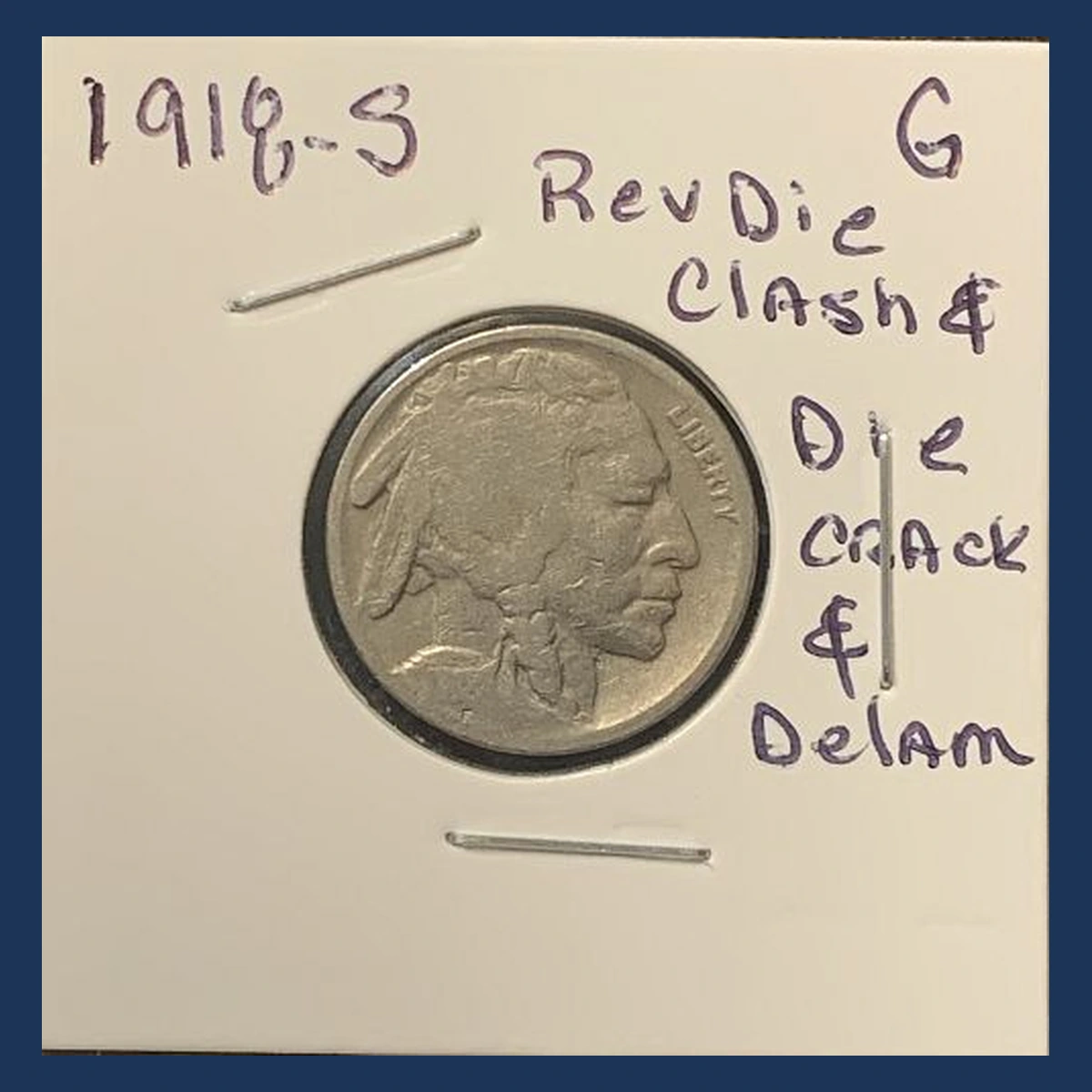
A thin strip of metal can lift away from the surface when a weak area inside the alloy separates. This peeling fault is called lamination.
A seller described a worn 1918-S nickel with lamination, a clash mark, and a crack from the stamping tool. Those observations concern one coin, and the peeling location is not specified in the written listing.
The nickel normally contains copper and nickel mixed throughout the blank. A lifted surface is therefore not proof that a plated layer has come off, and peeling should not be confused with a raised crack line.
Estimated Value
The worn San Francisco coin was advertised at $12, including its reported lamination, clash, and crack. That was a seller’s asking price for one coin, not three separate error sales.
An estimated $5–$150 suits small laminations on ordinary worn 1918 nickels. Larger peels and stronger remaining detail can move a coin toward the upper part of the range.
The estimate excludes unusually valuable high-grade San Francisco coins, whose basic date-and-condition value can dominate the price.
How to Identify
Photograph any lifted metal before moving the coin again.
Do not bend the flap to find out how far the separation runs.
A 10× magnifier can show whether an original part of the design survives on the loose metal. Look along the seam for an internal split rather than the smooth floor of a later scrape.
If the coin is loose, record its weight with a scale and its diameter with calipers. Compare with 5 grams and about 21.2 millimeters, and inspect the plain edge without pressing on fragile metal.
An attached flap may leave the weight close to normal. Check the S below FIVE CENTS when comparing with the seller’s example, and keep raised tool-crack lines separate from the peeling seam.
2. 1918 Buffalo Nickel Repunched Mintmark
A second D or S outline can begin when a mint letter is punched into the stamping tool more than once. If the punch shifts, part of the earlier letter may survive.
The 1918 year list reports repunched mintmarks without establishing a specific direction or numbered variety. That leaves the complete extra letter shape as the feature to test on an actual coin.
The F beneath the date is a different letter with a different job: it identifies designer James Earle Fraser. It must not be mistaken for the D or S on the back.
Estimated Value
A conditional estimate of $20–$300 applies to a genuine, identifiable minor repunched mintmark on an ordinary 1918 nickel. Wear and the strength of the remaining extra letter affect its appeal.
For comparison, a 1927-D FS-501 in worn XF40 condition sold for $335 on eBay in May 2021. That different-year pattern does not establish a specific 1918 variety or its auction record.
The normal value of the date and mint is included rather than added a second time.
How to Identify
For a loose coin, make a whole-coin record before enlarging the mintmark. Use a scale and calipers to check the normal 5 grams and approximately 21.2 millimeters, with a plain edge.
Photograph the back upright. The D or S belongs below FIVE CENTS; the F under the date on the other face is the designer’s initial.
Through a 10× magnifier, trace any extra stroke around the D or S and compare its curve with the main letter. A separately placed punch should leave a letter-shaped fragment, not merely an isolated bump.
Find an authenticated same-date, same-mint comparison before naming the variety. A flat shelf, corrosion, or a damaged letter cannot supply the missing match.
3. 1918 Buffalo Nickel Clipped Planchet
The known Philadelphia example is missing about 5% of its blank at the upper-left, described as 11 o’clock. The remaining design was struck around that shortage.
A clipped planchet is a blank that lacked metal before it entered the coin press. PCGS graded this 1918 example MS61, meaning unworn with noticeable marks.
Separate reports include clipped Denver overdate coins, including a VG10 example and another listed with a gap near 8 o’clock. Their overdate and clip belong to the same physical coin in each case, but the separate reports should not be assumed to describe one specimen.
Estimated Value
The Philadelphia MS61 with a 5% clip sold for $141 at Heritage in August 2014. An estimated $30–$350 covers ordinary-date worn through attractive unworn clips.
A clipped 1918/7-D needs the much higher overdate valuation instead of this ordinary-date range. Its two features are not priced by adding two maximum figures.
The size and originality of the gap matter, while a cut made after striking is damage even if it removes the same amount of metal.
How to Identify
The known Philadelphia example loses 5% of its blank near 11 o’clock. Start with its outline, then examine both ends of the gap through a 10× magnifier.
Look for struck detail meeting the shortage without saw marks or a filed surface. The rim opposite a genuine clip can be weak, though that clue should be considered with the edge itself.
A scale helps compare a loose candidate with the normal 5 grams. Use calipers on the intact diameter, usually about 21.2 millimeters, and inspect the remaining plain edge.
Now read the date and mint. If a D coin shows a genuine 7 beneath the last 8, switch to an overdate comparison; the ordinary Philadelphia clip’s price no longer describes its identity.
4. 1918 Buffalo Nickel Die Clash
A faint design fragment in the wrong place can come from a die clash. The two steel stamping tools struck each other without a blank between them and picked up parts of the opposite design.
Later coins then received those unwanted marks. A San Francisco auction example has clash traces behind the neck, while another report places them under the chin.
Philadelphia reports also exist, and back lettering areas can show related traces. These locations describe different examples rather than a requirement that every clashed 1918 nickel carry all the marks together.
Estimated Value
For ordinary worn examples with clear clash marks, estimate $15–$500. A recognizable transferred design generally has more interest than a vague line that could be damage.
The $12 seller listing for a worn 1918-S also mentions a crack and lamination. That combined asking price illustrates the low end without establishing separate sales for each feature.
A well-preserved San Francisco nickel can cost far more for its grade alone. Do not treat its entire price as a clash premium.
How to Identify
Use a normal coin or a clear image of its opposite face to work out what the stray shape resembles.
A clash should have a plausible connection to the other design, not just look unusual.
Under a 10× magnifier, inspect below the chin and behind the neck when matching the relevant San Francisco example. Compare back lettering areas only with the specimen that actually shows those marks.
Check a loose coin’s plain edge and measure it with calipers against about 21.2 millimeters. Its normal weight is 5 grams on a scale.
Keep the suspected transferred line separate from any raised crack or peeling metal. Photograph enough nearby design to show its relationship to the portrait or lettering rather than isolating an unexplained scratch.
5. 1918 Buffalo Nickel Die Cracks and Cuds
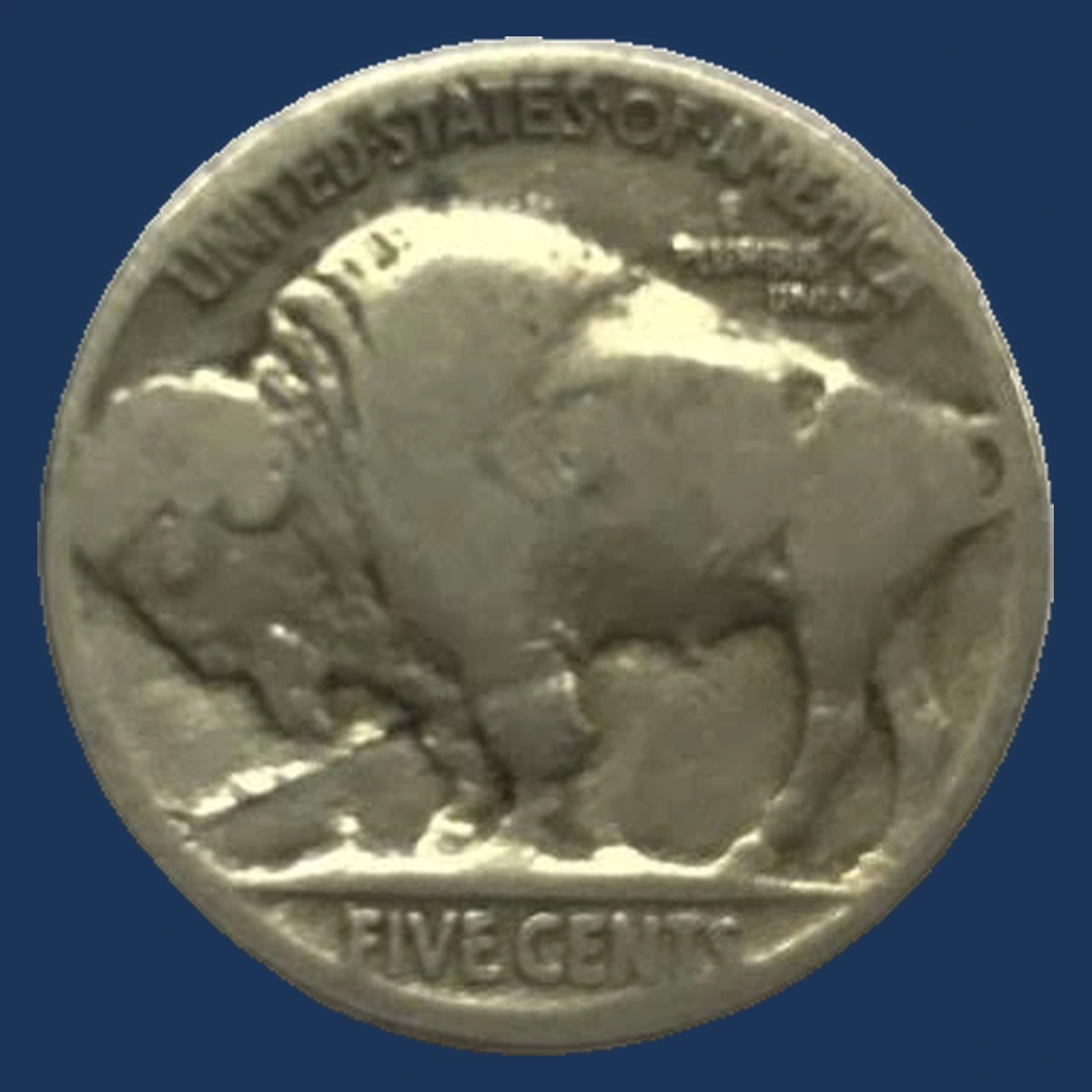
Two raised lines on a recorded 1918-S follow the leftmost feather and continue from its tip toward the rim. They formed when coin metal entered cracks in the steel stamping tool.
A Philadelphia doubled-back coin also has a collector-reported crack near the tail. That is a different example, not another line to expect on the San Francisco coin.
Catalogs list larger rim-connected breaks on Philadelphia and San Francisco nickels too. These raised patches are called cuds: part of the tool broke away, leaving a gap that filled with metal during striking.
Estimated Value
Allow an estimated $15–$600 for ordinary worn examples, from small crack lines to a prominent rim-connected cud. Preservation and the size of the raised area influence the price.
The recorded San Francisco feather-crack coin is MS64, an unworn grade whose basic rarity can make it much more valuable. Its full price should not be interpreted as the value of two cracks.
This range is an estimate, and the listed Philadelphia and San Francisco cuds have no sale amount used here.
How to Identify
Identify whether the feature is a line or a patch before choosing a comparison. A cud must connect with the rim; an interior bump needs a different description.
For a loose coin, weigh against 5 grams and measure about 21.2 millimeters with a scale and calipers. Examine the plain edge where a raised patch meets it.
Then use a 10× magnifier on the San Francisco feather lines or the Philadelphia tail area, as appropriate. The lines should rise from the surface rather than cut down through it.
A scratch can push a narrow ridge of metal beside its groove. Follow the whole feature through nearby design to see whether you are looking at a struck ridge or a later cut with displaced metal.
6. 1918 Buffalo Nickel Broadstrike
A nickel can spread too far when the surrounding collar fails to contain it during striking. The collar is the ring that normally limits the coin’s diameter.
This error, called a broadstrike, leaves an expanded outline while preserving the full design. An uneven expanded margin can occur, but it should not be confused with an off-center strike that loses part of the design.
Broadstrikes are reported in the 1918 year list without a specific authenticated example or mint. The expanded shape therefore needs to be demonstrated on the candidate itself, rather than assumed from a broad-looking rim.
Estimated Value
Use a conditional $100–$750 estimate for an ordinary 1918 broadstrike with a complete date and genuine expansion. A visually strong spread on an attractive coin can command more than slight expansion.
As a different-design comparison, a 1999-P Jefferson broadstrike in MS63 sold for $89 in March 2025. It supplies a market example of the mechanism, not a recorded 1918 sale.
High-grade branch-mint Buffalo nickels require separate attention to their ordinary date value before applying this general range.
How to Identify
Measure a loose candidate in several directions with calipers, comparing its spread with the normal 21.2-millimeter diameter. A scale should show close to 5 grams, since this error spreads the existing metal rather than removing it.
Under a 10× magnifier, follow the outer letters and date to check that the whole design remains on the coin. An untouched crescent opposite missing design calls for an off-center comparison instead.
Inspect the expanded margin and plain edge for signs of hammering, filing, or an added ring. The surface should show metal shaped by striking across the wider blank, not an artificially enlarged outline around an otherwise ordinary coin.
7. 1918 Buffalo Nickel Two Feathers
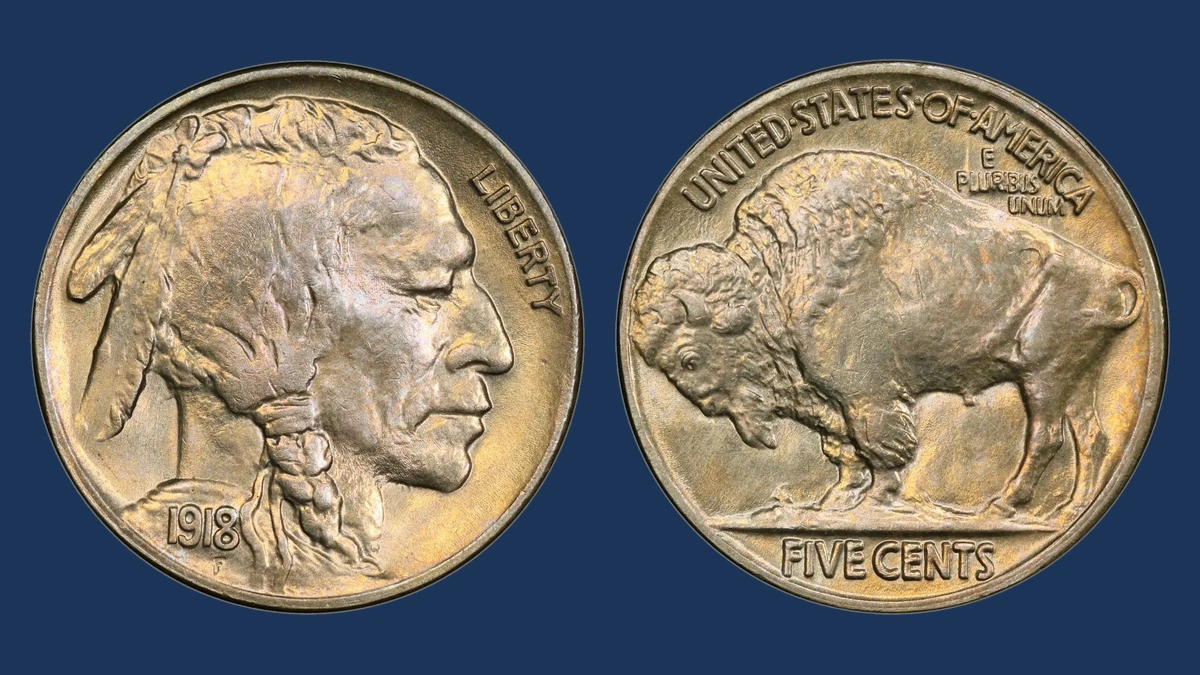
The small inner feather beside the neck can disappear when the stamping tool is polished too heavily. The two larger feathers remain, giving the variety its familiar name.
Philadelphia examples are cataloged, and a collector’s San Francisco example combines the reduced feather with a 20% off-center strike toward the bottom. The missing feather and displaced design describe that same San Francisco coin.
This is different from losing the whole feather area beyond the edge of an off-center blank. It also differs from ordinary wear, which can flatten nearby parts of the portrait along with the feather.
Estimated Value
For a matched two-feather variety without a major additional striking error, estimate $50–$2,500 across worn and better-preserved examples. This is an estimated span, not a quoted 1918 auction record.
A 1927-S two-feather MS63 sold for $2,280 in February 2021, providing a different-year comparison. The mint and condition still need to match the coin being priced.
The reported 1918-S with both missing feather detail and an off-center strike should receive one combined valuation rather than two added premiums.
How to Identify
Identify Philadelphia or San Francisco from the area below FIVE CENTS before choosing the feather photograph. On a loose coin, use a scale and calipers to record the normal 5 grams and approximately 21.2-millimeter diameter.
The edge is plain. Under a 10× magnifier, examine the two long feathers and surrounding hair to see how much ordinary wear they show.
Compare the small-feather area with the recognized variety from that mint. A ground-out patch or abrasive scratches on the coin are different from a detail removed from the stamping tool.
For the San Francisco off-center example, locate the boundary of the struck design. A feather that missed the blank entirely cannot demonstrate the separate polished-tool variety.
8. 1918 Buffalo Nickel Double Strike with Indent and Partial Collar
This Philadelphia example tells more than one part of a striking accident. The collector’s description records a double strike, a back indent covering about 5%, and a partial collar.
A double strike gives the coin another impression from the stamping tools. An indent is a depressed area caused by overlapping metal during the blow, without necessarily carrying a reversed design.
A partial collar means only part of the edge was held by the surrounding ring. These features belong to one reported coin, so its repeated design, depression, and stepped edge should be examined together.
Estimated Value
A working estimate for this combined 1918 error is $500–$3,500, depending on preservation and the clarity of all three features. The collector’s display provides no sale amount used here.
A 1940 Jefferson double strike with a partial collar brought $517.50 in October 2010. That different-year, different-design coin offers a comparison for two of the mechanisms, not a sale of this Buffalo nickel.
Value the complete coin once. Adding separate indent and collar prices would exaggerate the combined error’s value.
How to Identify
Make three views: the front, the back, and the side. The collector’s description cannot be checked from the date alone.
On the front and back, use a 10× magnifier to find repeated design that follows a second strike rather than a single doubled tool. Then inspect the back depression without expecting mirror-image lettering inside it.
The side view should show the change between constrained and expanded edge sections. Calipers help record that uneven shape against a normal diameter of about 21.2 millimeters.
For a loose coin, check the weight against 5 grams on a scale and remember that a normal Buffalo nickel has a plain edge. Keep each photograph oriented alike so the repeated design, 5% indent, and edge step can be compared as one accident.
9. 1918 Buffalo Nickel Off-Center Strike
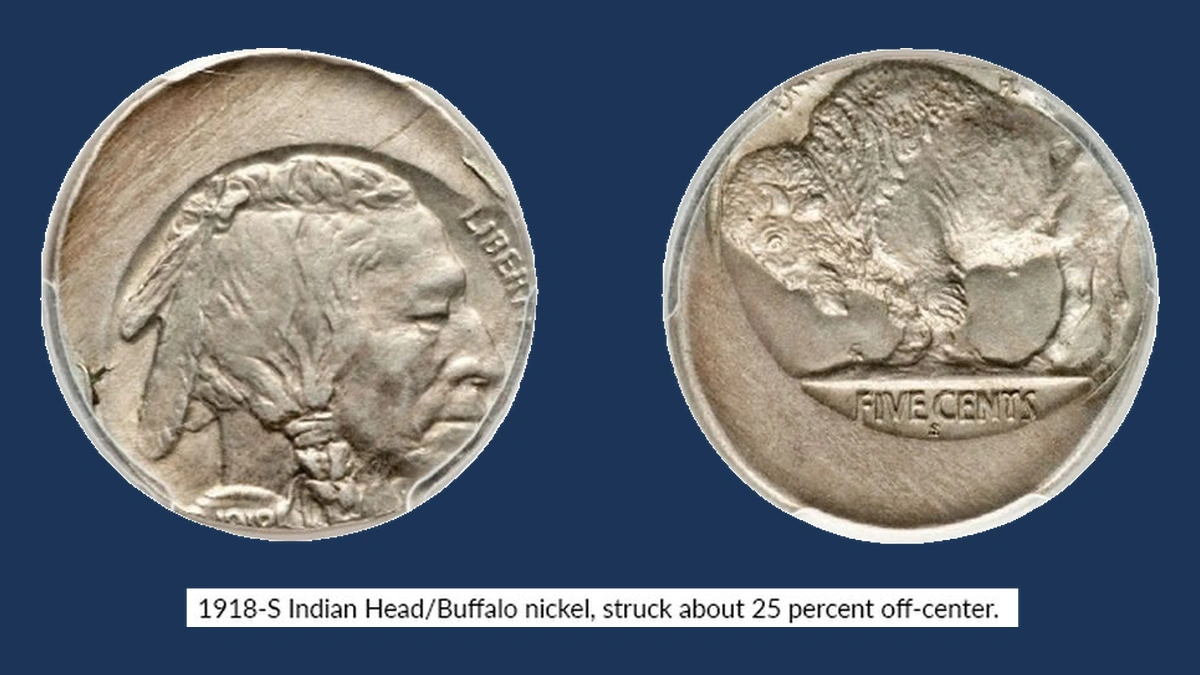
A 1918-D example was struck 10% off-center toward the lower-left, around 7:30. Its date and mintmark remain complete, while part of the buffalo’s head misses the blank.
Other Denver reports describe different displacements, including a 12% strike toward 10 o’clock. A San Francisco collector example is 20% off-center toward the bottom and also has reduced feather detail.
These are separate coins. Off-center striking occurs when the blank is not properly positioned between the tools, leaving an untouched area opposite the missing design rather than removing a piece of metal.
Estimated Value
The exceptionally well-preserved Denver 10% example, graded MS66, sold for $3,120 at Heritage on January 3, 2022. Its high grade contributes substantially to the total.
An estimated $150–$4,000 covers ordinary worn through attractive unworn examples with readable dates. Percentage alone does not decide the price.
The San Francisco example’s missing feather belongs to the same coin as its displaced strike. Compare that combination as a whole, rather than borrowing the Denver result or adding two separate ranges.
How to Identify
A scale should still show close to the normal 5 grams if a loose nickel’s design shifted without metal loss. Measure its outline with calipers against the usual 21.2 millimeters, and check the plain edge for trimming.
Compare both faces through a 10× magnifier. Trace the design lost at one edge and the untouched metal opposite it rather than treating any wide rim as an off-center strike.
The Denver 10% example moves toward 7:30 with its date and D still clear. Match that coin separately from other Denver percentages.
On the San Francisco 20% example, the small-feather area must remain within the struck design. Detail that merely missed the blank cannot establish its additional two-feather variety.
10. 1918 Buffalo Nickel Doubled Dies
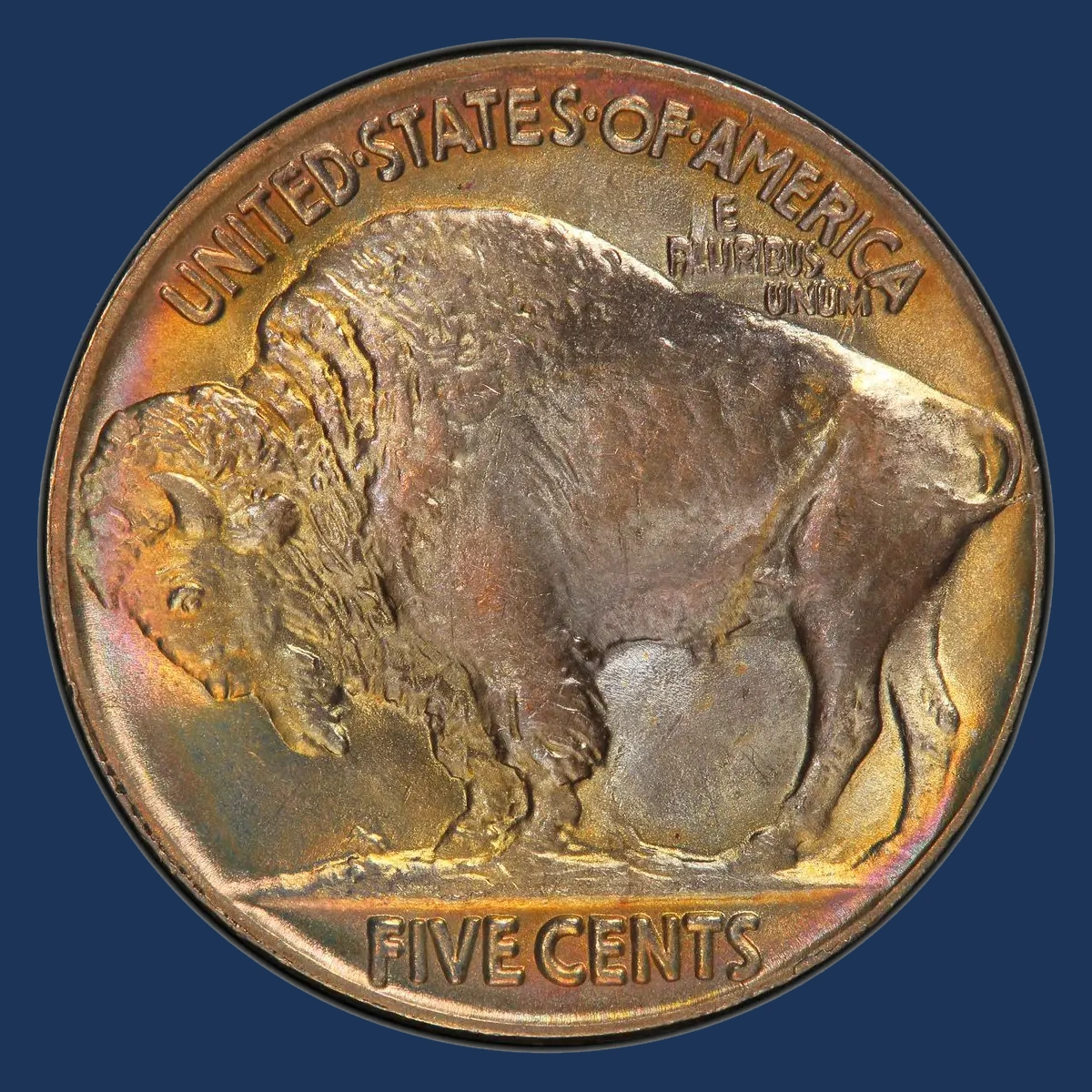
The Philadelphia back variety repeats parts of the lettering and design outlines. The repeated pattern began in a die, the steel stamping tool, rather than from two separate strikes on each coin.
Year-specific reports also describe front doubling around the date and the portrait’s lips, nose, and chin. Those reports do not identify a mint or certified example for the front pattern.
The ordinary front report is not the famous Denver 8-over-7 date. Front and back doubling need their own comparisons, since each tool carried a different design and could develop a different repeated outline.
Estimated Value
PCGS records $10,575 for a Philadelphia FS-801 back doubled die graded MS67 at Heritage in November 2012. MS67 means exceptionally well-preserved and unworn.
Estimate $75–$12,000 for identifiable back examples across a wide span of condition. Much of the top price reflects preservation as well as the variety.
The separately reported minor front doubling has a conditional $50–$500 estimate. That range requires a genuine variety match and does not apply to the Denver overdate.
How to Identify
Decide which face carries the extra design before choosing a photograph for comparison. A Philadelphia back variety cannot identify an unexplained front outline.
For a loose coin, use a scale and calipers to record about 5 grams and 21.2 millimeters. Inspect the plain edge and confirm any mint letter below FIVE CENTS.
With a 10× magnifier, compare multiple back letters and nearby outlines against a certified FS-801 example. A tail crack may accompany a collector-reported coin but cannot replace the doubled-design match.
On a front candidate, inspect the date and portrait contours for raised repeated details. Flat shelves can come from movement during striking, and a suspected 7 beneath the last 8 belongs in the separate Denver overdate check.
11. 1918 Buffalo Nickel Struck on the Wrong Planchet
A copper-colored 1918 Buffalo nickel may have been struck on a blank intended for a cent. A Philadelphia auction example weighs 3.1 grams, while a separate Denver example appears in a collector’s display.
The Philadelphia coin also has later work on its back, recorded as tooling. That damage does not erase its wrong-blank identity, but it affects condition and price.
A separate silver dime-blank example is recorded in the literature as PCGS AU58, meaning slight wear. Its mint attribution differs between references, so the silver coin should not automatically be called Denver without checking its back.
Estimated Value
The 3.1-gram Philadelphia cent-blank coin sold for $2,340 in January 2022 despite its tooled back. Estimate $1,500–$7,500 for identifiable copper examples, depending on grade and damage.
The dime-blank literature records a $14,400 Heritage sale in January 2020, after an earlier $27,000 asking price. A working silver-example range is $10,000–$20,000.
These ranges concern different metals and individual coins. The Denver copper report does not supply a measured weight or a separate sale here.
How to Identify
Color is only a starting clue. On a loose candidate, a scale can distinguish the normal 5-gram nickel from a cent blank near 3.11 grams or a silver dime blank near 2.50 grams.
Those are standard blank weights, not measurements of every reported coin. Use calipers against cent and dime blank diameters of about 19 and 17.9 millimeters, allowing for spreading during striking.
Under a 10× magnifier, inspect where the larger nickel design runs beyond the smaller metal. The normal nickel diameter is 21.2 millimeters with a plain edge.
Confirm the metal and mint through the coin and its certification rather than surface color alone. On the Philadelphia copper example, distinguish the original strike from the later tooling on the back.
12. 1918 Buffalo Nickel 1918/7-D Overdate
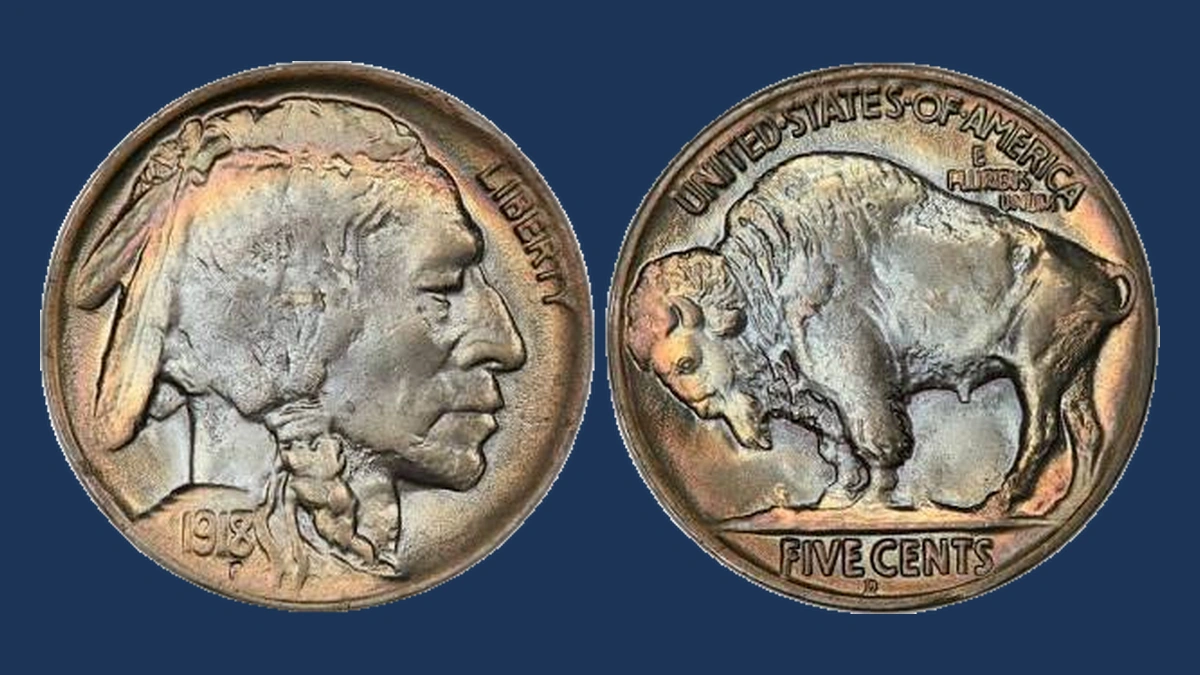
A clear part of a 7 beneath the final 8 is the defining feature of the Denver overdate. It originated when the same working die received impressions from tools bearing 1917 and 1918 dates.
The working die is the steel tool that stamps coins. The mixed date was already in that tool, so the Mint did not take finished 1917 nickels and hand-carve new dates into them.
Genuine examples also have a Denver mintmark that leans left. Because the variety is valuable even when worn, added lines and altered dates deserve close attention before purchase.
Estimated Value
The MS65+ overdate sold by GreatCollections brought $511,875 on February 11, 2024. That exceptional unworn coin far exceeds most circulated examples.
An estimated $500–$525,000 spans identifiable heavily worn pieces through the finest auction-level coins. A separate MS64 brought $90,000 at Heritage in January 2025, illustrating the effect of condition.
The visible underdigit and genuine Denver identity are essential. A damaged ordinary 8 or a line added later does not qualify for this range.
How to Identify
Check the whole coin before concentrating on a tiny mark inside the 8. A loose example should weigh about 5 grams on a scale and measure 21.2 millimeters with calipers, with a plain edge.
The D below FIVE CENTS should lean left, as on genuine examples. That letter supports the date identification but is not proof by itself.
Place an authenticated overdate photograph beside a 10× view of the final numeral. Follow the underlying 7 through the 8 rather than accepting a single notch.
Inspect the date’s surface for cuts, smoothing, or added metal. For a purchase, compare the entire coin with its certification photographs so a convincing close-up does not hide alterations elsewhere.
Conclusion
A clipped overdate and an ordinary clipped nickel can have very different values. The same is true of a copper cent blank, a silver dime blank, and a merely discolored normal nickel.
The estimated $5–$525,000 spread reflects those differences, from small worn flaws to the exceptional Denver overdate. Keep each coin’s mint, material, condition, and combined errors together when choosing its range.
Clear photographs of both faces and the edge preserve the clues that matter.