1928 Nickel Error List with Pictures

One small missing feather can matter more than a large mark. PCGS records a 1928-S Two Feathers nickel selling for $2,040 in August 2019.
This 1928 Buffalo nickel error list covers that variety alongside peeling metal, doubled letters, and misplaced strikes. Estimated values range from $10 to $3,000.
Some clues need a magnifier; others change the coin’s outline. Read on to learn where each check begins.
1. 1928 Buffalo Nickel Lamination
A thin flap or shallow peeled patch can show that the coin’s metal did not hold together. The separating layer is called a lamination.
A 1928-D example is reported with cracking and flaking at the surface. The precise patch needs to be checked on that coin.
These nickels were made from copper and nickel mixed together. They were not built with a thin outer coating that normally peels away.
An internal weakness can reach the surface before or after striking. Once a flap lifts, handling can break it off and change its appearance.
Estimated Value
Allow an estimated $15–$150 for a genuine 1928-D lamination, from a small peel to a clear larger separation. This is a practical range, not a recorded sale for the reported Denver example.
An attached layer with visible design can be especially interesting. Heavy corrosion or a scratched surface can reduce the appeal.
The extent of the original separation matters more than a seller’s description of how dramatic the damage looks.
How to Identify
Protect the loose area before examining it. Hold the coin by sound edges and leave any flap exactly where it sits.
A 10× magnifier can reveal whether the crack continues beneath a thin layer. Compare that with a gouge, which cuts down through otherwise solid metal.
Check for the D below FIVE CENTS when matching the reported Denver example. A scale and calipers compare a loose coin with the normal 5.00 grams and 21.21 millimeters; slight surface loss may barely change its weight.
Watch the separation under a moving light. The useful feature is an edge of coin metal lifting away from the layer beneath, rather than a dark stain or a piece stuck on top.
2. 1928 Buffalo Nickel Die Clash
A faint outline in an unexpected place can come from the two stamping tools touching each other. These steel tools, called dies, normally have a blank between them.
If the blank is missing, their collision can mark the tools. Later coins may show traces of the opposite face’s design.
This is a die clash. The year guide reports clash impressions on 1928 nickels without naming one exact location.
A clash does not stamp a complete new portrait into the coin. Its shallow, partial traces must fit the opposite design rather than a random scratch.
Estimated Value
An estimated $15–$150 is suitable for modest, clearly identified 1928 clash marks. Stronger recognizable outlines can attract more interest than a few faint lines.
The range is an estimate for the reported mechanism, not an auction price for a particular 1928 specimen. A specialist match is useful when the mark is subtle.
Ordinary tool-polishing lines can also appear on the surface. They do not earn a clash premium simply because they cross the background.
How to Identify
Compare the strange line with a photograph of the opposite face, rather than naming it from imagination. A clash should preserve part of an actual design shape in the position expected when the two tools meet.
Use a 10× magnifier and light from two directions to separate raised traces from recessed scratches. On a loose coin, a scale and calipers check the normal 5.00-gram weight and 21.21-millimeter size; a faint clash should not change either significantly.
Inspect the plain edge for later squeezing as well, since pressing finished coins together makes a different kind of damage. Trace the suspect outline into another recognizable feature instead of relying on one isolated straight line.
3. 1928 Buffalo Nickel Clipped Planchet
A clipped coin started with less than a complete disk of metal. Its missing area existed before the portrait and buffalo were struck.
The blank may have been punched across an earlier hole in the metal strip or near an incomplete edge. Those situations can leave different clip shapes.
Clipped planchets appear in the 1928 year listings, but the reports do not establish one mint or a fixed-size opening. Planchet simply means the prepared blank.
The nearby rim matters because it formed around the missing metal. A notch cut into a finished nickel has a different history.
Estimated Value
For typical confirmed 1928 clipped blanks, estimate $30–$200. A larger original opening, clear date, and attractive surface help support the upper part of that range.
This estimate follows the year guide’s general clipped-coin range rather than assigning an auction result to a specific example. A small notch still needs examination.
The shape is only the start of the decision. A later cut or broken edge does not become a mint error because it looks curved.
How to Identify
Locate the date before studying the gap. A missing or heavily worn date can prevent a firm 1928 identification.
Check the available full-width spans with calipers against the normal 21.21 millimeters. Then weigh the loose coin against 5.00 grams; missing blank metal should reduce that weight.
With a 10× magnifier, compare the exposed edge with the surrounding rim. A sawed surface may show repeated parallel lines.
Follow both ends of the opening for letters or rim metal that formed toward the missing area. The opposite rim can sometimes be weak too.
That opposite weakness is helpful but not universal. The stronger test is whether the opening and nearby struck details fit a blank that was incomplete before the press hit it.
4. 1928 Buffalo Nickel Die Cracks and Cuds
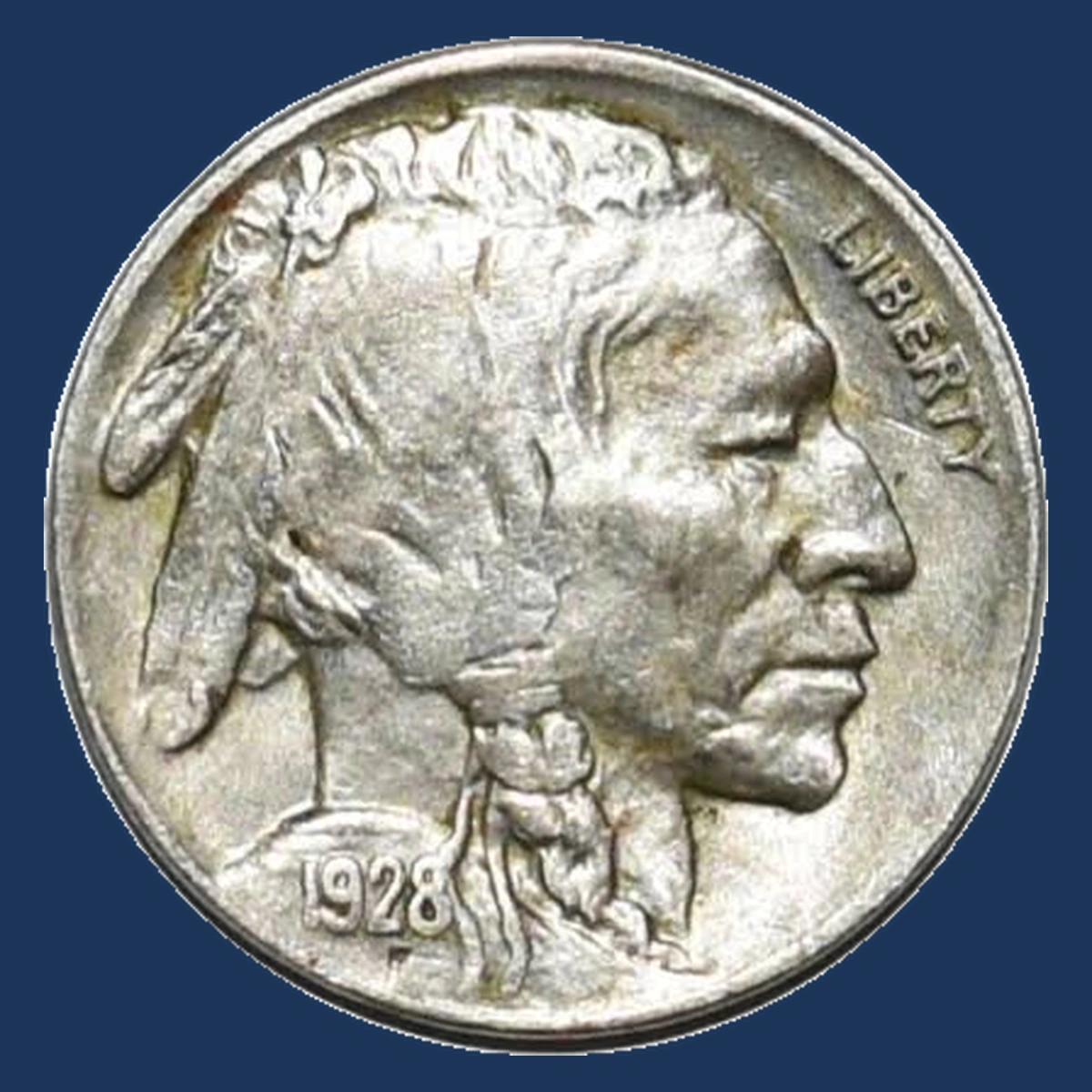
A crack in a stamping tool lets coin metal enter a narrow opening. The finished nickel shows a raised line where that opening was.
If a larger piece of the tool breaks away beside the rim, the coin can develop a raised lump called a cud. Original design is missing within that lump.
Both types are reported for 1928 Buffalo nickels, without one fixed route or clock position. Their size depends on how the tool broke.
The coin itself has not cracked in the same way. A split through the coin’s metal is a different flaw.
Estimated Value
Estimate $10–$40 for a modest raised crack and roughly $50–$300 for a clear rim-connected cud. These are ranges for genuine examples of the reported types, not individual 1928 sale records.
A larger broken area may attract more attention when the date and main design remain clear. A barely visible ridge usually brings a smaller premium.
Grade also matters to the whole coin. It should not be mistaken for the value of the break alone.
How to Identify
For a lump, inspect its connection to the rim first; for a narrow line, check whether its center is raised. A 10× magnifier under side lighting makes both relationships easier to see.
A die break adds shape to the coin rather than removing a matching piece of metal from it. A scale and calipers should therefore keep a loose example near the usual 5.00 grams and 21.21 millimeters, apart from wear.
Inspect the plain edge for impact marks or a seam where material was added afterward. At the affected design, look for letters ending naturally at the raised break, without a sharp channel cut across their tops.
5. 1928 Buffalo Nickel Struck Through Material
A patch can lose its intended detail when material blocks the stamping tool. Grease, debris, or another object can keep the design from reaching the metal fully.
This is called a strike-through. The 1928 listings report the type without identifying a particular obstruction or mint.
The finished shape depends on what was in the press and where it lay. A smooth weak patch does not prove the presence of cloth or wire.
Ordinary wear can also flatten details, especially on the high parts of a Buffalo nickel. Compare the surrounding surface before treating missing detail as an error.
Estimated Value
Use an estimated $15–$300 for confirmed 1928 strike-throughs, depending on how clear and extensive the interruption is. Small blocked details generally occupy the lower end.
This is an estimated range for the reported type, not a sale tied to a specific 1928 obstruction. Distinct shape and undamaged neighboring detail can strengthen demand.
A battered or heavily corroded patch should not receive the same premium. Its missing detail has a different cause.
How to Identify
Start with the surrounding portrait or buffalo, not just the weak patch. If all the exposed high points are flat, circulation wear may explain the missing detail.
Tilt the coin and inspect the patch with a 10× magnifier. A depression made after striking can push metal upward at its boundary or flatten details already present.
Check a loose coin on a scale and with calipers against 5.00 grams and 21.21 millimeters. These measurements help identify the coin, but do not tell what substance was in the press.
Examine the transition from clear design into the affected area. An original interruption should fit the surrounding struck surface, without scraped-away lettering or a hard impact lip.
6. 1928 Buffalo Nickel Doubled Die Obverse
LIBERTY is the main place to inspect this Philadelphia variety. The letters show extra outlines that originated on the front stamping tool.
CONECA lists the coin as DDO-001. DDO means doubled die obverse, or a doubled design on the tool used for the front.
One blow from that tool can transfer the doubled letters to a blank. The coin does not need to be struck twice to acquire them.
The listed effect is moderate, so careful magnification helps. A seller pointing only to the date has not yet shown the key LIBERTY detail for this variety.
Estimated Value
An estimated $50–$400 covers identified examples with readable doubling, depending on wear and preservation. This range reflects the year guides’ general estimates; no specific DDO-001 auction sale is assigned here.
A clear variety match is more useful than a large photograph of one blurry letter. Wear can merge small outlines and make the feature harder to sell.
Do not use the stronger Two Feathers prices as a substitute. That is a different 1928-S variety.
How to Identify
Read LIBERTY through a 10× magnifier and compare it with CONECA’s DDO-001 listing. Study the shapes and spacing of the extra outlines across several letters.
Turn the coin over to confirm that there is no D or S below FIVE CENTS. The listed variety is Philadelphia, not a general pattern assigned to every mint.
Normal weight and size remain 5.00 grams and 21.21 millimeters, which a scale and calipers can check on a loose coin. Repeated outlines on the tool do not require a larger or lighter blank.
Look for raised, separated letter edges. Flat ledges that reduce the main letter’s shape can come from movement during striking instead.
7. 1928 Buffalo Nickel Off-Center Strike
The documented example retains its full date beside a wide area of bare metal. The nickel design landed fifteen percent off center.
PCGS graded it VF30, meaning the coin has visible circulation wear but retains much of its main design. The bare area was outside the stamping tools when they struck.
An off-center strike moves both designs relative to the blank. It is different from a missing piece of metal or a single misplaced tool.
The preserved year is useful here because Buffalo nickel dates often wear away. The size of the offset alone cannot identify the coin’s date.
Estimated Value
Estimate $50–$500 for identified 1928 off-center nickels, depending on displacement, remaining date, and wear. Stronger examples with clear identifying details belong nearer the upper end.
The recorded fifteen-percent VF30 piece had a $45–$60 auction estimate in January 2003. The archived page does not provide a reliable realized price to use here.
That old estimate is not a sale. It also does not establish the value of every later appearance with similar wording.
How to Identify
The broad untouched arc should meet the struck portion without a line of removed metal. Examine that boundary with a 10× magnifier before trying to estimate the percentage.
Check the back for a corresponding shifted design. If the complete design remains within a widened border, a broadstrike may explain the shape instead.
A scale can still show close to the normal 5.00 grams because off-center striking need not remove any metal. Calipers can record the outline against the usual 21.21-millimeter nickel.
Finally, read the date in the struck portion and inspect it for alteration. The year must belong to the original design, rather than to a holder description alone.
8. 1928 Buffalo Nickel Two Feathers
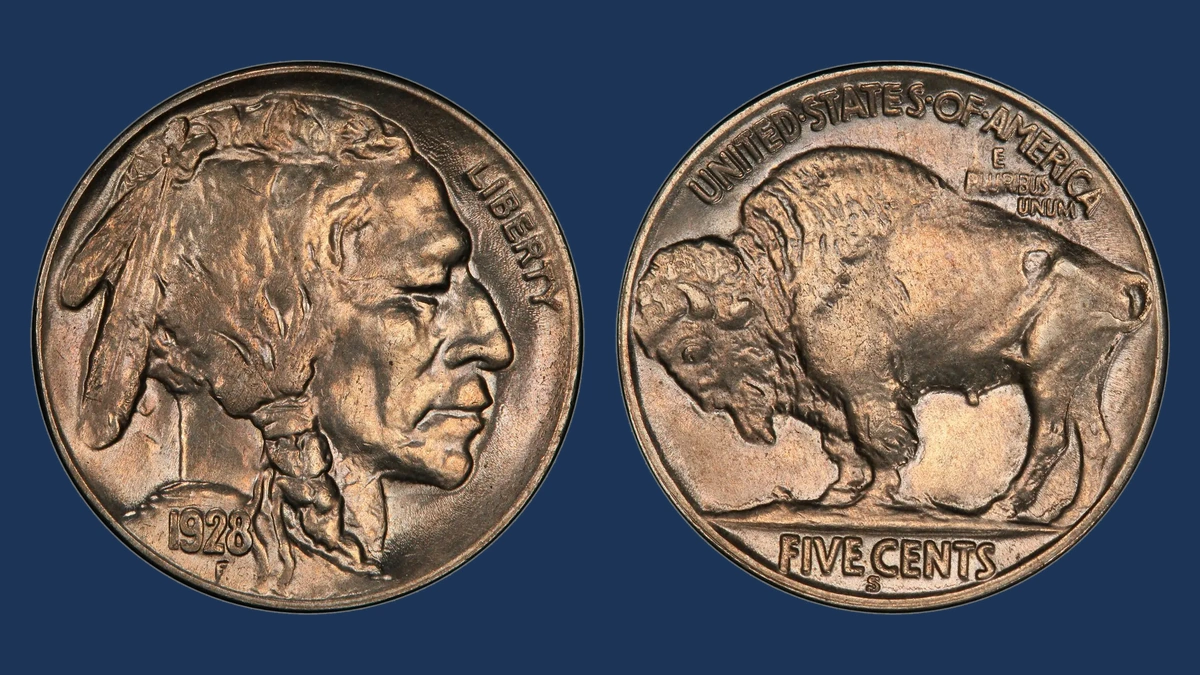
The smallest inner feather behind the portrait is largely missing on this San Francisco variety. Two longer feathers remain easy to see.
The variety is known as Two Feathers, or FS-401. Polishing the stamping tool removed shallow parts of the feather design before the coin was struck.
A tiny isolated remnant can remain near the neck and hair. Completely smooth space is therefore not the only acceptable appearance.
Wear can also hide a feather, but it usually weakens other high details too. The recognized variety must match the particular missing-feather pattern on a 1928-S coin.
Estimated Value
PCGS records a MS63 Two Feathers example at $1,175 in August 2016, alongside a $2,040 August 2019 result. A separate AU55 example brought $816 in December 2019.
Use an estimated $300–$3,000 across worn to attractive unworn examples. MS63 means no circulation wear with noticeable marks; AU55 means light wear.
The price depends on both the correct feather pattern and the coin’s preservation, not merely counting two visible feathers.
How to Identify
Find the S below FIVE CENTS on the back. Then turn to the smallest feather behind the portrait, close to the neck and hair.
Use a 10× magnifier to compare the shape with an identified FS-401 example. A detached island of feather detail can survive even when most of the inner feather is gone.
Check nearby hair and the larger feathers for wear. Scraping that removes the small feather can leave disturbed metal or lines through neighboring detail.
A scale and calipers should place a loose coin near the normal 5.00 grams and 21.21 millimeters. Tool polishing does not take a layer off the finished coin.
Concentrate on the inner feather’s outline and any remnant, rather than demanding an entirely blank patch behind the portrait.
Conclusion
The estimated $10–$3,000 spread reflects very different features, from modest metal flaws to a well-preserved Two Feathers variety. Missing design alone does not explain what happened.
Check whether the metal is absent, peeling, flattened, or carrying an extra outline. Then match the date and mint before comparing prices.
The small feather deserves a close look on 1928-S coins, but do not scrape or polish that area to make it clearer.