1936 Nickel Error List with Pictures

A partly missing buffalo leg can matter long before you reach the famous 1937-D issue. The separate 1936-D “3½ Legs” variety has its own appearance and price history.
One unworn example sold for $20,700 in March 2009. Across the 1936 Buffalo Nickel errors below, estimated values run from $5 to $25,000.
Start with the visible clue—missing metal, overlapping designs, or a weakened leg—and use the following checks to narrow it down.
1. 1936 Buffalo Nickel Peeling Metal Across the Buffalo
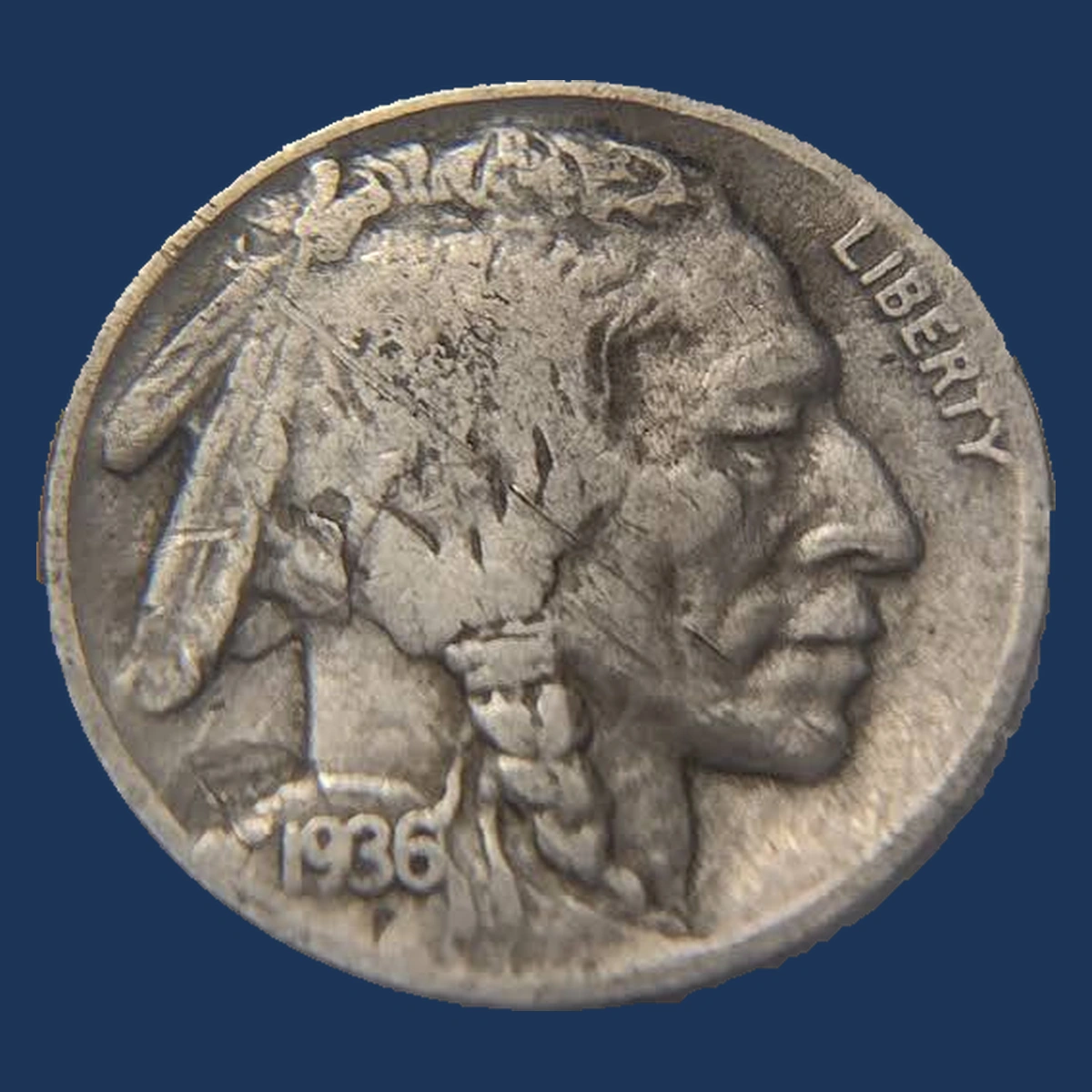
A thin layer can separate along a weakness inside the nickel’s metal. The reported 1936 example has a peeling area described as running from the buffalo’s neck toward a leg.
Collectors call this lamination. It may leave an attached flap or a rough depression where a piece has broken away.
The coin is made from copper and nickel mixed throughout, rather than a plated outer skin over a different center. A layered fault can still develop within that mixture, and the resulting break should not be confused with a scratch cut across the animal.
Estimated Value
For a modest worn example, estimate $5–$40; a larger, clear peeling area may bring $40–$200. These are estimates rather than a completed sale price for the reported neck-to-leg piece.
That example is described as VG, meaning heavily worn. Wear can make the boundaries less clear and reduce collector interest.
An intact natural flap or a clearly visible path can improve appeal, but lifting the metal to enlarge the fault damages the coin.
How to Identify
Follow the neck-to-leg area under a 10× magnifier without touching any loose metal. Look for a thin separation within the surface instead of a cut with metal pushed up on either side.
The reported coin is worn, so compare the fault with the surrounding flattened buffalo details. Ordinary wear does not by itself create a layered opening.
A scale can compare the remaining coin with 5 grams, while calipers should show about 21.2 mm across. A small attached flap may leave both measurements near normal.
Check the plain edge if the separation reaches it. A natural layered boundary, rather than the length of a scratch, is the feature to establish.
2. 1936 Buffalo Nickel Small Clip Below the Date
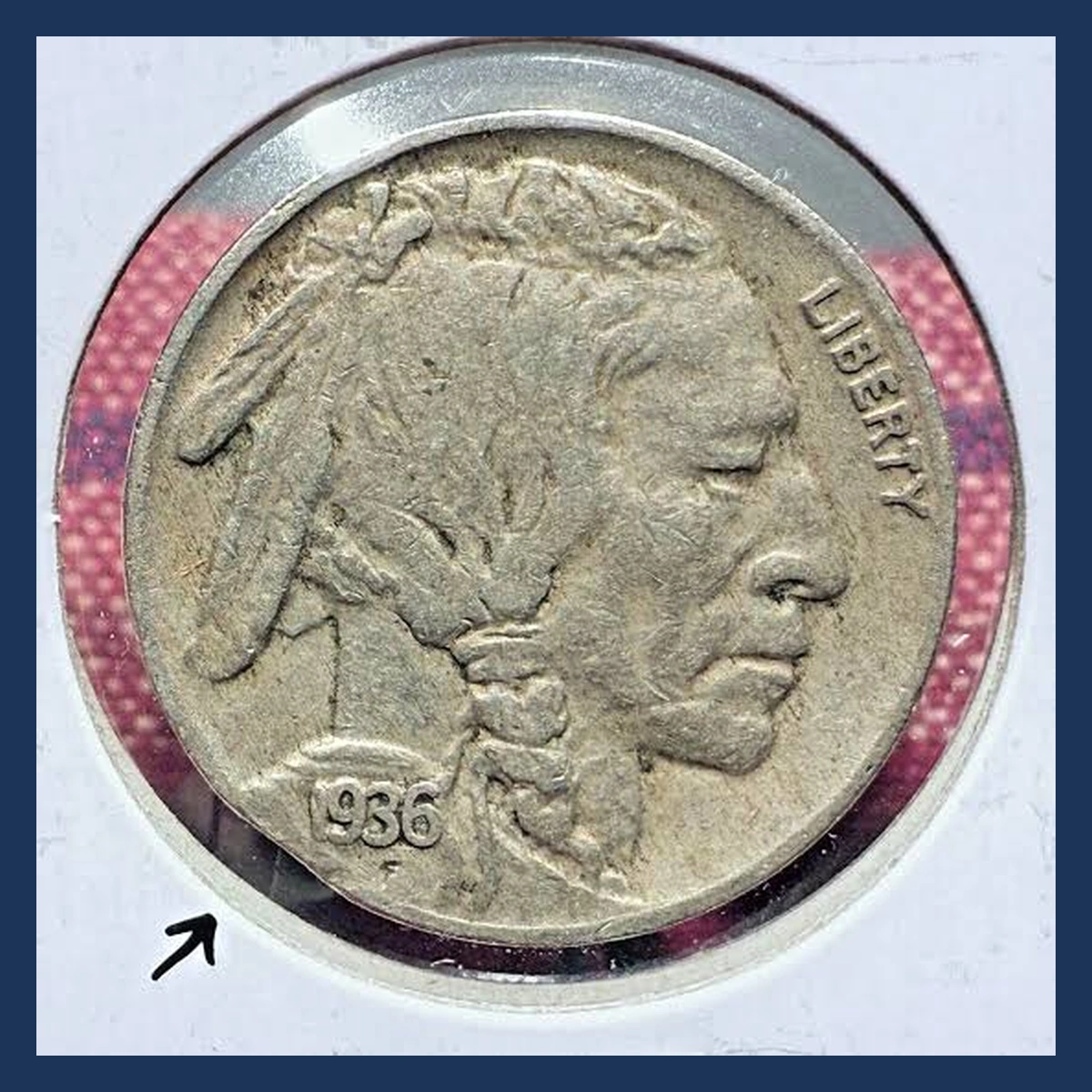
A tiny opening below the date can have been present before the design was struck. The recorded 1936 example has a 1% clip and was graded MS64, meaning unworn with noticeable marks.
The coin began as an incomplete metal disc, also called a blank. Striking formed the design around the missing section rather than restoring a full round edge.
A small clip is easy to overlook because very little metal is absent. Its position below the date helps locate this example, but does not mean every damaged rim in that area is a Mint error.
Estimated Value
A small genuine clip can fit an estimated $20–$100, with an attractive unworn example around $100–$250. The recorded 1% piece has no individual sale assigned here.
For a broad comparison, a later 1997-P Jefferson nickel with a much larger 20% clip sold for $124 in March 2025. That different design and missing percentage should not be transferred to the 1936 coin.
A readable date and natural missing-metal boundary matter more than the gap’s position alone.
How to Identify
Begin just below the date and decide whether metal is missing or merely pushed inward. A dent leaves displaced metal nearby, while an incomplete blank has an actual interruption in its outline.
Use a 10× magnifier at both ends of the gap, looking for natural transitions into the struck design. Sharp burrs or parallel file strokes suggest later removal.
Weigh the loose coin against 5 grams; a 1% clip removes very little metal. Use calipers across an intact span against 21.2 mm and examine the plain edge, including the rim opposite the gap.
The original-looking boundary at the opening is more important than a weak opposite rim by itself.
3. 1936 Buffalo Nickel Details Blocked During Striking
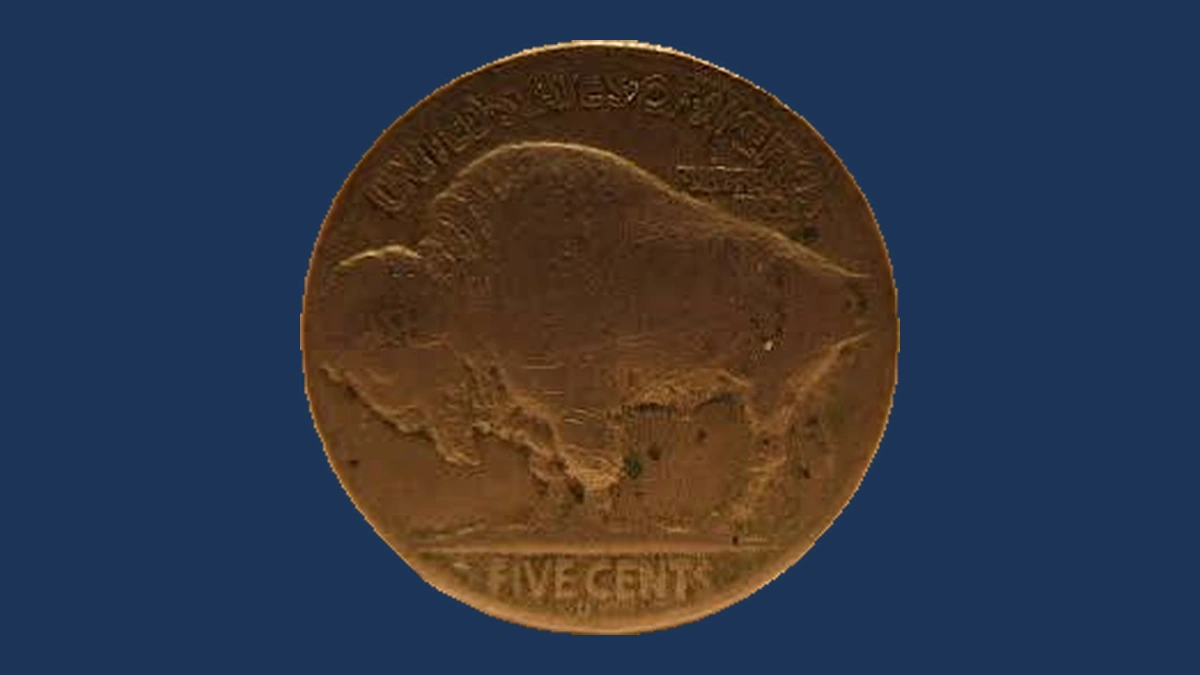
Grease or another obstruction can keep part of the stamping tool from forming the design. A 1936 example was described as struck through grease and graded AU50, showing light circulation wear.
Other recorded coins have blocked detail near CENTS or interrupted areas at the date and in front of the portrait’s mouth. These positions belong to separate examples.
The effect happens while the coin is struck, not through later rubbing of the finished surface. A weak date alone remains a poor test because Buffalo nickel dates commonly become faint through circulation wear.
Estimated Value
The AU50 grease-struck example sold for $79 on August 26, 2021. That sale provides a same-year comparison without assigning its price to the other recorded pieces.
Use an estimated $15–$100 for a modest, clearly identified blockage and $100–$300 for a larger or more distinctive area. Surface condition and the amount of recognizable design influence the result.
A simply worn date or rubbed cheek should not receive the same error premium.
How to Identify
Compare the weak area with the nearby high points under a 10× magnifier. If the entire date mound and portrait have worn down together, circulation may explain the missing detail.
For a suspected blocked CENTS, check whether nearby letters remain stronger. Marks near the mouth or date need comparisons with the separate recorded specimens.
Look for scraping lines and pushed-up metal that could identify a later gouge.
A loose nickel should remain near 5 grams on a scale and 21.2 mm with calipers. Inspect the plain edge for signs of squeezing or grinding.
A local interruption beside otherwise sharp, undamaged detail is a more useful clue than a broadly worn patch.
4. 1936 Buffalo Nickel Repeated Front or Back Lettering
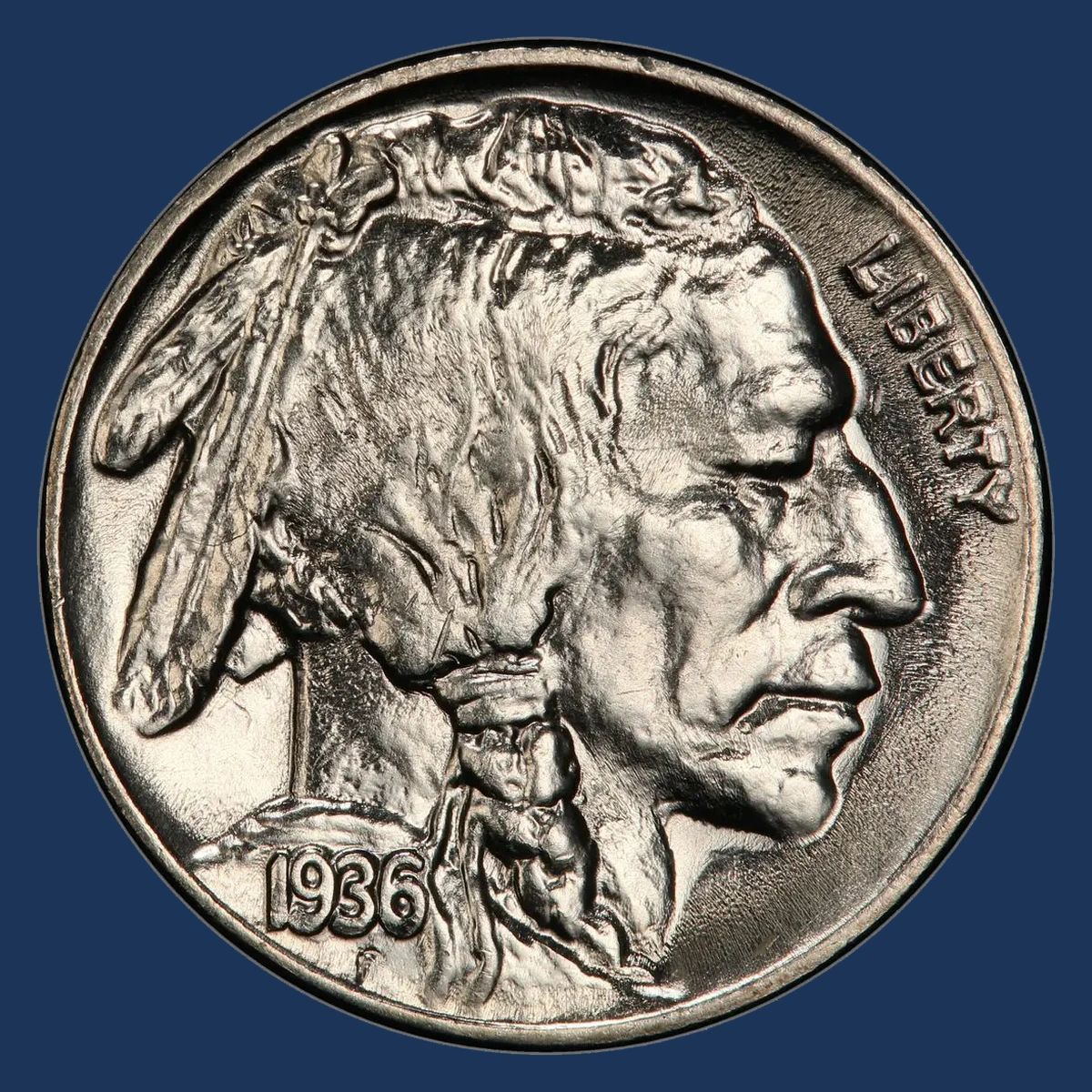
Two close outlines around a letter or date digit can come from a repeated design on the stamping tool. That steel tool is called a die, giving this variety the name doubled die.
Front and back examples are reported for Philadelphia’s ordinary 1936 nickels. The front reports include repeated lettering and date details, while a back variety is listed separately.
These are fixed features copied onto coins by the tool. They differ from a whole coin struck twice, and from flat shelves beside letters caused by movement during a single strike.
Estimated Value
For modest identified examples, allow an estimated $20–$100, with clearer attractive pieces around $100–$350. These ranges are estimates rather than individual results assigned to the reported front and back varieties.
The extra outline must match a particular genuine pattern; a thick date by itself has little basis for a premium. Wear and cleaning can also hide the features collectors need to see.
Price ordinary coins separately from specially made Proofs rather than transferring a collector-finish value to every doubled nickel.
How to Identify
Check the date and mint before choosing a comparison: these reports concern ordinary Philadelphia coins without a mintmark. Philadelphia also made Satin and Brilliant Proof collector coins in 1936, but finish alone does not establish doubling.
Under a 10× magnifier, inspect the reported letter or digit from several lighting angles. Separate raised outlines should remain recognizable rather than disappearing like a shadow.
Check roughly 5 grams and 21.2 mm with a scale and calipers, including the plain edge. Then match more than one affected feature to a photographed variety, since worn or flat-shelved lettering can imitate doubling without reproducing its full pattern.
5. 1936 Buffalo Nickel Repeated D or S Mintmark
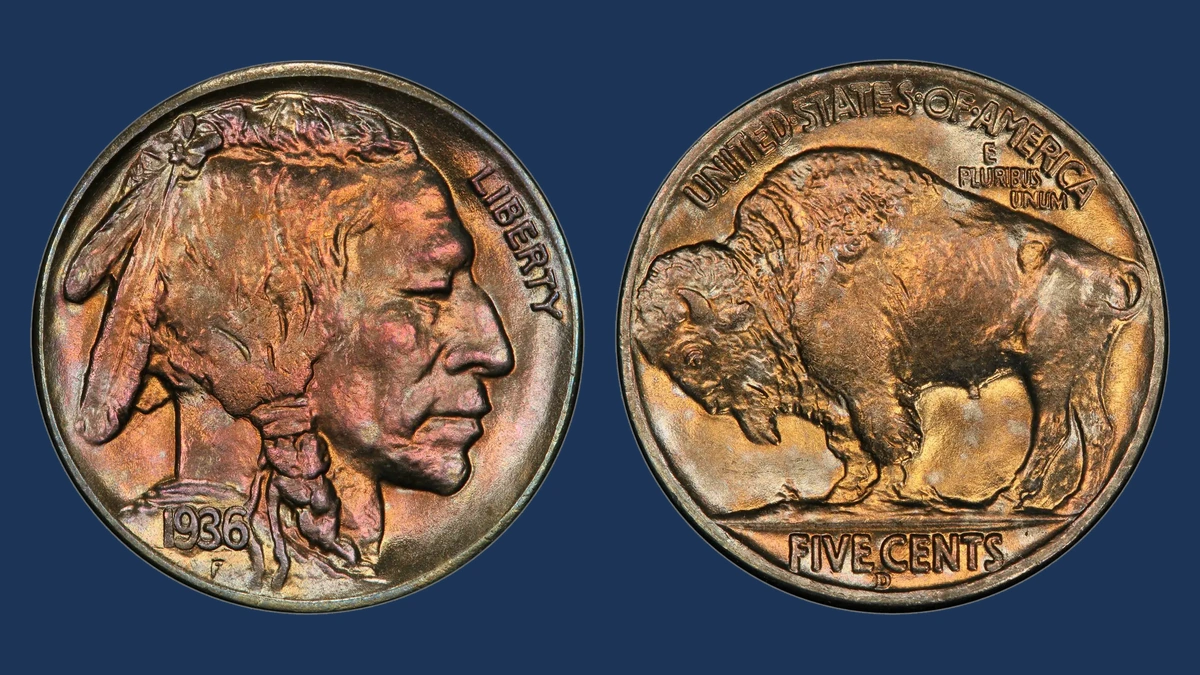
The little D or S below FIVE CENTS may preserve part of an extra letter. The mintmark was punched into the stamping tool separately, and a second impression could overlap the first.
The San Francisco variety known as FS-501 is also found under the older label FS-020. Denver D-over-D varieties are reported separately.
All these repeated mintmarks concern the letter on the tool, not a second striking of the whole coin. Scratches, a damaged letter, and metal pushed against the mintmark can create similar-looking bumps without preserving a real second outline.
Estimated Value
A recognized worn example may fall around an estimated $20–$150, rising to $150–$750 for an attractive unworn coin with clear extra strokes. Different varieties need separate condition comparisons.
This range does not assign an auction sale to each Denver or San Francisco listing. The named S-over-S variety should not automatically set the value of a faint unidentified D.
The price includes the full coin, and cleaning or damage around the mintmark can reduce its appeal.
How to Identify
Turn to the small mintmark beneath FIVE CENTS before investigating marks elsewhere on the back. A Philadelphia nickel has no letter there, so it cannot supply a D/D or S/S comparison.
Use a 10× magnifier to trace the original letter and any separate surviving stroke. Match the S-over-S example by its photographed shape, recognizing that FS-501 and the older FS-020 label refer to the same variety.
Do not assign a direction to an extra D simply because another mintmark variety has that direction.
A scale and calipers should show approximately 5 grams and 21.2 mm, with a plain edge. A recognizable overlapping letter is more useful than a lump beside the mintmark.
6. 1936 Buffalo Nickel Broadstrike
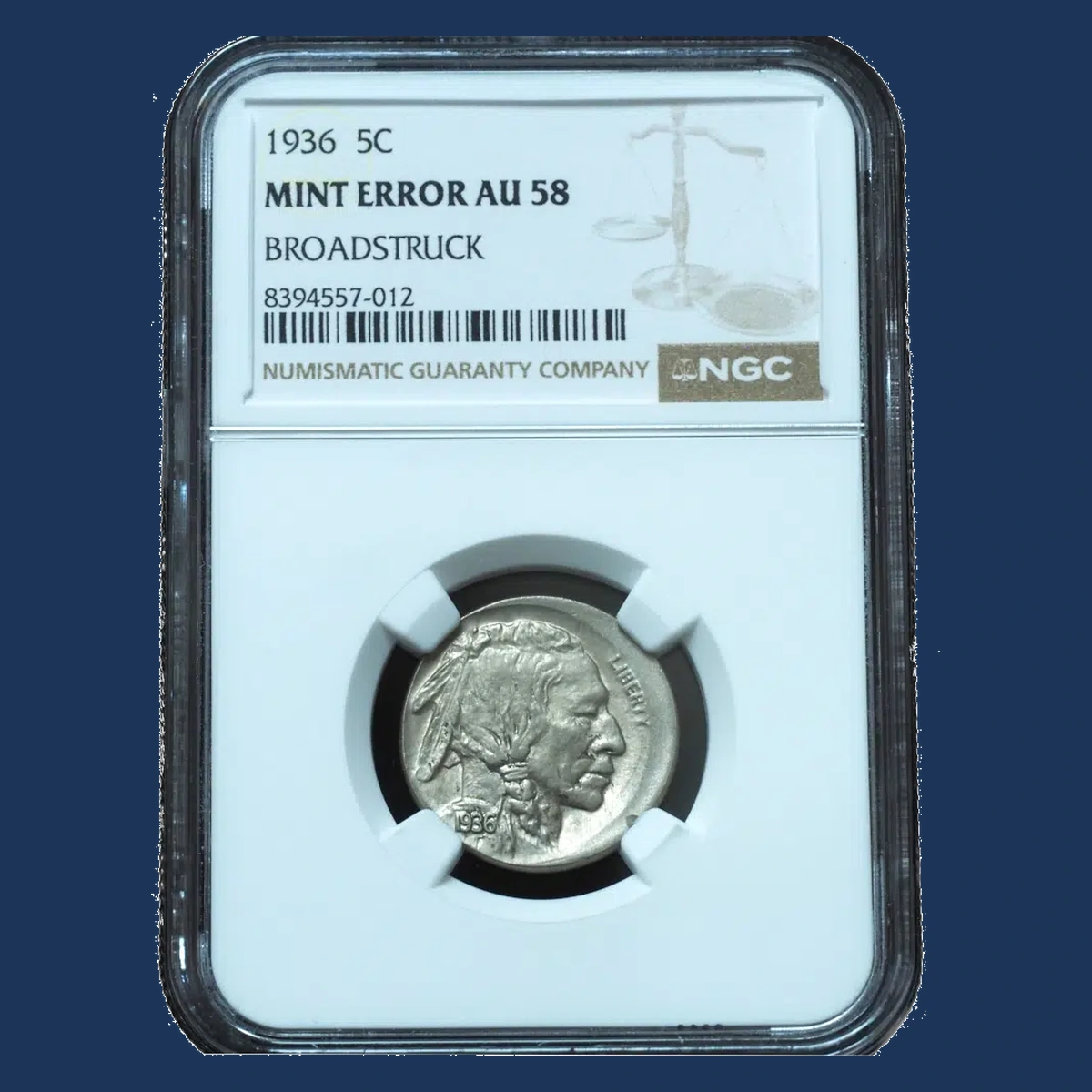
A wide, uneven border can form when a nickel is struck without normal restraint around its edge. The restraining ring is called the collar, and this kind of outward spread is a broadstrike.
A collector’s graded 1936 example is described as an uncentered broadstrike in MS64 condition. Its design is displaced within the expanded outline, which can make the border look lopsided.
That differs from an off-center strike where part of the intended design misses the blank. The distinction rests on what was struck, rather than whether the rim looks perfectly even.
Estimated Value
Estimate roughly $100–$300 for worn or less dramatic examples and $300–$900 for attractive broadstrikes with strong detail. The recorded MS64 display does not give a completed sale for that specific coin.
A 1999-P Jefferson broadstrike sold for $89 in March 2025. It is a later-design comparison at a modest price, not a direct valuation of an older Buffalo example.
The size of the natural spread and preservation of the full design influence the premium.
How to Identify
Measure the widest and narrowest dimensions with calipers, using 21.2 mm as the normal diameter. A scale should usually remain near 5 grams because outward spreading does not remove metal.
Next trace the outer lettering on both faces. An uneven unused border can surround a complete design, whereas an off-center strike loses some intended detail beyond the blank.
Use a 10× magnifier to inspect the plain edge for file marks or evidence of later flattening.
Check that the buffalo and portrait were not crushed along with the rim. A full design on naturally spread metal supports a broadstrike more strongly than a wide, damaged-looking border alone.
7. 1936 Buffalo Nickel Off-Center Strike
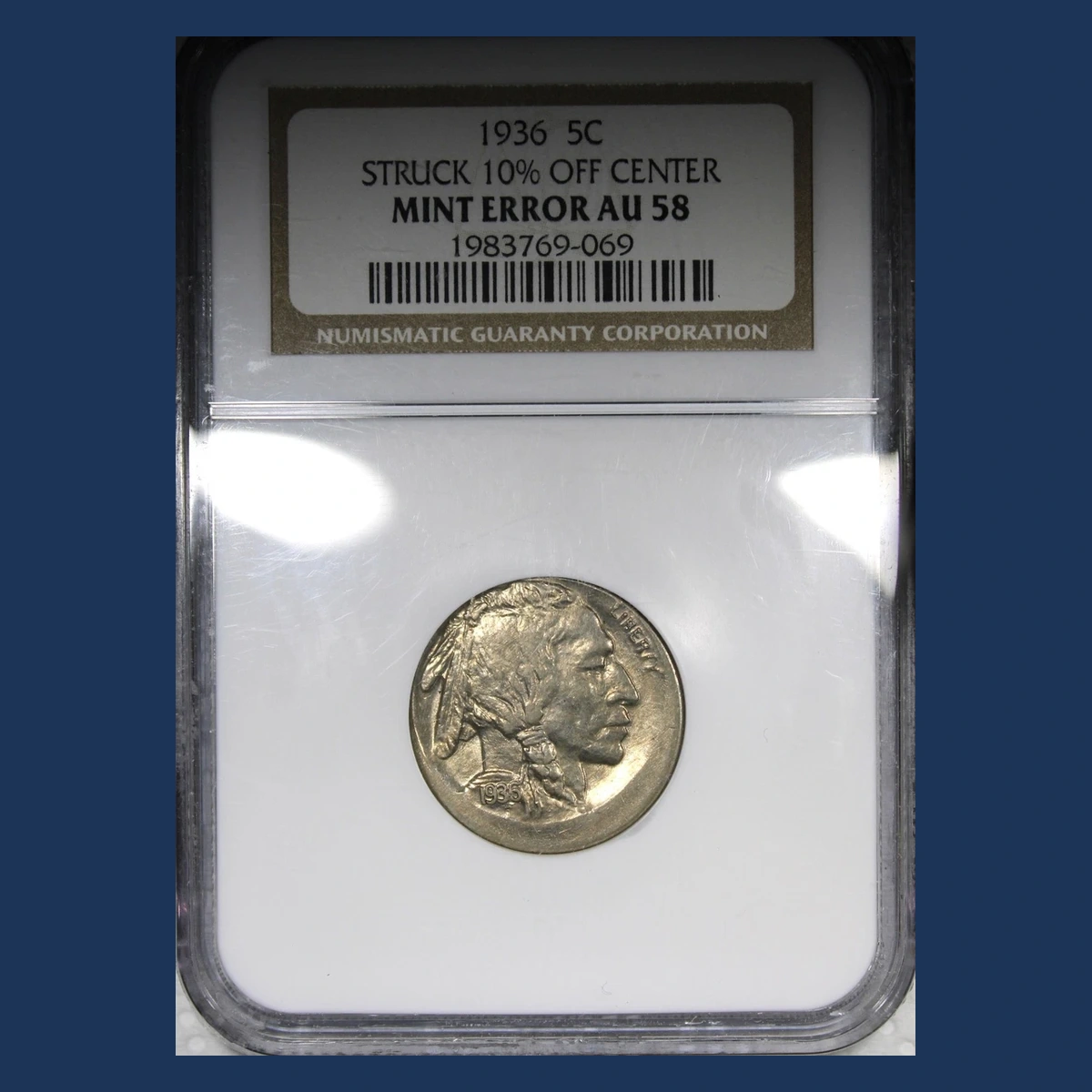
A blank crescent can remain when the coin’s metal disc is partly outside the intended striking position. Some of the design then falls beyond the opposite edge instead of appearing on the coin.
Recorded examples include a Philadelphia coin graded AU58 and a San Francisco coin graded MS62. The first has light wear, while the second is unworn with noticeable marks.
Their shifts should be judged separately rather than given the same percentage. A readable date and surviving mintmark help identify an error that might otherwise be only a partly struck Buffalo nickel.
Estimated Value
An estimated $75–$300 suits modest examples, while attractive coins with stronger shifts may reach $300–$1,200. Neither recorded collector-display coin receives a claimed individual sale here.
For comparison, a 1939 Jefferson nickel struck 10% off center sold for $252 in March 2021. Its different design and specific percentage belong to that later coin.
Deep scratches, heavy wear, or a missing year can lower interest even when the off-center strike itself is genuine.
How to Identify
Find the surviving date before studying the blank crescent. On a claimed San Francisco example, also locate the S below FIVE CENTS rather than assuming a mint from its appearance.
Turn the coin over while keeping track of the unstruck area. Both faces should fit the same misplaced blank.
A 10× magnifier can reveal the natural transition from unused metal to struck design. Watch for grinding scratches that would make an originally struck area look empty.
Use a scale against 5 grams and calipers against the normal 21.2 mm outline. The shape may spread, but the edge should remain plain without later cutting.
Missing outer design opposite solid unused metal identifies the shift more clearly than an uneven rim alone.
8. 1936 Buffalo Nickel Flipover Double Strike
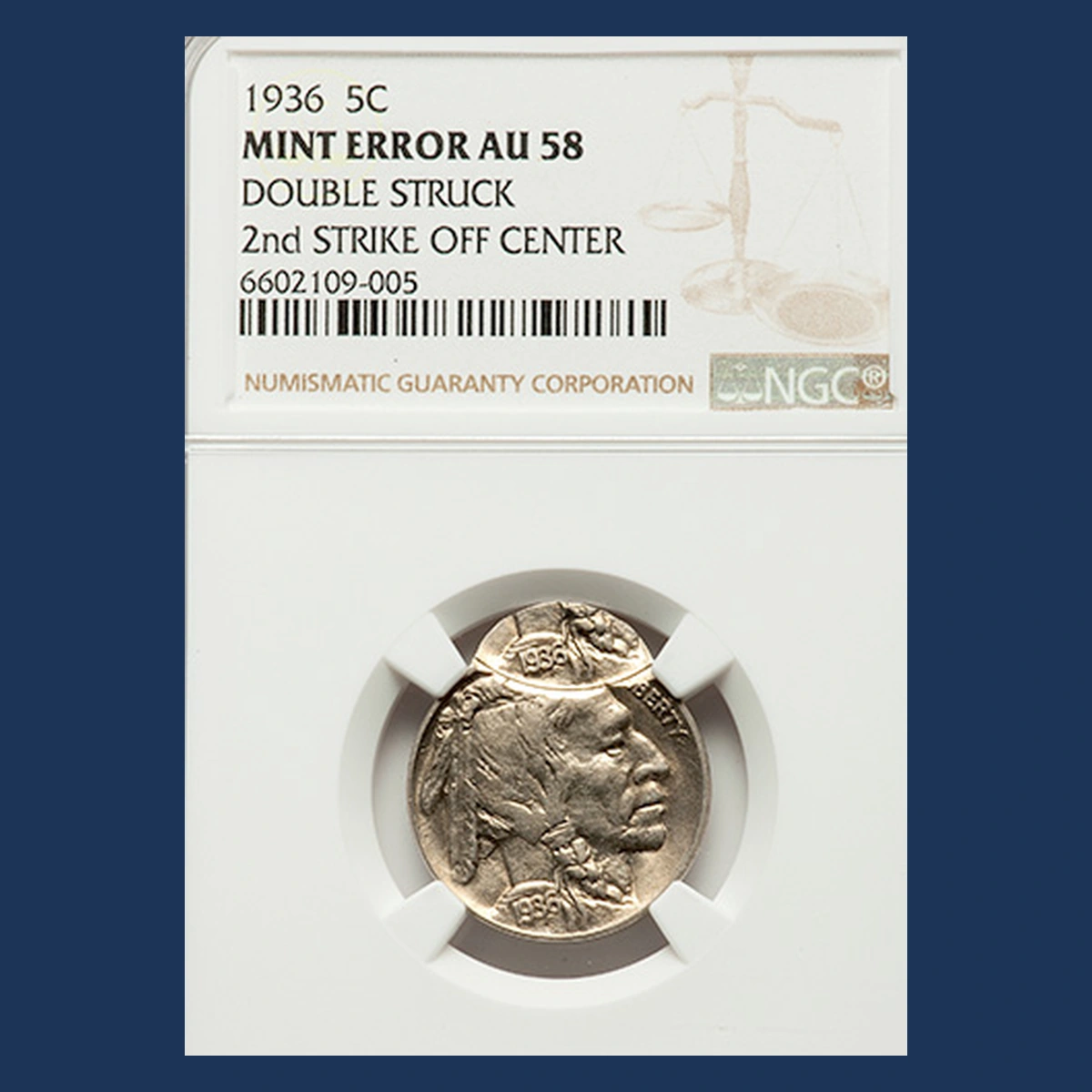
The portrait and buffalo can overlap when a coin flips before receiving another strike. A displayed 1936 example is described as a 50% flipover double strike, producing a much more complex picture than doubled lettering.
Part of an earlier design can survive on the face where the opposite design was later stamped. The shapes must be examined together to understand the sequence.
The collector also describes a later attempt to drill the coin. That hole is damage after minting, not evidence of how the flipover strike occurred or an additional Mint error.
Estimated Value
For a recognizable but worn or damaged example, estimate $300–$1,000. Better-preserved Buffalo flipover strikes with clear overlapping designs may reach an estimated $1,000–$3,000.
The drilled display coin should not receive an undamaged coin’s value. No completed sale is assigned to that piece here.
A 1947 Jefferson flipover strike sold for $216 in March 2023, providing a lower-priced different-design comparison. Its smaller-looking in-collar arrangement differs from this reported 50% Buffalo example.
How to Identify
Ignore the drilled area initially and identify a recognizable piece of each coin design. Under a 10× magnifier, follow portrait or buffalo details where one struck image overlaps the other.
Check both faces together rather than treating a confusing line on one side as proof. A reversed impression pressed into a finished coin can imitate an error without representing another Mint strike.
The normal starting coin weighed 5 grams and measured 21.2 mm. Record the present weight and shape with a scale and calipers, noting that later drilling may remove metal.
Inspect the plain edge for other alterations. Surviving parts of opposite designs crossing on one face, away from the hole, provide the useful flipover evidence.
9. 1936 Buffalo Nickel Struck on the Wrong Blank
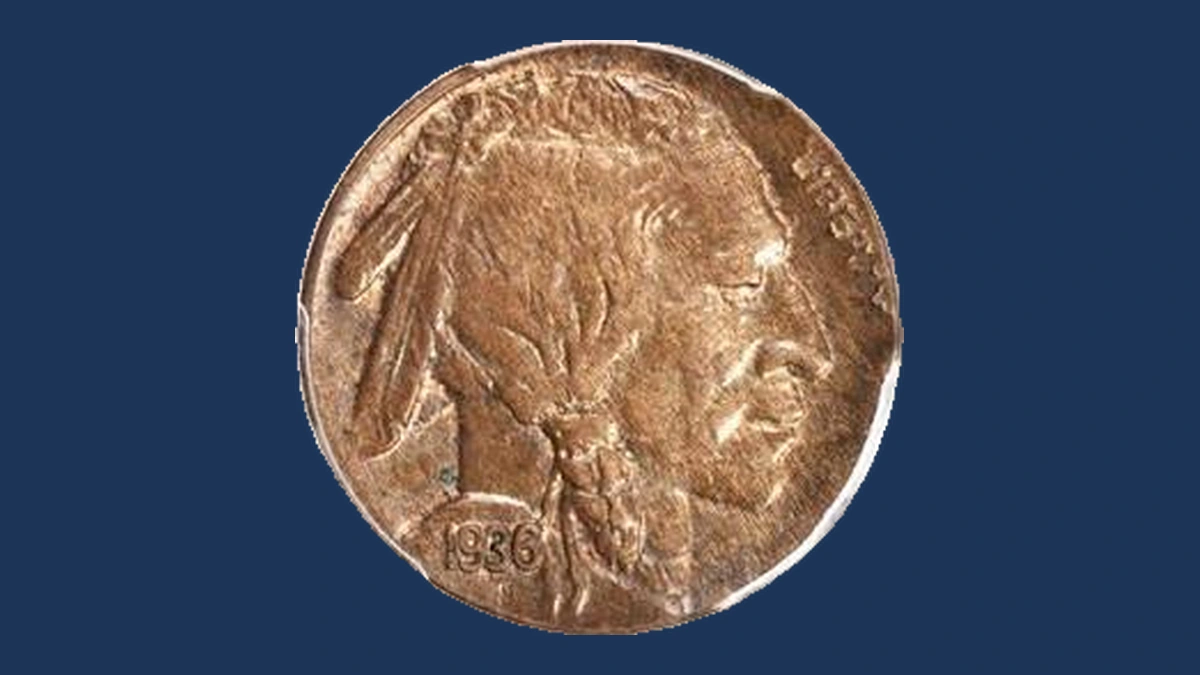
A smaller copper-colored or silver Buffalo nickel can have started on metal intended for another coin. Recorded combinations include an American cent, a Nicaraguan one-centavo, and a silver dime blank.
The AU55 American cent-blank example preserves nearly all the design but not the mintmark area. Its mint cannot be identified just because that area is missing.
The Nicaraguan blank carried nearly a full design in bronze. Separate dime-blank examples include Philadelphia and San Francisco coins; their silver metal and smaller size require their own checks rather than a color-only identification.
Estimated Value
The American cent-blank AU55 sold for $3,290 in June 2017. A Nicaraguan-blank MS62 brought $7,637.50 in November 2015, while a 1936-S dime-blank coin brought a reported $9,775 in January 2011.
Estimate $2,000–$5,000 for typical authenticated American cent-blank examples and $5,000–$12,000 for the scarcer foreign or silver-dime combinations. These are ranges, not additional sales.
The silver example’s cheek damage must remain part of its comparison, even though it carried an MS62 grade.
How to Identify
Begin with weight and dimensions, using a scale and calipers against the nickel’s normal 5 grams and 21.2 mm. American cent and silver-dime blanks started around 3.11 and 2.5 grams respectively, but those are standards rather than measurements of these errors.
Examine naturally cropped or stretched outer letters with a 10× magnifier. A filed-down normal nickel may be small without having the right metal or struck boundary.
Compare the edge with the Buffalo nickel’s usual plain edge, then obtain professional metal identification for a foreign-blank claim.
The American cent example lacks its mintmark area. Identify its blank from the whole coin instead of assigning Philadelphia merely because no mintmark survives.
10. 1936 Buffalo Nickel Denver 3½-Legged Variety
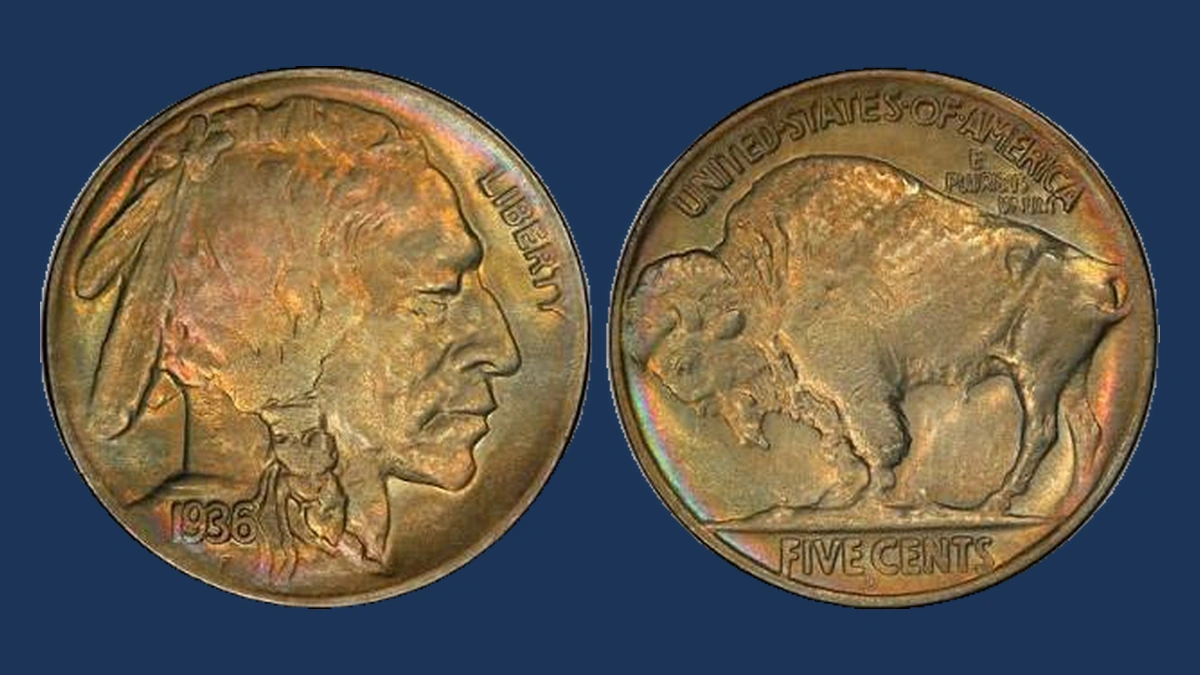
The buffalo’s frontmost leg appears partly erased on the 1936-D 3½ Legs variety. Too much polishing of the stamping tool removed some of the recessed detail that normally forms that raised leg.
Coins struck afterward copied the weakened leg. This happened to the tool before striking, not through somebody rubbing one finished coin.
The famous 1937-D three-legged nickel came from a different tool in a different year. Its appearance should not replace a proper 1936-D comparison, and ordinary wear can make legs faint without creating either collectible variety.
Estimated Value
Identified worn examples can fall around an estimated $500–$3,000, with better circulated coins around $3,000–$8,000. Unworn rarities may reach an estimated $8,000–$25,000.
PCGS records a $20,700 MS63 sale in March 2009. Its FS-901 listing also records $7,500 for an XF45 example in October 2025.
Those different conditions should not be treated as equivalent. A faint leg on an otherwise ordinary worn coin needs identification before these ranges apply.
How to Identify
Confirm the 1936 date and D beneath FIVE CENTS before concentrating on the leg. A 1937-D comparison belongs to a different variety.
Under a 10× magnifier, compare the partly weakened frontmost leg with photographs of an authenticated 1936-D example. Study the adjoining buffalo detail as well, because heavy overall wear can erase several features together.
Look for scraping lines or an unnaturally hollowed surface where somebody could have removed the leg later.
A scale and calipers should show approximately 5 grams and 21.2 mm, with a plain edge. Normal measurements do not prove the variety.
The particular partially missing leg on an otherwise matching 1936-D design is the feature to confirm, rather than a generic three-legged appearance.
Conclusion
Not every faint leg is the 1936-D variety, and not every brown nickel was struck on a cent blank. Compare the date, mintmark, shape, and specific altered detail before making either claim.
Estimated values here range from $5 to $25,000. Keep later damage separate from Mint mistakes, use the appropriate comparison for each blank type, and preserve the surface while checking a coin’s weight and dimensions.