1949 Nickel Error List with Pictures

The $32,900 June 2014 record for a 1949-D/S nickel involved more than an unusual mint mark. The coin also had exceptional surfaces and sharply defined Monticello steps.
This 1949 nickel error list includes that variety alongside split metal, shifted strikes, and smaller tool flaws. Estimated values stretch from $5–$35,000, with the top end reserved for exceptional D/S examples.
Compare the visible features below to place your coin in the right group.
1. 1949 Jefferson Nickel Die Cracks and Breaks
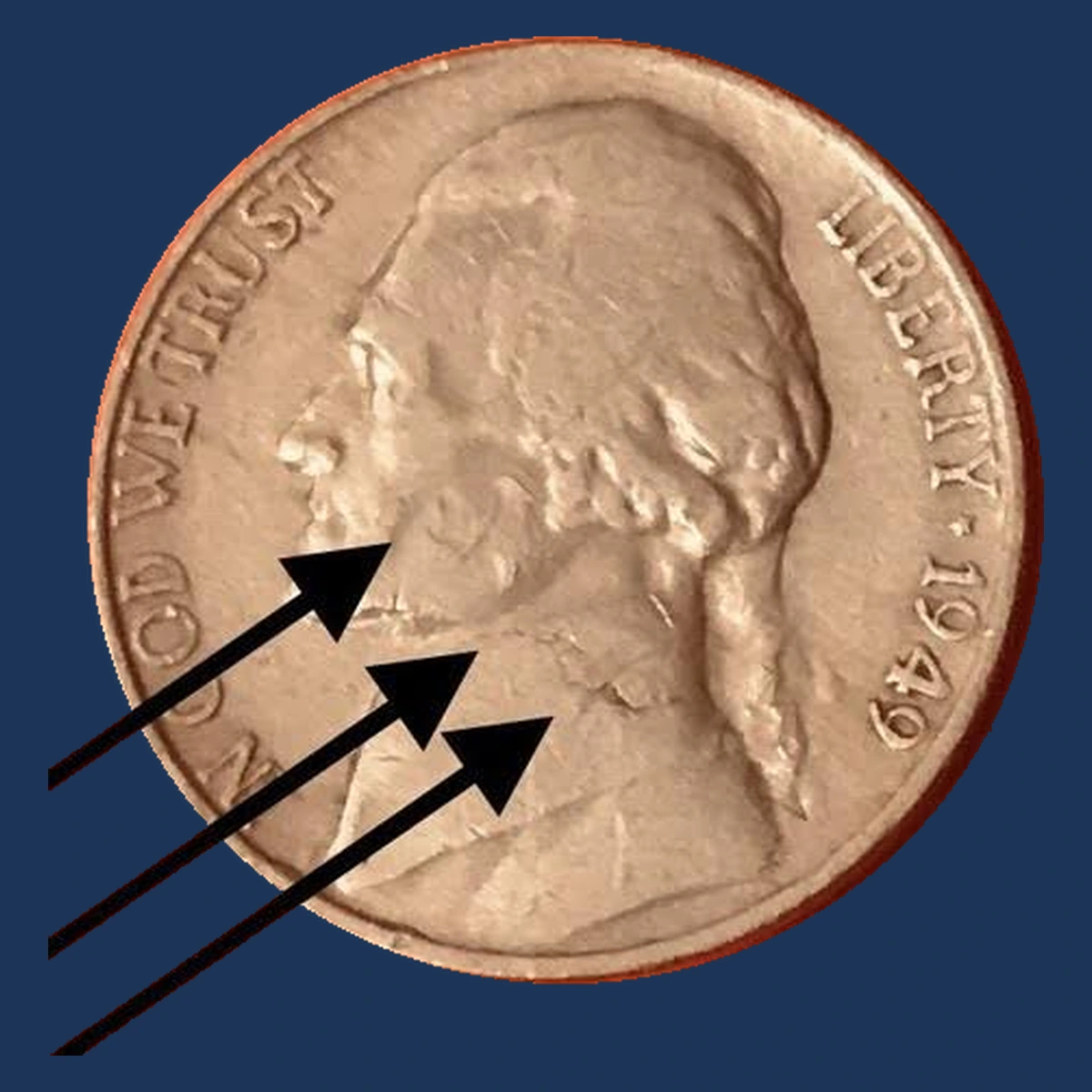
A raised line can form where the steel stamping tool, called a die, develops a crack. Metal pressed into that opening leaves a ridge on the coin.
A small missing piece of the tool can produce a wider raised area instead. Both features differ from a scratch that cuts into the finished surface.
A 1949 error list reports die breaks without identifying a specific mint or location. The shape on each coin must therefore be examined directly, rather than assigned a rim cud or a named crack pattern from the year alone.
Estimated Value
Confirmed modest cracks and small breaks are estimated at $5–$100. Size, clarity, and original surfaces help separate an interesting raised feature from an insignificant mark.
No individual 1949 sale is assigned to the broad year-list report. This estimate applies to a genuine feature copied from a damaged stamping tool.
Solder, dirt, and the pushed-up border of a later scratch do not earn that value simply because they stand above the surface.
How to Identify
Hold the coin under a low light and inspect the line’s center with a 10× magnifier. A die crack rises in the middle, while a scratch can have a sunken middle between raised edges.
For a larger patch, check how it meets nearby design and the rim. A lump alone does not establish a rim-connected cud.
Compare a loose coin with the usual 5.00 g and 21.21 mm using a scale and calipers. Inspect the plain edge for impacts that could have pushed metal across the surface.
Trace the raised area without scraping it. Its continuity with the original coin metal matters more than an eye-catching outline.
2. 1949 Jefferson Nickel Die Clash
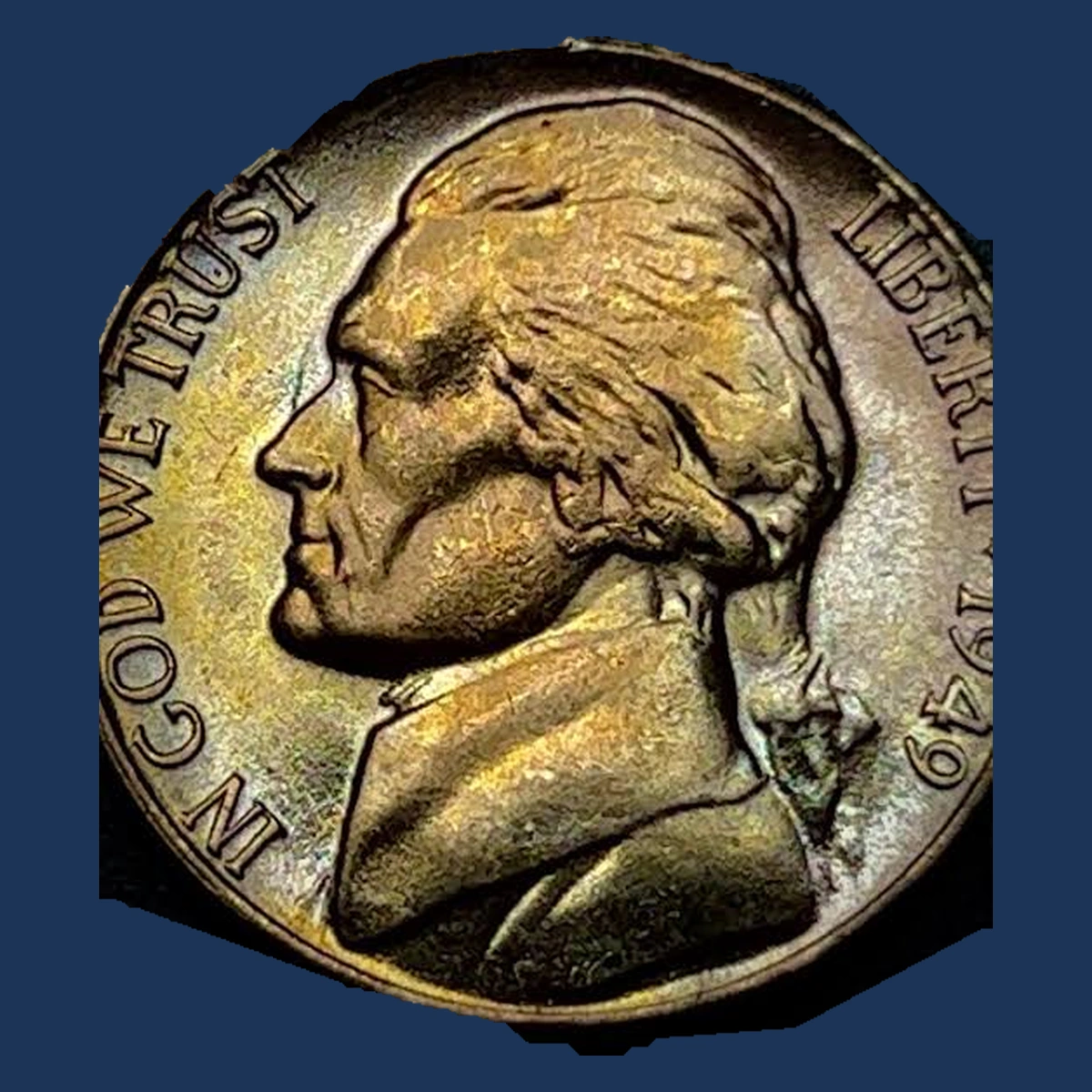
A line near the final O of MONTICELLO can record a collision between the two stamping tools. With no blank between them, one tool can leave part of its design on the other.
Later coins copy that transferred mark along with their normal image. This is called a die clash.
A Denver doubled-die listing records such a mark near the second O in MONTICELLO. The clash and doubled lettering can occur on the same coin, but they explain different visible features.
A random line near the word is not enough to establish the match.
Estimated Value
For a clear matching clash on a 1949-D nickel, estimate $15–$125. Visibility and condition influence the price, especially when the extra line is easy to distinguish from scratches.
This is an estimate for the recorded feature, not a separate auction price for the cataloged coin. If the same nickel also has doubled lettering, assess the combined object once rather than adding two full coin values as though two specimens were being sold.
How to Identify
The final O of MONTICELLO is the useful starting point. Compare that area with the Denver catalog photograph instead of searching for any vaguely portrait-like line on the back.
Under a 10× magnifier, follow the mark across the surrounding design and move the light to reveal its shape. A cut or an unrelated raised crack needs a different explanation from a transferred piece of the opposite design.
A scale and calipers should find about 5.00 g and 21.21 mm on a loose ordinary coin. Those readings cannot prove a clash; the specific line beside the final O must match the recorded pattern.
3. 1949 Jefferson Nickel Clipped Blank
Part of a nickel can be absent before the press stamps the design. The machine cutting blanks may overlap a previous hole or reach an incomplete section of the metal strip.
The remaining blank is struck with its gap already present. Nearby letters and rim details can weaken as the metal moves toward the opening.
Clipped blanks appear in a 1949 year guide without one fixed mint or size. A missing chunk alone does not prove the cause, because cutting and other damage after striking can also leave an incomplete outline.
Estimated Value
An estimated $20–$200 covers genuine clips with different sizes and conditions. A readable date and an undamaged boundary help make the error easier to assess.
The published 1949 clip report does not provide a particular sale to assign to every opening. Larger missing areas can attract attention, but sharp tool cuts do not qualify.
An extreme gap that removes the coin’s identity may be less useful than a smaller, clear example with a readable date.
How to Identify
Look at the struck rim on both sides of the gap with a 10× magnifier. Its shape and nearby lettering should fit an opening that existed before the design was stamped.
A weak opposite rim can support a genuine clip, but its absence does not automatically rule one out. Saw grooves and file marks are more direct warnings of later removal.
Use a digital scale to record the weight below the normal 5.00 g. Calipers can compare the intact outline with 21.21 mm without measuring only across the missing section.
Follow the metal into the opening. A naturally weakened struck boundary is better evidence than the shape of the gap alone.
4. 1949 Jefferson Nickel Doubled Die
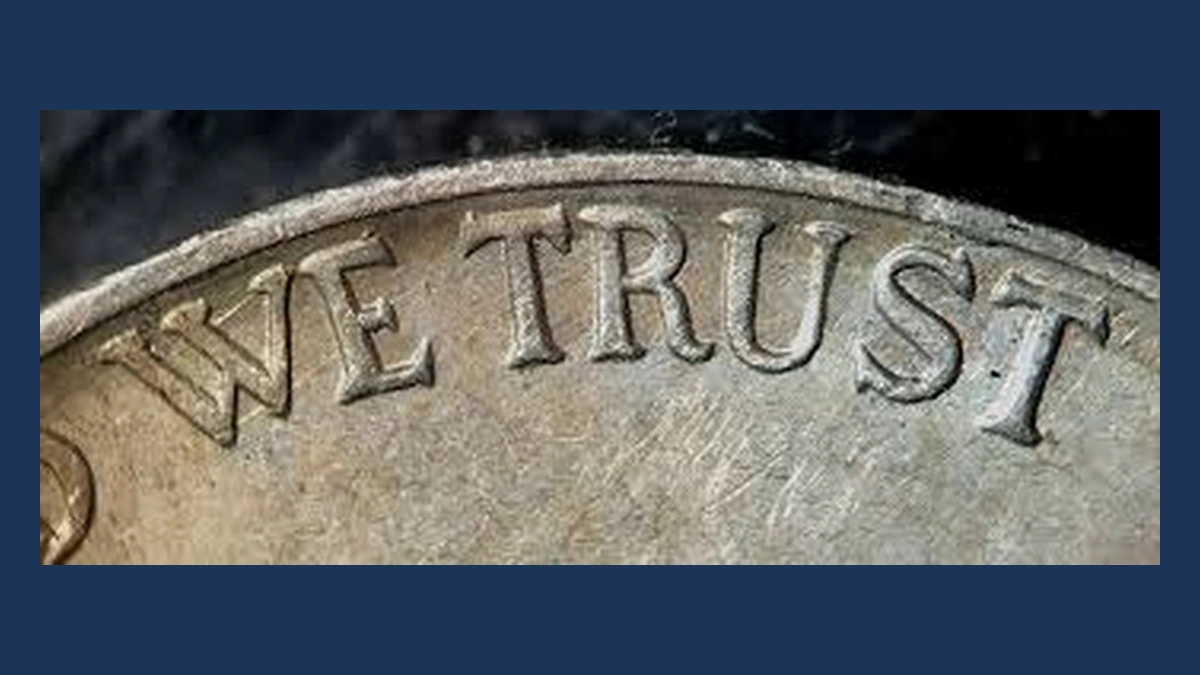
Two close raised outlines can appear around a letter or digit. The stamping tool carried the doubled image, so it could reproduce the same pattern on many coins.
Listed 1949 front varieties include Philadelphia and San Francisco examples. Back varieties are recorded for all three mints, with lettering and parts of Monticello among the affected areas.
A Denver example also has extra detail near the right side of the steps. These locations belong to particular patterns, not to every thick-looking 1949 nickel.
No Proof nickels were issued for 1949, so a bright surface does not identify a Proof variety.
Estimated Value
Minor identified doubled dies are estimated at $10–$250. Strong, clearly separated outlines on a well-preserved coin suit higher comparisons than barely visible thickening.
The range does not assign an auction record to each catalog pattern. A generally soft building or worn-tool lettering should not receive a premium without the matching raised detail.
Flat shelves from movement during striking also need a different explanation. Compare the correct location on a coin from the same mint.
How to Identify
Choose the mint before selecting an image from Brian’s catalog. A missing mint letter indicates Philadelphia, while D and S are beside Monticello on the back.
For a loose coin, normal checks are 5.00 g and 21.21 mm with a scale and calipers. Those measurements can rule out some altered pieces but cannot name a doubled die.
Use a 10× magnifier on the exact letters or step detail shown in the comparison. Follow rounded repeated edges instead of treating a low flat shelf as a second raised stroke.
A regular bright coin is still a regular coin. The extra outline must match the cataloged shape, not simply reflect more light.
5. 1949 Jefferson Nickel Lamination and a Complete Split
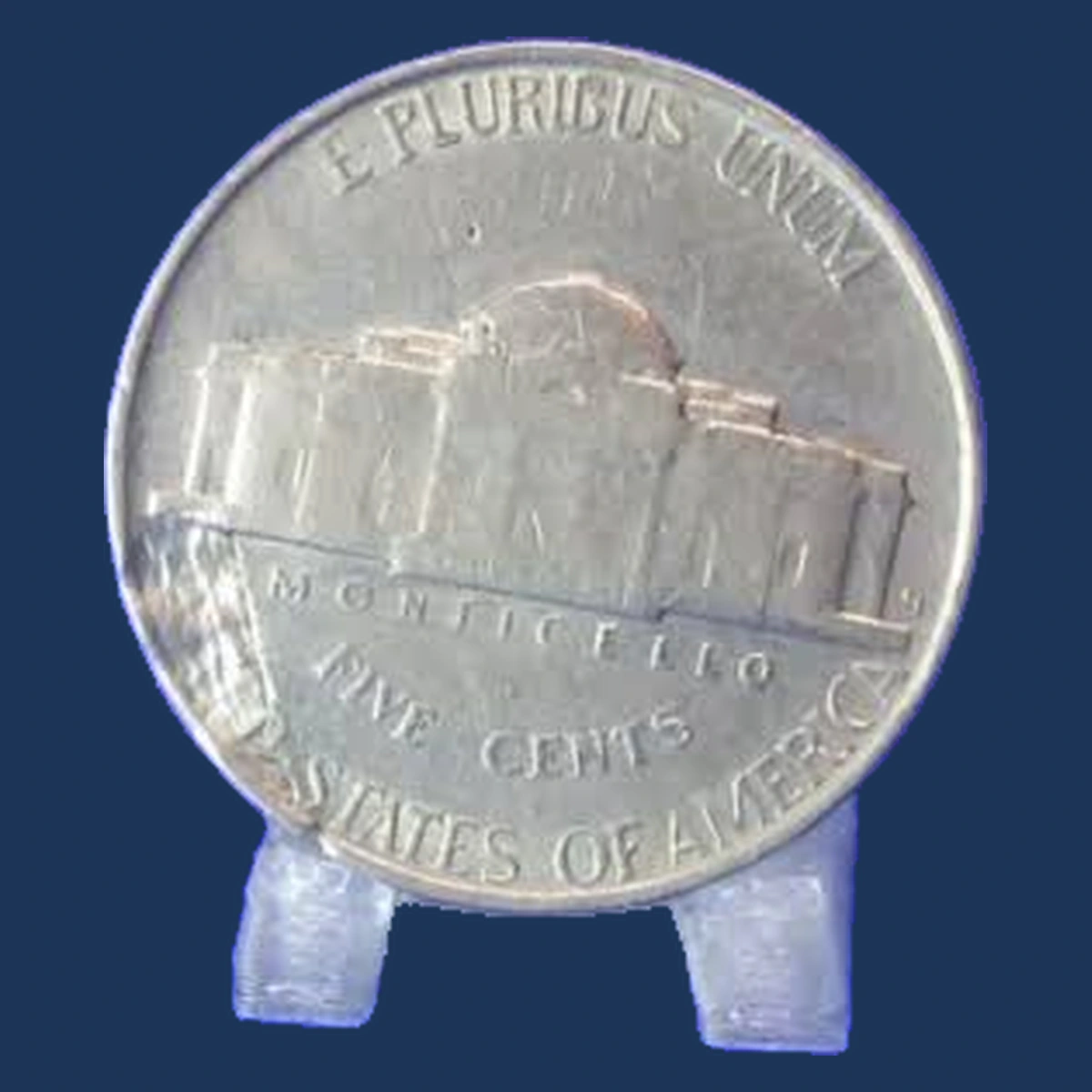
A weakness inside the metal can separate a small patch or divide the coin through its thickness. A surface separation is commonly called lamination.
A published 1949-S example has a diagonal lamination across Jefferson’s portrait. Another, Philadelphia, nickel split into two thin discs after it had already circulated.
One disc retained the front design, and the other retained the back. They are matching halves of the same original nickel, not two coins struck separately on thin blanks.
The inside surfaces and the worn outside designs help explain when that larger split happened.
Estimated Value
The matching Philadelphia halves sold together for $114 in April 2020. PCGS graded the front Fine15 and the back VF20, reflecting different amounts of visible detail on the circulated faces.
Estimate $15–$100 for a clear surface lamination and $75–$300 for a comparable identified matching split pair. The pair’s value is one total, and a single separated half should not automatically inherit the same price as both together.
How to Identify
For the split pair, set the halves beside each other without rubbing their inner surfaces together. One should carry the original front and the other the original back.
Inspect their edges and exposed interiors with a 10× magnifier. They should explain a single coin separating, rather than two discs freshly sawn from unrelated pieces.
A complete nickel originally weighs 5.00 g and measures 21.21 mm. A scale and calipers can record each loose half, but neither half should be required to weigh the full amount.
The San Francisco lamination is a different size of separation. Follow its diagonal portrait boundary and leave any attached metal undisturbed.
6. 1949 Jefferson Nickel Broadstrike
A broadstrike spreads beyond the normal outline because the edge-holding collar does not contain the blank properly. The metal expands outward while the tools stamp both faces.
A Denver example graded NGC MS62 appears in an auction-price listing. That grade describes a coin without circulation wear but with noticeable marks.
The design should still fit on the expanded metal. If part of the image misses the blank, an off-center strike may explain the shape instead.
Ordinary hammering can also widen a nickel, but usually leaves crushed details or repeated impacts on the finished design.
Estimated Value
The auction-price listing records $120 in April 2020 for the NGC MS62 Denver broadstrike. Comparable genuine examples are estimated at $75–$400.
The amount of spreading, completeness of the design, and surface condition all affect the comparison. A wide border alone is not enough to justify the range.
An ordinary high-grade Denver nickel also has a different price basis. Its sale does not establish the error value of a broadstrike with different surfaces.
How to Identify
Read the outside words on both faces first. A genuine broadstrike keeps them on the metal even when the border becomes wide or uneven.
Calipers should compare the expanded outline with 21.21 mm. A scale normally remains near 5.00 g because spreading alone does not remove metal.
Examine Jefferson and Monticello under a 10× magnifier. Crushed high points or repeated hammer marks can explain widening after the coin was made.
The normal edge is plain. Having no grooves is therefore not a special clue.
Full lettering alongside naturally spread metal is the relationship to look for. A border that simply appears wide does not establish it by itself.
7. 1949 Jefferson Nickel Double Strike with Separate Indent Examples
Two strikes can leave overlapping portraits or letters far apart on one coin. A Philadelphia example received its second strike 75% off center and was graded PCGS AU55.
A separate Denver report combines double striking with two indents. An indent is a depression made when another blank blocks part of the design during the blow.
The Denver description does not establish where those depressions lie. It should not be illustrated by borrowing the Philadelphia coin’s second-strike position.
An old auction may abbreviate double struck as D/S, which is different from the D-over-S mint-mark variety.
Estimated Value
The Philadelphia AU55 double strike sold for $460 in June 2008. AU55 means a lightly circulated coin that still retains much of its design.
Estimate $150–$900 for comparable repeated strikes and identified indent combinations. The price depends on how clearly the images and depressions explain the sequence.
The separate Denver compound example is one coin. Its indents should not receive additional full coin prices on top of the double-strike value.
How to Identify
Inspect the front design before studying the mint mark. Widely displaced portraits or dates suggest separate blows, whereas D-over-S concerns a small letter on the back.
With a 10× magnifier, follow where a later impression crosses an earlier one. On an indent combination, examine the depression for interrupted design rather than assuming it is an ordinary dent.
A digital scale and calipers can record a loose example against 5.00 g and 21.21 mm. Metal may spread during the second strike, but the linked overlapping designs are the evidence for repeated striking; the letters D/S in a title cannot establish which error is present.
8. 1949 Jefferson Nickel Off-Center Strike
An off-center nickel keeps unused metal beside a design that partly misses the blank. A 1949-S example was struck 10% off center and graded NGC MS66.
A separate Denver report describes a 10% shift toward 4 o’clock. A collector’s Philadelphia listing describes a 25% shift.
The three examples should not share one percentage or direction in a comparison. Each has its own position in the press and its own condition.
The high MS66 grade of the San Francisco coin indicates no circulation wear and very few marks, which can influence its price alongside the error.
Estimated Value
The San Francisco 10% example brought $690 in September 2010. Estimate about $100–$1,000 for comparable dated off-center nickels, allowing for mint, preservation, and how much identity remains.
The recorded result belongs to a high-grade S coin. It does not automatically price the Denver 10% or the collector’s Philadelphia 25% example, and a larger shift can remove useful identifying details instead of making a coin more desirable.
How to Identify
Find the surviving date, then check beside Monticello for the mint letter. An S example should not receive the direction described for the separate Denver coin.
Examine both faces with a 10× magnifier. The unused metal and cut-off design should fit the same shifted blow.
A slightly uneven rim confined to one side can have a different cause. Look beyond border width.
Weigh a loose piece against 5.00 g and compare its outline with 21.21 mm using calipers. The unused crescent contains metal, so an off-center strike does not require weight loss.
The useful boundary is where the original design runs off the blank beside its untouched surface.
9. 1949 Jefferson Nickel Struck on a Cent Blank
A smaller copper-alloy blank can receive the nickel design when it enters the wrong press. The recorded Philadelphia example was graded PCGS MS61 Brown.
Its LIBERTY remains normal, but the date stretches slightly and IN GOD is missing. Only part of WE TRUST and much less of E PLURIBUS fit on the metal.
Those details explain more than its brown color alone. A coating can change color without reproducing the same incomplete design.
Philadelphia nickels of this year have no P on the coin; a P in a grading description names the mint rather than an added letter.
Estimated Value
The PCGS MS61 Brown cent-blank nickel sold for $660 in September 2019. MS61 describes an unworn coin with noticeable surface marks, and Brown describes its copper color.
Comparable identified cent-blank strikes are estimated at $300–$1,200. A readable year and natural cut-off design help establish the coin, while cleaning or damage can reduce appeal.
That estimate does not apply to a normal nickel merely coated with copper after striking. Color alone cannot establish the blank.
How to Identify
Compare the motto and date with the recorded example. A 10× magnifier should show how the smaller piece of metal cuts off lettering without fresh trimming marks.
A period cent blank normally starts near 3.11 g and 19.05 mm. These are comparison standards, not a measured weight supplied for this particular 1949 coin.
Use a digital scale and calipers on a loose candidate. The normal nickel is heavier and wider at 5.00 g and 21.21 mm, although striking can spread the smaller blank.
Check the edge for plating or cutting. Lower weight, copper metal, and naturally incomplete nickel lettering should support the same explanation rather than color being the only clue.
10. 1949 Jefferson Nickel Repunched and D-over-S Mint Marks
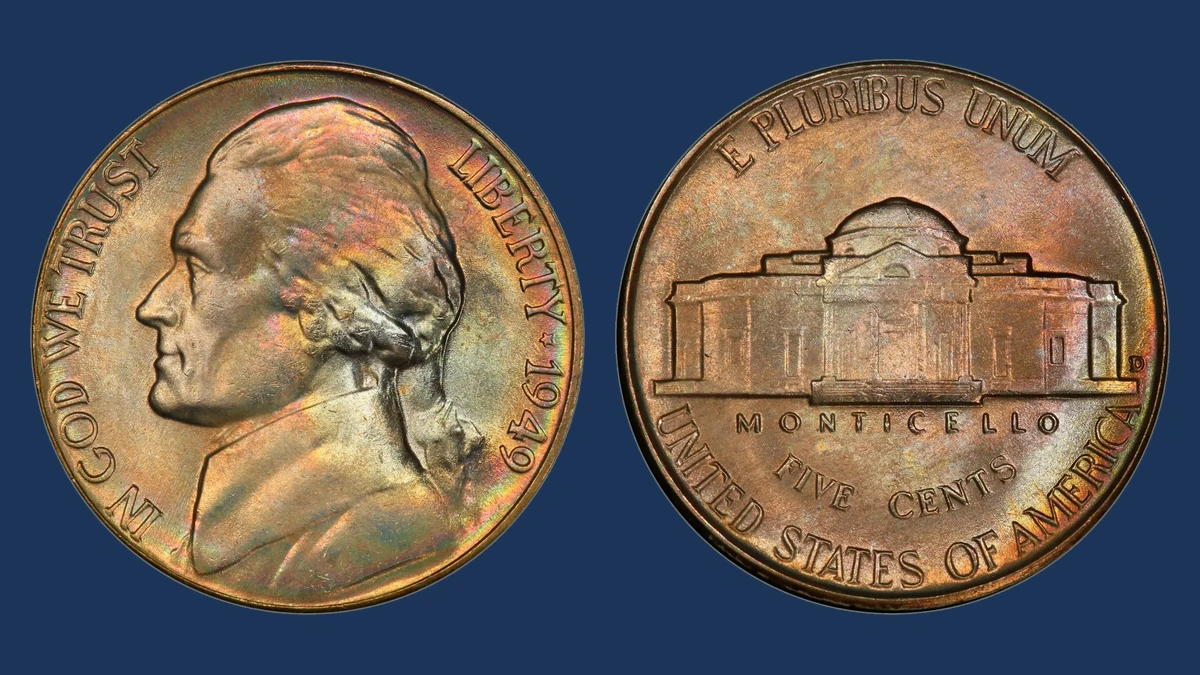
The famous D/S variety shows remnants of an S beneath the stronger D. A different mint letter was punched over an earlier impression in the stamping tool.
Other 1949 varieties repeat the same letter instead, producing D/D or S/S details. All belong at the small mint-mark position to the right of Monticello.
The D/S variety is especially popular, but its highest-priced coins also have exceptional surfaces and sharply defined steps. Full Steps describes that stair detail, not another minting mistake.
A low flat shelf beside a letter can come from movement during striking instead.
Estimated Value
PCGS records $32,900 in June 2014 for an MS67 Full Steps D/S. Estimate $30–$3,000 for more typical identified D/S examples, with exceptional high-grade Full Steps pieces potentially around $10,000–$35,000.
Ordinary D/D or S/S repunching may fit $5–$100. The auction record concerns an outstanding complete coin; it is not the premium for any small extra stroke beside a worn mint mark.
How to Identify
The S remnant beneath a D is the important shape on a D/S coin. Do not substitute a thick D or an extra D curve for that different letter.
Under a 10× magnifier, inspect the mark’s inside and outside edges. Same-letter repunching needs its own matching D/D or S/S comparison.
Check Monticello’s steps separately. Full Steps requires well-defined stair lines, and a valuable variety can still lack that designation.
A loose nickel normally weighs 5.00 g and measures 21.21 mm on a scale and calipers. Its edge should be plain.
Move the light to keep glare from hiding the lower letter. The visible S under D identifies the famous variety, rather than the abbreviation in a seller’s title.
Conclusion
The $5–$35,000 estimated range combines modest errors with exceptional D/S nickels. Sharp steps and outstanding preservation helped produce the record price, so an ordinary worn example belongs in a different comparison.
Check whether the extra feature comes from the stamping tool, missing metal, or another strike. Keep a matching split pair together, and distinguish a small mint letter from a widely shifted second design before choosing a value.