1956 Nickel Error List with Pictures

A nickel design on copper tells a different story from a merely brown nickel. One 3.1-gram 1956 example made on a cent blank sold for $1,495 in August 2010.
Among 1956 Jefferson Nickel errors, the useful clues include weight, repeated lettering, and the way an obstruction changes the design. Estimated values below span $5–$1,500.
Follow the sections to separate those clues, including the difference between a thin coin and a coin struck through another thin blank.
1. 1956 Jefferson Nickel Altered Color from Heating the Blank
A nickel blank is heated before striking to soften its metal. This step is called annealing, and poor conditions can alter its surface color or texture.
The 1956 type is reported without one established mint or finish. A dark or coppery candidate therefore needs examination on its own merits.
Normal nickels contain copper and nickel mixed throughout. They do not have a separate outer nickel layer that can simply peel away to expose copper.
Stains, later heat, and chemicals can produce similar colors. The original surface must support a mint-related change before the coin is treated as this error.
Estimated Value
Use an estimated $15–$150 for a genuine heating error, depending on its appearance and preservation. This range is not a recorded sale of a specific 1956 specimen.
A useful recent comparison is a lightly worn 1960 Philadelphia nickel identified as improperly annealed. It sold for $89 in June 2026.
That comparison concerns another year. A brown nickel with ordinary stains does not inherit the same value, and color without convincing original surfaces cannot support the upper estimate.
How to Identify
If the coin looks copper-colored, first check whether it is actually a normal nickel blank. For a loose piece, compare a scale reading with 5 grams and caliper measurements with 21.2 millimeters, including its plain edge.
A much lighter, smaller object needs a wrong-blank check before a color diagnosis. On a normal-sized piece, use a 10× magnifier to compare protected areas around letters with the open surface and look for coatings or corrosion.
Turn the coin beside an ordinary nickel under neutral light, watching whether original shine survives beneath the unusual shade. Keep those surfaces intact for examination; neither normal measurements nor dark color alone establishes that the Mint’s heating caused the change.
2. 1956 Jefferson Nickel Metal Peeling from the Surface
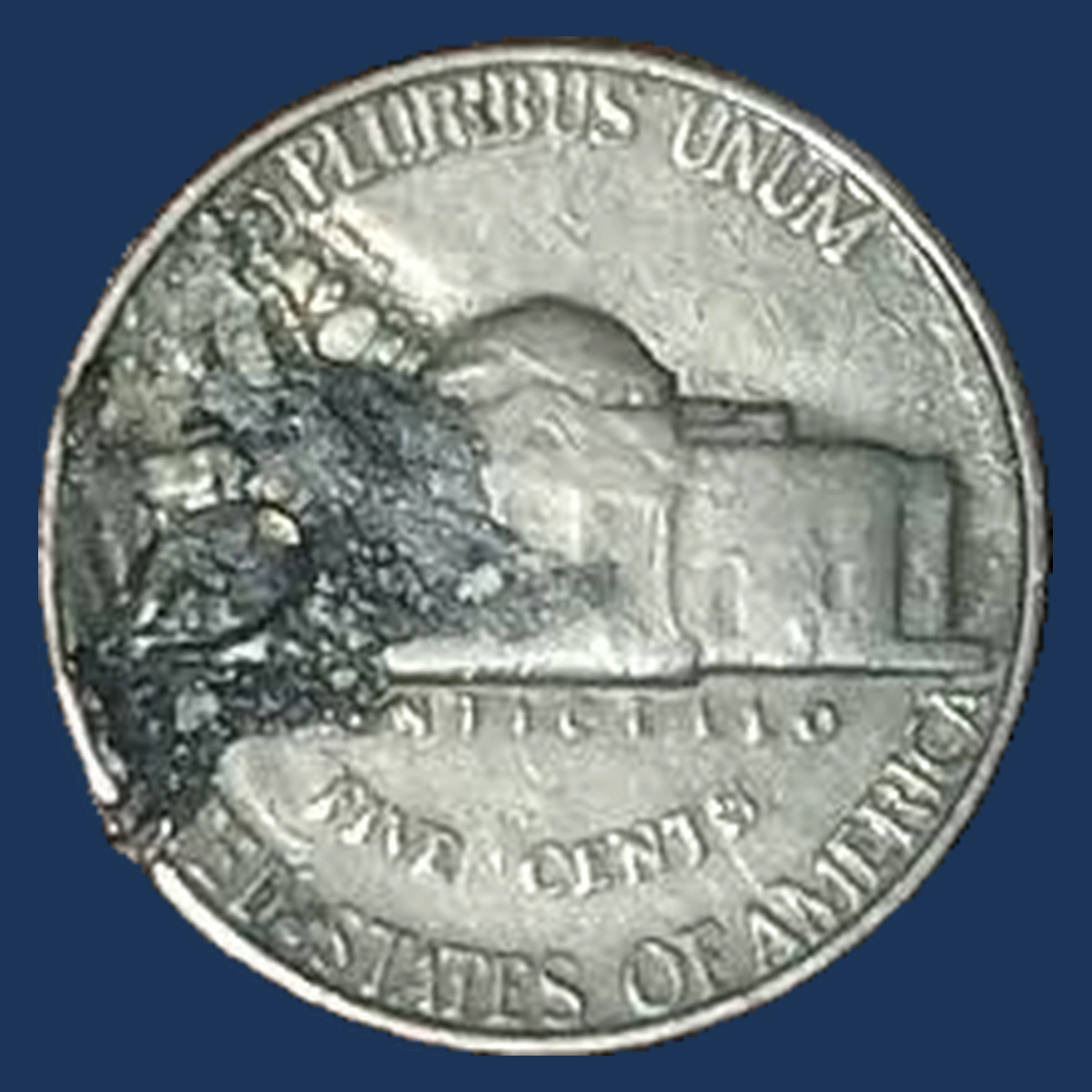
A thin flap may lift away from the coin or leave a shallow rough opening when it falls off. This separation inside the metal is called a lamination.
The 1956-D report describes the type without one verified location on the portrait or building. The actual opening and nearby design must guide identification.
A nickel’s copper and nickel form one alloy throughout the blank. The peeling is therefore not a normal nickel coating separating from a copper core.
Later scraping or corrosion can also remove surface metal. Their boundaries may look similar until the split is viewed closely from the side.
Estimated Value
An estimated $10–$200 covers small genuine separations through larger, attractive flaps. The estimate applies to an original weakness in the metal rather than an ordinary damaged patch.
No specific Denver sale establishes the range for this reported 1956 type. The amount of missing metal, surviving design, and surface condition affect where an example fits.
An attached flap can help explain the error. Removing it may reduce that appeal, so its presence should be documented without pulling or bending it.
How to Identify
Begin with photographs of both faces, keeping the Denver D beside Monticello visible. A general lamination report cannot tell you where a genuine split must appear on your coin.
If metal has gone missing, weigh the loose coin against 5 grams and use calipers across intact spans against 21.2 millimeters. An attached flap may leave the weight almost unchanged.
Now light the opening from the side and inspect it with a 10× magnifier. Follow the thin edge into the surrounding design without lifting it.
Inspect the plain edge if the split reaches the outline. A coating lying on top or a scratched trench through finished letters suggests a different process.
Leave every attached piece in place for examination.
3. 1956 Jefferson Nickel A Second Partial Denver Mintmark
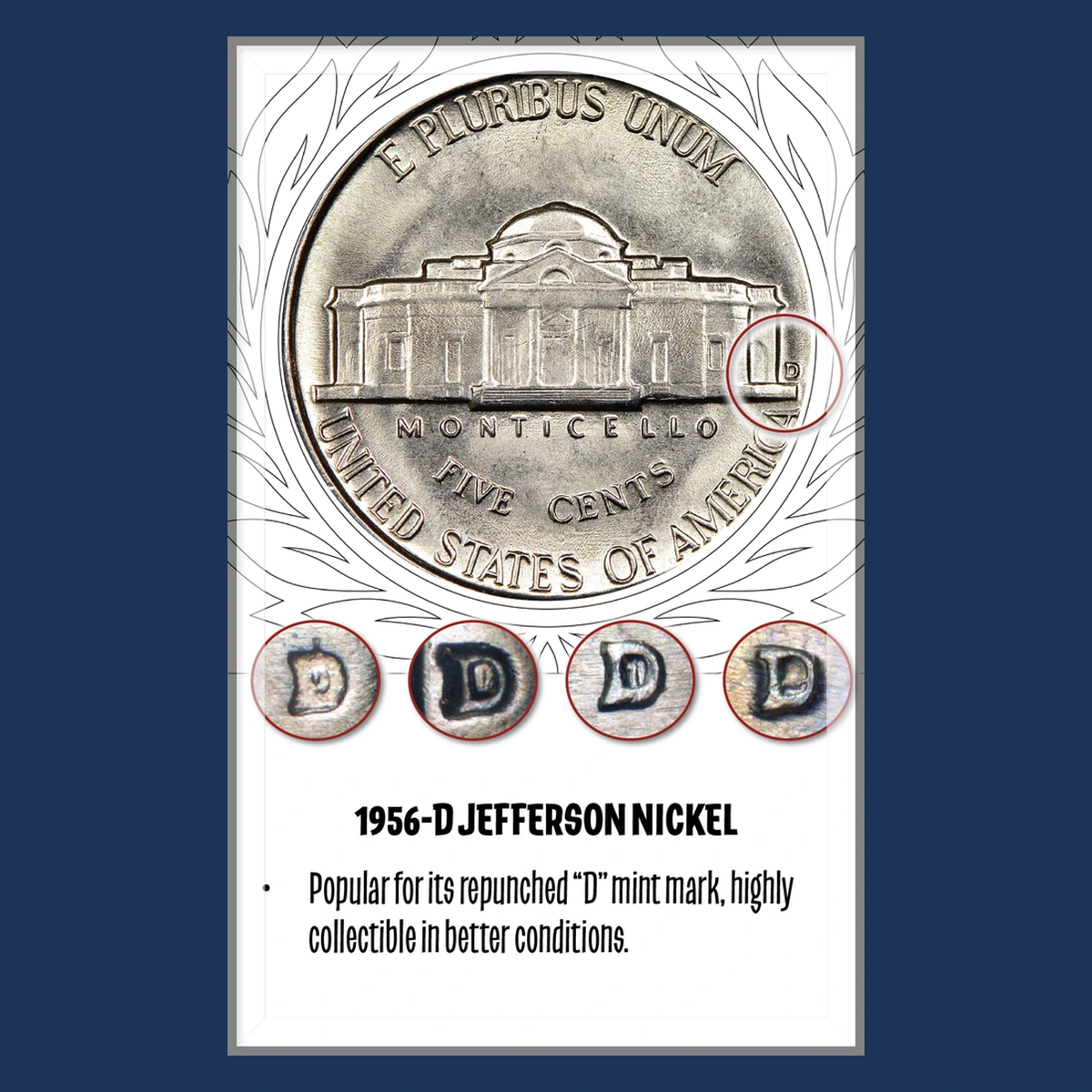
The small Denver D can show part of another D above its main outline. The letter was punched into the steel stamping tool more than once in slightly different positions.
This is called a repunched mintmark. A northward extra punch is reported for 1956-D, but that direction belongs to the described example.
The mark sits to the right of Monticello on the back. Philadelphia coins have no mint letter there.
A shelf caused by movement during striking can make a letter look doubled for another reason. The shape of the secondary outline matters more than the general impression of thickness.
Estimated Value
For a matched 1956-D repunched mintmark, estimate $10–$250. A worn minor example belongs near the lower end, while a strong, attractive unworn piece can bring more.
This is an estimated range, not a known sale assigned to the northward report. The exact variety and condition should guide comparisons.
Sharp steps on Monticello can increase the value of the whole nickel. They do not create another mintmark error, and the full coin price should not be called a D/D premium.
How to Identify
Begin at the right side of Monticello and locate the D. On a loose coin, first record the usual physical checks: 5 grams on a scale, 21.2 millimeters with calipers, and a plain edge.
Now examine above the D through a 10× magnifier. Follow any separate rounded outline back toward the main letter, keeping the whole mintmark in focus.
A flat shelf or a cut in the letter is a reason to compare another explanation. Do not force a northward match onto a shape that projects in a different direction.
Take one photograph showing the mintmark beside the building and another showing the extra outline. A convincing second letter shape is more useful than an isolated bright edge.
4. 1956 Jefferson Nickel Cracks and Raised Breaks from a Damaged Tool
A crack in a stamping tool can leave a line across the coin. Metal enters the opening during the strike and forms a ridge.
If a piece of the tool breaks away, the extra space can instead leave a raised lump. A larger break joined to the rim is called a cud.
Denver examples are reported for 1956, including front-side cracks. The reports do not establish a single photographed line or rim position for every coin.
A later blow can also raise metal beside a dent. The original design and nearby edge help separate that damage from a broken tool.
Estimated Value
Modest original cracks can be estimated at $5–$40. A substantial, well-preserved rim-connected break may fall around $40–$300.
A worn 1983-P nickel with a cud sold for $63 in July 2022, providing a different-year comparison. That does not establish a price for a specific 1956 Denver example.
The size and originality of the raised area matter. A tiny crack and a large missing-tool section should not receive the same price simply because both came from tool damage.
How to Identify
Choose the raised feature and compare it with the same area on a normal 1956-D nickel. A 10× magnifier helps separate an extra ridge from the normal portrait outline.
For a thin line, inspect its center: a scratch may have raised sides around a cut. A tool crack should leave a ridge rather than a freshly cut groove.
For a large patch, follow it to the rim and inspect the plain edge beside it. A dent that displaced metal may explain the lump without a mint error.
For a loose specimen, compare scale and caliper readings with 5 grams and 21.2 millimeters. Photograph the actual position with the date; the general Denver report cannot supply a missing location or shape.
5. 1956 Jefferson Nickel A Nickel Struck on Rolled-Thin Metal
A thin blank may fail to fill the spaces in the stamping tools as fully as a normal one. Its reduced thickness began while the metal strip was being rolled.
An auctioned 1956 Philadelphia nickel was described as struck on a ten-percent rolled-thin blank. PCGS graded it MS64, an unworn grade with some marks.
The description does not give its exact measured weight. Ten percent should not be converted into an assumed measurement for that specific coin.
This is the thin coin itself. It differs from a normal blank struck while another thin blank blocked one stamping tool.
Estimated Value
The ten-percent rolled-thin example sold for $111 in July 2021. Estimate $75–$350 for comparable genuine thin-blank nickels, allowing for surface quality and the clarity of the physical difference.
Weak detail alone does not support the estimate. The reduced thickness must be part of the original blank rather than the result of later grinding.
The auction description is a useful comparison, but its percentage is not a measured weight. Record a candidate’s actual dimensions before placing it in this range.
How to Identify
For a loose candidate, use a scale and calipers before judging the weak design. Record the actual weight, diameter, and accessible edge thickness against a normal 5-gram, 21.2-millimeter nickel.
Do not write down 4.5 grams merely by subtracting ten percent from the standard. The auctioned piece’s measured weight was not supplied.
Examine both faces and the plain edge through a 10× magnifier. Parallel grinding lines, filed edges, or design cut away after striking point toward later thinning.
A coin can also have soft detail because another blank blocked its tool. In that case the obstruction was thin, so confirm which object has the reduced thickness before identifying your own coin.
6. 1956 Jefferson Nickel A Displaced Design with Unused Metal
A blank can arrive under the stamping tools off center. One part receives no design while some intended detail falls beyond the opposite edge.
This produces an unused metal crescent beside the shifted portrait and building. Year guides report the type for both Philadelphia and Denver 1956 nickels.
The reports do not establish a certified example with a particular percentage or clock direction. A general illustration of a fifty-percent shift cannot supply those facts for another coin.
A one-sided uneven border may instead come from a tool being out of position. Both faces need to explain the same displaced blank.
Estimated Value
Allow an estimated $25–$500 for a genuine 1956 off-center nickel with an identifiable year. Modest offsets usually sit lower than dramatic, attractive pieces with the date preserved.
A fifteen-percent 1999-P offset sold for $64 in March 2025. That different-year sale offers a comparison without creating an auction history for the reported 1956 type.
The amount of unused metal is not the only factor. Heavy damage and loss of identifying details can reduce appeal even on a strongly shifted coin.
How to Identify
Compare the empty-looking area on both faces. It must still contain metal, unlike a clip where a section of the blank is missing.
Use a 10× magnifier at the boundary of the strike to see how the design ends. Then photograph the date and the right side of Monticello, including the Denver D if present.
A loose normal-blank nickel should be checked against 5 grams on a scale and 21.2 millimeters with calipers. Inspect the plain edge for filing or trimming that could produce an artificial outline.
Only after those checks estimate the displacement. If the opposite face is normally centered, investigate a shifted stamping tool instead of applying a percentage to the entire coin.
7. 1956 Jefferson Nickel Blocked Designs and Unusual Impressed Texture
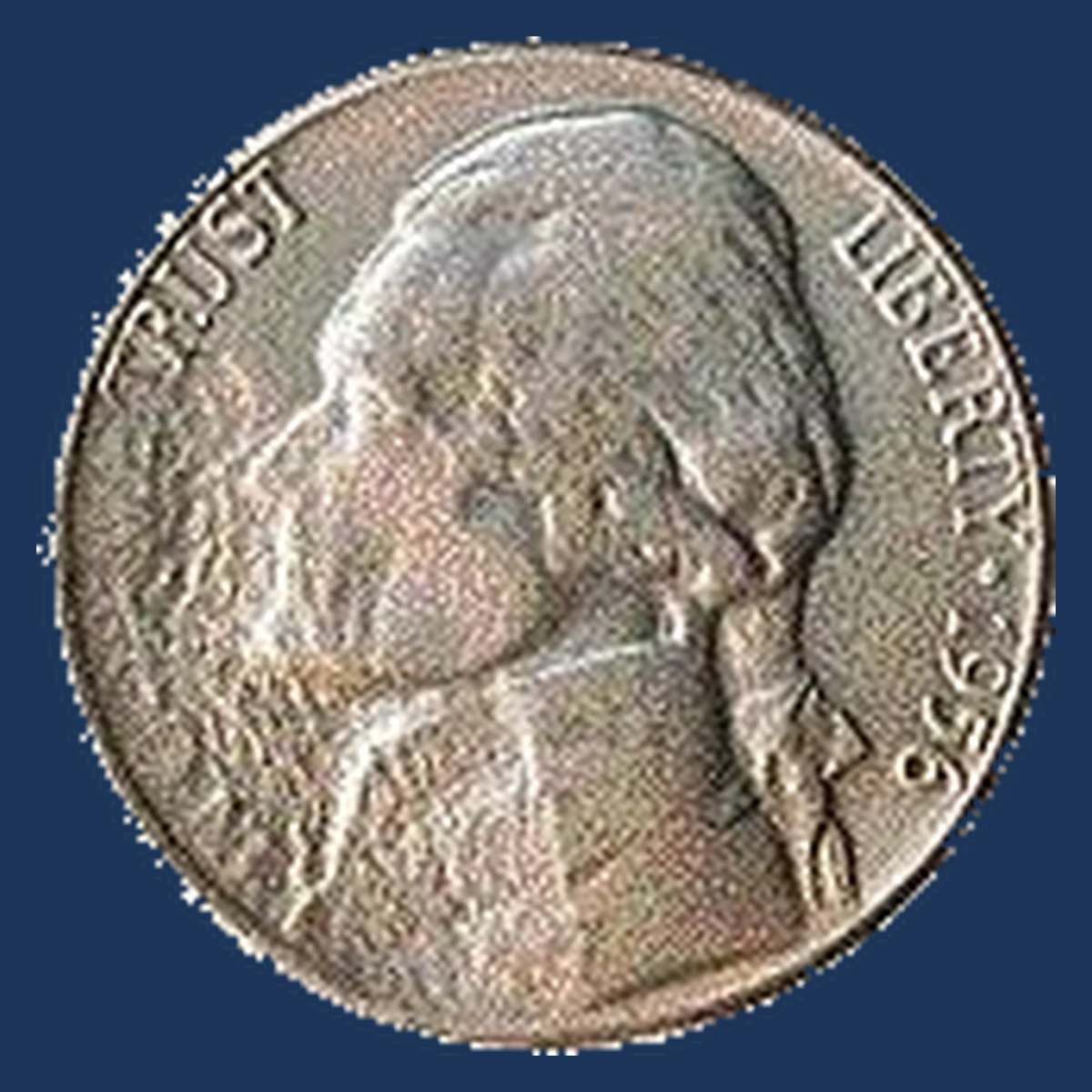
A faint raised Monticello can remain when a thin metal blank blocks the back-side tool. This is the effect described on one 1956 Philadelphia nickel.
The intervening piece could have been rolled thin or split from another blank. Its smooth surface does not establish which history produced it.
A separate Denver coin has irregular texture across the left side of its front. The texture lacks a cloth weave, so its material should not be called fabric.
Grease-filled tools are also reported for the year. These obstructions have different appearances, even though each prevents the intended design from forming normally.
Estimated Value
Minor grease-related weakness can be estimated at $5–$50. A clear textured impression or extensive blocked design can be estimated around $75–$600.
Neither illustrated 1956 case comes with a stated sale in the cited reports. As a different-year comparison, a 2000-P front-side strike-through sold for $84 in February 2015.
That sale does not identify the Denver object or prove that the Philadelphia receiver was itself thin. Value the visible effect and preservation on the actual coin being offered.
How to Identify
On the Philadelphia type, compare the faint raised building with the rest of the back. The illustrated thin-blank obstruction affects the transferred design; it does not establish a low weight for the receiver.
For a loose candidate, record its weight with a scale and spans with calipers against 5 grams and 21.2 millimeters. Inspect the plain edge before interpreting soft detail as a thin blank.
On the Denver type, switch to the front’s left side under a 10× magnifier. Irregular texture without crossing woven lines does not identify cloth.
Photograph both faces and compare the obstruction’s boundary with undamaged details. A smooth patch alone can also result from wear or later polishing.
8. 1956 Jefferson Nickel Curved and Ragged Missing Sections
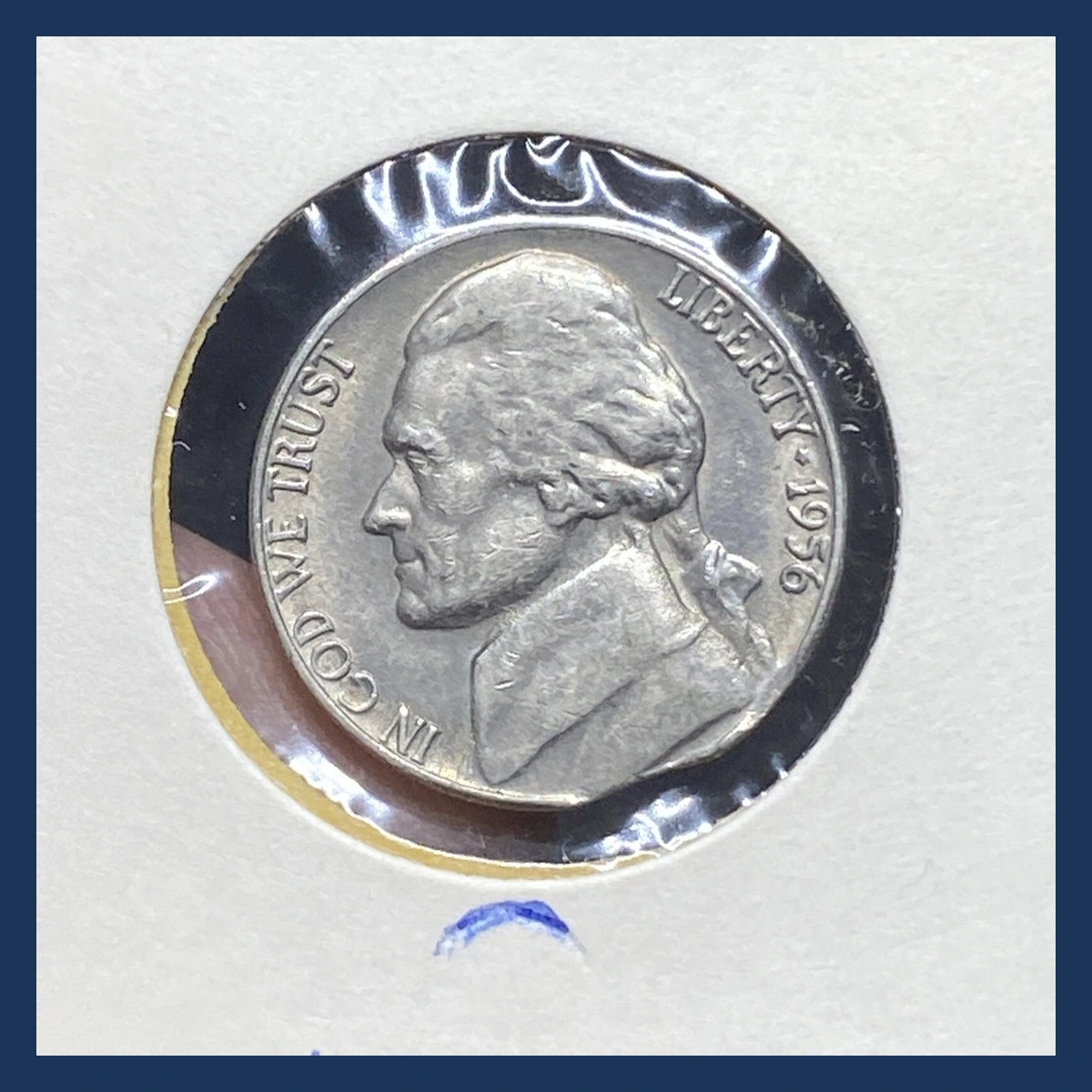
Part of the metal can be missing before the blank enters the press. The finished coin then carries its design around that incomplete outline.
A recorded Philadelphia example has a fifteen-percent curved clip. Another auction-price listing describes a one-percent ragged clip, with an uneven opening rather than a smooth arc.
They are different examples of incomplete blanks, not two required features on the same coin. The large curved clip appeared in an auction lot with four other nickels.
A percentage describes the missing portion. It should not be mistaken for a year when reading a title about a large clip.
Estimated Value
An estimated $20–$700 covers these reported shapes and their differing grades. An auction-price index records the one-percent ragged example at $630 in March 2026.
The fifteen-percent curved clip appeared in a five-coin lot that sold for $69 in August 2010. That $69 is the total for all five coins, not the price of the 1956 nickel alone.
Clip size therefore cannot rank every result. Condition, the specific opening, and demand can outweigh a simple comparison of percentages.
How to Identify
Count and photograph the actual openings before comparing percentages. A rough one-percent gap needs different close-ups from a large curved missing section.
Use a 10× magnifier on the opening and the letters beside it. Natural flow around an old gap differs from a fresh cut through a completed design.
For a loose coin, check its weight on a scale against 5 grams. With calipers, compare intact spans with 21.2 millimeters, then inspect the remaining plain edge for filing.
Keep the entire date visible where it survives. A label giving a large clip percentage does not identify 1956, and photographs of the other four nickels in a mixed lot cannot establish this coin’s exact shape.
9. 1956 Jefferson Nickel Repeated Designs on Ordinary and Proof Coins
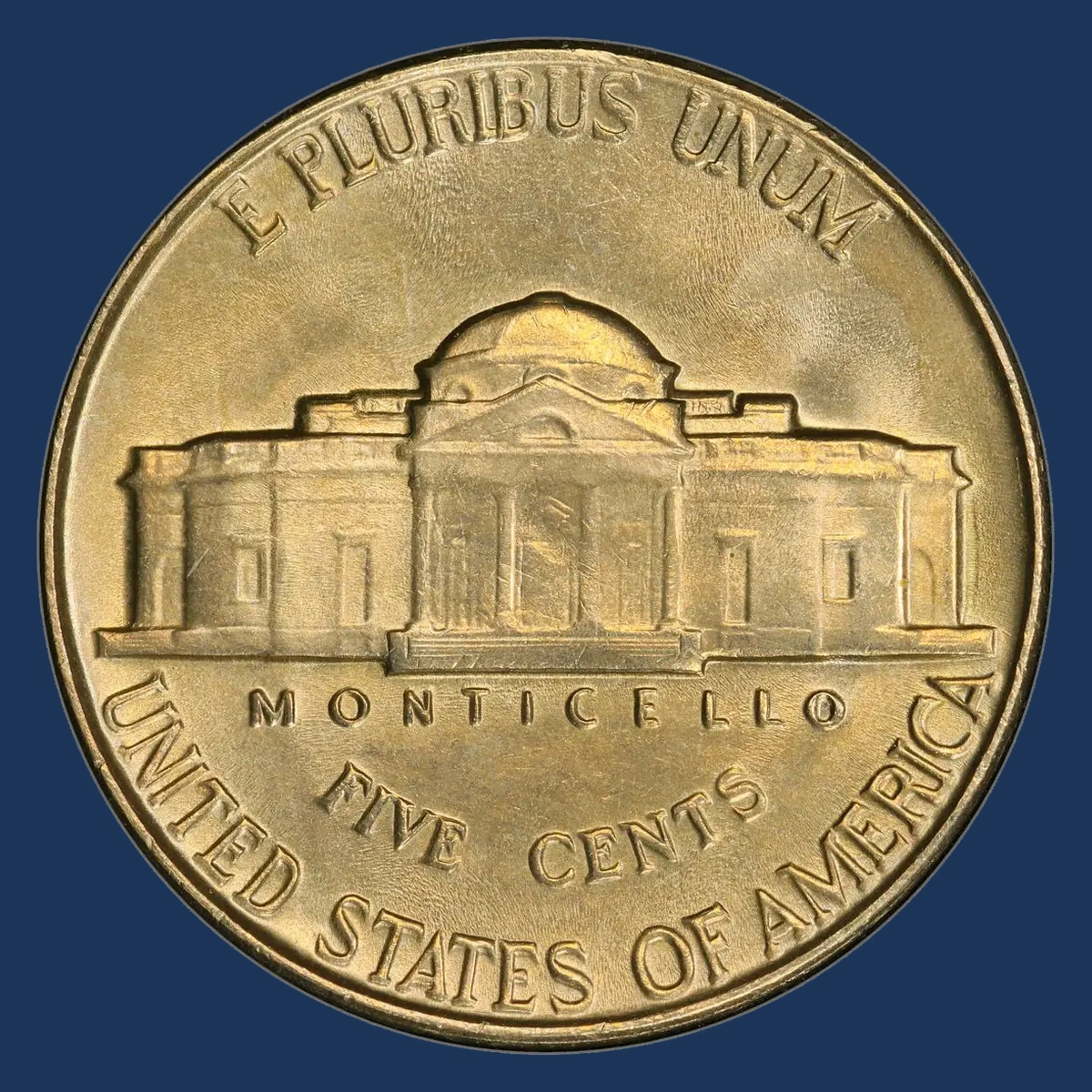
Several rounded outlines can appear around letters when the stamping tool already carried a repeated design. The coin receives those outlines in a single strike.
Ordinary Philadelphia nickels include back varieties described as tripled or quadrupled. Extra detail appears around the motto, country name, denomination, and parts of Monticello.
Separate front varieties occur on Proofs, collector coins made with special preparation. Their repeated features can involve the motto, LIBERTY, date, and portrait.
The back pattern should not be assigned a Proof price just because another variety is a Proof. Mint, finish, and the exact outlines remain part of the match.
Estimated Value
PCGS records $1,320 in May 2022 for an ordinary Philadelphia quadrupled-back variety graded MS65. That grade describes an unworn coin with relatively few marks.
Estimate $25–$1,500 for the ordinary back varieties, with minor patterns lower than strong, attractive examples. Proof front varieties can be estimated around $50–$500 pending an exact match and condition assessment.
The ordinary QDR record does not price a Proof front variety. Sharp stair detail is also a condition feature, not another doubled design.
How to Identify
Choose ordinary or Proof comparison photographs before studying the letters. The known quadrupled-back variety is ordinary Philadelphia, while the cited front FS-102 variety is a Proof.
For a loose coin, compare 5 grams with a scale and 21.2 millimeters with calipers, then inspect its plain edge. Neither finish changes these basic specifications.
Use a 10× magnifier to trace complete extra outlines in the relevant words. A flat shelf from movement during striking has a different appearance from separate rounded design details.
Check more than one letter against the same photographed variety. Do not borrow the front of one coin and back of another to construct a match, or treat sharp Monticello steps as an additional doubling feature.
10. 1956 Jefferson Nickel A Nickel Struck on a Copper Cent Blank
Jefferson and Monticello can appear on a copper-colored blank meant for a cent. Because it is smaller than a nickel blank, it cannot receive the entire outer design.
A Philadelphia example graded NGC MS64 Red and Brown weighs 3.1 grams. A separate Denver report gives 3.12 grams, while another Philadelphia example was graded PCGS MS62 Brown.
Those measurements belong to their own specimens. They should not be transferred to the brown MS62 coin when its measured weight is absent.
The starting piece was an unused cent blank. It does not need an old Lincoln design beneath the nickel impression.
Estimated Value
The 3.1-gram Philadelphia example sold for $1,495 in August 2010. Estimate $300–$1,500 for comparable authenticated copper-cent-blank errors, with condition and remaining design affecting price.
The MS64 grade means an unworn coin with some marks; Red and Brown describes its copper color. The separate brown MS62 coin should not inherit the same auction result.
A later different-year comparison is a 1981-P example at $372 in September 2025. It illustrates why wrong-blank nickels do not all trade at the highest result.
How to Identify
Photograph the date and the area beside Monticello where a Denver D would appear. Keep each mint and specimen separate when comparing the recorded 3.1-gram Philadelphia and 3.12-gram Denver pieces.
Use a 10× magnifier to examine the plain edge for a coating. Copper color on a normal-sized nickel does not establish a cent blank.
For a loose candidate, take its own scale reading against roughly 3.11 grams for a copper cent blank and 5 grams for a nickel. Record caliper measurements against the starting diameters of 19.05 and 21.2 millimeters, respectively.
Then follow the outer lettering into the smaller edge. Natural truncation differs from file marks cutting through completed detail; striking may also expand the original blank.
Conclusion
The estimated $5–$1,500 range includes small surface faults, altered blanks, and clearly repeated lettering. A dark surface needs a different investigation from a copper-colored coin that is also much smaller and lighter.
Check the whole object before focusing on one detail. Keep a thin blank separate from a normal blank whose design was blocked by another piece of metal.
For doubled designs, choose the correct ordinary or Proof comparison before deciding which price level fits.