1962 Nickel Error List with Pictures

A penny and a nickel can leave their designs on the same coin. A 1962-D nickel struck over a 1962 cent sold for $3,416 in March 2026.
Other 1962 nickel errors are easier to miss, including an extra D outline and thin layers of separating metal. Estimated values in this guide range from $10 to $4,500.
The following checks explain what to look for, with ordinary coins and specially made collector Proofs compared separately.
1. 1962 Jefferson Nickel Repunched Denver Mintmark
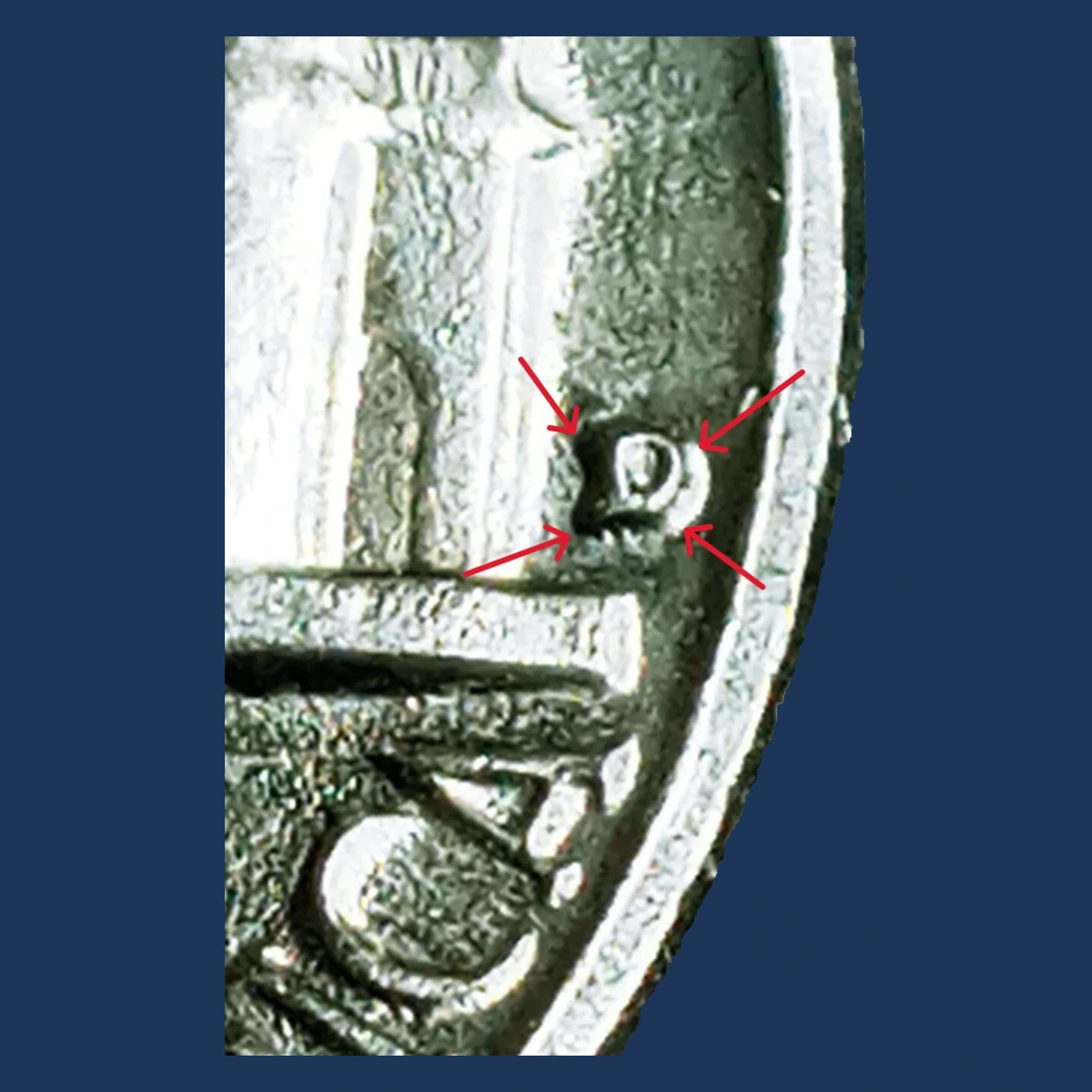
The D beside Monticello can show a second, tilted outline. Workers punched that mint letter into the steel stamping tool separately, and a shifted repeat blow could leave parts of both positions.
The documented Denver pattern is called D over D. It does not mean a Denver letter was placed over a different mint’s letter.
The extra outline should follow the shape of the D rather than appear as one random bump. A dent, a small break in the tool, or movement during striking can also leave extra-looking metal around the mintmark.
Estimated Value
An estimated $10–$150 covers identifiable examples with varying wear and clarity. A clean extra outline is more useful to a collector than a damaged letter with an ambiguous shape.
The range estimates minor Jefferson mintmark varieties rather than a specific sale of the illustrated coin. The shape and strength of the extra D help determine how desirable an example is.
Overall preservation matters. A faint worn trace does not compare with a sharp unworn example.
How to Identify
Start on the back, to the right of Monticello, where Denver placed the D in 1962. A mint letter on the front belongs to a later Jefferson design.
For a loose coin, a scale and calipers can check roughly 5 grams and 21.21 millimeters, with a plain edge. Those measurements establish the normal coin size; the tiny date-specific feature needs magnification.
Compare the D with Wexler’s pictured pattern through a 10× magnifier, following the tilted extra stroke around its curve and upright. Move the light across that outline to separate rounded raised metal from a flat shelf, then inspect nearby letters for the same flattening.
2. 1962 Jefferson Nickel Defective Blank
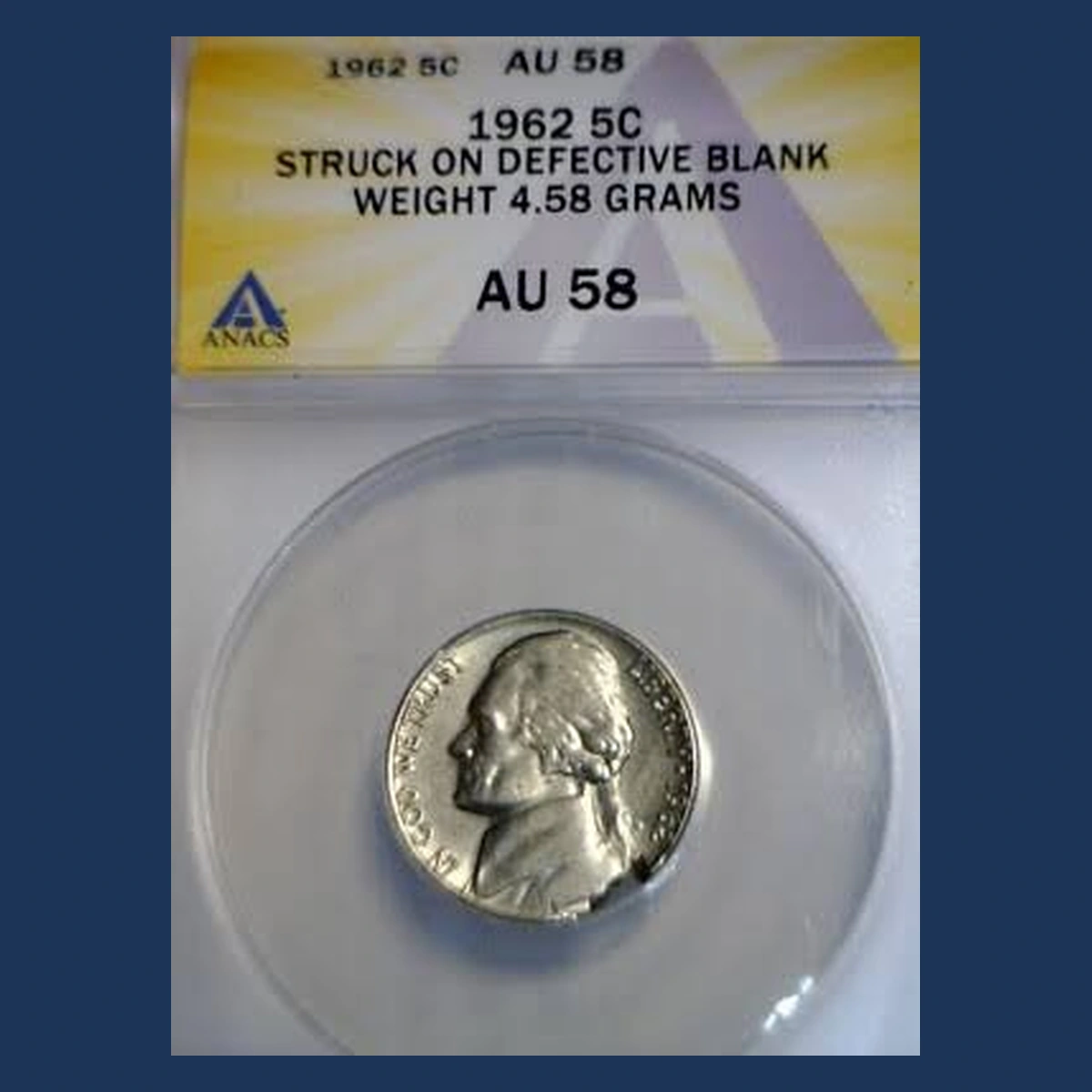
Two recorded nickels weigh less than the normal five grams because they were struck on defective blanks. The Philadelphia example weighs 4.2 grams, while a separate Denver coin weighs 3.4 grams.
NGC graded them MS63 and MS62 respectively, both unworn grades allowing visible marks. Their catalog descriptions do not identify a particular missing shape or explain the full manufacturing defect.
A low weight alone therefore cannot turn either one into a clipped coin or a wrong-denomination blank. Metal lost through corrosion or grinding after minting can also leave a nickel underweight.
Estimated Value
The Philadelphia 4.2-gram MS63 example sold for $75 in July 2021. It supplies a direct 1962 comparison for a cataloged defective blank.
Estimate $25–$250 for identifiable defective-blank examples with original surfaces. The amount of metal missing, visibility of the defect, and condition all affect the outcome.
The Denver coin’s 3.4-gram weight belongs to a different specimen. A greater weight shortage does not automatically make it worth more than the Philadelphia coin or establish the same defect.
How to Identify
Weigh a loose coin before deciding what caused its unusual appearance. Compare the result with five grams, keeping the recorded 4.2-gram Philadelphia and 3.4-gram Denver examples separate.
Calipers can record diameter and thickness without squeezing the edge. A normal nickel is 21.21 millimeters across, but the catalog does not provide replacement dimensions for either defective piece.
Under a 10× magnifier, examine both faces and the plain edge for corrosion, filing, or deliberate thinning. Those processes can remove metal after the coin has left the Mint.
Match the actual surface and outline with the certification photographs. Weight is a useful clue to a defective blank, but the original struck surfaces must explain why the coin is light.
3. 1962 Jefferson Nickel Broken Front Stamping Tool
A raised patch can mark the place where part of the steel stamping tool broke away. The blank’s metal fills that empty space instead of taking the missing piece of design.
One Denver 1962 example was graded NGC XF45, meaning worn but with substantial detail remaining. Its front-side break has a catalog number, JNC-62D-1, for comparison with the same pattern.
It sold alongside three nickels dated 1967, each with its own broken-tool feature. The 1962 coin must be judged by its own patch and condition rather than those other coins.
Estimated Value
For a genuine 1962-D tool break, estimate $15–$300 according to its size, visibility, and preservation. A prominent original patch generally attracts more attention than a tiny raised defect.
The XF45 coin sold with three 1967 nickels for $126.50 in August 2010. That is a four-coin total, not a price assigned entirely to the 1962 piece.
Condition matters alongside the break. A corroded surface or added metal can reduce appeal and may prevent a sound identification altogether.
How to Identify
Normal weight does not rule out a broken-tool error, because the missing metal came from the tool rather than the coin. On a loose example, use a scale and calipers to check about 5 grams and 21.21 millimeters.
Then locate the front patch in photographs of the 1962-D example. Inspect its outline through a 10× magnifier, noting how it meets the surrounding letters or portrait.
A hit can raise metal beside a dent, while solder can leave a seam around an added blob. Inspect the plain edge and the patch’s border for those signs before comparing its shape with the cataloged JNC-62D-1 pattern.
4. 1962 Jefferson Nickel Lamination and a Split Blank with an Indent
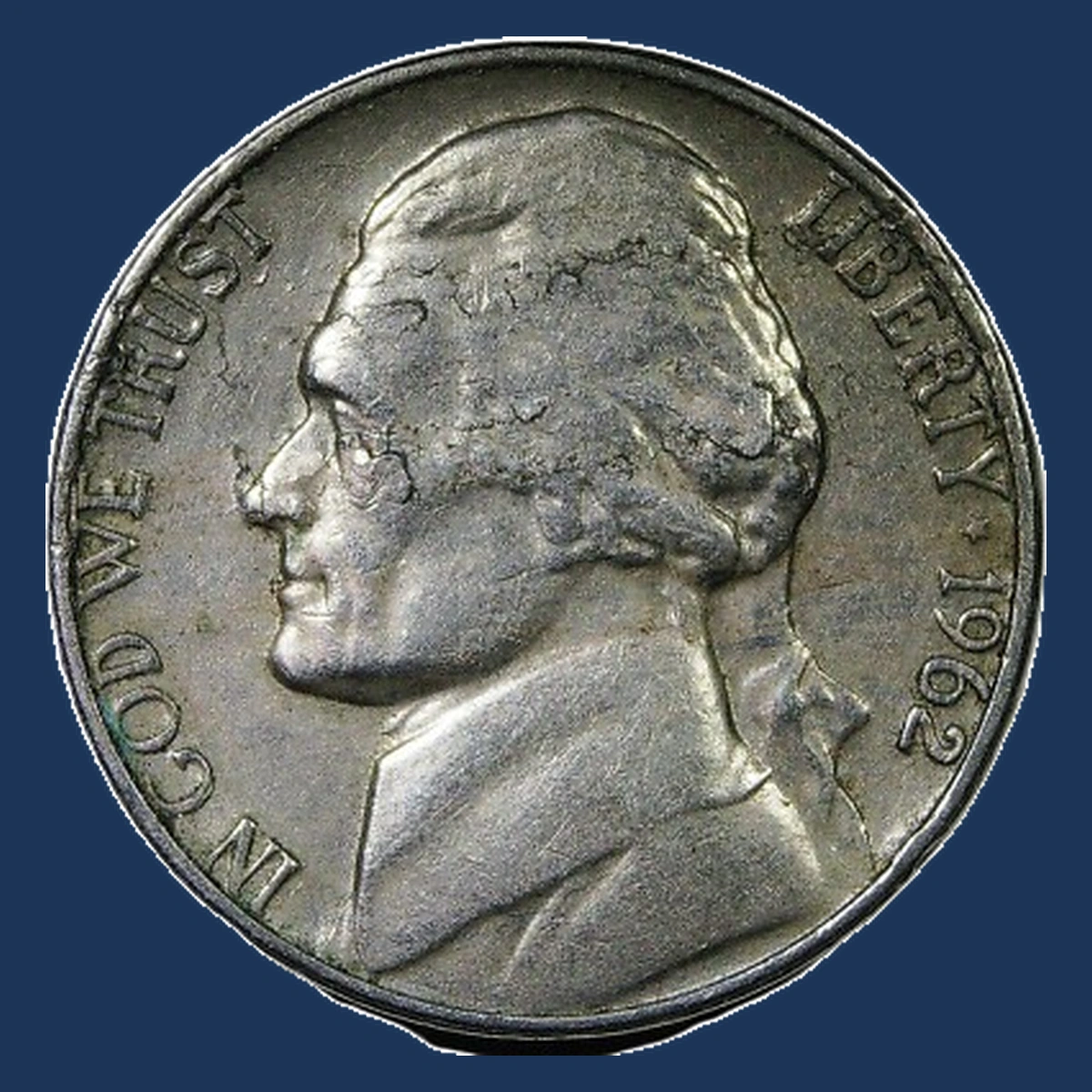
A weak seam in the alloy can allow part of a nickel to peel away. This is lamination, and a deeper separation can leave a thin piece of the original blank.
A cataloged 1962 nickel combines a split blank with an indent on the front. An indent is a depression made when another piece of metal blocks part of a stamping tool.
The description does not establish the split’s timing or the depression’s percentage. This combination belongs to one coin, separate from the 1941 and undated split-blank coins sold alongside it.
Estimated Value
Estimate $10–$150 for genuine local peeling and $75–$500 for an identifiable split-blank and indent combination. The range changes with the size of the separation and how clearly the second feature appears.
The 1962 combination sold in a four-coin group for $488.75 in August 2010. The group also included a 1941 coin and two undated errors, so that amount is not an individual 1962 price.
Value the complete combination once rather than adding maximum estimates for each feature.
How to Identify
Leave an attached layer alone, even if it seems ready to fall off. A side photograph can show whether the coin has a thin surface peel or a deeper separation without bending it.
Record the weight of a loose piece on a scale and measure its outline gently with calipers. A full normal nickel is 5 grams and 21.21 millimeters across, with a plain edge.
Now find the depression on the front. Use a 10× magnifier to follow the missing design across that hollow and distinguish it from the rough surface exposed by a split.
The two features need separate explanations even on the same coin. Their physical relationship must show the order of events before you decide whether the metal split before or after striking.
5. 1962 Jefferson Nickel Off-Center Strike
The date and portrait can move toward one edge while a bare crescent remains on the other. The blank sat out of position when the two stamping tools came together.
Off-center strikes are included in published 1962 error lists, but the report does not establish one certified specimen, mint, or direction. Percentages used in general price discussions do not supply those missing details.
The design must actually extend beyond the available metal. A wide border with a complete design can have a different cause, and a shift confined to one face may involve a misaligned tool.
Estimated Value
Estimate $25–$700 for genuine, dated 1962 off-center nickels, with the shift, surface quality, and surviving identification guiding the price. Strong visual appeal does not require the largest possible bare area.
For comparison, a 1999-D nickel struck sixty-five percent off center sold for $75 in September 2024. That is a different-year example, not a sale attached to the 1962 report.
A damaged or partly dateless piece may bring less. Keep the readable date in the comparison before choosing the upper end.
How to Identify
Turn the coin over and compare the two faces before estimating the shift. Original bare metal should accompany design that misses the blank, rather than appear only as an unusually wide rim.
Find the entire 1962 date with a 10× magnifier. On a Denver coin the D is on the back beside Monticello; Philadelphia coins normally have no mint letter.
If the mintmark area never received a strike, its emptiness does not identify Philadelphia. Keep that distinction visible in photographs.
A loose complete blank can still weigh near five grams on a scale. Use calipers against 21.21 millimeters and inspect the plain edge for cutting, then check the bare area for grinding that could have removed an earlier design.
6. 1962 Jefferson Nickel Doubled or Tripled Design
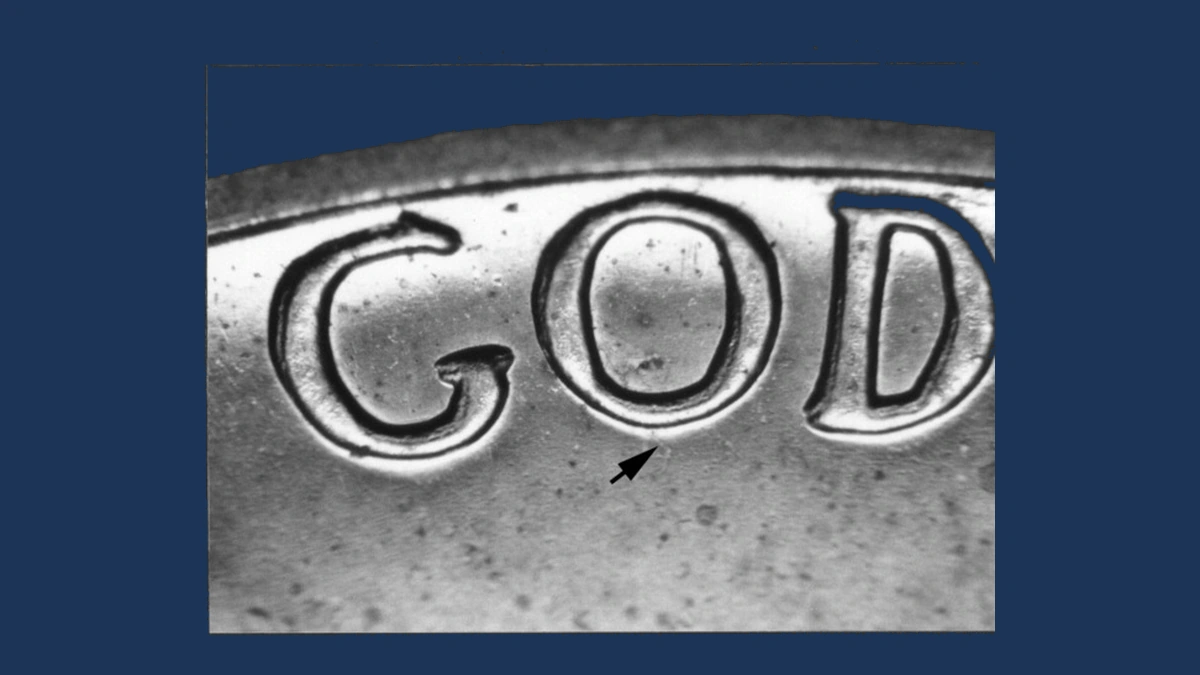
Two or three raised outlines around a letter can come from a repeated design in the steel stamping tool. Collectors call these doubled or tripled dies.
Denver front patterns affect IN GOD WE TRUST and sometimes the lower hair ribbon. Back patterns can be clearest toward AMERICA.
Philadelphia examples include specially made collector Proofs and others whose finish is not recorded. Their patterns can affect the motto, date, LIBERTY, and back lettering.
Some back outlines came from an earlier tool shared by several working dies. Similar lettering therefore need not identify one rare individual die.
Estimated Value
Use an estimated $10–$750 across identified 1962 doubled and tripled designs. Bold, well-preserved lettering attracts more interest than very close outlines.
Match the mint and finish whenever both are known; a Philadelphia coin is not automatically a Proof. A reflective surface alone does not establish an error or justify a high variety price.
This range includes the coin’s condition value. Repeated features inherited from a shared earlier tool should not be priced as a rare individual die.
How to Identify
Locate several repeated letters before choosing a variety name. Rounded extra outlines and split letter ends are more useful than one bright border beside a letter.
Compare those shapes with the illustrated 1962 catalog under a 10× magnifier. Use a photograph for the same mint and finish, and do not assume every Philadelphia example is a Proof.
For a loose coin, a scale and calipers should show near 5 grams and 21.21 millimeters. The plain edge is normal and does not identify a doubled design.
Check neighboring letters for flat shelves that can result from movement during striking. If a catalog number has changed, follow the pictured letter shapes rather than transferring an older number without comparison.
7. 1962 Jefferson Nickel Struck on a Cent Blank
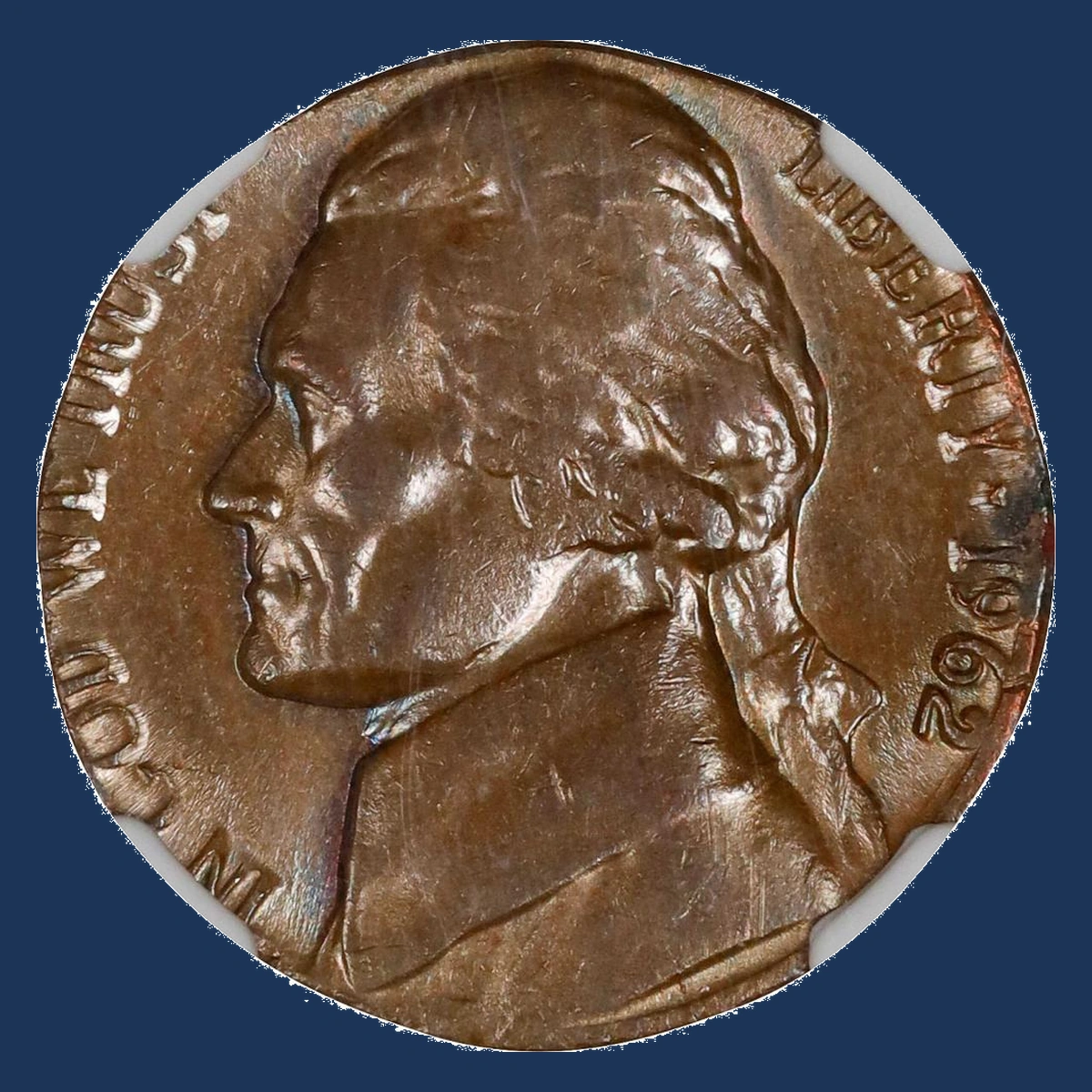
A copper-colored nickel can carry the five-cent design on a smaller blank prepared for a cent. The larger design cannot fit fully onto that disk.
One Denver example was graded PCGS MS62 and appeared in the Don Bonser collection. A separate NGC MS62 Red and Brown coin was recorded at 3.2 grams.
Those are different records, so the NGC coin’s weight should not be assigned to the PCGS specimen. Both differ from a nickel struck over an already finished cent, where parts of Lincoln’s design can remain beneath Jefferson and Monticello.
Estimated Value
The PCGS MS62 example brought $348 in November 2020. The separate 3.2-gram NGC MS62 Red and Brown coin sold for $488.75 in August 2010.
Estimate $200–$1,000 for identified 1962 cent-blank nickels across different preservation. A clear date and mint, original copper surfaces, and recognizable five-cent design make useful comparisons.
A later copper coating does not create the smaller blank. Its appearance alone should not attract the same premium as a coin made on the wrong disk.
How to Identify
Begin with a scale rather than the copper color. A normal nickel weighs 5 grams, while a contemporary cent blank starts near 3.11 grams.
The separate NGC example was recorded at 3.2 grams. That figure belongs to that specimen, not every 1962-D wrong-blank nickel.
With calipers, compare the outline against a cent blank’s starting 19.05 millimeters and the nickel’s 21.21 millimeters. Metal can spread beyond the original smaller diameter during striking.
Examine the cropped outer lettering and plain edge under a 10× magnifier. A coating seam or a filed-down edge suggests a different explanation.
Locate the date and surviving D on the same coin. Search for older Lincoln details separately, since those would point to a finished-cent overstrike rather than an unused cent blank.
8. 1962 Jefferson Nickel Struck over a Finished Lincoln Cent
Two denominations can appear on one copper coin when a finished cent enters the nickel press. The newer Jefferson design overlaps surviving parts of Lincoln’s design.
One cataloged Denver nickel was struck over a 1962-D cent and graded NGC MS64. Another auction record describes a Denver nickel over a 1962 cent, graded AU58, without specifying the underlying cent’s mint.
The second coin has slight wear, while MS64 describes an unworn piece with visible marks. Their different descriptions should remain separate, even though both show the same kind of wrong-denomination overstrike.
Estimated Value
The AU58 example brought $3,416 on March 23, 2026. The separately described MS64 nickel over a 1962-D cent sold for $930 in August 2020.
Estimate $750–$4,500 for identifiable examples with both designs recognizable. The auction differences show why grade alone does not predict the entire price.
Clear underlying cent details, surviving dates, and attractive original surfaces all contribute. The two denominations form one collectible coin, not two values to add together.
How to Identify
Find a recognizable Lincoln-cent detail before calling the coin an overstrike. Copper color and a small outline also occur when a nickel is struck on an unused cent blank.
With a 10× magnifier, follow where the later Jefferson design crosses the older image. The two designs should be struck into the same metal rather than attached as separate pieces.
Read each surviving date and mint identity independently. A D belonging to the nickel design cannot automatically establish the mint of the cent beneath it.
A scale and calipers compare a loose example with a copper cent’s standard 3.11 grams and 19.05 millimeters. These are starting specifications, not measured figures supplied for either auctioned specimen.
Inspect the plain edge for a join and keep both complete faces in the photographs.
Conclusion
The estimated $10–$4,500 range spans small repeated mint letters through coins carrying two denominations. Start with the feature you can actually see, then compare the mint, finish, and condition.
For a light coin, weight alone cannot distinguish a defective blank from removed metal. For a doubled-looking letter, matching several contours is more useful than one bright edge.
Keep fragile layers untouched and treat multi-coin auction totals as group prices.