1985 Nickel Error List with Pictures

A 1985-P nickel that curled around a stamping tool sold for $1,265 in October 2010. Its tall sides make the mistake easy to see.
Other 1985 nickel errors take a closer look, from missing letters to faint remains of a Lincoln cent. Estimated values across this list run from $5–$2,000, depending on the error and condition.
Follow the sections below to compare the shape, design, and metal of your coin.
1. 1985 Jefferson Nickel Grease-Filled Die
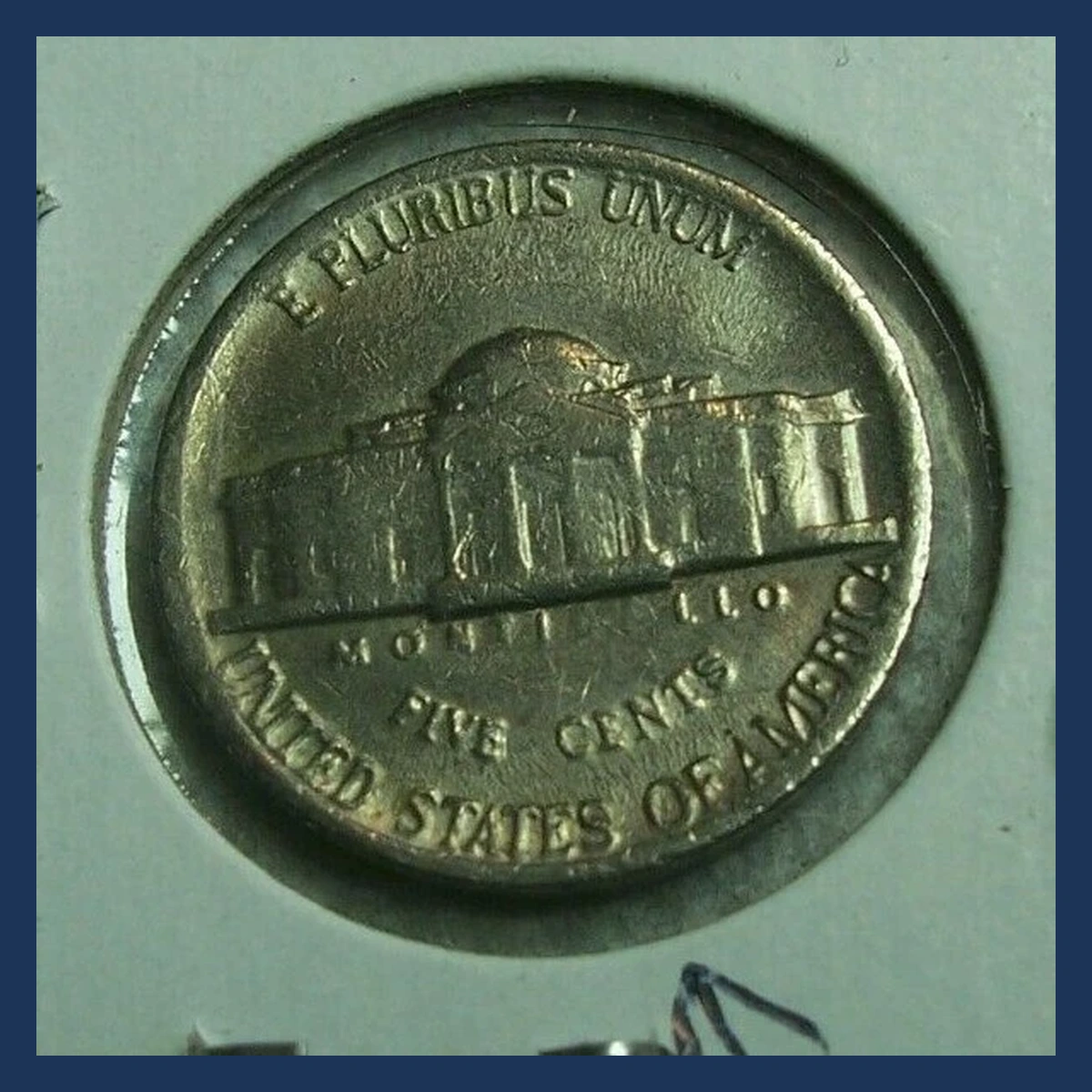
A letter may fade while the detail beside it remains sharp. Grease or other soft debris can fill part of a die, the steel tool that stamps the coin.
The blocked area then leaves less detail on the metal. This type is reported for 1985 nickels, but no particular missing letter identifies every example.
The obstruction can spread, move, or clear during production. A weak inscription therefore needs comparison with the rest of the coin, especially Jefferson’s cheek and the raised parts of Monticello.
Estimated Value
Small areas of missing detail generally fit an estimated $5–$30 range. A coin with extensive, obvious loss of design can attract more interest than one slightly weak letter.
These are estimated prices for a confirmed Mint error, not a recorded sale of a specific 1985 example. Heavy wear or surface scraping usually removes the appeal, even when the result resembles a filled letter.
How to Identify
Wear leaves a broader trail than one missing letter. Compare the suspect area with Jefferson’s cheek and hair, which usually show circulation wear early.
Next, move a lamp across the weak design. Fine parallel scratches through the surrounding metal suggest someone rubbed the area down.
A 10× magnifier can reveal those scratches without touching the surface. Grease does not scrape grooves into a finished coin.
Check a loose coin with a digital scale and calipers against 5.00 grams and 21.21 millimeters. Major weight loss calls for another explanation.
Follow the change from sharp to weak detail, looking for a local gap beside otherwise crisp, undisturbed metal.
2. 1985 Jefferson Nickel Clashed Dies
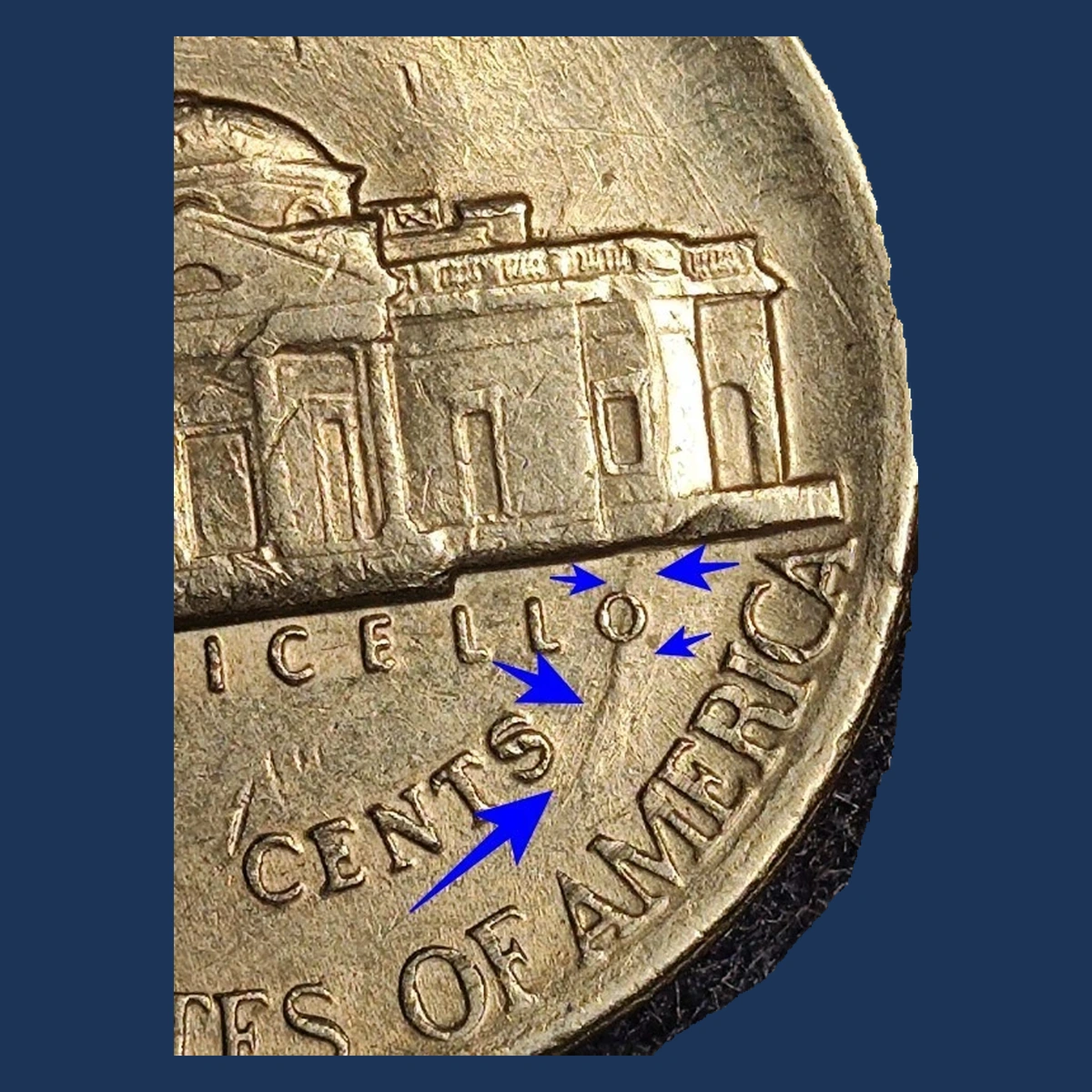
Monticello belongs on the back, so pieces of its outline beside Jefferson can look out of place. The reverse situation can leave traces of the portrait around the building.
This happens when the two stamping tools meet without a blank between them. They can damage each other, then carry those extra marks onto later coins.
A 1985 error guide reports this type for both Philadelphia and Denver. The useful clue is a recognizable part of the opposite design, rather than an unexplained line.
Estimated Value
Allow approximately $10–$60 for a clearly identified clash on a 1985 nickel. Strong, visible outlines should place a coin above faint marks that need difficult lighting to see.
This range is an estimate for the reported type. It does not assign a sale price to every line near Jefferson or Monticello.
Wear can erase small transferred details, while scratches across them make the pattern harder to recognize.
How to Identify
Trace one promising fragment before deciding that the coin has a clash. A line near Jefferson’s collar should match part of Monticello, while a curve above the building should fit the portrait.
Use a 10× magnifier and photographs of an ordinary nickel to compare those shapes. A normal coin is 5.00 grams and 21.21 millimeters, which a scale and calipers can check if its outline also looks altered.
Turn the reference photograph until the suspected fragments line up with the opposite design. An unrelated scratch may cross the same place, but a second matching angle or curve makes the connection much stronger.
3. 1985 Jefferson Nickel Doubled Die
Look for two raised edges where one letter or number should have a single outline. A doubled die carries an already doubled design, so it can stamp the same pattern onto many coins.
The coin does not need a second strike. Reports for 1985-P and 1985-D nickels mention the date, motto, and Jefferson’s outline.
These reports do not establish one pattern shared by both mints. Each coin needs its own comparison, especially because loose equipment can also create flat, shelf-like edges that look doubled at first glance.
Estimated Value
A practical estimate is $10–$100 when the extra raised detail is confirmed as a doubled die. Larger separation and a pattern collectors can match generally support the higher end.
The price range is not an auction record for a named 1985 variety. Flat mechanical doubling should not receive the same estimate.
Before spending more, compare the exact letters and the direction of their extra outlines.
How to Identify
Start with the mint letter. Philadelphia and Denver coins need separate comparisons, even when both show thickened letters in the same motto.
Take a sharp photograph of the date or IN GOD WE TRUST, then move the light. A reflection changes with the lamp; an extra raised stroke remains part of the metal.
Under a 10× magnifier, look for rounded separation and small splits at letter corners. A flat shelf that cuts into the normal letter suggests mechanical doubling.
For a loose coin, calipers and a digital scale should show about 21.21 millimeters and 5.00 grams.
Finally, compare several neighboring letters with a documented same-mint example, matching the extra strokes rather than just their thickness.
4. 1985 Jefferson Nickel Clipped Planchet
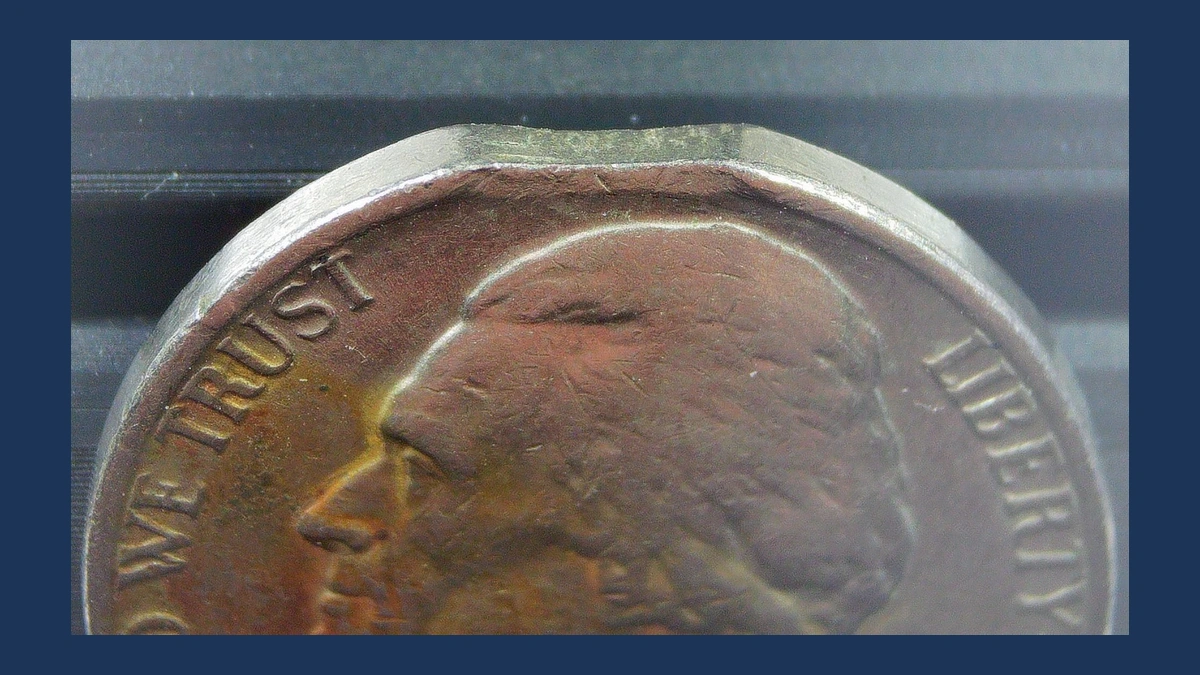
A small curved bite can start before a nickel receives its design. The machine that punches round blanks from metal strip may overlap an earlier hole, leaving part of the new blank missing.
One 1985-P example weighs 4.85 grams and was graded ANACS MS64, meaning it has no circulation wear. Its missing section is curved.
Straight clips are also reported for this year and can come from the strip’s edge. A clipped blank enters the press with that piece already absent, unlike a finished coin cut afterward.
Estimated Value
Estimate $15–$125 for a genuine clipped 1985 nickel. The small 4.85-gram Philadelphia example represents a much subtler error than a large missing crescent.
As a different-year comparison, a 2005-P clipped nickel sold for $99 in June 2026. That result helps illustrate the market for a visible clip, rather than establishing the price of the 1985 coin.
Original surfaces and a clearly natural missing section matter more than the mint letter alone.
How to Identify
The 4.85-gram example is only slightly below a normal nickel’s 5.00 grams. A digital scale that reads hundredths of a gram is useful for such a small difference.
Inspect the missing edge with a 10× magnifier before measuring its size. Saw marks, file grooves, or a sharp folded burr suggest someone removed metal after striking.
At the ends of a genuine clip, the struck rim may weaken as it approaches the gap. A weak patch directly across the coin can help, but it is not required on every example.
Use calipers across the surviving full width, normally about 21.21 millimeters. Study the transition into the gap: the rim should look struck around missing metal, not freshly severed through a finished border.
5. 1985 Jefferson Nickel Broadstrike
An unusually wide nickel can still carry all of Jefferson and Monticello. Without the surrounding collar holding the blank in place, a blow from the dies lets metal spread outward.
This is a broadstrike. The extra space usually appears around the design, which stays substantially complete rather than disappearing beyond one edge.
The type appears in published 1985 error lists, without a specific diameter for the illustrated coin. A plain edge is normal on every Jefferson nickel, so smoothness alone does not show that the collar failed.
Estimated Value
For a visibly expanded 1985 nickel with complete design, use an estimated $20–$150. Slight spreading belongs near the lower end; a wide border and good surfaces improve the display.
A different-year broadstrike, a 1989-P nickel graded ANACS MS63, was listed at about $47 in a December 2020 sale. That comparison supports a modest starting point, rather than an automatic three-figure price for every wide nickel.
How to Identify
An oversized outline is a reason to measure, not a diagnosis by itself. Record the widest and narrowest points with calipers, comparing them with the normal 21.21-millimeter diameter.
Now follow the lettering all the way around both faces. A broadstrike should retain the design inside its expanded border; major missing sections suggest an off-center blow.
The nickel should remain near 5.00 grams on a digital scale because spreading does not remove metal. Inspect any unusually thin section with a 10× magnifier for hammer marks or later squeezing.
Sharp nearby letters should continue naturally into the expanded border. Smearing across the design would undermine the broadstrike identification.
6. 1985 Jefferson Nickel Improperly Annealed Blank
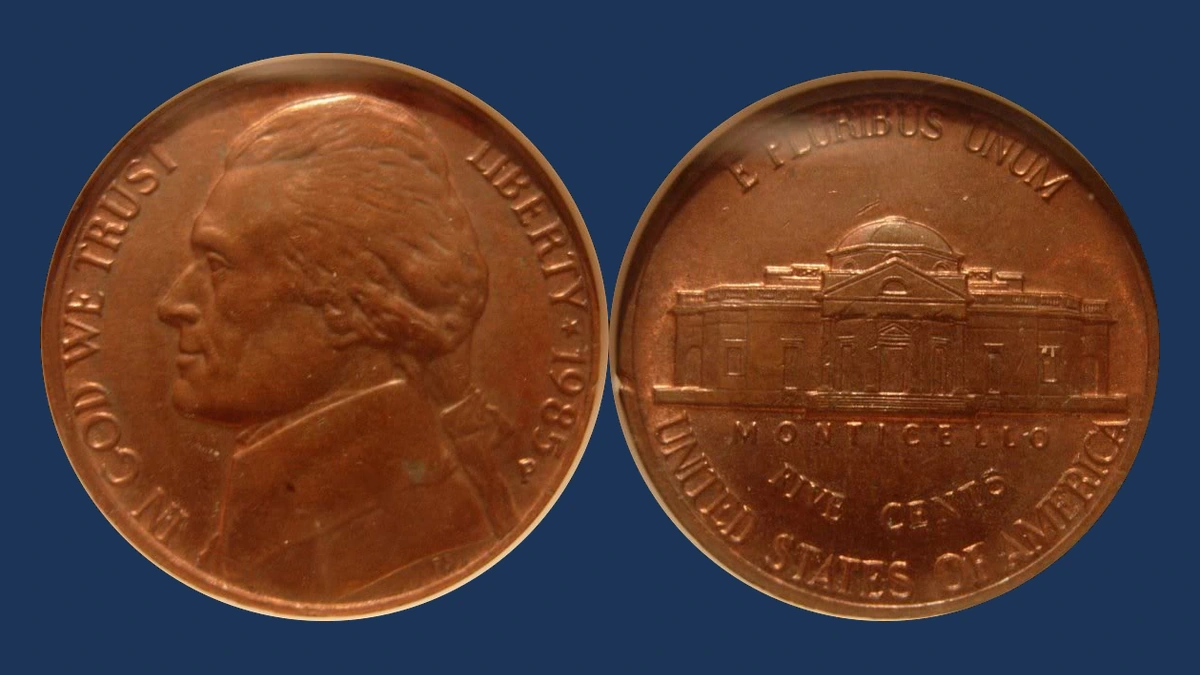
The color can be the first surprise. A nickel may develop an unusual surface during annealing, the heating process that softens blanks before they are struck.
A 1985-P example graded NGC MS63 was sold with three other improperly annealed nickels. That provides a specific coin to compare, rather than treating every dark nickel as the same mistake.
The exact color pattern can vary. Soil, chemical exposure, added plating, and heating after the coin left the Mint can all create misleading appearances on an otherwise ordinary nickel.
Estimated Value
A confirmed 1985 example can be estimated at $30–$200, with stronger color and undamaged surfaces supporting the upper portion. Color alone is not enough to apply that range.
The NGC MS63 Philadelphia coin was part of a four-coin lot that sold for $322 in September 2010. That payment also covered nickels dated 1959, 1993, and 1995, so it cannot be treated as a $322 sale of this coin.
How to Identify
If the coin is sealed in a grading holder, compare its surface with the grading record without opening it. The description should specifically name improper annealing, rather than merely noting unusual color.
For an ungraded coin, use neutral white light and a 10× magnifier to inspect both faces. Paint can bridge small recesses, while later plating may peel or build up along the edge.
The normal alloy is 75% copper and 25% nickel throughout. A digital scale and calipers should show roughly 5.00 grams and 21.21 millimeters on a loose piece.
Leave the color untouched for professional examination. Dark or copper-colored metal alone does not establish when the surface changed.
7. 1985 Jefferson Nickel Off-Center Strike
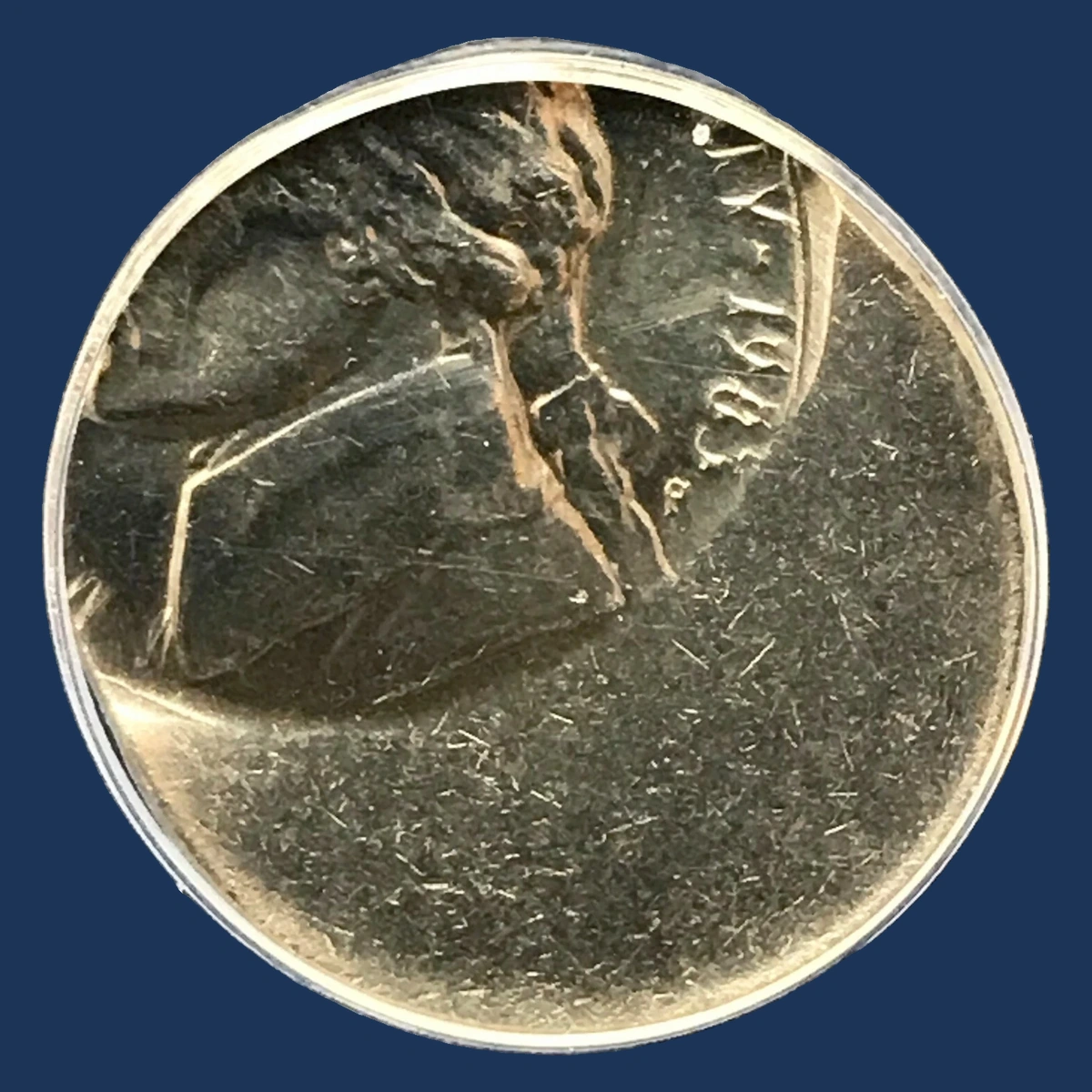
Most of the design missed one 1985-D blank. The coin was struck about 65% off center toward 11 o’clock, leaving a large area untouched by the dies.
This Denver example was graded ANACS MS64. It appeared in an auction pair with a separate 1987-P nickel, not as two views of one coin.
Philadelphia examples are also reported for the year. The basic error begins with a misplaced blank, so both faces share the same displaced striking area and part of the intended design is absent.
Estimated Value
For 1985 off-center nickels, estimate $30–$250. A large blank area, readable date, and clean surfaces usually make the coin more appealing.
The Denver 65% example appeared in a January 2022 pair listed at $65. Since a 1987-P nickel was included, that amount cannot be assigned to the Denver coin alone.
A coin with two overlapping designs needs a separate comparison with multiple strikes, even if its final blow was far off center.
How to Identify
Find the date and mint letter on the struck part before comparing percentages. A readable 1985-D identity is more useful than a seller’s claim about how far the design moved.
Turn the coin over and follow the boundary between struck and unstruck metal. The displaced area should make sense on both faces; one shifted design with a centered opposite face suggests a different problem.
A digital scale should read near 5.00 grams because the blank has not lost most of its metal. Its distorted shape may differ from the normal 21.21-millimeter diameter, which calipers can document.
Under 10× magnification, check the open area for added grinding. A single displaced impression and untouched blank metal separate this error from a second off-center blow.
8. 1985 Jefferson Nickel Multiple Strikes
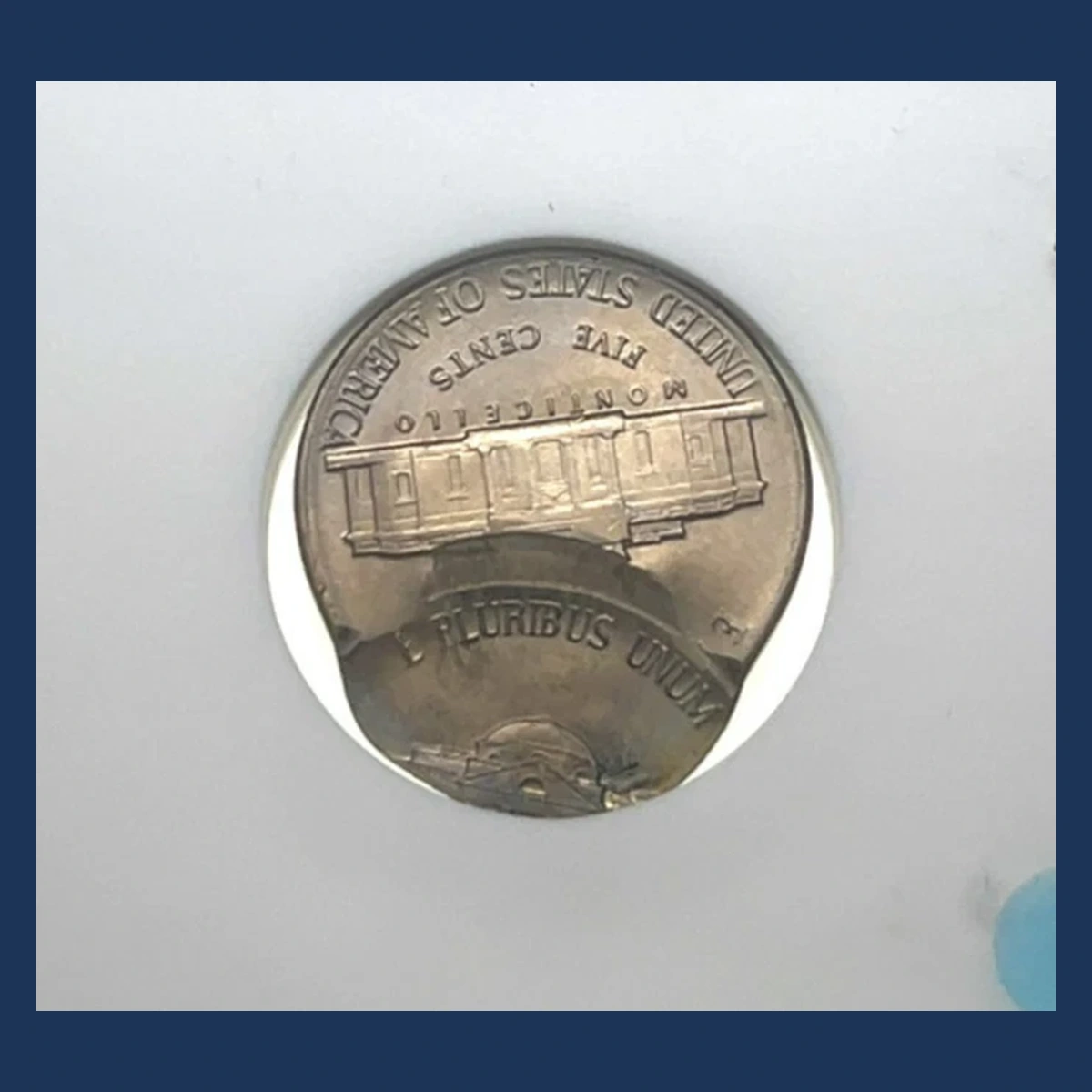
Two impressions can overlap without lining up. A 1985-P nickel graded NGC MS64 received a second blow about 80% off center; another Philadelphia coin was struck three times.
The second impression can also lack design on one side. A Philadelphia NGC MS63 example has a blank back in its 75% off-center second strike.
A Denver coin was cataloged with a 95% off-center second blow near 11:30 and a blank front there. These are separate coins, with different overlaps and different areas blocked during the later blow.
Estimated Value
The Philadelphia 80% double strike sold for $99 in January 2023. Across double and triple strikes, a useful estimated range is $75–$650.
Extra impressions that remain easy to follow can bring more than a crowded, poorly defined overlap. Large second strikes with a blank face also appeal to collectors.
The $99 result belongs to the NGC MS64 coin, not the triple strike or either of the blank-sided examples.
How to Identify
Count separate impressions by following repeated pieces of the portrait, lettering, or building. A doubled die repeats fine outlines; multiple strikes move larger parts of the design across the coin.
For the blank-sided examples, compare exactly the same second-strike area on both faces. The Philadelphia 75% example lacks back detail there; the Denver 95% example lacks front detail.
A 10× magnifier helps distinguish a blank striking area from later abrasion. For three strikes, trace three separate design positions rather than counting any three extra lines.
Record the outline with calipers and check a loose coin on a digital scale against the normal 21.21 millimeters and 5.00 grams. Follow where one impression runs into another to establish the sequence of blows.
9. 1985 Jefferson Nickel Indent from a Dime Blank
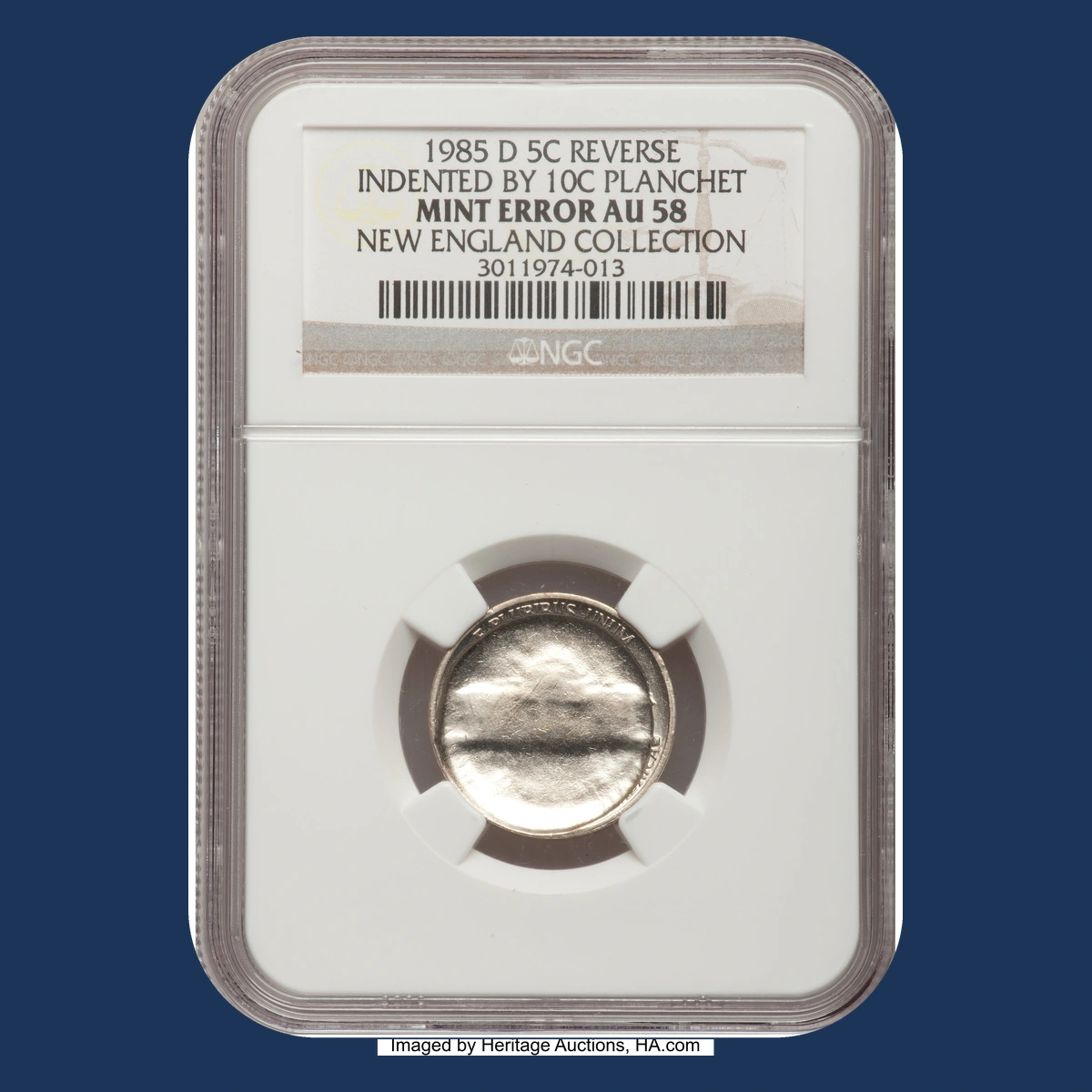
Jefferson looks fairly normal, but much of Monticello is barely visible. A dime blank sat between this nickel and the back stamping tool, blocking most of that design.
The smaller blank was nearly centered over the nickel. Parts of the lettering near the edge remained exposed and received a clearer impression.
NGC graded the nickel AU58, indicating slight circulation wear. The dime blank that caused the indentation was not included with it; this is a nickel pressed against another blank, not a nickel design struck on dime metal.
Estimated Value
This unusual Denver nickel sold for $1,092.50 in August 2010. An estimated $600–$1,400 range suits comparable examples with a clear dime-sized indentation and recognizable nickel identity.
The recorded sale was for the nickel alone. It did not include the dime blank that blocked the strike.
An ordinary dent made after minting does not share that value, even if it is round and roughly the size of a dime.
How to Identify
The coin remains a nickel, even though a dime blank helped create the mistake. If it is loose, check it with a scale and calipers against a nickel’s 5.00 grams and 21.21 millimeters.
Compare the two faces next: Jefferson should be largely normal, while the back has faint central detail beside clearer outer lettering. With a 10× magnifier, trace the smaller blank’s outline across the Monticello side.
A later punch can also make a circular dent, so examine its boundary for cut metal or destructive crushing. The convincing pattern is a broad blocked area that explains both the weak building and the surviving edge letters.
10. 1985 Jefferson Nickel Struck over a Lincoln Cent
Lincoln and Jefferson can share the same piece of metal. A finished cent entered the nickel press and received another denomination’s design, leaving pieces of its earlier image underneath.
A 1985-D example graded PCGS MS64 Red sold at auction. A separate Philadelphia example was cataloged as NGC MS62 Red and Brown.
The nickel date does not automatically identify the cent underneath. Look for surviving cent letters or Lincoln details before calling a copper-colored nickel this error; an unused cent blank starts without that earlier design.
Estimated Value
The Denver coin sold for $840 in January 2018. Estimate $600–$1,500 for comparable 1985 nickel-over-cent errors, depending on surface quality and how much of the cent remains visible.
The Philadelphia example has its own grade and appearance, so the Denver result is a comparison rather than its recorded price. Readable details from both denominations often matter more to buyers than a small difference in the numerical grade.
How to Identify
A trace of Lincoln or cent lettering is the decisive starting point. Compare it with a Lincoln Memorial cent so that an odd nickel letter is not mistaken for the earlier coin.
The original cent normally began at 2.50 grams and 19.05 millimeters. Weigh a loose piece on a digital scale, keeping in mind that an ordinary nickel is 5.00 grams.
Calipers can record how far the second strike stretched the metal beyond the cent’s original width.
Under a 10× magnifier, follow where Jefferson’s design crosses the earlier image. Look for two struck designs sharing one surface, rather than glued pieces or an added mirror-image stamp.
Read any surviving cent date independently of the nickel date; the two need not match.
11. 1985 Jefferson Nickel Struck on a Cent Blank
The nickel design is too large for this copper-colored piece. A blank intended for a cent reached the nickel press, so parts of the outer lettering could not fit.
An APMEX example is a 1985-P nickel graded NGC MS66 Red. That grade describes an unworn coin with few marks and preserved red copper color.
A regular cent blank from this period is copper-plated zinc. Its color does not make it solid bronze, and it differs from a finished cent that already carries Lincoln’s design.
Estimated Value
For a well-preserved 1985 nickel on a cent blank, estimate $500–$1,750. The cited NGC MS66 Red example establishes the type, but its listing does not provide a usable sale price.
For comparison, a 1993-P nickel on a cent blank graded NGC MS66 Red sold for $1,495 in August 2010. That is a different year, used here to support an estimate rather than presented as a 1985 auction record.
How to Identify
Weigh the coin before drawing conclusions from its color. A normal nickel is 5.00 grams, while a modern cent blank is about 2.50 grams.
Calipers provide the next clue: the cent starts near 19.05 millimeters rather than the nickel’s 21.21 millimeters. Striking pressure may change the final width, so weigh and measure together.
With a 10× magnifier, inspect the missing outer design and the remaining copper surface. An acid-damaged nickel can lose weight, but it often shows rough, eaten surfaces rather than a cleanly struck smaller design.
Also search for any earlier Lincoln or cent lettering. Clear remnants would point to an already struck cent, while a confirmed unused cent blank carries only the nickel impression.
12. 1985 Jefferson Nickel Deep Die Cap
The edge rises into a deep cup instead of staying flat. This 1985-P nickel stuck to the front die after its first strike and remained there for more blows.
Fresh blanks kept arriving beneath it. Repeated contact spread and flattened its back design while the metal wrapped farther around the tool.
NGC graded the coin MS68, a very high grade for an unworn piece, and placed it in an extra-thick holder. The tall wall and distorted back work together to explain why this nickel no longer has an ordinary coin shape.
Estimated Value
The deep Philadelphia cap sold for $1,265 in October 2010. Estimate $800–$2,000 for an impressive 1985 cap with similar depth and well-preserved surfaces.
A shallow cup or badly damaged example should not automatically inherit that price. Buyers can see the cap’s depth from the side, while the remaining date connects the altered shape to a particular year and coin denomination.
How to Identify
View the coin from the side first. The wall should rise around the cup, rather than consist of a few sharply bent corners.
Never straighten it. A deep cap’s shape is part of the error, and forcing it flat destroys that evidence.
Use a 10× magnifier to follow surviving design into the curved metal. The back should show the spreading and flattening expected from repeated contact with fresh blanks, not merely a smooth hammer dent.
An ordinary nickel starts at 5.00 grams and 21.21 millimeters. A scale can check a loose cap’s weight, and calipers can record its changed dimensions without squeezing the walls.
For a sealed example, inspect side-view photographs and the grading record; the deep wall plus stretched back is the useful combination.
Conclusion
Estimated prices for these 1985 nickel errors span $5–$2,000, from small blocked design details to deep die caps. A coin’s shape often tells you where to begin.
For copper-colored pieces, compare weight and design before deciding between a cent blank and a struck cent. Overlapping impressions need their own careful count.
Keep unusual coins uncleaned, and photograph both sides and the edge before seeking an expert opinion.