1987 Nickel Error List with Pictures

Brown and gray bands along the edge are unusual on a Jefferson nickel. On a recorded 1987-P error, those bands reveal layered metal intended for quarters; an example of this wrong-material error brought $1,753.75 in August 2010.
This 1987 Jefferson nickel error list covers estimated values from $3 to $3,000. It also distinguishes two different lightweight coins, raised tool breaks, and repeated strikes.
Keep reading to learn which visible details and measurements separate these mistakes.
1. 1987 Jefferson Nickel A Second Outline beside the D Mint Letter
An extra curve or edge beside the D can suggest that the mint letter was punched into the stamping tool more than once. This older tool-making mistake is called a repunched mintmark.
A 1987-D example is reported in year guides, but those reports do not establish a particular catalog number or direction of overlap. The actual extra outline must be compared with a confirmed example.
The D sits beside Jefferson, below the date. Damage or movement during striking can also change its edge without showing a second punch into the tool.
Estimated Value
Estimate $10–$150 for clearly confirmed repunching on a 1987-D nickel. A small, worn extra outline belongs toward the lower end, while strong separation and attractive surfaces support more interest.
This is an estimate for the reported mintmark variety, not a sale assigned to a professionally cataloged 1987 example. A seller’s name for the feature does not establish its cause.
Flat doubling, a chipped letter, or later damage should not receive the same variety premium.
How to Identify
Under a 10× magnifier, compare the suspected extra curve with the outline of an ordinary Denver D. A second punch should leave part of another letter shape, rather than a random bump or shadow beside it.
Look at the neighboring date and portrait for similar flat ledges, since movement during striking can affect more than the mint letter. Change the light and match the actual raised shape before assigning any direction of repunching.
Calipers and a scale should find roughly 21.2 mm and 5 g on a loose, otherwise normal nickel. Inspect the plain edge and the metal around D for filing, polishing, or added material that could alter its appearance.
2. 1987 Jefferson Nickel Extra Contours in the Front or Back Design
Extra raised contours may appear in a coin’s lettering or portrait when its stamping tool already carries duplicated detail. The resulting coin can show doubling from just one blow.
Reports for 1987-P and 1987-D nickels include front features around the date, LIBERTY, IN GOD WE TRUST, and Jefferson. Back reports point to MONTICELLO, FIVE CENTS, and E PLURIBUS UNUM.
These areas describe where to look, not a requirement that every coin show all of them. No particular numbered variety is established by the broad reports.
Flat shelf-like marks beside letters can have a different cause.
Estimated Value
For clear, confirmed tool doubling, estimate $10–$150. The price depends on how easily the extra contours can be matched, as well as wear and surface quality.
These ranges do not assume that every reported front and back feature occurs together. A coin showing one recognized pattern is judged on that pattern.
Full Steps on a grading label describes Monticello’s preserved steps, not proof of a doubled die. Ordinary flat doubling beside a letter does not earn this premium.
How to Identify
Use a normal 1987 coin of the same mint to decide which contour seems extra. Choose one clear letter before moving to the portrait or building.
A 10× magnifier should separate rounded extra outlines from a flat ledge. Thick-looking letters alone can come from a worn or distorted stamping tool.
Compare the suspected repetition across neighboring letters. Do not assume that a similar effect on the back belongs to the same tool variety.
A loose nickel should stay close to 5 g and 21.2 mm, checked with a scale and calipers. Inspect its plain edge for alteration.
Polishing can blur contours, while a change of lighting can create bright borders. Follow the raised metal itself and retain photographs of the separate front or back pattern you are comparing.
3. 1987 Jefferson Nickel A Thin Metal Flap Still Attached
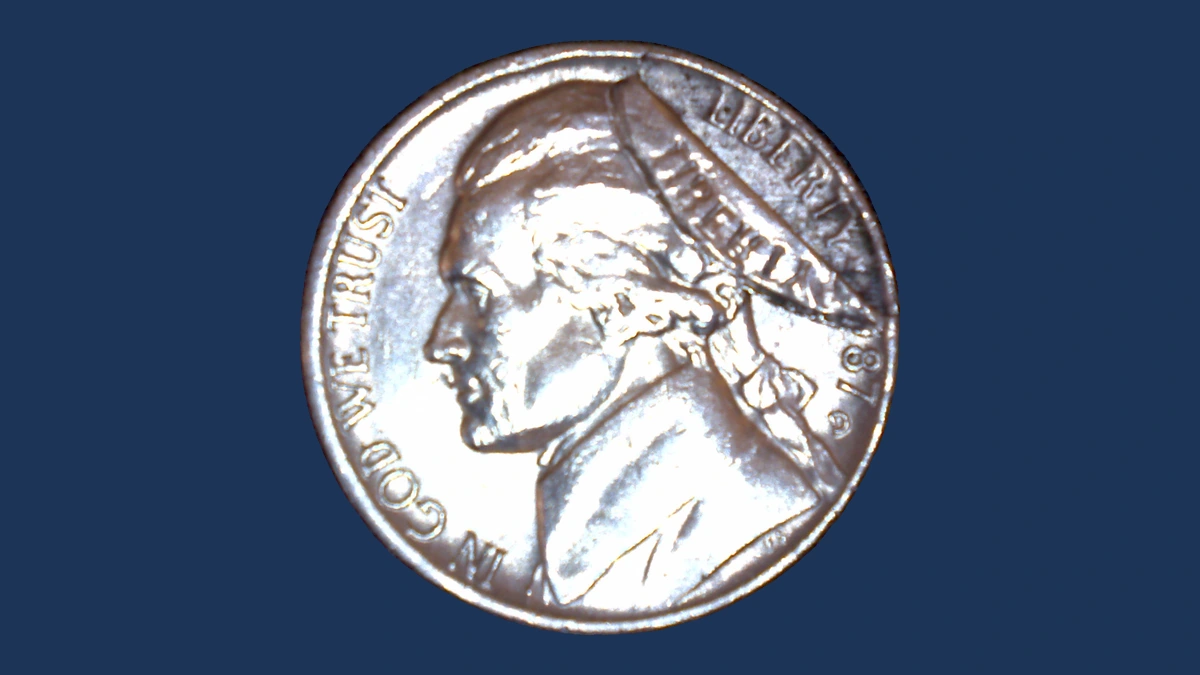
A thin flap remains connected to the front of a reported 1987-D nickel. The metal separated within the coin and bent over, rather than a normal outer coating simply peeling off.
This is described as a retained lamination, meaning the separating layer remains attached. Normal nickels use a uniform mixture of copper and nickel, not bonded sheets like a modern quarter.
The holder’s photographs prompted discussion of when the flap folded. Its folded position alone does not establish that it was struck down during minting.
Later handling can enlarge or bend an existing separation.
Estimated Value
For a genuine 1987-D retained lamination with a stable, visible flap, estimate $15–$200. A clear connection to the original surface helps collectors understand the flaw.
This range concerns the reported metal separation, rather than a certified sale of the photographed coin. It does not add a special premium for an assumed fold before striking.
A flap bent or enlarged later may be less desirable. Preserve it in its present position instead of trying to make the error look larger.
How to Identify
Support the coin so the flap cannot catch on its holder or your fingers. Leave its folded position unchanged.
Use a 10× magnifier to examine the hinge where the thin layer remains attached. A natural internal separation differs from a neat cut through a finished surface.
Move the light to see underneath any already open area. Do not lift the layer to expose more of it.
Weigh a loose example with a scale against 5 g and use calipers only on intact portions near the normal 21.2 mm diameter. The plain edge may show whether the separation continues into the coin.
Study the metal around the bend for later tearing or tool marks. Those signs can explain enlargement of an original flaw without proving that the flap folded before striking.
4. 1987 Jefferson Nickel Raised Cracks and a Patch Joined to the Rim
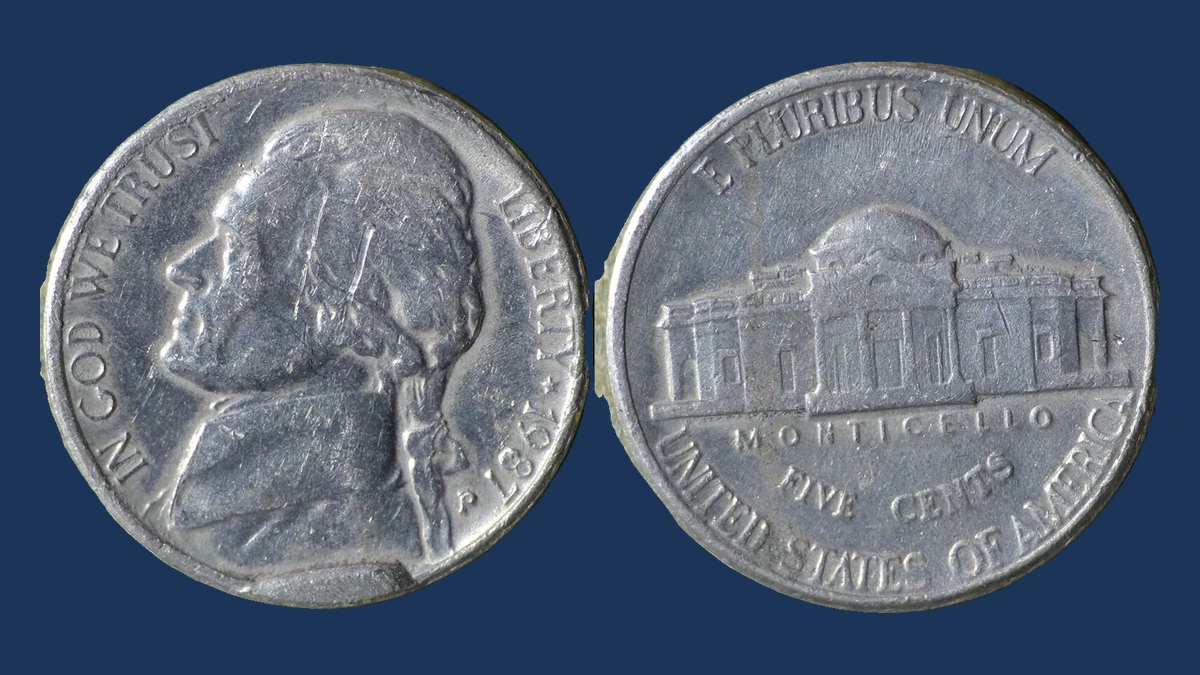
A thin raised line can become a broad raised patch when a stamping tool breaks. Metal fills the crack or missing area in the tool during the blow.
A narrow opening leaves a line across the coin. A larger missing piece at the tool’s edge produces a patch connected to the rim, called a cud.
A 1987-P cud example was graded PCGS MS64, meaning an unworn coin. Its documented label does not establish a universal side or clock position for every 1987 break.
A dent pushing rim metal over the design can imitate a raised patch.
Estimated Value
The PCGS MS64 1987-P cud sold for $57 in May 2021. It gives a direct example of an unworn rim break trading at a modest price.
Estimate $3–$30 for small raised cracks and $30–$300 for clear rim-connected breaks. The shape, size, and surrounding condition affect which comparison fits.
A larger patch is not automatically better if damage obscures its origin. Scratches cut into the coin and metal folded inward by impacts do not receive a tool-break premium.
How to Identify
Inspect the plain edge beside a suspected cud before judging the raised patch, using a 10× magnifier to look for a dent. An impact can fold edge metal inward and imitate a feature made by a broken stamping tool.
Follow the patch into the rim and compare its boundary with an authenticated example, without assuming a particular clock position. For a separate thin line, check whether it stands above the surface rather than cutting into it like a scratch.
A scale and calipers can record a loose nickel against 5 g and 21.2 mm without pressing on the raised feature. Check for a seam or different surface texture around any blob, since attached material is not an original tool break.
5. 1987 Jefferson Nickel Uneven Detail from a Tilted Stamping Tool
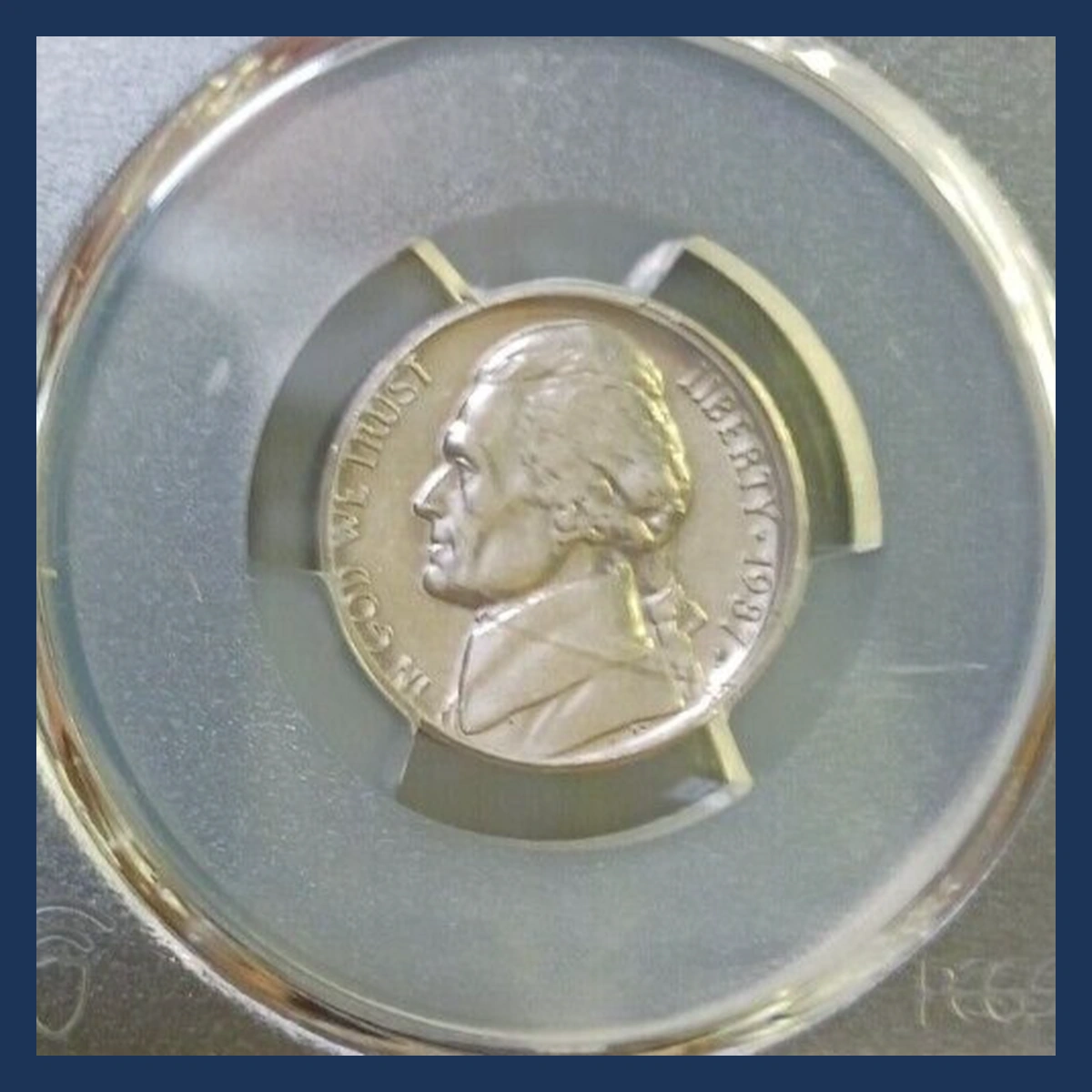
Detail can become uneven when a stamping tool meets the blank at an angle instead of squarely. Some areas receive stronger contact while others remain less fully formed.
A 1987-P example was certified as struck by a tilted, misaligned die. Its PCGS label also notes cleaning and AU detail, meaning only light wear remains.
The tool problem and the cleaning are different parts of the coin’s history. One occurred during minting, while the other changed the surface afterward.
A bent coin or one-sided pressure damage can also create uneven height and detail.
Estimated Value
The cleaned 1987-P example sold for $32 on July 5, 2022. That low result reflects a genuine minting error on a coin with a separate surface problem.
Estimate $25–$100 for recognizable worn or cleaned examples and $100–$300 for clearer pieces with better surfaces. This is a complete-coin range rather than a guaranteed premium.
Do not use a later offer amount as the auction result. Stronger uneven detail still needs to come from the strike rather than later bending.
How to Identify
Lay the coin on a flat, soft support and view its edge without pressing it down. A visible bend may explain uneven height before a tilted stamping tool needs to be considered.
Compare the strength of the design across each face with a normal nickel. A 10× magnifier can show whether weakly formed detail fits the changing rim height or whether damage has simply flattened one area.
Use calipers gently against the normal 21.2 mm width and a scale against 5 g for a loose coin. Inspect the plain edge for squeezing marks, while separating fine cleaning scratches from the original shallow strike.
A tilted tool does not mean the two faces are rotated relative to each other. Check the uneven contact across the surface instead.
6. 1987 Jefferson Nickel A Wider Outline around the Complete Design
An expanded border can surround the portrait and building without leaving parts of the design off the coin. The blank spread outward because the collar ring did not properly hold its edge during striking.
This is a broadstrike. A 1987-P example graded ANACS MS64 provides a specific unworn case, separate from the repeated-strike example described later.
The amount of outward spread must be measured on the individual coin. A general size quoted for broadstruck nickels is not a measurement of this specimen.
The ordinary smooth nickel edge remains a normal feature, not proof of the error.
Estimated Value
The ANACS MS64 broadstruck 1987-P nickel sold for $53 in December 2011. A later comparison, a 1999-P broadstrike graded PCGS MS63, brought $89 in March 2025.
Estimate $25–$150 for clear worn or marked examples and $150–$300 for more attractive pieces with strong expansion. These are whole-coin values.
The raised details should survive naturally within the wider outline. A coin flattened after minting does not qualify simply because it has grown wider.
How to Identify
Set a normal nickel beside the candidate and compare how much room remains outside the complete design. Calipers can measure any spread beyond 21.2 mm, but no fixed larger diameter applies to every broadstrike.
Use a 10× magnifier to inspect the outer lettering for crushing and the plain edge for pressure marks or a sharp lip. Those changes may show that a normal coin was flattened after leaving the Mint.
Weigh a loose example against 5 g on a scale, then compare the back with the front. Both faces should fit the same outward spread, while missing design beyond the blank suggests an off-center strike that needs its own explanation.
7. 1987 Jefferson Nickel A Lightweight Blank Rolled Too Thin
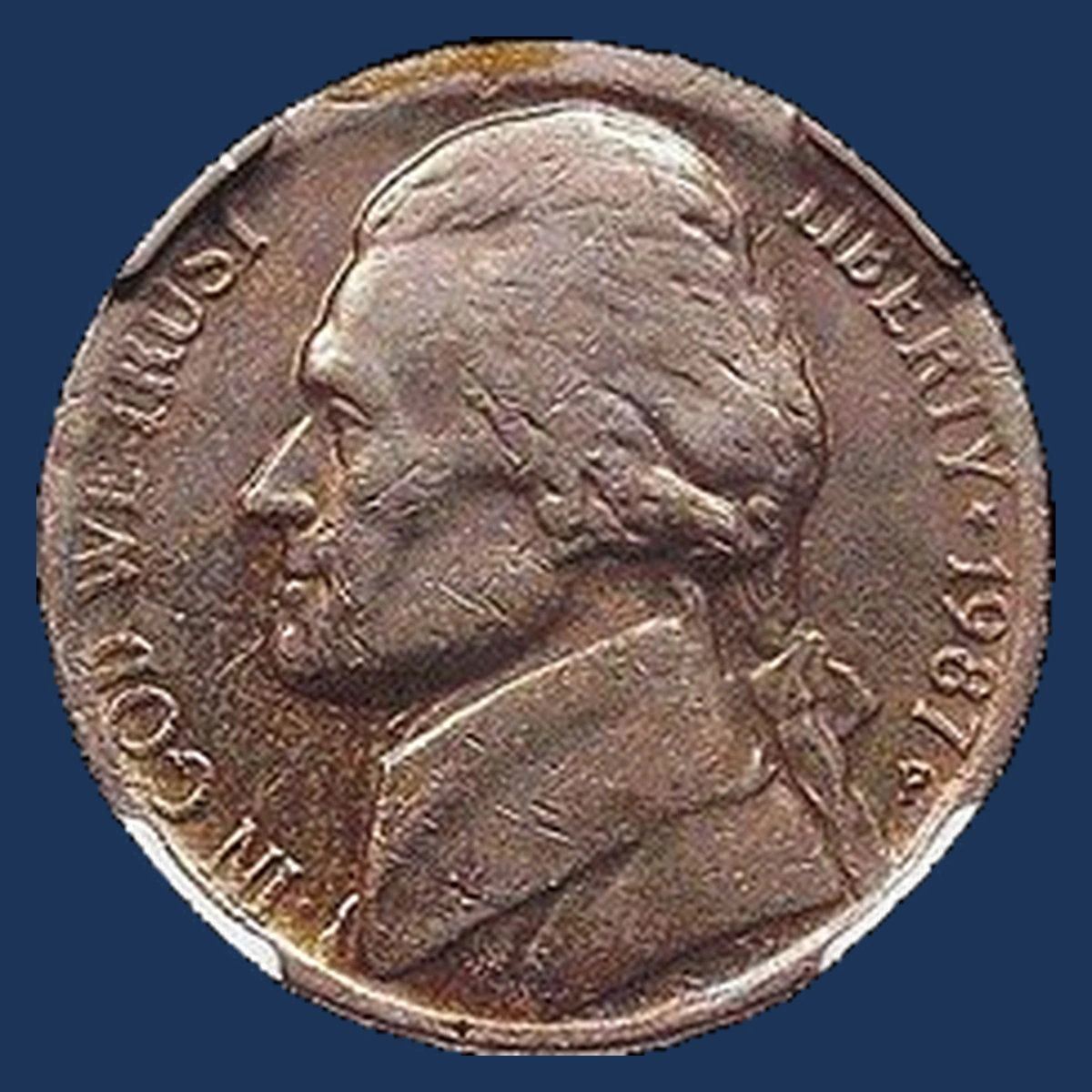
A nickel may look thinner and weigh less even though its design belongs on that metal. If the strip was rolled too thin before blanks were cut, each disc contains less material than intended.
The recorded 1987-D example weighs 3.7 g and was graded PCGS AU50, showing light circulation wear. Its label identifies a rolled-thin blank.
Another 1987-D nickel also weighs 3.7 g but was identified as a foreign blank. Equal weight does not make those two errors the same.
Grinding or chemical damage after minting can also reduce a coin’s weight.
Estimated Value
The 3.7 g rolled-thin 1987-D nickel sold for $73 on September 16, 2024. Its AU50 grade describes a worn example rather than an untouched coin.
Estimate $50–$150 for clear circulated pieces and $150–$300 for attractive unworn examples with reliable identification. The low weight needs to agree with the metal and surviving strike.
A different coin certified as a foreign blank requires its own comparison. Neither that label nor a higher price follows automatically from the same 3.7 g reading.
How to Identify
Compare the thickness with an ordinary nickel without squeezing either coin. Calipers can check accessible areas, though the exact thickness of the recorded example was not published.
A scale should show its low weight clearly: 3.7 g instead of the normal 5 g. Another coin weighing the same amount need not have the same cause.
Look at the design through a 10× magnifier for evidence of metal removed after striking. Grinding may leave parallel marks, while chemical damage can leave a rough or porous surface.
Inspect the plain edge for filing and compare the diameter with the ordinary 21.2 mm. A thin outline and low weight still need to agree with the coin’s metal.
A specialist can distinguish a thin nickel blank from the separately reported foreign blank. Keep both labels and photographs attached to their own examples when making that comparison.
8. 1987 Jefferson Nickel Design Shifted onto Part of the Blank
An unstruck crescent remains when the blank enters the press away from its intended position. Some of the portrait or lettering then misses the metal entirely.
A 1987-P nickel graded NGC MS64 was described as thirty-five percent off center. It appeared in an auction lot with four nickels from other years.
A separate dealer example was forty percent off center toward 12:30, near the upper edge with the portrait upright. Those figures belong to that example rather than the first coin.
The unstruck area still contains metal, unlike a missing edge section.
Estimated Value
Estimate $25–$200 for recognizable 1987-P off-center nickels, with $200–$500 for particularly attractive examples retaining a clear date. The amount of displacement alone cannot set the price.
The auction lot containing the thirty-five-percent coin brought $138 in August 2010, but it included five coins. That total must not be presented as this nickel’s individual price.
For a later individual comparison, a 1999-D nickel sixty-five percent off center sold for $75 in September 2024.
How to Identify
Read the date on the coin itself before comparing photographs from a mixed-year auction lot. With a 10× magnifier, follow the boundary between the raised design and the plain metal that missed the stamping tools.
A scale should still find about 5 g on an intact loose nickel, since an unstruck area has not lost its metal. Use calipers around the roughly 21.2 mm original outline and inspect the plain edge for trimming or later cuts.
Turn to the back and check whether its displaced design fits the same position of the blank. Keep the forty-percent example’s 12:30 direction separate from the thirty-five-percent auction coin rather than combining their features.
9. 1987 Jefferson Nickel Overlapping Strikes with Spread or Displacement
A second impression can cross an earlier portrait, word, or rim after a nickel moves between blows. On one 1987-P broadstruck example, the later rim impression runs through the earlier WE.
That coin also has a wide unstruck area near five o’clock. Another auctioned example has an off-center second strike and an NGC AU58 grade.
A separate dealer description gives an eighty-percent second strike toward three o’clock, with the date and mint letter in that later impression. Its exact measurements should not be assigned to the AU58 coin without matching the specimens.
Estimated Value
The AU58 off-center double strike sold for $159 in March 2025. The older broadstruck example appears in 2004 auction records at $34 and $38, showing that overlapping strikes can be inexpensive.
Estimate $50–$500 for clear ordinary combinations and $500–$1,500 for stronger displacement with attractive surfaces. Each range concerns the complete coin.
Do not add a separate broadstrike price to the double-strike value. The overlapping designs and wider outline belong to one minting accident.
How to Identify
On the broadstruck example, use a 10× magnifier to follow WE into the line left by the later rim. That intersection is stronger evidence of two blows than a vaguely doubled edge.
Next inspect the unstruck area at five o’clock and compare the back. Keep the separate eighty-percent, three-o’clock example beside its own photographs so its date placement stays with the right coin.
A loose nickel started near 5 g and 21.2 mm. Record weight with a scale and measure the altered outline with calipers without forcing it back into a round shape.
Inspect the plain edge for cuts or later flattening. A second normal raised impression should overlap the first, unlike a backward impression forced into a coin by later pressure.
10. 1987 Jefferson Nickel A 3.7 g Blank Intended for a Foreign Coin
A light nickel can have the correct American design on metal intended for a foreign coin. The wrong blank reached the nickel press before it received any foreign design.
GreatCollections recorded a 1987-D example weighing 3.7 g and graded NGC MS61. That grade describes an unworn coin with substantial marks.
The listing does not name the foreign country, denomination, or metal mixture. Those details cannot be supplied just by finding another coin with the same weight.
The separately certified 3.7 g rolled-thin nickel shows why weight alone is not a complete identification.
Estimated Value
For the certified foreign-blank type, allow an estimated $300–$1,500. The actual metal, size, preservation, and strength of the identification affect the useful comparison.
A 1995-P nickel on a dime blank sold for $336 in July 2022. That domestic wrong-blank sale offers a modest comparison, not proof of the foreign blank’s identity or its exact value.
A lightweight nickel without reliable identification belongs outside this range until ordinary thinning, corrosion, and a rolled-thin blank have been ruled out.
How to Identify
The NGC MS61 foreign-blank example and the PCGS AU50 rolled-thin nickel both weigh 3.7 g. Begin with their separate labels and complete photographs, rather than treating the matching weight as evidence of a common blank.
For a loose candidate, a scale and calipers can compare its measurements with the normal nickel’s 5 g and 21.2 mm. Use a 10× magnifier to check the edge and design for filing, chemical damage, or added coating.
An ordinary nickel’s edge is plain, but that fact cannot identify a particular foreign denomination. A specialist must assess the metal and the strike together before assigning a country to this unnamed foreign blank.
11. 1987 Jefferson Nickel A Blank Cut from Quarter Metal
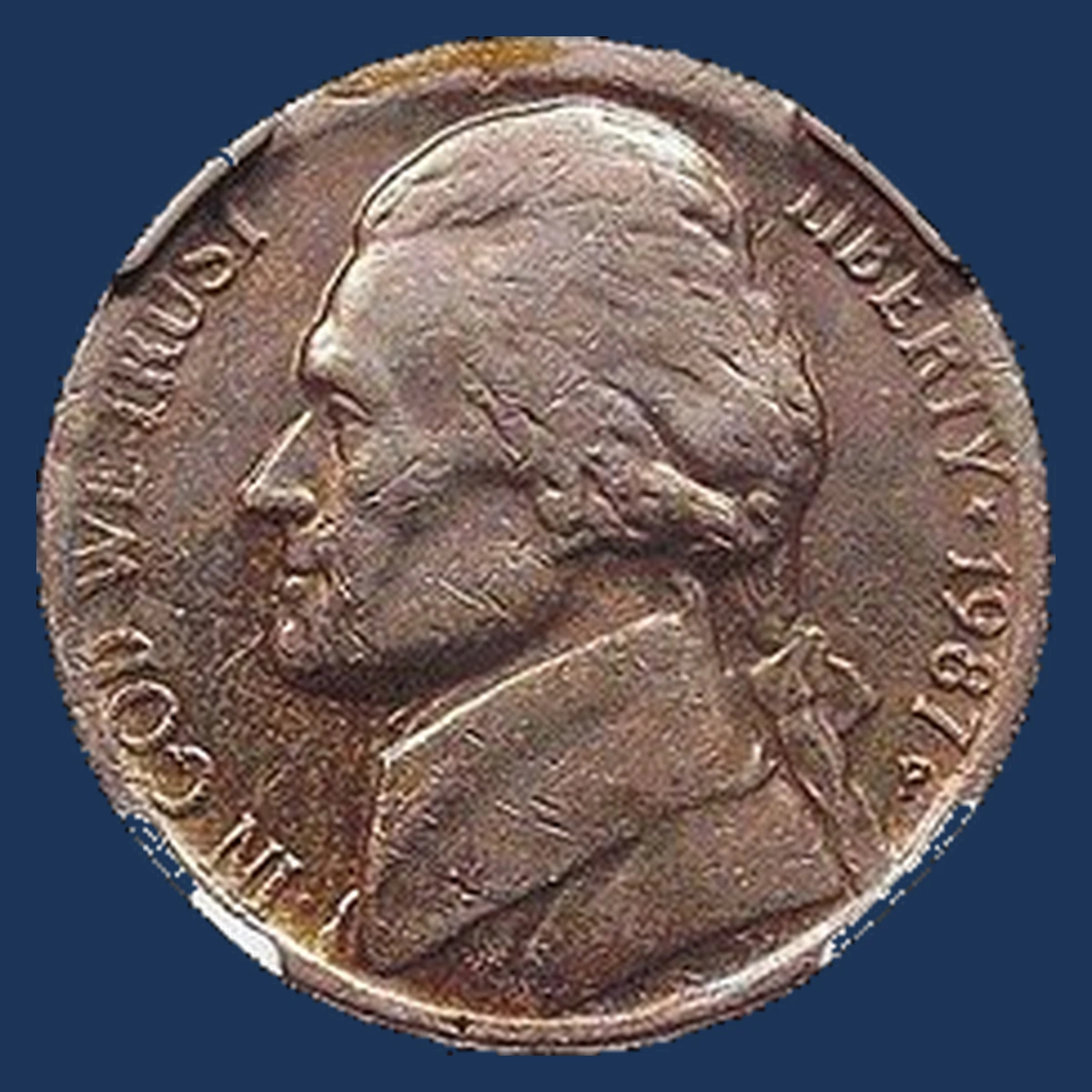
Brown and gray layers appear at the edge of a recorded 1987-P nickel. Instead of the usual uniform copper-nickel mixture, its blank came from layered metal stock intended for quarters.
The wrong strip passed through equipment that cut nickel-sized discs. This differs from putting an entire quarter blank into a nickel press.
The auctioned AU58 example weighs 4.22 g and has weakly formed left-side rims. AU58 indicates very light wear.
Its layered edge is central to the identification. Color staining or an added coating can imitate part of that appearance without proving the wrong material.
Estimated Value
An AU58 example of the clad-stock error brought $1,753.75 in August 2010. Another auction record for an AU58 piece shows $1,175 in October 2012.
Estimate $600–$3,000 for a clearly identified 1987-P wrong-stock nickel, depending on condition and the strength of the metal evidence. These figures describe a nickel-sized blank cut from the wrong strip.
They should not be applied to a merely discolored nickel. The edge construction and measurements must support the material mix-up.
How to Identify
Examine the edge through a 10× magnifier before relying on weight. The recorded coin shows copper-colored and gray bands rather than the uniform mixture expected at a nickel’s plain edge.
A scale should document the actual reading on a loose coin. The recorded AU58 example weighs 4.22 g, below the normal 5 g.
Use calipers to compare its nickel-sized outline with 21.2 mm. An entire quarter blank is a different size and is not the explanation here.
Look across both faces for added plating, staining, or chemical damage. The weak left rims on the known example support comparison but do not identify the metal by themselves.
A specialist can test the composition without cutting the coin. Preserve the layered edge and original surfaces for that examination.
Conclusion
Estimated 1987 nickel error values span $3–$3,000, from modest raised cracks to metal cut from the wrong strip. Weight alone cannot separate the 3.7 g foreign-blank coin from the 3.7 g rolled-thin example.
Check the edge, both designs, and any remaining metal flap before comparing prices. The same care applies to auction records: a five-coin lot total is not the value of its single 1987 nickel, and a cleaned error still has a condition problem.