2007 Nickel Error List with Pictures

A nickel can spread far beyond its usual outline when striking goes badly wrong. A double-struck, greatly expanded 2007-D example brought $1,260 in August 2025.
The 2007 Jefferson nickel errors below range from small doubled details to that much larger mistake. Estimated values span $3–$3,000, with separate attention to ordinary coins and specially made collector Proofs.
Follow the checks to see why an incomplete blank, an overlap impression, and a wide struck coin need different explanations.
1. 2007 Jefferson Nickel Repeated Design Outlines
A second outline may follow part of Jefferson’s cheek, hair, or motto. Back-side reports describe added outlines around Monticello or its surrounding lettering.
These are described as doubled dies: steel stamping tools made with duplicated details. Coins copy the extra design from the tool, rather than needing a second blow to create it.
The front reports include Philadelphia and Denver examples. Each pattern needs its own comparison; thick lettering, glare, and flat shelves from movement during striking can look similar without being the same kind of doubling.
Estimated Value
For a matched 2007 doubled design, estimate $5–$75. Clear extra contours on an unworn coin support more than slight thickening on a worn example.
These estimates concern modest modern varieties, not every letter that appears doubled in a photograph. A buyer needs to see the same added shape under more than one lighting angle.
The upper figure assumes both a convincing identification and suitable condition. An ordinary mechanical shelf or reflection receives no doubled-die premium from this range.
How to Identify
Choose the strongest extra outline and inspect it through a 10× magnifier. Keep enough of the normal design in the photograph to show what has actually been duplicated.
Read the mint letter on that coin before selecting another example for comparison. Similar marks on P and D coins do not come from the same stamping tool.
Use changing light to separate raised design from glare. A flat shelf that cuts into a letter is different from an added contour repeating its shape.
The normal loose nickel is 5 g and about 21.21 mm across, checked with a scale and calipers. Inspect its plain edge, and reject altered or damaged outlines before attributing a small feature to the original tool.
2. 2007 Jefferson Nickel Raised Cracks and Rim Breaks
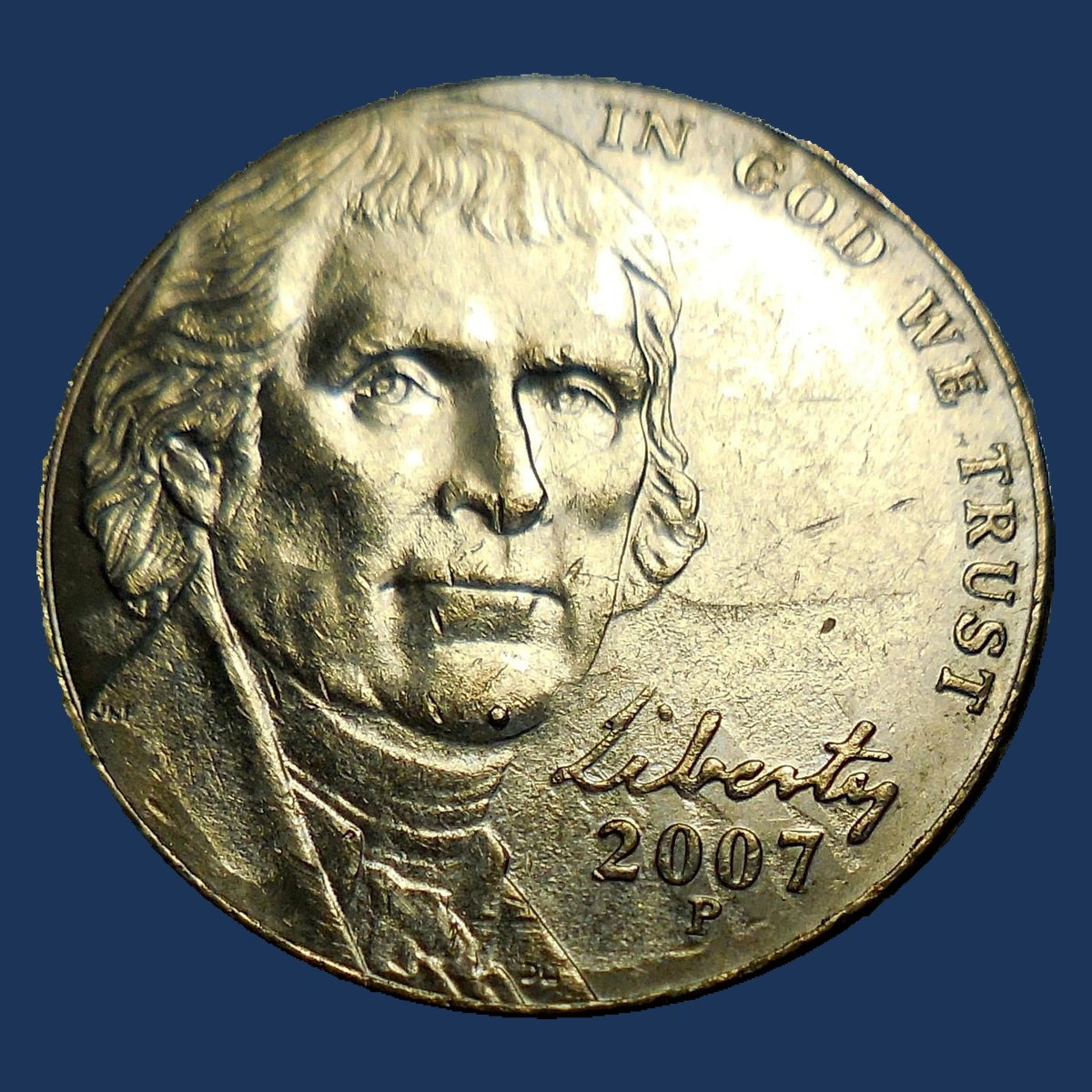
A raised line on the back can record a crack in the steel tool that stamped Monticello. Metal pressed into the crack forms a ridge on the coin.
The 2007-P reports also include a larger break connected to the rim. When a tool piece is missing there, the coin forms a raised patch instead of normal design detail.
That patch is called a cud. It differs from a fine crack or a tiny interior blob, even though all can result from damage to the stamping tool.
Estimated Value
An estimated $3–$25 covers ordinary crack lines, while clear rim-connected breaks can bring approximately $30–$200. The larger premium belongs to a larger, recognizable tool failure.
A 1983-P nickel with a cud sold for $63 in July 2022 at PCGS AU53. That lightly worn, different-year example gives a practical comparison.
The 2007 estimates depend on visibility and condition. A raised line should not inherit the value of a dramatic rim break merely because both involve cracked steel.
How to Identify
Locate the feature on the back, then follow its entire path with a 10× magnifier. Side lighting distinguishes a raised ridge from a scratch cut into the metal.
For the larger break, find the connection to the rim. Normal design should give way to the raised patch, without a seam suggesting attached material.
Check the plain edge beside it for an impact that folded metal inward. Look at the opposite face too, since a large tool break can affect how well nearby metal fills the other design.
For a loose coin, compare 5 g on a scale and 21.21 mm with calipers. Do not press the measuring jaws into the raised area or treat its height as a separate increase in metal content.
3. 2007 Jefferson Nickel Unusual Color on Both Faces
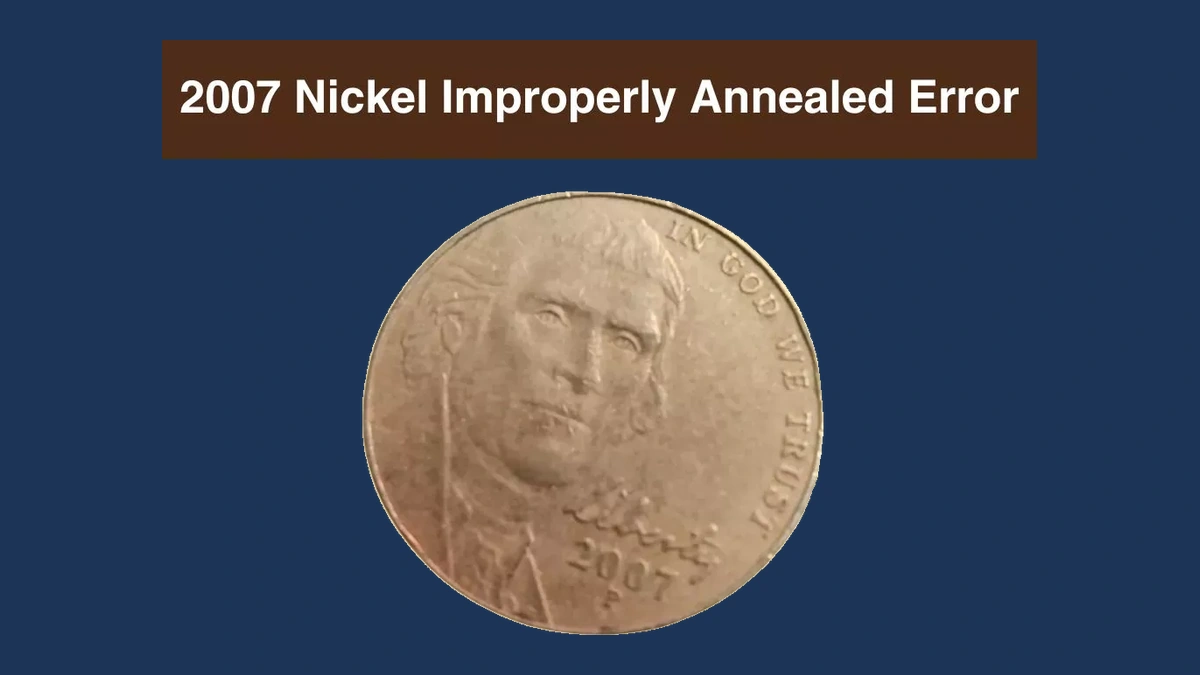
The two faces of a reported 2007-D nickel have unusual color associated with improper annealing. Annealing is the heating step that softens a blank before it enters the press.
If the heating process changes the surface chemistry, the finished coin can look dark or coppery instead of its usual silver-gray. The design can still be sharply struck.
A similar appearance can develop later from chemicals, heat, or environmental exposure. Color therefore starts the examination rather than completing it, and a bright reflection alone does not establish that the surface is original.
Estimated Value
Allow an estimated $30–$250 for authenticated 2007-D annealing errors. Attractive original surfaces and a clear professional identification support the higher end.
A 2005-D Bison nickel with improper annealing sold for $119 in December 2022, graded NGC MS62. That unworn example is a different-year comparison, not the price of the reported 2007 coin.
A stained nickel does not share the premium simply because its color matches. Cleaning and later heat damage can also lower the coin’s appeal.
How to Identify
Compare the color of both faces and the plain edge under neutral lighting. A coating that breaks at high points or peels near the edge needs a different explanation.
A 10× magnifier can reveal deposits, pits, and scratches that help separate later damage from a mint-made surface. Keep the coin uncleaned while taking photographs.
With a scale and calipers, record a loose example against the normal 5 g and 21.21 mm. These readings establish size and weight, not why the coin changed color.
The alloy is solid copper-nickel throughout. Ask a specialist to assess the surface chemistry and texture rather than describing a dark patch as a missing nickel layer or relying only on surviving shine.
4. 2007 Jefferson Nickel Expanded or Uneven Border
An extra-wide border can surround an otherwise complete design. A broadstrike results when the ring that normally limits the coin’s diameter fails to contain the metal during striking.
The recorded examples include a 2007-D coin and a separate 2007-P uncentered broadstrike. On the latter, the design sits unevenly within the expanded metal.
Uneven placement does not automatically make it an off-center strike. If the main design remains complete, the expanded border is the important feature; a true off-center strike loses part of the design beyond the edge.
Estimated Value
A 1999-P broadstruck nickel graded PCGS MS63 sold for $89 in March 2025. That unworn coin offers a recent comparison for ordinary broadstriking.
For the 2007 single-strike examples, estimate $25–$250. Clear expansion and attractive surfaces help support the higher part.
This range is separate from the much larger double-struck 2007-D coin discussed below. An uneven border alone should not inherit the price of a coin that underwent repeated striking and much greater distortion.
How to Identify
Check whether every main design element remains before calling an uneven coin off center. The P example was described as an uncentered broadstrike, so the preserved design matters more than its apparent sideways shift.
Measure the loose coin in several directions with calipers against 21.21 mm. A scale should read close to the normal 5 g unless another problem also changed the metal.
Inspect the expanded border through a 10× magnifier. Natural spreading should agree with the design, without flattened letters or pressure marks suggesting later squeezing.
The edge is normally plain. Its lack of grooves is therefore irrelevant; keep both faces and the expanded outline in comparison photographs so the complete design can be assessed.
5. 2007 Jefferson Nickel Straight, Curved, and Elliptical Missing Metal
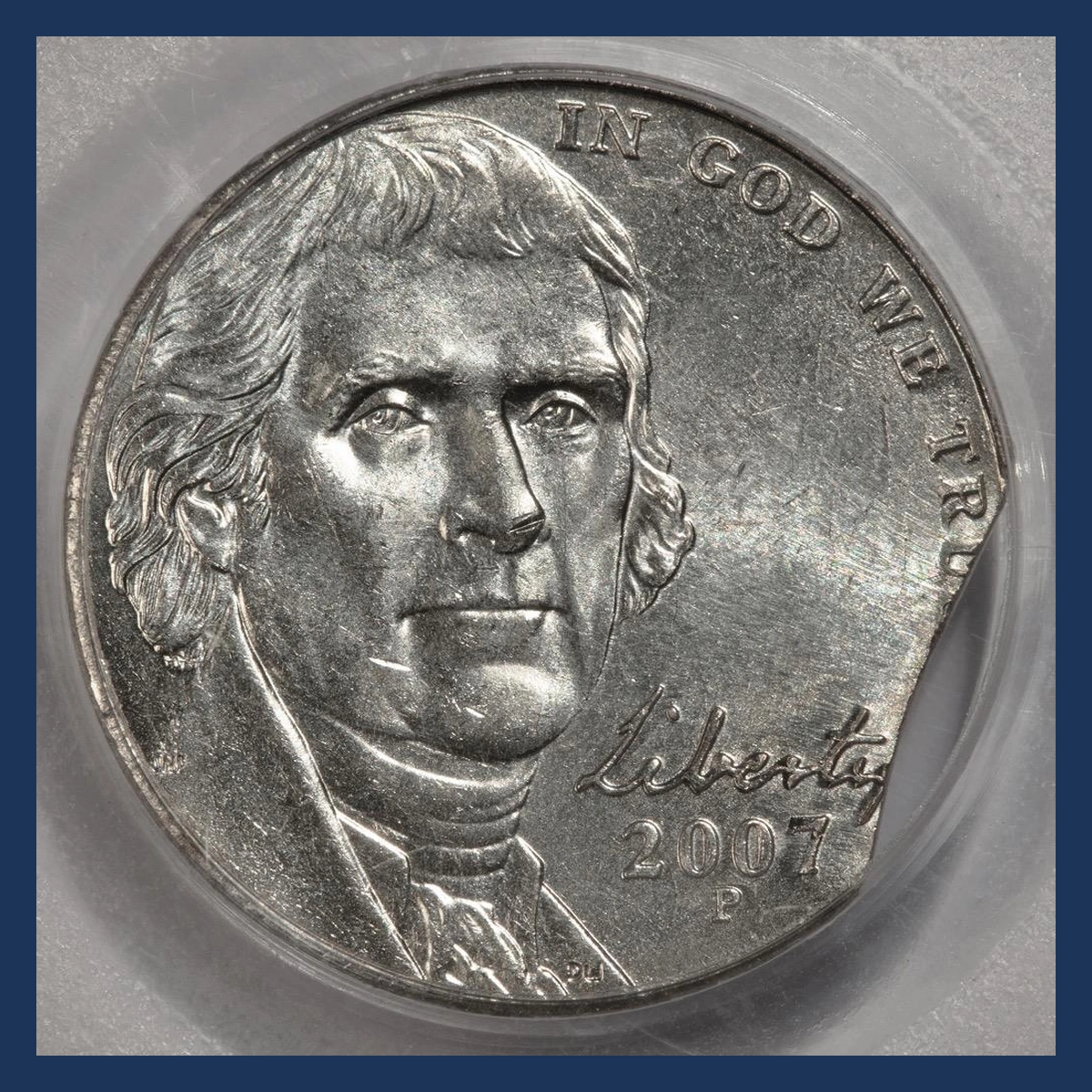
Incomplete blanks can leave more than one kind of outline. The 2007 reports include a straight clip, two curved missing sections on a Denver coin, and a separate elliptical Denver example.
The elliptical piece is recorded at 4.0 g, below the normal nickel weight. Its shape came from an incomplete blank, rather than merely squeezing a complete round coin into an oval.
All concern metal missing before striking. The ends of each opening and the nearby design help distinguish these errors from cutting, filing, or damage received afterward.
Estimated Value
Estimated values run from $15–$100 for modest clips to approximately $75–$350 for strong double clips or convincing elliptical blanks. Condition and the clarity of the shape affect the result.
A 1997-P nickel with a 20% curved clip sold for $124 in March 2025. That different-year sale provides context for a visible missing section, not an exact price for the 4.0 g Denver coin.
A squeezed oval with no original missing metal does not qualify for the elliptical-error range.
How to Identify
Weigh the loose coin before deciding what its outline means. The recorded elliptical example is 4.0 g, while a normal nickel is 5 g; later cutting can also cause weight loss.
Use calipers to record the long and short dimensions against a normal 21.21 mm disc. Under a 10× magnifier, inspect the plain edge and the ends of each missing section for natural metal flow.
Straight edges are not automatically damage, and curved edges are not automatically genuine. Saw marks, sharp burrs, or crushed design can reveal later alteration.
Photograph the opposite rim as well as the opening. Weakness there may support a clipped blank, but the original edge and surrounding struck detail must also fit.
6. 2007 Jefferson Nickel Impression on a Collector Proof
A depression or interrupted design can stand out against the reflective surface of a Proof nickel. Proofs are specially made collector coins, rather than ordinary coins struck for circulation.
A 2007-S example was graded NGC Proof 69 Ultra Cameo with a front-side struck-through error. Ultra Cameo describes strong contrast between the frosted design and mirrored background.
The error formed when material blocked normal contact during striking. Its exact substance should not be guessed from the name alone; a scratch made later can also look conspicuous on a bright mirrored surface.
Estimated Value
For a genuine 2007-S Proof struck-through error, estimate $50–$400. A clear impression with clean surrounding surfaces can be more appealing than a tiny disturbance visible only at one angle.
GreatCollections sold the Proof 69 example in August 2012. The estimate here is not a claimed realized price for that sale.
A high numerical grade describes preservation, not the size or rarity of the error. Compare the actual impression as well as the collector finish.
How to Identify
Keep a certified Proof in its holder.
Reflections can conceal or exaggerate an impression, so examine the front with a 10× magnifier while changing the light angle.
Look for a depression that interrupts the struck design naturally. A narrow scratch with pushed-up metal beside it has a different appearance from material blocking the strike.
Confirm the S and the reflective Proof finish before choosing price comparisons. Ordinary P or D coins do not share that finish.
If an example is loose, use a scale and calipers carefully against 5 g and 21.21 mm, and inspect its plain edge. Do not touch the mirrored fields or clean the impression, since tiny new marks can seriously affect a Proof’s appearance.
7. 2007 Jefferson Nickel Part of the Design beyond the Edge
Part of the design may fail to reach the coin because the blank sat away from the stamping tools’ center. A smooth unstruck crescent remains opposite the missing portrait or lettering.
The 2007 reports include Philadelphia examples. A real off-center strike needs design loss, not simply an uneven amount of border around a complete design.
That distinction separates it from the uncentered broadstrike described above. A small tool-alignment problem on one face can also create an uneven rim without displacing the whole blank between both tools.
Estimated Value
Estimate $30–$500 for dated 2007 off-center strikes, from modest shifts to dramatic examples with good surfaces. Readable dates make comparisons easier and usually help collector interest.
A 1999-P nickel described as 15% off center sold for $64 in March 2025. It illustrates the relatively modest value possible for a smaller shift.
The upper estimate is for a substantially stronger display piece. It does not assign a particular percentage or direction to the general 2007 reports.
How to Identify
Examine the missing design before measuring the empty area. An unusually wide border with all the main design present may be a broadstrike instead of an off-center strike.
Compare both faces, keeping the date upright in the front photograph. The displacement should make sense for a blank that missed the centers of both tools.
Use a 10× magnifier at the boundary of struck and untouched metal to look for grinding or later cutting. A scale should compare a loose coin with 5 g, while calipers record its outline against the normal 21.21 mm diameter.
The edge is normally plain. Preserve enough of the date and mint letter in photographs to establish the year and mint directly, rather than borrowing them from a listing title.
8. 2007 Jefferson Nickel Impression from Another Clipped Blank
A broad depression can interrupt the design even though the coin itself has no matching piece missing from its outline. A recorded 2007-D example was indented by another nickel blank that was clipped.
The other disc overlapped this coin during striking. It blocked the tool and pressed into the underlying metal, leaving an indent that reflected the overlapping disc’s shape.
The clipped blank and the indented coin are different objects. This distinction matters: the unusual depression is not proof that the displayed coin was itself cut from an incomplete blank.
Estimated Value
For a clearly identified 2007-D indent of this kind, estimate $100–$600. A distinctive boundary that shows the clipped overlapping blank can appeal more than a small, ordinary depression.
This is an estimate for the reported NGC MS62 type, not a claimed sale amount. That grade describes an unworn coin with noticeable marks.
The cause must be supported by the impression’s shape and surrounding strike. A later dent or pressed-in object does not receive the same mint-error premium.
How to Identify
Follow the coin’s outline with a 10× magnifier to see whether its own metal is missing, then inspect the inner depression. The clipped shape belongs to another blank that overlapped this coin, so these two boundaries should not be confused.
Compare how the struck design meets the depressed area, looking for natural pressure rather than a sharp gouge or scraping. Clear backward letters would suggest contact with an already struck coin instead of the plain overlapping blank described here.
A loose example can be checked with a scale against 5 g and calipers against 21.21 mm, including its plain edge. Do not expect the missing-metal weight loss of a coin that itself began as a clipped blank.
9. 2007 Jefferson Nickel Repeated Strike with Major Expansion
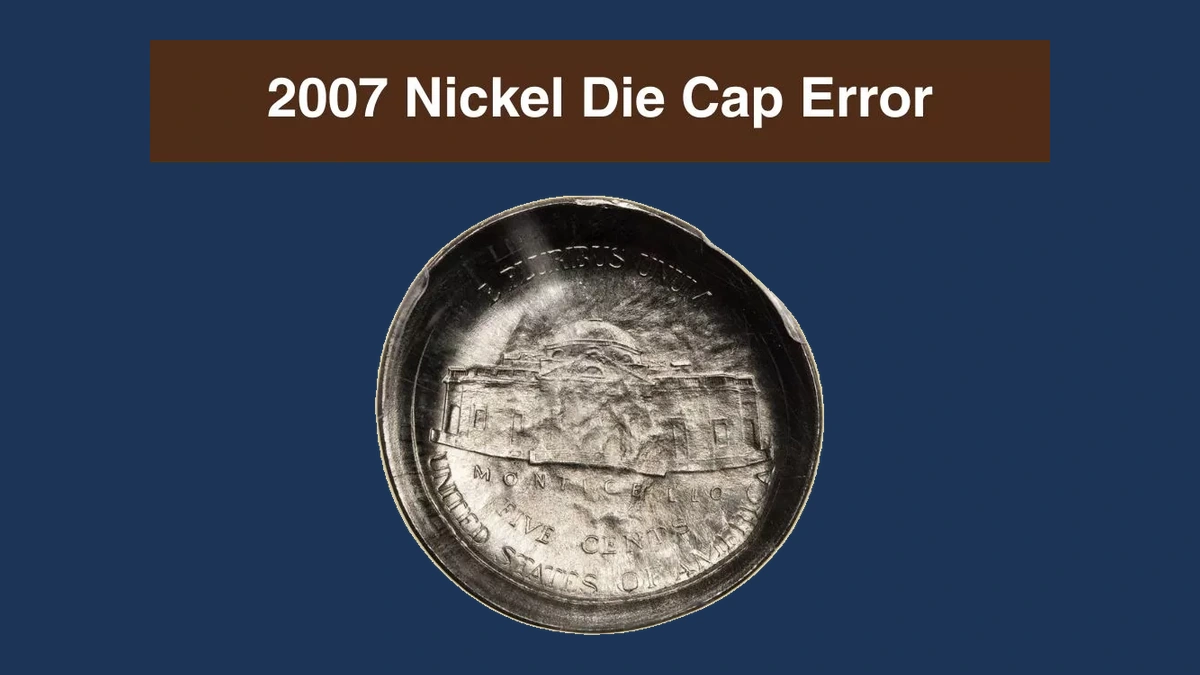
This 2007-D coin is much more distorted than an ordinary broadstrike. Repeated striking and major outward spreading produced an unusual shape with a cup-like raised edge.
PCGS labeled it Double Struck and Large Broadstrike. Error specialist Mike Byers discussed the piece as a reverse die cap, a coin that sticks to a stamping tool and begins to wrap around it.
The visible expansion and repeated strike are the starting facts. The cap explanation should not be turned into an extra claim that this coin necessarily carries a sunken mirror-image design.
Estimated Value
The PCGS MS63 example sold for $1,260 on August 31, 2025 at Heritage Auctions. Its unworn condition and dramatic shape distinguish it from a mildly expanded nickel.
An estimated $500–$3,000 covers comparable, well-authenticated combinations of repeated striking and major cap-like distortion. It is not a price for every cupped coin.
Later bending can imitate the outline. The original strike details and natural metal flow must support the much larger premium.
How to Identify
View the raised edge from the side and compare the entire outline with the auctioned coin, rather than judging one close-up. A bowl shape alone cannot explain whether the coin stuck to a stamping tool or was bent later.
Under a 10× magnifier, follow the second-strike traces and the metal’s transition into the raised edge. Natural flow should fit repeated pressure during striking, without sharp folds or scars from tools used afterward.
The starting nickel standard is 5 g and 21.21 mm, so a scale and calipers document how a loose example differs. Its edge began plain; never straighten the cup or press it flat merely to make the coin easier to measure.
Conclusion
Estimated values for 2007 Jefferson nickel errors run from $3 to $3,000. Small tool flaws sit below obvious clipped blanks, displaced designs, and the large double-struck example that sold for $1,260.
Pay attention to what changed: the original disc, the stamping tool, or the coin’s position during striking. Keep Proofs separate from ordinary coins in price comparisons, and preserve unusual edges or impressions without trying to straighten, clean, or improve them.