2008 Nickel Error List with Pictures

Two missing crescents and six complete steps can coexist on one nickel. The gaps describe an error; the steps describe strike quality.
That distinction helps when comparing 2008 nickel errors, with estimated values here from $3–$400. A 1997-P curved-clip nickel brought $124 in March 2025, offering an earlier-year auction comparison for missing-blank errors.
The list also covers tiny doorway additions, tilted designs, and expanded outlines. Check the feature itself as you work through the examples below.
1. 2008 Jefferson Nickel Cracked and Chipped Tools
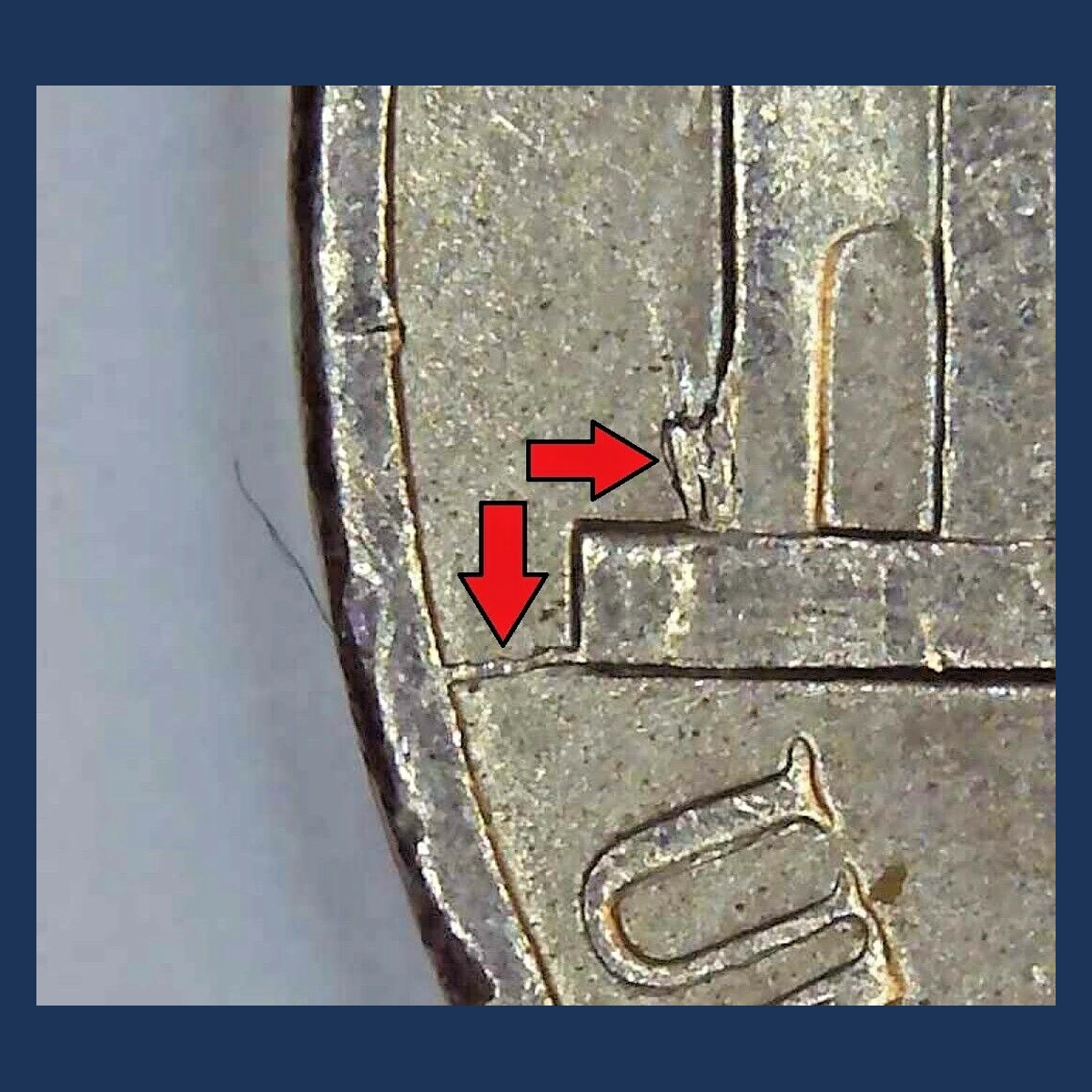
A raised line across the back can begin with a crack in the stamping tool. Copper-nickel metal fills the opening during the blow and becomes a ridge on the coin.
This type is reported on 2008-D nickels. The path needs to be judged from the particular coin.
A smaller damaged-tool feature appears in the P variety directory: a chip inside the 2 of the date. A missing piece of steel leaves extra raised metal there.
The P chip is also a useful marker for one doorway-doubling variety. It does not place the Denver crack at the same location.
Estimated Value
Allow an estimated $3–$60 for small genuine 2008 cracks and chips. Visible, well-defined shapes on clean coins generally attract more attention than faint specks on worn ones.
The little P date chip can help identify a coin, but its presence does not automatically make it expensive. Consider any related doorway doubling as part of the same complete piece.
These figures are estimates for collectible tool damage. A later dent or stuck-on material is not valued as the equivalent mint-made feature.
How to Identify
For the P chip, place the date under a 10× magnifier and inspect the inside of the 2. Compare the tiny raised addition with normal lettering before looking for related doorway detail.
The D report concerns a back crack. Follow that line under side lighting to see whether it rises above the design rather than cutting into it.
Check a loose example with a scale and calipers against 5.00 grams and 21.21 millimeters. Inspect the plain edge for dents that could have displaced metal onto a face.
Keep the two mint reports distinct in photographs. A chip matching a P variety cannot supply the missing path of a D crack, even though both came from damaged steel.
2. 2008 Jefferson Nickel Portrait Traces Transferred to the Back
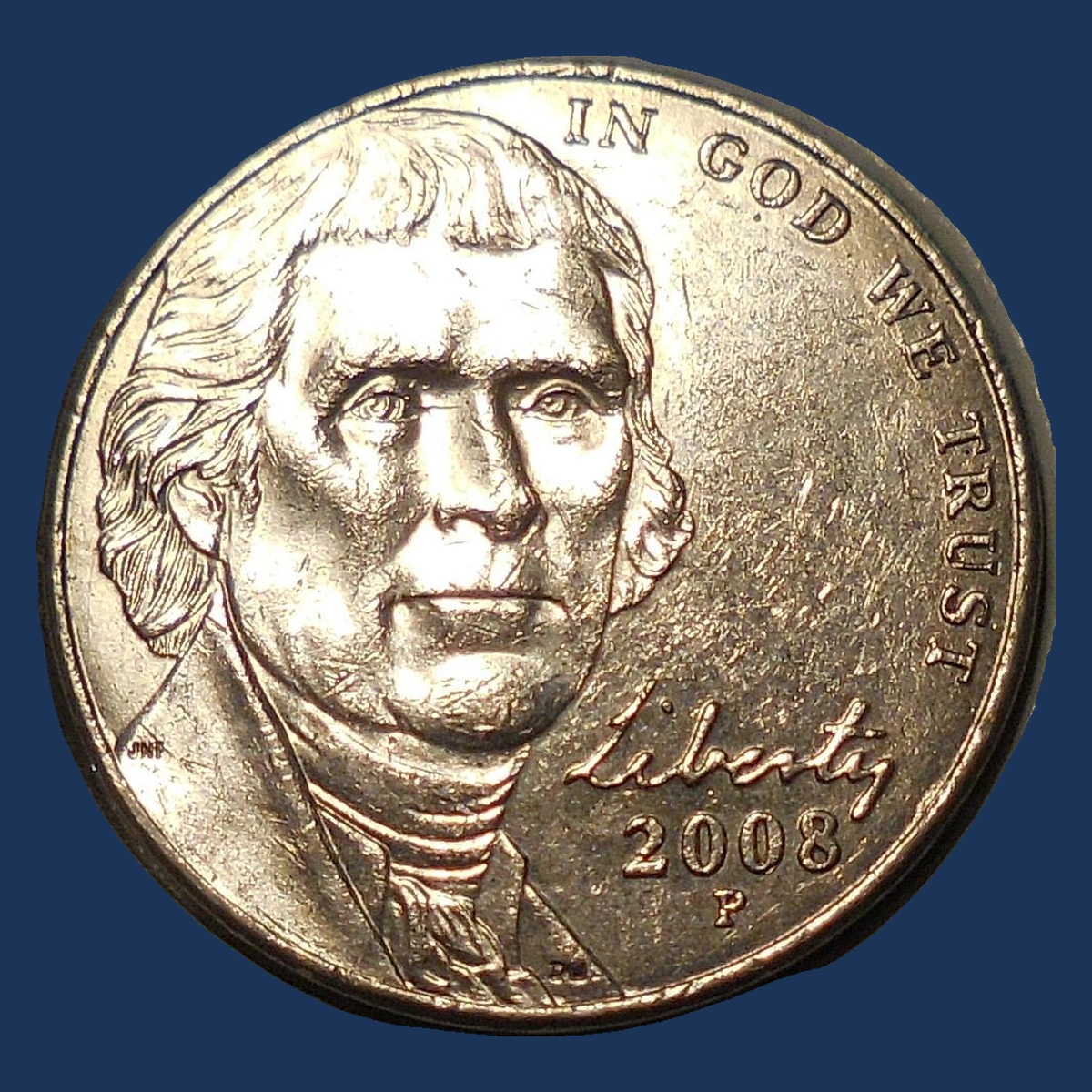
An unexpected portrait-like outline on the back is the feature to examine in a reported 2008-P clash. It is not part of Monticello’s intended design.
The two dies, the steel tools that strike the coin, touched while no blank lay between them. Contact transferred bits of their designs onto each other.
Coins struck later could then carry the extra outlines. Their presence does not mean a finished nickel was flipped and struck again.
A clash is judged by how the fragments relate to the opposing design. Relief alone is not a rule that every such mark must be deeply sunken.
Estimated Value
An estimated $5–$75 covers ordinary recognizable 2008-P clashes. A stronger portrait fragment on an attractive surface has more collector appeal than a few barely connected lines.
The estimate is for genuine tool contact, not a large second-coin impression created by squeezing two coins together. That later damage can look dramatic in a close-up.
Buyers need a clear explanation in the photographs. A high asking price without a convincing match to the opposite design does not establish a premium.
How to Identify
Find which part of Jefferson could explain the unusual back outline. Compare photographs of both designs, turning the image as needed rather than rotating the coin unpredictably during inspection.
A 10× magnifier helps trace a fragment past the place where it crosses normal building detail. An isolated line that resembles nothing on the front is a poor match.
For a loose coin, record weight and diameter with a scale and calipers against the normal 5.00 grams and 21.21 millimeters. Check the plain edge for compression.
Deep backward lettering across a broad area suggests a different transfer mechanism. Judge a clash from the connected design fragments, without imposing a rule that every genuine trace must be below the surface.
3. 2008 Jefferson Nickel Extra Detail in the Central Doorway
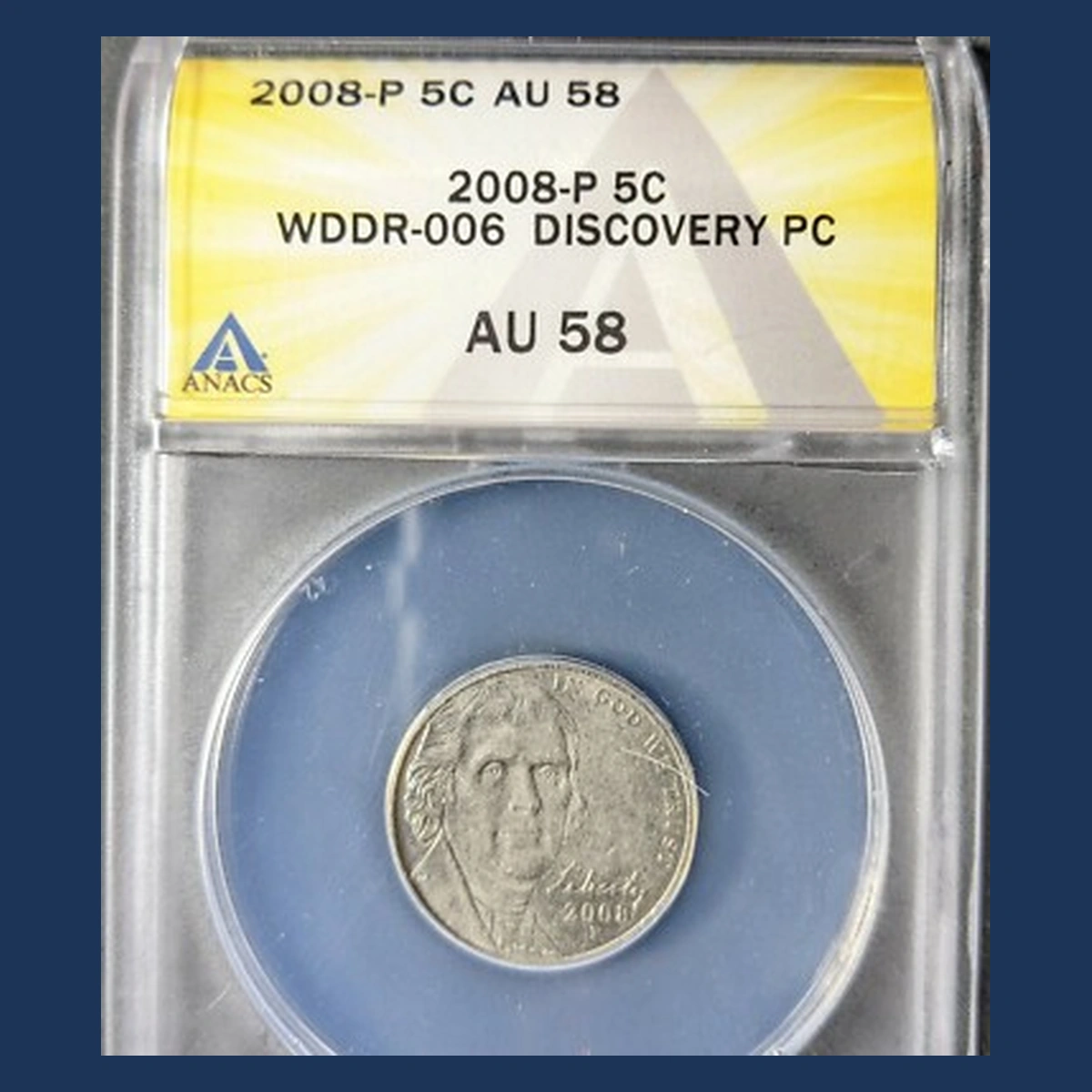
The center door has added detail on listed 2008-P varieties. Extra shapes appear below its upper frame or beneath the triangle above the doorway.
These additions were formed in the stamping tool while it was made. A tool carrying that extra design is called a doubled die.
Its coins can repeat the same addition without being struck twice. Different doorway patterns must be compared individually rather than combined into one impossible design.
Philadelphia made both circulation coins and satin-finish coins for Mint sets in 2008. The finish should be identified from the actual coin, not assumed from a doubled-doorway label.
Estimated Value
For a matched 2008-P doorway variety, estimate $5–$125. A strong extra shape on an unworn coin can draw more interest than a worn example with barely visible detail.
Compare like finishes as well as like patterns. Satin-finish set coins should not automatically receive the same valuation as ordinary circulation pieces.
This is an estimated variety range, not a stated 2008 auction result. A flat mechanical shelf or bright reflection inside the door does not qualify for the same premium.
How to Identify
Identify whether your nickel has the ordinary finish or the softer satin surface used for Mint sets. The date and P establish the year and mint, but not the finish by themselves.
For a loose example, compare 5.00 grams and 21.21 millimeters with a scale and calipers, and examine its plain edge. Then move to the central doorway under a 10× magnifier.
Compare the actual addition with the 2008-P doorway photographs. Keep the upper frame and the triangle above it distinct.
Follow the extra shape with light from another direction. Glare shifts with the lamp; a genuine tool-made addition remains attached to the same part of the architecture.
4. 2008 Jefferson Nickel Single and Double Curved Clips
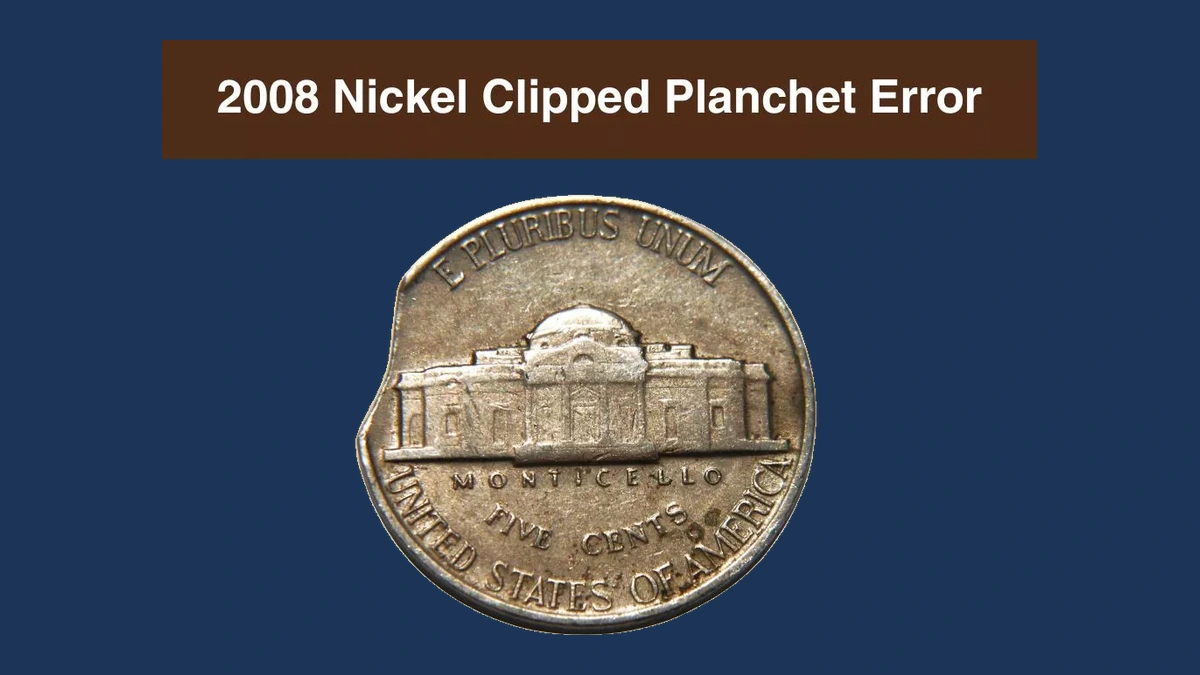
Two gaps in one coin can form when the blanking punch overlaps several empty areas in the metal strip. The incomplete disk then receives the nickel design.
The 2008 reports include a D nickel with two curved clips and a separate P nickel with one. The openings belong to different specimens.
The D report describes an NGC MS62 coin with 6FS, meaning unworn with noticeable marks and six complete Monticello steps. That step label concerns strike quality, not another mint error.
Each gap must still be examined for original metal flow. A second opening does not automatically double the value.
Estimated Value
A 1997-P nickel with a 20% curved clip brought $124 in March 2025. It provides a recent comparison for a clearly visible missing section, though it has a different year and one reported clip.
For genuine 2008 single or double clips, estimate $15–$200. The size and clarity of the openings matter alongside the coin’s condition.
A tiny double clip may appeal less than one dramatic single gap. The total price belongs to the coin, not to each opening separately.
How to Identify
For a claimed double clip, mark both gaps in a full-coin photograph before magnifying either one. Each opening should make sense as part of the original incomplete blank.
Inspect the ends of both gaps at 10× magnification for smooth striking flow or later cutting marks. Check the plain edge between them too.
A loose clipped nickel usually weighs below the normal 5.00 grams. Use a scale, then compare the surviving outline with 21.21 millimeters using calipers; do not invent a percentage from weight alone.
Look for weakness opposite the openings as supporting evidence, while allowing that it may be faint. Confirm the mint letter separately so the P single-clip report is not mistaken for the D double-clip example.
5. 2008 Jefferson Nickel Expanded Broadstrike
A 2008-D broadstrike is reported with an expanded outline rather than a missing portion of design. Its metal spread farther outward during striking.
The collar is the ring that normally controls diameter around the blank. Failure to contain it properly can allow this spreading.
The result need not be perfectly centered, and some rim detail can survive. A broadstrike is therefore not defined by an absolute lack of rim.
The full design and expanded metal must be considered together. An ordinary nickel with one uneven border, or a coin later hammered flat, can otherwise be mistaken for the error.
Estimated Value
Genuine 2008-D broadstrikes have an estimated range of $40–$300. Strong expansion with intact design and clean surfaces supports the upper part.
A 1999-P example graded PCGS MS63 sold for $89 in March 2025. That was an unworn broadstrike with noticeable marks from another year and mint.
The comparison is more useful than a generic claim that every wide rim is valuable. A coin must show actual mint-made spreading rather than damage before the estimated range applies to it.
How to Identify
Use calipers on a loose coin to record its width in several directions. Compare with the normal 21.21 millimeters, then check its weight against 5.00 grams on a scale.
Inspect the whole portrait and building to see whether the designs remain complete. A cut-off design beside an unstruck area suggests off-center striking instead.
With a 10× magnifier, follow the outer metal into the plain edge. Repeated impact marks and flattened letters can reveal later hammering.
Allow for uneven spreading rather than demanding a perfectly centered circle. A little surviving rim does not rule out the error; the measured outline and original striking surfaces must explain the enlargement together.
6. 2008 Jefferson Nickel Rotated Back Design
Monticello should stand upright after a correctly held nickel is turned from top to bottom. A rotated tool can leave the building tilted instead.
The 2008-P report describes a ninety-degree relationship, roughly a quarter-turn. This concerns the angle between the two faces rather than one design moving sideways.
Tool rotation can leave the coin’s outline, weight, and central design otherwise ordinary. That makes controlled handling especially important when checking it.
A photograph turned on a screen can imitate the effect. Two separate photographs without a fixed orientation do not show how the front and back actually relate.
Estimated Value
Estimate $40–$300 for genuine 2008-P rotations, depending on the angle and the coin’s condition. A large, easily demonstrated tilt usually attracts more attention than a slight one.
A 2015-D nickel with a ninety-degree clockwise rotation sold for $79 in October 2021. PCGS graded that comparison MS64, an unworn coin with some marks.
The later-year sale does not confirm the reported 2008 angle or direction. Measure the actual relationship before comparing the coin with a priced rotation.
How to Identify
Practice the turn with an ordinary nickel first. Hold Jefferson upright, turn the coin from top to bottom, and keep your fingers from adding a sideways twist.
Repeat the same movement with the suspected example. If Monticello remains tilted, photograph or film the controlled turn so the angle can be checked.
Use a 10× magnifier to confirm the 2008 date and P rather than judging from the building alone. Record any wear that might affect comparison with an unworn coin.
For a loose nickel, compare 5.00 grams and 21.21 millimeters with a scale and calipers. Inspect the plain edge for seams or alterations that could join two differently oriented faces into a false error.
7. 2008 Jefferson Nickel Abnormal Color from Blank Heating
An unusually colored front is reported on a 2008-P nickel as an annealing error. Annealing is the heating process that softens a blank before the design is struck.
Conditions during heating can change the metal’s surface. The later strike impresses the portrait into that affected material.
The color does not have to be perfectly uniform to deserve examination. However, neither uniform color nor patchy color alone proves a mint-made cause.
A nickel can also darken through chemicals, later heating, or its environment. Its metal is a uniform copper-nickel alloy, so a supposed missing outer nickel coating is not the explanation.
Estimated Value
For an authenticated 2008-P annealing error, use an estimated $30–$350. A strong effect on an otherwise attractive surface is generally more desirable than a damaged, dull patch.
A 2005-D Bison nickel with improper annealing sold for $119 in December 2022. Its earlier design provides a comparison for a recognized heating error.
The estimate does not apply to every discolored 2008 nickel. Establishing a mint-made surface change comes before using an error price, regardless of how striking the color looks.
How to Identify
Compare the portrait side with the back and edge under neutral light. Record whether the change is localized or widespread without assuming that one distribution proves the cause.
Do not rub the surface to test its color. Use a 10× magnifier to examine pitting, residue, and the condition of the struck detail.
For a loose example, a scale and calipers can compare 5.00 grams and 21.21 millimeters. The plain edge should also be checked for later coating or alteration.
Keep the coin’s finish in mind when making visual comparisons, since 2008 includes satin-finish set coins. Expert surface examination is needed to distinguish abnormal blank heating from changes that happened after minting; color alone cannot settle that question.
8. 2008 Jefferson Nickel Displaced Strike
A blank that enters the press incorrectly can receive only part of the intended design. The remaining metal forms an unstruck crescent beside the portrait and building.
The year guide describes a 2008-D nickel as fifteen percent off-center. That figure describes the reported example, not a measurement for every coin of the type.
Both faces should show the effects of the same misplaced blank. A design shifted only on one face may involve tool misalignment instead.
The metal in the blank crescent is still present. A clip removes part of the original disk and is a different kind of error.
Estimated Value
An estimated $30–$400 covers genuine 2008 off-center nickels, from modest shifts to more dramatic examples with a readable date. Surface quality and the remaining design affect the result.
A 1999-P nickel described as fifteen percent off-center sold for $64 in March 2025. Its matching reported percentage makes a useful comparison, though its year and mint differ.
The fifteen-percent label alone does not fix the value. A heavily marked coin can bring less than a cleaner piece with the same displacement.
How to Identify
Look at the unstruck crescent before measuring the shift. It should be intact blank metal, not an opening where someone cut away part of the coin.
Confirm the date and any surviving mint letter with a 10× magnifier. Then compare both faces using the same physical edge to keep their orientations consistent.
For a loose example, check the normal 5.00-gram weight on a scale. Calipers can compare the usual 21.21-millimeter outline, allowing for spreading during the off-center blow.
Inspect the plain edge for trimming and the empty area for flattened lettering. A genuine displaced strike loses intended design at one side while leaving original unstruck metal elsewhere, rather than simply showing an uneven rim.
Conclusion
Estimated values of $3–$400 cover the reported types here, from small tool defects to more dramatic changes in shape or alignment. The precise feature and the coin’s condition determine the useful comparison.
For a two-gap nickel, examine both openings; for a rotated back, control how you turn the coin. Doorway doubling needs a close photo match.
Keep finish, mint letter, and any grade labels separate from the error description when recording your find.