2010 Nickel Error List with Pictures

A nickel that opens like a shell is worth examining without pulling it apart. A 1959-D clamshell split sold for $159 in June 2024, offering a different-year comparison for the split reported in this guide.
These 2010 Jefferson Nickel errors also include a repeated doorway outline, trapped material, and enlarged coins. Estimated values span $5–$1,500.
Read on for simple checks based on the feature you actually see. Keep the P or D mint letter with each comparison.
1. 2010 Jefferson Nickel Traces of the Opposite Design
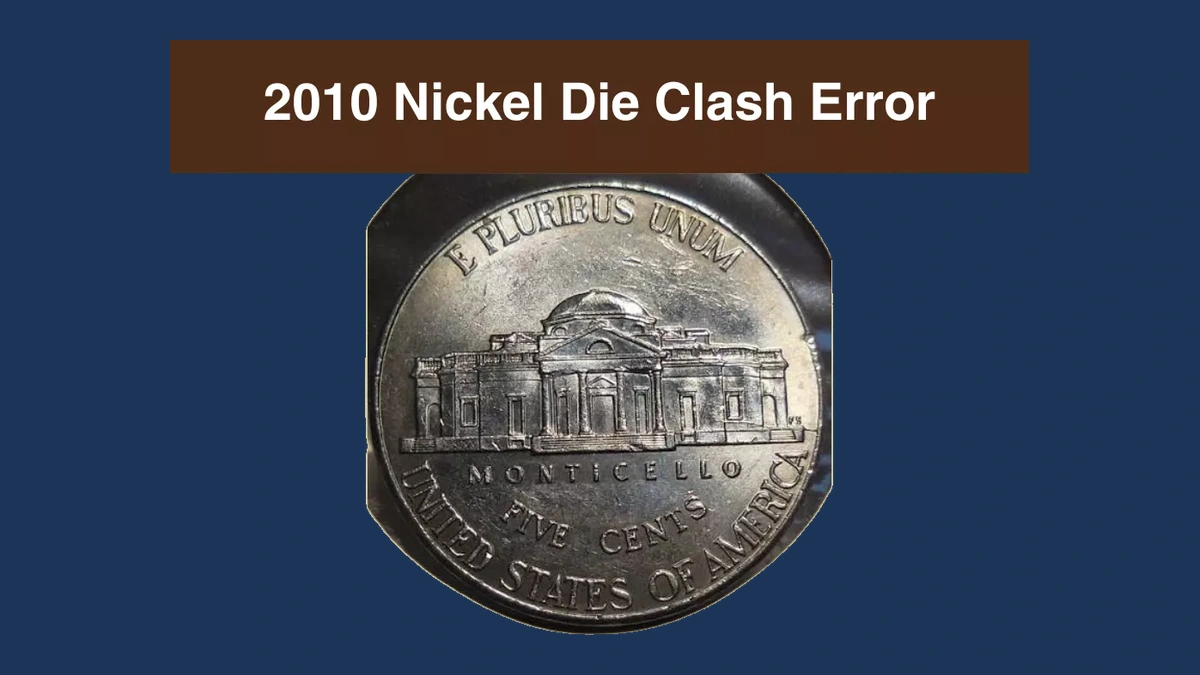
An unexpected curve can make sense when compared with the design on the coin’s other side. Parts of Jefferson or Monticello may leave faint traces where they do not normally belong.
The cause is a die clash. A die is the steel stamping tool, and two dies can touch when no blank lies between them.
Damage from that contact can then appear on later coins. Reports include this type for 2010 without establishing a fixed mint or position.
A single unexplained line is not enough. The visible fragments must fit recognizable parts of the opposite design.
Estimated Value
For a recognizable original clash, estimate $10–$75. A clear group of matching shapes has more appeal than an isolated mark that needs a long explanation.
This range estimates the reported type rather than assigning an auction price to one identified 2010 specimen. The strength of the traces and the surrounding coin’s condition both affect the comparison.
Scratches or marks pressed into the coin later do not qualify simply because they appear near Jefferson or the building.
How to Identify
Use photographs of the correct design: the 2010 portrait faces forward. An older side-view Jefferson cannot provide the right shapes for this comparison.
With a 10× magnifier, follow one unexpected curve or angle and compare it with the opposite face. A second matching fragment helps establish a recognizable piece of the other design rather than a single random scratch.
A loose nickel normally weighs 5 grams and measures 21.21 millimeters, checked with a scale and calipers. Inspect its plain edge and both faces for squeezing or impact damage, then trace how the extra fragments fit the opposite portrait or building.
2. 2010 Jefferson Nickel An Extra Doorway Outline
The central door above Monticello’s steps has an extra outline on a recorded Philadelphia variety. It lies just below the upper part of the frame.
The repeated shape came from the tool’s preparation. Coins struck with that tool could receive the same doubled detail without passing through the press twice.
A separate Denver front-doubling report concerns the portrait side. It does not establish that the Philadelphia doorway coin also has a doubled front.
Normal door-frame edges and lighting can imitate extra lines. Sharp steps are a sign of striking quality, not proof that the doorway is doubled.
Estimated Value
A matched minor example is estimated at $10–$40, with clearer, well-preserved pieces around $40–$100. These ranges concern repeated design details rather than flat shelves from movement during striking.
The Philadelphia doorway listing provides a pattern to compare, not a separate completed sale for this estimate. A Denver front needs its own matching evidence.
Look for an extra shape that another collector can recognize in a clear photograph. Thick letters or bright shadows alone should not receive the same premium.
How to Identify
Find the P and turn the coin to the Monticello side. Enlarge the central doorway with a 10× magnifier, keeping the steps below it visible for location.
Compare the top of the door with the 2010-P doorway listing. Its extra outline lies just below the upper frame.
The normal coin is 5 grams and 21.21 millimeters with a plain edge. A scale and calipers can check those measurements on a loose piece.
Move the lamp before accepting a bright line as doubled metal. A fixed raised shape stays in place as the light changes.
Concentrate on the extra doorway outline, rather than the ordinary lines of the steps underneath it.
3. 2010 Jefferson Nickel Lines Associated with the Feeding Mechanism
A row of parallel lines can prompt a closer look at how the blank reached the press. Reports associate front lines on a 2010-P nickel with a feeder finger.
This moving press part helps position blanks. Contact with a stamping tool can scratch the tool, which may then leave raised lines on coins.
A direct impression from an object against the blank is a different event. Parallel lines alone cannot choose between those explanations.
The reported coin has no fixed line direction established here. Their height and relationship to the finished design matter more than their number.
Estimated Value
Estimate $10–$150 for a correctly identified feeding-related mark with clear original features. A small group of tool lines usually belongs lower in the range than a distinctive, well-supported impression.
This is an estimate for the reported mechanism, not a verified sale of the Philadelphia example. A label mentioning the feeding equipment still needs to agree with the surface.
Later scratches and polishing lines do not earn that premium. Price depends on the identified event and its visibility.
How to Identify
First decide whether each line rises above the surface or cuts into it. Side lighting through a 10× magnifier can reveal that difference without touching the coin.
Next follow the marks where they meet letters or the portrait. A later scratch can cut through completed detail.
Photograph several lines together. Their parallel shape is useful evidence, but does not by itself identify which press part made them.
Use a scale and calipers on a loose specimen against 5 grams and 21.21 millimeters. Check the plain edge for related damage.
Keep tool scratches and a direct trapped-object impression as separate possible explanations. Ask for a specialist comparison of the complete pattern before naming the feeding event.
4. 2010 Jefferson Nickel Different Color on the Back
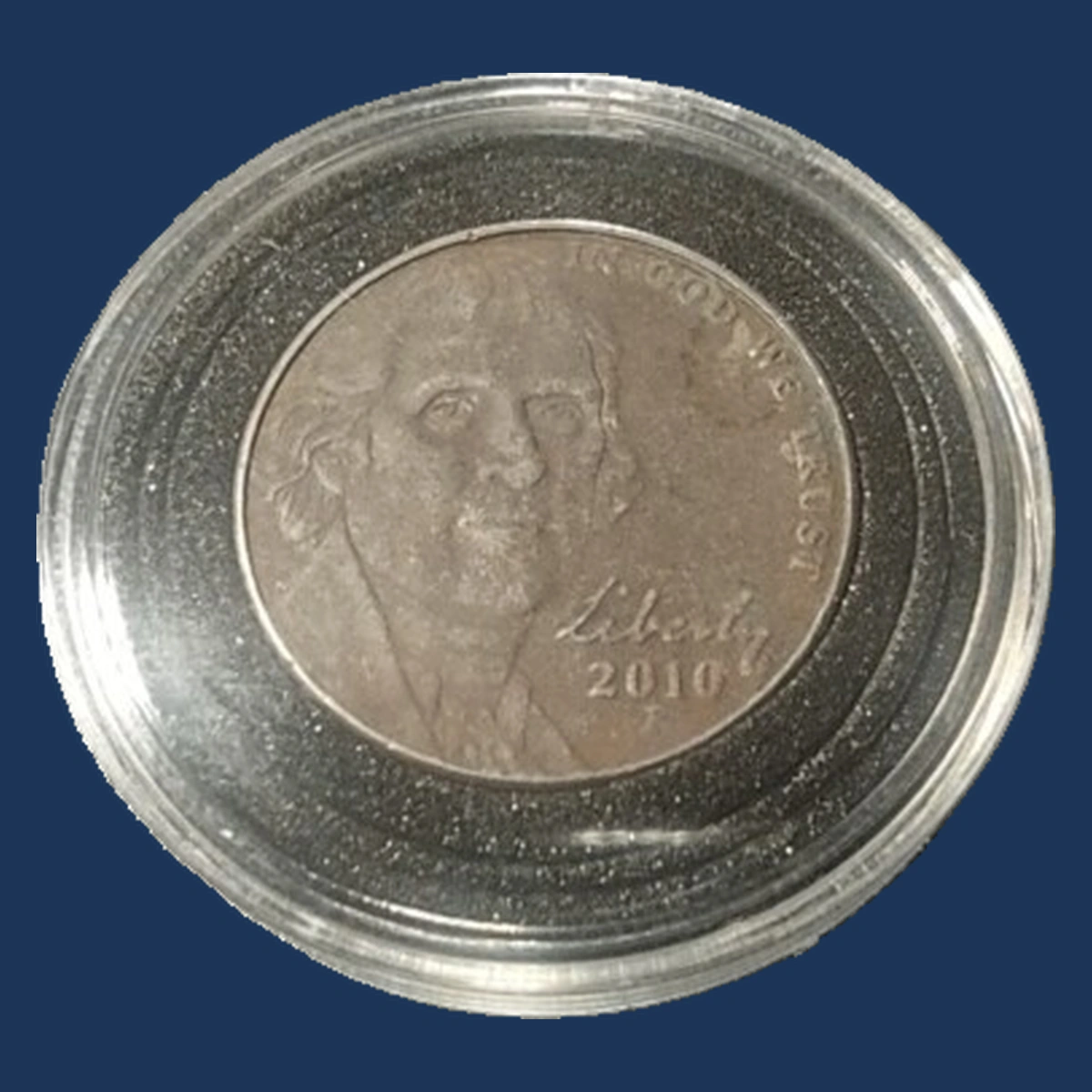
The back of a nickel may have a different color from its portrait side. A Denver report for 2010 describes this contrast as improper annealing.
Annealing is the heating used to soften a metal blank before striking. A problem during that process can change its surface.
The normal coin is one mixture of copper and nickel throughout. A brown patch is not an exposed copper center beneath a missing nickel layer.
Color can also change after minting through chemicals, burial, or later heating. A normal-looking front does not establish when the back changed.
Estimated Value
Use an estimated $20–$175 for a correctly identified original heating error. The range assumes preserved surfaces that support a Mint cause, rather than ordinary later discoloration.
A 2005-D improperly annealed nickel sold for $119 in December 2022. This different-year comparison does not assign that result or its color pattern to the reported 2010-D back.
Strong color may make a coin easier to display, but color alone is not authentication. Condition and the actual surface evidence remain part of the value.
How to Identify
Photograph both faces under the same neutral light before comparing their color. Different lighting can make an ordinary front and back appear less alike than they are.
Inspect protected spaces around letters with a 10× magnifier. Paint, corrosion, or a coating that pools in recesses may explain the unusual back.
On a loose coin, use a scale and calipers against 5 grams and 21.21 millimeters, then inspect the plain edge. Major changes in mass or size call for another investigation.
Do not polish a spot to reveal brighter metal. Preserve the two-sided contrast for examination, because a normal front beside a dark back cannot by itself prove a Mint heating error.
5. 2010 Jefferson Nickel Metal Missing before Striking
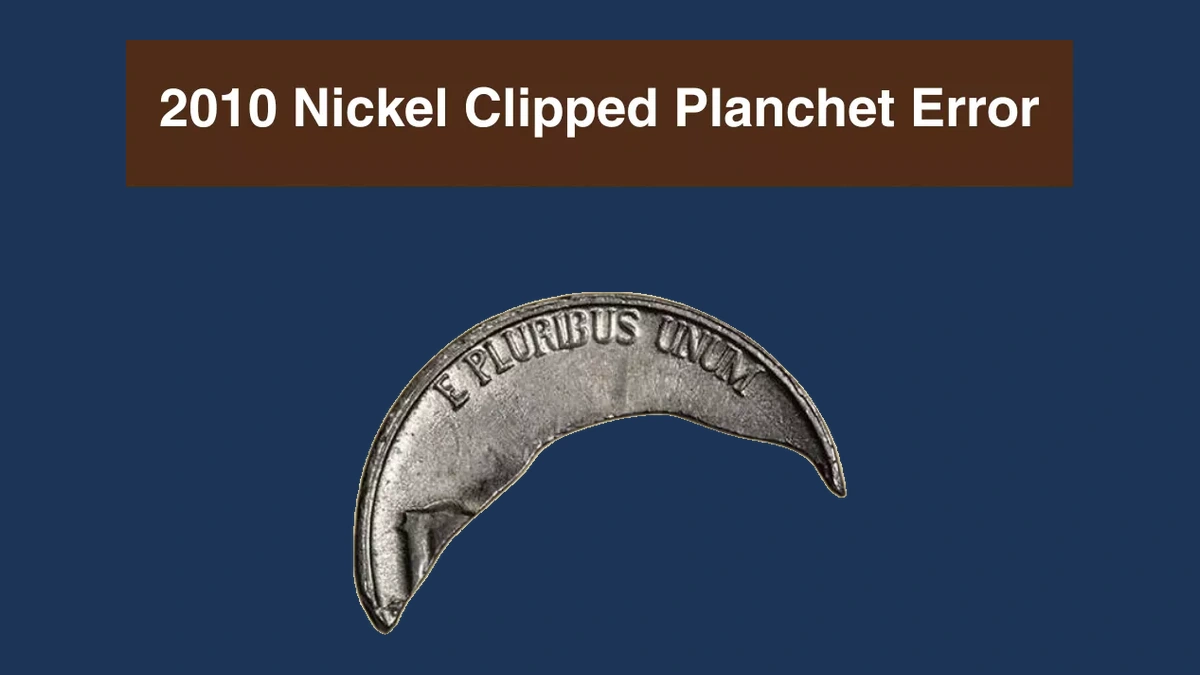
A gap in the outline can begin before Jefferson’s design reaches the blank. If the metal disk was incomplete when punched from a strip, the press can strike a coin around that missing section.
This is a clipped blank. A Philadelphia example with its date surviving is reported for 2010.
The reported coin has no established clip percentage or exact shape. Judge the opening on the coin itself, including how the struck rim meets its two ends.
A cut made later can leave a similar opening. The transition between struck design and the missing section helps separate their histories.
Estimated Value
For genuine examples, estimate $15–$75 with a modest clip and $75–$200 for a larger, attractive missing section. The surviving date helps establish the correct year.
A different-year 1997-P nickel with a twenty-percent curved clip brought $124 in March 2025. Its size and shape belong to that coin, not the Philadelphia report here.
An original boundary is more important than a dramatic gap. Metal removed by a saw or file after striking does not receive the same premium.
How to Identify
Begin at the two ends of the gap and follow how the design approaches them. Use a 10× magnifier to look for natural metal flow rather than a sharp cut across finished details.
Weigh a loose coin against the normal 5 grams. A small clip may produce only a small reduction, and later cutting also lowers weight.
Measure intact spans with calipers against 21.21 millimeters. Keep the readable date and P in the same photograph as the opening.
Inspect the plain edge and then the rim opposite the gap for supporting weakness. That weakness can help, but the original-looking boundary and struck details should explain the missing metal together.
6. 2010 Jefferson Nickel A Broadstrike with Extra Width
Extra width can appear when the ring around a blank fails to hold the metal during striking. This ring is called the collar.
The blank spreads outward under the blow, producing a broadstrike. Jefferson, Monticello, and the outside words stay on the coin even if the border is uneven.
A Denver example is reported for 2010. Its exact diameter should be measured from the actual coin rather than assumed from a general photograph.
A plain edge is normal on Jefferson nickels. It cannot prove that the collar failed, and later flattening can also make a coin wider.
Estimated Value
Allow an estimated $25–$100 for moderate original spreading and $100–$250 for a more dramatic, clean example. The complete design should remain visible within the expanded metal.
A 1999-P broadstruck nickel brought $89 in March 2025. This different-year sale offers a comparison for a straightforward broadstrike without establishing a price for the reported Denver coin.
Later hammering can make a wide disk without adding collector value. The original striking features must support the enlarged shape.
How to Identify
Follow the outer lettering on both faces before judging the coin by its width. A broadstrike keeps the design, while a simple off-center strike loses some of it beyond one edge.
Calipers can record the widest and narrowest spans against 21.21 millimeters, without squeezing the irregular border. A digital scale should stay near 5 grams if the metal has simply spread.
Use a 10× magnifier to examine the expanded surface and plain edge for later hammering or crushed lettering. The enlarged border should carry natural struck details, rather than merely surround a design flattened after the coin left the Mint.
7. 2010 Jefferson Nickel Raised Lines and a Rim-Connected Cud
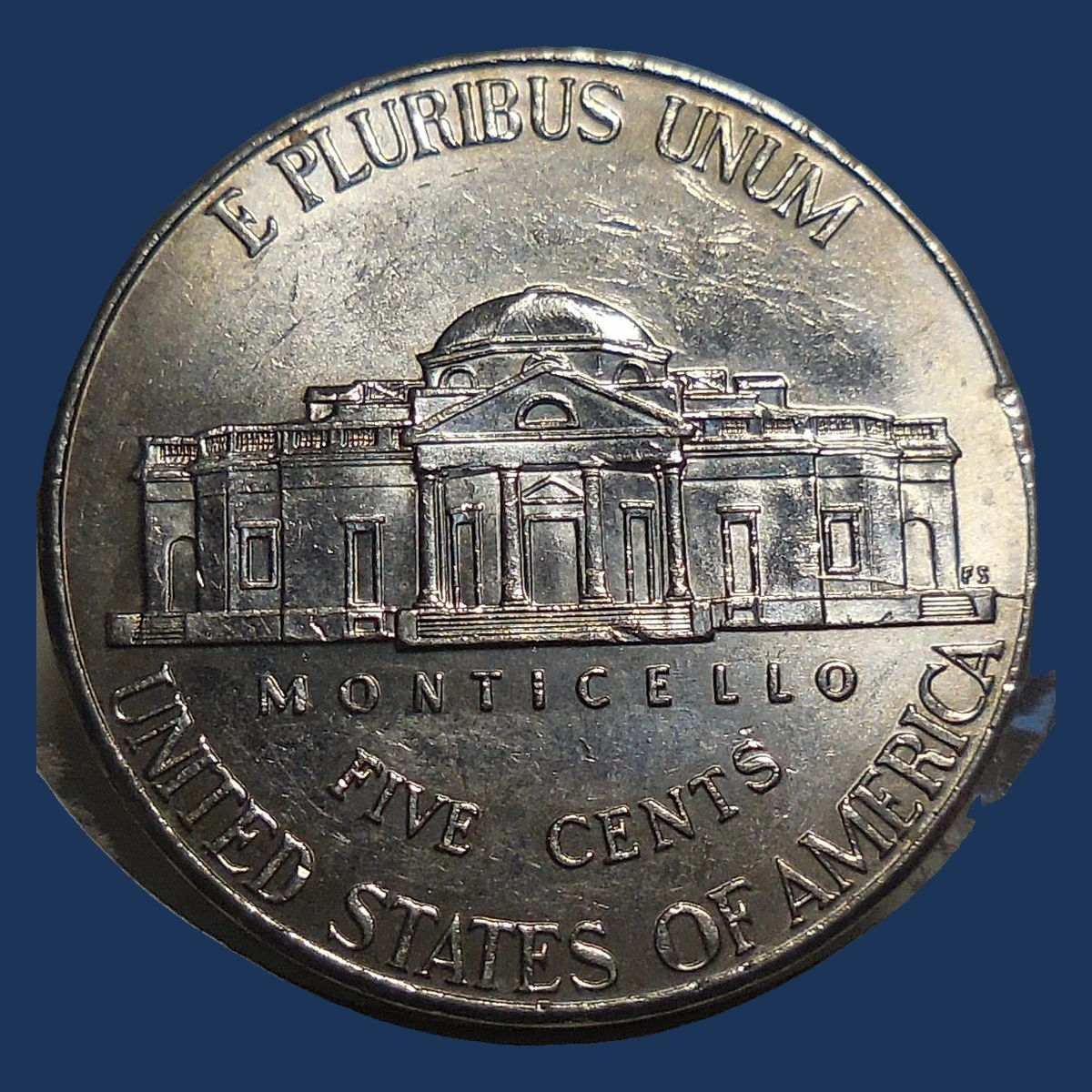
A narrow raised line can form where a stamping tool has cracked. Metal entering the opening becomes an extra ridge on the coin.
The 2010-D front-crack report does not establish a single route across Jefferson. Compare the actual line rather than expecting it to pass through one particular feature.
A separate Denver report concerns a larger broken area joined to the rim. The smooth raised patch from that edge break is called a cud.
A cud differs from an isolated interior chip. Added solder or metal pushed upward by a later blow can imitate a raised patch.
Estimated Value
Minor original cracks are estimated at $5–$40, while clear rim-connected cuds can be estimated at $40–$300. Size, visibility, and surface condition determine the better comparison.
A 1983-P cud on a worn nickel brought $63 in July 2022. That different-year result illustrates a modest genuine break, not a fixed price for every raised mark.
The range prices one coin as a whole. A crack leading into a cud does not create a second full coin value to add.
How to Identify
For a suspected cud, first establish a continuous connection between the raised patch and the rim. A free-standing lump inside the design is a different form of tool damage.
Use a 10× magnifier to inspect the join for a seam, unusual texture, or signs of solder. Check the opposite face for a later impact.
For a thin line, follow its center under side lighting. A ridge fits a tool crack; a cut with pushed metal beside it suggests a scratch.
A loose nickel can be checked with a scale and calipers against 5 grams and 21.21 millimeters. Include the plain edge in photographs so the original rim connection is visible rather than hidden.
8. 2010 Jefferson Nickel A Shifted Design beside Unstruck Metal
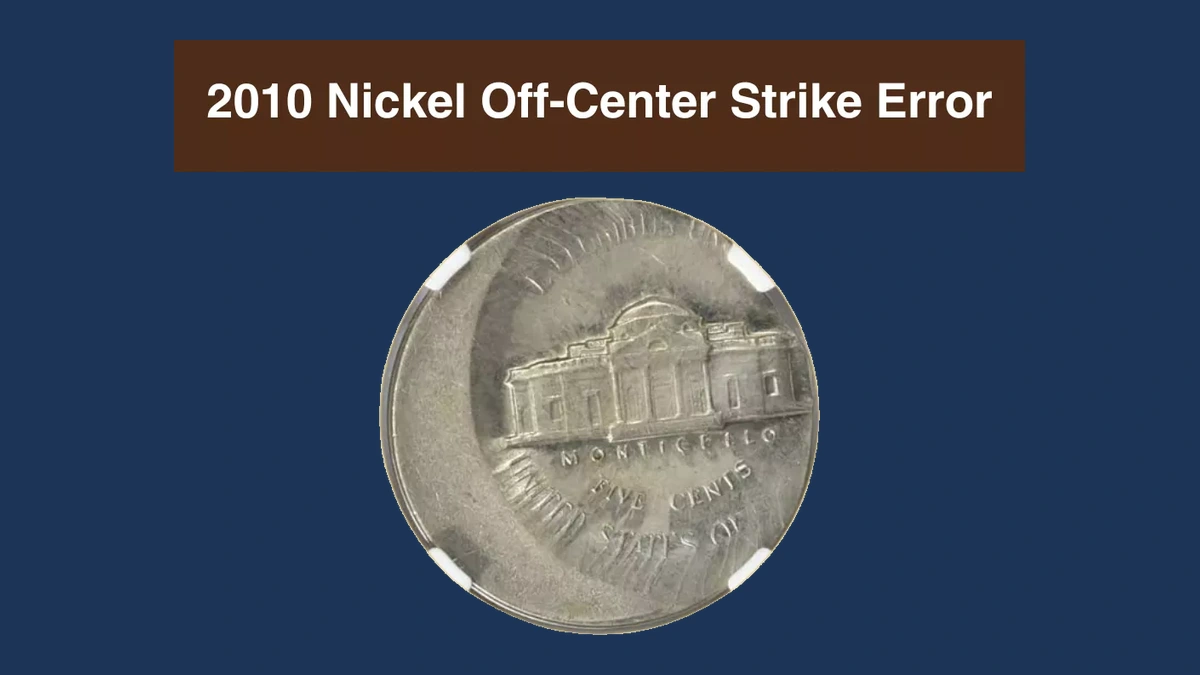
The blank can sit partly outside the stamping tools when the press closes. One section remains unused, while parts of Jefferson and Monticello fall beyond the opposite edge.
This produces an off-center strike. Reports for 2010 include Denver examples without assigning a common percentage or direction.
The unused part is still metal. It should not be confused with a clipped blank that lacks a piece of its outline.
When only one face has a shifted design, a misaligned tool may offer a better explanation. The position of one misplaced blank should account for both faces.
Estimated Value
For a dated example with a modest shift, estimate $25–$100; clearer, more dramatic pieces can reach an estimated $100–$350. Preservation remains part of the comparison.
A 2011-P off-center nickel with damage brought $63 in January 2022. That nearby-year result shows why a visible offset does not automatically mean a high price.
The estimate does not assign a particular angle to the 2010 report. Judge the surviving date, unstruck area, and condition on the actual coin.
How to Identify
Locate the surviving year and hold it upright before describing direction. Include the unstruck area in the photograph, then record the back in the same orientation.
Compare the missing design on both faces. Their relationship should fit a single blank sitting away from the center.
Inspect the untouched area with a 10× magnifier for grinding or polishing that could have erased a finished image. Look along the plain edge for trimming as well.
Weigh a loose specimen against 5 grams and measure its outline with calipers against 21.21 millimeters. Spreading can alter its shape without removing most of the metal, so the design relationship matters more than an exact round diameter.
9. 2010 Jefferson Nickel A Clamshell Split
A nickel can split through its thickness and stay attached along one side. The opening resembles a clamshell, giving the error its common name.
The Denver report for 2010 describes this joined separation rather than a small patch peeling from one face. A weakness inside the metal lets the split develop.
The coin uses one copper-nickel mixture throughout. There is no normal layer boundary where a copper core should separate from an outer coating.
A coin sawn or pried apart later can imitate the shape. The inner surfaces and surviving connection are therefore essential parts of the examination.
Estimated Value
A genuine joined split is estimated at $75–$200, rising to $200–$500 for a clear, attractive example. The strength of the connection and original inner surfaces affect its appeal.
For comparison, a 1959-D clamshell nickel brought $159 in June 2024. Its recorded 3.58-gram weight belongs to that different-year coin and should not be assigned to the 2010 report.
Pulling the halves farther apart can destroy useful evidence. Preserve the natural opening rather than trying to improve its display.
How to Identify
Keep the opening as it is. Neither pulling the parts farther apart nor flattening them will help identify the original split.
With a 10× magnifier, follow the connection and any inner surface already visible. Parallel saw marks or sharp prying scars would suggest that someone opened the coin later.
Each outer face should still belong to the same connected body. Photograph how the split travels through the plain edge.
A scale can compare a loose piece with the normal total weight of 5 grams. Use calipers against the intact 21.21-millimeter outline without closing the jaws across the opening.
The natural inner surface and surviving joined edge matter more than how widely the coin opens.
10. 2010 Jefferson Nickel Foreign Material Left in the Coin
An object can remain in a coin after blocking part of the strike. Collectors call this a retained strike-through.
The 2010-D report describes material left in the affected area without identifying it as wire, cloth, or another particular substance. Its shape should be documented before choosing a name.
The coin’s design may stop or weaken where the obstruction lay between the blank and stamping tool. The object and surrounding metal together help explain the event.
Material glued onto a finished nickel is different. So is ordinary dirt packed into a dent after the coin entered circulation.
Estimated Value
For a genuine retained-object strike-through, estimate $50–$250, with a larger, distinctive example around $250–$750. The object must belong to the original striking event.
A 1959-D nickel with a retained staple on its front brought $780 in October 2021. It is a different-year comparison involving identified material, not proof that the 2010 object is also a staple.
The range values the whole coin with its retained material. Removing the object changes what a buyer can examine.
How to Identify
Protect the object from fingers and packaging pressure before photographing it. Trying to remove it may destroy the strongest evidence of the error.
Under a 10× magnifier, study where the design meets the material. The surrounding strike should explain why details are missing or interrupted there.
Look for glue, a coating, or a later dent that could hold ordinary debris. Inspect the opposite face and plain edge for related damage.
If already loose, record weight and size with a scale and calipers against 5 grams and 21.21 millimeters. Retained material may affect the reading, so keep it in place.
Photograph a letter or design line where it reaches the object. Detail that stops naturally at the trapped material helps explain why the obstruction was present during striking.
11. 2010 Jefferson Nickel A Design on the Wrong Blank
A nickel design can be too large for the disk beneath it if the wrong blank enters the press. A smaller blank may lose the outer lettering while preserving central details.
This is the type to investigate when a 2010 candidate has unusual weight, size, or metal. The year’s general reports do not establish a particular cent-blank or dime-blank specimen.
A finished coin of another denomination would add a separate clue: remnants of its earlier design. An unused blank has none.
Color alone cannot name the blank. Plating, grinding, and chemical damage can alter an ordinary nickel.
Estimated Value
For an authenticated strike on a modern cent blank, use an estimated $300–$1,000; a dime-blank example can be estimated at $400–$1,500. These are conditional ranges for the identified blank.
A 1995-P nickel on a dime blank brought $336 in July 2022. That different-year sale supports a comparison without establishing a 2010 specimen.
The year must be readable on the actual coin. A nickel auctioned in 2010 is not necessarily a nickel minted in 2010.
How to Identify
Weigh and measure before choosing a denomination. A loose normal nickel is 5 grams and 21.21 millimeters; use a scale and calipers to record any difference.
A modern cent blank starts near 2.50 grams and 19.05 millimeters. A clad dime blank starts near 2.268 grams and 17.91 millimeters, with some expansion possible during striking.
Inspect the edge under a 10× magnifier for a copper core between lighter layers on a dime blank. A modern cent instead has copper plating over zinc.
Match the metal, weight, and naturally cropped design together. Confirm the surviving 2010 date and rule out filing or coatings before treating a small or copper-colored coin as a wrong-blank strike.
Conclusion
Estimated ranges of $5–$1,500 cover these 2010 nickel error types. Begin with the physical clue: a repeated doorway line, an unused crescent, a joined split, or material still trapped in the surface.
Keep each comparison tied to its own year and mint. A normal weight does not rule out every error, and a low weight does not prove a wrong blank.
Preserve fragile metal and retained objects while recording the evidence.