2012 Nickel Error List with Pictures

A tiny addition beneath Jefferson’s nose can matter, while an ordinary scratch across his face may add nothing. The 2012 nickel errors below need different checks for added design, missing metal, and displaced strikes.
Estimated values range from $3–$400. As a recent comparison, a 1997-P nickel with a large curved clip sold for $124 in March 2025; that was a different-year coin, not a 2012 sale.
Look through the examples below and compare the actual shape on your nickel.
1. 2012 Jefferson Nickel Small Tool Chips and Cracks
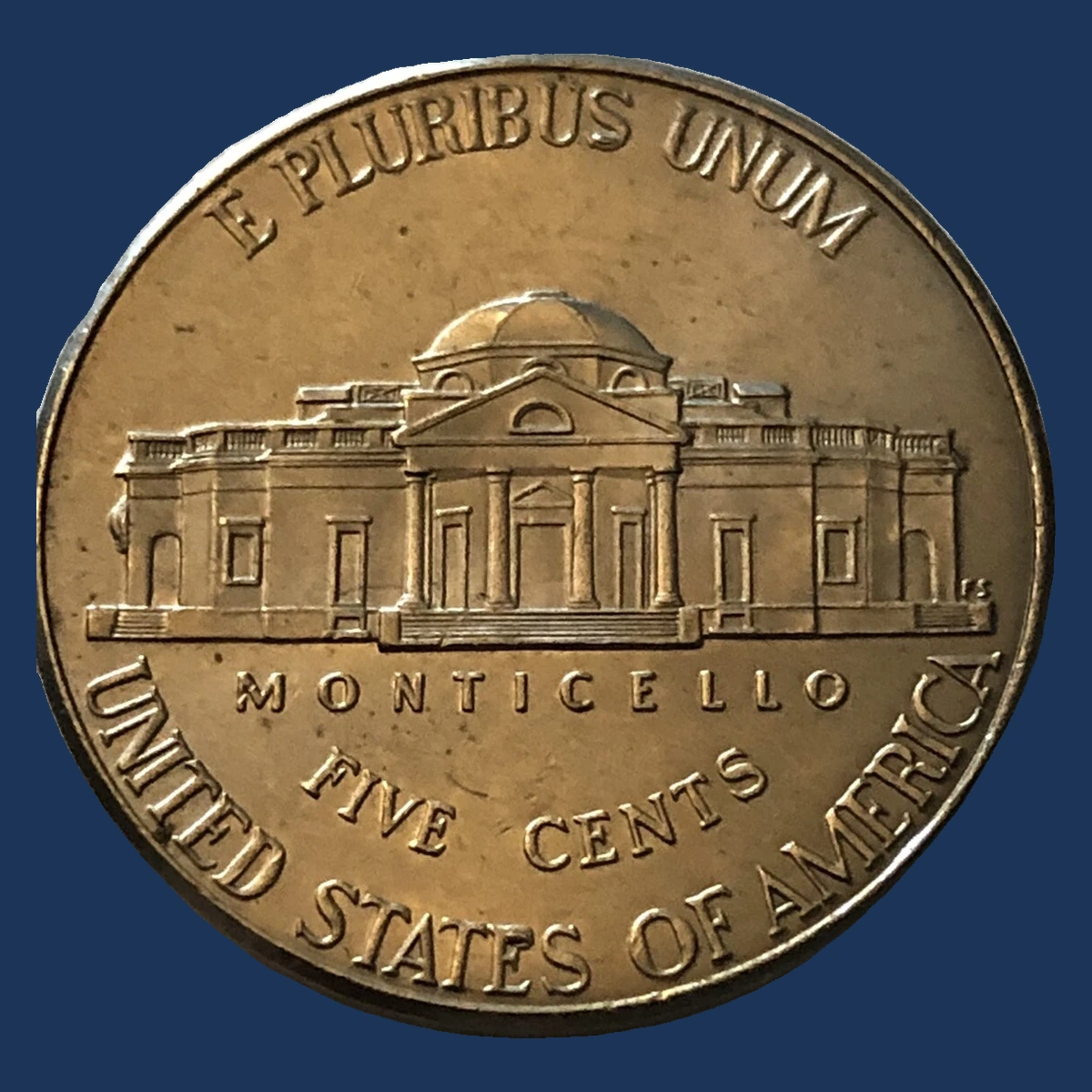
A little bridge between letters can come from a small piece missing from the stamping tool. On a listed 2012-P nickel, extra metal appears between the E and R of LIBERTY.
The die, or steel stamping tool, lost metal that normally kept that space clear. During the strike, coin metal filled the damaged area.
Other P examples show small chip effects near Monticello or PLURIBUS. A separate 2012-D report concerns a larger crack, which produces a raised line instead of a patch.
These features come from damaged tools, but their locations should not be exchanged between mint issues.
Estimated Value
For small genuine 2012 chips and cracks, estimate $3–$60. A distinct shape joining letters or a clear raised line is easier to display than a barely visible dot.
The range values the coin as a whole. Several small defects on the same nickel do not each add another maximum price.
These are estimated collector values, not a recorded sale for every listed position. Clean surrounding detail helps buyers see the feature; wear and heavy contact marks can obscure it.
How to Identify
Locate the E and R of LIBERTY on a P coin and compare their normal separation with the extra bridge. A 10× magnifier helps distinguish added metal from dirt stuck between the letters.
For other chip locations, use the correct matching example rather than expecting every raised patch to occur together. The Denver crack report does not assign the Philadelphia letter bridge to D coins.
Check a loose nickel against 5.00 grams and 21.21 millimeters with a scale and calipers. Examine its plain edge for an impact that pushed metal onto the face.
Follow a suspected crack under side lighting. A line raised above the original surface differs from a scratch whose center is cut into the metal.
2. 2012 Jefferson Nickel Transferred Design from Clashed Tools
Extra design fragments in the open area around Jefferson or Monticello may come from a clash. The two stamping tools met without a blank separating them.
That contact damaged the tools with pieces of the opposing design. Later coins picked up those fragments along with their normal images.
Clashes are reported for 2012 nickels, but a strong example from another year is only a comparison. Its precise marks do not establish the locations on a 2012 coin.
A transferred shape should resemble real design from the opposite face. A random scratch or isolated bump has no such necessary connection.
Estimated Value
Use an estimated $5–$75 for recognizable 2012 clash marks. Clear transferred shapes on an unworn coin generally have more appeal than faint lines on a worn surface.
The range concerns ordinary collectible clashes, not the spectacular prices of unrelated rare mint errors. It is an estimate rather than a specific 2012 auction result.
A useful photograph should explain the connection to the other face. A description claiming many clashes adds little if those shapes cannot actually be followed.
How to Identify
Check the plain edge and the overall coin before studying faint lines. If the nickel is loose, compare its weight and diameter with 5.00 grams and 21.21 millimeters using a scale and calipers.
Now put photographs of both faces beside each other. Find a real portion of the opposing design that could explain the suspected mark.
Use a 10× magnifier to follow the fragment across the open area rather than judging one bright spot. Change the lighting to separate relief from reflections.
Do not borrow the exact outline from a different-year example merely because it has a dramatic clash. The actual 2012 mark must fit its own portrait or building and must be distinguished from later scratches or pressure damage.
3. 2012 Jefferson Nickel Doubled Nose and Doorway Details
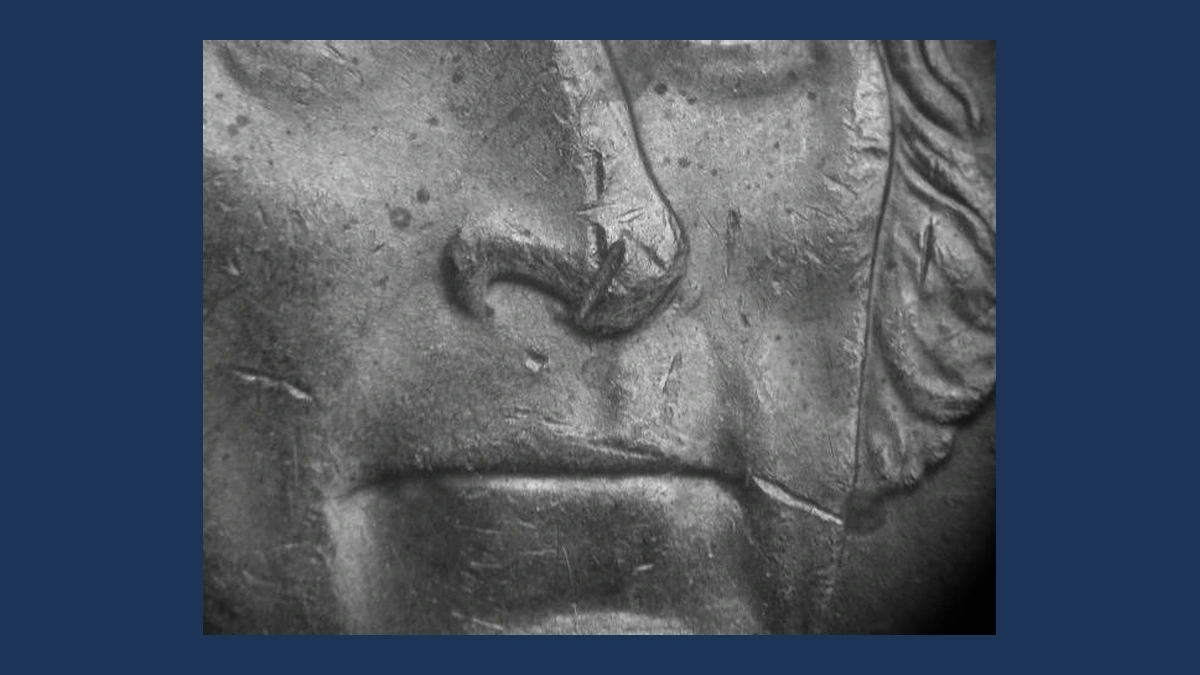
An extra outline on the nose is one of the 2012-P doubled designs. Different examples affect the lower part or the right side of Jefferson’s nose.
Other P examples add detail below the upper frame of Monticello’s center door or beneath the triangle above it. The extra shapes began on the stamping tools.
A doubled die repeats such a tool-made feature on coins struck from it. It does not mean each coin was hit twice.
One listed P combination has doubling on both faces. D front doubling is also reported, but the P nose locations cannot be assumed for it.
Estimated Value
A correctly matched 2012 doubled design has an estimated value of $5–$125. Small, faint additions usually sell below strong features on clean unworn coins.
The value depends on the visible pattern and its condition, not the number of directory labels attached to it. A coin with both faces affected is still priced as one object.
These are estimates for the listed type. Ordinary nose contours, door details, or mechanical shelves beside letters do not qualify merely because they look thick.
How to Identify
Select the nose or doorway feature first, then compare it with the 2012 P listings at 10× magnification. Keep left, right, and lower positions distinct.
The added doorway detail lies inside specific parts of the central architecture. A stray dot elsewhere on the building may be a chip rather than the doubled design.
Confirm the mint letter and inspect the other face, since one listed combination has both nose and back doubling. For a loose coin, compare 5.00 grams and 21.21 millimeters with a scale and calipers, then examine its plain edge.
A P photograph cannot identify a D report. Match the actual extra shape on the appropriate mint issue before deciding that normal relief or glare is an error.
4. 2012 Jefferson Nickel Clipped Blank
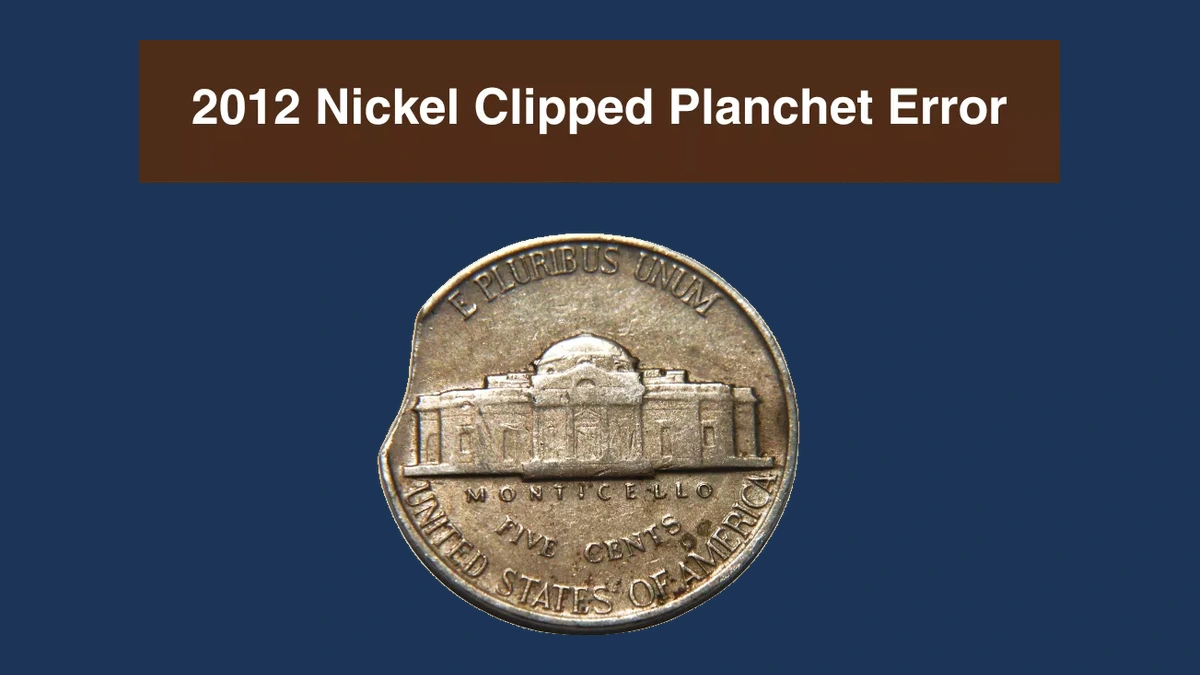
A nickel with an incomplete blank can show a curved, straight, or irregular gap. The blank is the metal disk that receives the design.
A cutting punch that overlaps a previous hole or the edge of a strip may leave the disk incomplete. The mint then strikes a design onto the remaining metal.
Clipped blanks are reported for 2012 nickels. Their shape and size need to be judged from each coin rather than assigned from the year.
A saw or file can create a similar-looking opening later. Its cut surface and relationship to the struck design often reveal the difference.
Estimated Value
A 1997-P nickel with a 20% curved clip sold for $124 in March 2025. That substantial opening gives a useful comparison for the general error type.
Estimate $15–$150 for genuine 2012 clips. Small missing portions on worn coins generally fall below clean examples with a more obvious gap.
The earlier sale does not establish a 20% clip for 2012. Clear date detail, sound surfaces, and an original edge matter as much as the amount of metal missing.
How to Identify
Weigh the loose coin, then examine where the missing metal should have been. A clip normally lowers the 5.00-gram weight, but filing can do the same.
Use a 10× magnifier on the gap’s two ends. Look for original striking flow at the boundary rather than sharp sawing ridges or repeated file strokes.
Calipers can compare the intact outline with the normal 21.21-millimeter diameter. Inspect the plain edge on both sides of the opening.
Weakness opposite a clip can provide supporting evidence, although not every genuine example shows it. Photograph the gap together with the date and mint area, so the missing section cannot be confused with an unrelated edge-damaged coin.
5. 2012 Jefferson Nickel Blocked Strike
A struck-through error forms when material blocks direct contact between the blank and the stamping tool. Part of the intended design does not form normally.
The interruption may be a depression, a textured patch, or an area of weak detail. Its appearance depends on what blocked the strike.
A 2012-D nickel is reported with this type of error. The material should not be named from a general example of grease, wire, or cloth.
Later wear can erase detail too, while a gouge removes finished metal. Their surface effects need to be separated from a blockage during striking.
Estimated Value
For genuine 2012-D struck-through errors, estimate $10–$200. Broad, clearly defined interruptions tend to attract more interest than faintly weakened lettering.
A 2000-D nickel struck beneath a coin stuck to a tool sold for $84 in September 2025. That earlier coin involved a different obstruction, so it provides only a general market comparison.
The range does not identify the material on the reported 2012 example. An attached object, if present, needs its own examination before it changes the valuation.
How to Identify
Follow the boundary of the weak or depressed area with a 10× magnifier. Compare sharp nearby design with what is missing inside the interruption.
Wear usually also smooths exposed high points. A cut made later may leave scraped surfaces or a raised lip of displaced metal.
Check the 2012 date and D before using this report as a comparison. Leave any attached material untouched rather than trying to clean away the apparent obstruction.
For a loose example, compare 5.00 grams and 21.21 millimeters using a scale and calipers. Inspect the plain edge for squeezing or hammering.
A weak building alone does not prove a struck-through error. The localized change in the design must be explained by the surface, not merely by a seller’s chosen material name.
6. 2012 Jefferson Nickel Broadstrike
A wider coin with its full design still present can be a broadstrike. The blank spread beyond its normal outline during the blow.
The collar, the ring surrounding a coin as it is struck, normally limits that spread. Improper collar support lets the metal move farther outward.
A 2012-P broadstrike is reported in the year guide. Its exact diameter should be measured rather than borrowed from a generic illustration.
The ordinary nickel has a plain edge, so that feature alone cannot identify the error. Expansion of the whole coin matters more than a wide-looking border on one side.
Estimated Value
An estimated $40–$300 covers genuine 2012-P broadstrikes from modest spreading to more obvious examples with attractive surfaces. Damage can lower the value despite a large outline.
A 1999-P broadstruck nickel graded PCGS MS63 sold for $89 in March 2025. MS63 indicates an unworn coin with noticeable marks.
That earlier-date sale is a comparison, not the price of the reported 2012 coin. Buyers should be able to see genuine expansion and a complete design in the photographs.
How to Identify
Place the suspected coin beside an ordinary nickel for scale, then compare its two faces. The design should remain complete even though the outer metal has spread.
For a loose example, take several diameter measurements with calipers against 21.21 millimeters. A scale should be used to compare the normal 5.00-gram weight too.
Inspect the expanded area and plain edge with a 10× magnifier. Hammer marks, folds, or flattened lettering may show that a larger outline resulted from damage.
A shifted design on only one face points toward tool misalignment rather than proving a broadstrike. Keep the whole outline visible when photographing the coin, since a tight crop can make an ordinary uneven rim look unusually wide.
7. 2012 Jefferson Nickel Abnormal Heating Color on the Back
The reported 2012-D annealing error concerns unusual color on the Monticello side. Annealing is the heating process used to soften the metal blank before striking.
When that process goes wrong, the surface can change before the tools impress the design. A dark or coppery appearance may draw attention to the coin.
Color alone does not show when the change occurred. Chemicals, heat, and the environment can also affect a finished nickel.
The coin is a uniform copper-nickel alloy. The explanation does not involve a thin nickel coating falling off, and rainbow colors alone do not establish an annealing error.
Estimated Value
A 2005-D Bison nickel with an improper-annealing description sold for $119 in December 2022. That earlier design provides a comparison for a recognized surface-heating error.
For an authenticated 2012-D example, estimate $30–$350. Strong effects on otherwise attractive surfaces support more interest than dull, damaged patches.
The estimate is conditional on a mint-made cause. A colorful nickel altered after production does not receive the same premium merely because its shade resembles that of a certified comparison coin.
How to Identify
Examine the back under neutral light before using a close-up photograph to judge its color. Compare the portrait side and plain edge as well, recording how the change spreads across them.
For a loose coin, measure 5.00 grams and 21.21 millimeters with a scale and calipers as normal comparisons. Matching those figures does not settle the cause of the color.
Use a 10× magnifier to inspect the surface for residue, pitting, or damage that may point to later exposure. Do not polish the darker area to reveal the metal beneath.
Keep the full coin available for expert assessment. A rainbow, dark patch, or coppery hue needs a surface-based explanation before the coin can be valued as improperly annealed.
8. 2012 Jefferson Nickel Off-Center Strike
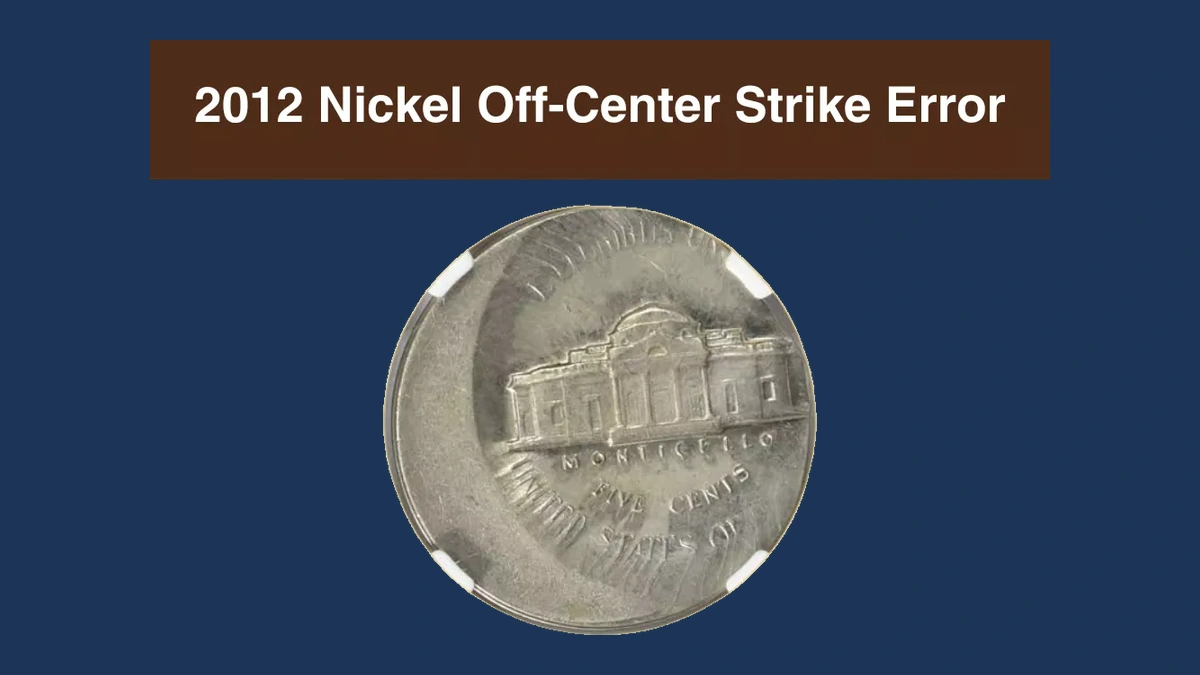
An empty area beside the design shows that part of the blank missed the striking tools. The design on the remaining portion is shifted toward one side.
The year guide reports a 2012-D example described as 35% off-center. That percentage belongs to the report, rather than every off-center nickel from the year.
Both faces need to be examined because the same blank was displaced beneath both tools. A single shifted face can have a different cause.
The date may remain visible even when the mint letter is lost. In that case, the year and the mint attribution require separate judgments.
Estimated Value
For genuine 2012 off-center nickels, estimate $30–$400. Modest displacement usually falls below dramatic examples with a clear date and attractive surfaces.
A 1999-P nickel described as 15% off-center sold for $64 in March 2025. That smaller, different-year comparison does not determine the price of the reported 35% 2012-D example.
The visible date helps collectors identify what they own. A large shift that loses essential design may bring less than a smaller error with stronger, more readable details.
How to Identify
Find the year in the struck portion and record whether the mint letter survives. A missing letter does not erase a readable 2012 date, but it may prevent assigning P or D.
Next compare both faces using the same blank edge as your reference. The missing design and unstruck area should agree with the blank having been out of position.
At 10× magnification, look for untouched metal in the empty portion rather than flattened letters. Use a scale and calipers on a loose coin to compare 5.00 grams and 21.21 millimeters.
Inspect the plain edge for later trimming. Judge the amount of displacement from the actual coin; a seller’s percentage should not replace the two-face check.
Conclusion
Added nose detail, a chipped letter, and an empty edge gap can all be small, but they come from different events. Start with the shape rather than the size of a seller’s price.
Estimated values here span $3–$400. Stronger, clearer errors on attractive coins usually offer more to collectors than faint features hidden by wear.
Photograph the date and mint letter alongside the defect, and keep fragile or discolored surfaces untouched during examination.