2013 Nickel Error List with Pictures

A raised rim patch turned an older Jefferson nickel into an $84 auction sale in September 2024. That 1982-P example provides a real comparison for the rim-break reports discussed here.
The 2013 nickel errors below have estimated values of $5–$650. They range from tiny extra doorway lines to missing metal and unusual transferred designs.
Start with what you can see: raised detail, a hollow, a split, or an altered outline. The following sections explain how each points to a different cause.
1. 2013 Jefferson Nickel Doubled Die
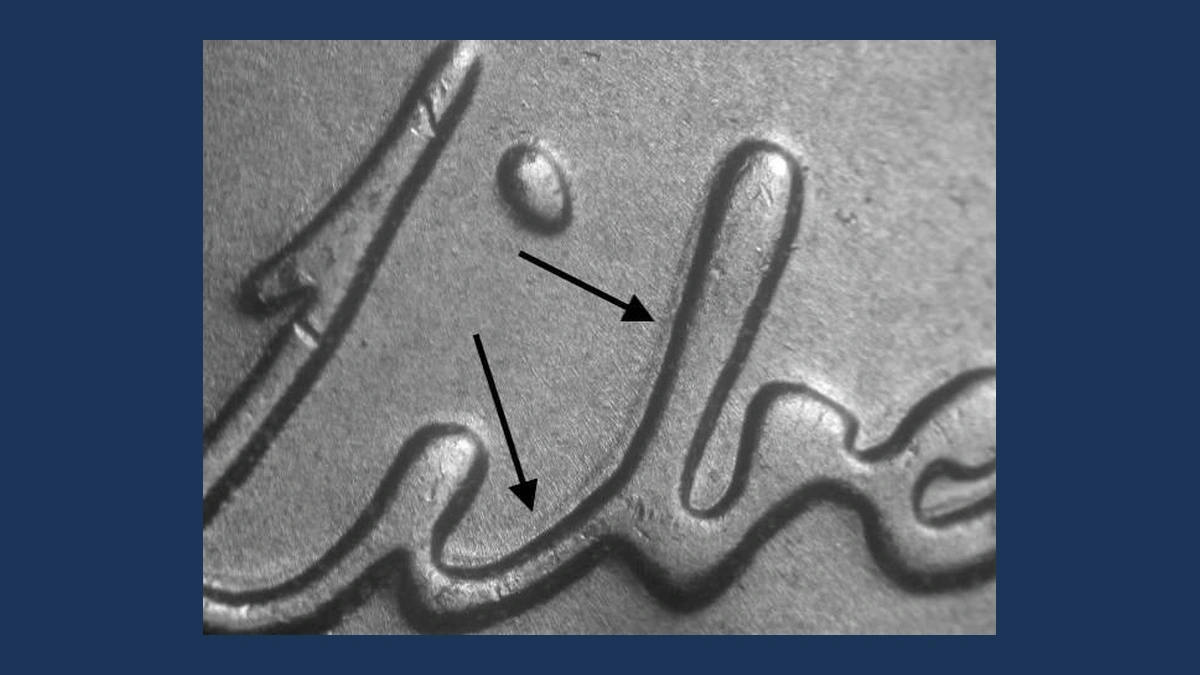
Extra detail on a 2013-P nickel can appear on Jefferson’s side or at Monticello’s doorway. Those are separate pictured examples, not a requirement that every coin have both.
Brian’s Variety Coins lists front doubling around the eye, hair, lettering, date, and P. Back examples show added detail at the top or inside of the central doorway.
The steel stamping tool, called a die, carried the extra design before striking the coin. The doubled P is therefore part of the design, not evidence of a mint letter separately punched twice.
Estimated Value
For the small cataloged varieties, estimate $5–$50, depending on visibility and preservation. That is a practical range for collectors matching minor extra design, not a promise of a major rarity.
A year guide mentions a $215 reverse-doubling result without an original lot clearly tied to these doorway examples. It should not automatically set their price.
Strong close-ups help establish the match. Full Steps, meaning sharply separated building steps, is a quality label rather than another error.
How to Identify
Choose one feature to match before examining the rest of the coin. For front doubling, magnify the eye and nearby hair, then compare the lettering, date, and P with the same cataloged example.
For back doubling, aim a 10× magnifier at the small central doorway above the steps. The added line should match a published shape and position, rather than simply make the entire building look blurry.
These coins retain the ordinary 5.00-gram weight and 21.21-millimeter diameter, checked with a scale and calipers on a loose specimen. Move the light across the suspected detail to distinguish a fixed extra outline from glare or a flat shelf caused during striking.
2. 2013 Jefferson Nickel Broadstrike
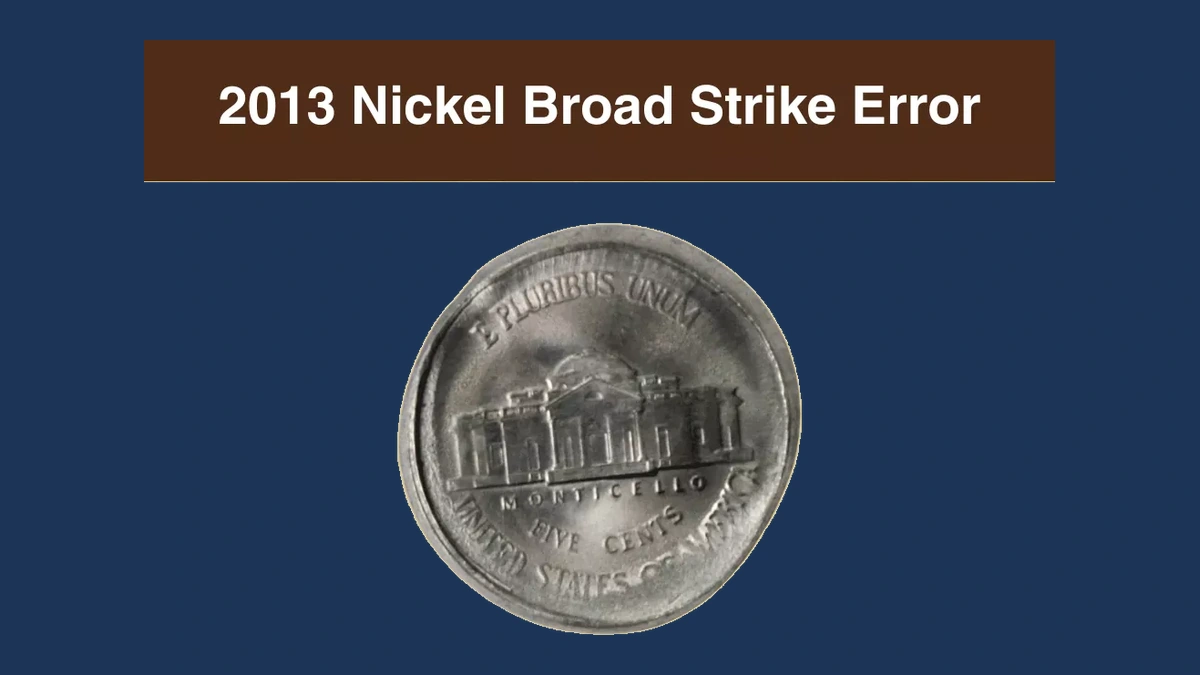
Both designs can fit inside a nickel that looks wider than usual. A broadstrike happens when the metal spreads without proper support from the collar, the ring that normally controls the coin’s width.
The 2013 year lists include this error, but do not establish one exact diameter or mint letter. A different-year comparison should not supply those details.
The outer spacing may be uneven even when all the intended design remains. That separates an uncentered broadstrike from a strike that loses part of its image beyond the blank.
A normal nickel already has a smooth edge.
Estimated Value
For an ordinary broadstruck example, use an estimated $20–$100. Coins with an obvious expanded border and undamaged design should attract more interest than barely oversized pieces.
The year material uses a 2017-P coin reported at $75 as a comparison. That is another year’s reported amount, not a 2013 sale.
Complete design and original surfaces matter. A nickel hammered flat after leaving the Mint may be wider, but that alteration does not earn a broadstrike premium.
How to Identify
The lettering is the first useful test: follow it around both faces and check that the intended design remains on the metal. If part of the image ran beyond the edge, consider off-center striking instead.
Next, view the edge with a 10× magnifier for hammer marks or a rolled-over border. A later flattened coin may have smeared letters as well as an enlarged outline.
Only then measure several widths with calipers against the normal 21.21 millimeters. A scale should place an intact example near 5.00 grams, since spreading the metal does not remove it.
Keep full photographs of both faces: the expanded border must surround original design rather than flattened remnants.
3. 2013 Jefferson Nickel Clipped Blank
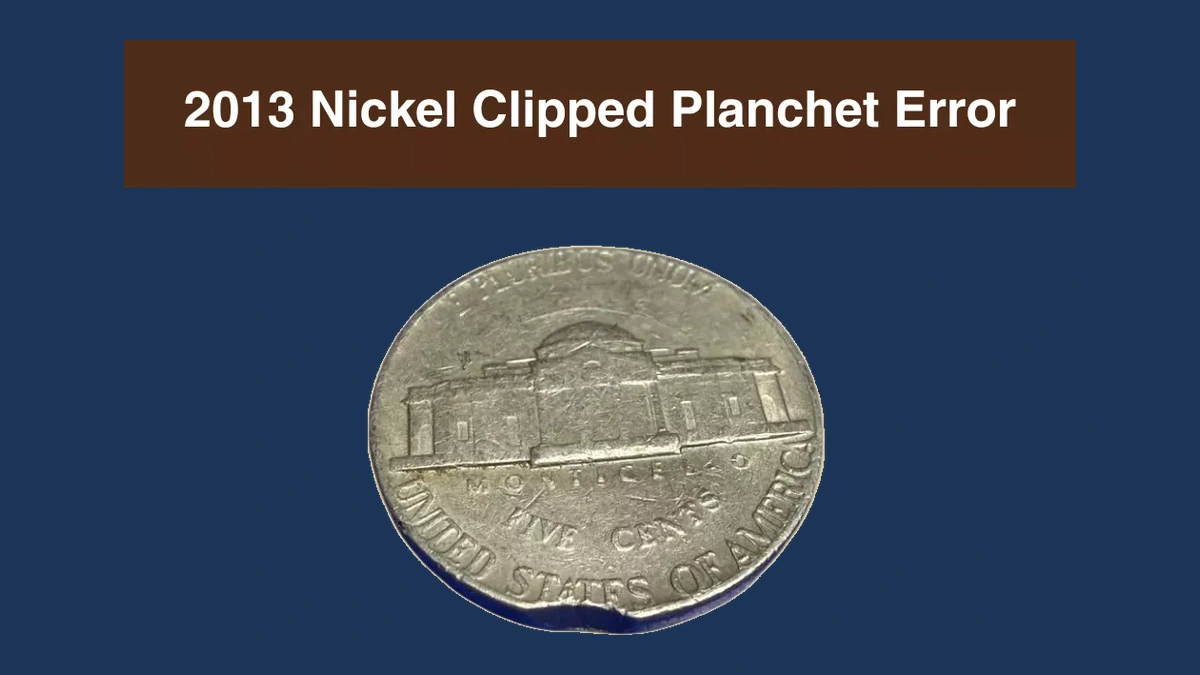
A section of the coin’s edge can be absent because the original blank was incomplete. When the press struck that blank, the missing section interrupted the usual round outline.
Collectors call it a clipped blank or clipped planchet. Curved and straight gaps can have different shapes while belonging to this same basic error.
The 2013 listings report the type without tying every illustrated gap to a specific mint and specimen. The gap’s shape alone cannot establish its date or origin.
Cutting or filing a finished nickel can imitate missing metal. The boundary around the gap supplies the better evidence.
Estimated Value
A reasonable estimated range is $15–$125. The lower end fits small, plainly visible clips, while a larger original gap on an attractive coin may bring more.
The year guide places ordinary clipped examples around $75, but the exact specimen behind that figure is not established. Use it as a guide amount rather than a completed sale of your coin.
Heavy scratches and corrosion reduce appeal. Multiple notches do not automatically multiply the value.
How to Identify
Weigh a loose candidate before handling the opening closely. A genuine missing section should reduce the normal 5.00 grams, though a later cut also makes a nickel lighter.
Calipers can record the remaining outline against 21.21 millimeters. Keep their tips away from fragile or jagged areas.
Under a 10× magnifier, inspect the gap’s ends for metal shaped during striking. Repeated file lines or saw marks point toward later removal.
The edge directly opposite a curved clip may be weak, but that is supporting evidence rather than an automatic verdict. No orange copper core should appear in this solid copper-nickel alloy.
Inspect how the original design ends at the gap, rather than trusting the missing shape by itself.
4. 2013 Jefferson Nickel Die Cracks, Chips, and Rim Cuds
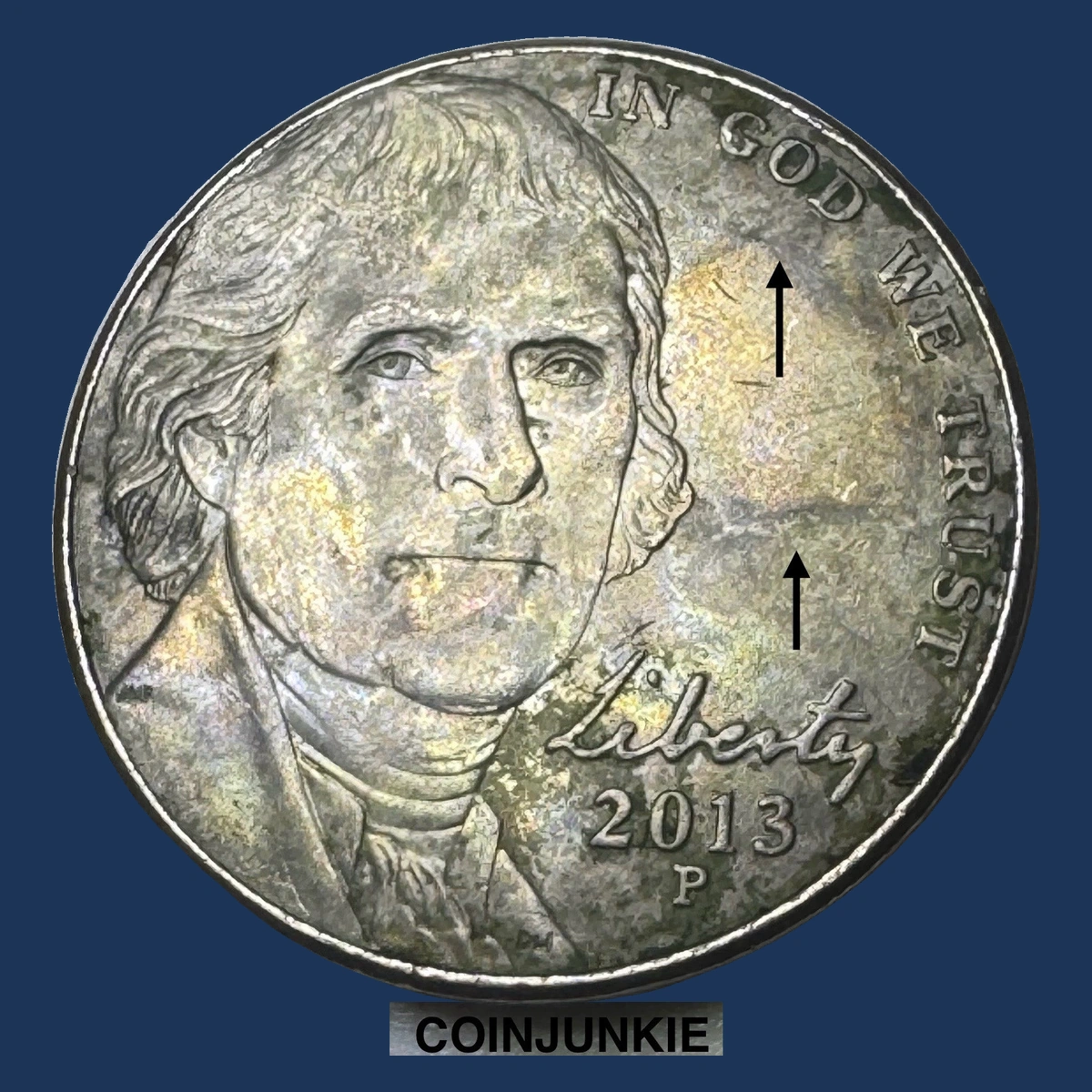
Raised lines and lumps are different from cuts into the surface. They can form when coin metal enters broken areas in a stamping tool.
A crack produces a narrow ridge, while a small missing piece of steel leaves a chip-shaped lump. A larger break touching the rim is called a cud.
The year reports describe a Philadelphia front crack, Denver back chips, and a separate Philadelphia rim cud. Their exact positions should be matched to their own photographs.
An interior lump is not a rim cud. Nor does a scratch prove that a raised patch came from a broken tool.
Estimated Value
An older example helps show the scale of prices: Heritage sold a 1982-P rim-break nickel for $84 in September 2024. CACG graded it MS66, meaning unworn with few marks.
For the 2013 reports, estimate $5–$150, from tiny chips to a prominent genuine rim break. The 1982 coin is a different-date comparison, not a sale of a 2013 example.
Judge the size and position of the raised feature together with the coin’s overall condition.
How to Identify
An intact nickel remains close to 5.00 grams and 21.21 millimeters, measured with a scale and calipers if loose. Those readings do not establish a tool break, but a large added lump may change them.
The important distinction is raised original metal versus damage or material stuck onto the surface. View the mark under a 10× magnifier, turning the lamp to reveal grooves, dents, or a separate attached layer.
Choose the comparison by mint and face: Philadelphia front crack or rim cud, versus Denver back chips. For a suspected cud, follow its connection to the rim and check whether the patch replaces the normal design.
5. 2013 Jefferson Nickel Improper Annealing
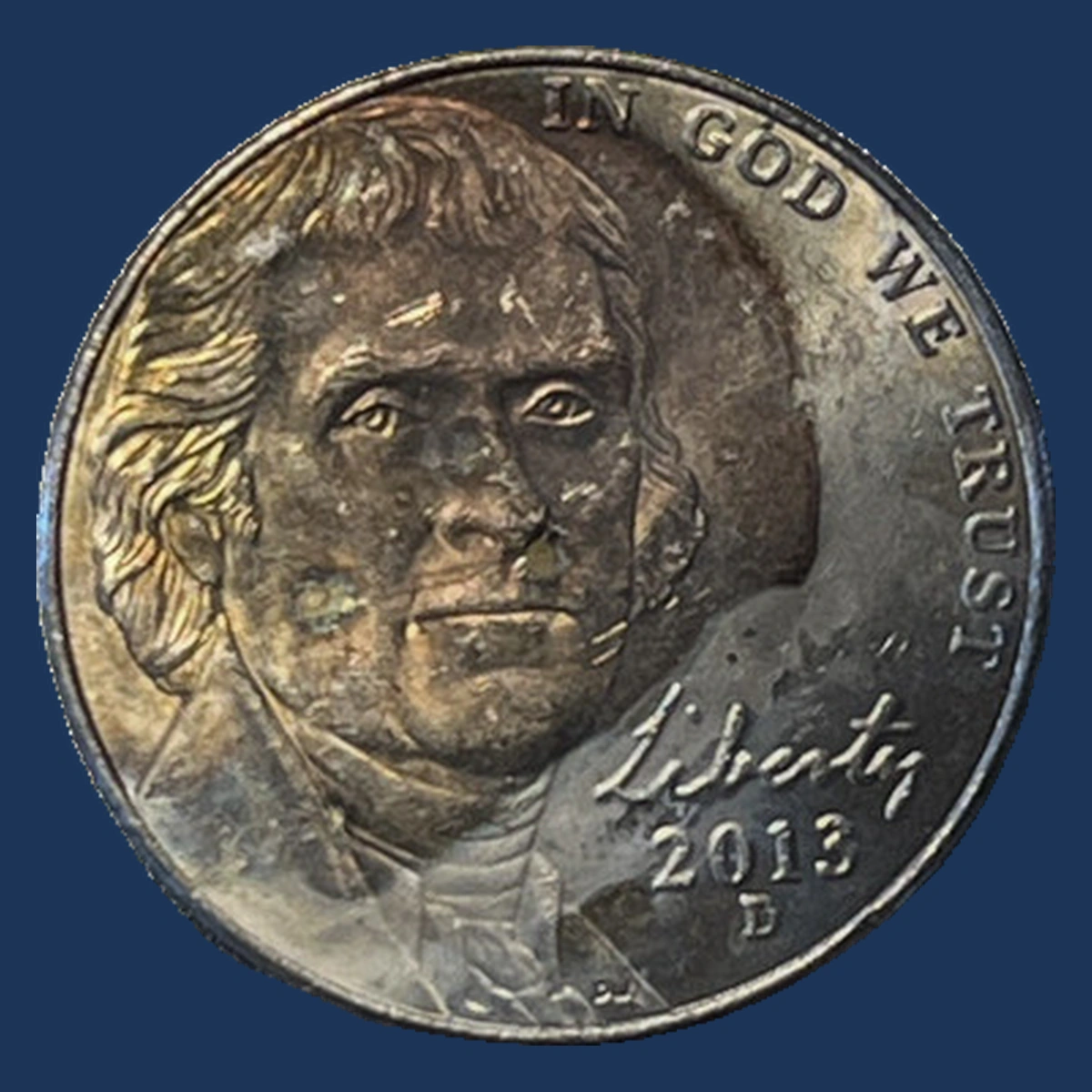
The Denver annealing report concerns unusual surface color, rather than a different coin design. Annealing is the heating used to soften metal blanks before they enter the press.
A problem during that treatment can affect the finished coin’s appearance. However, a nickel can also change color through later heat, chemicals, or storage.
The same weight and an interesting shade do not settle the cause. Original surface texture and the way color crosses the struck design matter too.
The coin is solid copper-nickel. Treat a colored example as that alloy unless a qualified examination shows something different.
Estimated Value
The year guide discusses a $215 amount for an unusually colored Denver coin. That figure does not establish the cause of another coin’s color.
For a confirmed minting-related heating error, estimate $25–$225. Clean, unworn surfaces and a strong but original color difference support the upper portion.
Ordinary staining or artificial heat coloring falls outside this error range. A specialist’s explanation of the surface is worth more than a seller’s dramatic color description.
How to Identify
Compare the dark or colored parts with nearby normal metal under a neutral white light. Avoid tinted bulbs or heavily edited photographs.
A 10× magnifier helps reveal whether crust, paint, pitting, or fine scratches cover the surface. Inspect the edge as well as Jefferson and Monticello.
Do not rub, dip, or heat the coin to test a theory. The untouched surface is the evidence needed for an expert opinion.
A scale and calipers check the ordinary 5.00 grams and 21.21 millimeters, but normal measurements do not authenticate an annealing error. The final assessment should explain how the color relates to the original struck surface, rather than relying on the shade alone.
6. 2013 Jefferson Nickel Off-Center Strike
Look for bare metal beside a design that has run off the edge. An off-center strike happens when the blank is misplaced beneath the stamping tools.
The press still stamps both sides, but part of the intended design misses the metal. That leaves an unstruck crescent on the other side of the outline.
Year lists report 2013 examples and discuss several percentage ranges. Those ranges describe possible degrees of displacement, rather than one confirmed coin with a known angle.
A complete image inside a wide rim is different. So is a nickel with only one face slightly shifted.
Estimated Value
An estimated $25–$300 covers modest through strong off-center examples with an identifiable date. The year material places small shifts near the low end and larger, attractive examples higher.
No particular percentage is assigned to an individual 2013 specimen here. The price should follow the actual blank crescent and missing design on the coin offered.
A readable date helps collectors choose a specific year. Losing it can limit demand even when the displaced strike looks dramatic.
How to Identify
Before estimating a percentage, verify that 2013 belongs to the shifted design and remains readable. Use a 10× magnifier to check the date and the surface of the bare crescent.
Photograph both faces without cropping out the edge. Follow the same physical part of the blank to see whether both designs were displaced together.
An intact blank normally retains about 5.00 grams on a scale, despite the incomplete image. Calipers can record the altered outline against the usual 21.21-millimeter diameter.
Metal should still be present in the bare area, unlike a clip. Check for original unstruck texture there instead of scratches or grinding that removed an already finished design.
7. 2013 Jefferson Nickel Counterbrockage
A counterbrockage can leave an enlarged, raised image that reads in the normal direction. It is made through an extra transfer of the design during a sequence of faulty strikes.
First, a coin receives a sunken, backward impression called a brockage. That surface can then impress its design into another blank, producing the raised counterbrockage.
The 2013-D report uses the counterbrockage name but describes a backward hollow instead. Those are different results.
The reported coin belongs here as a candidate for examination. Its actual image must settle whether the name fits.
Estimated Value
For an identified example, use an estimated $50–$300, from a worn or partial transfer to a clear unworn piece. Mint Error News’s 2024 price guide places ordinary Jefferson counterbrockages around $50–$200 across its condition categories.
The higher allowance here is for a stronger, more appealing transfer. It is an estimate, not a 2013 sale.
The disputed year-guide description does not support treating its $685 figure as a confirmed counterbrockage auction record.
How to Identify
Read the unusual lettering before studying its size. Counterbrockage lettering normally reads forward and stands above the surface, as explained by Error-Ref.
Inspect it under a 10× magnifier with the light moving sideways. A hollow, backward impression needs assessment as a brockage or later coin-to-coin damage instead.
The coin’s original nickel blank should be near 5.00 grams. Weigh it on a scale if loose, and use calipers to compare its outline with the normal 21.21 millimeters.
Expansion can occur during the faulty strike, so measurements alone will not settle the category. Photograph the normal face too.
The first decisive comparison is whether the transferred design is raised and forward-reading or recessed and backward.
8. 2013 Jefferson Nickel Struck Through Material
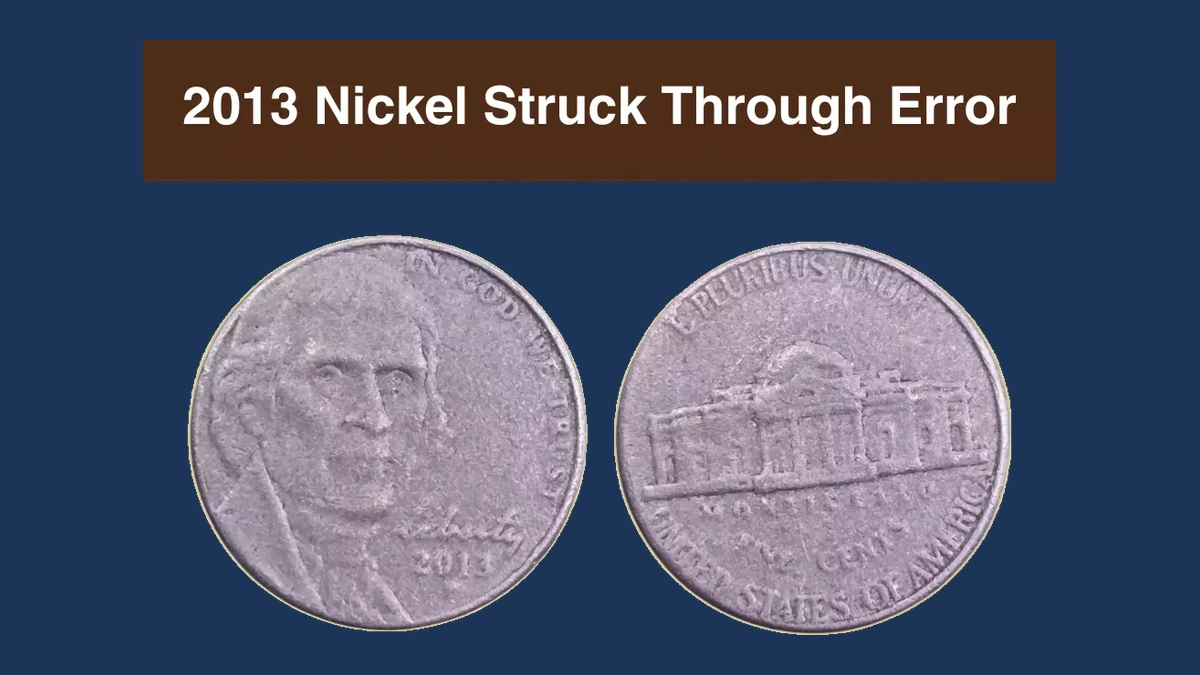
Foreign material can prevent part of a nickel’s design from forming. It may leave a weak patch or a hollow where it lay between the blank and stamping tool.
This is called a struck-through error. The shape can reflect the material, but a guess about that material is not the same as an identification.
A 2013-P example appears in the year report without a specific location or object firmly described. It should not automatically be called a wire, cloth, or grease strike.
The impression and the surrounding design provide the clues. Later dents can look surprisingly similar.
Estimated Value
For a genuine 2013 struck-through error, estimate $15–$450. Small weak spots belong low in the range, while a large, clearly formed impression can justify much more.
The year guide reports $412 for a Philadelphia coin graded MS63, an unworn example with visible marks. The report does not establish which material made the impression.
Price should reflect the actual feature and overall surfaces. A high reported amount should not turn every dent into a valuable error.
How to Identify
A normal weight can help distinguish a blocked design from one that was cut away. On a loose coin, check about 5.00 grams with a scale and the usual 21.21-millimeter width with calipers.
Put a 10× magnifier over the transition from sharp design to the affected area. A later impact may leave displaced metal beside a dent, while scraping can remove finished letters and leave fine lines.
Take photographs with light from several directions, keeping any attached material untouched. Follow the impression across nearby design details to see how it interrupted the strike, rather than guessing an object from its outline alone.
9. 2013 Jefferson Nickel Lamination
A thin metal flake can lift away from a nickel and expose a rough patch underneath. This separation within the metal is called lamination.
The 2013-P report includes such a flaw, but its exact position is not established. A close photograph must show the actual separation rather than borrow the location of another example.
The normal nickel contains seventy-five percent copper and twenty-five percent nickel mixed into one alloy. It has no separate copper core or silver-colored outer layer to lose.
A split within that alloy is possible. Peeling paint or plating added later is a different problem.
Estimated Value
The estimated range is $15–$650, covering small original flakes through major, clearly identified separations on attractive coins. Most minor flaws belong much closer to the lower end.
The year guide reports $620 for a Philadelphia lamination graded MS62, meaning unworn with noticeable marks. That amount is a secondary report, not proof of a missing outer metal layer.
A large damaged or corroded patch is a poor comparison for an original lamination.
How to Identify
Leave a lifting flake attached. Its connection to the rest of the metal can reveal more than the exposed patch alone.
With a 10× magnifier and side light, follow the thin boundary underneath the flake. Look for a separation inside the coin rather than a film lying on top.
If loose metal has fallen away, a scale may show less than the normal 5.00 grams. Calipers compare intact areas with the ordinary 21.21-millimeter diameter.
Take edge photographs without pressing the damaged area. A normal nickel is solid alloy, so an orange core with separate outer skins would require another explanation.
The useful clue is a continuous metal-layer separation, not roughness or discoloration by itself.
Conclusion
Estimated values of $5–$650 cover these small varieties and more dramatic manufacturing flaws. The metal tells the story: a raised line differs from a scratch, and a split differs from missing plating.
On doubled-die candidates, compare the exact portrait or doorway details. For missing metal, keep the original edge intact.
The reported counterbrockage deserves special care: its transferred design should be raised and read normally. A backward hollow needs a different explanation.