2015 Nickel Error List with Pictures

Jefferson can look perfectly upright while Monticello lies sideways. A 2015-D nickel with that quarter-turn mismatch sold for $79 in October 2021.
Rotation is one of several 2015 Jefferson nickel errors worth learning to recognize. Estimated values across this list range from $3 to $500, including small tool defects, expanded coins, and material trapped during striking.
Use the following checks to look beyond a coin’s first appearance and understand which part of the minting process left the unusual feature.
1. 2015 Jefferson Nickel Transferred Traces from the Opposite Design
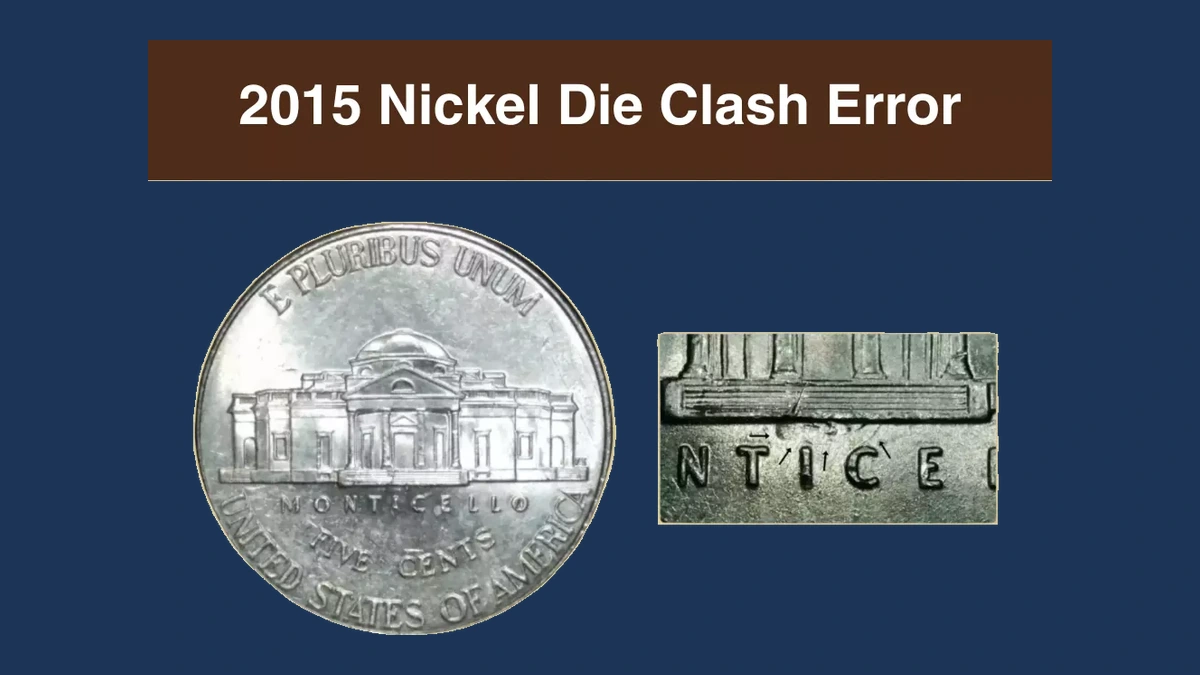
An unfamiliar curve or short line can appear beside the ordinary design. On reported 2015 examples, including Denver coins, the relevant shapes must be compared with the portrait or Monticello on the opposite face.
These marks can result from a die clash. The two steel stamping tools hit each other with no coin blank between them, leaving marks that later coins copy.
The transferred traces may be faint and incomplete. They differ from random scratches and from a full sunken mirror-image design made by direct contact with another coin.
Estimated Value
For visible, identifiable clash marks, estimate $3–$60. Stronger traces on an unworn nickel are easier to display than weak lines on a worn surface.
This is an estimated range for a modest minting feature, not a documented sale of a specific 2015 example. The comparison to the opposite design should be clear.
A large number of unexplained lines does not automatically mean a better error. Buyers value recognizable transferred shapes more than a dramatic description without matching photographs.
How to Identify
Compare photographs of both normal designs at the same size, looking for the opposite design within each extra shape. That check is more useful than trying to explain an isolated short line near the portrait.
Use a 10× magnifier with side lighting to distinguish the transferred shape from scratches and ordinary building details. Its position must agree with contact between the stamping tools, without assuming that every clash mark has the same depth.
A scale and calipers should record about 5 g and 21.2 mm for a loose coin, with a plain edge. Keep surrounding letters visible in close-ups, since overly tight cropping can make unrelated marks seem to occupy matching positions.
2. 2015 Jefferson Nickel Doubled Design Outlines
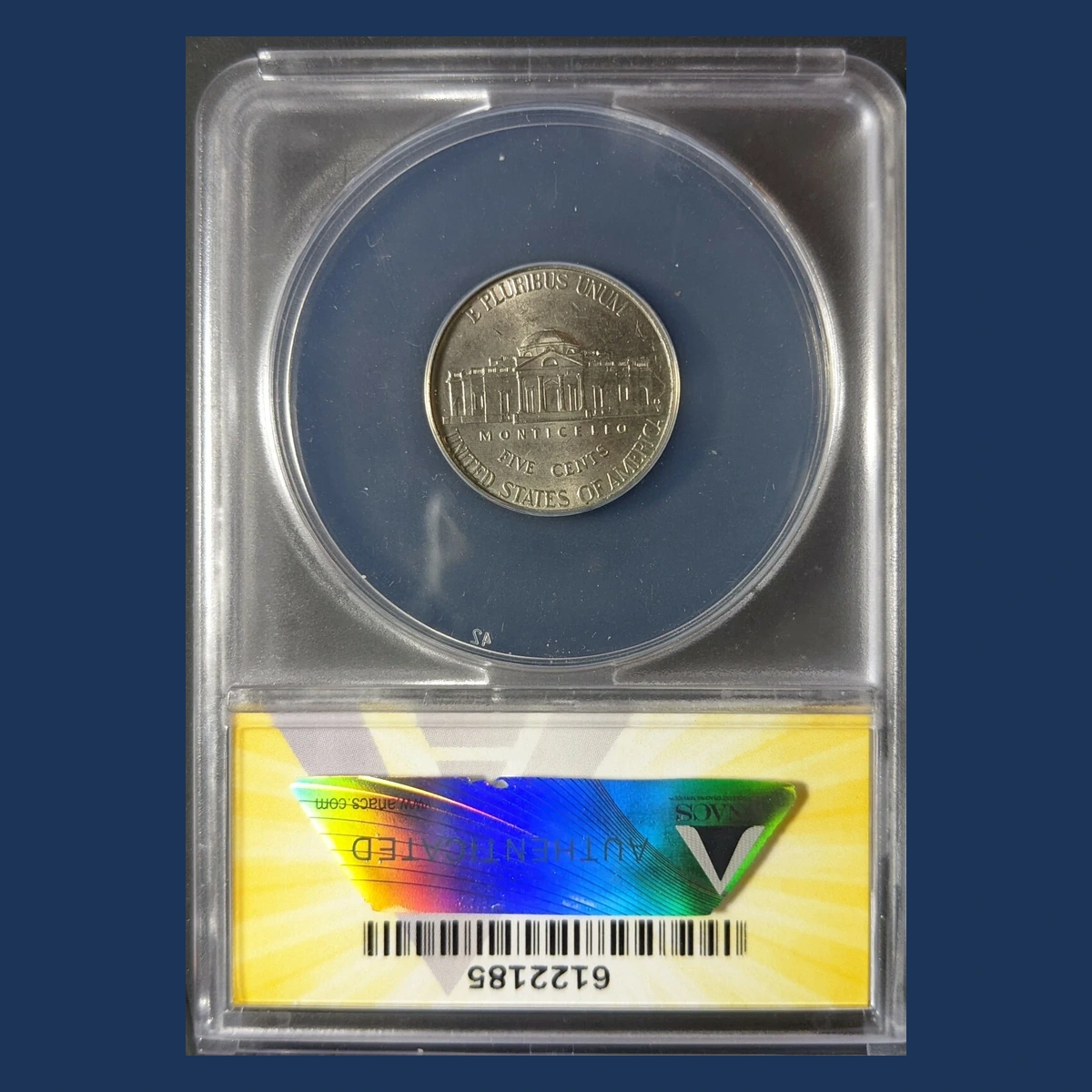
Extra outlines may follow LIBERTY, the motto, or parts of Jefferson’s portrait on reported 2015-D examples. Reports for the back also describe doubling around Monticello and FIVE CENTS.
A doubled die is a stamping tool whose design contains duplicated details. The extra shapes can therefore repeat on multiple coins made from that same tool.
This is not simply a coin being stamped twice. A second strike shifts a broader design, while ordinary machine movement can leave flat shelves along letters that look doubled at first glance.
Estimated Value
An identified doubled design has an estimated value of $5–$75 on a 2015 nickel. The strength of the added outline matters more than the number of letters described as doubled.
Worn, slight features belong near the lower end. Sharp unworn examples with a convincing matching pattern can attract more.
These estimates concern modest modern varieties. They do not transfer the high prices of famous older doubled dies to a thick-looking word or a mechanical shelf on an ordinary nickel.
How to Identify
Choose one clearly separated feature and photograph it before enlarging other letters. Under a 10× magnifier, a real extra outline should follow a recognizable part of the original design.
A flat shelf can reduce the width of the main letter. Compare that appearance with raised duplication, and move the light to remove misleading glare.
The front report concerns 2015-D, but the back report should not automatically be assigned the same mint. Read the actual mint letter on each example.
For a loose coin, check 5 g on a scale and approximately 21.2 mm with calipers. Inspect the plain edge for alteration, then compare the specific extra shapes with another matching coin rather than accepting thickness alone.
3. 2015 Jefferson Nickel Splitting Surface Metal
A narrow opening can lead beneath a thin piece of surface metal. The piece may remain attached or leave a shallow patch after separating.
This is lamination, a split within the metal rather than a loss of an applied coating. The 2015-D nickel is made from a solid mixture of copper and nickel.
Because the coin has no separate copper core and outer layers, calling the defect a missing clad layer would be misleading. The important feature is the metal’s internal separation, not merely an unusual color where the surface is rough.
Estimated Value
Expect an estimated $10–$100 for clear 2015-D laminations. An attached sheet can be more interesting than a small missing patch because it shows how the metal separated.
The range estimates ordinary collector demand for this flaw. It is not a claim that one particular 2015 coin sold at either endpoint.
Condition and appearance still count. Corrosion or a large unattractive scar can limit the price, even when part of the original weakness began before the coin entered circulation.
How to Identify
Read the D beside the date and include it in an overall photograph. The reported 2015-D peeling feature needs to be compared with this denomination’s solid copper-nickel construction.
If the coin is loose, record its intact diameter with calipers against 21.2 mm and its weight against 5 g. A lost sheet can lower the scale reading, while a sheet still attached need not do so.
Now examine the opening under a 10× magnifier. Follow the split beneath the surface and toward the plain edge if it reaches that far.
Leave the flap attached. A scrape made from above, or foreign coating lifting away, should not be confused with a sheet separating inside the coin’s original metal.
4. 2015 Jefferson Nickel Incomplete Blank
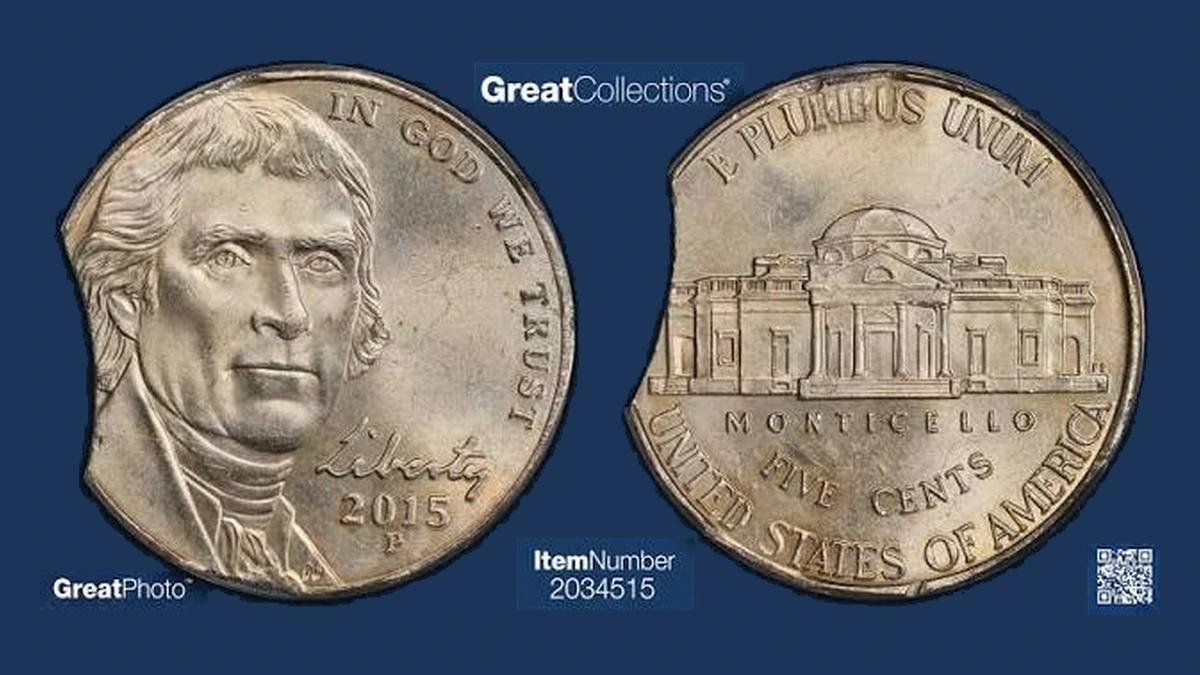
The coin’s outline may have a missing section before the designs are ever stamped. A clipped blank is an incomplete disc produced during the cutting of coin blanks from metal strip.
The opening survives when the incomplete disc reaches the press. Nearby details may soften where the metal flows toward the gap instead of filling the design normally.
A weak rim opposite the opening can support the identification, but it is only one clue. Later cutting, filing, and corrosion can all remove metal without creating a genuine clipped-blank error.
Estimated Value
Large, easily recognized clips generally bring more than tiny missing sections. For 2015 nickels, an estimated $15–$150 allows for that difference and for wear.
A 1997-P nickel with a 20% curved clip sold for $124 in March 2025. It is a useful different-year comparison, not evidence that the same shape or percentage applies to a 2015 coin.
Original edges matter. A large cut made after minting does not deserve the price of an equally large genuine clip.
How to Identify
Inspect the cut-looking surface and both ends of the opening with a 10× magnifier. Saw marks and sharp filing grooves should be ruled out before judging the overall shape.
Compare the design beside the gap on both faces. Naturally softened details and metal flow are more useful than a missing section viewed from only one side.
A scale should record less than the normal 5 g if metal was absent from the blank. Use calipers across an intact part to compare with the normal 21.2 mm diameter.
The remaining edge should be plain. Include the opposite rim in photographs so any weakness there can support the other clues, without treating that one feature as a complete authentication test.
5. 2015 Jefferson Nickel Cracks, Small Chips, and Rim Breaks
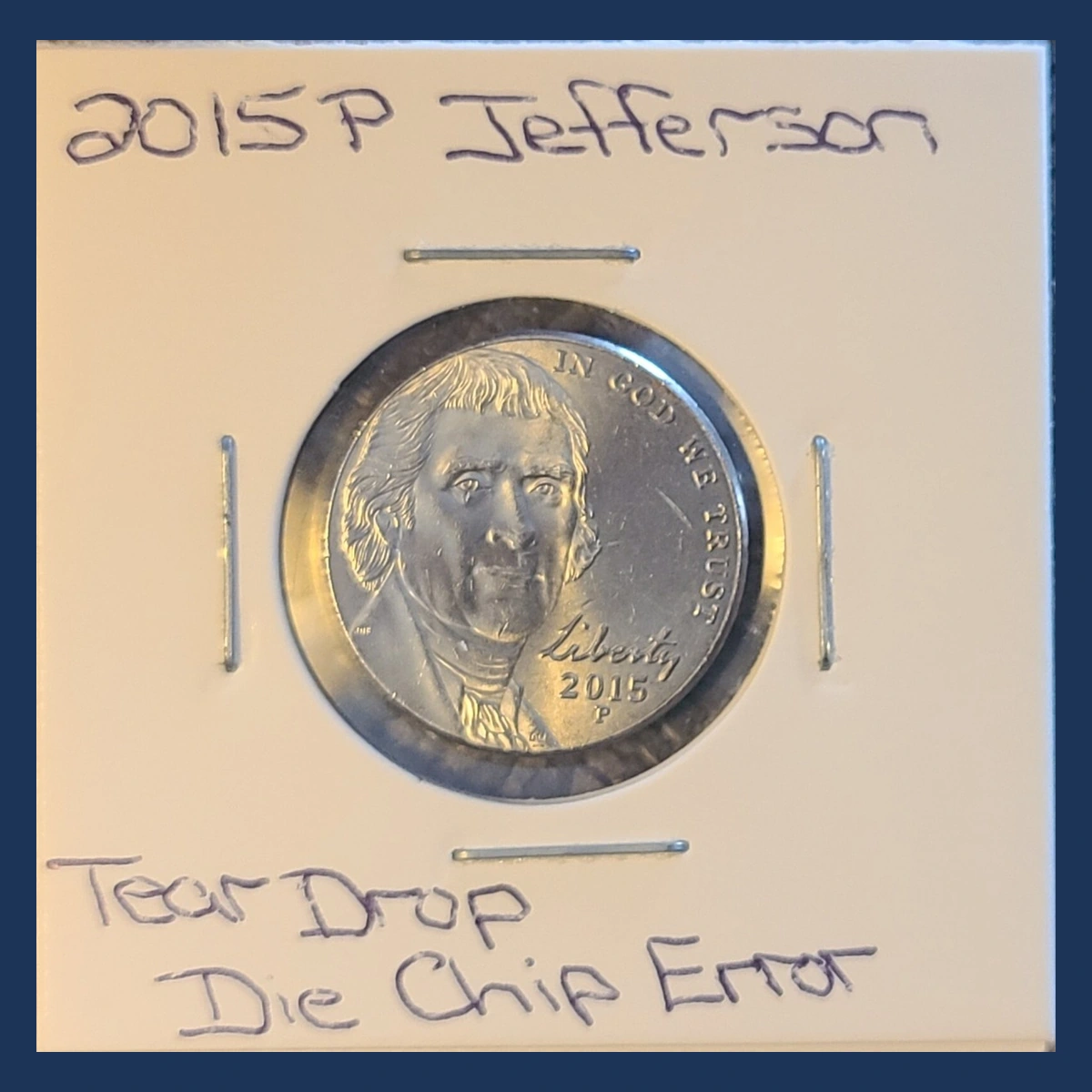
A thin raised line, a small blob inside the design, and a broad rim-connected patch show different amounts of damage to a stamping tool. They are related, but their shapes are not interchangeable.
A crack lets metal form a narrow ridge. A chipped-out piece creates a larger raised area, while a break at the tool’s edge can erase design beside the coin’s rim.
Collectors call that last feature a cud. The recorded 2015 categories include these forms, without establishing one common location for every example.
Estimated Value
Allow roughly $3–$25 for minor cracks or small interior chips, and $30–$200 for a substantial rim-connected break. The larger range belongs to an obvious failure, not every raised dot.
These are estimated 2015 collector prices. A clear boundary and good surrounding detail make the shape easier to understand.
Wear, dents, or corrosion can hide the feature and reduce appeal. Judge the entire coin rather than adding separate premiums for a crack and blob that developed together.
How to Identify
Ask where the raised feature ends. An interior blob is a chip-type feature, while a cud must connect to the rim and replace part of the normal design.
Use a 10× magnifier to follow narrow lines into wider patches. A cut-in scratch or glue lump does not reproduce the same natural struck surface.
On a loose nickel, calipers should compare the normal 21.2 mm diameter and a scale the normal 5 g. The metal mixture remains the usual copper-nickel alloy.
Examine the plain edge next to any large patch and the design opposite it. Later impacts can fold metal over the rim, so a damaged outline should not be explained as a broken stamping tool without checking both faces.
6. 2015 Jefferson Nickel Widened Coin from an Unrestrained Strike
More metal than usual can appear outside the design, making the nickel look wide or uneven around its border. A broadstrike happens when the metal is not properly held by the surrounding ring during striking.
The pressure spreads the disc outward. The main portrait, building, and lettering remain on the coin instead of being cut off by its edge.
The reported 2015-D category concerns this expansion. Since a normal nickel already has a plain edge, the absence of grooves cannot distinguish a broadstrike from an ordinary coin.
Estimated Value
A broadstruck 1999-P nickel graded PCGS MS63 brought $89 in March 2025. That unworn coin provides a recent sale comparison for the same general striking problem.
For 2015-D, estimate $25–$250. The amount of visible expansion and preservation help set the price.
A complete design with natural outward spread is more convincing than width alone. Coins flattened after leaving the Mint may look wider, but their damaged details exclude them from this mint-error estimate.
How to Identify
Lay a normal nickel beside the candidate and compare the space outside the lettering. An expanded border should be considered together with the complete designs on both faces.
Measure several directions with calipers, using 21.2 mm as the normal diameter. The widened outline may be uneven rather than perfectly round.
A scale should still show close to 5 g because expansion moves metal without removing it. Through a 10× magnifier, inspect the plain edge and surrounding design for natural flow.
Look for flattening across raised letters, the portrait, or Monticello. Similar pressure damage on both faces can reveal a squeezed coin, even when its larger size first suggests a broadstrike.
7. 2015 Jefferson Nickel Abnormal Color from Blank Heating
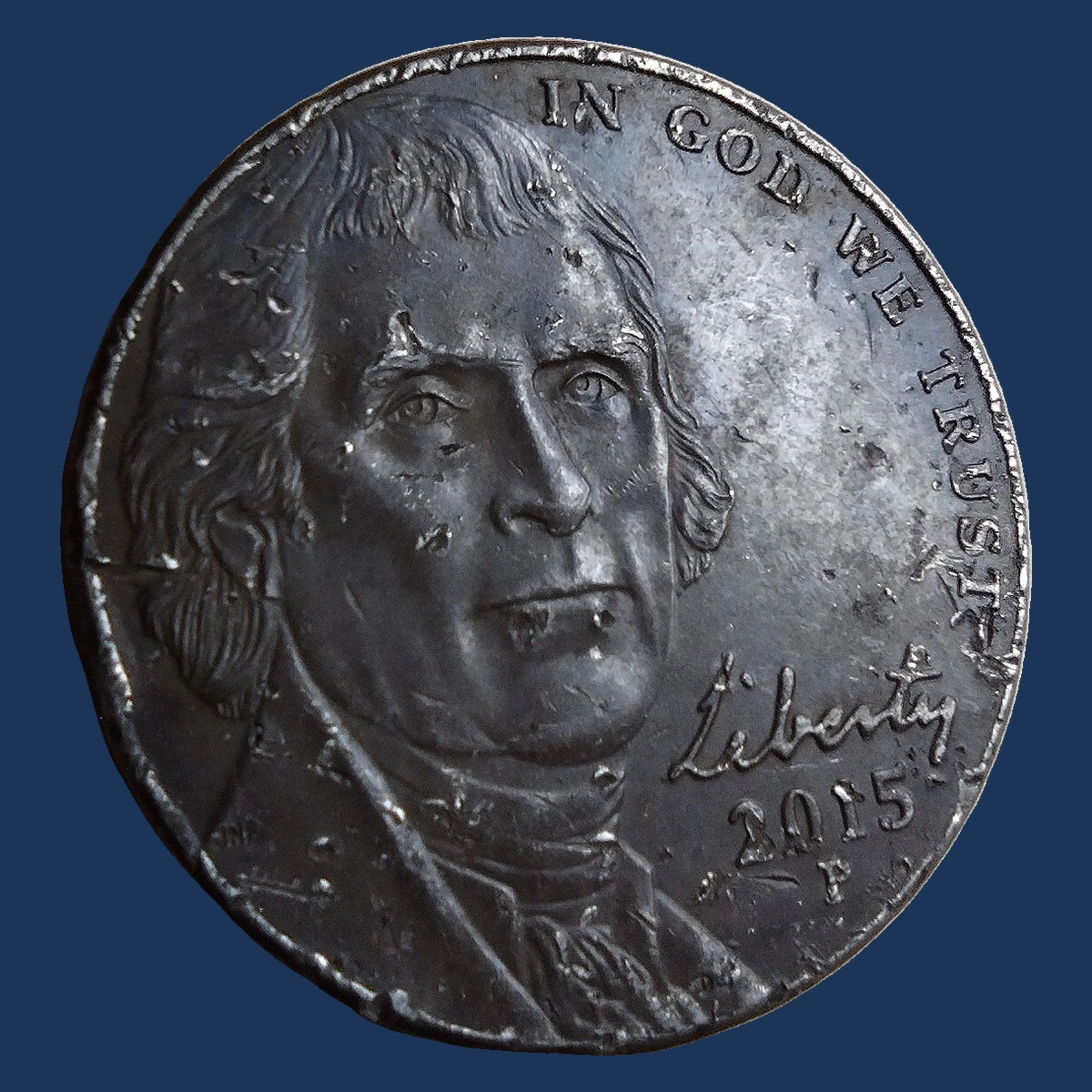
Brown, coppery, or unusually dark surfaces may point to a problem during the heating of a blank. That heating step, called annealing, softens the metal before striking.
If the process goes wrong, the surface chemistry can change while the coin still receives its normal design. The reported 2015 category concerns that minting process.
A stained coin can look similar. Neither a dark color nor surviving shine alone separates improper annealing from environmental change, later heat exposure, or chemical treatment, and the nickel has no outer plated layer to lose.
Estimated Value
The estimated range for authenticated 2015 annealing errors is $30–$250. Attractive original surfaces can support more than a dark, worn coin with an unclear history.
A 2005-D Bison nickel with improper annealing sold for $119 in December 2022 at NGC MS62. That unworn older example is a comparison, not a 2015 result.
The premium depends on the cause of the color. An ordinary stained nickel does not become equally valuable merely because its shade resembles the auctioned coin.
How to Identify
Examine the edge as well as both faces under neutral light. A coating that wears through on raised areas can change color without any heating error at the Mint.
Record a loose coin with a scale and calipers against 5 g and 21.2 mm. Normal readings support its identity as a nickel but do not explain the color.
A 10× magnifier can show deposits, pitting, scratches, or damage from later heating. Keep a normal 2015 nickel beside it so differences caused by lighting are easier to notice.
Do not polish the plain edge or wipe a dark patch. A specialist needs the original surface to assess whether the color formed before striking or developed after the coin entered use.
8. 2015 Jefferson Nickel Monticello Turned Sideways
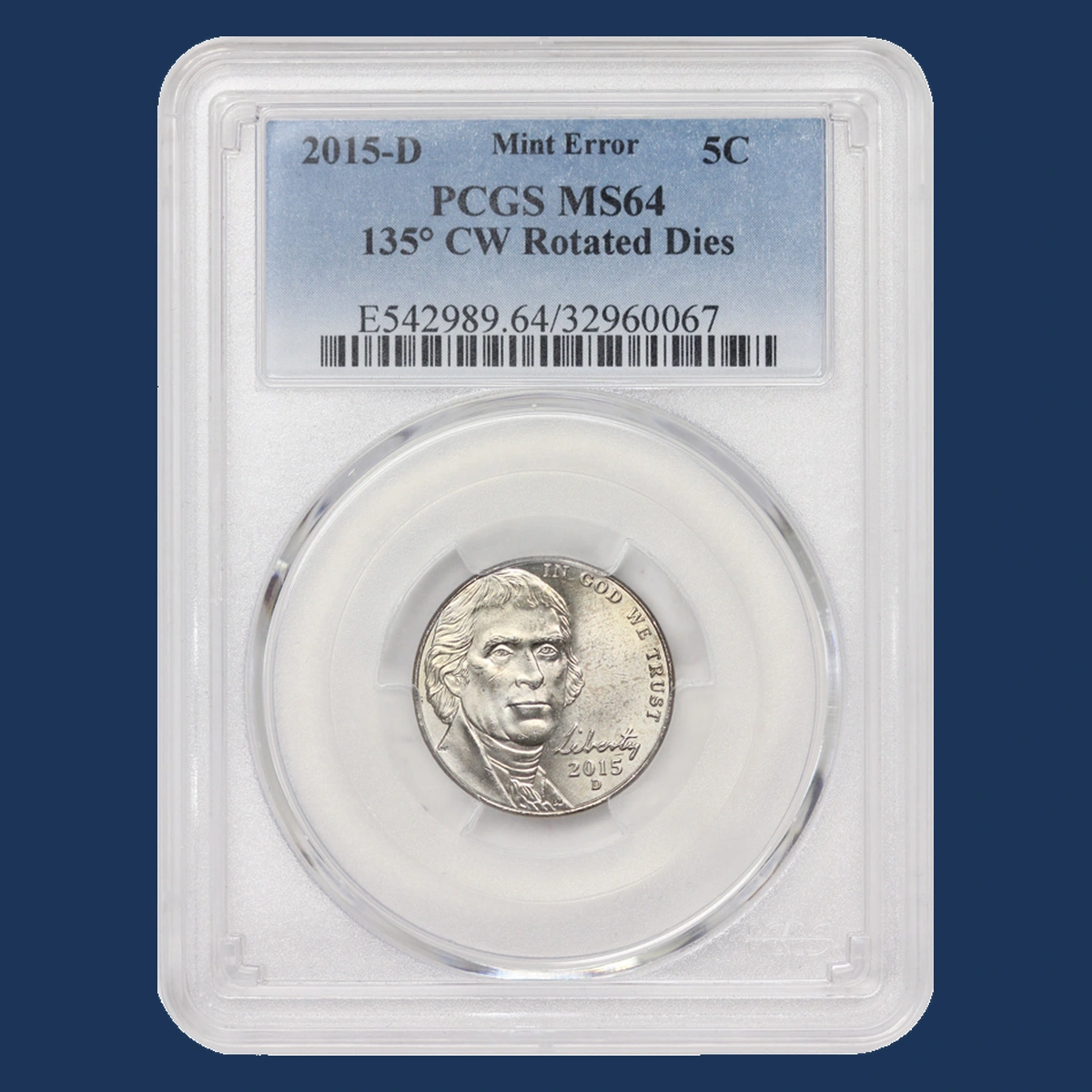
After a normal nickel is turned top to bottom, Monticello should stand upright. On a 2015-D example, the building instead turns ninety degrees clockwise, as though it were lying on its side.
One stamping tool was turned relative to the other. Each face can look normal separately, yet their positions do not line up in the usual way.
A different 2015-D example was offered with a 135-degree clockwise rotation. These are two angles of the same kind of error, not proof that every rotated 2015 nickel has one fixed angle.
Estimated Value
The 90-degree example sold for $79 on October 6, 2021, graded PCGS MS64. That grade describes an unworn coin.
An estimated $40–$300 covers convincing 2015-D rotations with different angles and levels of preservation. Larger, easily demonstrated turns tend to attract more attention than a small tilt.
The separately offered 135-degree coin supports another angle, but its sold listing does not provide a price to treat as an additional auction result.
How to Identify
Hold Jefferson upright.
Flip the coin top to bottom without twisting it sideways, then measure Monticello’s tilt from upright.
Repeat the same turn while recording video, or hold the coin in a transparent flip that keeps its position fixed. Separate photographs can be rotated independently and therefore prove little by themselves.
A protractor can measure the back’s angle from upright. With a 10× magnifier, inspect the plain edge for a seam that might join two altered coin halves.
For a loose coin, a scale and calipers should compare 5 g and 21.2 mm. Keep a certified example sealed and use its fixed position in the holder to demonstrate the relationship between its two faces.
9. 2015 Jefferson Nickel Blocked Details and Trapped Material
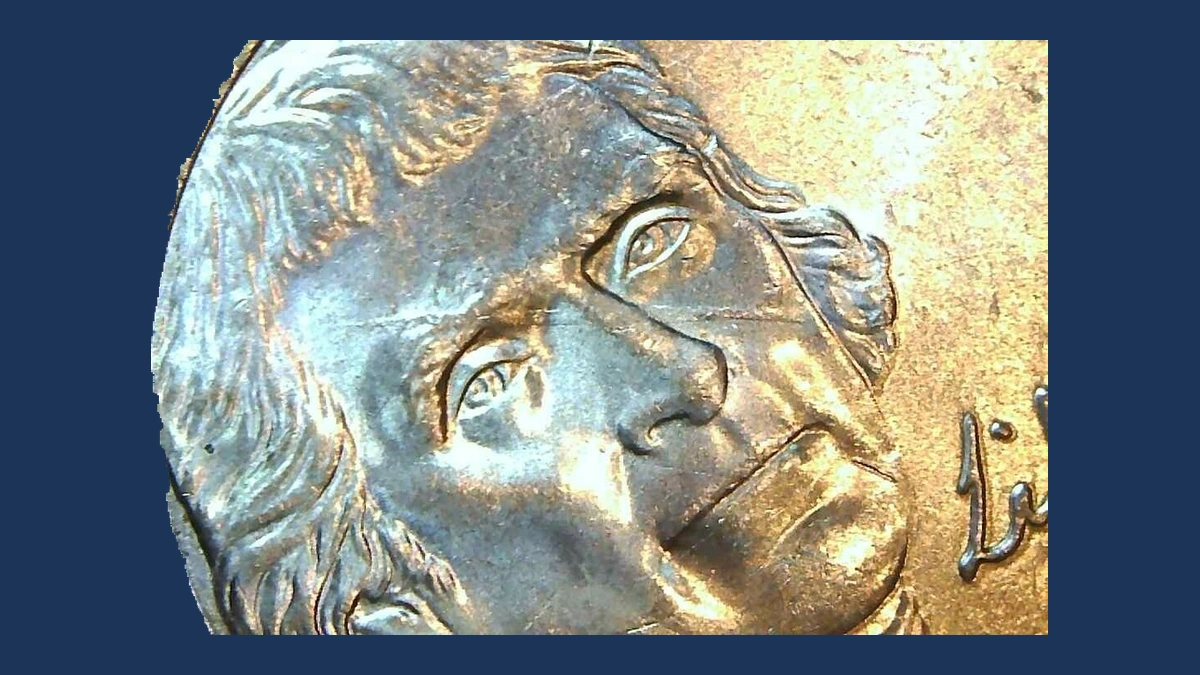
Some details can fade where grease blocks the stamping tool. A more dramatic version leaves a piece of unwanted material embedded in the coin after the strike.
The 2015 reports include weak areas around the portrait, LIBERTY, or building, plus retained material on a Philadelphia example. The material’s identity should not be guessed from a rough-looking patch.
Both effects involve an obstruction during striking. Soft debris can prevent detail from forming, while a solid piece can leave an impression and remain in place; later glue or attached debris is different.
Estimated Value
Estimate $3–$25 for small grease-filled areas and $50–$400 for genuine retained-material errors. Embedded material needs a clear relationship with the struck design to justify the larger premium.
A different-year 2000-D nickel struck through a coin covering the tool sold for $84 in September 2025. That comparison involves another kind of obstruction, not retained material on a 2015-P nickel.
The 2015 ranges are estimates. The object’s size, visibility, and the coin’s condition influence the final price.
How to Identify
For retained material, start at the boundary between object and coin. A 10× magnifier should show how the strike pressed metal around or against the object, rather than a piece simply resting on top.
Do not test the attachment by pulling it.
Photograph the full face and the boundary from several low angles.
For soft missing details, compare the weak area with nearby sharp design and with general wear. Gouges, scraped patches, or ordinary wear need different explanations.
A loose nickel normally measures 21.2 mm with calipers and weighs 5 g on a scale; retained material may alter the reading. Inspect the plain edge too, without dislodging anything or treating weight alone as proof of an embedded object.
10. 2015 Jefferson Nickel Designs Struck off the Edge
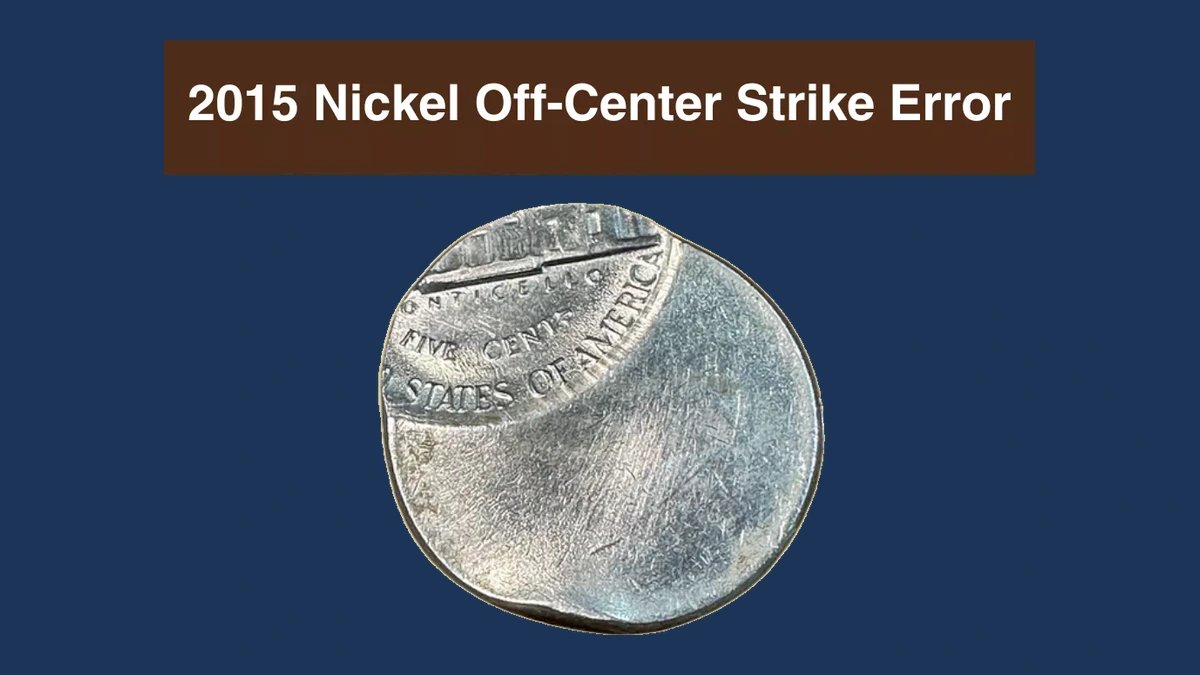
A blank crescent may take up one side of the coin while part of the portrait or lettering runs off the other. The disc was out of position when the tools stamped it.
An off-center strike leaves some metal untouched because it never passed between the designs. The displaced pattern should be assessed on both faces.
This differs from a broadstrike, which spreads the metal while preserving the main design. It also differs from a small alignment problem affecting just one tool, which can create an uneven border on only one face.
Estimated Value
An estimated $30–$500 covers small through dramatic off-center 2015 nickels. Readable dates and attractive untouched crescents are useful selling features.
A 1999-P example described as 15% off center sold for $64 in March 2025. That older coin shows the modest price possible for a smaller displacement.
The upper estimate allows for a larger, clear 2015 error with good surfaces. It does not imply that a particular percentage or direction has been established for every coin reported from this year.
How to Identify
Compare the two faces before estimating a percentage. The blank crescent and lost design should fit one displaced disc, rather than an uneven rim visible only on the portrait side.
Use a 10× magnifier at the transition from struck detail to blank metal. Filing or grinding that removes part of a finished design leaves a different boundary.
Read the surviving date and mint letter directly, keeping them in the photographs. An incomplete date should not be filled in from the seller’s title.
Check a loose coin with a scale against 5 g and calipers against the normal 21.2 mm blank diameter. Striking may distort its shape, so inspect the plain edge for missing metal instead of judging the error from width alone.
Conclusion
For 2015 Jefferson nickel errors, estimated prices run from $3 to $500. A measured rotation, preserved debris, or clearly displaced design can be easier to demonstrate than a faint line or dark patch.
Keep the date and mint letter visible in photographs, and examine both faces before naming the error. Measurements help support the diagnosis, while original surfaces and undisturbed metal preserve the clues that collectors need to see.