2023 Nickel Error List with Pictures

Monticello’s doorway and Jefferson’s eyebrow offer useful starting points when checking a 2023 nickel. Some extra marks repeat from one coin to another, while a wrong blank changes the whole coin.
A comparable 1981 nickel on a cent blank sold for $372 in September 2025. The 2023 Jefferson nickel errors below have estimated values from $3 to $750, depending on the mistake and condition.
Read on for the visible clues, including the checks needed before assigning a premium to an unusually light coin.
1. 2023 Jefferson Nickel Soft or Missing Details
A letter or part of Monticello can fade while nearby details remain sharp. Grease or other soft debris may have filled a recess in the die, the steel tool that stamps the coin.
The blocked recess could no longer form its full raised design. This is often called a grease-filled die or struck-through-grease error.
The type is reported on 2023-D nickels. A missing detail is the starting clue, but broad wear or a weak strike can also soften the design without grease being involved.
Estimated Value
For genuine grease-filled areas, estimate $3–$25. A small soft letter usually sits near the lower end, while a clearly missing section on an unworn coin can bring more.
These are estimated collector prices, not a claimed sale of a particular 2023-D nickel. Strong surrounding detail makes the effect easier to explain and display.
Wear that has flattened the whole coin removes that advantage and can leave the piece worth only face value.
How to Identify
Compare the weak area with the highest points of the portrait. If both show broad flattening, ordinary wear may explain the missing detail.
Under a 10× magnifier, look for smooth weakness beside sharp, undamaged lettering. Scratches crossing the area or a flattened, scraped surface point toward later damage instead.
The D identifies Denver. Check the date and mint letter before comparing photographs, since a similar missing feature on another year is not the same example.
A loose coin should remain close to 5 g and 21.2 mm across; use a scale and calipers, then inspect its plain edge. Grease blocking a design recess does not normally remove metal from the finished coin.
2. 2023 Jefferson Nickel Long Raised Marks
A long raised mark can run from Jefferson’s eyebrow toward the rim. Another reported pattern passes down Monticello from the dome, through the doorway, toward the steps.
These are separate observations, not a claim that both marks occur on every coin. Collectors have discussed damage or an inclusion in the stamping tool as possible causes.
The visible raised shape can be compared without choosing a final cause. It should not be renamed a doubled die simply because it adds an extra line near an existing design.
Estimated Value
A modest estimated $5–$40 is appropriate for a clearly photographed, repeating 2023-P raised-mark pattern. This values the collectible appearance, rather than assuming a newly established rare variety.
At the lower end, a worn coin may show little more than a line. A sharp unworn example with matching examples is easier to sell to a specialist.
A single unexplained mark should not receive the price of a major error merely because its shape looks unusual.
How to Identify
First determine whether the mark rises above the surface. Tilt the coin under a lamp and use a 10× magnifier; a scratch usually cuts downward instead.
Compare either the eyebrow-to-rim pattern or the dome-to-steps pattern with another 2023-P example. Matching its start, end, and bends is more useful than calling every long mark the same error.
Photograph both faces so the normal eye, doorway, and columns remain visible around the added feature. Record a loose coin’s weight and diameter with a scale and calipers against 5 g and 21.2 mm.
Inspect the plain edge and raised mark for attached material. An added blob of metal or glue is not part of the original struck design.
3. 2023 Jefferson Nickel Faint Traces of the Opposite Design
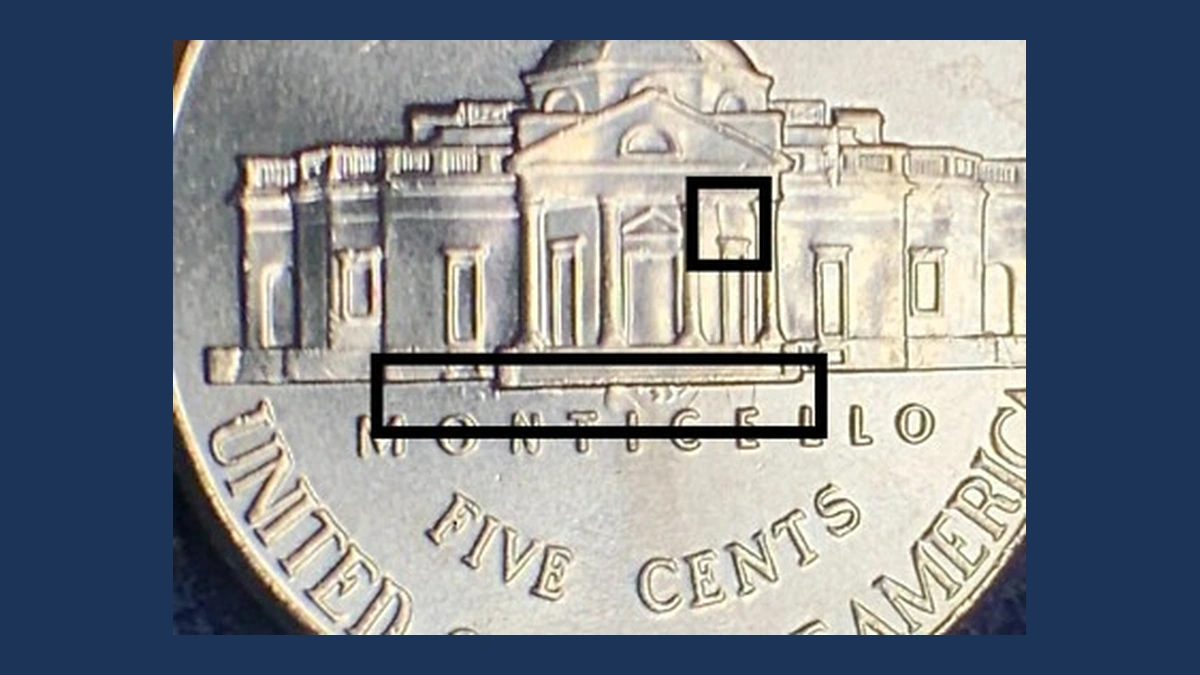
Faint parts of the opposite design may appear where they do not belong. Collectors have reported this effect on 2023-P nickels, separate from the long raised eyebrow and doorway marks.
A die clash happens when the stamping tools hit each other without a blank between them. The contact damages their surfaces, and later coins can carry traces of that damage.
Only parts of a design may transfer. The faint shapes should fit the opposite face in position and direction; one unexplained straight line is not enough.
Estimated Value
Expect an estimated $5–$60 for recognizable 2023-P clash marks, with stronger marks and cleaner surfaces toward the upper end. This is a modest variety estimate, not a published auction result.
Collectors need to see how the extra shape relates to the other face. A faint line that requires a long explanation may attract little premium.
Clear photographs and a sound match matter more than a dramatic name attached to an otherwise ordinary coin.
How to Identify
Place normal front and back photographs beside the coin and compare each extra shape with the opposite design. A faint curve or letter fragment must fit that design’s position, rather than merely look unusual.
Use a 10× magnifier and low light to separate the extra shapes from scratches and normal building details. The collector discussion treats the long raised anomalies separately from possible clash marks.
A loose nickel should measure approximately 5 g on a scale and 21.2 mm with calipers, with a plain edge. A complete sunken backward portrait requires a different explanation, since a clash leaves partial traces beside the regular raised design.
4. 2023 Jefferson Nickel Doubled Letters and Building Details
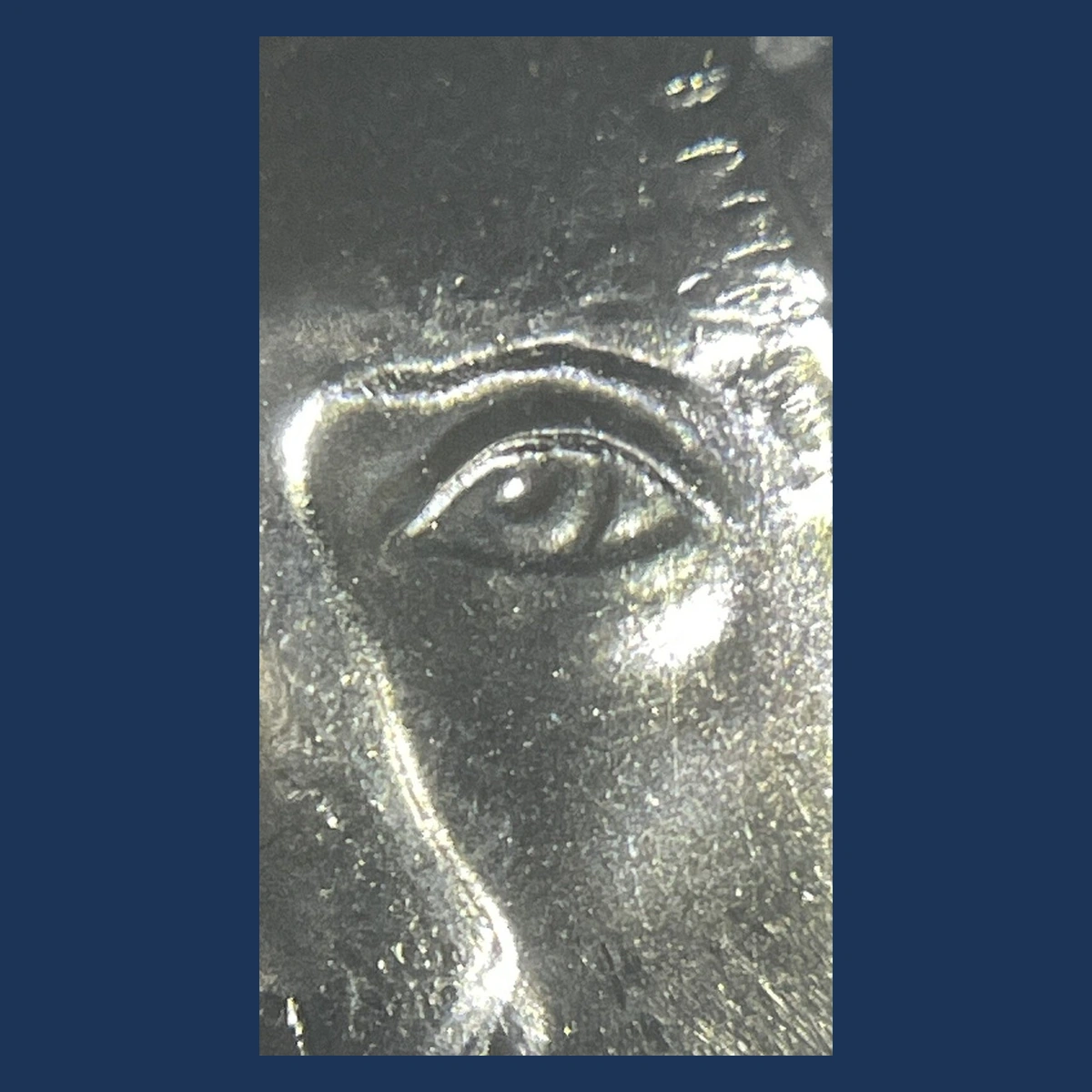
The 2023-P date, mint letter, Y of LIBERTY, and motto can show extra outlines. On the back, recorded doubling appears above the top step, beside the central doorway, and around TICE in MONTICELLO.
A doubled die is a stamping tool that already carries a doubled design. Each coin it strikes can repeat the same extra shapes.
This differs from a coin moving during a strike, which can leave flat, shelf-like edges. The front and back examples have separate catalog listings and should be matched separately.
Estimated Value
Identified 2023-P doubled designs have an estimated range of $5–$75. Worn, slight doubling belongs near the bottom; clear unworn examples with a strong catalog match can reach the higher part.
The estimate is for these modern, relatively small features. It does not borrow the exceptional prices of famous older doubled-die nickels.
Sharp photographs of the exact extra outlines are more useful to a buyer than a label saying only “double stamped” or “rare error.”
How to Identify
Begin with the mint letter: the listed examples are 2023-P. With a 10× magnifier, compare the front details with the WDDO-002 photographs, rather than looking only at the largest date digit.
For the back listing, WDDR-001, examine the top step, both sides of the central doorway, and TICE. Follow each added shape alongside the normal design to distinguish it from glare.
Normal weight and size are 5 g and 21.2 mm, checked on a loose coin with a scale and calipers.
Its edge should be plain.
A flat shelf that cuts into the original letter is a common lookalike. The cataloged extra outlines must agree in location and shape, not merely make the lettering appear thick.
5. 2023 Jefferson Nickel Peeling Metal
A thin flap may lift from the surface, or a shallow patch may remain after it falls away. This is called lamination, a separation within the metal used to make the coin.
The nickel’s metal is an alloy, a mixture of 75% copper and 25% nickel. It is not built from the bonded outer layers found on modern dimes and quarters.
The reported 2023 type therefore concerns splitting within that mixture. A pale or dark patch alone does not show that a separate outer layer is missing.
Estimated Value
An estimated $10–$100 covers small through conspicuous laminations on ordinary 2023 nickels. A visible flap still attached to the coin can be more appealing than a vague rough patch.
This range assumes genuine separation within the original metal. It is an estimate based on the usual market for modest nickel flaws, not a recorded 2023 auction.
Corrosion, scraping, and heat damage do not qualify, even when they leave a similarly uneven surface.
How to Identify
Leave any loose flap alone; pulling it away destroys part of the evidence and can spoil the coin’s appearance. Through a 10× magnifier, follow the split into the metal instead of judging only the rough patch above it.
A scrape may push metal into a ridge, while corrosion often leaves scattered pits without a thin sheet. Side photographs can show the flap’s connection, including any split at the plain edge, without pressing or bending it.
If the coin is loose, check its diameter with calipers against 21.2 mm and weigh it against the normal 5 g. Losing a flake may lower the weight, but an attached flap need not change that reading.
6. 2023 Jefferson Nickel Curved Missing Section
A curved bite can interrupt the coin’s otherwise round outline. The missing copper-nickel section may have been absent before any design was stamped.
Blanks are punched from metal strip. If the punch overlaps an earlier hole, it cuts an incomplete disc that can later become a clipped coin.
The 2023 reports describe this curved form. Softness near the clip ends, along with a weak rim opposite the opening, can help identify the mistake.
Those clues work together; a crescent shape alone can also result from later cutting.
Estimated Value
A 1997-P Jefferson nickel with a 20% curved clip sold for $124 in March 2025. Its fairly large opening helps explain the appeal, although it is a different year.
For 2023, use an estimated $15–$150 rather than transferring that price to every missing section. Small clips tend to bring less.
A clear date and clean surfaces make the coin easier to display. Buyers also want convincing evidence that the section was absent before striking.
How to Identify
Weigh the loose coin first, comparing with a normal 5 g nickel. A real missing section lowers the weight, but filing and cutting can do the same.
Use calipers across the intact diameter to compare with 21.2 mm. Under a 10× magnifier, inspect both ends of the curve for natural softening where the design meets the incomplete edge.
The plain edge inside the opening should not show saw teeth or sharp cutting burrs. Check the rim opposite the clip for weakness, treating it as supporting evidence rather than a guarantee.
Photograph both faces at the same angle. A sharp, newly cut recess with disturbed metal around it calls for a damage explanation before any mint-error premium.
7. 2023 Jefferson Nickel Raised Lines and Rim Blobs
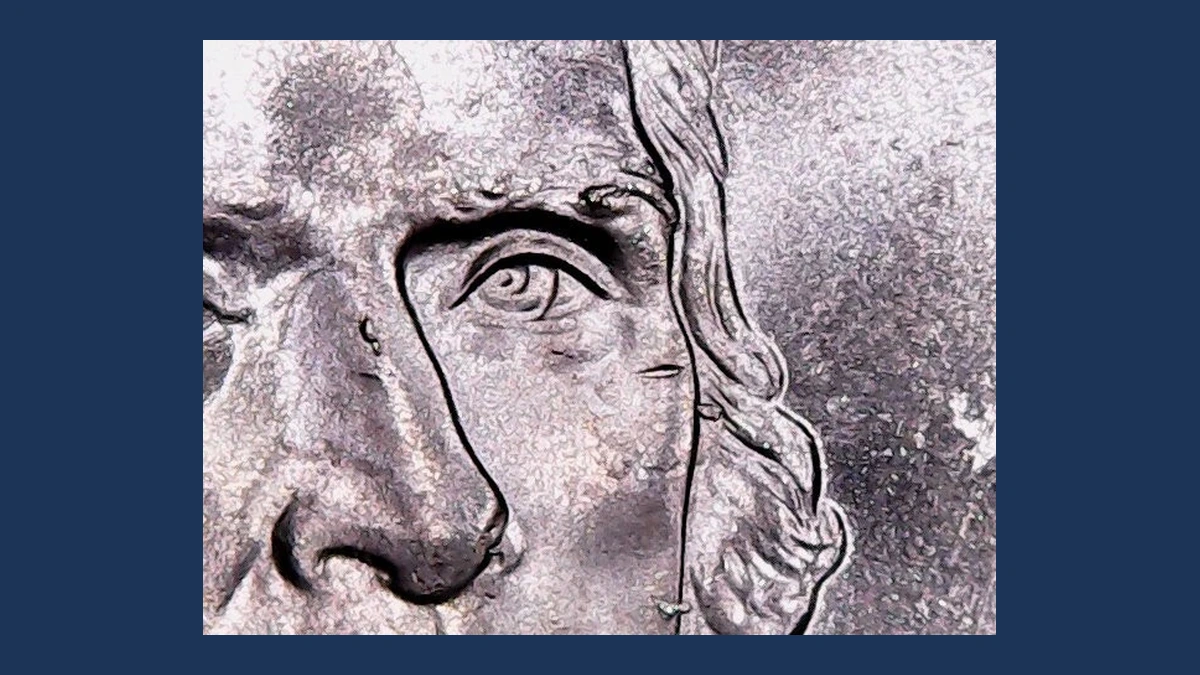
Raised lines have been reported around Jefferson, LIBERTY, and Monticello, including the building’s right side. They can form when a crack opens in a stamping tool and metal fills the opening.
A larger tool break at the edge can leave a broad raised patch connected to the coin’s rim. Collectors call that patch a cud.
The patch loses normal design detail because the missing tool section could no longer shape it. A tiny isolated raised dot inside the design is different from a rim-connected break.
Estimated Value
Small recognizable cracks have an estimated value of $5–$25, while substantial rim-connected breaks can bring roughly $30–$200. These ranges separate a fine raised line from a much more obvious missing-tool effect.
They are estimates for genuine 2023 examples, not a single auction record covering every shape. Condition still matters: a worn, battered rim can hide the feature.
A large clean patch with clear connections to the rim is easier to collect and display.
How to Identify
A normal building line can look like a crack in a small photograph. Compare Monticello with a normal 2023 nickel before following an unexpected ridge under a 10× magnifier.
For a cud, trace the raised patch all the way to the rim.
Check the opposite face as well, since pressure near a large tool break may leave weaker detail there.
Weigh a loose coin and measure it with calipers against 5 g and 21.2 mm. These errors change how the metal is shaped, not the intended metal mixture.
Inspect the plain edge beside the patch. A dent that folds metal inward or attached solder can resemble a blob, but neither shows the original struck surface flowing into a broken-tool area.
8. 2023 Jefferson Nickel Unusual Color from Heating the Blank
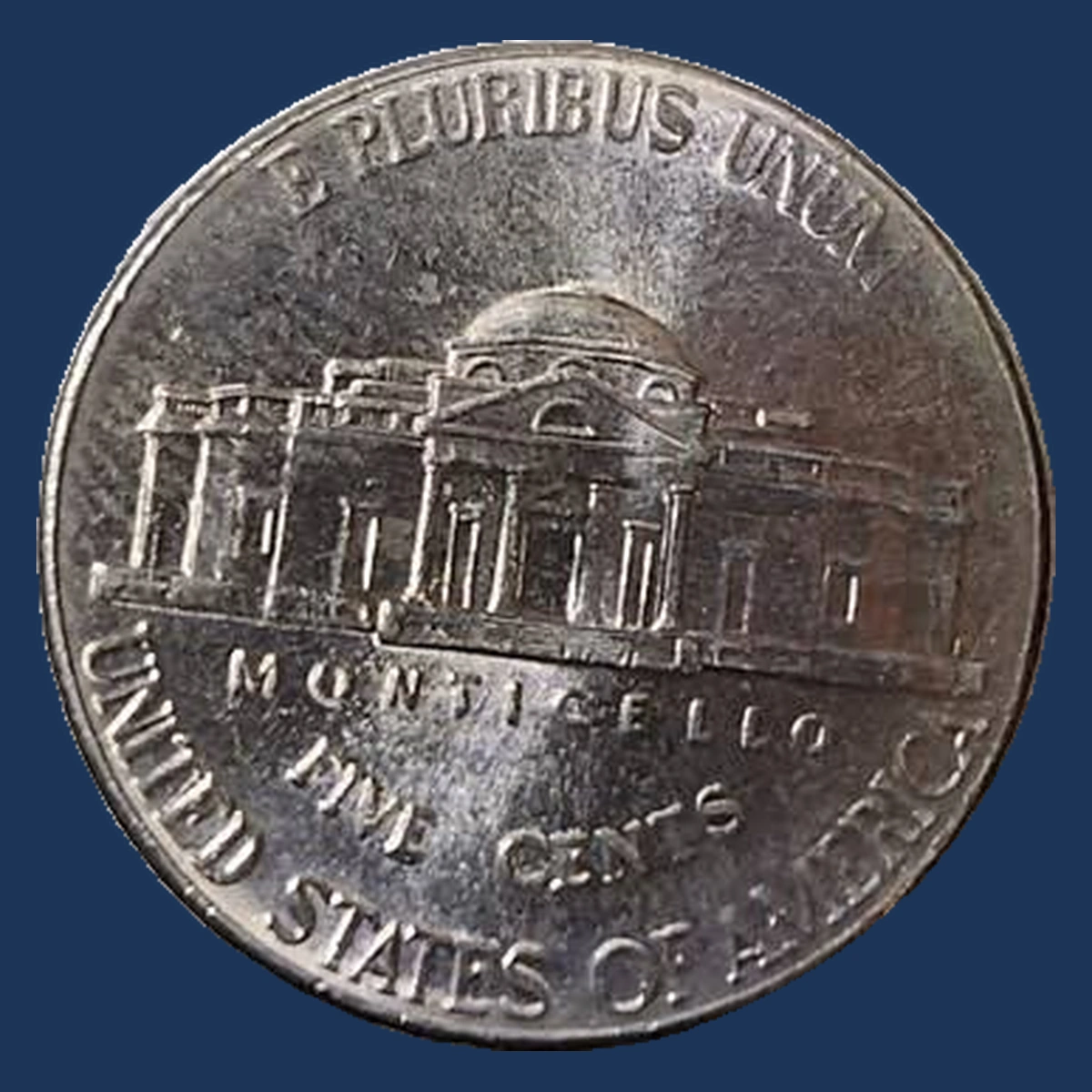
A nickel may appear unusually brown, dark, or coppery while still carrying its normal design. Improper annealing is one possible cause: a problem during the heating step used to soften the blank before striking.
The heat treatment can change the surface chemistry. It does not convert the whole coin into copper or remove a separate nickel-colored outer layer.
This error is reported for 2023 nickels, but color has many other causes. Soil, chemicals, later heating, and ordinary surface aging can all change how a nickel looks.
Estimated Value
In December 2022, a 2005-D Bison nickel graded NGC MS62 sold for $119 with improper annealing. That unworn coin has an older date and different back design.
The comparison supports an estimated $30–$250 for genuine 2023 examples, depending on appearance and condition. The figure values an identified heating error, not dark color by itself.
A stained coin cannot borrow that premium. Attractive original detail and a sound identification are needed before comparing it with the auctioned piece.
How to Identify
Set the coin beside a normal 2023 nickel under the same neutral light. Warm lighting and camera settings can make ordinary silver-gray metal appear copper-colored.
Use a scale and calipers on a loose coin: the normal targets remain 5 g and 21.2 mm. Inspect the plain edge and both faces before treating the color as a mint-made effect.
A 10× magnifier helps reveal pitting, deposits, scratches, or later heat damage. Original shine may support the assessment, but shine alone cannot establish how the color formed.
Keep the surface untouched and show it to an error specialist. Chemical cleaning could remove evidence while leaving a bright coin that is harder, rather than easier, to identify.
9. 2023 Jefferson Nickel Unusually Thin, Light Coin
A reported 2023-P nickel weighs 4.02 g and shows nearly the full design, with weaker detail near the date. One proposed explanation is a thin blank.
If the metal strip was rolled too thin, the disc could keep a normal diameter while containing less metal. That differs from using a smaller blank intended for another denomination.
The low reading is a clue, not proof of that cause. Acid, grinding, or an inaccurate scale can also produce an unusually light nickel, so the thickness and surfaces need examination.
Estimated Value
The reported 4.02 g reading does not carry a guaranteed premium. An estimated $50–$350 applies if examination establishes that the coin was struck on an abnormally thin blank.
Uniform thinness with original surfaces makes the case stronger. Grinding or acid damage would exclude the coin from this error range.
The estimate places an authenticated thin nickel above modest surface flaws. A dramatic wrong-metal coin can still bring more, because its different composition and truncated design are easier to demonstrate.
How to Identify
Check the scale with a known weight, then weigh an ordinary nickel on the same setting. Repeat the reading on the 2023-P piece before accepting 4.02 g.
Calipers should compare its diameter and thickness with a normal 21.2 mm nickel. The regular weight is 5 g; a thin-blank claim needs reduced thickness without a cut-down outline.
Examine both faces and the plain edge with a 10× magnifier. Porous surfaces, sharp grinding lines, or rounded, eaten-away lettering suggest metal was removed after striking.
Photograph the two coins side by side at edge level. Keep weak detail near the date in view, since the amount of metal available during striking helps explain which parts could form fully.
10. 2023 Jefferson Nickel Design Shifted off the Blank
Part of the design can run off the edge while a blank crescent remains on the opposite side. An off-center strike happens when the disc sits away from the center of the stamping tools.
The reported 2023 category covers that misplaced-blank effect. It does not establish one particular mint, direction, or percentage for every example.
Both faces matter. A slightly uneven border on only one face may come from a misaligned tool, while a true off-center strike leaves corresponding signs that the whole blank was misplaced.
Estimated Value
Estimate $30–$500 for genuine 2023 off-center strikes, depending on the shift, condition, and whether the date remains readable. A small displacement belongs below a dramatic, attractive example.
A 1999-P nickel with a listed 15% off-center strike sold for $64 in March 2025. That earlier coin gives a modest comparison, not a 2023 result.
Large empty crescents can draw attention, but a missing date makes it harder to sell the coin as a specific year.
How to Identify
Look at the empty crescent before the displaced portrait. It should be original unstruck metal, not a flattened or ground-away part of a formerly complete design.
Turn the coin over and compare the missing design on the other face. With a 10× magnifier, inspect the boundary between the struck and unstruck areas for later tooling.
The normal blank weighs 5 g and is about 21.2 mm across. A scale and calipers help record the loose coin, although the strike may distort its outline; the edge is normally plain.
Read the surviving date directly. Without enough of 2023 visible to identify it, do not rely on the modern portrait alone to assign the coin to this year.
11. 2023 Jefferson Nickel Nickel Design on a Cent Blank
A copper-colored coin with Jefferson’s nickel design may have been struck on a cent blank. A blank is the metal disc fed into the press before it becomes a coin.
A modern cent blank weighs 2.5 g and is smaller than the normal nickel disc. The large nickel design therefore cannot fit completely within its edge.
The reported 2023 example was described as lightly worn. Copper color alone is not enough: plating can change a normal nickel’s appearance without giving it the cent blank’s weight and dimensions.
Estimated Value
A 1981-P example sold for $372 in September 2025. Its older cent blank was heavier and had a different metal mixture from today’s copper-plated zinc blank.
For authenticated 2023 examples, estimate $150–$750. A clear date and strong surviving design support the upper part.
That range is a comparison-based estimate, not a price claimed for the reported coin. Original surfaces and an undamaged edge help buyers judge the small blank without confusing it with a cut-down nickel.
How to Identify
A scale provides a useful starting point: compare approximately 2.5 g for a modern cent blank with 5 g for a nickel. Neither reading alone identifies the metal.
Use calipers to compare the small disc with the cent’s 19.05 mm starting diameter and the nickel’s 21.2 mm diameter. Striking can expand the smaller blank.
With a 10× magnifier, follow the nickel design to the plain edge and look for natural cutoff of outer details. A cut-down or copper-plated nickel can look similar but may show tooling or an added surface coating.
Keep the date and denomination readable in photographs. Metal testing by a specialist should confirm the copper-plated zinc blank without scraping through the surface to expose its core.
Conclusion
The estimated $3–$750 range runs from small missing details to a genuine nickel design on a cent blank. Doubling, raised marks, peeling metal, and displaced designs each need a different check.
Start with the visible feature, then compare the correct mint and normal specifications. A 2023 nickel is solid copper-nickel alloy, so dark color is not a missing outer layer, and low weight alone does not prove a valuable wrong blank.