2024 Nickel Error List with Pictures

Extra eyes, a missing crescent, or a backward portrait can send a nickel into very different collecting groups. For 2024 nickel errors, the shape of the mistake matters more than an exciting label.
An undated Jefferson nickel with a partial backward impression sold for $336 in June 2024; it is a comparison, not a dated 2024 sale. The types below have estimated values of $3–$1,500.
Follow the visible clues below to learn which feature your coin actually shows.
1. 2024 Jefferson Nickel Clashed Design Traces
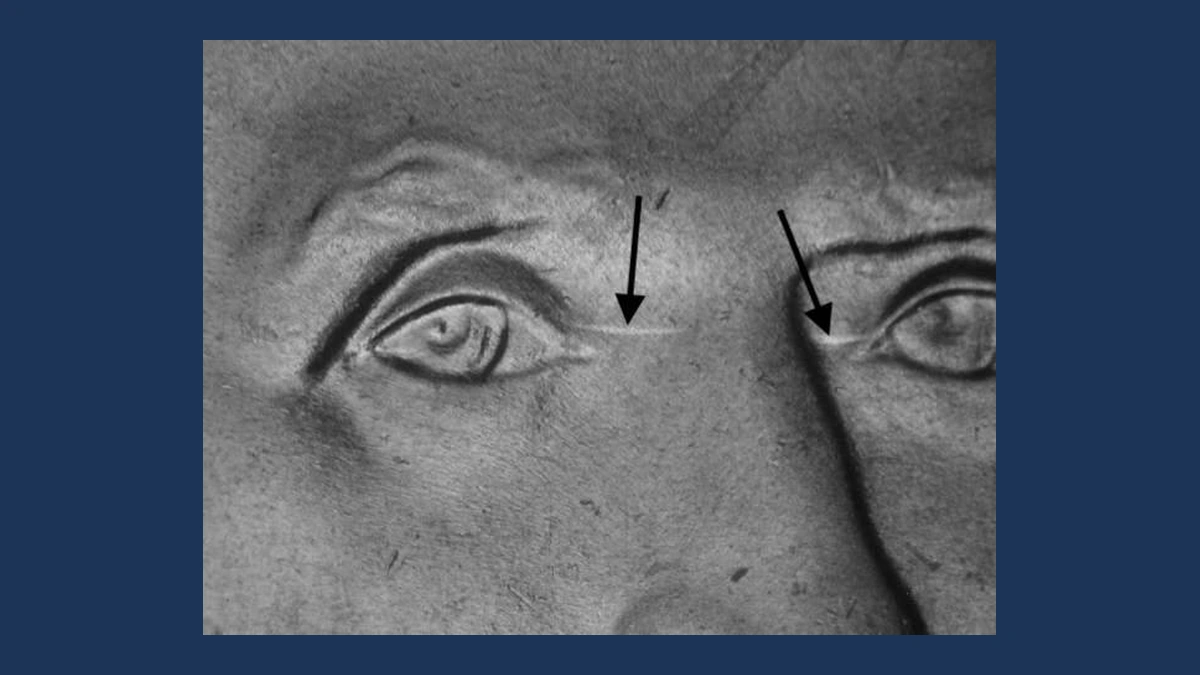
Lines across Jefferson’s eyes need not be scratches. One listed 2024-P nickel has clash marks there, with related traces below and left of the center steps on the back.
The dies, the steel tools that stamp coins, touched without a blank between them. That contact transferred small parts of each design onto the opposing tool.
The marks then passed to later nickels. This particular coin also has doubled lettering, but the transferred lines and the extra letter outlines have different causes.
A clash leaves fragments of the other face rather than an entire second portrait.
Estimated Value
Clear 2024-P clash traces have an estimated value of $5–$60. Their visibility matters: a recognizable transferred shape usually interests buyers more than a barely visible line.
The coin’s doubled lettering may also appeal to a variety collector. Price the complete coin rather than adding two maximum estimates together.
These are estimates for the small recorded marks. Heavy scratches, corrosion, or wear can make a matching pattern harder to see and reduce the likely selling price.
How to Identify
Turn from Jefferson’s eyes to the area below the center steps. A comparison of both faces helps separate the reported clash pattern from random contact marks.
With a 10× magnifier, examine how each fine line relates to the design on the opposite side. Scratches may cross the portrait too, but they need not follow a transferred design.
Before buying a loose example, check its 5.00-gram weight and 21.21-millimeter diameter with a scale and calipers. Its edge should be plain.
Keep the doubled motto separate while examining the eye area. Extra outlines attached to the original letters belong to doubling; faint shapes borrowed from the other face belong to the clash.
2. 2024 Jefferson Nickel Struck-Through Grease or Debris
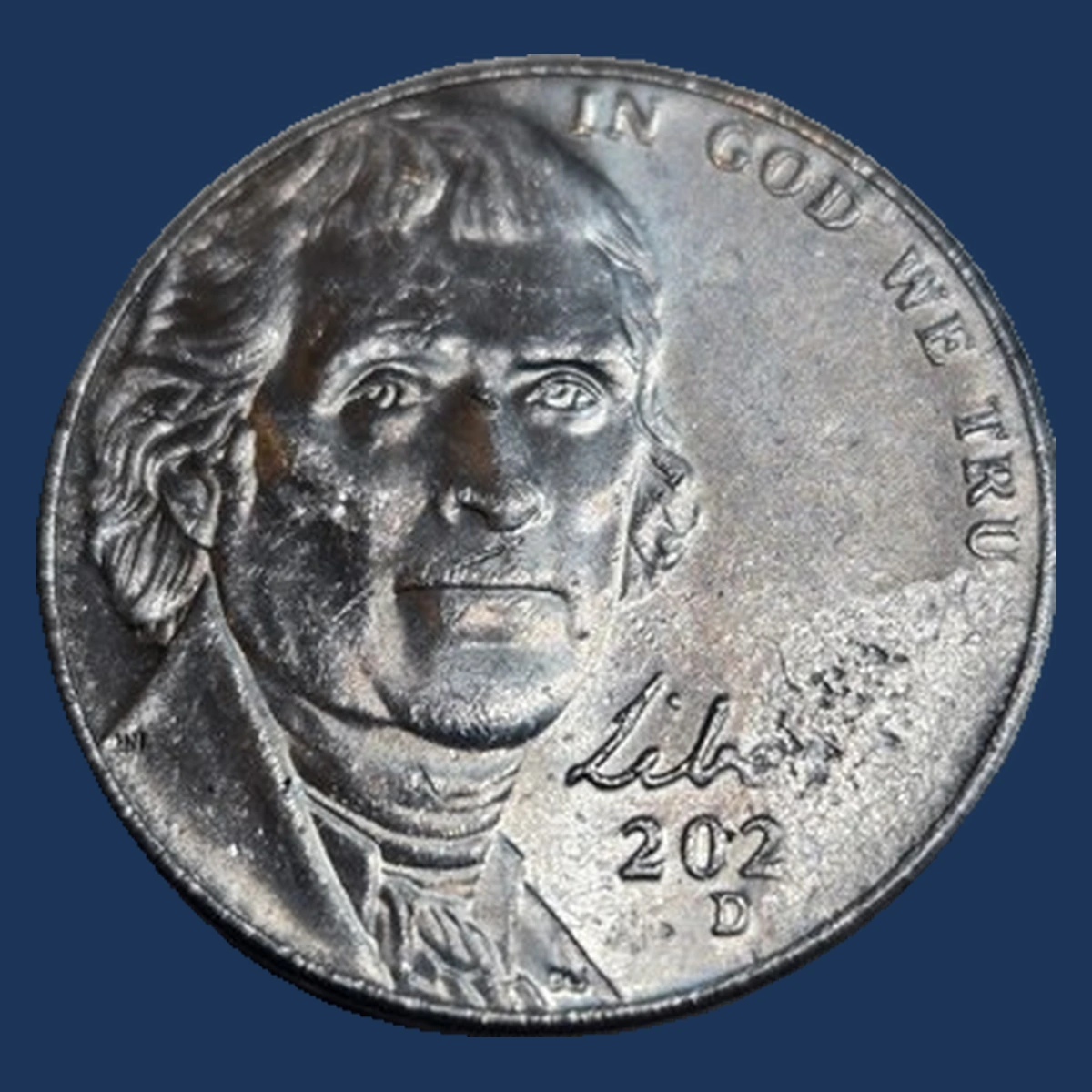
A struck-through area can look partly erased while the nearby design remains sharp. Grease or another object blocked direct contact between the blank and a stamping tool.
A seller has reported this error on a 2024-D nickel. The seller’s description calls the material grease, but a weak patch alone cannot identify what caused the blockage.
Soft material may leave blurred or missing detail. A solid object can leave a more sharply shaped depression.
Visible material still attached to the coin needs separate examination; it should not be called retained grease just because the design looks weak.
Estimated Value
For genuine 2024 examples, estimate $5–$100 for weak patches or small depressions. A large, clearly shaped blockage can be more appealing than slightly soft lettering.
For comparison, a 2000-D nickel struck through a coin stuck to a tool sold for $84 in September 2025. That was a different obstruction on an earlier design.
The comparison shows a modest market level; it does not prove the 2024 seller’s grease claim or price an unidentified attached substance.
How to Identify
Leave any attached material in place. Cleaning could remove the very feature that helps explain the missing design.
Compare the weak area with the surrounding surface under a 10× magnifier. A blockage can interrupt particular details, while wear usually also smooths exposed high points nearby.
Check the D beside the date before comparing the reported seller example. Do not assume every faint 2024 nickel has the same affected location or material.
A scale and calipers are useful for a loose coin: normal weight is 5.00 grams and diameter is 21.21 millimeters. Inspect the plain edge for squeezing.
Look for scrape lines or displaced metal at the patch. Those signs favor later removal of the design rather than something blocking the original strike.
3. 2024 Jefferson Nickel Clipped Blank
A clipped blank gives the nickel an incomplete outline before it is struck. The blank is the metal disk from which the coin is made.
If a cutting punch overlaps a hole or an edge in the metal strip, part of that disk can be missing. The later strike presses the design onto the incomplete piece.
This category is reported for 2024 nickels. A particular clip’s size and shape must come from the actual coin.
A damaged edge can look similar, especially when someone files away metal after minting. The surface beside the gap helps tell the two apart.
Estimated Value
A 1997-P Jefferson nickel with a 20% curved clip brought $124 in March 2025. That earlier coin provides a useful comparison for a substantial missing section.
For genuine 2024 clips, estimate $15–$150. A small opening on a worn coin belongs below a strong, easily recognized clip on a clean example.
Do not transfer the earlier coin’s percentage to your nickel. The amount missing, readable date, and quality of the remaining edge affect its appeal.
How to Identify
Photograph the date beside the missing section, then weigh the loose coin. Missing metal normally lowers its weight below the 5.00-gram standard, though a tiny clip causes little loss.
Use calipers across the surviving outline, comparing with 21.21 millimeters. Inspect the plain edge and both ends of the gap at 10× magnification.
Genuine metal flow can soften the point where the struck surface meets the opening. Sharp cutting ridges, file lines, or a freshly exposed edge suggest later work.
Also inspect the rim opposite the missing section for weakness caused while the incomplete blank was prepared for striking. That can support a genuine clip, but its absence does not by itself prove that the coin was cut later.
4. 2024 Jefferson Nickel Doubled Eyes, Letters, and Building Details
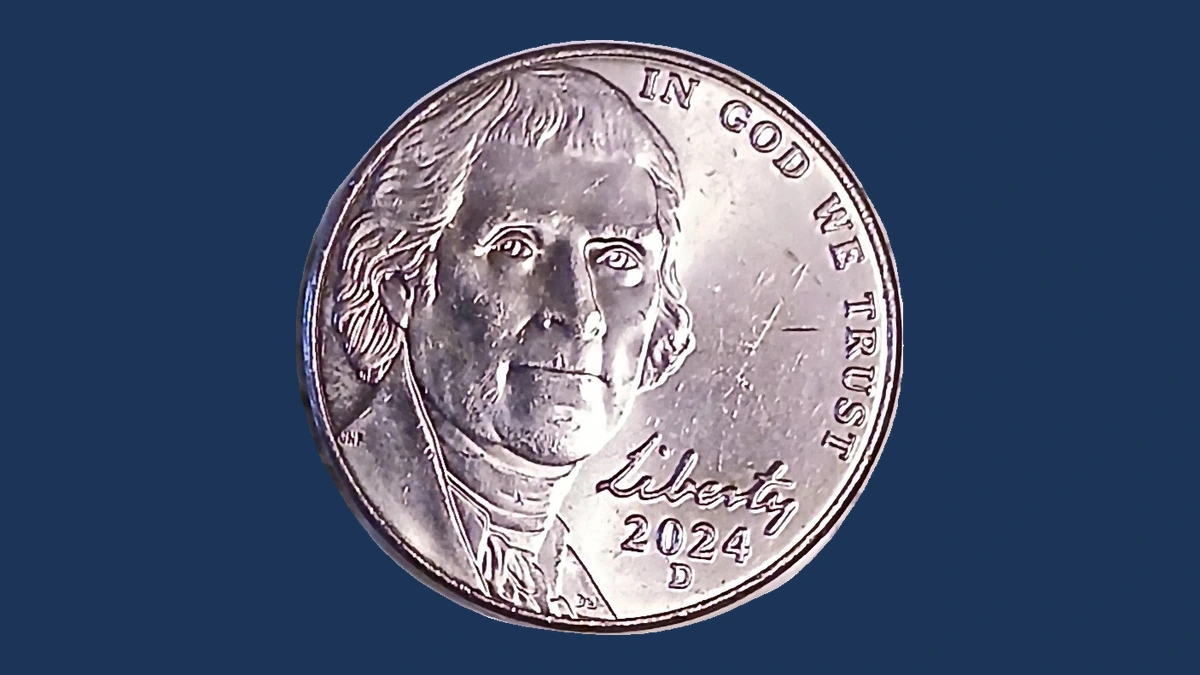
An added eye outline or building edge can originate in the tool rather than a second strike. Several patterns are listed for 2024-P.
Some affect Jefferson’s eyes or the motto and Y of LIBERTY. Others affect the steps, T of MONTICELLO, window, or back lettering.
These are doubled dies: the design was doubled while the stamping tool was made. One building pattern began on a working hub, an earlier tool used to make several coin-stamping tools.
The shared pattern affects the left roof triangle and center steps.
Doubling is also reported for 2024-D; it needs its own photo match.
Estimated Value
For a clearly matched 2024 doubled design, estimate $5–$200. Tiny extra outlines generally occupy the lower portion; obvious separated details on an unworn coin can attract more.
A pattern shared by several tools is not automatically rarer than one found on a single tool. Judge the visible strength and collector demand.
These estimates apply to identified doubling, not a blurred photograph or thick-looking letters. A match to the correct mint and exact feature supports the price.
How to Identify
Begin with the mint letter. The detailed 2024 listings at Brian’s Variety Coins describe P examples; their locations should not be assigned to a D coin.
Choose the feature you actually see and compare it at 10× magnification. Eye doubling, motto doubling, and an added window edge need separate photo matches.
The working-hub pattern follows the left roof triangle, neighboring building edges, and left center steps. Other small tool marks can vary between coins carrying it.
For a loose nickel, a scale and calipers should be compared with 5.00 grams and 21.21 millimeters; the edge is plain.
A flat shelf beside a letter may be mechanical doubling from movement during striking. Look for the listed added shape, not simply any line beside the design.
5. 2024 Jefferson Nickel Broadstrike
A broadstruck nickel spreads wider than normal while retaining the complete design. Its outer area may look stretched or unusually flat.
The collar, a metal ring around the blank during striking, normally limits that outward movement. Without proper support from the ring, the striking pressure can spread metal farther.
Broadstrikes are among the reported 2024 nickel error types. The expanded shape is the useful feature to examine, rather than the presence of a smooth edge.
Jefferson nickels normally have plain edges. A lack of grooves therefore proves nothing about whether the collar worked correctly.
Estimated Value
A 1999-P broadstruck Jefferson nickel graded PCGS MS63 sold for $89 in March 2025. MS63 describes an unworn coin with noticeable marks.
Use an estimated $40–$300 for a genuine 2024 broadstrike, with obvious expansion and good surfaces supporting the higher end. That range is an estimate, not a reported 2024 auction result.
Mere uneven rim width is less persuasive. Buyers want to see a complete design on a coin that actually spread beyond its normal outline.
How to Identify
Calipers provide an early check here. A loose broadstrike should show real expansion beyond the normal 21.21-millimeter outline, while its weight usually remains near 5.00 grams.
Then inspect the full design on both faces. Missing design caused by a displaced blank points toward an off-center strike instead.
Under a 10× magnifier, examine the transition from the design to the expanded outer area. Metal should have spread during the strike, rather than being hammered flat afterward.
Check the plain edge for later blows and compare the coin with an ordinary 2024 nickel. Damage can enlarge or distort part of a rim too.
Keep the whole outline visible in photographs; a cropped picture of a wide border cannot establish a broadstrike.
6. 2024 Jefferson Nickel Cracks and Rim-Connected Tool Breaks
A fine raised line can mark a crack in a stamping tool. Metal enters that crack during the blow, leaving a line above the nickel’s surface.
A larger piece of steel can break away at the tool’s edge. The resulting coin may have a raised patch joined to the rim, called a cud.
Both forms are reported among 2024 nickel errors. They range from small lines to missing design beneath a broad patch.
A bump wholly inside the design is a small chip effect, not automatically a cud. Rim contact separates the larger edge-break form.
Estimated Value
Small genuine cracks or chips have an estimated range of $3–$30. More substantial rim-connected breaks can fit an estimated $40–$300 range.
The jump reflects size and visibility, not merely a different name. A clean patch covering clear design is easier to display than a tiny line hidden by wear.
These are 2024 estimates based on the general modern-nickel market. An ordinary rim dent or a piece of attached material does not receive the same valuation.
How to Identify
Try changing the light before changing the magnification. A raised line casts a small shadow differently from a groove cut below the surface.
Use a 10× magnifier to follow the feature through nearby design. For a cud, trace the raised area all the way to the rim rather than judging a single close-up.
If the edge is crushed and metal has been pushed sideways, consider damage first. The normal edge is plain, so grooves from a later tool deserve attention.
A loose coin can be weighed against 5.00 grams and measured against 21.21 millimeters with a scale and calipers.
Finally, compare the missing design inside the patch with the sharp detail beside it. A broken stamping tool leaves an unformed area, not a glued-on blob.
7. 2024 Jefferson Nickel Off-Center Strike
An off-center nickel has unused metal beside a design that does not fully fit on the blank. The blank entered the striking area in the wrong position.
Both stamping tools then hit that displaced disk. Parts of the portrait and building can extend beyond its edge, while another portion remains unstruck.
The type is reported for 2024 nickels. The direction and percentage vary with the individual coin rather than the date alone.
A complete date makes a dramatic example easier to identify. A nickel with only one face shifted may instead involve a misaligned tool.
Estimated Value
Estimate $30–$400 for genuine 2024 off-center nickels, ranging from modest displacement to dramatic examples with the full date. Strong eye appeal and a clear mint letter help.
A 1999-P nickel struck 15% off-center sold for $64 in March 2025. That is an earlier-year comparison, not a 2024 sale or a fixed rate per percentage.
Large shifts can remove the date entirely. Losing the year can reduce demand even when the remaining design looks spectacular.
How to Identify
Locate the complete 2024 date, then compare photographs of both faces at the same scale. Line up the same physical blank edge so you can see which parts of both designs were lost.
A true off-center strike leaves unstruck metal and cuts off part of the intended design. An uneven rim alone does not satisfy that test.
For a loose coin, compare 5.00 grams and 21.21 millimeters with a scale and calipers; some spreading can affect its outline. Examine the plain edge for bending or compression.
Use a 10× magnifier to study the unstruck area itself. Flattened letters, repeated tool marks, or fresh scraping suggest that someone removed a design after minting instead of the blank missing part of the strike.
8. 2024 Jefferson Nickel Split Blank
A nickel can separate through its thickness when the metal contains an internal weakness. The resulting piece is thinner and lighter than an ordinary coin.
If separation happens after striking, one side may retain the design while the newly exposed side shows the broken interior. If it happens before striking, both faces of the thin piece can receive a design.
Split blanks are reported for 2024. The two possible sequences should be distinguished from the coin’s surfaces.
This is not a missing outer layer from a plated coin: modern nickels use a uniform copper-nickel alloy.
Estimated Value
Allow an estimated $50–$500 for a genuine 2024 split piece with a clear date and convincing broken surface. Strongly recognizable examples belong above very small or badly damaged fragments.
This is an estimate for the reported type, not a documented 2024 sale. The surviving design and the amount of metal present both matter.
Matching halves is a different offering from one separated piece. Do not price a thin nickel as though its missing half were included.
How to Identify
Put a loose piece on a scale without bending it. A substantial loss below the normal 5.00 grams is useful evidence, but it does not establish the cause by itself.
Compare thickness and width with calipers; an ordinary nickel is 21.21 millimeters across. Examine the thin plain edge for saw marks or grinding.
Then study both faces with a 10× magnifier. A normal struck side opposite a rough internal surface supports separation after striking.
Two struck faces on a thin piece call for a different sequence. Check whether the weak design follows the metal’s original texture.
Artificially thinned coins can also weigh too little. Fresh scraping, repeated abrasive lines, or a neatly machined back argue against a natural internal split.
9. 2024 Jefferson Nickel Backward Sunken Design
Backward lettering pressed into the nickel is the main clue to a brockage. An already struck coin acted as one of the surfaces that struck a new blank.
That coin’s raised design pressed a reversed, sunken image into the new piece. The other face could receive a normal design from a steel stamping tool.
Brockage is reported as a 2024 error type. It may cover only part of a face or extend across much of it.
A faint transferred line from clashed tools is different. Brockage comes from direct contact with another coin during striking.
Estimated Value
An undated Jefferson nickel with a 30% brockage from an off-center strike sold for $336 in June 2024. Its unknown year means the sale is a comparison, not proof of a 2024 specimen.
Estimate $100–$1,000 for an authenticated 2024 brockage, depending on coverage, clarity, and condition. Small or distorted impressions generally bring less.
A large clear backward design is especially easy to display. A weak irregular patch without recognizable reversed detail offers much less visual evidence.
How to Identify
Read the lettering in a mirror or flip a photograph horizontally. A genuine transferred word should become understandable when its reversed orientation is corrected.
Now tilt the coin to confirm that the transferred image is sunken. A second normal raised portrait would suggest a different striking event.
Use a 10× magnifier around the impression and the plain edge. Coins squeezed together outside the Mint can leave copied designs too, often with flattening or pressure damage.
On a loose example, compare 5.00 grams and 21.21 millimeters using a scale and calipers. Preserve photographs of both faces and the complete edge for authentication.
Do not identify the year solely from an unrelated normal nickel pictured beside it. The claimed 2024 date must belong to the error itself.
10. 2024 Jefferson Nickel Cap-Shaped Coin
A genuine die cap is the coin that stuck to a stamping tool and began wrapping around it. Repeated blows can stretch its edge into a wall.
The shape may resemble a shallow bowl or a deeper cap. One face can keep part of the original design while the other becomes distorted through further contact.
The cap type is reported for 2024 nickels. A flat coin struck beneath a cap is a different object, even though both errors involve the same obstruction.
A bent nickel made into jewelry can look cup-shaped too; shape alone does not establish mint origin.
Estimated Value
An undated Jefferson reverse die cap graded NGC MS62 sold for $300 in December 2025. It is an actual cap comparison, rather than a flat coin struck beneath one.
For an authenticated 2024 cap, use an estimated $300–$1,500. A strong wall, readable date, and clear surviving design favor the upper portion.
The estimate reflects the unusual shape and identification quality. An attractive bowl made by later bending remains a damaged coin, not a comparable mint error.
How to Identify
Photograph the coin from the side without trying to flatten it. The wall and base must be examined together, not treated as separate damaged areas.
A scale can compare a loose cap with the normal 5.00 grams. Calipers help record the base and wall, but its distorted outline need not equal the ordinary 21.21-millimeter diameter.
Inspect the plain edge and stretched design with a 10× magnifier. Look for metal that moved around the tool during repeated blows, rather than folds made by pliers.
A readable date should be part of the surviving design. Do not assign 2024 from a seller’s title alone.
The raised wall identifies the cap itself; a largely flat nickel with blurred detail may instead be a coin struck through that cap.
Conclusion
Estimated values run from $3–$1,500, with small tool defects near the bottom and convincing cap errors near the top. A backward portrait, an oversized outline, and missing metal each call for a different check.
For the small doubled designs, match the actual eye, letter, or building detail. For unusual shapes, keep both faces and the edge visible in photographs.
A readable 2024 date and the correct mint letter keep the comparison tied to your coin.