1793 Cent Error List with Pictures

A 1793 Chain cent with cracks and clash marks sold for $132,000 in August 2020. Its scarce design uses AMERI. as a short form of AMERICA, and light wear helped drive that whole-coin price.
This 1793 penny error list covers the Chain, Wreath, and Liberty Cap large cents separately where needed. Estimated values run about $1,000–$150,000 across the examples discussed.
The edge matters as much as the faces on some pieces. Read on to compare the correct design before naming a flaw or choosing a price.
1. 1793 Large Cent Reported Clipped Blank
A piece missing from the original copper blank can leave an incomplete coin after striking. The blank-cutting punch may overlap an earlier hole or the edge of the copper strip.
The 1793 year guide reports clipped blanks without identifying a particular large-cent design or a specific opening. It therefore does not supply a clock position to match.
Chain, Wreath, and Liberty Cap cents need different design comparisons. A clipped half cent or a modern copy cannot establish an example of this large-cent error.
The opening’s surface and the neighboring struck details are more useful than its outline alone.
Estimated Value
For a confirmed clipped 1793 large cent with recognizable design, estimate $3,000–$30,000 in worn condition. The particular design and the amount of surviving detail would strongly affect the whole-coin value.
No realized price is assigned to a specific 1793 clip here. For comparison, a later 1796 Draped Bust cent with a small clip and shallow flake sold for $408 including fees in January 2023.
That heavily worn example illustrates the feature, not an equivalent first-year-cent price.
How to Identify
Identify the large-cent design before examining its opening: a Chain reverse, a Wreath reverse with flowing hair, and a Liberty Cap portrait require different references. Use a 10× magnifier inside the gap to look for saw teeth, filing lines, or freshly exposed copper.
A loose original began near 13.48 grams and roughly 27–29 millimeters, depending on its design. A scale and calipers can record missing material, but a later cut can also reduce both weight and width.
Compare softness beside the opening with any weakness on the opposite rim, and photograph the surviving edge decoration or lettering. Those features must agree with a blank that was incomplete before striking, rather than a finished cent cut afterward.
2. 1793 Wreath Cent Copper Separation near STATES
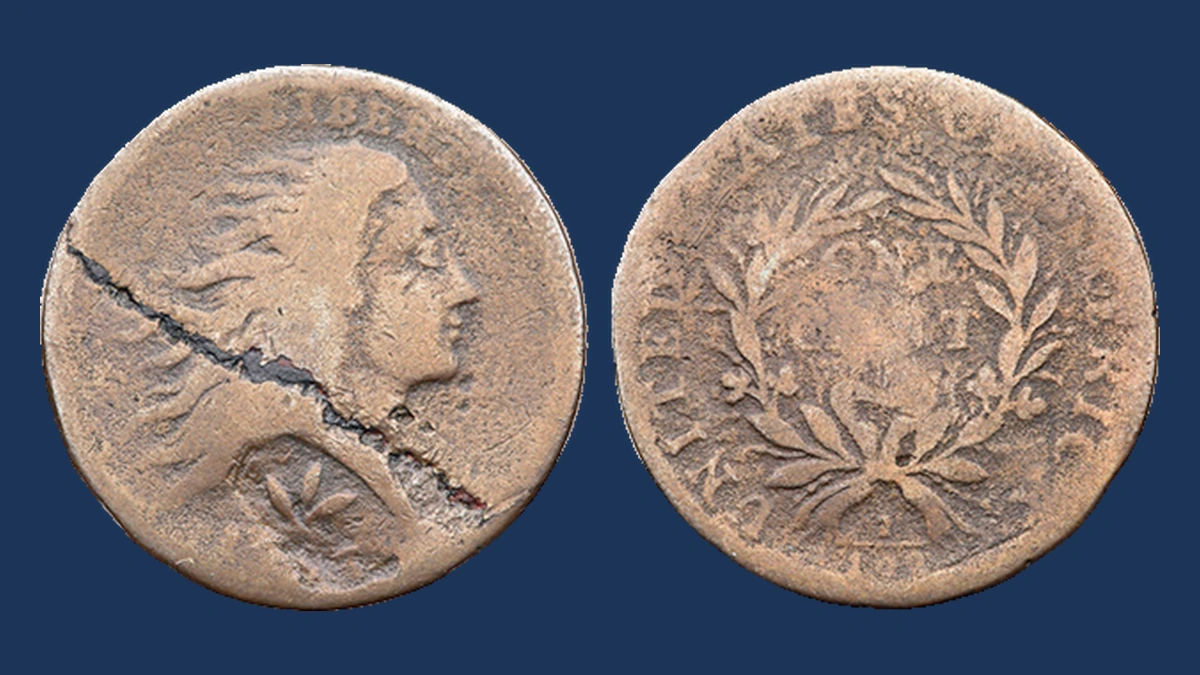
A thin separation crosses the top wreath leaves and reaches TE in STATES on a recorded 1793 Wreath cent. The auction describes the flaw as present when the coin was struck.
This is lamination, where a weak layer within the copper separates. It is a local surface problem rather than evidence that the whole coin divided into two thinner discs.
The example was graded NGC AU50, meaning light wear. Its back tool had not yet developed a crack.
The catalog also records a rim bruise left of the fraction. That later impact is separate from the original peeling area.
Estimated Value
Estimate $2,000–$10,000 for worn 1793 Wreath cents with local laminations and $10,000–$40,000 for attractive, lightly worn examples. Most of that value comes from the scarce first-year coin and its preservation.
The documented AU50 example supplies a clear location for the flaw. Its thin peeling strip cannot be valued separately from the rest of the early cent.
A small original layer defect can coexist with collectible surfaces. Widespread corrosion or a large later gouge may affect the comparison much more strongly.
How to Identify
Keep the coin under low-angle light and find TE in STATES. Follow the affected strip down toward the upper wreath leaves through a 10× magnifier.
The rim bruise left of the fraction is a different mark. It should not be joined to the thin strip to create a larger supposed lamination.
Leave any loose layer attached. Its remaining connection to the copper can be more informative than the size of the missing area.
A safely handled loose Wreath cent can be weighed against 13.48 grams and measured near 28 millimeters with a scale and calipers. This S-9 belongs with vine-and-bars edge decoration.
Photograph the boundary where the layer meets intact design. Scattered pits from corrosion differ from one thin sheet separating within the copper.
3. 1793 Wreath Cent Ten-Percent Off-Center Strike
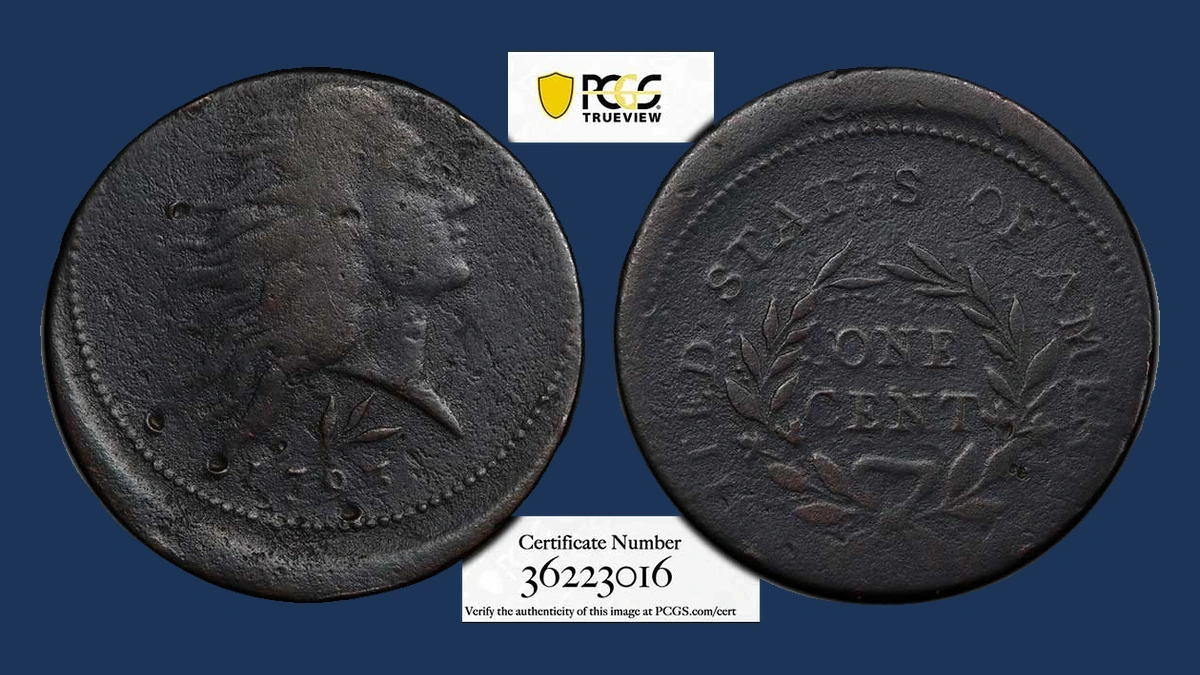
Part of a Wreath cent’s copper can remain blank when the disc sits outside the intended striking position. The design moves toward one side, and some border detail may miss the metal.
A PCGS article illustrates a 1793 Wreath cent described as ten percent off center. The text does not state a clock direction.
That example establishes a reported piece without requiring a larger imagined shift. A modern copy carrying an off-center design is not evidence for another original specimen.
Both faces need to fit the same misplaced blank. Uneven spacing on only one side calls for a different explanation.
Estimated Value
An identifiable worn 1793 Wreath off-center cent fits an estimated $5,000–$25,000 range. Better-preserved or especially clear examples can fit roughly $25,000–$50,000.
These are estimates rather than a recorded sale for the pictured ten-percent piece. No certified grade is assigned to that example here.
A later 1808 Classic Head cent, thirty percent off center and described as AU55, sold for $6,462.50 in February 2018. The different date, design, and very light wear make it a broad comparison only.
How to Identify
Photograph both faces without changing which physical edge is at the top. The design missing from one side and the untouched copper on the other should explain the same misplaced blank.
At 10× magnification, follow the boundary between struck and unstruck areas for grinding lines or remnants of removed letters. A scale and calipers can record a loose Wreath cent against its original 13.48 grams and approximately 28-millimeter size, allowing for distortion.
Check the edge for the decoration or lettering appropriate to its Wreath variety, as well as any later cuts. Read the surviving date and compare the full design before assigning 1793 to a coin that merely has a flowing-hair portrait.
4. 1793 Wreath Cent Double Strike with Two Fractions
Two fractions remain on the back of a recorded Wreath cent. One belongs to the main impression, while the other sits below its right ribbon.
Overlapping features also appear at Liberty’s neck, LIBERTY, and around the back’s outer design. The coin received separate blows, leaving portions of the earlier impression visible.
This differs from two outlines already engraved into a stamping tool. Repeated striking acts on the coin itself.
The same specimen also missed its normal edge decoration. The extra strike and the plain edge are two features of that one coin, not two separate auction examples.
Estimated Value
For a recognizable 1793 Wreath double strike, estimate $10,000–$60,000, depending on wear and the clarity of the two impressions. Strong remaining detail helps establish what the press did.
The NGC XF45 Star example sold for $32,900 in January 2014. It had light to moderate wear and unusually attractive surfaces for its grade.
That result also includes its missing edge decoration. The same sale must not be added again when evaluating the plain-edge feature.
How to Identify
Start on the back, where a second fraction survives below the right ribbon. Under a 10× magnifier, trace each fraction separately instead of combining them into one distorted set of numbers.
Check the neck and LIBERTY for movement that fits the same repeated-strike explanation. The coin’s crack through the lower lip is a tool defect, not itself evidence of the extra blow.
For a loose Wreath cent, compare the original 13.48 grams and approximately 28-millimeter diameter with a scale and calipers. Record any spreading of the outline.
This particular coin has a plain edge where vine-and-bars decoration should appear. Keep the edge photographs with the two faces so the combined features remain tied to the same specimen.
5. 1793 Wreath Cent Missing Vine-and-Bars Edge Decoration
The edge of the double-struck Wreath cent is smooth where a vine-and-bars pattern should have been applied. This decoration normally runs around the side of the copper disc.
The auction description explains that the blank missed the edge-preparation step. Its normal size and weight supported that conclusion rather than later removal of the decorated surface.
Other Wreath varieties have edge lettering instead of vine-and-bars decoration. That legitimate difference is not the same as missing the edge treatment entirely.
The plain-edge specimen must therefore be compared with the correct Wreath variety. A smooth edge alone does not explain its history.
Estimated Value
A confirmed original plain edge on an otherwise recognizable 1793 Wreath cent fits an estimated $10,000–$60,000 whole-coin range. The exact design, preservation, and confidence in the edge examination are central to the comparison.
The documented example’s $32,900 January 2014 price also includes its double strike and NGC XF45 Star condition. It is the same transaction described above.
There is no separate sale amount here for the missing decoration alone. Filing an ordinary decorated edge smooth creates damage instead.
How to Identify
Photograph the entire edge in overlapping sections before concentrating on a single smooth area. A partly worn decorative pattern can disappear in one small photograph.
Use a 10× magnifier to look for surviving vine shapes, bars, file scratches, or machining lines. Compare the edge with the treatment appropriate to the same Wreath variety.
A scale and calipers are especially useful for a loose candidate here. Compare about 13.48 grams and 28 millimeters, while allowing for wear and any spreading from repeated striking.
Do not remove a certified coin from its holder just to obtain these measurements. A specialist can use its records and suitable edge views.
The smooth surface, preserved dimensions, and lack of removal marks need to support the same missed edge-preparation step.
6. 1793 Large Cent Reported Backward Portrait Impression
A backward portrait sunk into the copper can appear when a struck coin remains in the press. Its raised design is forced into the next blank.
The resulting error is called a brockage. The other face can still receive its normal raised design from a stamping tool.
The early-cent reference records an observed Chain-cent example and another historical 1793 report. The design of the second record needs separate confirmation.
Those reports should not be joined into one specimen or assigned a Wreath or Liberty Cap portrait by guesswork. A design visible in the actual coin must guide the comparison.
Estimated Value
For a confirmed and clearly identified 1793 large-cent brockage, use a broad estimated $15,000–$80,000 range. The first-year design, surface quality, and completeness of the backward impression would matter greatly.
This is not a sale price assigned to either historical report. A later dateless brockage identified as a 1796 Draped Bust cent sold for $5,280 in December 2018.
The later VF35 coin had moderate wear and a backward wreath. It provides a different-year comparison, not proof of a 1793 specimen.
How to Identify
Check which design appears on the normal face before selecting a brockage comparison. A Chain-cent portrait cannot establish the identity of a different 1793 type.
With a 10× magnifier and angled light, examine both the backward direction and the depth of the unusual letters. They should lie below the surrounding copper, rather than forming a second raised portrait.
A loose original large cent began near 13.48 grams and roughly 27–29 millimeters, depending on its design. Use a scale and calipers, and compare surviving edge decoration or lettering with that type.
Include the normal face in photographs for a specialist. Pressure against another coin after minting can imitate a backward design while leaving damage that does not fit an original press error.
7. 1793 Large Cent Raised Cracks and Rim Breaks
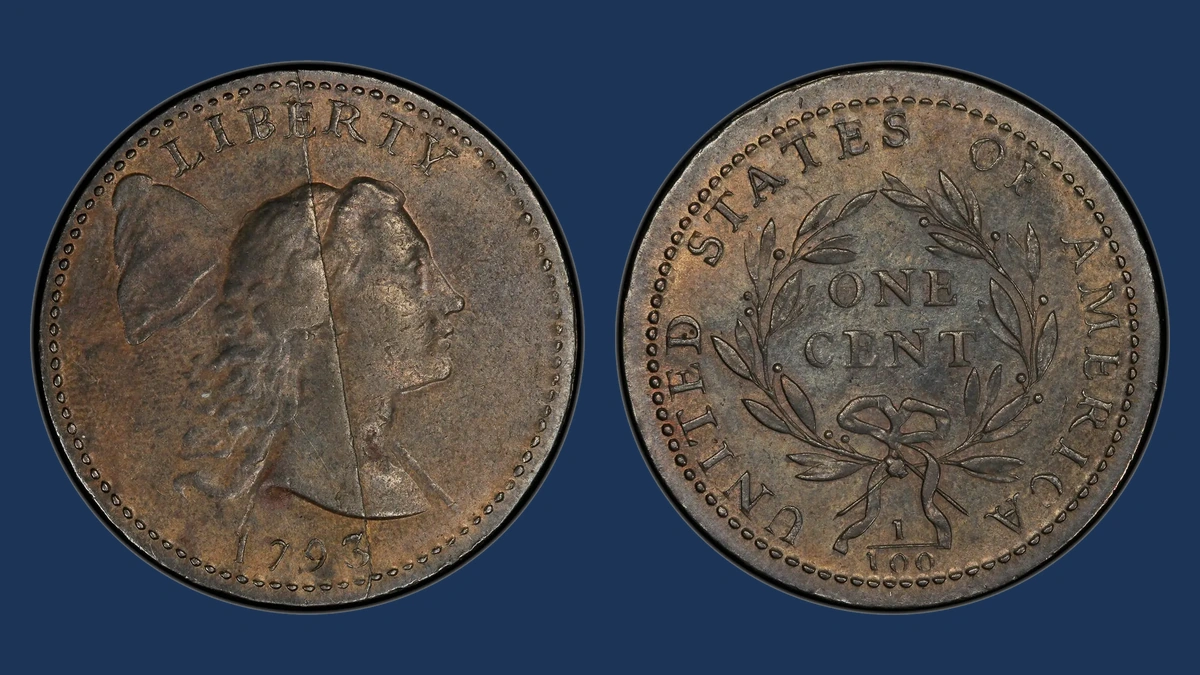
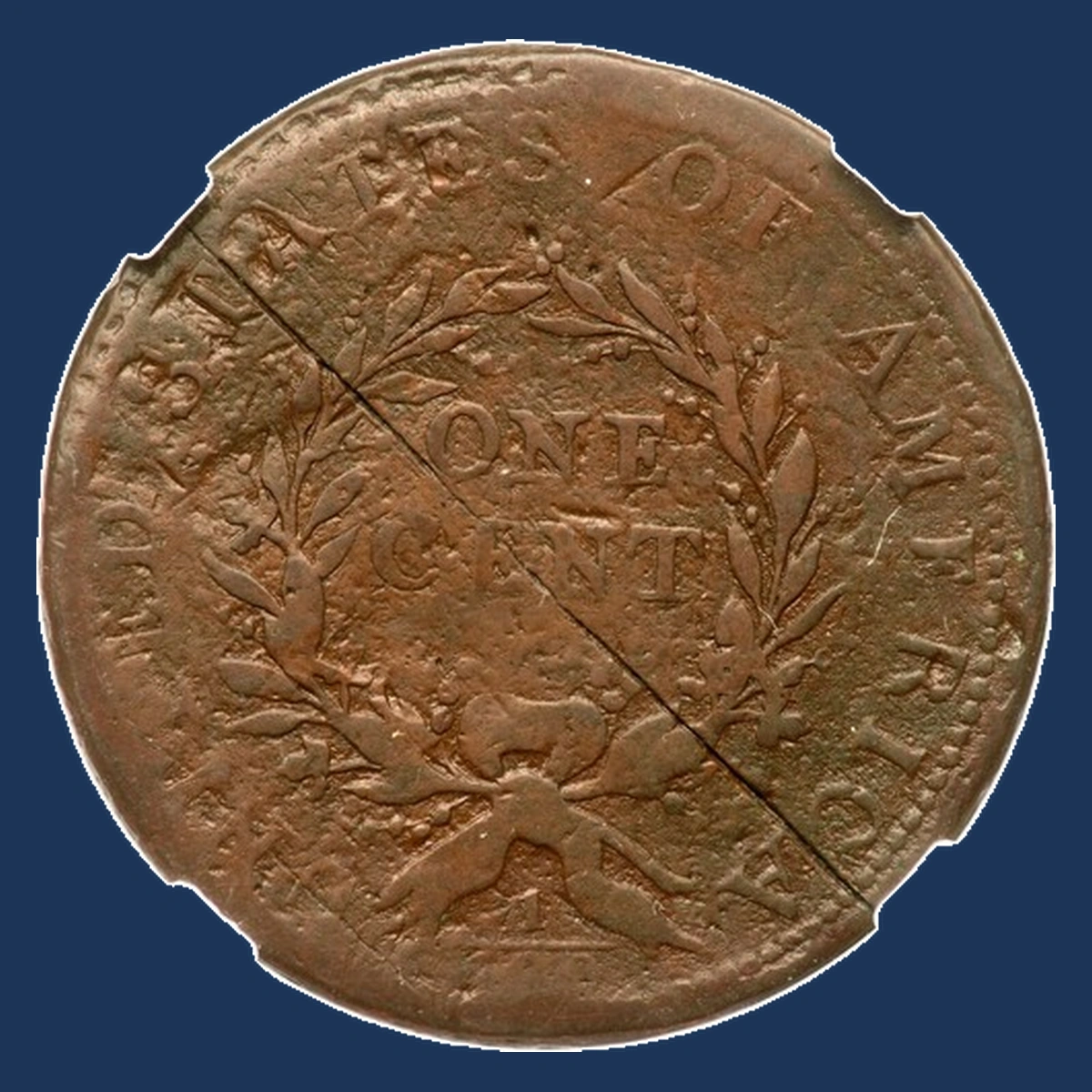
Raised lines can come from cracks in the dies, the steel tools that stamped the cents. Copper pressed into a crack reproduces its shape on the coin.
A Chain example shows a back crack near the first T in STATES. The recorded double-struck Wreath cent instead has a crack through Liberty’s lower lip.
A separate Wreath cent has a narrow raised rim break above IT in UNITED. Such a break is called a cud.
The year guide reports cracks on Liberty Cap cents. That example needs its own comparison rather than a path borrowed from a Chain or Wreath cent.
Estimated Value
Worn Wreath cents with visible tool breaks fit roughly $1,000–$15,000, while scarce designs or exceptional preservation can reach an estimated $15,000–$150,000. The complete coin matters more than the crack alone.
The Wreath specimen with the small IT rim break was described as XF Details with smoothed surfaces. Its catalog estimate began at $4,000, not a reported sale.
The Chain cent’s $132,000 August 2020 result reflects its scarce design and PCGS AU53 preservation as well as its visible features.
How to Identify
Select a reference for the same design and location. Under a 10× magnifier, compare the Chain back lettering, Wreath lower lip, or Wreath IT rim area separately.
A line should rise above the copper if it came from a cracked tool. A scratch or split in the blank cuts into the coin instead.
The Wreath IT patch needs an edge view to rule out a dent that pushed copper upward. The same coin’s smoothed face is a separate surface issue.
On a loose large cent, a scale compares 13.48 grams and calipers record its roughly 27–29-millimeter size. Match the edge’s vine-and-bars decoration or lettering to the particular design.
Follow the raised feature through its whole visible path rather than identifying it from one bright point.
8. 1793 Large Cent Traces of the Opposite Design
Parts of a chain can appear near a Chain cent’s portrait even though the chain belongs on the back. The tools touched without a blank and transferred pieces of their designs to each other.
Later coins copied those marks. This is called a die clash.
Chain-cent descriptions place traces near the mouth, chin, neck, and below the bust. A separate lettered-edge Wreath example shows marks below the neck and above the small sprig.
The opposite designs differ, so their transferred shapes differ too. A chain-link fragment should not be used as the required pattern on a Wreath cent.
Estimated Value
Estimate $1,500–$20,000 for worn 1793 cents with recognizable clashes, with superior preservation or scarcer designs around $20,000–$150,000. These ranges include the value of the entire first-year coin.
The PCGS AU53 Chain cent with AMERI. on the back sold for $132,000 in August 2020. AU53 indicates light wear.
Its transferred marks do not account for that sum on their own. The same coin also has a back crack, which must not be assigned another complete sale value.
How to Identify
Place a clear image of the back beside the extra shapes on the front. Use a 10× magnifier to compare a Chain coin’s suspected traces with actual chain links, rather than with a wreath.
The lettered-edge Wreath example requires a wreath-based comparison below the neck and above the sprig. Turn or mirror the opposite-face image to understand how the two stamping tools met.
If the coin is loose, a scale and calipers record its original standard of 13.48 grams and roughly 27–29 millimeters across. Photograph the correct edge treatment too, then identify which particular chain or wreath feature explains the extra outline instead of calling every faint line a clash.
Conclusion
The estimated $1,000–$150,000 range spans different 1793 designs, conditions, and striking problems. Identify the Chain, Wreath, or Liberty Cap type before comparing an unusual feature.
Then examine the relevant letters, blank area, or edge pattern. A plain edge can be significant on a coin that should carry decoration, but later filing must be ruled out.
Keep combined errors tied to one specimen and one whole-coin price. Fragile copper and scarce first-year cents deserve careful handling.