1797 Cent Error List with Pictures

A second outline around almost every detail helped one 1797 cent sell for $25,300 in August 2006. That unworn double strike is a striking contrast to the small cracks found on many early copper coins.
The 1797 penny errors below have estimated whole-coin values of $100–$30,000. Condition, the remaining design, and the kind of mistake explain much of that spread.
Look for ONE CENT on the back before starting: the smaller half cent dated 1797 has different error examples.
1. 1797 Draped Bust Cent Cracks and Rim Cuds
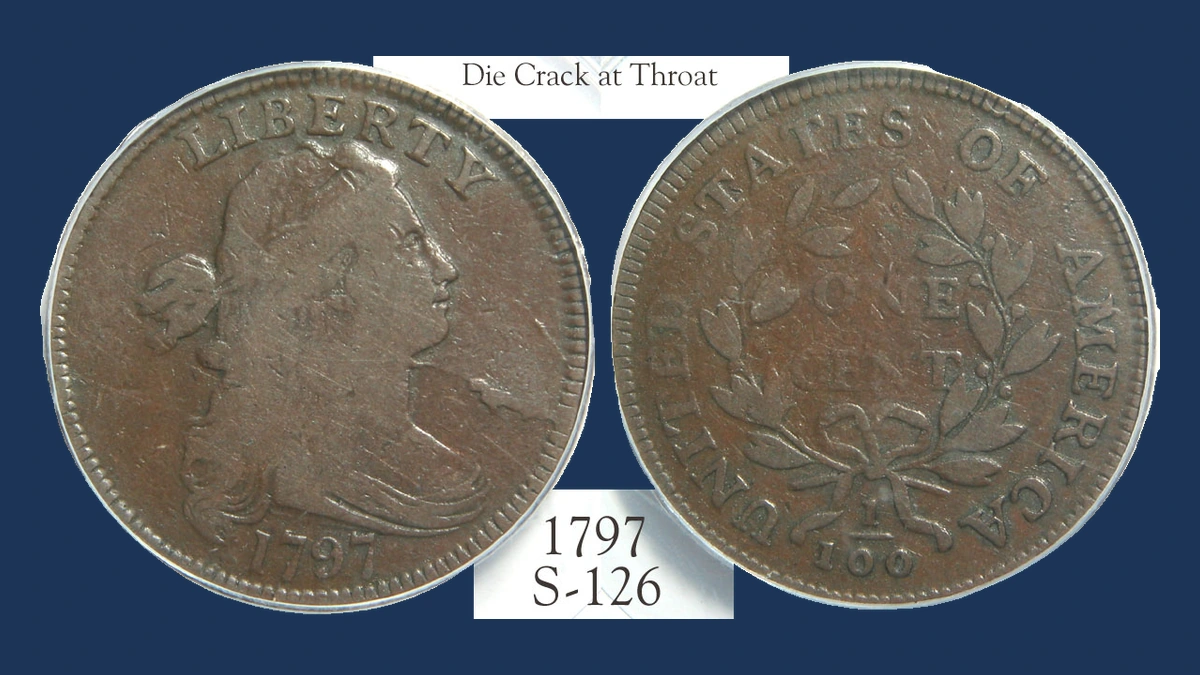
A line above the surface may have started as a crack in the die, the steel tool that stamped the coin. Copper entered the crack and formed a narrow ridge.
On documented 1797 tools, cracks cross the tops of letters in LIBERTY or run from the rim toward the lower hair. Different patterns belong to different stages of tool wear.
A larger missing piece at the tool’s edge leaves a rim-connected mound called a cud. A year guide reports a front cud without establishing its exact position.
That mound should not be assumed to accompany every lettering crack.
Estimated Value
For worn cents with clear original cracks, estimate $100–$500. More attractive coins or obvious authenticated rim cuds can be estimated at $500–$1,500, excluding especially rare or exceptional pieces.
Fine cracks are common enough on early copper that the cent’s ordinary condition may account for most of its price. A broad cud is usually easier to show a buyer.
These are whole-coin estimates; a scratch or a dent does not qualify as a tool break.
How to Identify
Study the line under a 10× magnifier while moving the lamp across it. A ridge catching light differs from the cut center of a scratch.
Trace the complete path across the letters or toward the hair. Similar-looking fragments should not be joined into a pattern the coin does not actually show.
For a cud, follow the mound to the rim and inspect the adjacent edge. A pushed-in dent or added solder can also create raised metal.
Use a scale against 10.89 grams and calipers against roughly 28–29 millimeters on a loose cent. Some 1797 varieties have intentional edge marks known as a gripped edge, so an unusual edge alone does not establish damage or a cud.
2. 1797 Draped Bust Cent An Incomplete Blank
A piece of the copper disk can be missing before the design reaches it. The incomplete blank still receives a portrait and wreath, but the missing section interrupts the finished coin’s outline.
A year guide reports a twenty-percent clip. Breen’s reference also records a separate lightly worn example with a small clip.
The smaller example should not inherit the larger one’s percentage. Neither description supplies a universal clock position for clipped cents of this year.
Later cutting can imitate a missing section, so the edge of the gap matters as much as the amount of copper absent.
Estimated Value
Estimate $150–$700 for worn cents with clear clips and $700–$3,000 for attractive, substantial examples. The range depends on the original surface as well as the amount missing.
The year guide reports asking prices around $2,550–$2,695 for the twenty-percent piece. Those offers are not completed sales.
A small clip on a particularly well-preserved cent can also be expensive because of the underlying coin, so missing-metal percentage should not be used as a price formula.
How to Identify
Place the cent so the opening is visible without gripping its thin ends. A close photograph should show the gap and the nearest struck letters together.
With a 10× magnifier, inspect where those details meet the incomplete edge. Saw marks or filing through finished detail point to copper removed later.
The opposite rim may be weak, but circulation wear can hide this supporting clue.
Weigh a loose piece against its original 10.89 grams. Calipers can compare the intact arcs with roughly 28–29 millimeters, although the missing section prevents a normal measurement across the gap.
Check the remaining edge against the proper plain or gripped-edge variety, and leave deposits untouched while recording the boundary.
3. 1797 Draped Bust Cent A Flaw in the Original Copper
An irregular patch across Liberty’s neck can come from imperfect copper used to make the blank. This differs from an accidental cut across the finished portrait.
The Ralph Rucker collection list describes such a flaw running from the hair below the ear across the upper neck. It appears on a cent otherwise close to unworn condition.
The catalog calls it a blank flaw without specifying a peeling layer or a hole. Those more specific labels require their own visible evidence.
Its position helps locate the recorded feature, but a modern scratch in the same place is not an equivalent error.
Estimated Value
Estimate $200–$800 for worn cents with a recognizable original blank flaw and $800–$4,000 for attractive examples. An unusually well-preserved or rare coin may exceed that working range.
The estimate is for the entire cent, not a premium to add automatically for the neck patch. A flaw that spoils Liberty’s portrait can reduce visual appeal even when it is original.
The Rucker description establishes a specific example; no completed sale price for it is claimed here.
How to Identify
Follow the hair below Liberty’s ear into the upper neck with a 10× magnifier. The Rucker collection description places the flaw across that area, but its position alone cannot establish an original defect.
Use low light to examine how the struck portrait meets the patch. A fresh gouge may push copper across completed detail, whereas the original blank’s flaw was present when the portrait formed.
For a loose coin, a scale and calipers can check its original 10.89 grams and roughly 28–29 millimeters. Compare the correct edge variety too, and leave the patch untouched while photographing any boundary or exposed interior.
4. 1797 Draped Bust Cent Traces of the Opposite Design
The stamping tools can strike each other when the press has no blank between them. Marks from that contact may then appear on later coins as fragments of the opposite design.
This is called a die clash. Breen records traces near the front border from below the date toward the area opposite Liberty’s mouth.
On the back, the same tool variety also developed traces from the drapery near S and OF. Other marks from the border appear above F AME.
These are fragments transferred through the tools, not proof that another finished coin was pressed against your cent.
Estimated Value
For identifiable clashes, estimate $200–$1,000 on worn cents and $1,000–$5,000 on attractive examples. The strength of the ordinary design and the surface condition still contribute much of the value.
A faint trace may add little if it is hard to see without explanation. Several clearly matching fragments make the feature easier to collect.
The documented tools also cracked and later bulged, so those features may share one coin rather than represent separate values to add together.
How to Identify
Keep photographs of the normal portrait and wreath beside your coin while examining it with a 10× magnifier. Follow the front border, then compare the unexpected shapes near S, OF, and F AME on the back.
The Breen description connects these marks with border and drapery details from the opposite tools. Several matching fragments provide better evidence than one shining scratch.
Check a loose cent with a scale against 10.89 grams and calipers against roughly 28–29 millimeters. Inspect its edge for later squeezing or joined pieces, allowing for the year’s intentional gripped-edge marks; those normal marks do not explain extra fragments beside the design.
5. 1797 Draped Bust Cent A Bulge from a Failing Tool
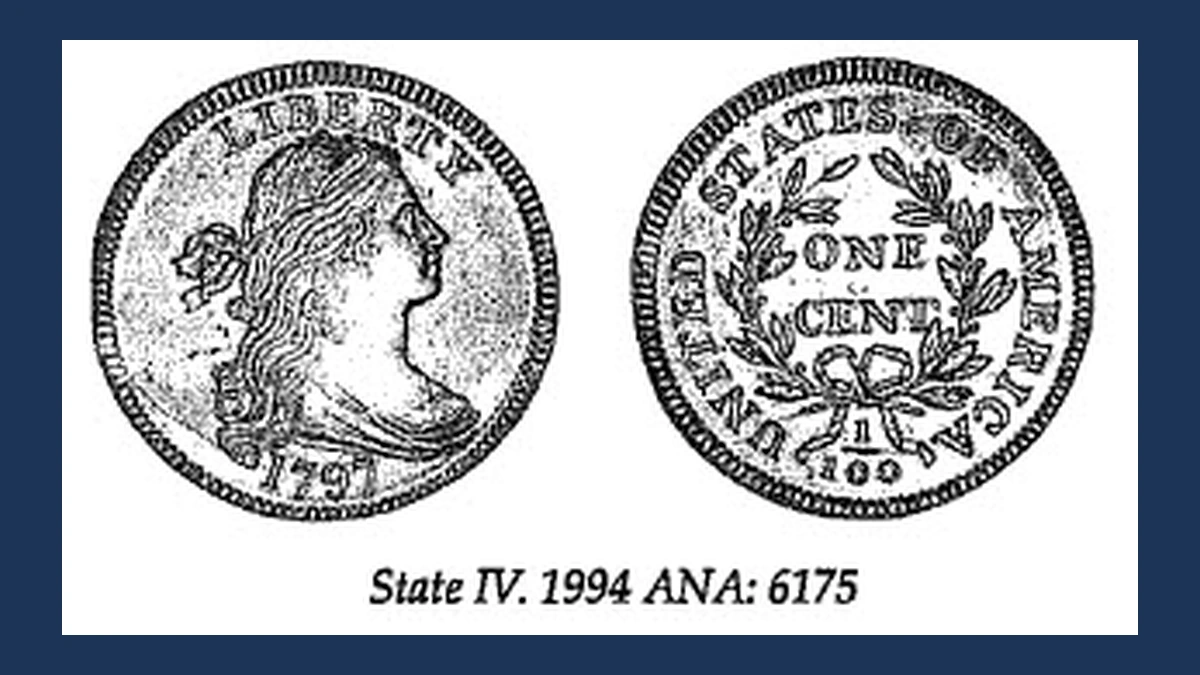
Not every tool failure leaves a sharp crack. A tool face can bend or sink, allowing the coin’s surface to rise into a broad uneven area.
Collectors describe this as die buckling. Breen records it in the open area to Liberty’s left and through OF on the back of a particular 1797 variety.
Later examples developed more unevenness near the end of the drapery and between existing cracks. The broad change should be judged beside the original design.
A coin bent after striking can also look uneven, but that changes the finished disk rather than the stamping tool.
Estimated Value
A working whole-coin estimate is $200–$1,200 for worn examples and $1,200–$6,000 for attractive cents with clearly matched tool buckling. Exceptional condition and rarity need separate comparisons.
The bulge is often one feature within an established tool variety, alongside cracks or fading clash marks. It does not always bring a large premium by itself.
A later-bent or heat-damaged coin is a different case and should not receive this Mint-error range just because its surface is uneven.
How to Identify
Hold the light low and watch its reflection move across the coin. Broad unevenness to Liberty’s left and through OF should be easier to see from the side than straight on.
Compare that shape with a known example from the same stamping tools. The nearby cracks and drapery can anchor the comparison.
Use a 10× magnifier where the bulge meets normal detail. A sharp impact or later bend may disturb the opposite face too.
On a loose cent, a scale and calipers can record its weight against 10.89 grams and diameter against roughly 28–29 millimeters.
Inspect the edge without forcing it straight. The broad surface change should fit the documented tool damage, rather than a local crease through the finished coin.
6. 1797 Draped Bust Cent A Slightly Misplaced Strike
A small shift can leave the rim narrow on one side and the design incomplete at the edge. The blank sat slightly away from the intended position when struck.
The recorded 1797 example has a gripped edge and was struck about five percent off center toward nine o’clock. NGC graded it Good 4, indicating heavy wear.
The catalog explains that missing protection from the rim contributed to weak lettering on the back. Wear also affected those letters.
This mild displacement is a separate case from the double-struck cent discussed below, where both blows landed off center.
Estimated Value
Estimate $300–$1,500 for worn examples with a readable date and $1,500–$8,000 for more attractive or dramatic pieces. These are estimates for the whole 1797 cent.
An undated early cent identified as 1808 brought $6,462.50 in February 2018 with a much larger offset. Its thirty-percent displacement and better preservation make it a stronger example, not a direct price for the heavily worn 1797 coin.
A slight uneven border alone warrants less enthusiasm.
How to Identify
Keep Liberty upright before locating nine o’clock on the recorded example. Compare the thin border and missing outer design on both sides, because one shifted tool can create a different pattern.
A 10× magnifier will help distinguish smooth wear from the boundary of the original strike. The cataloged coin has both wear and displacement, so not every faint letter was weak from the beginning.
For a loose cent, use a scale against 10.89 grams and calipers against roughly 28–29 millimeters. Inspect for later trimming that could imitate an off-center outline.
The documented specimen’s gripped edge is part of its variety. Do not mistake those intentional marks for proof that the misplaced strike damaged the edge.
7. 1797 Draped Bust Cent A Sunken Mirror Image
A struck coin left in the press can act like an extra stamping surface. When it presses into another blank, it leaves a sunken mirror image of its raised design.
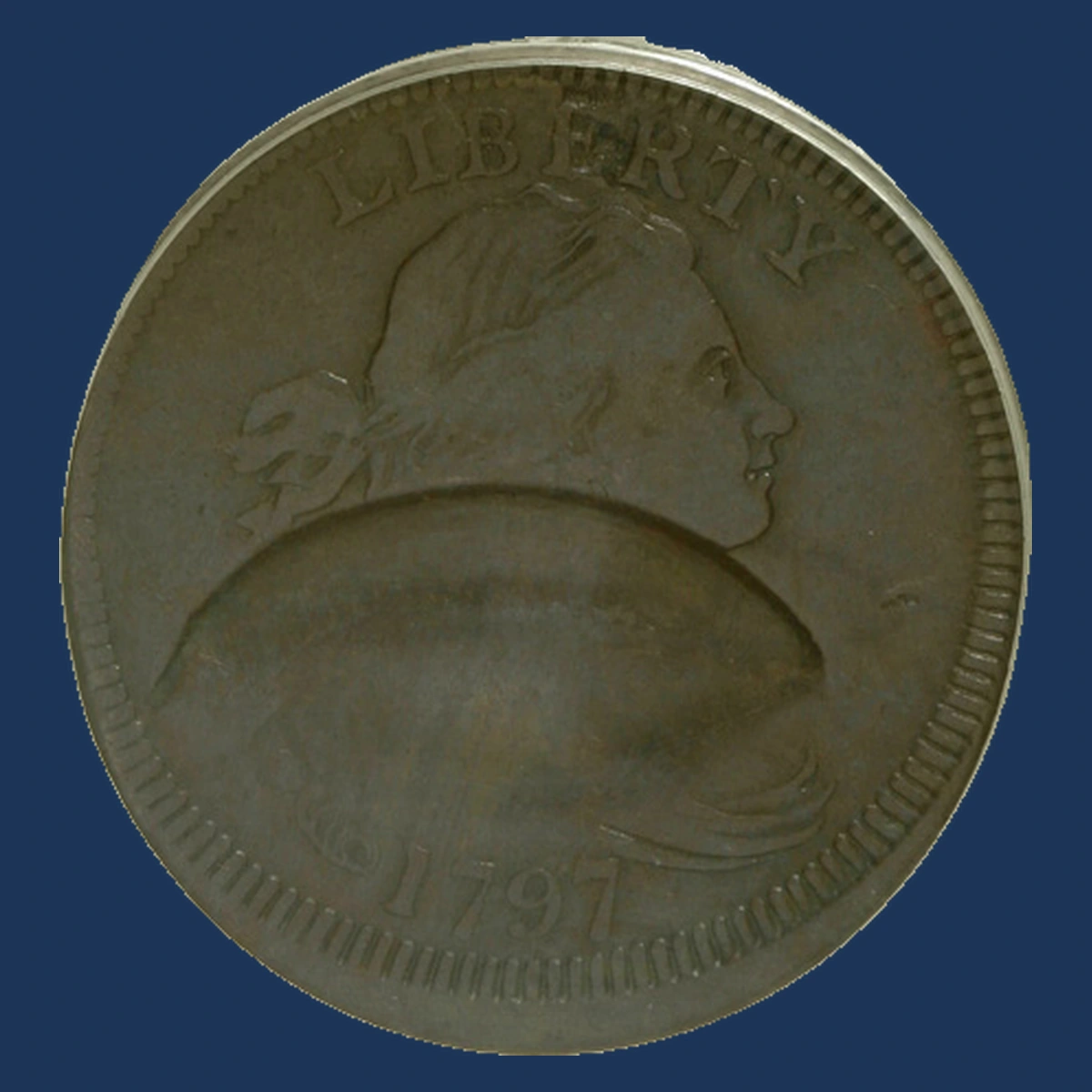
This is a brockage. Breen records a 1797 example made from the front design, while Mint Error News lists a different cent with a partial front brockage and two strikes.
The partial example was graded PCGS Fine 12, showing considerable circulation wear. Its mirror impression and extra strike belong to the same coin.
Ordinary faint clash lines do not reproduce the same sunken, reversed design.
Estimated Value
For a genuine 1797 brockage, estimate $800–$4,000 on worn or partial examples and $4,000–$15,000 on clearer, attractive pieces. These are whole-coin estimates.
A different-year 1817 brockage had a $7,500 winning bid before fees in January 2015. That comparison illustrates the appeal of a strong mirror design without establishing a sale price for the reported 1797 coins.
The partial brockage with two strikes receives one combined valuation, not the sum of both sections’ upper limits.
How to Identify
Read the lettering as well as the portrait. In a brockage, the transferred design should be reversed and sunken, unlike normal raised lettering.
A 10× magnifier and angled light help show depth. Compare the mirrored elements with the ordinary front design instead of assuming any depression is a portrait.
For a partial example, map where the mirror area ends. On the reported double strike, trace the additional normal impression separately so the two effects are not confused.
A loose large cent began near 10.89 grams and roughly 28–29 millimeters; use a scale and calipers to record it. Inspect the edge and opposite face for evidence of two finished coins squeezed together later, which can imitate a mint-made mirror impression.
8. 1797 Draped Bust Cent Double and Triple Strikes
The clearest recorded double strike repeats almost the entire design on both sides. Its two impressions are about one millimeter apart, including the date, portrait, wreath, lettering, and border.
A different cent received two off-center blows and later suffered environmental damage. Those problems did not erase the evidence of its two strikes.
Breen also records a triple strike whose second impression turned about thirty degrees and whose final blow was ninety-five percent off center near ten-thirty.
These movements belong to separate coins. A tiny repeated profile should not inherit the dramatic sequence of the triple-struck example.
Estimated Value
The NGC MS65 Brown double strike brought $25,300 in August 2006. MS65 describes unusually attractive unworn preservation, while Brown describes its copper color.
The damaged, twice-off-center cent sold for $504 in September 2019. That contrast shows why the error name alone cannot set the price.
Estimate $400–$4,000 for worn readable examples and $4,000–$30,000 for stronger combinations or exceptional unworn coins.
How to Identify
Choose one repeated letter and follow its companion into the surrounding portrait or wreath. On a true second strike, related parts of the design should move together.
Check both faces under a 10× magnifier. The exceptional close double shows much more than a thin shelf beside one letter.
For the triple-struck example, identify each surviving impression separately; the final small edge strike should not be mistaken for the thirty-degree movement of the second.
Weigh a loose coin with a scale against 10.89 grams and measure its outline with calipers against roughly 28–29 millimeters. Repeated blows may change the shape without adding copper.
Inspect the edge and flattened overlaps for later alteration. Keep a partial brockage on the same coin in the same valuation, even though it requires a different visual check.
Conclusion
The estimated $100–$30,000 range for 1797 cent errors covers very different coins. A small crack on a worn cent and a clear double strike on an unworn example should not share one price.
Follow the visible feature: inspect a gap’s wall, compare a ghost design, or trace complete repeated letters. Check the correct edge variety and preserve the copper surface before deciding what caused the unusual appearance.