1801 Cent Error List with Pictures

Three small mistakes on the back helped an 1801 cent reach $138,000 at Heritage in January 2005. That exceptional unworn coin shows how much a recognizable design mistake can matter.
Most 1801 penny errors cost far less. The estimates below span $100–$150,000, from worn coins with original metal flaws to exceptional examples of the famous engraving mistakes.
Turn your cent over first: its fraction, wreath stems, and lettering may tell you more than its date alone.
1. 1801 Draped Bust Cent Clipped Blank
A notch in the edge may belong to the blank itself. The blank is the copper disk that received the coin design, and an incomplete disk could still pass through the early Mint’s press.
A year guide describes a clipped 1801 cent with a VG Details grade. This means substantial wear plus a condition problem, rather than an undamaged coin with a precise numerical grade.
The report does not establish the clip’s exact shape or direction. A curved, straight, or irregular opening needs inspection of its own boundary before being accepted as an original Mint feature.
Estimated Value
For genuine clipped 1801 cents, estimate $100–$400 when well worn and $400–$1,200 for more attractive examples. These figures price the whole coin, including its remaining design.
The year guide reports a $649.99 asking price for the VG Details piece. An asking price records what a seller wanted, not what a buyer paid.
A cut made after the coin left the Mint does not earn the same premium, even if the missing section looks dramatic.
How to Identify
The edge of the opening matters more than its size. Under a 10× magnifier, inspect both ends for metal flow and fading design that fit a blank already missing a piece when struck.
Saw grooves, filing, or a sharp cut through completed letters suggest later removal. Also inspect the opposite rim for weakness, which can support a clip but may disappear through wear.
Weigh a loose coin against its original 10.89 grams and measure intact spans with calipers against roughly 28–29 millimeters. Both an original clip and later cutting reduce weight, so the scale cannot decide between them.
Keep photographs of both faces and the plain edge, with the 1801 date readable.
2. 1801 Draped Bust Cent Peeling Copper
Copper can separate along a weakness inside the original blank. The result may be a thin flap or a shallow patch where part of the surface has fallen away.
This is called lamination. It differs from a layer of paint or another coating peeling off a finished coin.
The type belongs among the metal flaws to check on early copper cents. An 1801 candidate still needs a boundary that shows separation within its own metal.
Rough green corrosion, a scraped patch, or a deep modern gouge can damage the surface without producing a genuine Mint lamination.
Estimated Value
A genuine 1801 lamination can be estimated at $100–$400 on worn coins and $400–$1,500 on more attractive examples. The size of the separation and the remaining original surface matter.
A later copper cent dated 1841, with a front lamination, brought $564 in December 2021. That is a related error comparison, not a recorded 1801 sale.
The estimate applies to an original metal flaw; corrosion or cleaning can lower the underlying cent’s value instead.
How to Identify
If a flap remains, avoid touching or lifting it. Side lighting can reveal the opening underneath without forcing the fragile metal apart.
Follow the boundary through a 10× magnifier. A genuine separation runs within the copper, while a coating has its own layer above the original coin surface.
Compare nearby struck details with the affected area and photograph any design continuing onto the flap. Corrosion pits and scraped lines need a different explanation.
A retained flap may leave the weight almost unchanged; missing copper can lower it. Use a scale against 10.89 grams and calipers against roughly 28–29 millimeters for a loose cent.
Inspect the plain edge too, especially if the supposed separation extends beyond one face.
3. 1801 Draped Bust Cent Raised Cracks and Rim Cuds
Several 1801 cents show lines left by cracked dies, the steel tools that stamped the designs. Copper pressed into a crack forms a raised ridge on the coin.
One collector’s example has several wavy lines in front of Liberty’s face. Other recorded coins have cracks through the date or the fraction on the back.
When a piece breaks from a tool’s edge, it can leave a larger raised patch joined to the rim. This is a cud.
Recorded positions include below 801 and beside AT in STATES, on separate examples with different break patterns.
Estimated Value
Allow roughly $100–$500 for worn examples and $500–$2,000 for clearer breaks on attractive cents. These estimates exclude exceptional condition or especially rare combinations of stamping tools.
Small cracks are familiar on early copper and may add little to a coin’s ordinary value. A larger rim-connected patch can be easier to see and more desirable.
If the cent also has an engraving mistake, assess both features on the same coin rather than adding two full price ranges.
How to Identify
For a rim blob, begin at the plain edge and follow the raised patch onto the face. It should connect naturally with the original rim, not have a join left by added solder.
Use a scale and calipers on a loose cent to compare with 10.89 grams and roughly 28–29 millimeters. Normal measurements alone cannot identify a broken stamping tool.
Now move a lamp across any thin lines while looking through a 10× magnifier. A tool crack leaves a ridge, whereas a scratch cuts into the surface.
The illustrated collector’s examples provide different patterns to compare. Follow the raised feature through the same letters or design details, instead of assuming every 1801 cent shares one crack.
4. 1801 Draped Bust Cent Wrong and Corrected Back Designs
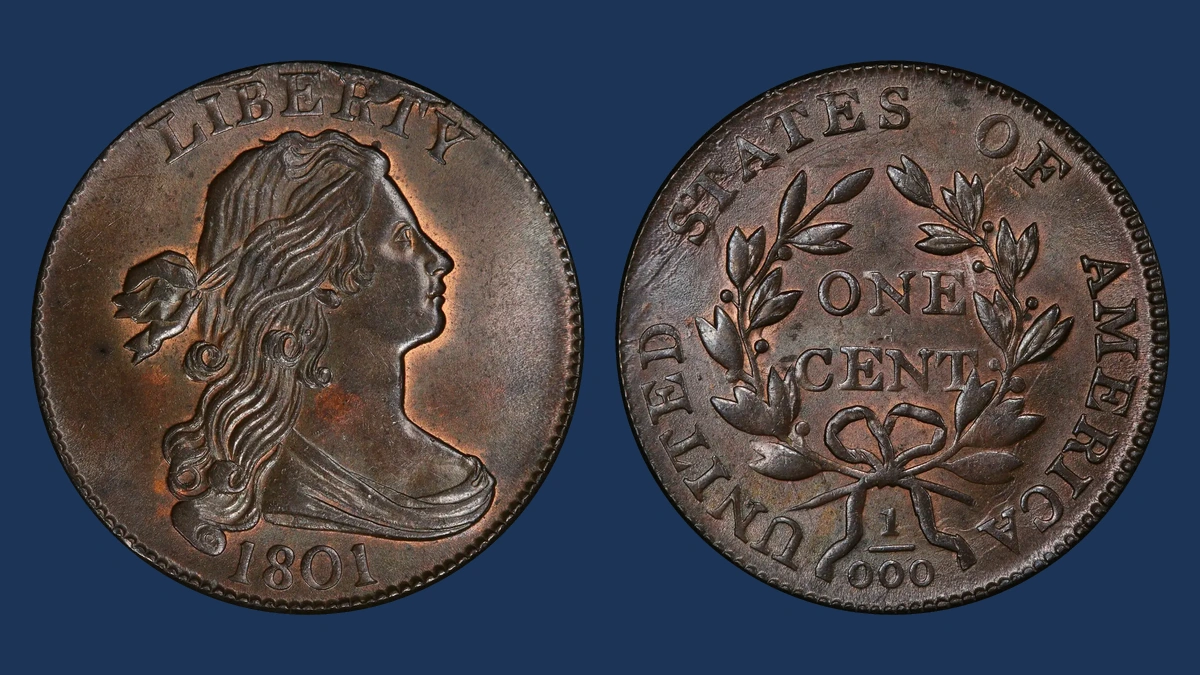
The normal fraction below the wreath is 1/100, meaning one hundredth of a dollar. Some 1801 tools instead gave coins the meaningless 1/000.
Another tool was corrected by punching a 1 over the first lower zero. Part of that zero remained visible around the replacement digit.
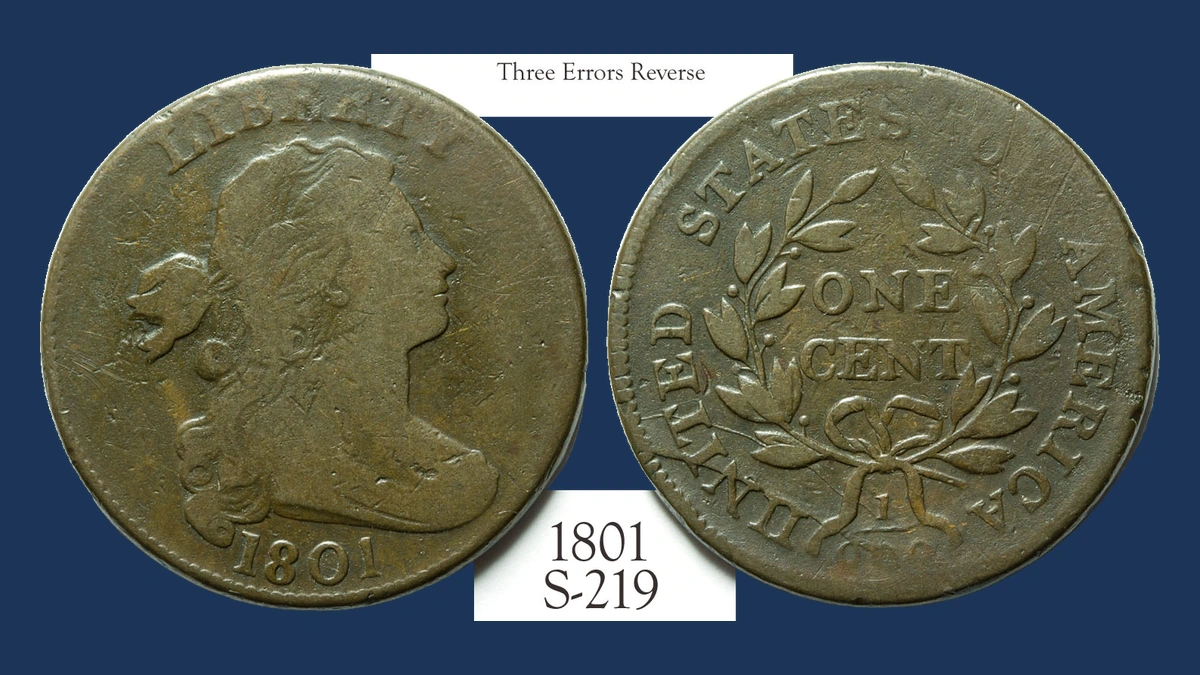
The famous Three Errors back combines 1/000 with a missing left wreath stem and a corrected U that resembles II in UNITED. All three features belong to one design.
These are mistakes in preparing the stamping tools. They do not mean the finished coin received three separate strikes.
Estimated Value
Estimate $200–$5,000 for many worn examples, with scarce or exceptional pieces reaching $5,000–$150,000. The exact back design and condition strongly affect value.
A Three Errors cent graded MS63 brought $138,000 in January 2005, according to PCGS; that was an exceptional unworn coin. A more affordable corrected-fraction cent sold for $650 before buyer’s premium in January 2026.
The latter coin had grainy surfaces and a small rim bruise.
How to Identify
Read the fraction with a 10× magnifier. Three zeros below the bar identify the wrong lower number; a 1 with an older zero beneath it points to the correction.
For Three Errors, check the wreath and UNITED as well. The left stem is missing, and the altered U looks like two upright strokes.
A worn-away stem alone is insufficient. Compare the fraction, stem, and U together with the illustrated Three Errors example.
The back must say ONE CENT, not HALF CENT. Check a loose coin with a scale and calipers against 10.89 grams and roughly 28–29 millimeters, including its plain edge.
Leave dirt around the fraction untouched while matching the visible digits; picking at a faint zero can destroy the evidence.
Conclusion
On an 1801 cent, a wrong fraction can be easier to recognize than a small surface flaw. Check the wreath stem and UNITED as well before calling it the Three Errors version.
Estimated whole-coin values range from $100–$150,000, with the highest figures reserved for exceptional pieces. Preserve the copper surface and record each feature clearly; several mistakes on one cent still belong to one coin.