1809 Cent Error List with Pictures

An exceptionally preserved 1809 cent with extra date strokes, faint design traces, and raised breaks sold for $43,200 in August 2020. That was the complete coin’s price, not a charge for one tiny mark.
This 1809 penny error list covers estimated whole-coin values of $75–$45,000, with most worn examples far below the highest end. Preservation matters greatly on these early copper cents.
Use the following checks to compare the final 9, unusual raised lines, and changes in the coin’s metal.
1. 1809 Classic Head Cent A Shallow Clipped Blank
A small missing edge section appears beside the ninth star on an 1809 cent cataloged by Early Cents Auctions. The same coin has corrosion, strongest near stars nine and ten and on the lower back.
The catalog describes the gap as a shallow clip. That means part of the copper disk was absent before the design was struck.
Corrosion affects the surrounding surface but should not be treated as the same feature. A later cut or filed edge can also imitate an incomplete blank.
The original boundary and nearby design provide the useful evidence, rather than the missing shape alone.
Estimated Value
Estimate $75–$300 for a worn genuine clip and $300–$1,000 for a clearer, more attractive example. These ranges include the ordinary collectible value of the cent.
The catalog assessed its corroded coin at G6, meaning heavy wear or reduced overall quality. Its sharper underlying detail does not erase that surface problem.
An unworn 1852 clipped large cent brought $384 in June 2024. That later coin is a comparison, not a sale record for the star-nine example.
How to Identify
With Liberty upright, count the stars from the lower left around the portrait to find star nine. Photograph the small edge gap and the neighboring corroded area together.
Look along the opening with a 10× magnifier for filed metal or cuts across completed detail. Check the opposite border for supporting weakness, allowing for the coin’s wear.
A scale and calipers can record a loose cent against its original 10.89 grams and roughly 28–29 millimeters. Measure intact areas and inspect the remaining plain edge.
The cataloged example still has a readable date and legend. Keep those details visible in full photographs so a close-up of the gap is not separated from the coin’s identity.
2. 1809 Classic Head Cent Lamination
An early copper cent can have a weak layer beneath its surface. When that layer separates, it may leave a loose flap or a shallow exposed patch.
This is called lamination. The 1809 year guide reports the type without locating a particular specimen’s flaw.
The copper should show evidence of separating within itself. A surface coating, corrosion pit, or gouge is not enough to establish the same cause.
A small flake also does not mean the entire disk split into two halves. The extent of the separation must come from the actual coin under examination.
Estimated Value
For an identifiable original lamination, estimate $100–$400 on a worn 1809 cent and $400–$1,500 on a sharper example. The price concerns the whole coin and its surfaces.
An 1841 large cent with a front lamination sold for $564 in December 2021. Its different date makes it a general comparison rather than a result for 1809.
A minor rough spot belongs lower than a clear original separation. Extensive corrosion can lower value despite making the surface look more dramatic.
How to Identify
Leave any attached flap untouched and place the coin where it cannot rock against that area. A broken-off flake removes evidence as well as metal.
Use low light and a 10× magnifier to follow the separation into the copper. Check whether it lies inside the metal rather than beneath paint or an added coating.
If safe to handle loose, weigh the cent against 10.89 grams and measure intact spans against roughly 28–29 millimeters with calipers. A retained flap may leave the weight nearly unchanged.
Inspect the plain edge for a joining seam that could indicate a made-up copy.
Photograph the affected area with nearby lettering or portrait detail. Focus on a thin lifting edge or exposed layer within the copper.
3. 1809 Classic Head Cent A Shallow Blank Flaw above CENT
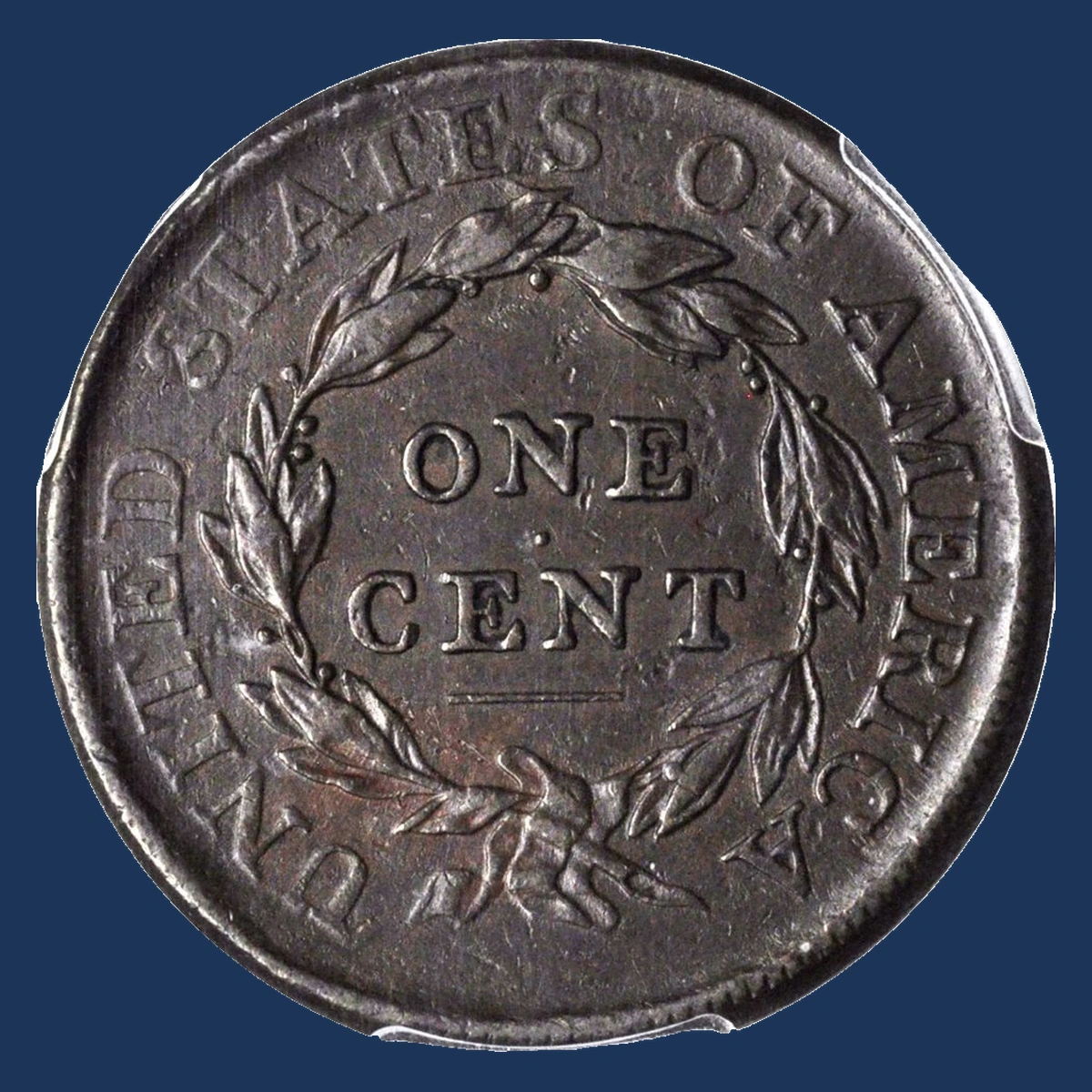
A shallow patch above the T in CENT appears on a circulated 1809 large cent sold by Stack’s Bowers. The auction description identifies it as a flaw in the original blank.
A blank is the metal disk used to make the coin. A defect can survive the blow and interrupt an otherwise normal-looking surface.
The description does not identify a loose layer or a particular object that caused the mark. It should therefore remain a blank flaw rather than automatically becoming a lamination or struck-through error.
A shallow depression and a lifting flap offer different clues about the metal.
Estimated Value
The PCGS VF25 example brought $1,680 in March 2019, a price for the complete collectible cent. VF25 describes moderate circulation wear with clear remaining detail.
Estimate $150–$800 for more worn examples with an original blank flaw and $800–$2,500 for appealing, sharper coins. These ranges do not mean the shallow mark itself adds that amount.
Handling marks, surface color, and overall quality affect the comparison. A later scratch above CENT should not inherit the recorded coin’s value.
How to Identify
Turn to CENT and inspect the copper just above its T with a 10× magnifier. The cataloged flaw is shallow; a raised ridge in this area belongs to a different feature.
Photograph the patch from two lighting angles so its depth and boundary remain clear. A sharp cut with pushed copper suggests damage after striking, while corrosion may leave several nearby pits.
Weigh a loose cent on a scale against its original 10.89 grams and use calipers against roughly 28–29 millimeters. Compare the opposite face and plain edge too, since a blow that dents one side may disturb the other.
4. 1809 Classic Head Cent Off-Center Strike
An off-center strike begins when the metal disk misses its intended position between the stamping tools. Some design lands beyond the edge, leaving an unused area on the opposite part of the blank.
Walter Breen’s early-cent reference lists off-center reports for 1809 through 1812. That establishes a year report without assigning one shared direction or percentage.
An 1809 half cent is a different coin and must not supply the missing measurements. ONE CENT on the back identifies the large-cent denomination.
A slightly narrow border on one face also differs from a substantial displacement of both designs.
Estimated Value
For an authenticated, dated 1809 off-center cent, estimate $300–$1,500 with ordinary wear and $1,500–$5,000 for a stronger example. These are estimates for the type, not a newly identified sale.
An undated cent attributed to 1808 brought $6,462.50 in February 2018. It had a thirty-percent shift and very light wear, so its price is a higher, different-year comparison.
The missing design, visible identity, and surface condition should set the comparison rather than a guessed percentage.
How to Identify
Read ONE CENT before using a photograph labeled only “1809 copper.” A half cent can also show striking errors, but belongs to a different denomination.
Compare the intact copper with the large cent’s original 10.89 grams and roughly 28–29 millimeters using a scale and calipers on a loose coin. Its edge should be plain.
Photograph the entire front and back. Both designs should agree with the same misplaced blank.
Under a 10× magnifier, inspect the unused area for grinding or erased letters. A genuine unstruck surface differs from design removed later.
Do not copy a direction from a one-sided alignment shift. Estimate the displaced portion only after the actual coin’s two faces support an off-center strike.
5. 1809 Classic Head Cent Traces from Clashing Tools
Strange design fragments can appear when stamping tools strike each other without a blank in place. The damaged tools leave traces of that contact on coins made afterward.
Collectors call this a die clash. It differs from pressing two finished coins together after they leave the Mint.
The recorded 1809 example has traces behind Liberty and on either side of ONE CENT. Several related curves are more useful than a single bright line.
Normal hair and wreath details can cause confusion. A convincing clash should connect the unexpected mark with part of the opposite design.
Estimated Value
Estimate $150–$700 for worn 1809 cents with recognizable traces and $700–$3,000 for sharper examples. Outstanding unworn coins can fit an estimated $3,000–$45,000 whole-coin range.
The exceptional cent introduced above also carries repunching and tool breaks. Its high price reflects the complete coin’s quality, not separate charges for each faint feature.
These ranges should not be added across sections for the same object. A small clash on an ordinary worn cent does not create top-grade value.
How to Identify
Photograph the areas beside ONE CENT before searching behind Liberty’s head. Those two back areas can help you separate unwanted design fragments from normal wreath leaves.
Use a 10× magnifier to compare the strange curves with parts of the opposite design. A single bright scratch is less convincing than several fragments that fit together.
Check a loose coin on a scale against 10.89 grams, and use calipers to compare it with roughly 28–29 millimeters. Examine the plain edge at the same time for squeezing or a seam between joined pieces.
Turn back to Liberty under a low lamp.
Keep her normal hair in view while tracing the unexpected marks behind it. Look for pieces of the opposite design, rather than a complete second portrait.
6. 1809 Classic Head Cent A Large 9 over a Smaller 9
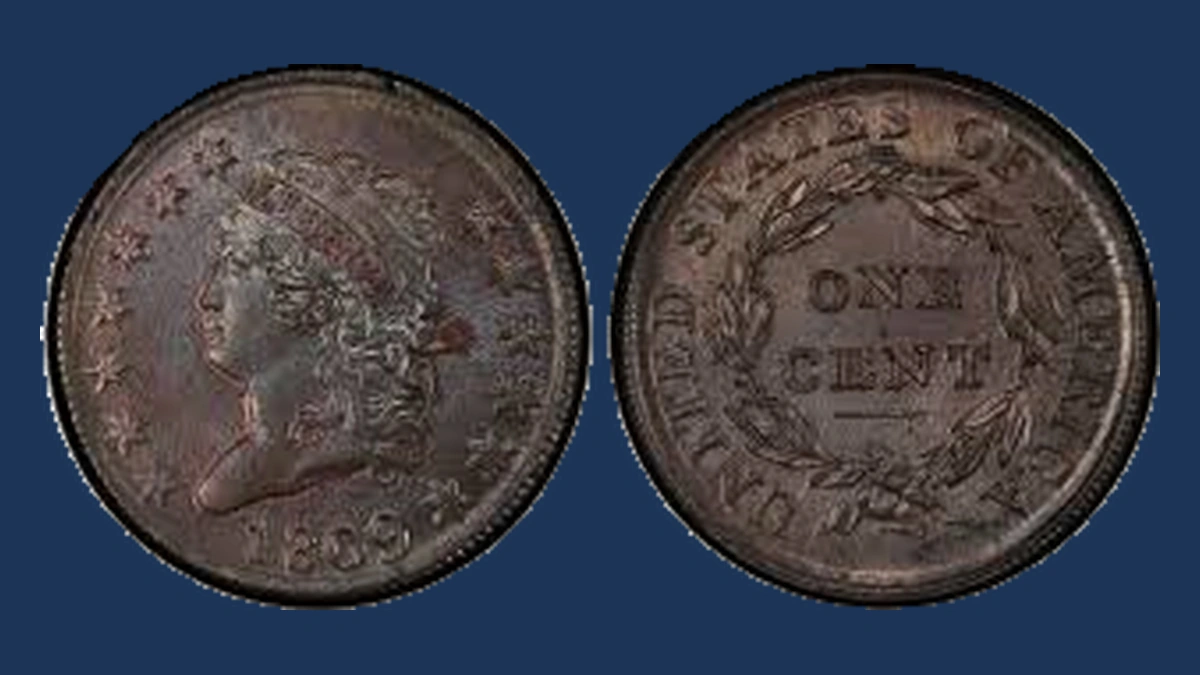
The last digit can contain traces of another 9. The larger numeral was punched over a smaller one while the steel stamping tool was being prepared.
This is a repunched date, not a different year stamped over an old one. The finished coin still reads 1809.
Subtle remnants can become hard to see as the tool wears or the coin circulates. A damaged digit can also create extra-looking edges without any second punch.
Compare the shape of the surviving metal rather than assuming every thick 9 has equally clear repunching. A close-up needs the surrounding date for context.
Estimated Value
Use an estimated $150–$800 for identifiable worn coins and $800–$4,000 for sharper examples. Exceptional unworn 1809 cents can reach an estimated $4,000–$45,000.
The repeat-punched digit is part of this issue’s tool history. It should not be treated as a newly discovered rarity on every example.
The same exceptional coin appears in the clash and tool-break sections. Its complete price cannot be multiplied by the number of visible features, and blurred date detail still affects presentation.
How to Identify
Read ONE CENT on the back before studying the final 9. An 1809 half cent or an 1810/09 cent needs a different comparison.
Check a loose coin with a scale against 10.89 grams and calipers against roughly 28–29 millimeters. Examine the plain edge for filing or a joining seam.
Now photograph the entire date and enlarge its last numeral with a 10× magnifier.
Move the lamp to distinguish a surviving extra stroke from a shadow inside the 9. The faint smaller digit should belong to the original raised metal, not a cut made through it.
Inspect the nearby copper for fresh engraving or pushed edges. Leave dirt inside the numeral untouched rather than scratching out a supposedly clearer second stroke.
7. 1809 Classic Head Cent Cracks and a Raised Patch inside the Wreath
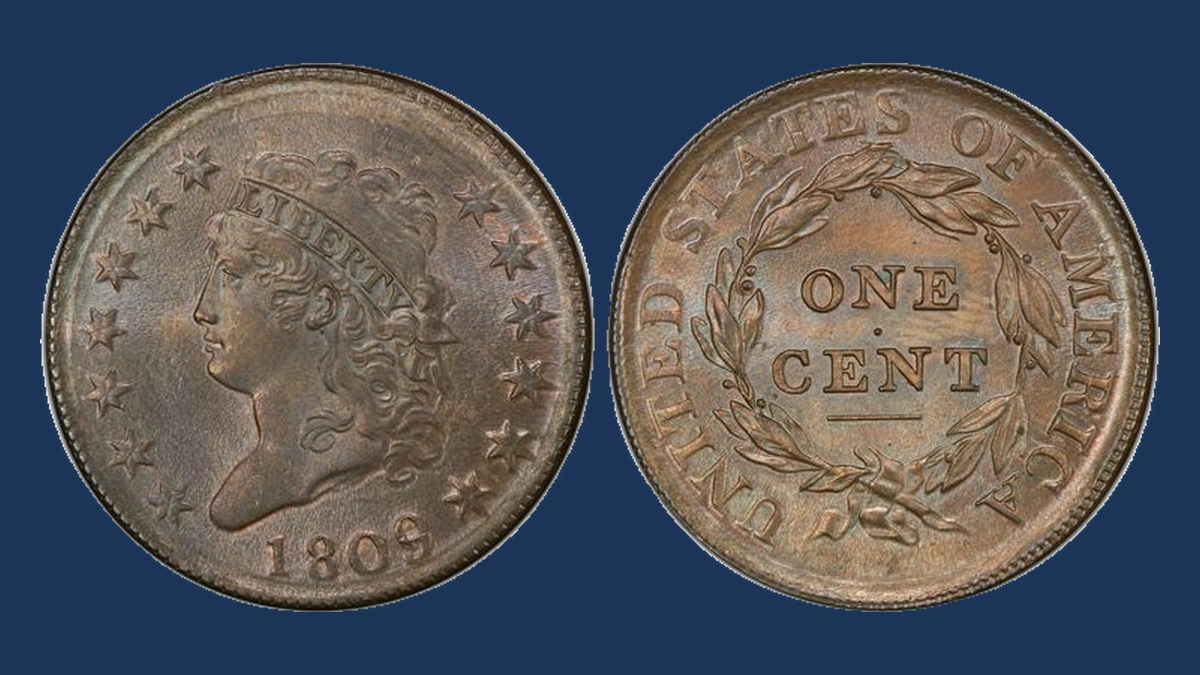
A raised patch below ES in STATES lies between cracks in the wreath. Other lines reach toward ONE, CENT, and the outer border on the same recorded coin.
The steel stamping tool was breaking apart. Copper filled its openings during the blow, leaving raised lines and a larger patch.
The auction calls the patch an internal cud. For a beginner, the useful distinction is that it stays inside the design instead of joining the rim like a rim cud.
Ordinary leaves are also raised. The surrounding cracks and disrupted design help distinguish this extra metal from normal wreath detail.
Estimated Value
Estimate $150–$750 for clear worn examples and $750–$4,000 for sharper coins. Exceptional unworn pieces can fall within an estimated $4,000–$45,000 whole-coin range.
The PCGS record lists $43,200 in August 2020 and $40,800 in January 2025 for the same MS64 Brown cent. That grade means unworn with some marks.
Its preservation explains much of those prices. A small raised break on a heavily worn cent should not receive the same valuation.
How to Identify
Locate the raised area below ES and follow the narrow ridges leaving it. A 10× magnifier helps separate those ridges from cut scratches or ordinary leaf edges.
Check whether the patch has a seam or appears to cover previously complete detail. Added metal and corrosion can imitate a lump but need a different explanation.
Now follow the reported paths toward the E in ONE and the area above the T in CENT. Keep this raised feature separate from the shallow blank flaw on the other cataloged coin.
Use a scale and calipers on a loose cent against 10.89 grams and roughly 28–29 millimeters. Inspect its plain edge without assuming the internal break must connect to the rim.
Conclusion
Estimated whole-coin values of $75–$45,000 cover very different levels of preservation and error visibility. The highest recorded prices belong to exceptional 1809 cents, not to ordinary scratches or minor flaws alone.
Begin with the coin’s identity, then decide whether the unusual feature is raised, recessed, peeling, or missing. Several tool-made details can belong to one cent, so keep its value together rather than adding every section’s range.