1810 Cent Error List with Pictures

The last two digits deserve a close look on an 1810 cent. Some were stamped from a tool that still showed parts of its old 1809 date; one unworn example sold for $10,575 in January 2014.
The 1810 Classic Head cent errors below also include a coin struck twice and a backward portrait paired with a clipped edge. Estimated whole-coin values run from $60 to $30,000.
Follow the pictures and simple checks to distinguish each feature from wear or later damage.
1. 1810 Classic Head Cent Lamination — Estimated Up to $2,500
Lamination looks like a thin layer lifting from the copper or leaving a shallow gap after it falls away. A weak bond inside the metal lets the layer separate.
It differs from a deep pit or a thick chunk broken off the rim. The boundary of the layer matters more than the patch’s color.
The date must remain readable on a coin identified as an 1810 example. A worn cent described only as belonging to the 1808–1814 series cannot establish which year it was made, even when its metal flaw is obvious.
Estimated Value
For a clearly dated and authenticated 1810 lamination, estimate $100–$2,500 across worn through attractive examples. This is a condition-based estimate, not a claimed sale of a specific 1810 specimen.
A small layer flaw on an unworn 1842 large cent brought $750 in September 2021. That later-series comparison helps price the kind of metal defect, while the older coin’s wear, corrosion, and surviving copper surface still need to be considered separately.
How to Identify
Read all four date digits first. If the final number is missing, do not select 1810 simply because the portrait looks like a Classic Head cent.
A 10× magnifier can reveal a thin flap, a stepped boundary, or a natural separation beneath an attached layer. Leave any flap in place.
Corrosion often makes uneven pits without a distinct layer boundary. Fresh scrapes may cut through nearby design or leave bright metal.
Compare a loose coin with 10.89 grams on a scale and approximately 28.5 mm with calipers, then inspect its plain edge. Match a readable 1810 date with a true layered separation before assigning the flaw to this year.
2. 1810 Classic Head Cent Off-Center Double Strike with a Blocked Back — Estimated Up to $12,000
Two impressions share the copper on this 1810/09 cent, with the second falling about seventy percent outside the disc. The first strike was normally placed, but the coin failed to leave the press completely.
Another metal disc then entered beneath it. That disc blocked the back tool during the second blow, leaving a one-sided second strike and an overlapping-disc impression.
The same coin explains the off-center strike, double strike, and indent descriptions. Its old date remnants are a separate tool feature: an 1810/09 date alone does not mean that the coin received two blows.
Estimated Value
The PCGS VG8 example sold for $2,520 on January 3, 2022. That is the price of one complete coin with several linked effects, not separate amounts for three errors.
An estimated $500–$12,000 allows for differences in wear, damage, and the visibility of both strikes. A different-year 1811 double strike brought $16,200 in September 2025, but its stronger preservation and different strike pattern prevent treating that result as an automatic 1810 value.
How to Identify
Find the second portrait or border before studying the small overdate remnants. A tool with an altered date can stamp a coin only once, so the extra strokes beneath 10 do not prove a second blow.
Use a 10× magnifier to follow the displaced impression and turn the coin over to examine its matching area. On this example, the back lacks a corresponding second normal design because another disc stood between it and the tool.
A scale and calipers compare loose copper with 10.89 grams and about 28.5 mm; inspect the plain edge for later crushing. Pair the displaced second front strike with the blocked back area, rather than counting the overdate as the second strike.
3. 1810 Classic Head Cent Full Brockage with a Curved Clip — Estimated Up to $15,000
The wreath is missing from the back of this coin. In its place, Liberty’s portrait and the date appear backward and sunken into the copper.
A previously struck coin remained in the press and pressed its design into the next disc. This full mirror transfer is called a brockage.
The same cent also has a shallow curved gap near four o’clock, where part of the disc was missing before striking. Its ANACS AG3 Details grade records heavy wear and scratches; those later scratches are separate from the mirror impression and the original clipped edge.
Estimated Value
Estimate $1,000–$15,000 for authenticated 1810 full brockages with a clip, depending on readable detail and surface condition. The badly worn, scratched example should be compared toward the lower portion rather than with sharp, undamaged pieces.
For context, an 1819 cent combining a partial back brockage with an off-center strike sold for $5,175 in November 2010. That later coin had different accompanying features, so its price is a comparison rather than a sale record for this 1810 clipped brockage.
How to Identify
The normal front is so worn on the recorded coin that its date has disappeared. Read the mirrored date on the back instead, using a mirror and a 10× magnifier.
Check that the backward design is sunken, with no normal wreath beneath it. The shallow clip sits near four o’clock when the normal front is held upright.
Examine the gap for later cutting or filing.
The clip may lower the normal 10.89-gram weight on a scale; use calipers across the intact disc against about 28.5 mm. Inspect the remaining plain edge without disturbing the surface.
A sunken backward date and portrait replacing the wreath, together with the shallow four-o’clock clip, match the recorded combination.
4. 1810 Classic Head Cent 1810/09 Overdate — Estimated Up to $20,000
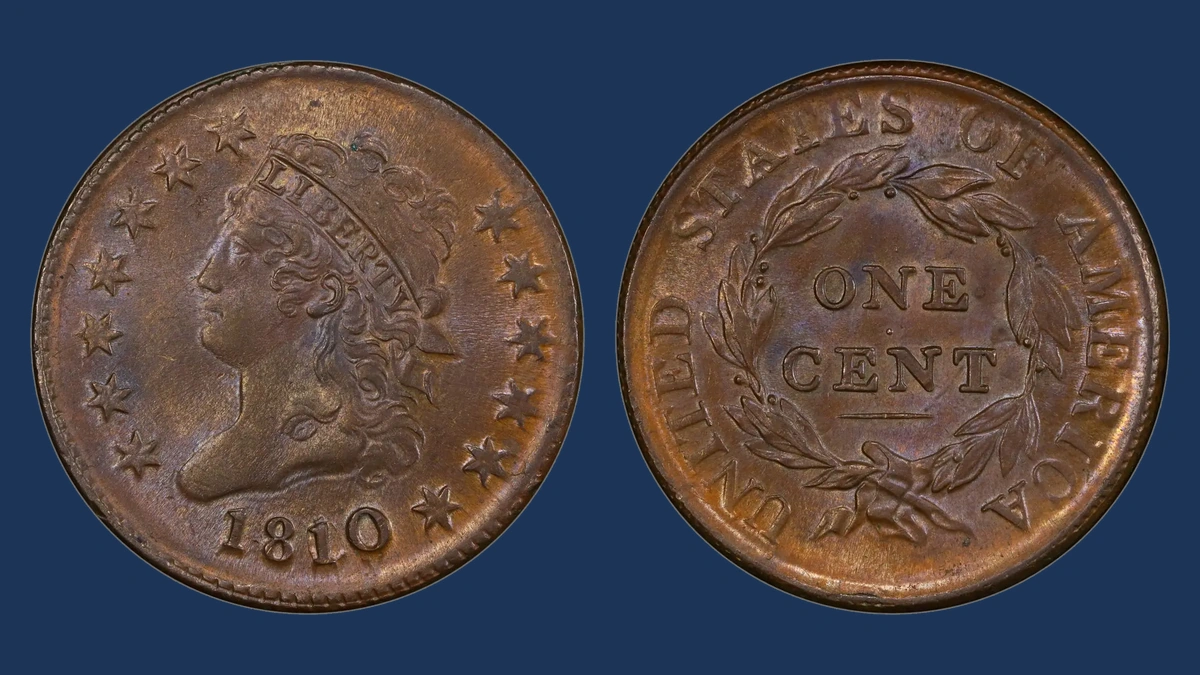
The last two date digits hide parts of older numbers. On the 1810/09 variety, remnants of 09 survive beneath the final 10.
The Mint changed the date on the steel stamping tool, called a die, before using it to make these cents. The old strokes were not completely removed.
This variety is known as S-281, a catalog number for its front and back tool pairing. Ordinary 1810 cents do not need those extra strokes, and raised marks elsewhere in the date should not be mistaken for the specific remains of the earlier two digits.
Estimated Value
A PCGS MS63 Brown overdate sold for $10,575 in January 2014; a PCGS AU58 example brought $10,200 in January 2025. The grades describe unworn and nearly unworn coins, respectively.
An estimated $60–$20,000 spans heavily worn pieces through attractive unworn examples. Recent lower-grade results show the range: an auction-assessed Good 4 or finer coin sold for $64.80 in October 2025, while a PCGS VF25 example brought $1,680 that month.
How to Identify
The normal copper specifications are 10.89 grams and approximately 28.5 mm across. Check a loose coin with a scale and calipers, and examine the plain edge for signs of alteration.
Now enlarge the last two date digits with a 10× magnifier. Compare them with a clear photograph of S-281, looking for parts of the old 09 beneath the current 10.
Ignore ordinary wear around the first 1. The overdate does not require an imaginary loop inside that digit.
A worn example may show only part of the old numbers, so compare the surviving strokes rather than demanding a complete 09. Match those remnants beneath the final 10 to an identified S-281 date.
5. 1810 Classic Head Cent Die Cracks and Rim Cuds — Estimated Up to $30,000
A raised line connects the tenth through thirteenth stars to the right part of the date on S-285 cents. Copper filled a crack in the stamping tool and left that line on the coin.
A different variety, S-283, has a raised rim patch outside stars five and six. This patch is a cud, made when part of the tool’s edge broke away.
The two locations belong to different tool pairings. A coin with the right-side crack should not also be expected to carry the left-side rim patch simply because both were made in 1810.
Estimated Value
Worn examples with a clear crack or rim break can be estimated around $75–$3,000. An attractive unworn S-283 with its recorded cud belongs to a different whole-coin tier, roughly $5,000–$30,000.
The upper estimate includes the scarcity and preservation of unworn Classic Head copper, not just the small raised patch. As a lower-grade comparison, an 1827 cent with a retained rim break brought $264 including fees in May 2025.
How to Identify
Choose the matching side of the portrait before tracing a mark. The S-285 crack runs among the lower right stars, while the S-283 cud sits outside stars five and six on the left.
Count stars from the lower left around the portrait, then inspect the relevant area with a 10× magnifier. The crack should stand above the copper; the cud should join the original rim.
On a loose coin, compare 10.89 grams with a scale and about 28.5 mm with calipers. Inspect the plain edge for a later blow that pushed copper inward.
Follow the right-side raised line toward the date, or find the natural rim-connected patch beside stars five and six, according to the variety.
Conclusion
An 1810/09 overdate comes from changed numbers on a stamping tool, while the displaced second strike happened to an individual coin. Keep those two causes separate when checking your cent.
Estimated whole-coin values range from $60 to $30,000. The brockage and clip belong to one combined example, and later scratches do not become mint errors simply because they appear beside an authentic one.