1816 Cent Error List with Pictures

A tiny peeling area did not prevent one 1816 penny from selling for $5,520 including the buyer’s fee in August 2025. Its excellent overall preservation mattered far more than the small flaw alone.
This 1816 Coronet Head cent error list covers estimated whole-coin values of $40–$9,000. Other examples show broken rim tools, a displaced design, or a small second impression at the edge.
Use the photographs and checks below to understand how each feature formed and which price comparison fits.
1. 1816 Coronet Head Cent Raised Rim Cuds
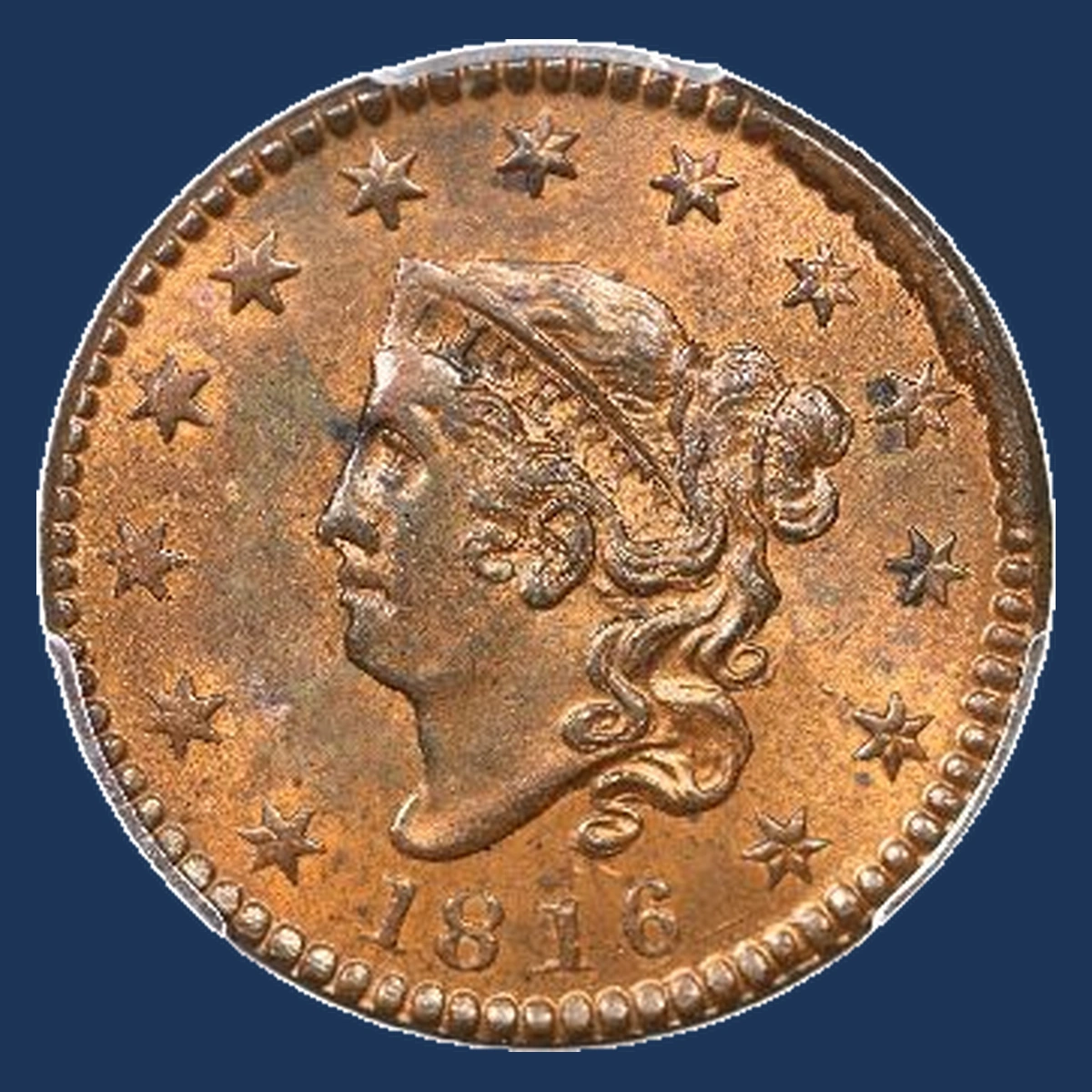
A raised patch can replace the border when a piece breaks from the stamping tool. Copper fills the newly opened space during the blow.
The resulting rim-connected patch is called a cud. It can repeat on later coins struck with the damaged tool.
Research on 1816 cents describes upper-rim breaks and examples with another break between stars eleven and twelve. The affected areas vary with the tool and how far it had broken.
One coin therefore need not show every recorded patch. A dented edge or metal folded over the face can resemble a cud without having formed during striking.
Estimated Value
Estimate $40–$5,000 for identified 1816 cuds across worn examples and attractive coins with clear raised breaks. A distinct boundary and original surfaces support the comparison.
An unworn 1836 large cent with a front cud and back crack sold for $2,040 in August 2020. It was graded PCGS MS65 Brown, meaning relatively few marks on brown copper.
That later-date coin provides context for a broken-tool feature. Its price should not be transferred to an 1816 cent because both have rim patches.
How to Identify
Compare the raised patch with the untouched border beside it under a 10× magnifier. A folded edge can flatten or cover nearby design, leaving a seam visible from the side.
A genuine cud rises where a piece was missing from the stamping tool. Follow its boundary into the rim and compare the shape with a matching 1816 example.
For a loose coin, use a scale and calipers against the usual 10.89 grams and approximately 28 millimeters. Inspect the plain edge beside the patch for added metal or a fold.
The 1816 study distinguishes different break arrangements. Use the example with the same affected area, rather than expecting every coin to show both upper and lower-right breaks.
2. 1816 Coronet Head Cent Single Off-Center Strike
The intended design can extend beyond one side of the blank while the other side remains bare. A single blow struck the coin while the blank was misplaced.
This is an off-center strike. The missing outer detail and unused crescent should fit the same shift on both faces.
A year guide describes a moderately off-center 1816 example without a percentage or direction used here. Its listed amount does not identify every off-center cent of this date.
An undated coin labeled with a broad range of years is different. The Coronet portrait alone cannot establish that a coin was dated 1816.
Estimated Value
The published 1816 example was offered for $185, an asking price rather than a confirmed sale. Estimate $100–$6,000 for authenticated dated examples across worn modest shifts and stronger unworn pieces.
An 1855 large cent struck seventy percent off center sold for $1,092.50 in January 2009 at PCGS Fine 15. It had substantial wear.
That is a different-year comparison with much clearer displacement information. Check the surviving date and original copper before applying a price based mainly on the bare crescent.
How to Identify
For a loose example, use a scale against the normal 10.89 grams and record its outline with calipers beside roughly 28 millimeters. A misplaced blow need not remove any copper.
Now locate the complete date before following the bare crescent. An 1816–1839 series label does not replace readable digits on the coin.
Under a 10× magnifier, inspect the boundary where the design ends. Look for original blank surface, not grinding or later flattening.
Compare the opposite face and the plain edge. If only one face is displaced while the other remains centered, investigate movement of one stamping tool.
The original blank’s position should explain both faces together.
3. 1816 Coronet Head Cent Second Strike Eighty-Five Percent Off Center
A small extra impression at the edge can record a second blow after the coin moved. The reported 1816 example is described as double struck, with its second strike eighty-five percent off center.
That percentage describes the displacement of the second blow. It does not mean most of the copper disappeared.
The year guide identifies an NGC Fair 2 grade, meaning extremely heavy wear with basic details remaining. Wear can make the two impressions harder to follow.
A simple doubled-looking profile is not enough. A second strike needs recognizable design at another position, with overlap that fits the later blow.
Estimated Value
For recognizable 1816 double strikes, estimate $300–$7,500, from heavily worn examples to stronger coins showing both impressions clearly. No auction amount is assigned to the reported Fair 2 piece here.
An unworn 1881 Indian cent with a seventy-percent off-center second strike sold for $1,880 in August 2013. Its PCGS MS64 Brown grade, smaller bronze size, and different date make it a broad comparison.
A second impression can be interesting despite wear. Price the complete coin once, including both blows.
How to Identify
Find recognizable letters, border teeth, or portrait detail in the extra impression before calling an edge dent a second strike. Use a 10× magnifier with light from several directions.
The reported Fair 2 condition means many normal details are worn away. Compare the surviving marks with full coin photographs rather than filling in shapes that cannot be seen.
Check the overlap to determine whether the later blow flattened part of an earlier design. Photograph both faces and the entire outline.
For a loose coin, use a scale against 10.89 grams and calipers against an ordinary diameter of about 28 millimeters. Inspect the plain edge for a join or later crushing; the extra design must belong to the original metal.
4. 1816 Coronet Head Cent Small Peeling Area above AMERICA
The flaw lies among border teeth above the left side of the M in AMERICA. It is small enough that this 1816 cent remains exceptionally well preserved.
Early Cents described the flaw as an original lamination on a coin graded PCGS MS65 Brown. Lamination means a weak layer within the copper separated.
The defect affects a part of the surface. It does not describe a coin split into two complete halves.
This example also shows why a high grade does not require perfectly uniform metal. The original blank can carry a small fault while retaining sharp design and attractive surfaces.
Estimated Value
The auction record shows $4,600 plus a $920 buyer’s fee in August 2025, totaling $5,520. PCGS MS65 Brown indicates an unworn coin with relatively few marks.
Estimate $40–$9,000 across worn 1816 laminations and particularly well-preserved examples. The documented sale belongs to the entire attractive coin, not a $5,520 premium for its tiny flaw.
A specialist had reduced this coin’s assessment because of the defect. That difference underlines why condition and the original metal fault should be considered together.
How to Identify
Locate AMERICA on the back and inspect the border above the M’s left side. Under a 10× magnifier, compare the small opening with the intact border teeth nearby.
Leave any attached copper in place. A thin layer should separate within the metal, unlike a scratch that cuts down across finished detail.
For a loose coin, use a scale against 10.89 grams and calipers against approximately 28 millimeters. The tiny flaw may leave both measurements close to normal.
Inspect the plain edge beside the affected border without pressing on the opening. Follow the layered boundary in low light, keeping it separate from ordinary dark toning or a dent that merely flattens the teeth.
Conclusion
The tiny layer flaw above AMERICA and the heavily worn double strike show why an error’s size cannot set its price. Preservation, readable design, and the actual sequence of minting events all matter.
Estimated whole-coin values extend from $40–$9,000. Keep a single displaced strike separate from a second blow that caught only a small part of the coin.
For this year, start with a readable 1816 date and the Coronet Head design.