1823 Cent Error List with Pictures

An 1823 date does not always mean the coin was struck officially in that year. Later private copies also exist, and their dramatic cracks must not be used to identify original Mint errors.
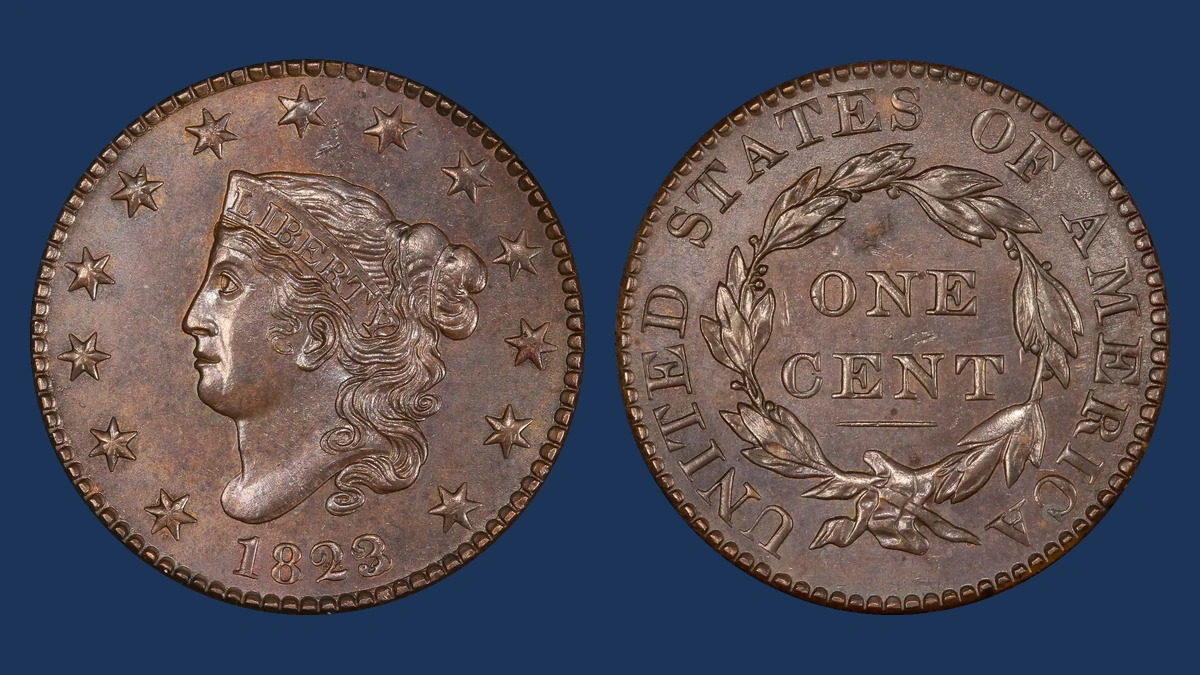
One exceptionally preserved original cent brought $299,000 in February 2009; its small rim break, slight off-center strike, and rotated back belong to the same coin.
This 1823 Coronet Head cent error list covers estimated whole-coin values of $100–$350,000. Read below to separate original features, overdates, and condition-driven prices.
1. 1823 Coronet Head Cent 1823/2 Overdate — Estimated Up to $25,000
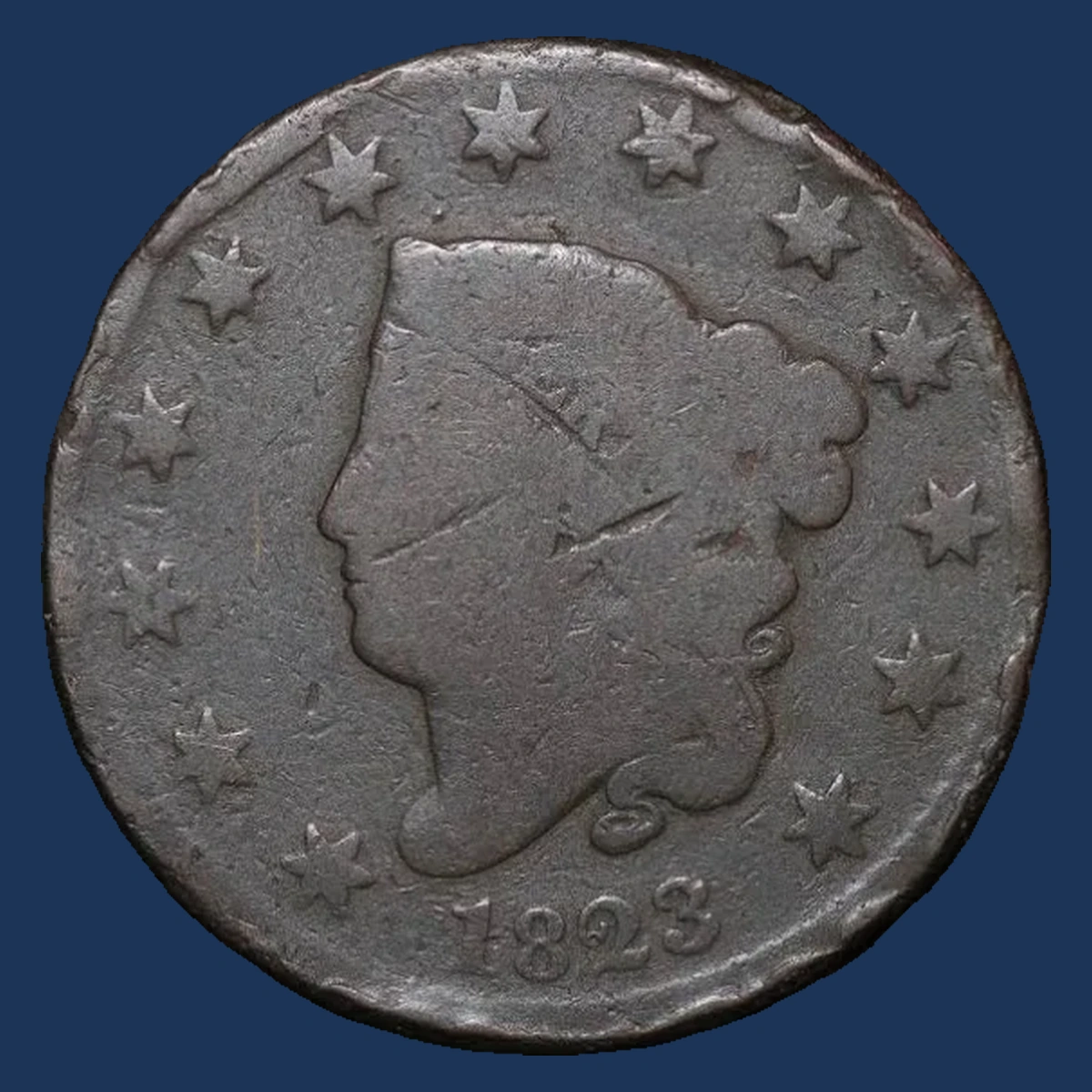
Parts of a 2 remain around the final 3 in the date. The steel stamping tool had been dated earlier, then changed so that a 3 covered much of the old last digit.
This variety is called 1823/2 and is identified as N-1. The ordinary 1823 N-2 date does not have the same underlying number.
The older curves and lower stroke must be compared with a genuine example. A scratch, added engraving, or the natural shape of a worn 3 can suggest extra lines without showing an actual overdate.
Estimated Value
For genuine circulated overdates, estimate $150–$25,000, ranging from worn examples to attractive nearly unworn pieces. The amount of wear and the quality of the copper surface produce large price differences.
PCGS records an AU55 Brown example at $15,600 in April 2025. That result concerns the 1823/2 cent, not the similarly dated dime or quarter, and it should not be applied to an ordinary 1823 N-2 coin with an altered final digit.
How to Identify
Enlarge the whole date before concentrating on one stray line. With a 10× magnifier, inspect the top and bottom of the 3 for remnants that fit the older 2.
Compare the position of those strokes with an identified N-1 photograph. Scratches can cross digits randomly, while added engraving may leave cuts or pushed copper along the supposed older number.
Weigh a loose coin against the normal 10.89 grams and check its roughly 28 mm diameter with calipers. Inspect the plain edge for alteration.
Follow the older curved and lower strokes in their correct relationship to the 3; the presence of any extra line is not enough.
2. 1823 Coronet Head Cent Original Rim Breaks and Reported Cracks — Estimated Up to $350,000
Small raised breaks occur along the original N-2 front rim near stars four through six. One documented coin has a thin break at star five extending about halfway toward star four.
Another description includes a separate break above star six. Copper filled an opening left by damaged steel in the stamping tool, called a die.
A raised line can likewise result from a cracked tool. However, the large crossing cracks on later private copies cannot identify a crack on an official original cent; an original crack claim needs its own matching example.
Estimated Value
Ordinary circulated original cents with small rim breaks may fall around $100–$10,000, with date scarcity and preservation dominating the price. An authenticated fine crack should be valued within the appropriate original coin’s condition range.
The exceptional N-2 coin graded PCGS MS66 Brown brought $299,000 in February 2009. A comparable elite original might be estimated around $200,000–$350,000; its rare preservation, not the tiny rim break alone, accounts for this entirely different price level.
How to Identify
Establish that the coin is an original issue before tracing a crack. Later private copies were made outside the official 1823 production and have their own tool patterns.
On an original N-2, inspect the rim near stars four through six at 10×. Separate the thin star-five break from the other reported break above star six.
A scale and calipers compare the copper coin with 10.89 grams and about 28 mm. Examine the plain edge for added metal or a folded rim.
Trace a raised original rim break into undisturbed struck detail. Do not use a large private-copy crack as the matching pattern for an original cent.
3. 1823 Coronet Head Cent Rotated Dies — Estimated Up to $350,000
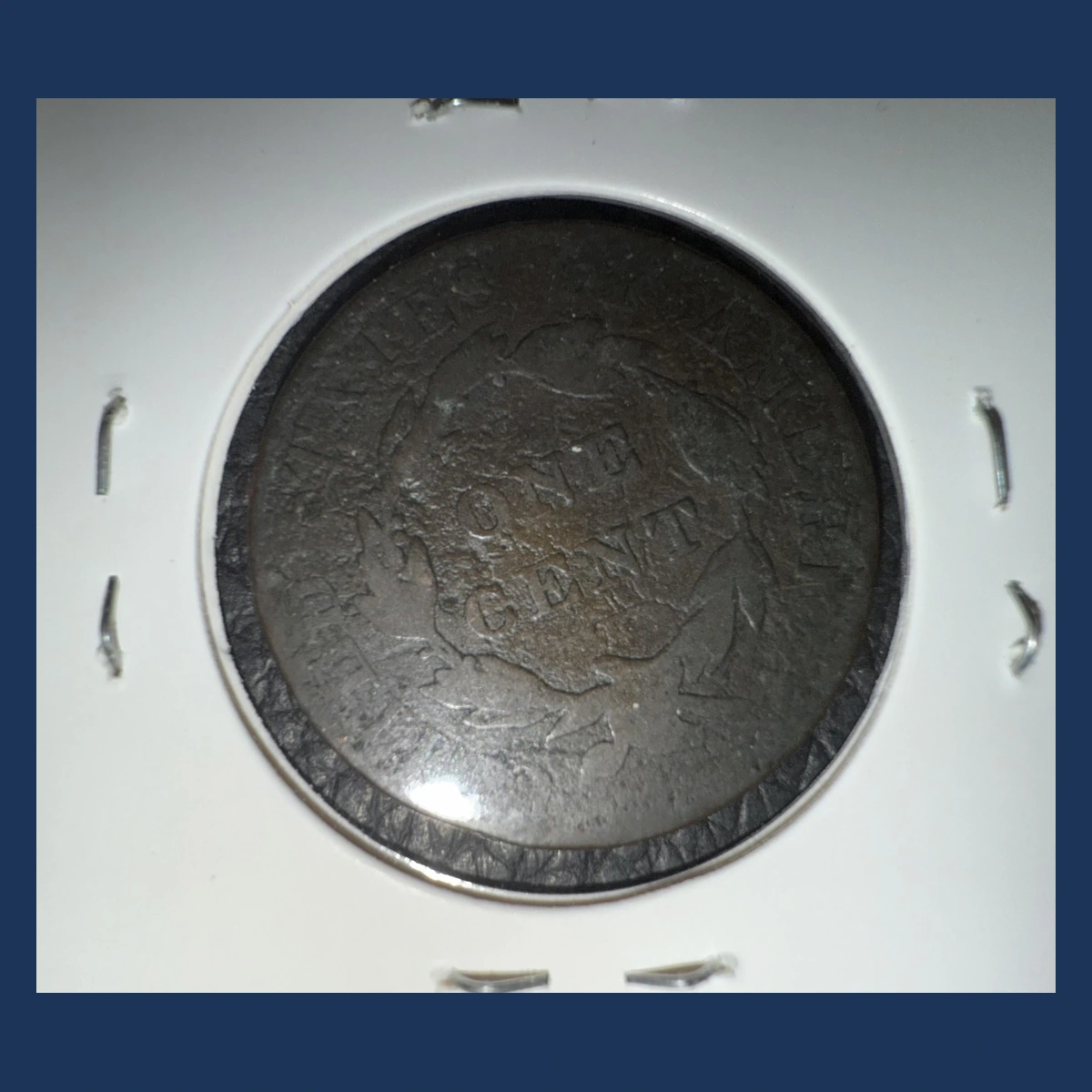
The back of the documented N-2 coin sits about 40 degrees counterclockwise from normal alignment. The front and back stamping tools were positioned at different angles when it was struck.
This is the same high-grade coin that has a small rim break and a very slightly off-center strike. Its three features should remain linked when discussing its auction history.
A separate 1823/2 N-1 example appeared in an ANACS VG8 Details holder with rotated dies noted. Its rotation angle was not given, so forty degrees should not be assigned to that coin.
Estimated Value
For ordinary circulated originals with noticeable rotation, use an estimated $150–$10,000, depending on the underlying variety and surfaces. The reported VG8 Details overdate also needs allowance for its condition qualification.
The N-2 coin discussed above belongs to a separate $200,000–$350,000 range for exceptional preservation. Its large whole-coin value should not be treated as the price of forty degrees of rotation, nor added to another estimate for the same coin’s rim break.
How to Identify
Hold the date upright, then turn the coin top to bottom without twisting it sideways. Compare the back with a fixed vertical line to measure departure from normal coin alignment.
For the documented N-2, the back leans about forty degrees counterclockwise. The separate overdate requires its own measurement.
Before paying for rotation, inspect the plain edge under a 10× magnifier for a join or other alteration.
On a loose coin, a scale checks 10.89 grams and calipers compare approximately 28 mm. Leave a certified example sealed when using its photographs.
Repeat the same controlled turn and watch whether the measured back tilt returns consistently.
4. 1823 Coronet Head Cent Very Slight Off-Center Strike — Estimated Up to $350,000
The design sits very slightly toward ten o’clock on the documented N-2 cent. Its auction catalog described this as a very slight off-center strike, without giving a percentage.
This is a small placement error, not a dramatic missing half of the design. The same coin’s back is also rotated, which is a different kind of misalignment.
Auction photographs of this exceptionally preserved cent should not be used to suggest that every unevenly bordered 1823 cent has the same error. A shift on only one face can instead reflect a misplaced single tool.
Estimated Value
The documented original coin is the same piece behind the $299,000 sale already discussed. That exceptional result is not a separate off-center auction price.
For circulated originals with a small genuine placement error, estimate $150–$10,000, mainly according to variety and condition. Reserve roughly $200,000–$350,000 for comparable elite preservation; a tiny shift cannot lift an ordinary worn cent into that range by itself.
How to Identify
Compare complete photographs of both faces, including every part of the original edge. A tight crop can make a centered coin appear shifted.
Inspect the ten-o’clock side under a 10× magnifier, then compare the opposite border. The cataloged movement is very slight, so do not invent a percentage from a weak or worn rim.
A scale and calipers can compare a loose coin with 10.89 grams and about 28 mm. Check the plain edge for filing that creates an uneven border.
Look for matching evidence of the disc’s misplaced strike on both faces; an uneven rim confined to one face may come from only one shifted tool.
Conclusion
Keep original 1823 cents separate from later private copies before naming a crack or rim break. For the overdate, look for the older 2; for rotation, test the relationship between both faces.
Estimated values span $100–$350,000, with the highest figures reserved for exceptional original coins. The famous N-2 example has several features on one piece, so its rim break, rotation, and small shift do not create three separate values.