1839 Braided Hair Cent Error List with Pictures

Two 1839 pennies can carry quite different portraits. This 1839 Braided Hair cent error list concerns the Petite Head, also called the Head of 1840.
An unworn example described with possible rim breaks sold for $1,703.75 in February 2017. That price bought the entire coin, including its condition.
Estimated whole-coin ranges below run from $50–$6,000. Read on to separate a small missing edge, peeling copper, and misplaced designs without confusing this portrait with other 1839 cents.
1. 1839 Braided Hair Cent Rotated Front and Back
A sideways back can be hidden until you turn the coin over. With the portrait upright, a top-to-bottom turn should bring the back upright too.
A rotated die changes that relationship; a die is the steel tool that stamps a coin. Its misplaced angle can put the back design out of alignment with the front.
Rotation has been reported for 1839 cents, but a particular angle has not been established for this Petite Head issue. Photographs turned separately cannot measure it.
Both designs can remain complete. The mistake concerns their relationship, rather than a missing part of either face.
Estimated Value
For an authenticated Petite Head rotation, estimate $50–$1,500, including the ordinary value of the coin. A small tilt and a dramatic turn should not be priced alike.
A dealer listed an 1851 large cent described as rotated sixty degrees for $39.99. That sold-out display is an asking price, not proof of the amount paid.
The comparison concerns a different date. Preservation and the measured angle determine where an 1839 coin fits within the estimated range.
How to Identify
Keep the front upright and turn the coin top to bottom without twisting it sideways. Repeat the movement over a soft surface, noting where the top of the back actually lands.
An upright back is normal. A consistent tilt needs photographs that preserve the relationship between the two faces.
Check the date and Petite Head portrait with a magnifier before comparing any reported 1839 rotation. The other portraits struck that year are different issues.
For a loose coin, use a scale and calipers to check the usual 10.89 grams and 27.5 millimeters. Examine the plain edge for a join; two attached coin faces can imitate an unusual alignment.
2. 1839 Braided Hair Cent Peeling Copper and Surface Cracks
One crack travels from the rim through the hair, ear, and eye toward the hair above the forehead. It belongs to a layer separating within the copper, rather than a raised line copied from broken steel.
An Early Cents auction described this fault on a Petite Head cent, together with another peeling area at star four. The longer break begins at star ten.
This separation is called lamination. Weakness inside the metal allows a thin layer to lift or split.
The coin did not divide into two complete halves. These faults affect parts of its front surface.
Estimated Value
The Early Cents example brought $600 before the buyer’s fee in January 2026. The catalog graded it AU50, meaning light wear; this was the auctioneer’s grade.
Estimate $75–$2,000 for comparable 1839 laminations across worn and better-preserved coins. That range values the whole cent, not each crack separately.
A stable, attractive surface differs from rough corrosion or a loose flap. The two peeling areas on the auction coin belong to one purchase.
How to Identify
Do not lift a flap to look beneath it. An attached layer can break away, changing the coin and losing useful evidence.
Use a 10× magnifier with light from the side to find an opening beneath the copper. On the auction example, follow the star-ten break through the hair and face, then examine star four separately.
A scratch cuts into finished metal, while a stamping-tool crack normally leaves a raised ridge. Peeling should reveal a thin layer or a broken surface within the coin itself.
For a loose coin, use a scale to compare its weight with 10.89 grams. Calipers check the ordinary 27.5-millimeter width; inspect the plain edge without pressing on a fragile area.
3. 1839 Braided Hair Cent Tiny Clipped Edge
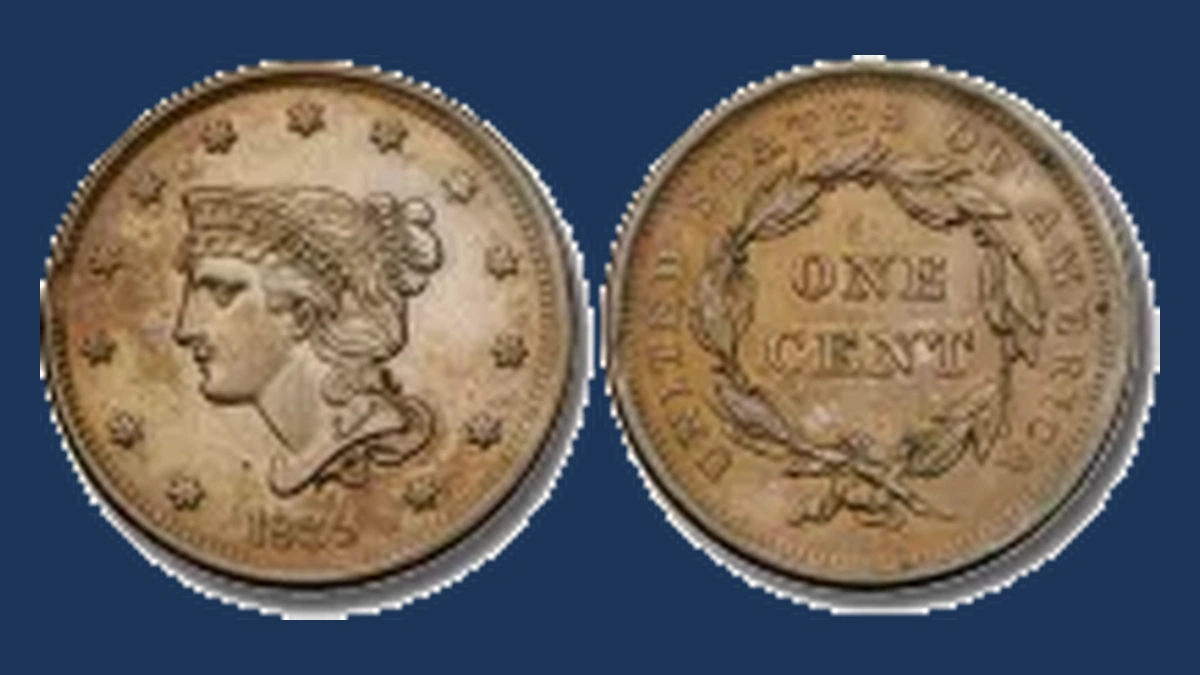
The missing piece can be much smaller than the dramatic curved bites seen on other error coins. A May 2026 auction described a tiny clip beside the fourth star on an 1839 Petite Head cent.
The nearby border teeth were weak on both faces. On the back, that weakness appeared above the T in UNITED.
A clip means part of the blank was missing before the design was struck. Metal therefore filled the border differently near the gap.
The catalog graded this coin EF45+, indicating light wear. It is a different example from the star-four lamination described above.
Estimated Value
Allow an estimated $75–$2,500 for genuine Petite Head clips, depending on preservation and the missing section. A tiny gap should be compared with modest clips rather than a large crescent.
An 1852 large cent with a clip sold for $384 in June 2024, graded NGC MS63 Brown. It was an unworn coin of another date.
The 1839 auction description establishes its small edge fault; no separate realized amount is used here.
How to Identify
Find star four, then compare the back border above the T in UNITED. Those two areas describe the same small gap on the auction coin.
Look directly at the edge under a 10× magnifier. A dent can push metal inward, whereas a genuine clip began with metal already absent.
For a loose coin, use a scale against the normal 10.89 grams and calipers across intact spans against 27.5 millimeters. A tiny clip may remove too little copper for an ordinary pocket scale to show clearly.
Follow the plain edge into the gap, looking for filing or a later cut. The weak border on both faces helps connect the small missing section with the original strike.
4. 1839 Braided Hair Cent Raised Tool Cracks and Rim Breaks
Raised bumps below the date appear in the description of one unworn Petite Head cent. The auction wording called them possible rim cuds, rather than identifying a large missing piece of steel.
A cud forms when broken steel at the edge of a stamping tool leaves space for copper to rise. Smaller cracks in the tool can instead make thin raised lines.
The reported coin was graded PCGS MS63 Brown, meaning unworn with visible marks and brown surfaces. Its rim description does not establish a particular crack elsewhere.
Ordinary border teeth, dents, and peeling copper need different explanations.
Estimated Value
The MS63 Brown coin sold for $1,703.75 in February 2017, according to NGC’s auction record. Its grade and the whole coin were part of that price.
Estimate $50–$4,000 across worn examples with small tool cracks and better-preserved coins with recognizable breaks. This is not a claimed premium for the possible rim cuds alone.
A strong raised patch can attract different interest from a faint line. Match the shape and condition before applying either comparison.
How to Identify
Begin with an ordinary Petite Head border for comparison. Enlarged teeth or a dented rim can resemble a small raised break when viewed only from above.
Under a 10× magnifier, inspect below the date, using side light to see whether the extra metal rises naturally from the coin. A folded edge may show a seam or flattened nearby detail.
For a loose coin, use a scale and calipers to compare 10.89 grams and 27.5 millimeters. Check the plain edge from the side as well.
Trace any separate line across the face. A raised ridge supports a cracked stamping tool, while an open layer through the portrait belongs with peeling copper rather than this rim-break example.
5. 1839 Braided Hair Cent Off-Center Strike
A bare crescent beside a displaced design can show where a blank missed part of the blow. On the opposite side, some intended design fell outside the metal.
This is an off-center strike. It differs from one misplaced stamping tool, which can shift only one face.
Reports covering 1839 cents include more than one portrait style. A Petite Head example must show enough of its own portrait and date to establish both.
A coin labeled only 1839–1857 names the Braided Hair series, not a readable year. A missing date cannot become 1839 simply because the design looks early.
Estimated Value
For an authenticated, dated Petite Head off-center strike, estimate $500–$6,000. The amount of displacement, surviving date, and condition determine the most useful comparison.
A different-year 1855 large cent struck seventy percent off center sold for $1,092.50 in January 2009. It had considerable wear, graded PCGS Fine 15.
That sale does not establish an 1839 example. The estimate applies after its identity is confirmed, with a readable date generally more useful than a broad series-date label.
How to Identify
Before judging the crescent, compare the portrait with a normal 1839 Petite Head cent. The year also appears on other large-cent portraits, so a visible date alone does not settle the issue.
For a loose coin, use a scale against 10.89 grams and record its outline with calipers beside the normal 27.5-millimeter diameter. Off-center striking need not remove copper.
Inspect the plain edge and bare crescent for grinding. Keep the full date in your photograph instead of cropping it away to enlarge the error.
Use a magnifier to trace where design ends and original bare metal begins. Compare both full faces: they should fit the same misplaced blank, rather than a shift confined to one stamping tool.
Conclusion
The fourth star points to two different stories: a tiny clip on one coin and peeling copper on another. Follow the metal itself before assigning the same name to both.
Estimated whole-coin values span $50–$6,000. First match the Petite Head portrait, then examine the affected area and the complete coin’s condition.
A documented sale prices that particular coin. A reported rotation or off-center piece needs its own matching photographs.