1842 Cent Error List with Pictures

A complete design can still sit slightly out of place. On one red 1842 large cent, the back shifts gently toward three o’clock; the well-preserved coin sold for $7,800 in August 2020.
Its original color accounts for much of that price. This 1842 Braided Hair cent error list also covers missing metal, peeling layers, and reported tool breaks, with estimated whole-coin values of $20–$10,000.
Read the checks below to see why a small sideways shift differs from a strike that actually loses part of the design.
1. 1842 Braided Hair Cent Reported Die Cracks and Rim Breaks — Estimated Up to $800
A thin raised line can result from a crack in a steel stamping tool, called a die. A larger broken tool section can leave a broad raised patch joining the coin’s rim.
The rim-connected form is called a cud. A dent or an interior lump without that connection needs a different explanation.
For an 1842 claim, the raised feature must be checked on a specific coin. General descriptions of nineteenth-century tool damage do not establish a particular route across the portrait, lettering, or wreath for this date.
Estimated Value
For an authenticated example, estimate $20–$800 depending on the feature’s size and the coin’s condition. A fine line may add little, while a substantial rim break can be more desirable.
A later copper-nickel 1864 cent with a retained rim break and broadstrike sold for $646.25 in 2016. That combined error is a comparison rather than a sale record for an 1842 crack or cud, and its two features cannot be priced separately.
How to Identify
First determine whether the feature is raised, using a 10× magnifier while changing the light. A scratch cuts down into the surface, although displaced copper beside it can form a misleading ridge.
For a broad patch, inspect the plain edge where it meets the rim. Added metal, a folded rim, and corrosion should be excluded before naming a cud.
Use a scale and calipers to compare the normal 10.89 grams and 27.5 mm. These measurements help check the coin, but they do not establish a particular tool break.
Follow the raised feature into undisturbed design and compare it with a documented 1842 specimen before accepting the claimed pattern.
2. 1842 Braided Hair Cent Straight Clip — Estimated Up to $800
The missing piece has a straight boundary rather than a rounded bite. A documented 1842 cent was listed with this straight clip at a weight of 10.63 grams.
The normal weight is 10.89 grams. The difference is consistent with missing metal, although weight alone cannot distinguish an original clip from a later cut.
ANACS graded the coin VF30 Details, indicating circulation wear and a qualification rather than a straight numerical grade. The listed clip affects the original metal disc, so the way the nearby design formed is an important part of its identification.
Estimated Value
Estimate $40–$800 for genuine straight clips across varying amounts of wear and missing metal. The recorded 10.63-gram example should be compared with similarly worn coins, allowing for its Details designation.
A later 1939 clipped cent graded MS64 Brown sold for $180 in January 2023. That small-cent result offers a basic error comparison, while the 1842 large cent’s age, condition, and clip shape affect its own whole-coin value.
How to Identify
Begin with the straight boundary. Under a 10× magnifier, inspect both ends of the missing section for the way the rim and design approach it.
Look along the cut face for file lines or a fresh sharp lip. Those can point to metal removed after striking.
A scale can compare the actual coin with 10.89 grams. The documented example’s 10.63 grams belongs to that specific piece, not every 1842 clip.
Use calipers across intact portions to compare the normal 27.5 mm diameter and examine the surviving plain edge.
Follow the struck rim into both ends of the gap; original soft formation there is more useful than a straight shape or low weight alone.
3. 1842 Braided Hair Cent Off-Center Strike — Estimated Up to $1,500
A narrow crescent of untouched metal can accompany a design that has partly run beyond the edge. The disc was not centered correctly when the stamping tools struck it.
Reports for 1842 describe modest shifts of about 5% to 10%. Each actual coin still needs its date, both faces, and the missing design examined together.
An uneven rim is not enough by itself. If the entire design remains present, or only one face is displaced, the coin may instead show spreading metal or a misaligned single tool.
Estimated Value
For readable-date examples with modest displacement, use an estimated $150–$1,500. Wear, surface damage, and how much of the design is visibly cut off affect the whole price.
An 1854 large cent struck about 50% off center sold for $1,527.50 in September 2016 at ANACS VF20. That same-series result involved a much larger shift, so it should not be transferred directly to a lightly off-center 1842 report.
How to Identify
Read 1842 in the surviving date before comparing the shape. An undated Braided Hair cent cannot establish an error for this year merely because the portrait matches.
At 10×, examine the point where outer lettering or border teeth leave the available disc. Check the back as well, since a centered back may indicate only a shifted front tool.
Weigh the coin against 10.89 grams and measure its outline with calipers relative to 27.5 mm. Inspect the plain edge and unused crescent for grinding or flattening.
Locate missing design opposite untouched metal on the original disc; that pair is the useful test for a true off-center strike.
4. 1842 Braided Hair Cent Lamination and Retained Flakes — Estimated Up to $2,000
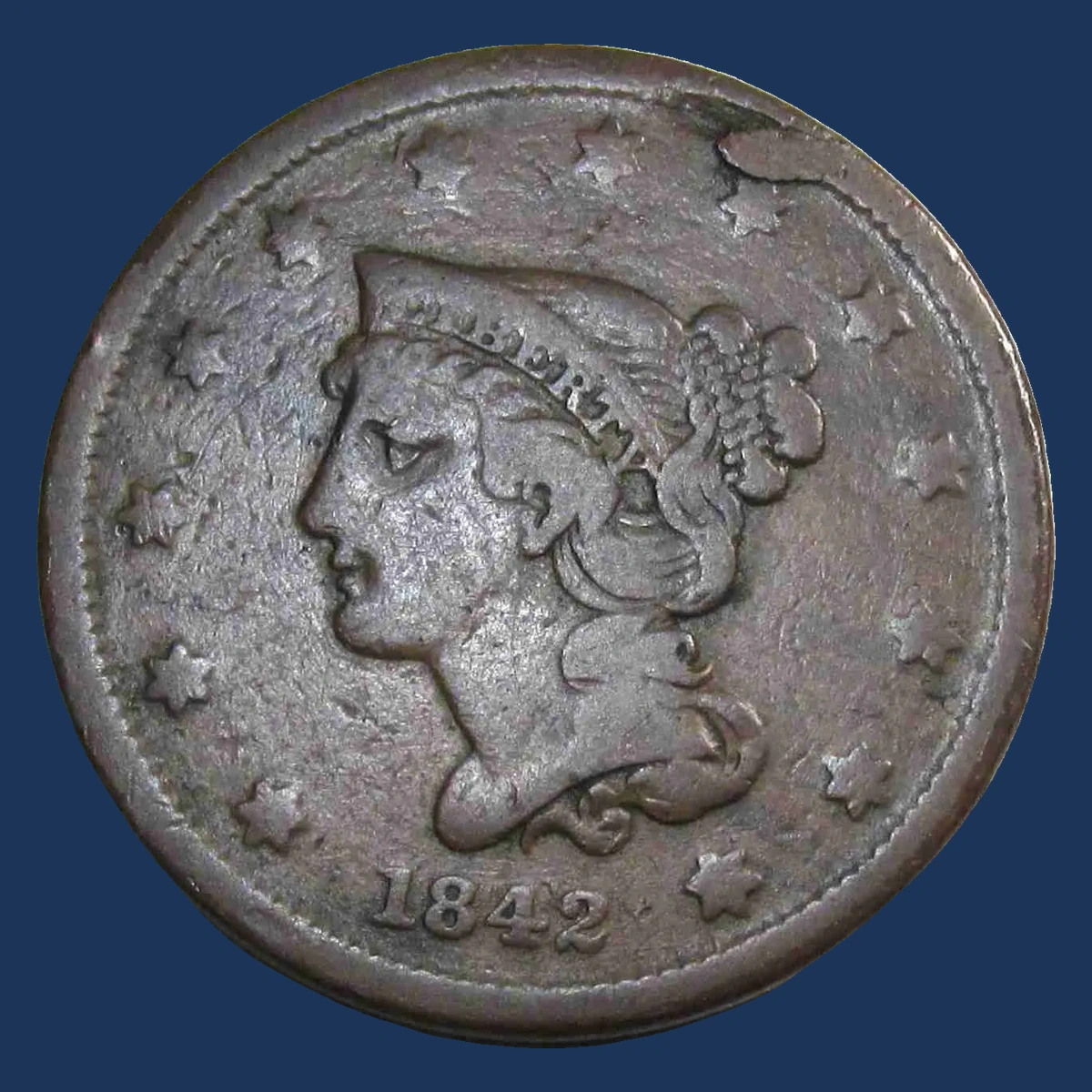
A layer can loosen within the copper, leaving a flap or an irregular opening. This defect is called lamination.
On an 1842 Large Date N-7 example, the flaw lies among the small border teeth between the second and third stars. A separate N-9 coin has a retained layer above ONE on the back.
These locations describe different coins. Neither establishes that an entire disc split apart, and the naturally soft hair detail seen on some N-7 coins should not be mistaken for a missing copper layer.
Estimated Value
PCGS records a $750 result in September 2021 for the Large Date N-7 coin with the rim flaw. It had unworn detail, with the planchet flaw noted on its label.
An estimated $30–$2,000 covers more varied examples, including worn coins and better-preserved pieces with retained layers. The overall surface quality and variety matter alongside the flaw; an unstable flap or extensive missing detail can reduce a collector’s interest despite being visually dramatic.
How to Identify
Leave an attached flake untouched. For the back example, look above ONE and identify the layer’s boundary before trying to judge its thickness.
For the N-7 rim example, count from the first star near the lower-left date area and inspect between stars two and three at 10×. The flaw needs an actual opening or separating layer, not simply soft hair elsewhere.
A scale can compare the normal 10.89 grams if handling is safe, while calipers measure an intact span against 27.5 mm.
Check the plain edge gently and follow the existing separation without lifting it. This visible boundary distinguishes lamination from a stain or weak strike.
5. 1842 Braided Hair Cent Slightly Misaligned Back Die — Estimated Up to $10,000
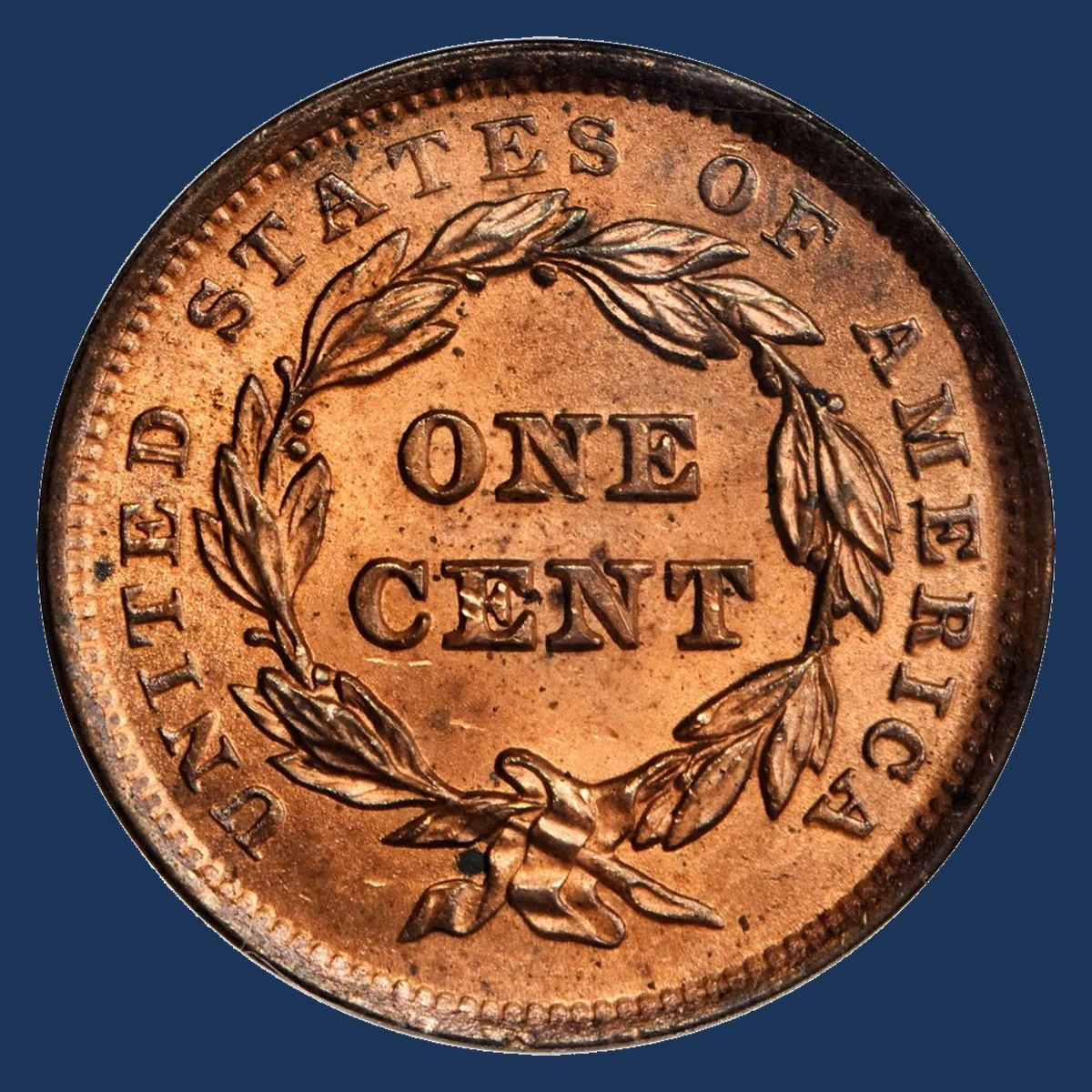
The back design leans toward the right edge on a documented 1842 Large Date cent. Its central details remain complete and sharply formed.
The auction described a slight shift toward three o’clock. One stamping tool was out of position, rather than the entire disc missing a large part of the strike.
The coin was graded PCGS MS64 Red and retained substantial original copper-red color. That preservation is a major part of its value; the small back shift should not be presented as a severe off-center error simply because the coin sold for a high price.
Estimated Value
The red MS64 example brought $7,800 in August 2020. Its original color and strong preservation chiefly explain that whole-coin result.
For ordinary circulated cents with a slight shift, estimate $20–$400. A similarly preserved red 1842 cent may fall around $4,000–$10,000; the documented auction coin is a condition comparison, not evidence that a tiny misalignment adds thousands of dollars to every example.
How to Identify
Compare how the back lettering sits within the border, especially at three o’clock. The central design should remain complete on this mildly shifted example.
Now inspect the front at the same image scale. A one-tool shift is judged from the difference between the two faces.
At 10×, check the rim for filing or pushed metal that could imitate an uneven border.
Use a scale and calipers to compare 10.89 grams and 27.5 mm, and inspect the plain edge for alteration. Color does not prove the cause of the shift.
Find the slightly right-shifted back inside its original edge while checking that the front does not show a matching loss of design.
Conclusion
For 1842 cents, first decide whether metal is missing, a layer is separating, or the design has moved. A raised line or rim patch needs its own evidence before it receives an error premium.
Estimated whole-coin values run from $20 to $10,000, including exceptionally preserved red cents. Compare the same date style and condition, and protect any loose layer while examining the surrounding design.