1848 Cent Error List with Pictures

A rare 1848 cent with two original rim flaws sold for $8,500 plus buyer’s premium in January 2024. Collectors wanted its rare variety despite those flaws, which lowered its grade.
This 1848 cent error list covers estimated whole-coin prices from $20–$10,000. These large copper cents can show peeled layers, extra date strokes, broken-tool marks, and striking errors.
Read on to see which marks belong to the coin’s manufacture and which prices fit the actual example.
1. 1848 Braided Hair Cent Peeling Copper Layer
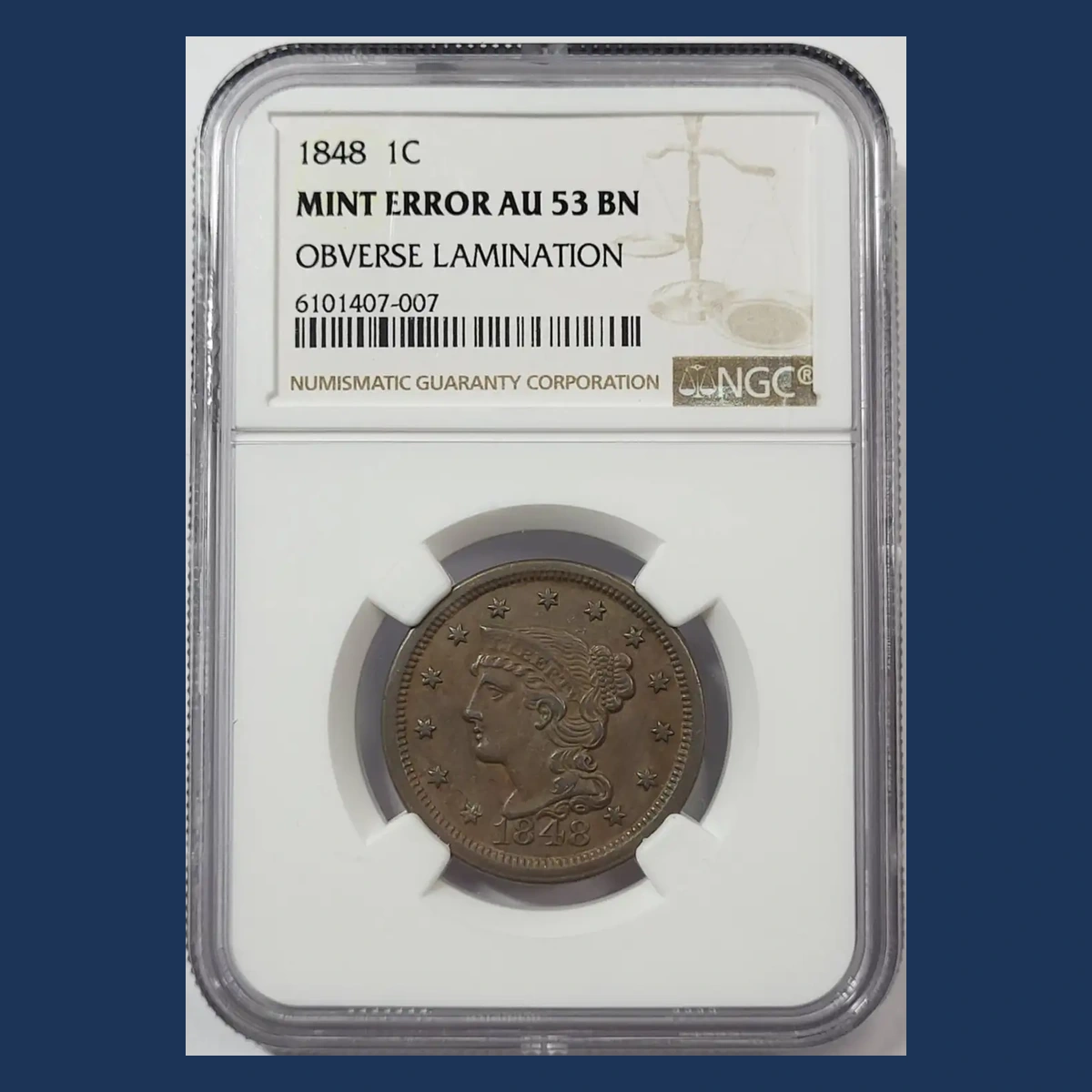
Copper may separate along a weak layer inside the blank, leaving a flake, loose flap, or shallow rough opening. Collectors call this a lamination.
One 1848 N-32 cent appeared in a three-coin auction lot with this problem. Its remaining design suggested Fine detail, but the seller reduced its overall assessment because of the separated layer.
The description does not locate the flaw on either face. Scratches described on other coins in nearby lots do not explain this one.
A peeling boundary matters more than roughness alone. Corrosion can eat into copper without following a weak internal layer.
Estimated Value
Estimate $20–$100 for worn 1848 cents with small laminations, or $100–$400 for clearer flaws on better-preserved pieces. These are whole-coin estimates.
The Austin sale’s three-coin lot containing the N-32 sold for $42 including the buyer’s premium. That total belongs to all three coins, not just the laminated cent.
An attractive peeling layer can interest an error collector, but extensive metal loss can also reduce appeal. Compare the surviving date and portrait as well as the separation.
How to Identify
A loose flap should stay untouched. Moving it could destroy the boundary that helps explain the flaw.
Under a 10× magnifier, tilt the cent so light crosses the layer’s edge. Look for a thin sheet separating from copper below, rather than a groove scraped across the top.
Use a scale to compare a loose example with 10.89 g and calipers to check intact widths against 27.5 mm. Minor peeling may leave both measurements close to normal.
Photograph the entire face before enlarging the flaw. Follow the peeling edge into the surrounding struck design; widespread pits with no layered boundary point instead toward corrosion.
2. 1848 Braided Hair Cent Repunched 4 in the Date
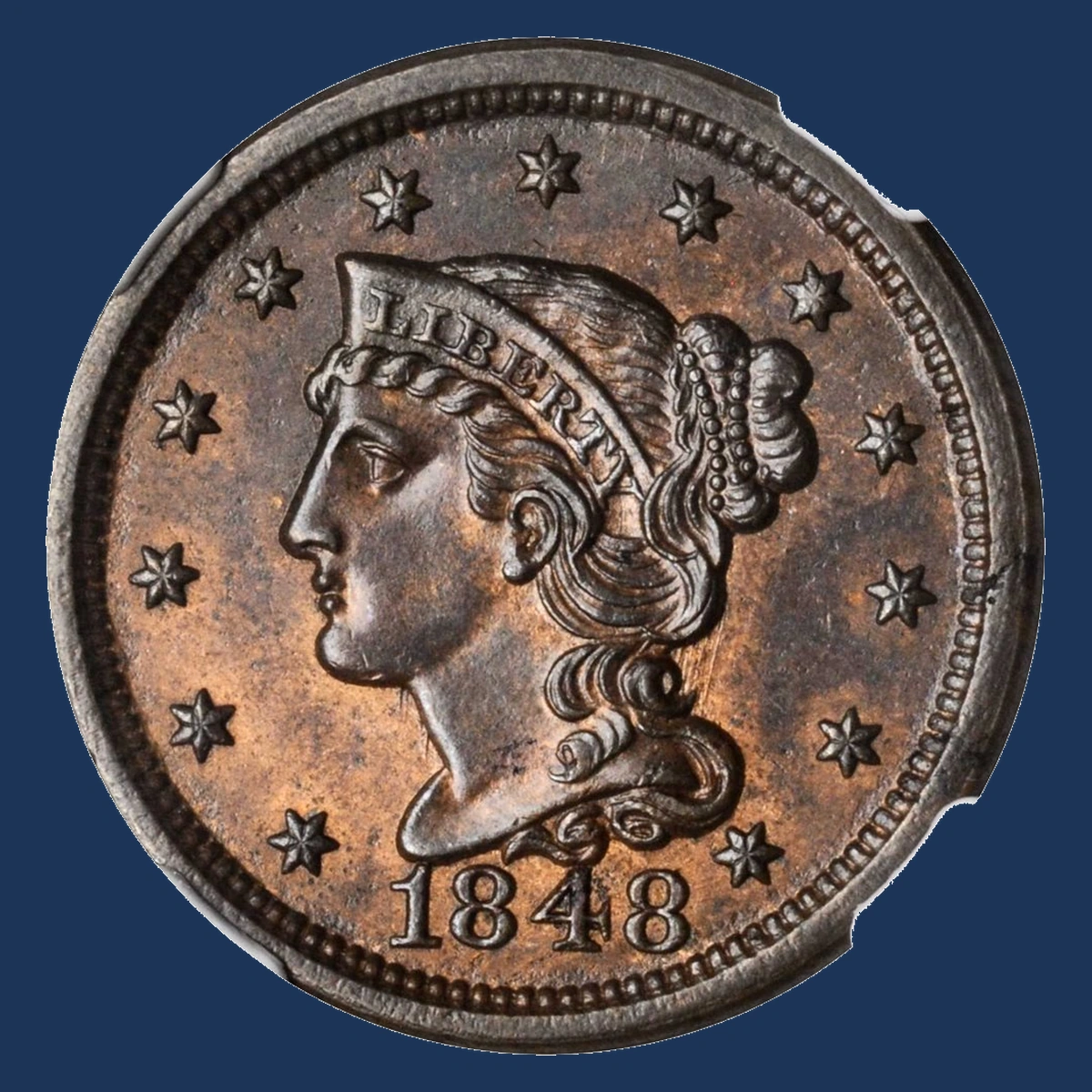
The 4 can show a second faint outline beside its main shape. An earlier impression remained when the date punch was applied again to the stamping tool.
Heritage described this feature on an 1848 N-16 cent. The extra strokes were faint and visible at the 4, rather than forming a second complete date.
Other 1848 varieties can show different date marks, so the arrangement matters. A stronger example elsewhere does not make a faint stroke on this variety incorrect.
The feature was already on the tool before coins were struck. It is different from a finished cent receiving another blow.
Estimated Value
Heritage sold an NGC MS63 Brown N-16 for $276 in January 2006. MS63 means it had no circulation wear, although marks could remain.
Estimate $30–$250 for circulated examples with recognizable repunching and $250–$1,000 for better-preserved coins. Variety, surface quality, and the clarity of the extra strokes affect the comparison.
The $276 result includes the entire cent. It is not an extra amount to add to the price of another 1848 coin.
How to Identify
Place a 10× magnifier over the 4 and move the lamp instead of turning the coin constantly. Faint raised strokes can disappear under light shining straight down.
Keep both neighboring 8s visible in your photograph. Their spacing helps compare the correct date arrangement rather than a vaguely similar extra line.
Sharp cuts into the copper suggest engraving, not an earlier date impression.
For a loose coin, check 10.89 g with a scale and 27.5 mm with calipers. These measurements help confirm the large copper cent but cannot identify the date punch.
The useful match is the shape and position of the remaining 4 strokes, with the same main date beside them.
3. 1848 Braided Hair Cent Trace of an 8 beneath STATES
A curved trace from the date appears on the wrong face: beneath T and E in STATES on the back. Almost half of the first 8 was described there.
This can happen when the two stamping tools hit each other without a blank between them. Marks transferred during that contact then appear on later coins.
Stack’s Bowers described strong marks on both faces of its N-36 example. The front marks did not seem to match the expected large-cent back design.
That observation leaves their exact source unresolved. It does not establish that tools for different denominations collided.
Estimated Value
For visible 1848 clash marks on circulated cents, estimate $50–$300. Clearer marks on better-preserved or scarcer varieties can fit roughly $300–$1,500.
The described N-36 was graded PCGS EF45, meaning light to moderate wear remained. Its scarce variety and surfaces also matter, so this range is an estimate rather than its reported auction result.
A trace that can be matched to the date is more useful than an unexplained line. Strong front marks alone do not prove a higher-priced cross-denomination error.
How to Identify
Photograph the first 8 and the back’s T and E at the same clear photographic enlargement, then compare the curve under a 10× magnifier. The clash should preserve recognizable parts of the opposing design.
Check the ordinary copper cent’s 10.89 g weight with a scale and 27.5 mm diameter with calipers if it is loose. Leave a graded coin in its holder.
The Twin Leaf catalog separates the identifiable back trace from the puzzling front marks. Do the same when examining the coin: a matching half-8 below TE supports the described clash, while unrelated front lines need their own explanation.
4. 1848 Braided Hair Cent Expanded Blank with the Design Still Present
An unusually wide cent can retain the portrait, stars, date, and back lettering instead of losing them beyond the blank. Such expansion is described as a broadstrike.
The 1848 year guide reports a worn example offered for sale. Its listing does not give a measured diameter or a detailed description of the edge.
That makes the surviving outline important when examining the coin itself. An enlarged copper disc alone does not show whether the expansion happened during striking.
Pressure applied to a finished cent can also spread its metal. Flattened designs and distorted rims may reveal that later damage.
Estimated Value
The year guide records a $30 asking price for a low-grade broadstrike. An asking price shows what a seller wanted, not what a buyer paid.
Estimate $30–$300 for worn examples whose expansion can be established as mint-made. More distinct, better-preserved examples can fit roughly $300–$2,000.
These ranges require an original expanded strike, rather than a cent pressed wider afterward. Size, complete design, and remaining surface detail should be compared together before choosing a price within the range.
How to Identify
Record the widest and narrowest diameters with calipers, then photograph the complete front and back beside a normal 27.5 mm cent. Do not crop the outer copper from the images.
A scale should show how closely a loose coin retains the standard 10.89 g. Wider does not automatically mean heavier.
Inspect the stars and lettering under a 10× magnifier for flattening or stretched marks caused by later pressure.
A genuine expanded strike needs preserved design and an edge consistent with that strike. If the design runs off the available copper and leaves a bare crescent elsewhere, compare an off-center strike instead.
5. 1848 Braided Hair Cent Small Missing Piece of the Blank
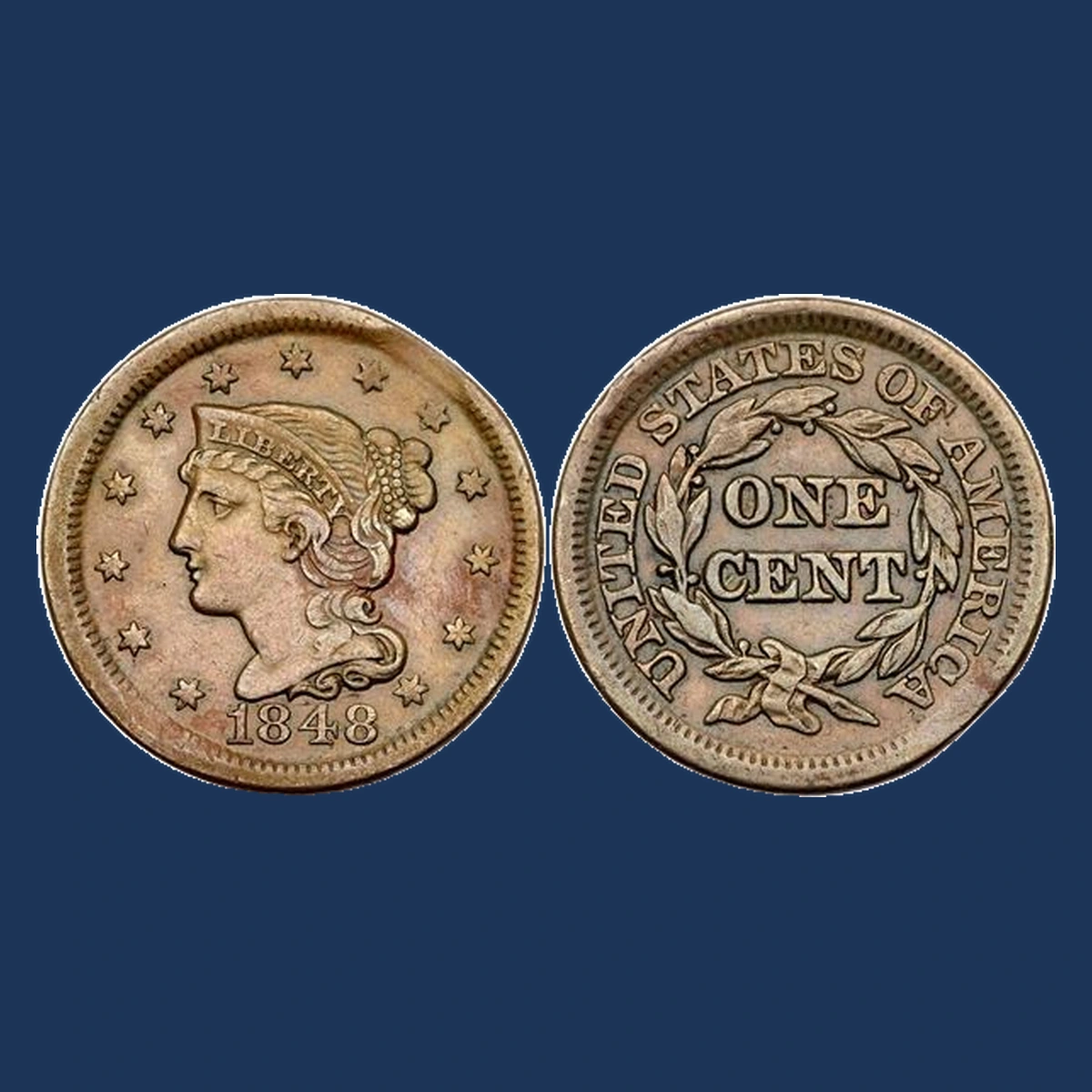
A small missing section can interrupt the circular copper outline before the cent is struck. The design then reaches an edge that was already incomplete.
Early Cents Auctions described a minor blank clip on an 1848 N-9 graded VF25 by the cataloger. It appeared with two other cents in a group.
The same N-9 also had raised rim breaks. Those add copper above the coin’s surface, while the clip removes part of its outline.
The summary gives no precise clock position or shape for the missing section. Those details must come from the individual coin, not from a different clip.
Estimated Value
The three-coin group containing the VF25 N-9 showed a $160 total. Its small clip and rim breaks were features of one coin within that group.
Estimate $50–$400 for comparable worn 1848 clipped cents, with roughly $400–$2,000 for stronger examples in better condition. The size of the missing piece and the readable date matter.
The group total does not isolate a clip premium. Neither dividing it equally nor assigning all $160 to the clipped coin produces a reliable individual sale price.
How to Identify
First distinguish the missing edge from any raised rim patch on the same coin. A clip is an absence of metal; a cud is metal raised by a broken stamping tool.
Follow the missing section under a 10× magnifier, checking where nearby letters or border details approach it. Fresh cutting grooves across an already struck design point toward later alteration.
For a loose cent, a scale compares the remaining mass with 10.89 g, and calipers check an intact span against 27.5 mm. A very small clip may change the weight only slightly, so the edge’s relationship to the original design carries more weight than a tiny measurement difference.
6. 1848 Braided Hair Cent Cracks across Liberty and Raised Rim Breaks
A raised line can cross the portrait when a stamping tool cracks. One cataloged cent shows the line extending between the edges near stars 3 and 11.
The surface above that line sits higher than the surface below it. This uneven level records movement within the broken tool.
Other examples show a back crack through lettering or raised patches joined to the rim. A rim-connected patch is called a cud and forms where part of the tool has broken away.
Reported back cuds beside D-STATE and above TES belong to separate examples. They need not occur with the portrait-crossing crack.
Estimated Value
Estimate $30–$200 for modest cracks on circulated 1848 cents. Strong cuds or an advanced break across the portrait can fit roughly $200–$3,000, depending on rarity and condition.
The dramatic portrait-crossing example had corrosion and scratches as well as its unusual tool damage. Its remaining detail alone would overstate its overall condition.
A three-cent group containing rim breaks and a minor clip showed $160. That group total is context, but it is not an individual price for the advanced portrait crack.
How to Identify
Count the front stars from the lower left to find star 3, then trace the ridge toward star 11 on the right. A moving lamp and 10× magnifier help reveal the different surface levels on either side.
An ordinary scratch cuts into copper rather than lifting a broad adjoining area.
For back cuds, inspect the rim above the named letters and compare the edge from the side. Folded rim damage can pile metal over lettering without a broken tool.
Check a loose cent with a scale and calipers against 10.89 g and 27.5 mm, leaving any raised patch untouched. The continuous raised ridge or rim-connected patch should remain visible as the light moves.
7. 1848 Braided Hair Cent Second Strike after a Quarter Turn
Two sets of cent designs can cross one another when a struck coin turns and receives another blow. A quarter turn puts the impressions about ninety degrees apart.
A 1979 error catalog, reprinted by Mint Error News, lists an 1848 large cent with this feature. It describes the coin as Very Fine, with moderate wear.
The short listing supplies no modern grading record or exact amount of overlap. It remains a historical report of a double strike.
Known privately made small-date 1848 pieces also exist. Their unusual strikes should not be confused with errors made by the United States Mint.
Estimated Value
The historical catalog offered its Very Fine example at $175. That was a 1979 asking price, not a recent auction result.
For a genuine United States Mint 1848 double strike, estimate $500–$3,000 in circulated grades and $3,000–$7,000 with clearer overlapping designs and better preservation. These are estimates, not a resale price for the cataloged coin.
The range assumes the coin’s identity is established. A privately made small-date imitation belongs to a different collecting category even if it was struck twice.
How to Identify
The first check is the coin’s identity: compare its large date and portrait with an ordinary United States Mint 1848 cent. A small-date imitation cannot establish this reported Mint error.
Use a 10× magnifier to trace two sets of raised letters or portrait details on the same face. Photograph them with a protractor guide to compare their approximate quarter-turn separation.
A scale and calipers compare a loose copper piece with 10.89 g and 27.5 mm, though repeated blows may change its outline.
A tilted back by itself shows a different issue. For a double strike, the two impressions must overlap on the coin, not merely face different directions after flipping it over.
8. 1848 Braided Hair Cent Design Struck Partly beyond the Blank
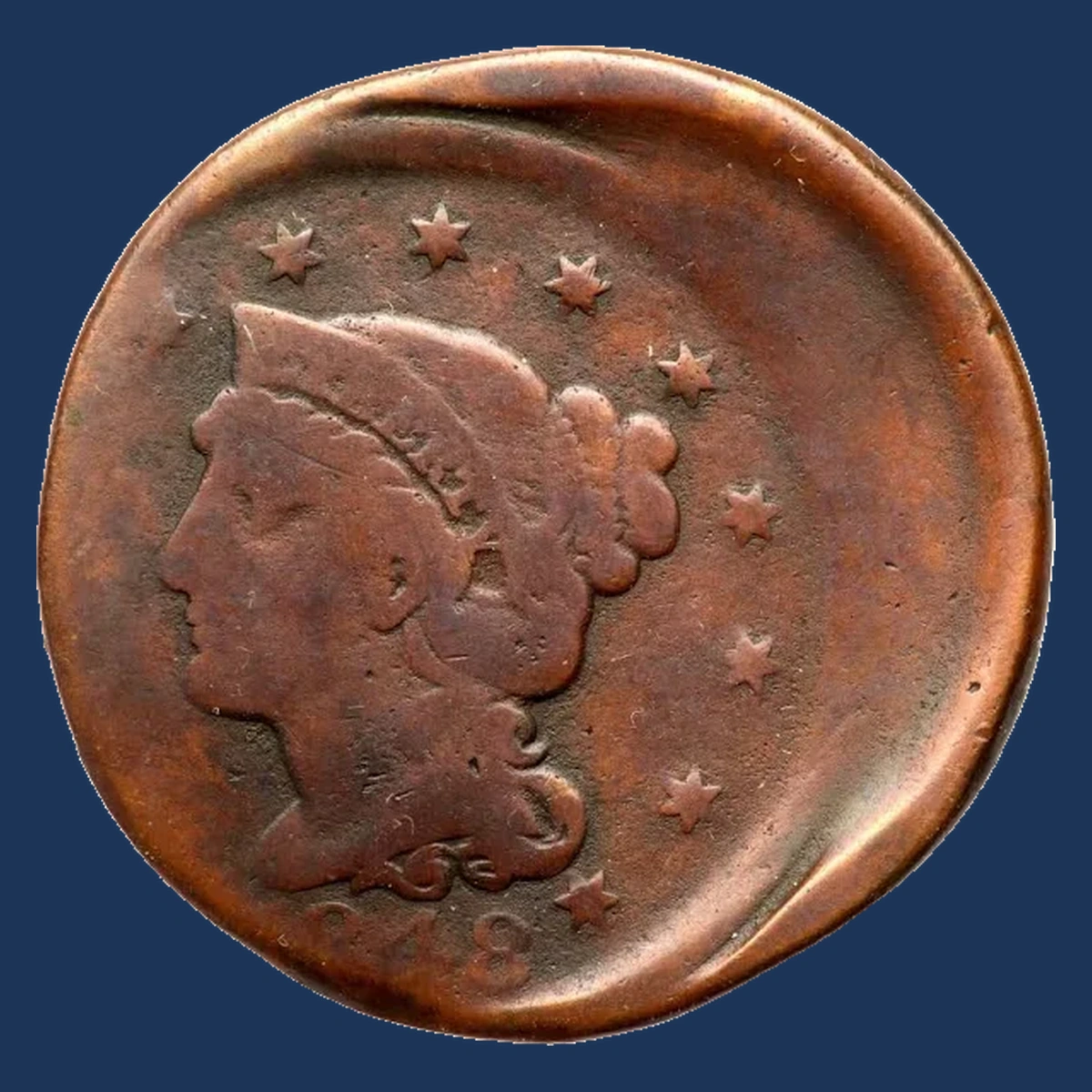
Only part of the portrait and lettering reaches the copper when the blank sits too far from the striking position. A broad bare crescent remains beside the displaced design.
An 1848 example graded PCGS XF40 was struck about thirty percent off-center. A separate NGC MS63 Brown cent is recorded at seventy percent off-center.
These percentages describe different coins, not competing measurements of one specimen. XF40 indicates some circulation wear, while MS63 indicates no circulation wear but allows surface marks.
Lost design is only part of the comparison. A readable date and clear original surface can be just as important.
Estimated Value
The thirty-percent PCGS XF40 cent sold for $1,980 in December 2023. Heritage also records $6,600 for the seventy-percent NGC MS63 Brown example in February 2010.
Estimate $500–$3,000 for circulated 1848 off-center cents with clear dates. Dramatic unworn examples can fit roughly $3,000–$10,000.
The older $6,600 result is a separate sale, not proof that every greater displacement earns more. Wear, missing date digits, and surface damage can reverse that relationship.
How to Identify
A bare crescent and missing outer design should tell the same story on both faces. Photograph the entire coin straight on before estimating the displacement.
With a 10× magnifier, examine the boundary where the struck design stops. A ground-down portrait may leave abrasion lines instead of an untouched crescent.
Weigh a loose piece against 10.89 g and measure several widths with calipers against 27.5 mm. Off-center striking displaces the design without requiring a piece of copper to be removed.
Check all four date digits separately.
If only the front is off center while the back remains centered, compare a shifted front tool; the blank may not have been misplaced between both tools.
9. 1848 Braided Hair Cent Original Blank Flaws above Two Stars
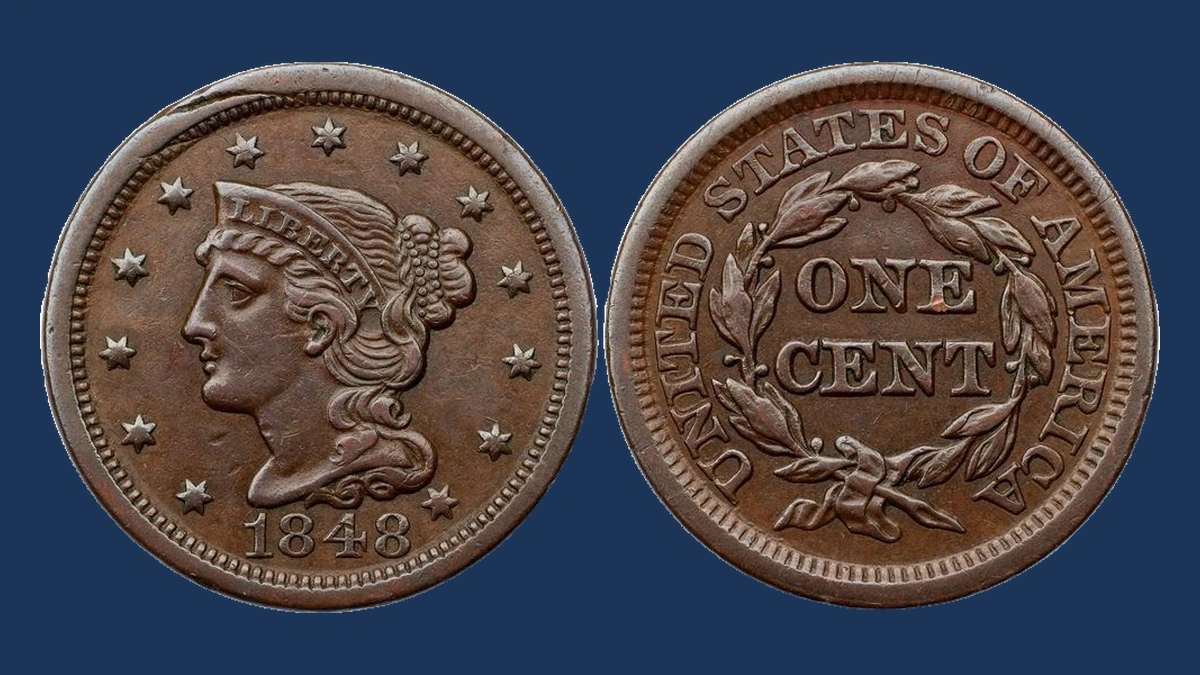
Two uneven areas interrupt the rim and border teeth above stars 5 and 6. Early Cents Auctions described them as flaws in the copper blank.
The affected N-46 cent was assessed as VF20+, although its surviving design suggested at least VF30. Both grades describe circulated coins, with the higher number indicating more detail.
The description does not call these flaws clips or peeling layers. Their visible boundaries should be examined before choosing a more specific cause.
This coin also combines a rare pairing of front and back stamping tools. That rarity matters independently of the flaws that reduced its grade.
Estimated Value
The N-46 sold for $8,500 plus buyer’s premium in January 2024. Its rare tool combination drove collector interest despite the blank flaws.
Estimate $20–$300 for ordinary circulated 1848 cents with comparable small original blank flaws. An identified rare N-46 with suitable detail can belong around $5,000–$10,000, where rarity dominates.
Do not apply the rare-variety range to any penny with two rim marks. Matching the whole coin is essential before using that sale.
How to Identify
A scale and calipers compare a loose cent with 10.89 g and 27.5 mm. Near-normal measurements do not rule out two small flaws in its original copper.
Count from the lowest star on the portrait’s left side to locate stars 5 and 6. Use a 10× magnifier on the rim and small border teeth above them.
Turn the light to see whether struck details enter the uneven areas or later pressure has pushed metal over them. Never scrape the copper.
The marks alone do not establish the rare N-46. Match the complete date, portrait, and back arrangement with the auction coin before connecting a similar rim flaw to that high price.
Conclusion
A mark beside the stars may begin in the copper blank, while a raised line across Liberty can come from a broken tool. Similar-looking damage needs a different explanation.
The estimated whole-coin ranges here run from $20 to $10,000. Check the date, visible feature, and remaining detail before using a sale for comparison.
For the expensive N-46 example, rarity explains the price better than the two flaws that lowered its grade.