1862 Penny Error List with Pictures

An 1862 penny spread into eight petal-like tabs brought $51,750 in a reported Heritage auction result. The same striking error later sold for $40,800 in September 2020.
This 1862 penny error list covers estimated values from $15 to $55,000. It includes small date marks, uneven edges, missing metal layers, and the extraordinary cap formed around a stamping tool.
Read on to see which details belong to each mistake and how their prices compare.
1. 1862 Indian Head Penny Peeling Surface Layer
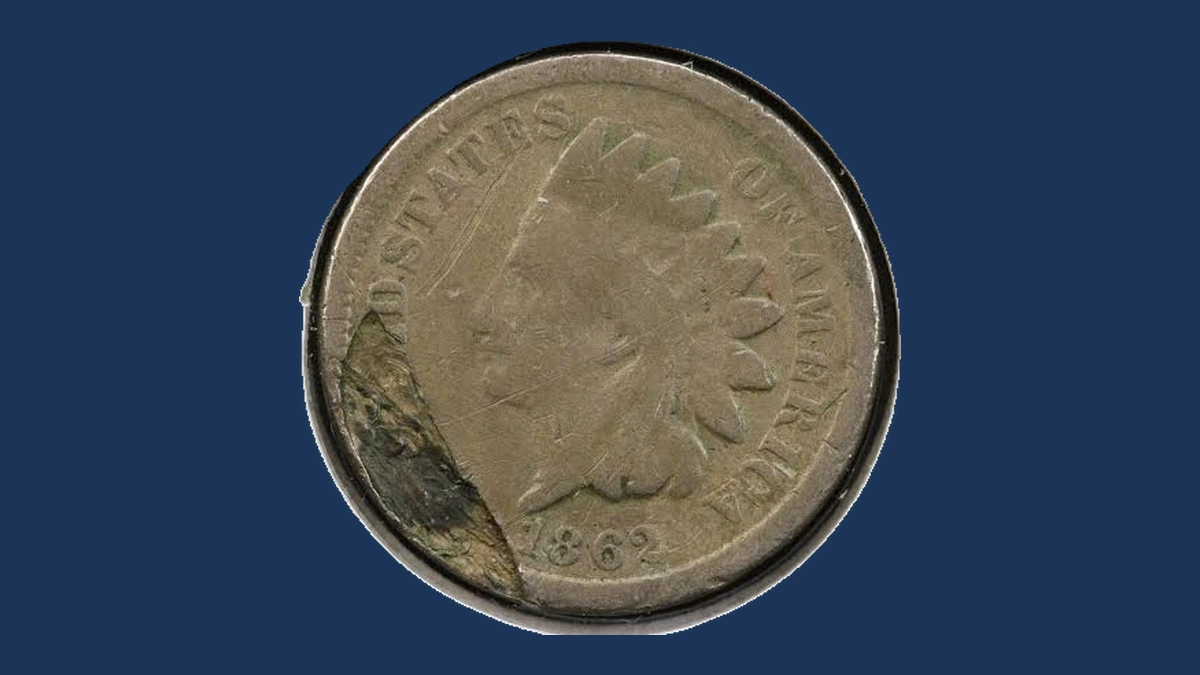
A thin flap or shallow missing patch can appear where the copper-nickel metal separates near its surface. This peeling is called a lamination.
APMEX lists an 1862 example graded NGC VG8, showing considerable wear across much of the design. Its listing names the error without describing the exact affected area.
The original blank contained a weak layer that could lift or fall away. This differs from an entire thickness layer separating across almost the whole coin.
A small lamination need not remove much weight. Its torn boundary is usually more useful than the size of the hollow alone.
Estimated Value
For a worn 1862 penny with a clear, modest lamination, estimate $20–$150. Larger visible separations on better-preserved coins can reach roughly $100–$350.
The APMEX VG8 listing identifies a graded example without providing a completed sale used here. These figures are estimates for the whole coin.
Collectors can inspect an attached flap more easily than a flat, damaged patch. Additional corrosion, cleaning, or deliberate removal of metal changes that comparison.
How to Identify
A VG8 lamination listing establishes no particular clock position. Examine both faces under a 10× magnifier before deciding where the separation lies.
Tilt the light across its boundary and inspect any thin layer still attached. Do not lift it.
For a loose copper-nickel cent, compare the weight with 4.67 g on a scale and the diameter with 19.05 mm using calipers. A minor flake may produce little measurable weight loss.
Look beyond the hollow for widespread pits, sharp scraping grooves, or pushed-up metal. A naturally separating layer should explain the patch more convincingly than a dent or a corroded surface.
2. 1862 Indian Head Penny Layer Split Away after Striking
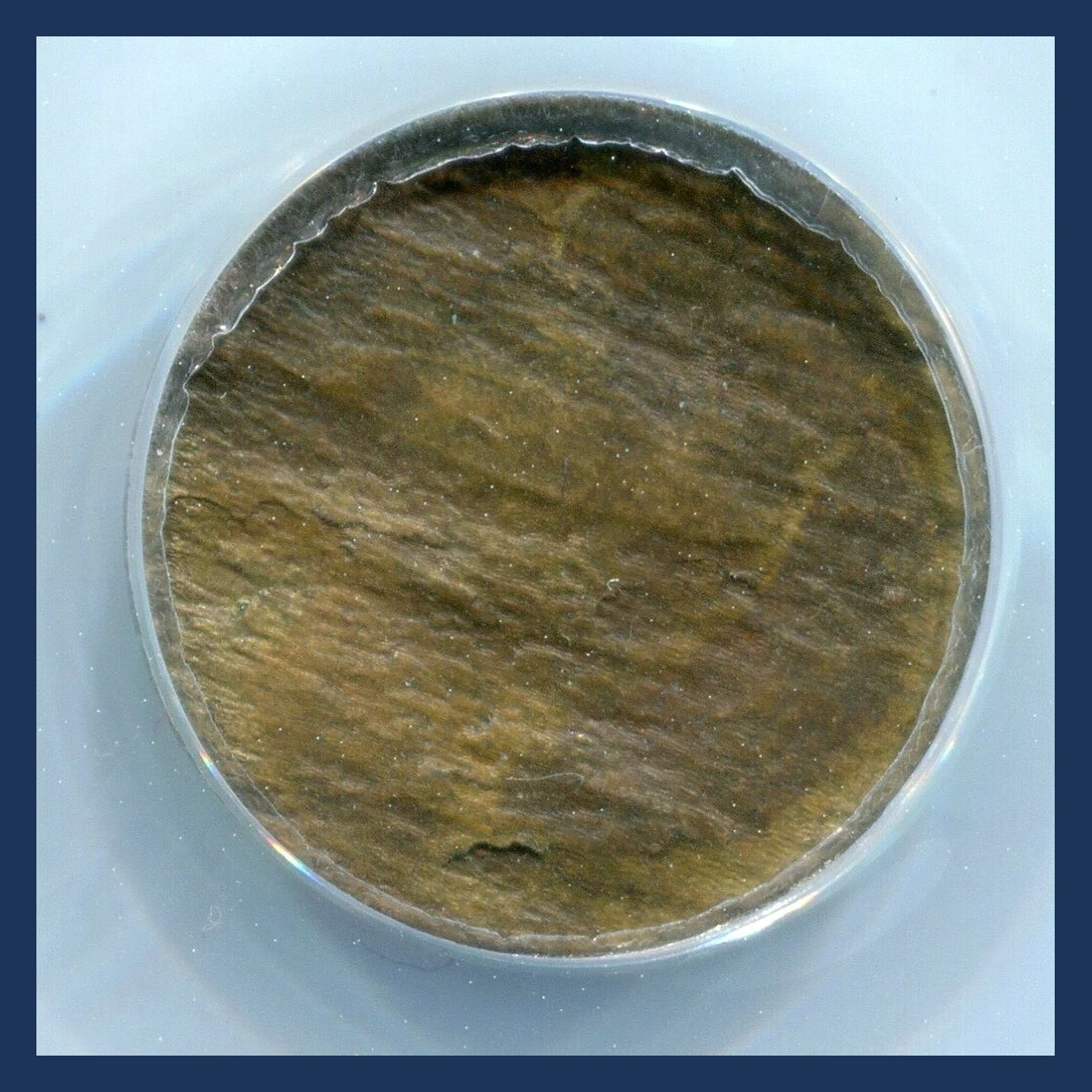
The dated front can survive while much of the coin’s back separates as one layer. The remaining piece is thinner than a complete penny.
Heritage described an 1862 example with a rough, streaked back and normal struck details on the front. ANACS graded it Fine 12, reflecting substantial circulation wear.
A weakness inside the blank allowed it to split after the designs had been struck. The exposed inside surface therefore did not receive a normal back design.
This is more extensive than a little surface flake. Sawing or grinding an ordinary cent can produce a thin piece too.
Estimated Value
An ANACS Fine 12 split-after-strike example sold for $74 at Heritage in February 2010. Another sale listing for that description records $74 in October 2010.
Estimate $50–$450 for 1862 pieces with a clear natural split and a readable date. The lower portion suits heavily worn examples like the listed coin.
The remaining design, surface damage, and how clearly the split can be seen all matter. Two appearances in auction records do not necessarily represent two different coins.
How to Identify
Examine the thin edge first without pressing or bending the coin. Calipers can record thickness at several points as well as the usual full-coin diameter of 19.05 mm.
Weigh a loose piece on a scale against the normal 4.67 g. The loss should fit a missing layer, although no single weight identifies every split.
Under a 10× magnifier, compare the rough back with the front’s struck details. Long grinding grooves, saw marks, or an artificially smooth back deserve close attention.
A sealed example should stay in its holder.
On this documented pattern, the useful combination is a normal dated front, a thinner edge, and a naturally rough exposed back.
3. 1862 Indian Head Penny Fragment Pressed into the Back
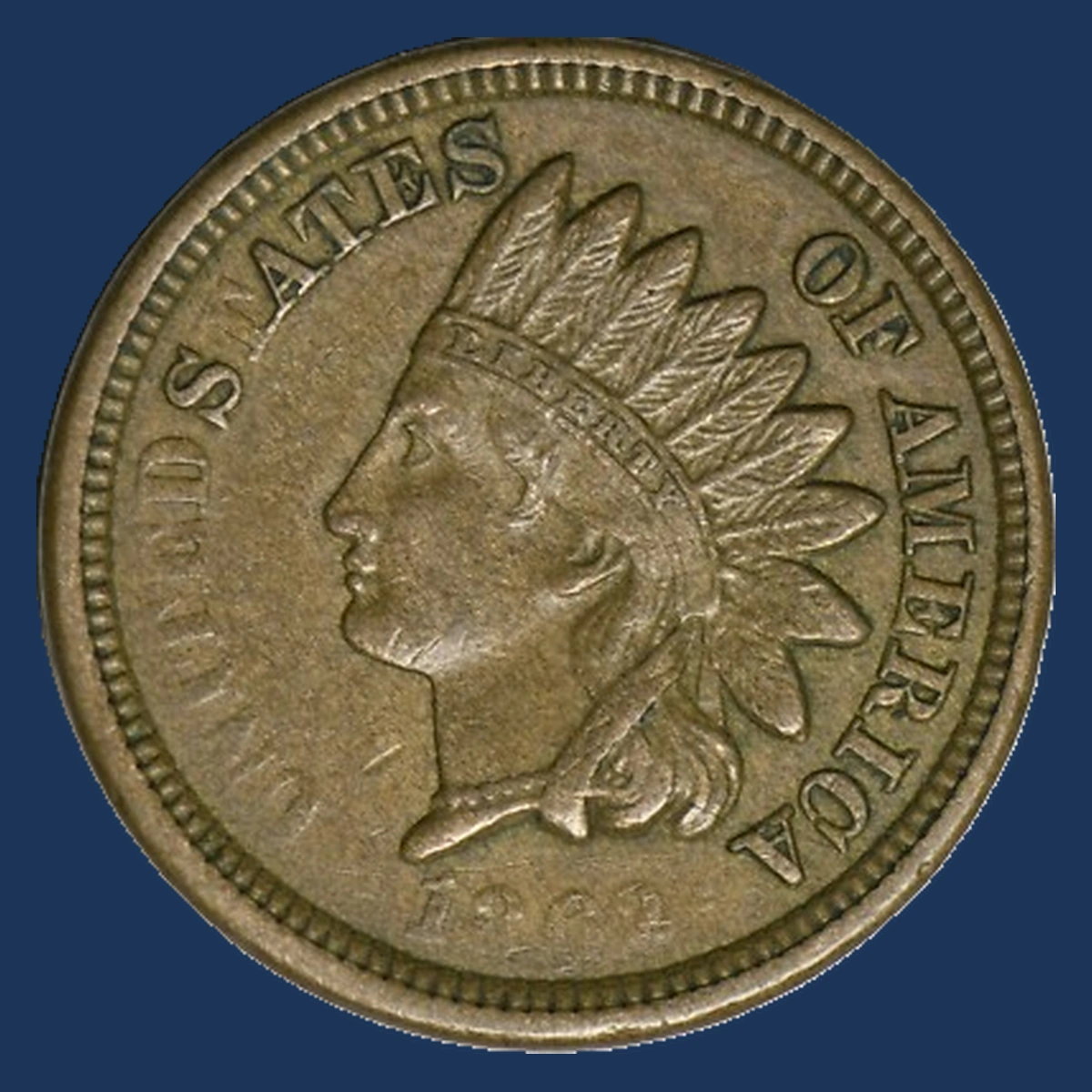
Hollows interrupt the shield and nearby back design on an 1862 penny. The affected area extends into the lettering and right and lower wreath.
A fragment lay between the blank and a stamping tool during the blow. It blocked parts of the design and left its impression in the metal.
Heritage described the coin as struck through a fragment and also partly held by the edge ring. The ANACS label recorded nearly unworn detail but reduced its assessment because of cleaning.
The description does not say the fragment remains attached. A later gouge can create a hollow of another kind.
Estimated Value
A two-coin Heritage lot brought $115 in December 2005. It included this cleaned fragment strike-through and a Fine 12 split-after-strike penny, so $115 is not an individual price for either coin.
Estimate $50–$600 for a comparable 1862 fragment impression, from worn or cleaned examples to stronger preserved pieces. The size and clarity of the hollow affect the estimate.
The accompanying partial collar belongs to the same coin and does not warrant adding a second complete price.
How to Identify
Compare the shield with the lettering and the wreath around it under a 10× magnifier. The recorded hollows occupy a broad connected area rather than one small missing letter.
Photograph each boundary in side light to see where the original design stops or weakens. Sharp cuts and metal shoved over nearby detail can point to later damage.
Because this example also has an edge error, use calipers to record several diameters against 19.05 mm. A scale compares a loose coin with the usual 4.67 g.
Keep cleaning lines separate from the deeper impression. Follow the hollow through the shield and right-hand wreath instead of treating every hairline as part of the mint error.
4. 1862 Indian Head Penny Repunched 8
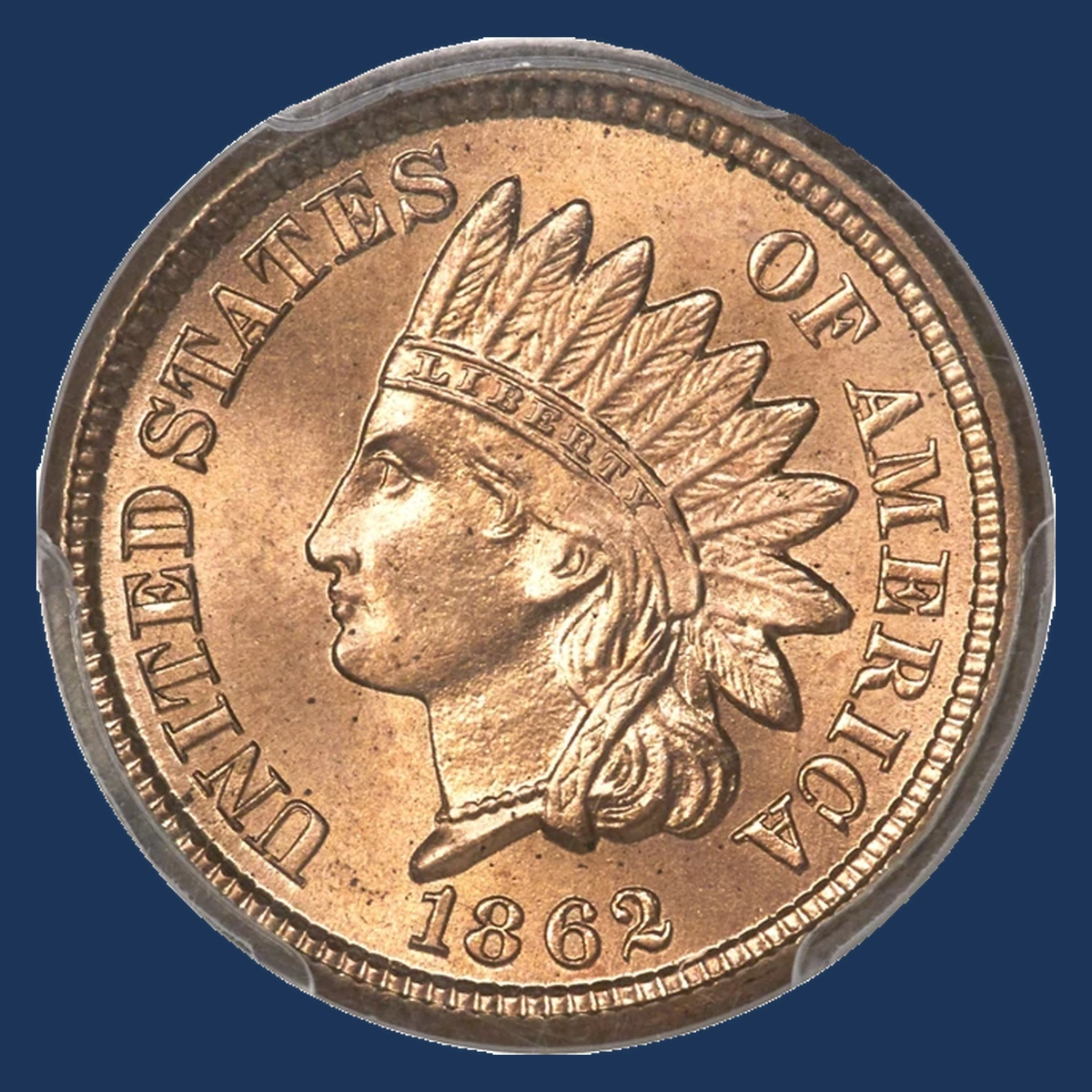
An extra curve below the 8 is the main clue to the recorded repunched date. The date was impressed into the stamping tool more than once in slightly different positions.
The final 8 did not erase every trace of the earlier impression. Later pennies copied that remaining curve when they were struck.
The 1862 catalog identifies this pattern as Snow-7, with the earlier 8 displaced downward. It is not an extra digit from a different year.
A nearby raised line can also come from a damaged tool or ordinary letter outlines. Its position against the normal 8 is essential.
Estimated Value
A circulated Snow-7 example can fit an estimated $25–$200 when the extra 8 remains visible. Better-preserved coins with a clear date can fit roughly $200–$750.
These are estimates rather than a reported sale of the illustrated repunched date. They allow for the coin’s grade as well as the small additional curve.
A thick or worn 8 alone does not justify the range. A matching earlier stroke gives buyers something more specific to compare across examples.
How to Identify
Center a 10× magnifier on the 8, holding the normal lower loop and the area beneath it in view. Compare that whole shape with a clear Snow-7 photograph instead of treating the normal loop as the extra curve.
Turn the lamp to see whether the remnant remains raised in changing light, and check for engraving cuts around it. An altered digit may have sharp grooves that the original raised mark does not share.
For a loose example, use a scale and calipers to check 4.67 g and 19.05 mm. Once its copper-nickel size and weight agree, the downward extra part of the 8 provides the specific variety check.
5. 1862 Indian Head Penny Expanded Coin from an Unrestrained Strike
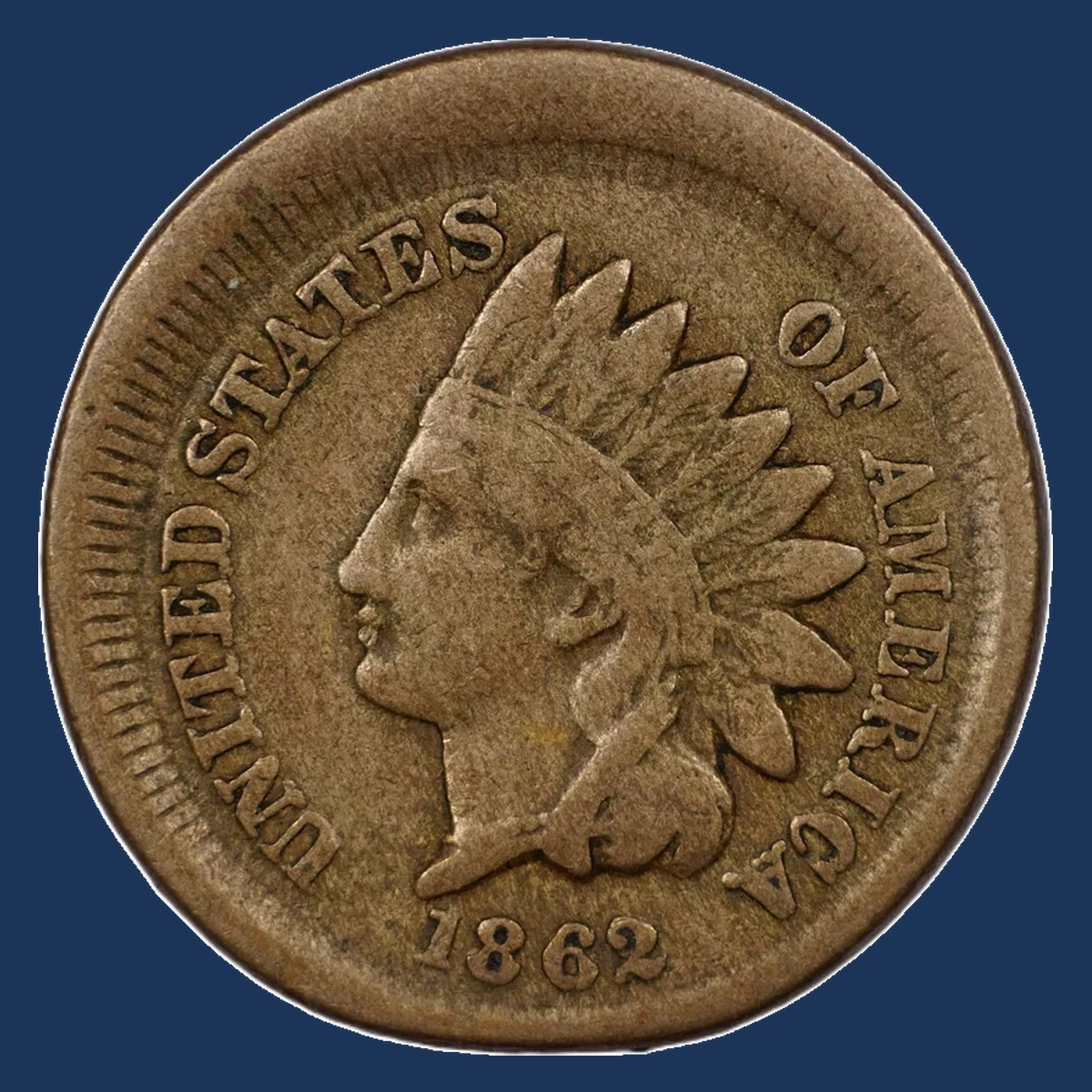
The whole design can fit on a penny whose outside edge has spread beyond its normal outline. Collectors call this a broadstrike.
The blank was not held properly inside the surrounding steel ring, called the collar. Pressure therefore pushed its metal outward instead of keeping the normal diameter.
Heritage cataloged an 1862 broadstrike graded NGC XF45, a circulated coin with much of its fine detail preserved. Its measurements are not supplied in that description.
A broadstrike can be unevenly centered. However, an incomplete design from an off-center blow needs to be distinguished from a complete design surrounded by expanded metal.
Estimated Value
An NGC XF45 1862 broadstrike brought $234 at Heritage in December 2023, as recorded by Greysheet. This provides a circulated comparison for the same date and mechanism.
Allow an estimated $100–$1,000 for 1862 broadstrikes, with the visible expansion and surface quality guiding the position within that range.
A separate coin with both broadstriking and a back strike-through sold for $192 in 2022. That combined-error result is a whole-coin amount, not two independent premiums.
How to Identify
A caliper reading is useful only alongside a view of the complete design. Compare several diameters of a loose penny with 19.05 mm and check its weight against 4.67 g on a scale.
Then trace the lettering around both faces to see whether the designs remain on the blank.
With a 10× magnifier, examine the expanded metal for normal struck texture or later compression. A vise can spread a coin while flattening its original design.
Inspect the plain edge from the side for an abrupt step that might instead indicate partial collar contact. The broadstrike should show outward spreading around a design that still fits on the metal.
6. 1862 Indian Head Penny Raised Cracks and Missing Tool Pieces
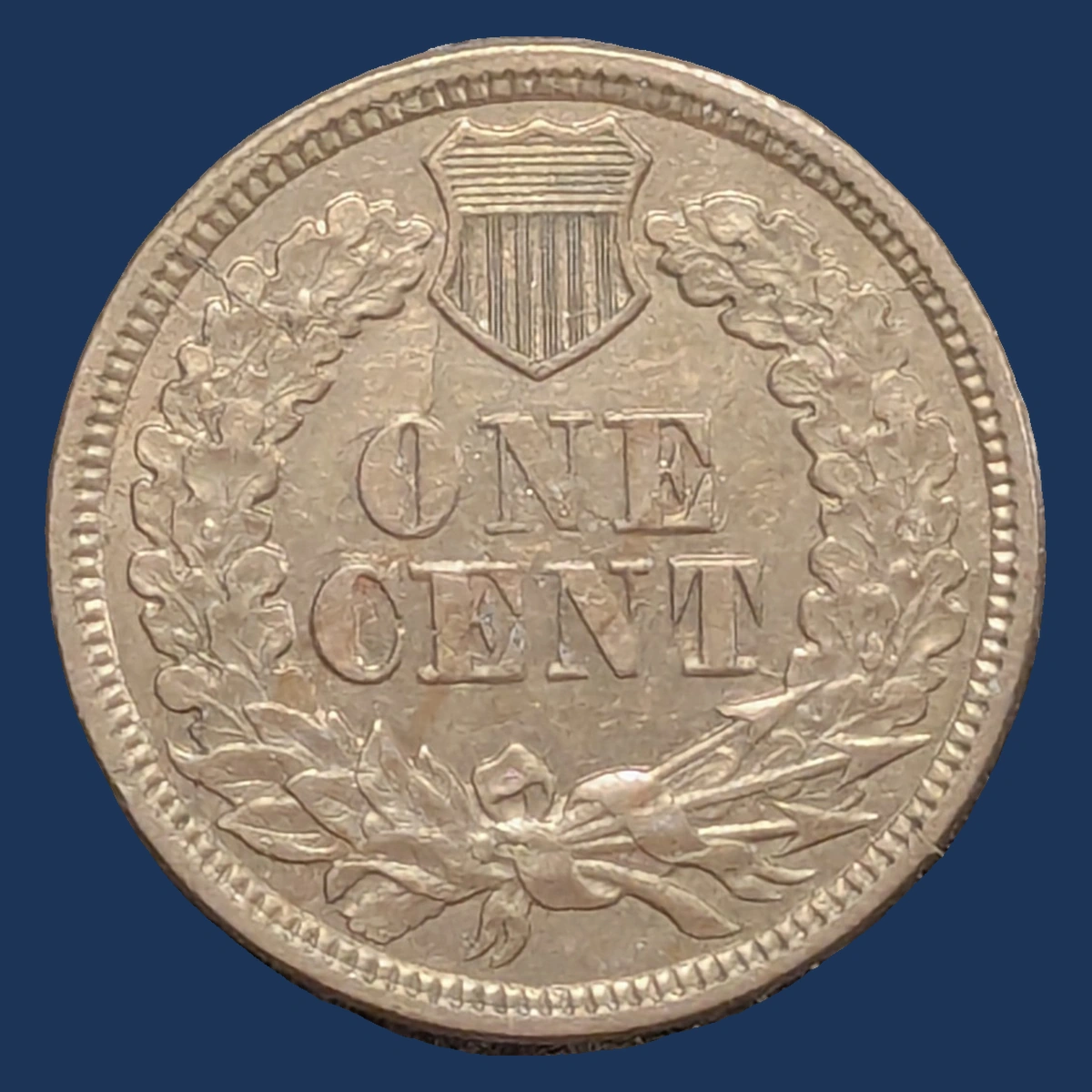
A large raised patch can cover part of the wreath and merge into the rim. One cataloged back example lies between eight-fifteen and nine-forty-five.
This patch forms when part of the stamping tool breaks away and coin metal fills the gap. The rim-connected result is called a cud.
Other examples retain some design inside a raised boundary because the damaged tool piece remained in place. A front example has a break near eleven to twelve o’clock.
Thinner raised lines record cracks before or without a major break. Strong recorded back cracks run through the region from two to four o’clock.
Estimated Value
Heritage sold a PCGS VF25 1862 cud for $99 in May 2021. That grade describes moderate wear with clear main details.
An estimated $15–$100 suits many worn coins with modest raised cracks. More substantial cuds and retained breaks can fit roughly $75–$1,500 across different sizes and preservation levels.
The $99 coin is not a price for every cataloged clock position. A broad clear patch and a faint hairline crack offer very different visual appeal.
How to Identify
Use the upright wreath or portrait to establish the clock position of a raised patch. Compare it with the relevant 1862 example, keeping front and back breaks separate.
A 10× magnifier can show whether old design remains within the boundary. Surviving leaves or letters may indicate that the tool piece stayed in place.
For a loose penny, a scale checks the normal 4.67 g, while calipers compare the diameter with 19.05 mm. Added metal or a squeezed edge needs separate examination.
Follow a narrow line under light from both sides. A crack in the tool produces a ridge on the coin; a cut into the coin produces a groove.
7. 1862 Indian Head Penny Turned Back Design
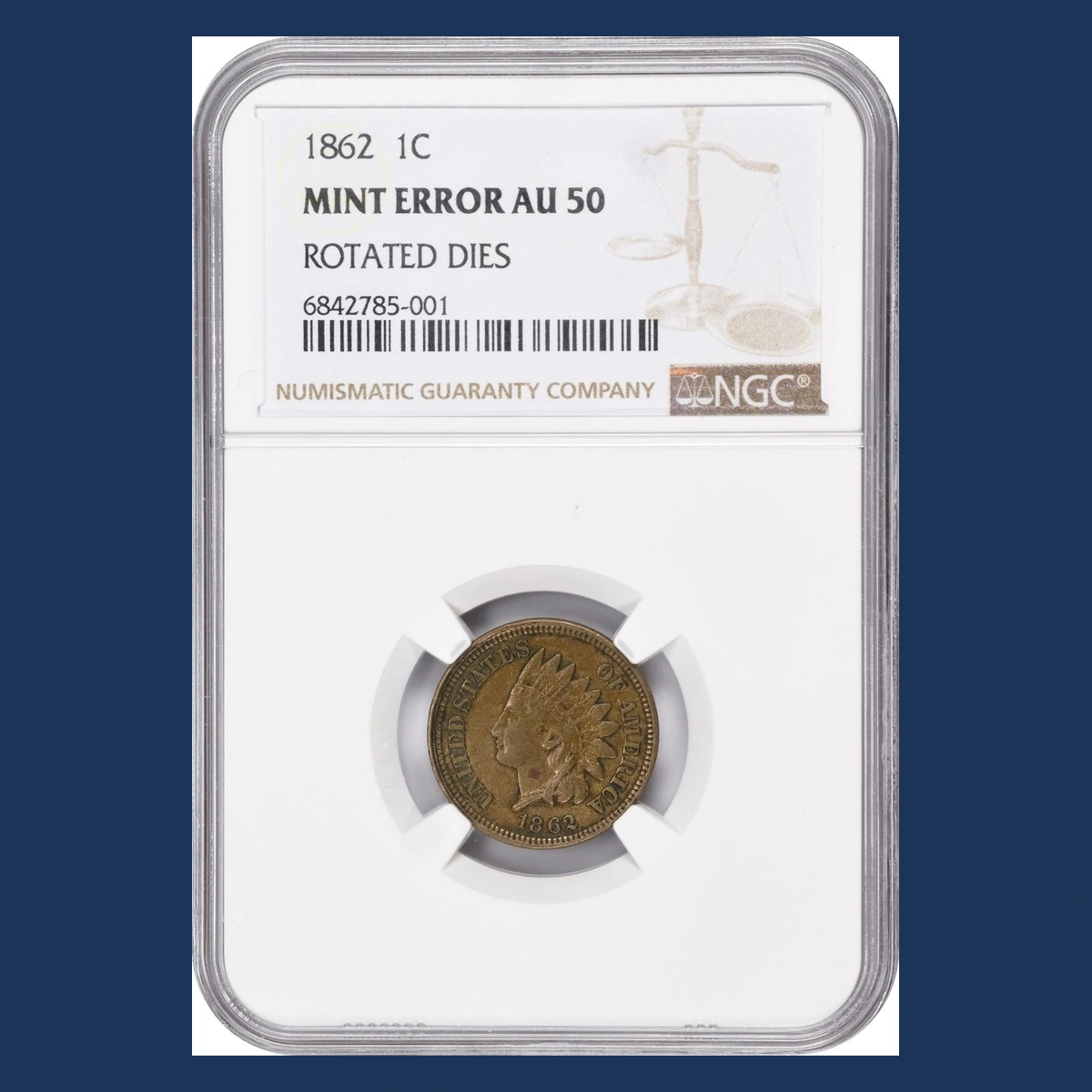
After the upright front is flipped top to bottom, the back should also be upright. Some 1862 pennies instead leave the wreath leaning or nearly inverted.
The stamping tools faced the blank at an incorrect angle to each other. This is called a rotated die; a die is the tool that strikes the design.
The variety catalog records thirty degrees clockwise and 171 degrees counterclockwise on separate examples. Heritage also sold a PCGS MS62 coin with fifty-five degrees clockwise rotation.
Each angle describes a different example. A coin turned inside a holder or a rotated photograph cannot establish the relationship.
Estimated Value
The PCGS MS62 coin with fifty-five degrees clockwise rotation sold for $216 at Heritage in May 2021. MS62 means no circulation wear, although marks are noticeable.
For comparison, Greysheet records a separate NGC AU50 rotated example at $168 in March 2024. Its angle is not specified here.
Estimate $75–$2,000 for clearly measured 1862 rotations, depending on the angle and preservation. A near-half-turn example should be compared with similarly dramatic rotations rather than a slight photographic tilt.
How to Identify
Place the penny upright against a fixed vertical line, then turn it top to bottom without twisting sideways. Repeat the movement while keeping the same grip.
If the wreath stays tilted, use a protractor on aligned photographs to measure the angle. Mark clockwise or counterclockwise as seen from the back.
Calipers and a scale can compare a loose coin with 19.05 mm and 4.67 g. Neither measurement proves the angle.
A 10× magnifier helps locate the shield’s center when the upper design is worn.
The thirty-degree and near-half-turn catalog examples must each reproduce their own angle after the controlled flip, not merely resemble a tilted auction photograph.
8. 1862 Indian Head Penny Numeral Fragments away from the Date
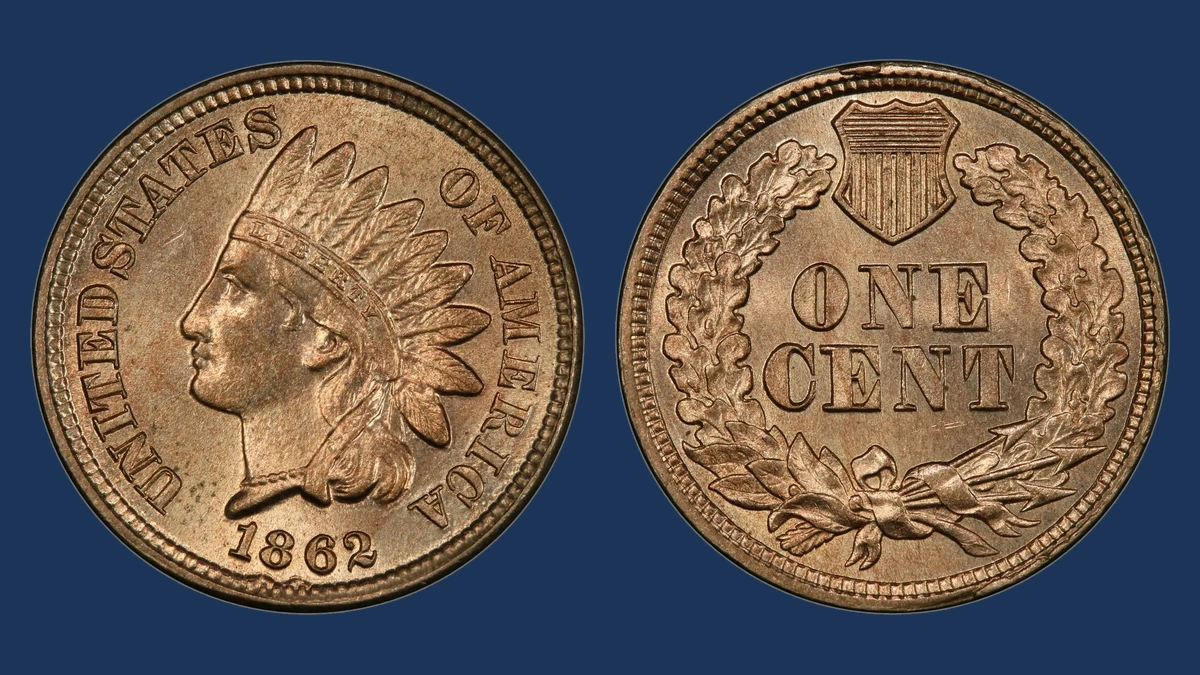
Some date fragments sit among the little border teeth instead of beside the normal 1862. One pattern places two fragments below and to the right of the 8.
Another has extra 1s in the border. A separate example shows the lower right portion of a 6 between the ribbon and hair curl.
These stray impressions came from the date punch contacting the stamping tool outside its intended position. The tool then copied the fragments onto coins.
The positions do not all belong to one penny. Small ordinary teeth and hair details can resemble numeral pieces when examined in isolation.
Estimated Value
Circulated 1862 misplaced dates can fit an estimated $35–$350. Clearer examples with little or no wear can fit roughly $350–$2,500, depending on the precise variety and condition.
These ranges are estimates, not auction results assigned to each illustration. The border fragments and the 6 near the hair must be matched separately.
Wear or polishing of the stamping tool can weaken the small marks. A high grade alone does not make an indistinct fragment easier to identify.
How to Identify
The tiny 6 needs a view of the ribbon and adjacent hair curl under a 10× magnifier. Follow its curve without confusing it with an ordinary strand of hair.
Border varieties require a different photograph, with the normal 8 and the little teeth below it visible together.
Keep dirt in place rather than scraping a mark to make it look more like a digit.
A loose copper-nickel cent should be compared with 4.67 g on a scale and 19.05 mm using calipers. These measurements identify the normal coin, not the particular misplaced numeral.
Match each extra 1 or lower fragment to its position beside a fixed border tooth in the corresponding variety photograph.
9. 1862 Indian Head Penny Stepped Edge from a Partial Collar
Viewed from the side, a plain edge can have a difference in width. Part of the blank was held by the steel ring while the rest spread beyond it.
The ring is called a collar, so this error is a partial collar strike. The visible step follows the change between restrained and unrestrained metal.
An 1862 ANACS MS60 example combines this edge feature with a double strike. A different cleaned example has both a fragment impression and partial collar contact.
The extra feature does not turn either into two separate coins. A squeezed or folded edge can imitate the shape.
Estimated Value
For an 1862 partial collar on its own, estimate $75–$800 across worn and stronger examples. Coins with additional clear striking errors can fit roughly $300–$3,000.
The double-struck ANACS MS60 example sold for $690 in November 2001. That is one total for its edge step, repeated design, and condition.
A fragment-impressed example sold within a two-coin lot, so that lot’s price cannot establish its separate value. Compare the whole combination rather than adding complete prices for every feature.
How to Identify
Record the narrow and wide spans of the edge step with calipers, using 19.05 mm as the normal diameter comparison. Then view the whole circumference from the side to see how far the step continues.
The normal cent has a plain edge, so missing reeds are irrelevant here. Under a 10× magnifier, look instead for filing grooves, a folded lip, or crushed metal that might imitate the change in width.
A scale checks whether a loose example remains near 4.67 g, while photographs connect the stepped edge to the front and back. On the double-struck example, separate the repeated lettering from the edge step: only the latter records partial collar contact.
10. 1862 Indian Head Penny Doubled Ribbon or Front Lettering
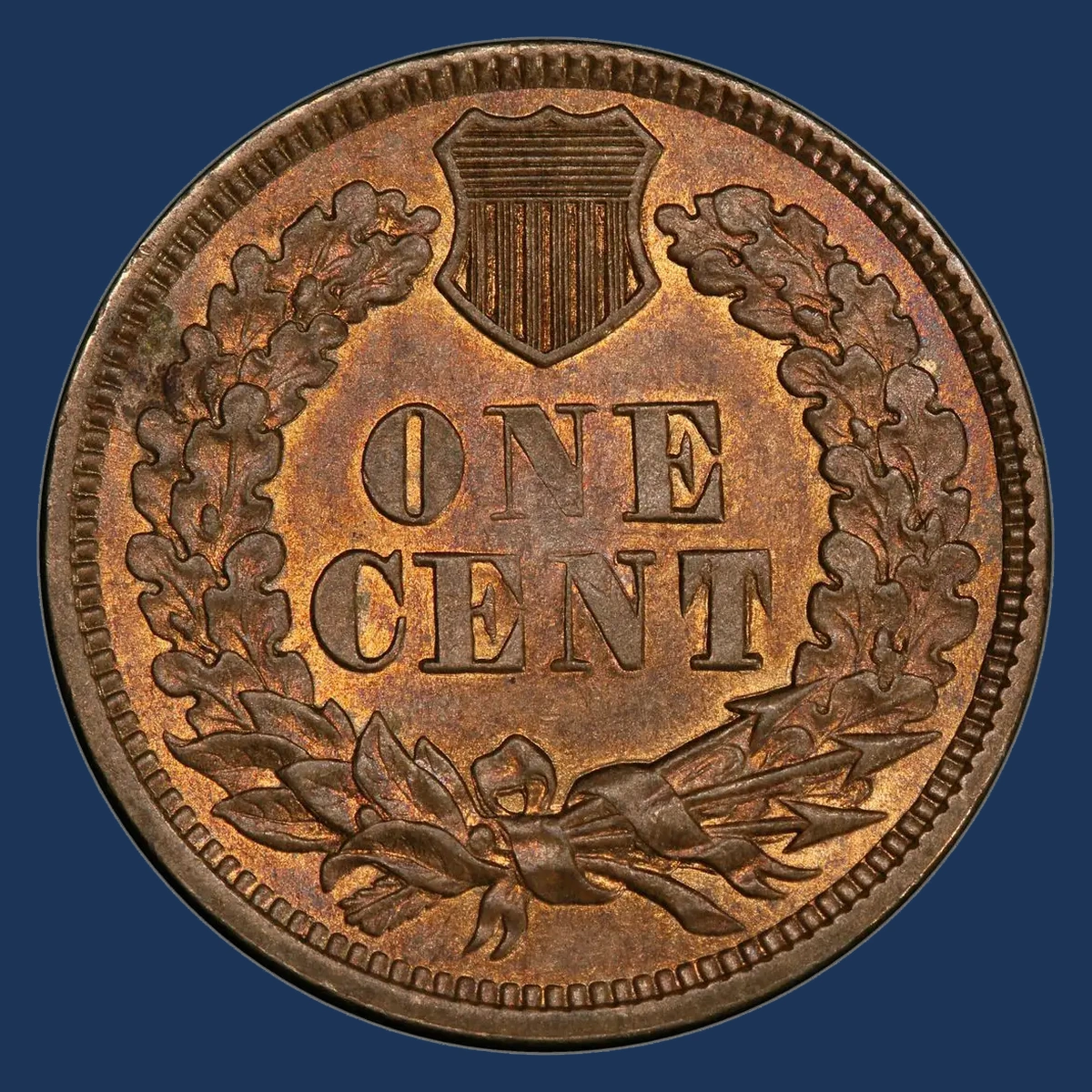
The ribbon holding the arrows can show a thin extra upper edge. PCGS describes that feature on the Snow-5 doubled back, with smaller repeated details on the arrow shafts.
The steel stamping tool received a slightly shifted design while it was being made. Coins copied its repeated outlines without needing a second strike.
Snow-6 is another doubled back, not a second name for Snow-5. A separate front variety repeats parts of UNITED STATES OF AMERICA.
Thick normal letter borders and flat shelves from movement during striking can look similar. The affected ribbon, arrows, or lettering must match the appropriate example.
Estimated Value
A Snow-5 MS63 example brought $1,116 at Heritage in November 2014, according to PCGS. MS63 indicates no circulation wear but visible marks.
Greysheet records a separate Snow-6 XF40 example at $156 in August 2019. Its wear and different doubled pattern make it a different comparison.
Estimate $50–$4,000 across identified 1862 doubled varieties and grades. Front-letter doubling should receive its own pattern comparison rather than automatically inheriting the highest price for a different doubled back.
How to Identify
Use the ribbon above the arrow bundle as a starting point for Snow-5. A 10× magnifier reveals its additional upper edge and smaller repeated lines on the arrow shafts.
That is the specific back pattern described by PCGS.
Check a loose coin with a scale against 4.67 g and calipers against 19.05 mm; keep a certified example sealed.
The front variety needs an entirely different view of UNITED STATES OF AMERICA. Compare repeated outlines across several adjacent letters rather than transferring the ribbon description to this face.
An even border around ordinary letters or a flat shelf at their edges does not establish the cataloged doubled pattern.
11. 1862 Indian Head Penny Curved Missing Segment
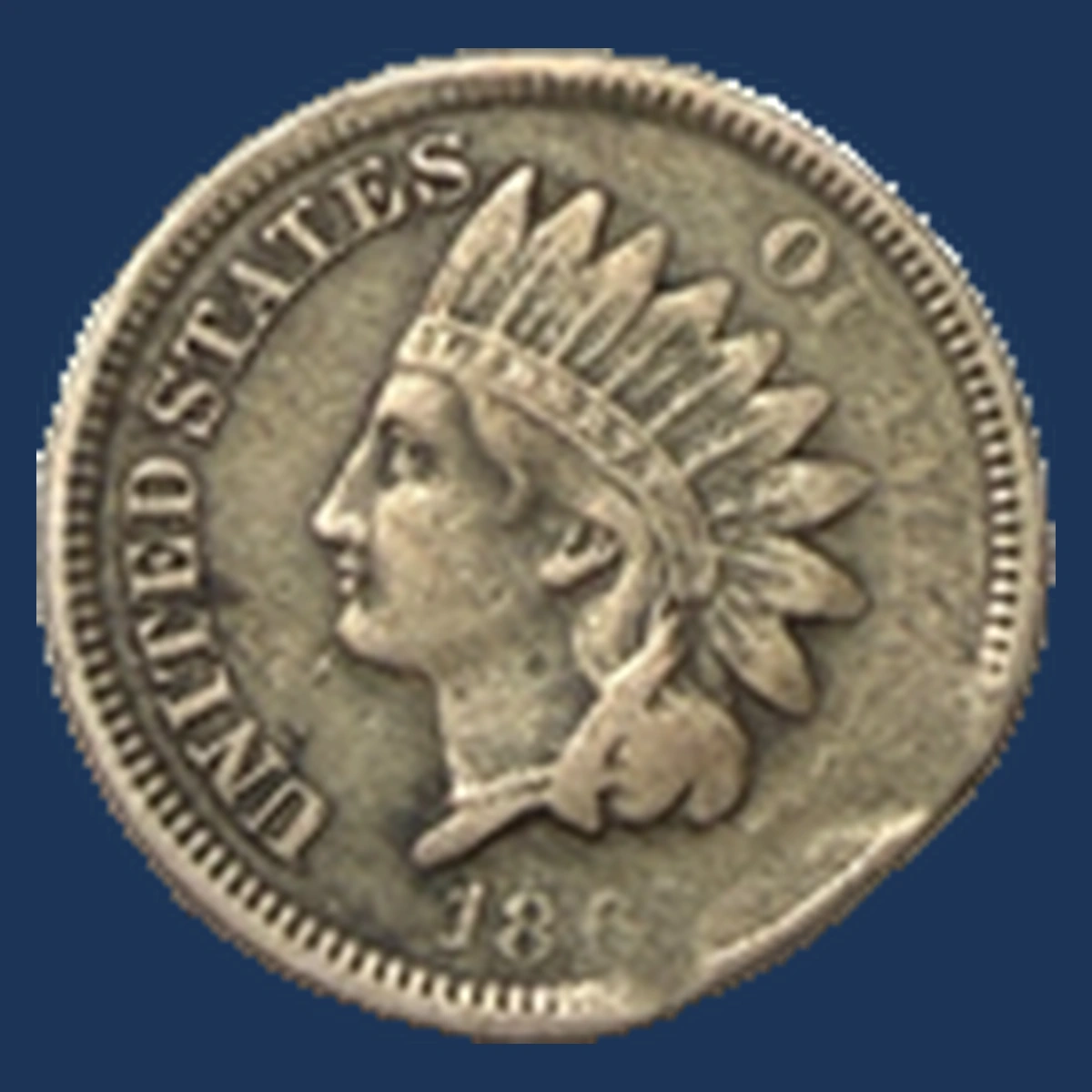
A curved bite in the outline can begin before the coin reaches the press. The punch that cuts round blanks may overlap a hole already cut in the metal strip.
The incomplete blank then receives the penny design. This mint error is called a curved clip.
A public sales listing describes an 1862 example graded NGC MS62, meaning unworn but noticeably marked. Its precise missing percentage and clock position are not stated.
That description does not establish a specific shape or missing percentage. A saw, file, or cutting tool can also remove a curved piece after a coin is struck.
Estimated Value
For circulated 1862 curved clips, estimate $75–$600. Clearly original unworn examples can fit roughly $400–$4,500, depending on the missing segment and surfaces.
The reported MS62 listing does not provide a completed sale used here. Its grade places it among unworn comparisons, without establishing a particular price.
A larger missing section is not automatically better if it removes the entire date. Natural edge features and an identifiable 1862 design matter more than a dramatic silhouette alone.
How to Identify
Place a loose penny on a scale and compare its remaining mass with the usual 4.67 g. Calipers across an intact span check the normal 19.05 mm size without pressing on the missing section.
Inspect where the design meets the curved boundary under a 10× magnifier, then look across the coin at the opposite rim. Weakness there can support a clip, though it is not equally visible on every example.
The edge of the missing section must also be checked for straight tool grooves or cuts crossing finished letters. A genuine clipped blank received its design after the segment was already absent, so the struck rim should fit that earlier boundary.
12. 1862 Indian Head Penny Repeated Design from Two Blows
The outer lettering can show two positions where the press struck a penny twice. On the documented 1862 example, the overlap is most obvious near the edges.
Heritage identified the coin as double struck with a partial collar. ANACS graded it MS60, indicating no circulation wear but substantial marks or other limitations.
The blank did not leave the striking area normally before the extra blow. Its shifted position allowed another impression to overlap the first.
This repeats the coin design. It differs from a doubled stamping tool, which copies a small repeated feature in the same position on many coins.
Estimated Value
The ANACS MS60 double strike sold for $690 at Heritage in November 2001. The sale included its partial collar and preserved condition in one price.
Estimate $400–$6,000 for genuine 1862 double strikes, from circulated examples to strikingly clear unworn pieces. This is a broad comparison range, not a claim that the $690 coin later sold at the upper end.
Two easily separated impressions help explain the error. Scraping, cleaning, or damage across the overlap can reduce its appeal.
How to Identify
Follow the outer lettering around the front and mark where a second recognizable letter or border appears. A 10× magnifier helps separate two design positions from one thick outline.
Compare the corresponding back area to see how its impressions fit the same extra blow. Do not assume a particular rotation or percentage that the auction description does not state.
Calipers can record enlargement beyond the normal 19.05 mm, including the partial-collar step. A scale compares a loose example with 4.67 g.
Finally, inspect the overlap for joined metal or a second coin pressed against it later. The extra impression should belong to a recognizable second penny design across the affected area.
13. 1862 Indian Head Penny Design Shifted across the Blank
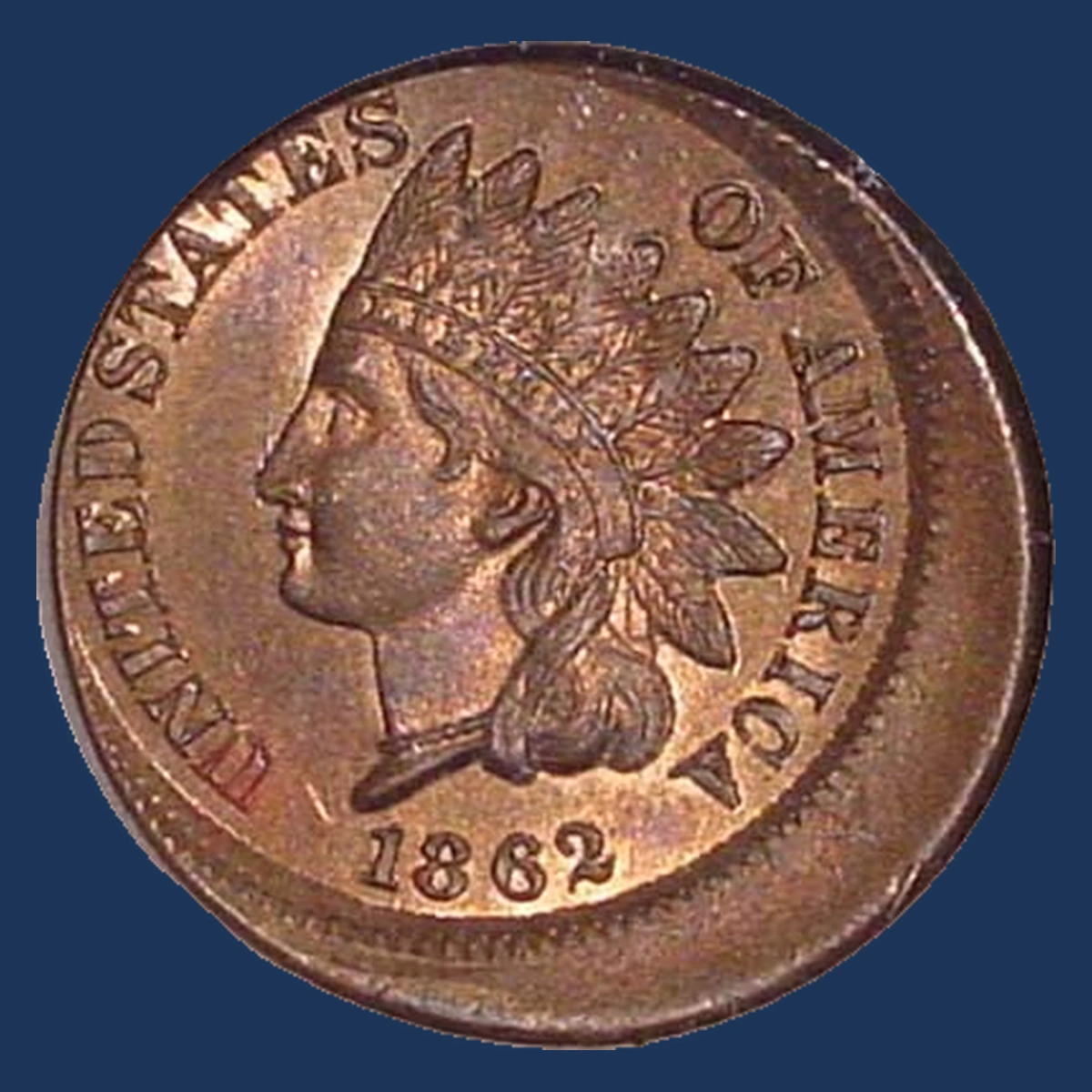
A blank crescent shows where part of the metal missed the stamping tools. The shifted design may also lose outer lettering on the opposite side.
The Xan Chamberlain Collection includes an 1862 penny struck fifteen percent off-center toward eleven o’clock. NGC graded it MS66, an unworn coin with very few marks.
Heritage lists another example twenty percent off-center in MS64. The two descriptions concern different coins and do not establish the same direction.
This was a displaced strike on a complete blank. It is not a missing metal segment or simply a broad rim around a complete centered design.
Estimated Value
An estimated $200–$1,500 covers many circulated 1862 off-center pennies with readable dates. Attractive unworn examples can fit roughly $1,500–$8,000.
The MS66 fifteen-percent example has much stronger preservation than a typical worn find. No final sale is assigned to its collection photograph here.
The separate MS64 twenty-percent coin also needs its own condition comparison. Evaluate the readable date, amount of missing design, and untouched surfaces together; a larger percentage alone does not guarantee a higher price.
How to Identify
Turn the penny over while keeping both complete outlines visible in your photographs. The two faces should show design boundaries consistent with the same misplaced blank, rather than displacement on only one face.
With the date upright, compare the reported eleven-o’clock direction and inspect the untouched crescent under a 10× magnifier. Its border with the struck design helps separate the error from metal removed after striking.
Weigh a loose example against 4.67 g on a scale and measure several spans against 19.05 mm with calipers. Expansion can alter the outline, but the remaining full blank should explain both the untouched crescent and the lost outer design.
14. 1862 Indian Head Penny Reported Strike on a Silver Dime Blank
A lighter silver-colored piece can carry Indian cent designs on metal intended for a dime. Jim’s Coins published an 1862 example under that description.
The listing reports 2.8 grams and an NCS label describing unworn detail with damage. It also suggests the piece may have been bent.
The stated weight differs from the approximately 2.49 grams expected for a silver dime blank of that period. The description therefore needs to be considered with its actual measurements and metal.
Plating can make an ordinary cent look silver without changing its underlying blank. Experimental cents made for testing are a separate category.
Estimated Value
The old Jim’s Coins catalog set a $295 minimum bid for the damaged piece. That figure was a starting requirement, not a published completed sale.
For a verified 1862 cent struck on a silver dime blank, use an estimated $1,000–$15,000 range across damaged and better-preserved examples. It assumes the blank identity has been established.
The reported 2.8-gram example cannot inherit a strong price from color alone. Damage and the exact metal blank both materially affect the comparison.
How to Identify
Weigh a loose coin with a scale accurate to 0.01 g and compare the result with both relevant standards. A normal copper-nickel 1862 cent is 4.67 g; the period’s silver dime was about 2.49 g.
Use calipers to compare the normal cent diameter of 19.05 mm with the dime’s approximately 17.9 mm. Striking can spread a smaller blank, so diameter alone is not conclusive.
The published listing reports 2.8 g and damage. Preserve that distinction rather than treating the number as the standard dime weight.
Inspect missing outer design under a 10× magnifier, then seek metal testing and professional examination. Silver color without the matching weight, composition, and struck shape does not identify a dime blank.
15. 1862 Indian Head Penny Coin Spread into a Cap
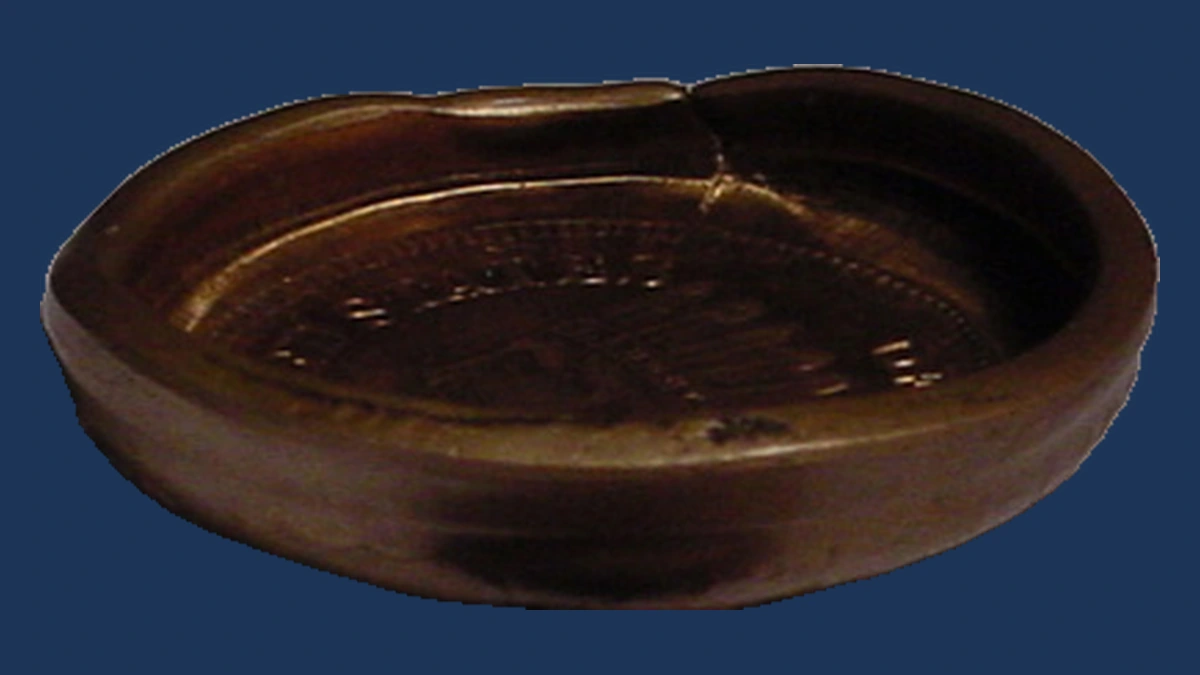
Eight petal-like tabs surround a sharply detailed Indian portrait on an extraordinary 1862 penny. The date and outer design stretch toward the ends of the tabs.
The coin stuck to a stamping tool and received repeated blows. As its metal spread around the tool, it formed what collectors call a die cap.
PCGS graded the example MS67, an unworn coin with exceptional preservation. Its back has no visible normal design.
A separate recorded MS62 example forms a deep cap rather than the same open flower shape. Neither appearance should be explained simply as a penny bent after leaving the Mint.
Estimated Value
Mint Error News reports a $51,750 Heritage result for the MS67 cap in its earlier NGC holder. The later PCGS MS67 sale brought $40,800 in September 2020.
Estimate $5,000–$55,000 for substantial authenticated 1862 caps, with the deepest or most visually distinctive examples requiring individual comparison. The spectacular MS67 belongs near the exceptional end.
These results do not price every bent or expanded penny. Cap depth, stretched design, surface preservation, and proven identity all contribute.
How to Identify
Do not press an unusual cup or flower-shaped penny flat. First photograph its depth from the side and compare the sharp central portrait with the stretched outer design under a 10× magnifier.
Calipers can document width and depth against the ordinary 19.05 mm starting diameter, while a scale compares a loose piece with 4.67 g. Leave a certified example sealed rather than removing it to obtain those measurements.
The blank-looking back alone does not prove that two blanks entered together. Follow the stretched lettering out onto the tabs, then distinguish natural tears between them from straight saw cuts on an artificially shaped coin.
Conclusion
A thin extra numeral and a broad missing layer call for different checks. Keep the whole coin visible before moving closer to letters, broken edges, or overlapping designs.
Estimated values here run from $15 for modest worn examples to $55,000 for exceptional caps. Compare the grade and the actual mistake together.
An old minimum bid is not a sale, and two errors on one penny still receive one total price.