1876 Penny Error List with Pictures

A pale 1876 penny weighing about 1.7 grams is a very different find from an ordinary bronze cent. An example labeled as struck on a three-cent nickel disc sold for $16,675 in August 2004.
Most 1876 Indian Head penny errors are less dramatic: shifted date strokes, raised lines, or a small change in the back’s angle. The estimated ranges here span $25–$30,000.
Read the visible checks below before comparing your penny with the rare metal error.
1. 1876 Indian Head Penny Slightly Rotated Dies (Estimated Up to $350)
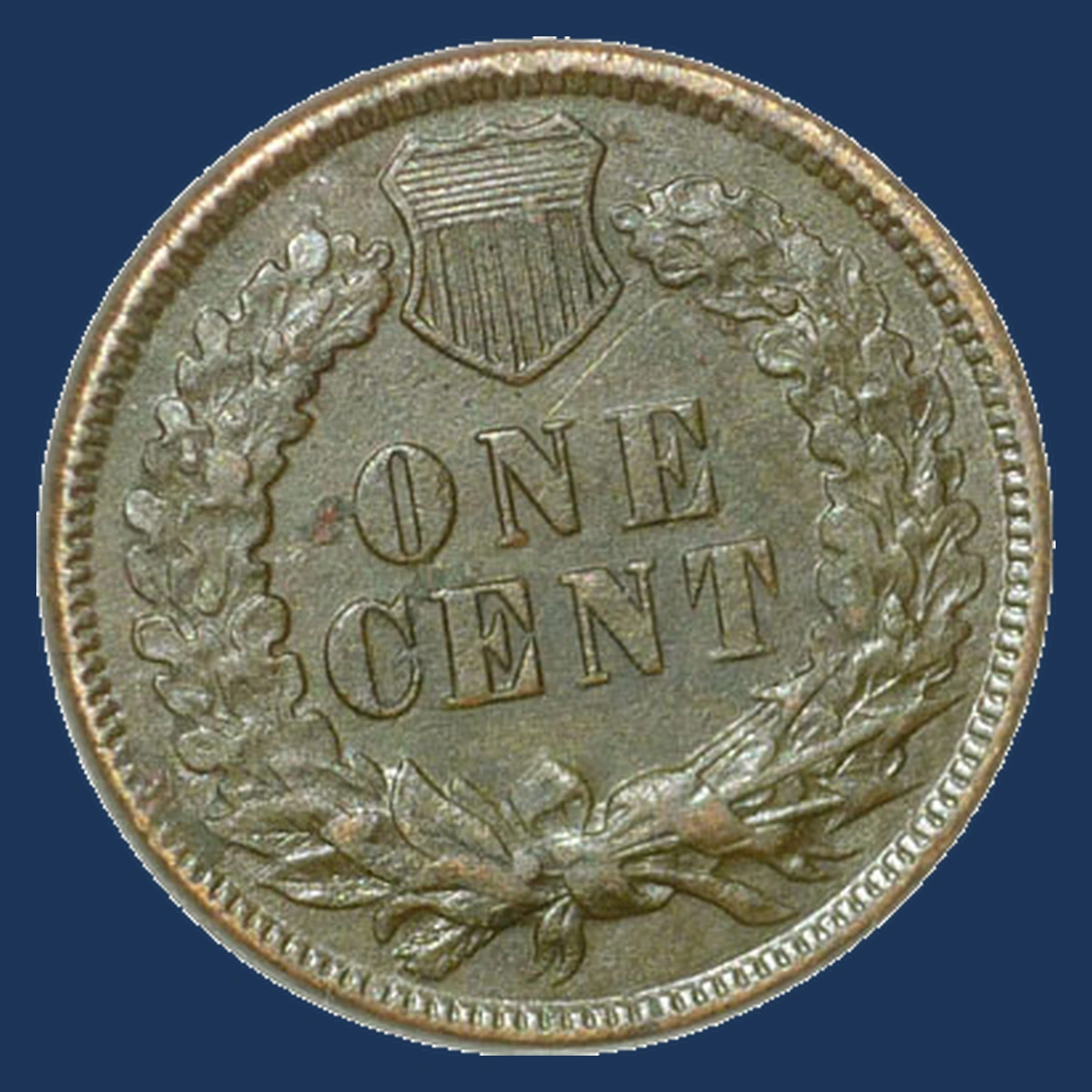
The back sits at a slight angle after a careful top-to-bottom flip. The 1876 example has a recorded counterclockwise turn of about 9 degrees.
Two steel tools stamp the front and back. If one tool turns slightly from its intended position, that angle appears between the finished designs.
The tools are called dies, which gives the feature its name: rotated dies. This small turn is not the same as a dramatic sideways or upside-down back.
It is also easy to imitate accidentally by moving a loose coin while flipping it. A fixed grip matters when checking the angle.
Estimated Value
For an 1876 penny with this small rotation, use an estimated whole-coin range of $25–$350. Most of that amount reflects the coin’s condition and date.
A 9-degree turn usually adds much less interest than a large sideways rotation. This estimate should not be treated as a special premium to add to every ordinary 1876 cent.
The recorded variety provides an angle, not a sale price used here. A high-quality coin can still be valuable for reasons unrelated to the rotation.
How to Identify
Place the penny in a holder that prevents it from turning. Set the date upright, then flip the holder from top to bottom without twisting it sideways.
The back should normally appear upright after that motion. Compare the small tilt with a protractor rather than estimating 9 degrees from a casual glance.
Inspect the plain edge through a 10× magnifier for a join or alteration. Use a scale and calipers to check the normal bronze specifications of 3.11 g and about 19 mm.
Repeat the same fixed flip several times. A consistent slight counterclockwise tilt, rather than a changing angle from hand movement, is the useful evidence.
2. 1876 Indian Head Penny Clashed Dies (Estimated Up to $400)
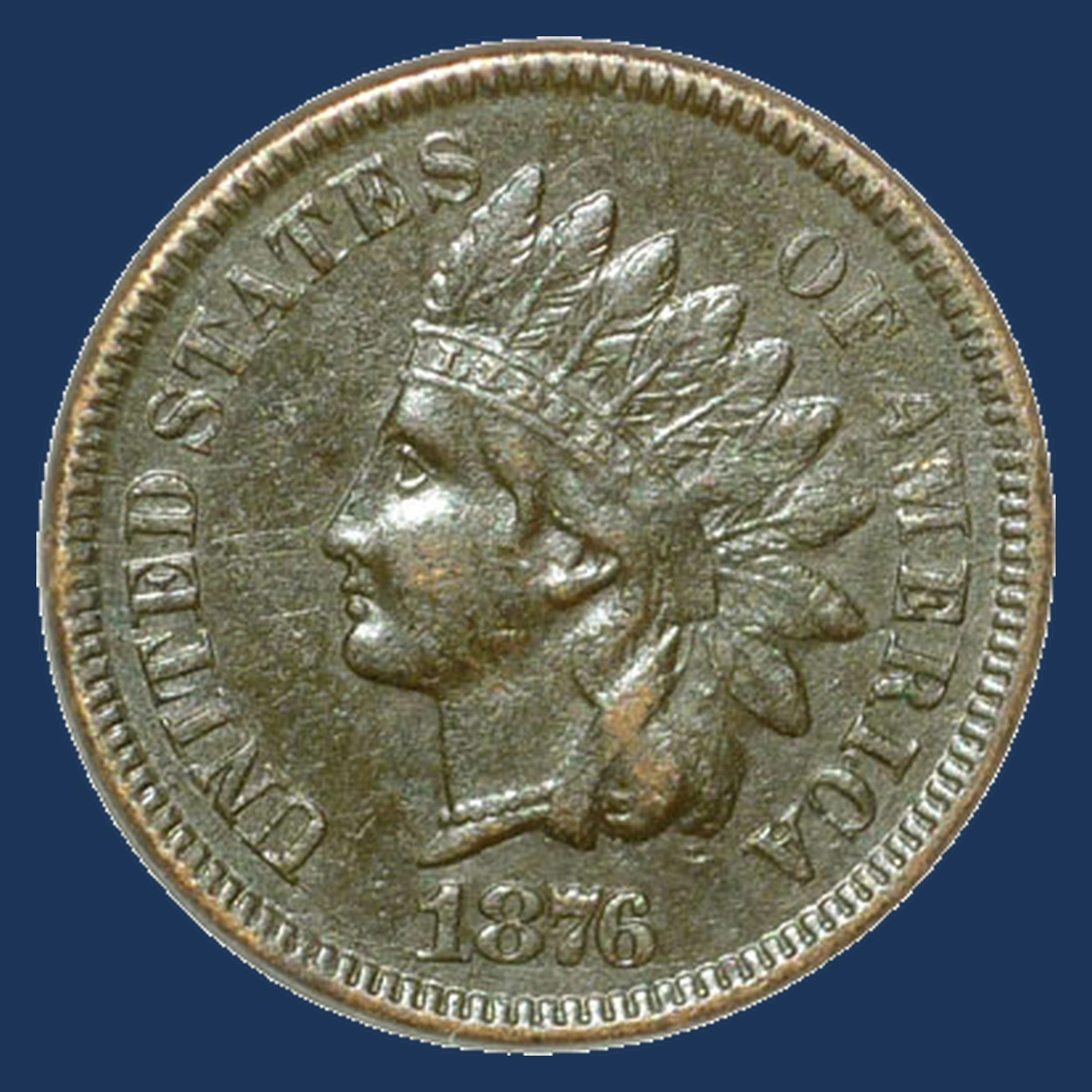
An odd outline near the portrait may belong to a feature normally found on the back. Marks of this kind can result from a clash between the two stamping tools.
Without a metal disc between them, the tools can contact each other and transfer traces of their designs. Later coins then pick up those traces beside their normal design.
For 1876, recorded locations include the forehead area, between feathers eight and nine, and around the C in CENT. They belong to separate illustrated examples.
The shape matters. A random line should not be called a clash because it looks unusual.
Estimated Value
Estimate $30–$400 for recognizable clashes on ordinary 1876 pennies. The estimate prices each whole coin, with stronger preservation and clearer transferred shapes supporting the upper portion.
Faint traces on worn coins may add little to an ordinary cent’s value. A larger mark is useful only when it can be recognized as part of the opposite design.
No specific sale is assigned to the listed 1876 clashes. Scratches and simple tool lines should not receive the same error premium.
How to Identify
Use photographs of both normal faces to identify what the strange outline could represent. Start with the forehead or the C in CENT, rather than trying to interpret every surface mark at once.
At 10×, follow that outline through its curves and compare it with the corresponding opposite-side design. For the feather example, count the feathers from the same direction as the reference photograph.
A scale and calipers should show roughly 3.11 g and 19 mm, and the edge should be plain. Match the recognizable transferred shape with the photographed 1876 clash instead of relying on a single straight line that could have another cause.
3. 1876 Indian Head Penny Clipped Planchet (Estimated Up to $450)
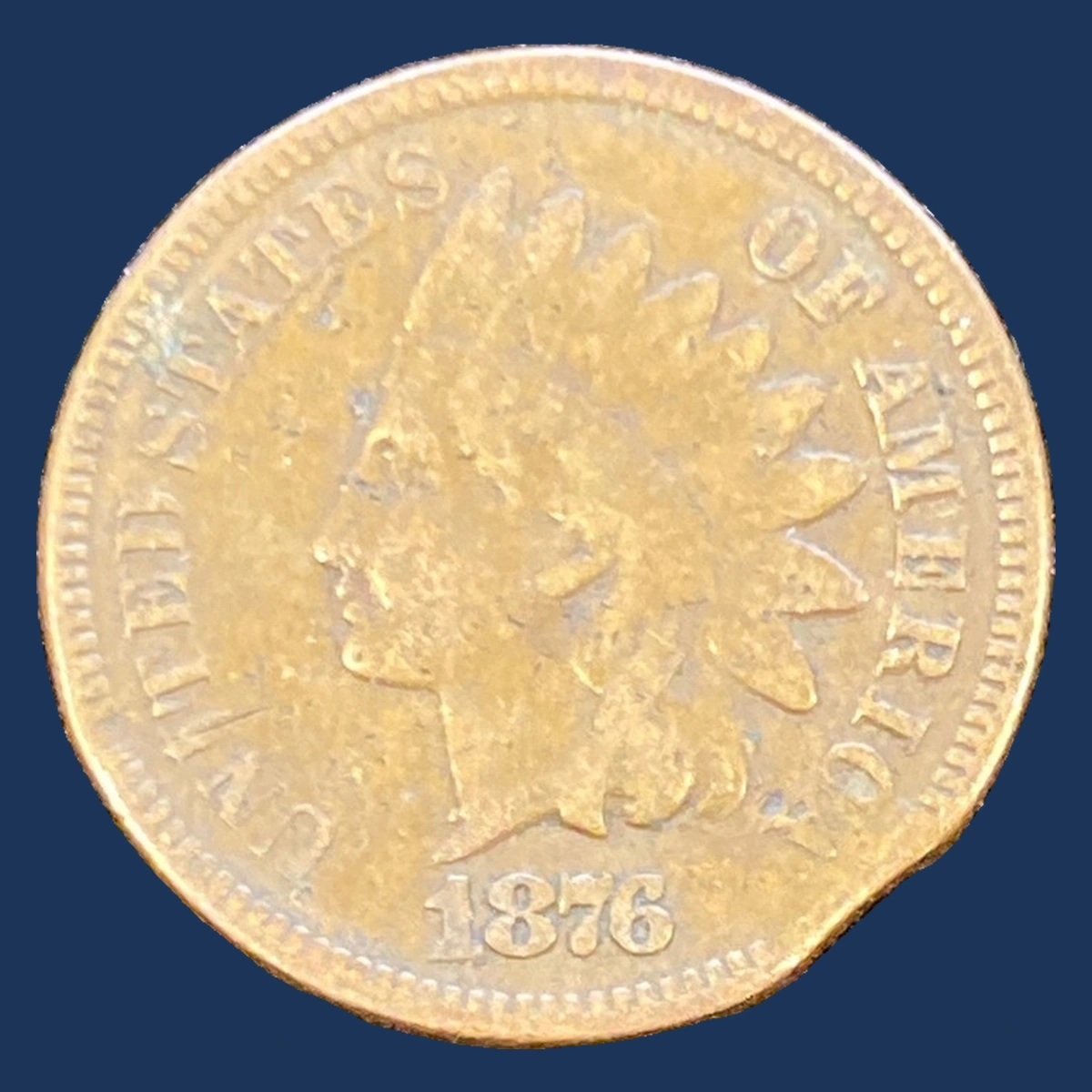
A gap in the penny’s edge may have existed before the coin received its design. This is a clipped planchet, meaning an incomplete metal disc went through the striking press.
The disc-cutting punch can overlap an existing hole in the metal strip or pass beyond its edge. The resulting shortage changes how nearby rim detail forms.
A 2025 collection sale listed an 1876 rim clip graded XF45 Details by ANACS. The Details label means the coin has a condition problem beyond ordinary wear.
The listing does not supply a clip percentage here. Do not infer one from the grade.
Estimated Value
An estimated $50–$450 covers identifiable 1876 clips, with size, wear, and surface problems affecting the result. The listed XF45 Details coin does not have a sale amount assigned here.
A 1939 clipped cent graded an unworn MS64 Brown sold for $180 in January 2023. That later copper coin is only a broad comparison for the error mechanism.
An undamaged 1876 coin and a Details-graded example need different comparisons. A notch cut after minting carries no genuine clip premium.
How to Identify
Compare the gap with the plain edge through a 10× magnifier. A later saw cut or filed notch can leave parallel tool marks and an abrupt cut through finished design.
Weigh the penny on a scale.
Missing metal should lower the usual 3.11 g weight, although wear also removes metal. Use calipers across an intact diameter to compare with the normal size of about 19 mm.
Look beside each end of the gap for border detail that weakens as it approaches the missing metal. Weakness on the opposite rim may support the finding but is not required on every clip.
Follow the original strike into both ends of the gap rather than identifying the error from the notch’s outline alone.
4. 1876 Indian Head Penny Die Cracks, Chips, and Rim Breaks (Estimated Up to $700)
The diagonal stroke of the N in CENT can carry a small raised lump. It came from a local missing piece of the stamping tool, not an extra letter added to the design.
Thin cracks in that tool leave raised lines instead. The recorded 1876 paths include the right side of the back shield and parts of the wreath.
Larger breaks can reach the rim and replace a patch of design. Examples occur on the right and lower-left edge areas of the back.
A small defect inside the N is not a rim break just because both involve damaged tools.
Estimated Value
Use an estimated $25–$700 for ordinary 1876 pennies with these tool failures. Small chips and thin cracks may add little to a worn coin’s underlying value.
Large, easily matched rim breaks can command more, especially when the border and surrounding design remain clear. The upper range is an estimate, not a documented price for the small N chip.
A bent rim can also create a lump. Its appearance should not be priced as a mint-made break without checking the edge.
How to Identify
Identify whether the raised feature touches the rim. That separates the small N defect from a larger break joining the coin’s outer border.
Under a 10× magnifier, follow the N’s diagonal stroke into the lump. For a rim break, examine the plain edge and check whether damage has pushed metal inward.
Compare scale weight and caliper diameter with 3.11 g and about 19 mm. A normal measurement does not prove the cause of the raised mark.
Then trace any thin line past the shield or wreath, checking that it rises rather than cuts downward. For the N example, the raised metal should occupy the upper part of that same diagonal stroke.
5. 1876 Indian Head Penny Repunched Date (Estimated Up to $800)
Look beneath the 1 and the first 8. The recorded repunched date shows traces extending downward from the main numbers.
Workers added dates to the steel stamping tools with a separate punch. A repeated blow after a small shift could leave parts of the first impression exposed.
The earlier strokes then appeared on coins struck with that tool. They are remnants of the date, not a second full impression of the coin’s design.
The downward direction is important for this 1876 example. A scratch below a number or a simple flat shelf beside it does not establish the variety.
Estimated Value
For a matched 1876 repunched date, estimate $40–$800 across worn and attractive unworn examples. The upper end assumes clear extra strokes and a well-preserved coin.
A later 1904 FS-301 cent graded an unworn MS64 Brown sold for $168 in January 2019. That provides a minor-variety comparison, while the date and condition differences still matter.
The 1876 estimate covers the whole cent. A vague lower edge on a worn digit is not enough to justify a repunched-date premium.
How to Identify
The normal bronze coin should weigh near 3.11 g and measure about 19 mm. Check with a scale and calipers, and inspect its plain edge before concentrating on the small date detail.
Under a 10× magnifier, hold 1876 upright and compare the bottoms of the 1 and 8 with an ordinary date. The recorded extra impression lies below the main numbers.
Look for shapes that fit those digits, rather than assuming every raised line is another date stroke. At the clearest part, compare both clearly visible lower remnants with the photographed 1876 repunched date so that the direction and spacing agree.
6. 1876 Indian Head Penny Split Planchet (Estimated Up to $1,000)
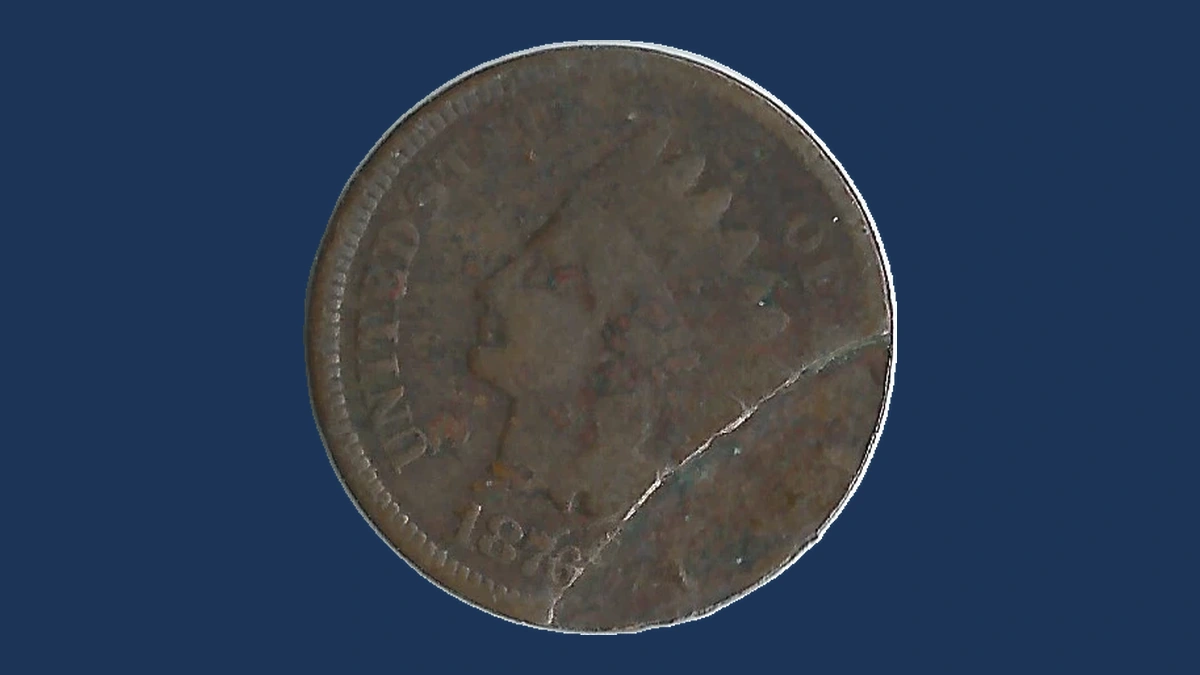
A broad layer of the coin’s metal can split away, leaving a thinner surviving piece. The metal disc is called a planchet, and this failure is known as a split planchet.
Weak bonding inside the original metal allows the separation. It is different from a small flake peeling off a limited surface area.
The recorded 1876 coin was described as heavily worn with a non-retained split. Non-retained means the detached portion was no longer with the coin.
The description does not establish which face separated or when the split occurred. Those details must be read from the surviving surfaces.
Estimated Value
Estimate $100–$1,000 for a genuine identifiable 1876 split-planchet piece. The amount of surviving design and the condition of the exposed metal affect collector interest.
The recorded example appeared in a six-coin group, so that lot does not provide an individual price for this piece. No divided share of the group’s price is used here.
A strong date and a clear natural separation can support the higher estimate. A coin ground thin after minting does not qualify.
How to Identify
Measure thickness at several points with calipers and record the weight on a scale. A separated piece should be lighter than the normal 3.11 g bronze cent, though its diameter may remain around 19 mm.
Now examine the exposed face through a 10× magnifier. A natural internal split can leave uneven metal texture rather than the parallel lines of sanding.
Check how that face meets the plain edge.
The visible date and remaining design must identify the piece as an 1876 cent. Do not assume whether the split happened before or after striking when the surfaces do not show it.
Compare the thin surviving body with its separation surface and look for natural internal-metal texture extending to the edge.
7. 1876 Indian Head Penny Misplaced Date (Estimated Up to $1,500)
A piece of a number can sit away from the intended date after a date punch touches the stamping tool in the wrong place. The mark can survive even after the date is added correctly.
Coins made with that tool repeat the stray fragment. Collectors call the feature a misplaced date.
An 1876 example is cataloged as MPD-001. Its exact digit location is not specified here, so a random bump near the portrait should not be assigned that name.
The fragment must look like part of a number and match the photographed variety, not merely sit outside the normal date.
Estimated Value
Use an estimated $50–$1,500 for an identifiable 1876 misplaced date, depending on condition and how clearly the fragment matches. This range does not price an unidentified bump.
A different-year comparison is the recorded $1,187 eBay price for a 1908 FS-301 cent graded an unworn MS65 Red and Brown in December 2021. It is not an auction result for the 1876 variety.
The broader estimate allows for the older coin’s condition and collector demand. A clear variety match remains essential.
How to Identify
Obtain a photograph specifically identified as the 1876 misplaced-date variety before choosing a spot to inspect. The location from another year is not a substitute.
With a 10× magnifier, compare the suspected fragment and the nearby normal design together. Their relative positions are more useful than an isolated enlarged bump.
Check the penny’s plain edge and compare its scale weight and caliper diameter with 3.11 g and about 19 mm. Corrosion or a cut can create a misleading shape on an otherwise genuine coin.
Follow the candidate fragment into its clearest curve or straight stroke. Match that shape and its exact neighboring design with the 1876 photograph before naming it MPD-001.
8. 1876 Indian Head Penny Double Strike (Estimated Up to $5,000)
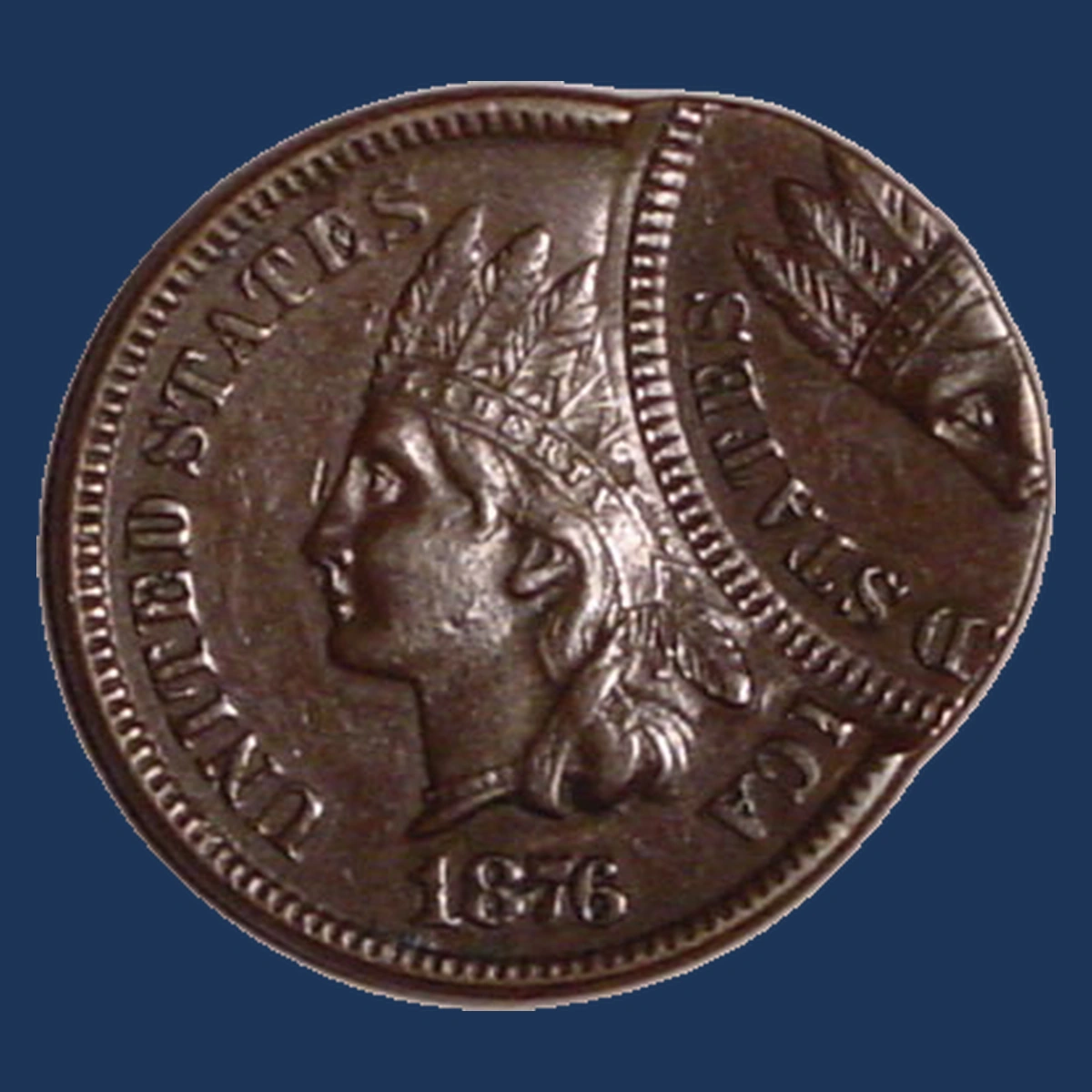
A second set of design details stretches toward the right side of this penny. The recorded 1876 example was struck once in the center and then struck again after moving.
The later blow landed 65% off-center toward 3 o’clock. Much of that second design missed the available metal.
NGC graded the collection example AU58 Brown, meaning very slight wear with brown surfaces. Its two strike positions remain separate from the grade describing its condition.
The first centered image helps explain the sequence. This is not a single off-center strike or a few doubled outlines within one letter.
Estimated Value
Allow an estimated $600–$5,000 for a genuine 1876 double strike with a readable date. The clarity of both impressions and the coin’s condition influence the price.
A 1908 cent with a second off-center strike, graded an unworn MS62 Brown by NGC, sold for $4,080 in June 2024. It is a different year and not the recorded 1876 example.
The 1876 AU58 Brown coin appears in a collection account without a sale price used here. Its range is therefore an estimate.
How to Identify
Locate the first, centered portrait and date before following the extra image to the right. The recorded later strike lies toward 3 o’clock, so its design should fit that second position.
Use a scale against 3.11 g and calipers to record the outline around the normal 19 mm size. A second blow may spread or distort the metal without removing it.
Inspect the plain edge for joining or added metal, then study both impressions through a 10× magnifier. Trace one recognizable design feature through the two positions and check that the overlap follows a real second strike rather than a shallow flattened shelf.
9. 1876 Indian Head Penny Copper-Nickel Strikes (Estimated Up to $30,000)
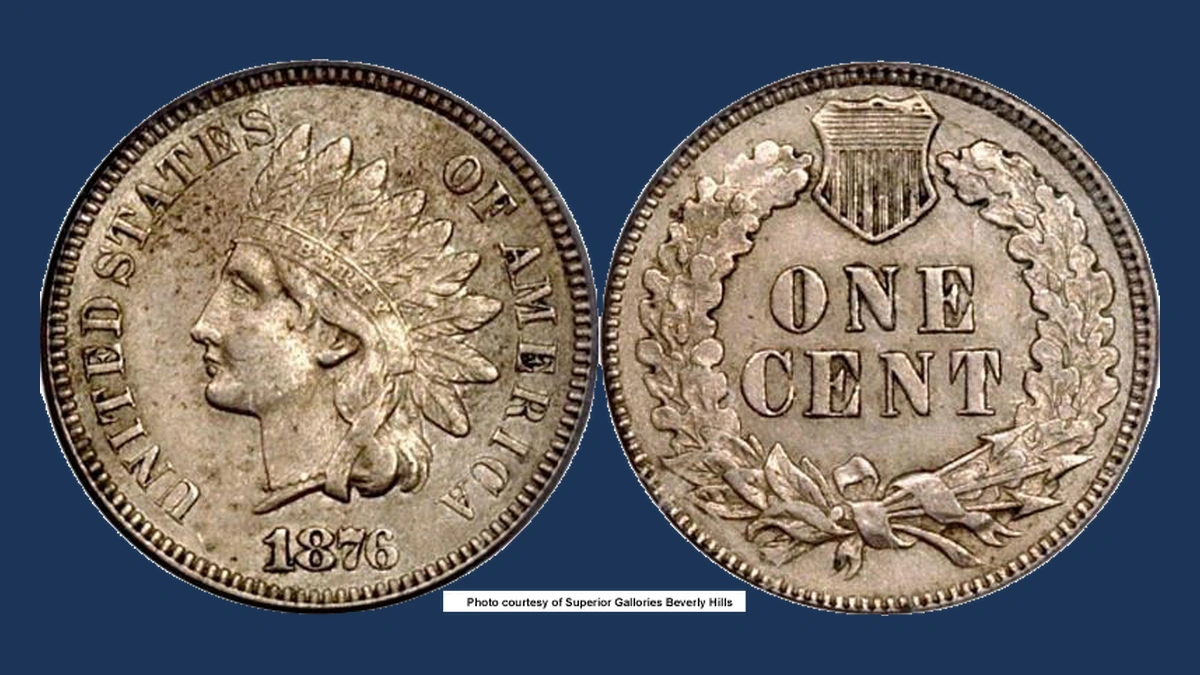
The pale metal on these rare pennies differs from ordinary bronze. One recorded example was labeled as a cent struck on a disc intended for a three-cent nickel coin.
Its reported weight is 1.68 grams, rounded to 1.7 grams on the holder. That is far below a normal cent’s weight.
Another copper-nickel piece has been called a test striking, while a competing explanation proposes a Venezuelan one-centavo disc. That country assignment remains an explanation, not a fact established by color.
The two reports should not be merged into one specimen. Their size, design coverage, and recorded identities must remain separate.
Estimated Value
The unworn NGC MS64 three-cent-nickel-disc example sold for $16,675 on August 21, 2004. Use an estimated $10,000–$30,000 for a comparable authenticated piece.
For the separately reported test-strike or foreign-disc piece, allow a conditional estimated $5,000–$25,000. Its accepted identity and condition could change the comparison.
The historical sale belongs to the small labeled example. It should not be assigned to the other piece or to an ordinary penny with a pale coating.
How to Identify
Begin with a scale reading.
The small labeled example is reported at 1.68 grams, with 1.7 grams on its holder. A normal bronze cent weighs 3.11 grams and measures about 19 mm.
Use calipers to record diameter, and compare how much of the outer design fits. The small-disc example and the full-diameter disputed piece should not be judged from the same outline.
At 10×, inspect the plain edge and worn points for a coating over ordinary copper. Color alone cannot name the alloy or the intended denomination.
Compare the measured coin with the correct documented specimen and obtain professional metal testing. The small example’s low weight and cropped outer design provide the first useful checks together.
Conclusion
Weight is crucial for a pale 1876 penny, while a tiny extra date stroke needs a photograph match. A slight rotation calls for yet another test: a controlled flip.
The estimated $25–$30,000 range covers these very different discoveries. Keep the rare copper-nickel pieces separate from ordinary bronze coins, and price the complete coin with its condition rather than treating every unusual mark as equally valuable.