1896 Penny Error List with Pictures

The last digit of 1896 deserves a close look: many varieties hide an extra stroke beside the 6. More dramatic 1896 penny errors include missing metal and a second strike far outside the first.
A 10% off-center 1896 cent sold for $159 in June 2023. Estimated values across the errors below span $5–$5,000, with dramatic multiple strikes toward the upper end.
Follow the visible clues through each section to separate a real mint feature from a scratch, cut, or tempting nickname.
1. 1896 Indian Head Penny Tool Line Inside the 6 (Estimated Up to $150)
A straight raised line crosses the upper part of the 6 on this cataloged example. Its shape does not follow the curve expected from another impression of the digit.
The mark is listed under RPD-019, but the name alone does not establish a repunched date. A cut or deep line in the stamping tool could also leave raised copper on the finished penny.
The stamping tool is called a die. Damage to it can repeat on many coins.
What matters here is the visible line, rather than assigning it a date-punch explanation that its shape does not support.
Estimated Value
Allow an estimated $5–$150 for an identifiable example, depending on wear and the clarity of the line. This prices a minor tool feature on the whole coin.
It should not automatically receive the premium of a confirmed repunched-date variety. The catalog label preserves a way to find the example, rather than proving how the line formed.
Better surfaces make a small mark easier to study. Heavy corrosion or an unrelated scratch can reduce that usefulness.
How to Identify
Compare the suspect line with the normal curve of the 6 through a 10× magnifier. A straight bar should not be treated as a second curved digit merely because it lies inside the number.
Check the coin’s plain edge and use a scale and calipers against 3.11 g and 19.05 mm. Those measurements address the penny’s basic identity, not the cause of its small line.
Move a lamp around the date to establish whether the line rises above the surface. At its clearest point, follow it toward both ends and compare that straight path with the recorded original RPD-019 photograph.
2. 1896 Indian Head Penny Die Cracks and Rim Breaks (Estimated Up to $750)
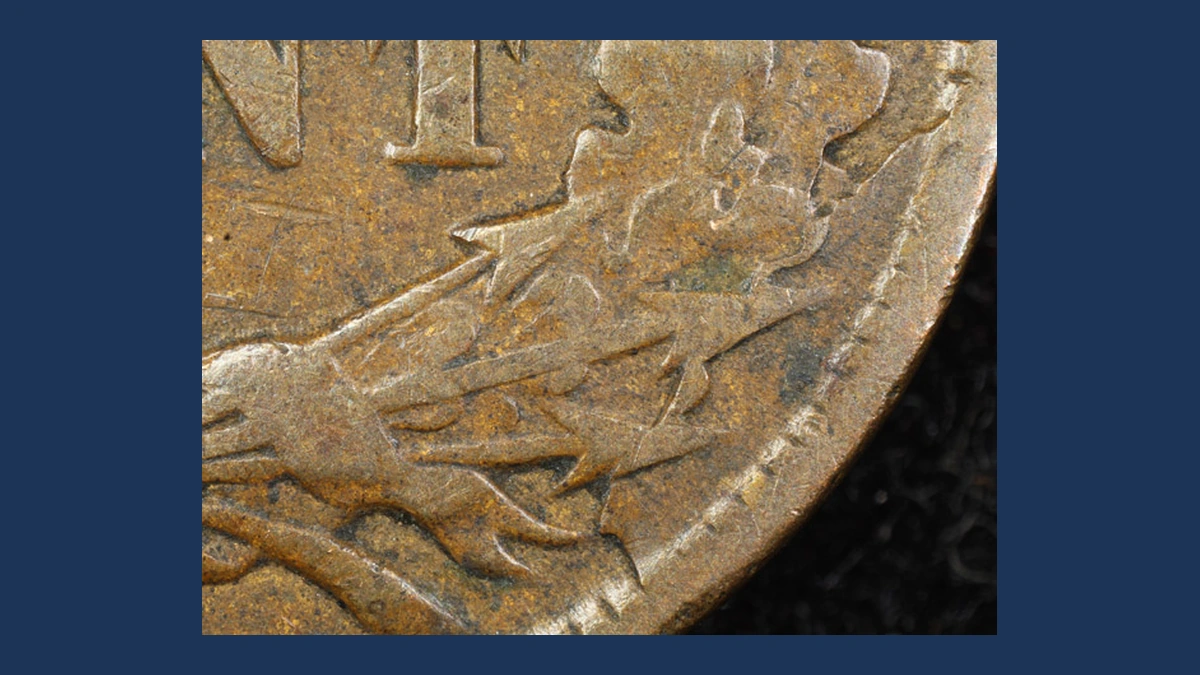
At the top of one 1896 penny’s back, a small raised patch bridges the rim and nearby flat surface. A piece of the stamping tool broke away and copper filled the space.
This example occupies roughly 11:30 to 12:30. Another tool developed cracks at several points around the back.
On later coins from that second tool, the lower-left section became a retained break. The broken tool piece stayed in place, leaving an uneven section that could still carry design detail.
The two patterns should be compared separately, even though both result from tool failure.
Estimated Value
Estimated whole-coin values run from $5–$75 for small cracks to around $75–$750 for clear rim breaks. Wear and the size of the raised area affect the result.
A retained piece showing displaced design is different from a faint line on an otherwise ordinary coin. The upper estimate is meant for a noticeable, correctly identified feature.
No separate auction price is assigned here to either illustrated 1896 tool. These ranges reflect comparable minor and larger Indian cent tool defects.
How to Identify
Turn the back upright and decide which area is affected before consulting a variety photograph. The small top break spans about 11:30 to 12:30; the retained lower-left break lies near 7:15 to 8:45.
Use a 10× magnifier to inspect the boundary between the raised section and normal design. Remaining detail within the lower-left section can support a retained break rather than a completely missing tool piece.
A scale and calipers should find about 3.11 g and 19.05 mm. Examine the plain edge beside the feature for impact damage, then check whether original design continues across the displaced section instead of being crushed into it.
3. 1896 Indian Head Penny Curved Clip (Estimated Up to $1,000)
A curved missing section changes the penny’s outline before its design is stamped. The metal-cutting machine can overlap an earlier hole in the strip and produce an incomplete round disc.
That disc can still pass through the press. The design then forms beside the already missing section.
The documented 1896 example is graded VF25 by ANACS and weighs 3.01 g. It shows wear but remains a recognizable curved clip.
The listed weight does not establish the missing section’s percentage or its clock position. Those details belong to the actual outline, not to a generic clip diagram.
Estimated Value
An estimated $50–$1,000 covers genuine 1896 curved clips, allowing for size, condition, and appearance. The documented VF25 coin has no assigned sale price here.
A 1939 Lincoln cent clip graded MS64 Brown sold for $180 in January 2023. That other-year coin illustrates a real market for the error, but differs in design, grade, and clip shape.
A modest worn clip generally sits below a larger, attractive unworn example. A later cut is not priced as a mint clip.
How to Identify
Put the coin on a scale before drawing conclusions from its curved outline. The known example reads 3.01 g, compared with the normal 3.11 g.
Use calipers on the surviving round portion to compare with 19.05 mm. Inspect the plain edge for fresh cutting or saw marks; a low weight alone does not prove a mint error.
At 10× magnification, study the ends of the curve and the design beside them. The missing section should fit the way metal moved during striking.
Check the rim directly opposite the curve for local weakness. That supporting clue can help distinguish an incomplete disc struck by the Mint from a finished penny cut later.
4. 1896 Indian Head Penny Flying 9 (Estimated Up to $1,500)
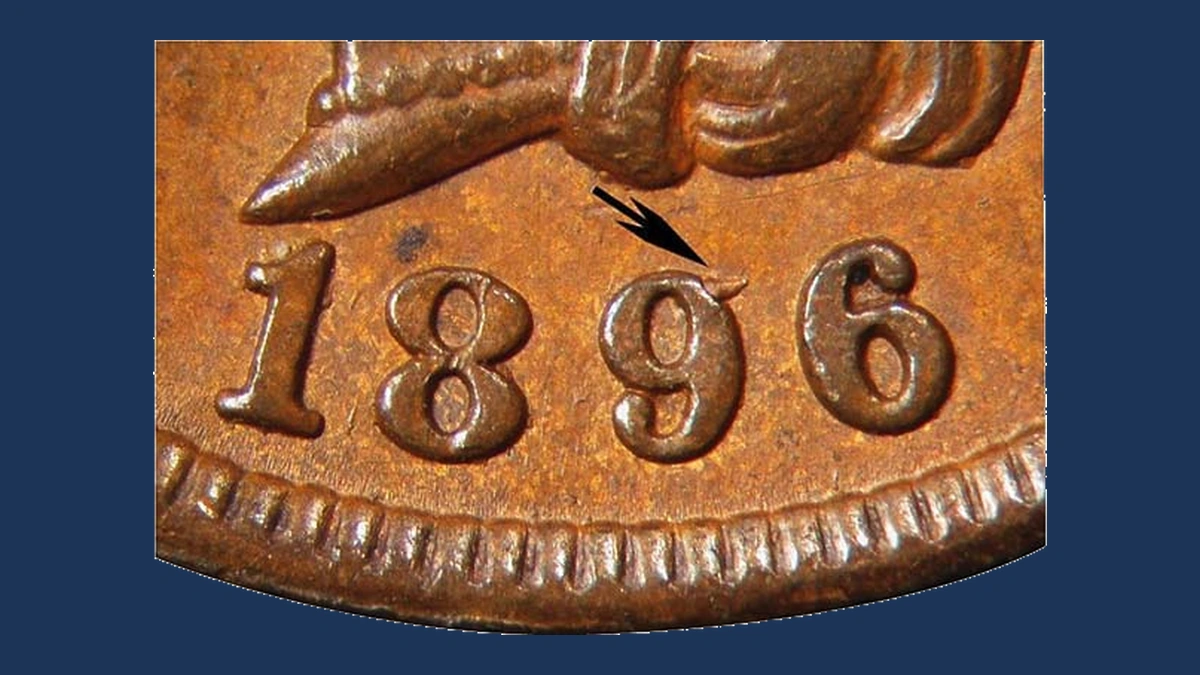
The 9 has a tiny projecting corner that can look like a wing. Collectors call this visible feature the Flying 9.
It is associated with Snow 21. The nickname describes the shape rather than proving a particular manufacturing sequence.
One explanation involves a fragment from a damaged date punch, but specialists have disagreed about that explanation. The extra corner is not established proof that a 9 was punched over a 5.
An ordinary date with a scratch beside it is also different. The Flying 9 feature must match the raised shape and its attachment to the digit.
Estimated Value
For an identified Flying 9, use an estimated $20–$1,500 range across worn through attractive high-grade coins. The small projection’s visibility and the penny’s surfaces strongly affect appeal.
These are whole-coin estimates, not a claimed auction record for Snow 21. A clear catalog match is more useful than a dramatic story about the feature’s origin.
Do not pay an overdate premium solely because a seller calls the mark “9 over 5.” That explanation goes beyond the visible evidence.
How to Identify
Start with the 9’s upper-right edge in clear, sharp focus under a 10× magnifier. Look for a projection joined to the digit, rather than a separate scratch or a loose particle.
A normal 1896 penny has a plain edge, weighs about 3.11 g, and measures 19.05 mm across. A scale and calipers can check the coin without explaining how the tiny projection formed.
Compare its shape with the published original Flying 9 example. Keep the normal 9 aligned, then inspect the point where the small corner leaves the digit; that attachment is more useful than imagining a complete hidden 5.
5. 1896 Indian Head Penny Repunched Date (Estimated Up to $1,500)
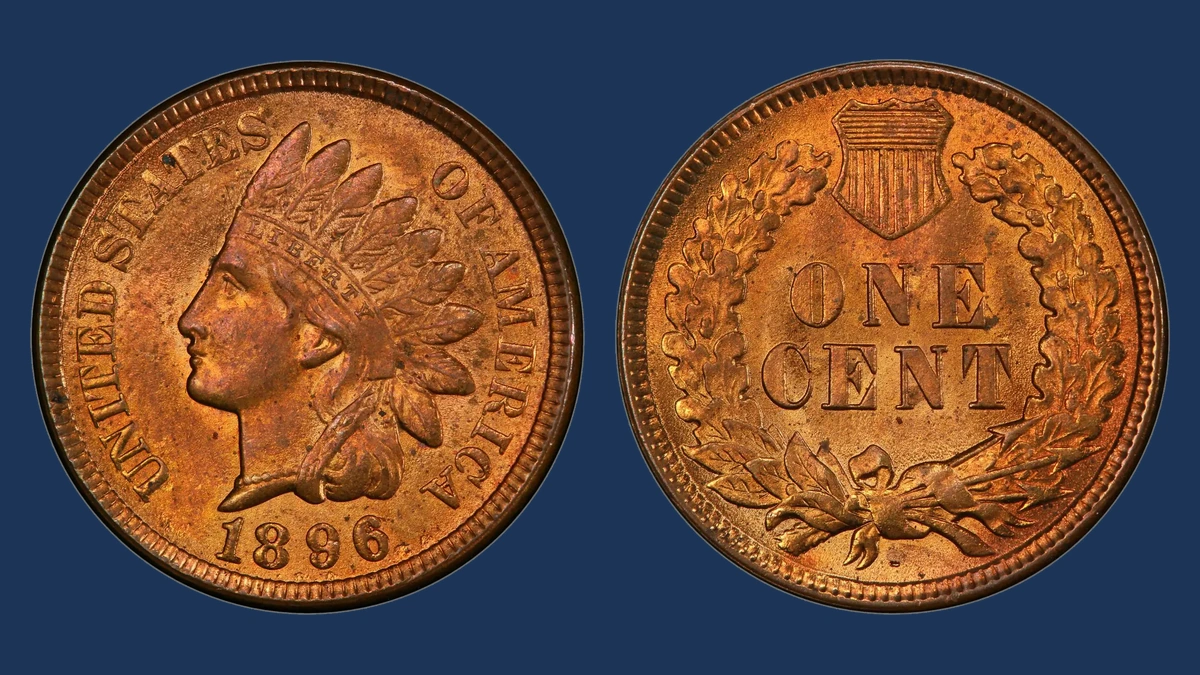
A narrow extra curve beside the 6 may record a second position of the date punch. Both impressions remained in the stamping tool and appeared together on later pennies.
The familiar FS-301, also called Snow 1, has an extra stroke toward the right of the 6. Other 1896 varieties affect the 8, 9, or several digits.
The same front tool could be paired with different back tools. That is why a date match alone does not settle every catalog name.
These differences are varieties of repunching, rather than separate kinds of striking error.
Estimated Value
An unworn FS-301 graded MS63 Red and Brown has a $92 March 2012 auction result recorded by PCGS. That older result belongs to one specific coin.
An estimated $10–$1,500 covers other grades and varieties, with the best surfaces and clear secondary strokes supporting higher prices. It includes the ordinary value of the penny.
A thick digit alone is not enough to place a coin at the top of the range.
How to Identify
Check the 6 first when investigating FS-301, but do not stop at a vaguely doubled outline. Through a 10× magnifier, look for a separate curved stroke to its right.
If the stroke matches, compare the back with the appropriate catalog image. The same front tool appears with different back tools, and some early extra detail on the 1 becomes weaker later.
Use a scale and calipers to check the normal 3.11 g and 19.05 mm, and inspect the plain edge. These measurements do not select the variety.
For another date pattern, examine each affected digit independently. Check whether the extra stroke preserves part of a numeral instead of forming a flat shelf beside it.
6. 1896 Indian Head Penny Misplaced Date (Estimated Up to $1,500)
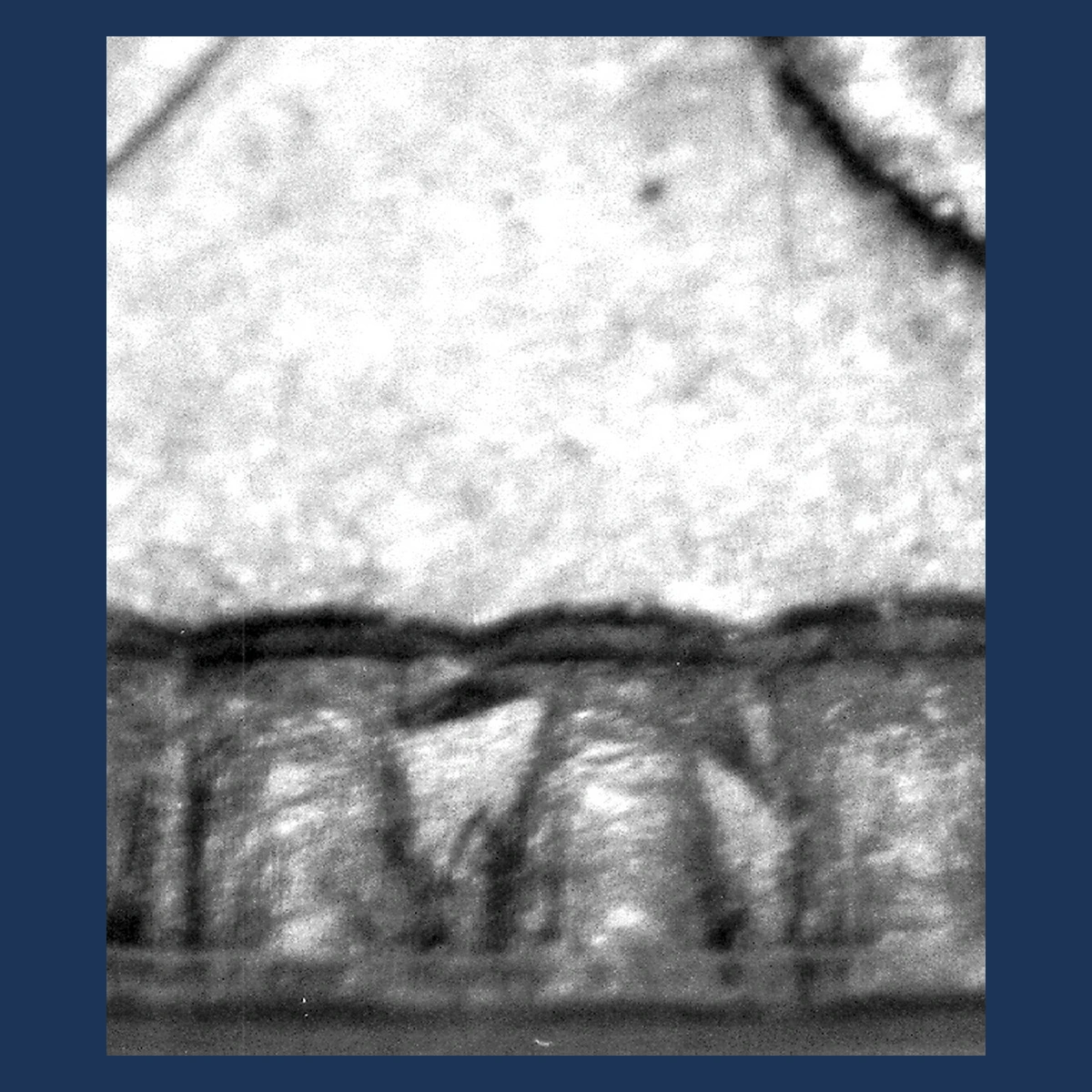
The top of an extra 6 can hide below and slightly left of the normal 6. On Snow 10, it sits among the small teeth that form the inner border.
The date punch touched the stamping tool too low before the final date was placed. Coins struck from the finished tool preserved part of that first mistake.
Other 1896 varieties show different misplaced digits. One has remnants of 1 and 8 below and to the right of the normal 8.
A nearby repunched digit can accompany a misplaced date without being the same feature.
Estimated Value
Estimated values of $25–$1,500 allow for different misplaced-date varieties, wear, and the clarity of the extra digit. These are prices for complete coins.
A related 1908 Indian cent, FS-301 graded MS65 Red and Brown, has a recorded $1,187 eBay result from December 2021. That different date and variety offers a comparison for an attractive example, not a sale price for an 1896 coin.
Faint partial digits on worn surfaces should be valued more modestly.
How to Identify
The border below the date is the working area for Snow 10. With a 10× magnifier, find the top of the misplaced 6 beneath and slightly left of the normal 6.
Before relying on a small border mark, examine the plain edge for reshaping. A scale and calipers should find approximately 3.11 g and 19.05 mm.
Other varieties need their own photographs; do not assign Snow 10 from any isolated curve below a digit. On Snow 10, also check above the lower loop of the normal 6 for its accompanying repunching, keeping that stroke separate from the misplaced digit in the border.
7. 1896 Indian Head Penny Doubled Die Obverse (Estimated Up to $1,500)
Letters in LIBERTY and parts of the date are the reported areas of front doubling for 1896. In a genuine doubled die, two slightly different design impressions exist in the stamping tool itself.
A single strike can therefore put doubled detail on a coin. It does not require the penny to pass through the press twice.
The reported feature needs comparison with ordinary lettering and date-punch varieties. Repunching only a date digit does not establish doubling of the broader design.
Wear and flat mechanical doubling can also make letters look thick or uneven.
Estimated Value
An estimated $25–$1,500 applies to a properly confirmed example of the reported 1896 front doubling. This is a conditional valuation, not a certified sale record tied to a proven DDO001 attribution.
For comparison, an 1887 Indian cent FS-101 with a different, established front doubled die sold for $1,380 in June 2025. Its variety and strength differ.
The estimate depends on the actual 1896 doubling being established; an ordinary thick or damaged letter is not enough.
How to Identify
Compare LIBERTY on two 1896 coins with similar wear. Through a 10× magnifier, look at letter corners rather than simply judging which word looks thicker.
Check the plain edge, then use a scale and calipers for the standard 3.11 g and 19.05 mm. Normal measurements do not establish that the tool carried a doubled design.
Move from the lettering to the date and ask whether the effects belong to the same design doubling. A separate date-punch stroke can have a different cause.
At the clearest letter, turn the light across its edge. A flat shelf beside the letter points toward mechanical doubling rather than a second rounded design outline.
8. 1896 Indian Head Penny Broadstrike (Estimated Up to $1,500)
A broadstruck penny has room to spread outward during the blow. The collar, the ring that normally controls the coin’s width, did not provide its usual support.
The design can remain complete even though the outline becomes wider or uneven. That complete design distinguishes a broadstrike from a strike that misses part of the metal.
An unworn 1896 example graded MS64 Brown by NGC appeared in a Heritage auction in 2020. Its expanded rim belongs to the strike, rather than to later circulation wear.
A hammered penny can also become wide, so shape alone needs careful checking.
Estimated Value
Allow an estimated $50–$1,500 for a genuine 1896 broadstrike, depending on preservation and how clearly the metal spread. The 2020 MS64 Brown example is not assigned an unverified sale amount here.
An older same-series comparison is a 1900 coin with a broadstrike label and added flaws, sold for $207 in 2006. Its possible slight off-center strike and lamination make it a combination example.
The estimate concerns complete coins, not an identical price for every expanded outline.
How to Identify
Calipers can reveal extra width beyond the normal 19.05 mm, but first note where the outline is widest. Follow the design toward that area to see whether the outer letters are still present.
Then weigh the coin against 3.11 g. Spreading during striking changes the shape without requiring extra metal.
Under a 10× magnifier, inspect the lettering for flattened tops and the plain edge for repeated blows. Those signs can expose a penny widened after it left the Mint.
A naturally expanded area should belong to the same original surface as the rest of the coin. Check the final outer letters around the entire design before calling the strike complete.
9. 1896 Indian Head Penny Off-Center Strike (Estimated Up to $2,000)
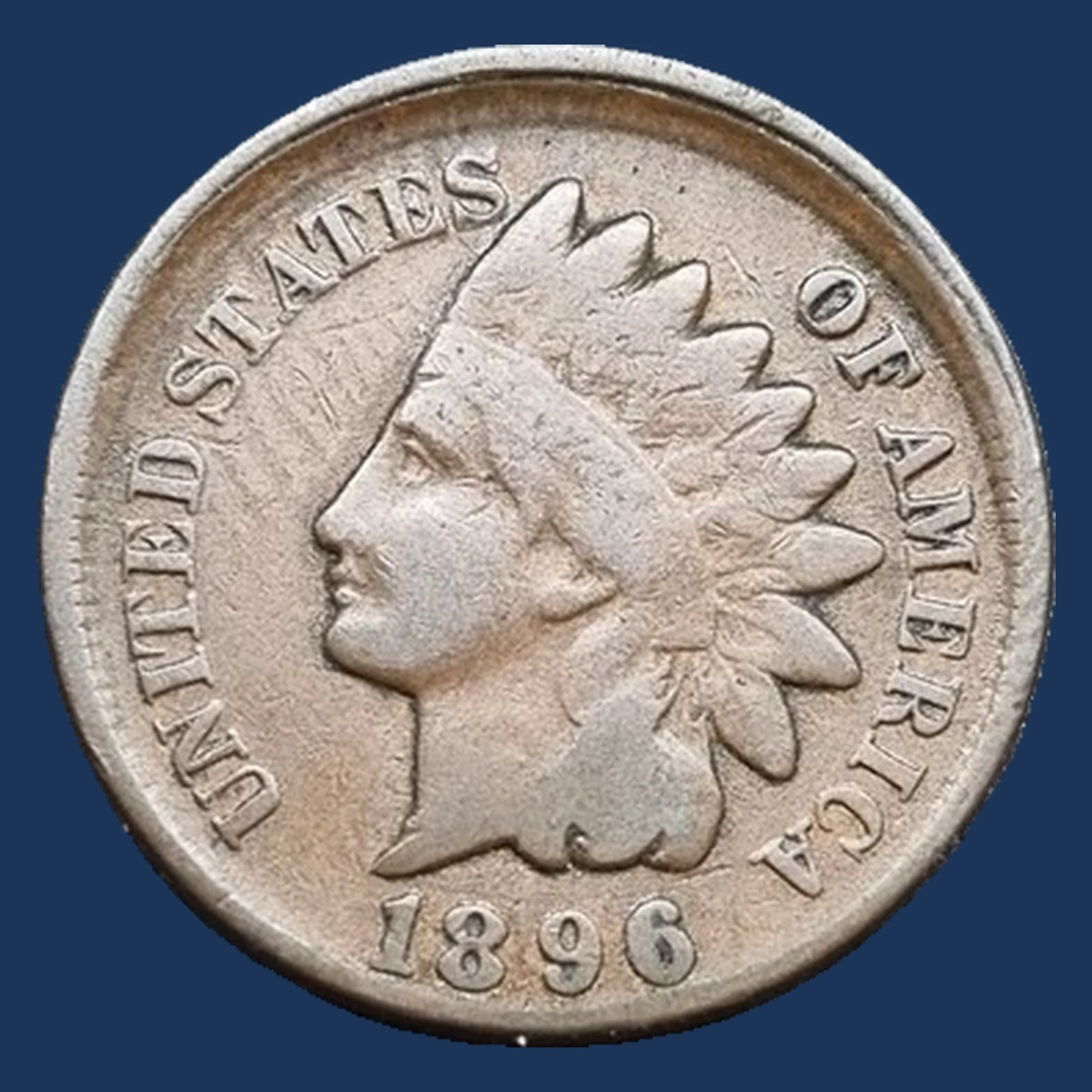
The amount of blank copper and the missing design show how far a penny sat outside the striking area. The disc was misplaced before the press closed.
A documented 1896 example is 35% off center toward the left. Another shifts about 30% toward 1:30, losing part of OF AMERICA and the right wreath.
A smaller 10% example also appears in an auction record. These coins illustrate different displacements, not stages of one tool.
The direction of the shift must be read from each coin. A larger percentage does not mean that every important detail survived.
Estimated Value
A 10% off-center 1896 cent graded AU50 sold for $159 at Heritage on June 12, 2023. AU50 indicates a coin with light circulation wear.
Across modest and stronger shifts, use an estimated $100–$2,000. A readable date, attractive copper, and a striking appearance can improve the price.
The 30% and 35% examples have different wear and missing details. The $159 transaction belongs only to the 10% coin, not to every illustrated displacement.
How to Identify
On the 30% example, use the missing portion of OF AMERICA and the right wreath to orient the strike. Other examples may lose different design areas.
Check with a scale that the retained metal remains near 3.11 g, and use calipers against the ordinary 19.05 mm outline. Inspect the plain edge for a cut section masquerading as an unstruck area.
A 10× magnifier should show original copper on the blank crescent rather than grinding scratches. Where a letter runs out of room, follow it to the strike boundary and confirm that the blank metal and missing design agree with one displacement.
10. 1896 Indian Head Penny Double Strike (Estimated Up to $5,000)
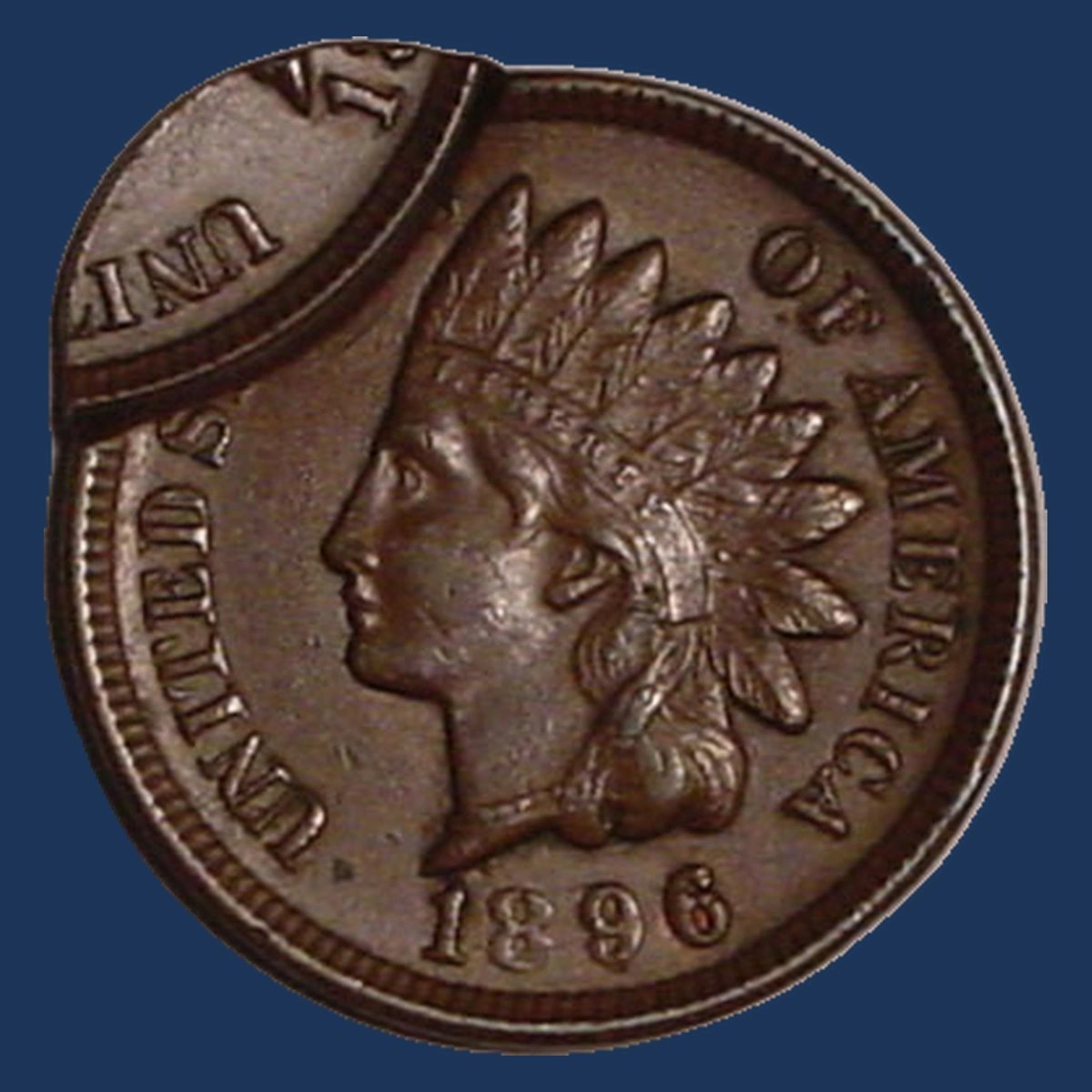
A second set of design details appears far from the first on an 1896 double strike. The coin received its first blow, failed to leave the press, and moved before another blow.
One documented example has the second strike about 70% off center and an AU55 grade indicating light wear. A different coin has an 85% second strike toward roughly 11 o’clock.
Their overlapping pictures reveal more than an extra date stroke. Each second impression carries part of the larger design.
The clearest coins let the viewer follow which details were present before the later strike flattened or covered them.
Estimated Value
An estimated $300–$5,000 spans worn through attractive 1896 double strikes, depending on the overlap and surviving detail. The two documented examples do not share an assigned transaction amount here.
A 1908 Indian cent double strike graded MS62 Brown sold for $4,080 in June 2024. That same-series, different-year result supports a higher-value comparison.
The estimate still depends on the individual 1896 coin, especially its surfaces and how clearly the two strikes can be seen.
How to Identify
Find an area where the two impressions overlap and examine it through a 10× magnifier. The later design can flatten parts of the earlier one, helping establish the order of the blows.
A scale should remain near 3.11 g if no metal was lost, while calipers may show an outline wider than 19.05 mm. Check the plain edge for evidence of artificial pressing.
Do not confuse a small doubled letter with a second impression of the coin design. On the 70% example, trace the first, centered design outward to where the later displaced impression crosses it; the second image should have its own coherent direction.
Conclusion
Extra strokes around the 6, a raised corner on the 9, and a broad blank crescent tell different stories. Match the actual feature before choosing a variety name or attaching a price.
The estimated $5–$5,000 range includes modest tool marks through dramatic double strikes. Keep all four date digits in view, check the coin’s basic measurements, and leave its surfaces untouched while you examine them.