1901 Penny Error List with Pictures

A tiny extra stroke on the first 1 can belong to a specially made collector coin. One such Proof, with a repunched date, sold for $8,700 in August 2019; its exceptional condition was part of that whole-coin price.
The 1901 Indian Head penny errors below span estimated values of $5–$9,000. They include smaller tool flaws as well as shifted and repeated strikes.
Follow the visible feature to its section, keeping ordinary coins separate from specially prepared Proofs when comparing prices.
1. 1901 Indian Head Penny Rusted Die (Estimated Up to $250)
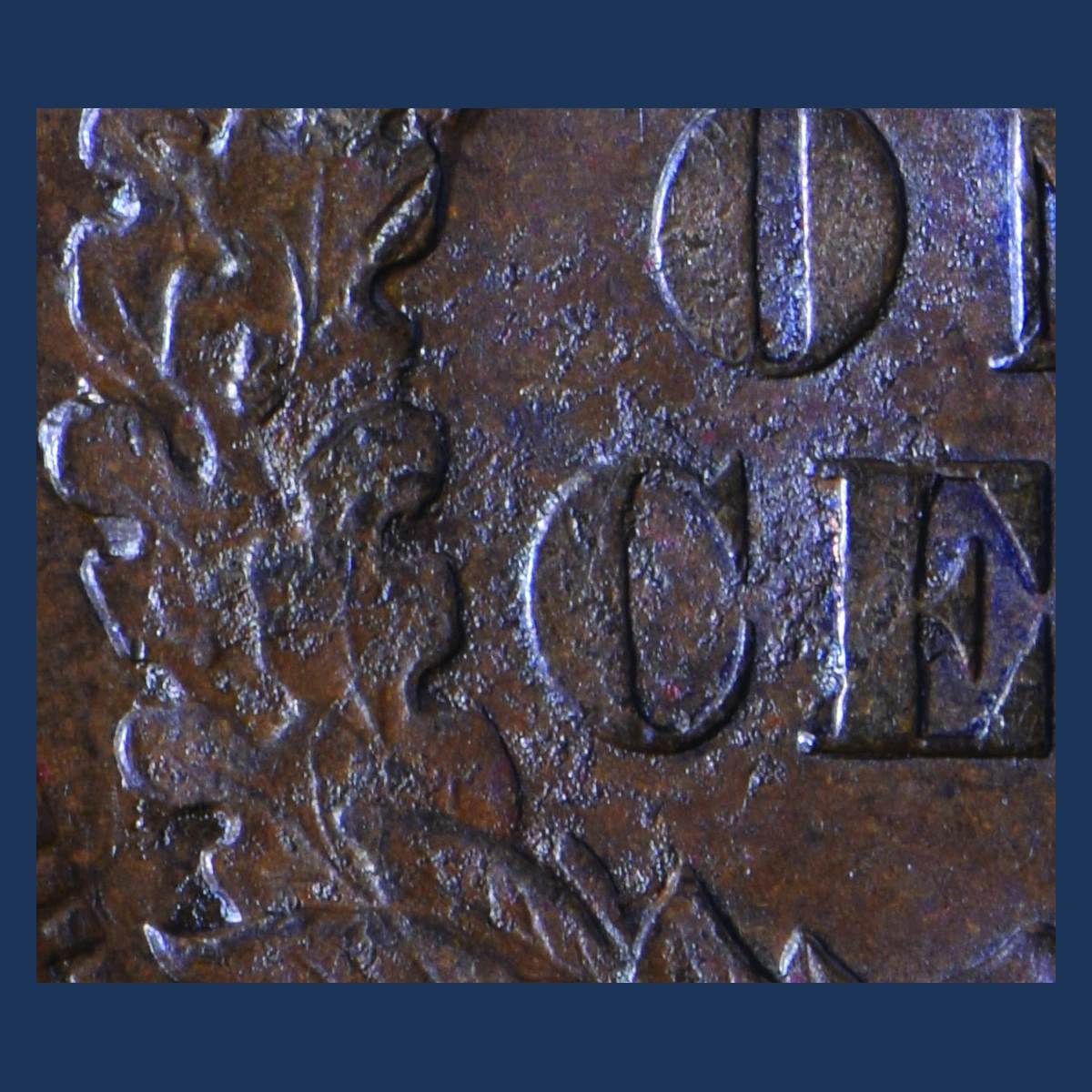
The lower-left part of the back may have small raised rough spots. They can form when rust pits develop in the steel stamping tool, called a die.
Metal enters those pits during striking, copying them as raised marks. This differs from corrosion that attacks the penny after manufacture.
The documented 1901 example also has extra date strokes. They appear inside the lower loop of the 9 and near the bases of 0 and the final 1.
These details identify a particular tool pair. A pitted coin should not receive that variety name simply because it looks rough.
Estimated Value
Estimate $5–$250 for identifiable rusted-tool examples, allowing for wear and the strength of the raised roughness. This is a whole-coin estimate rather than a documented sale for that exact variety.
For ordinary 1901 date varieties, a different repunched-date coin graded AU50 has a recorded $150 eBay result from November 2016. That comparison concerns a lightly worn coin, not a separately priced rust premium.
Later corrosion can reduce value even when a genuine tool flaw is also present.
How to Identify
Place the light low across the lower-left back and use a magnifier to judge the roughness. Raised spots copied from a tool differ from holes that eat into the coin, although later corrosion can obscure either.
Before using the variety name, compare the date as well: look inside the lower loop of the 9 and beneath 0 and the last 1. The front and back features should belong to the same known example.
Check an accessible penny with a scale and calipers against 3.11 grams and about 19 millimeters, inspecting its smooth edge for alteration. If loose green deposits hide the surface, do not scrape them away to force a match.
2. 1901 Indian Head Penny Clipped Planchet (Estimated Up to $350)
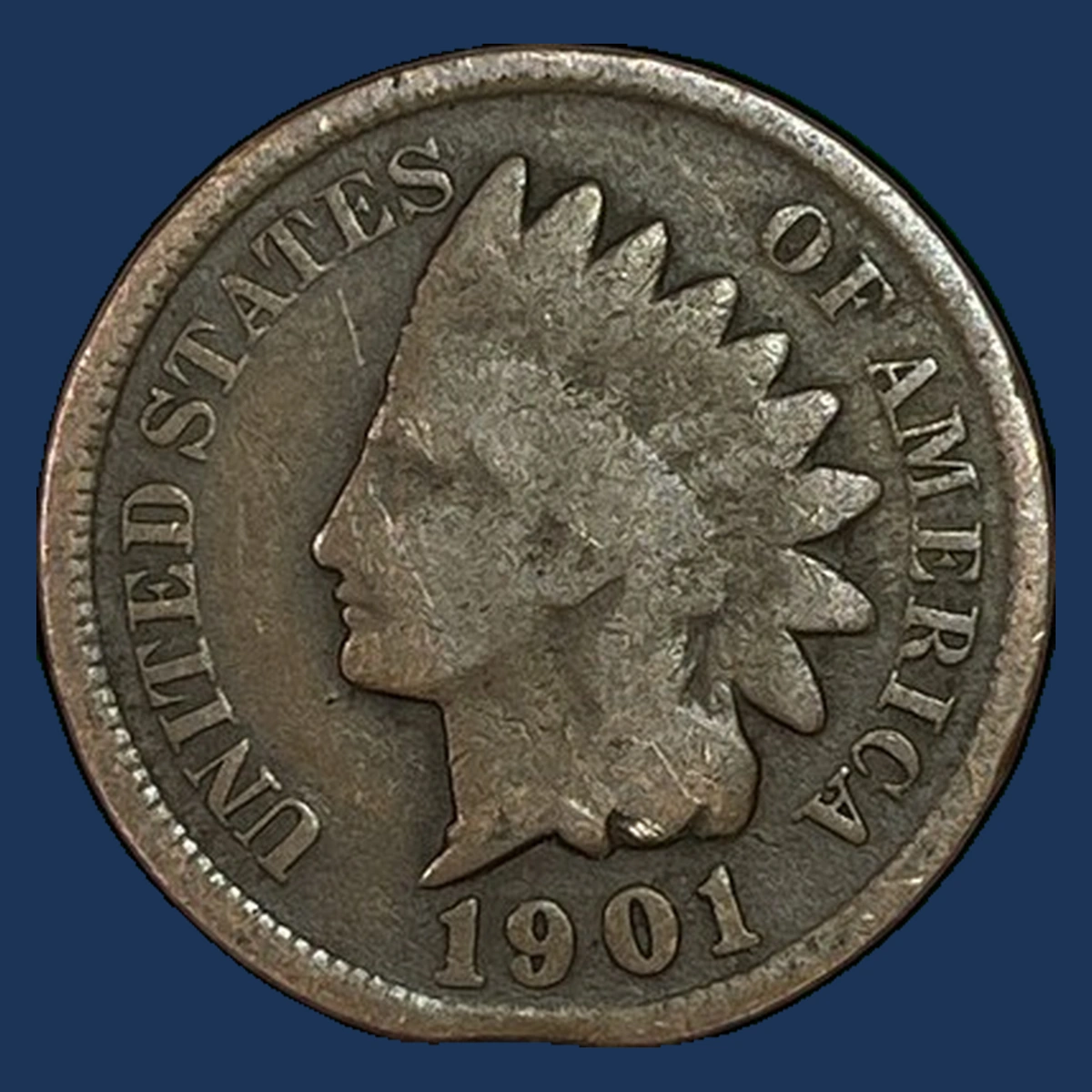
A piece of the blank may be missing before the penny reaches the striking press. The remaining metal then receives the design around that gap.
Collectors call this a clipped planchet: an incomplete flat metal disc prepared for striking. It differs from a notch cut into a finished coin.
A GreatCollections example was graded ANACS VG08, a well-worn condition. Its listing identifies a rim clip without establishing one exact shape or direction for every 1901 example.
The edge beside the gap matters more than its label. Wear can soften useful clues, so compare the surviving border on both faces.
Estimated Value
The worn ANACS VG08 listing demonstrates a rim-clip example, but its hidden auction price is not used here. Estimate $15–$350 for comparable genuine clips of different sizes and preservation.
A different-year 1905 cent with a ragged clip and an off-center strike sold for $211.50 in August 2013. That combined-error price cannot be assigned to clipping alone.
Small clips on worn pennies generally need modest comparisons. A larger gap still requires an original edge before its size supports a premium.
How to Identify
On a worn coin, start where the gap meets the surviving border rather than expecting sharp metal-flow detail. Magnified photographs from both faces and from the edge can show whether the missing area predates the strike.
Use a scale to weigh an accessible example against the normal 3.11 grams. With calipers, compare an intact span with about 19 millimeters rather than measuring across the gap.
Examine the remaining smooth edge for saw marks or filing. Then look opposite the gap for a weakened rim.
That opposite weakness can help, but it is not required on every genuine clip. If a sharp cut slices through the completed border, its neat shape does not make it an original blanking error.
3. 1901 Indian Head Penny Struck Through Material (Estimated Up to $500)
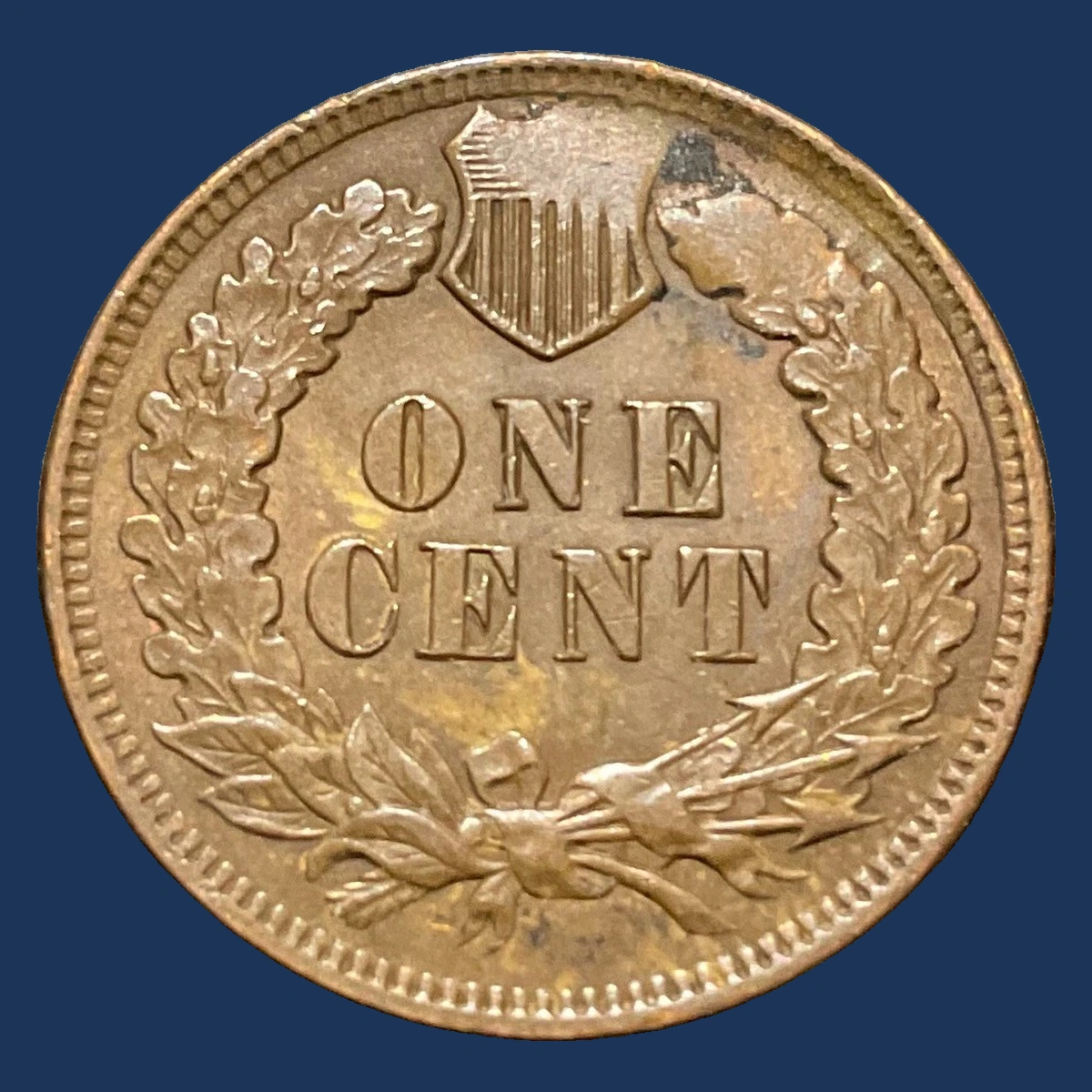
A foreign object or soft debris can block part of the front while the design is struck. Its contact area may remain weak or take the shape of the material.
This is a struck-through error. The object may fall away afterward, so a depression does not require something to remain attached.
The 1901 report identifies the front but does not establish the object or its exact position. Those details should come from the coin, with its surrounding design visible.
A dent made later can also remove detail. The surrounding design and the depression’s edge help show when the interruption occurred.
Estimated Value
For a genuine front struck-through error, estimate $20–$500, with a recognizable object-shaped impression generally easier to compare than slight weak detail. An unidentified dent does not receive that range automatically.
A 1920 Lincoln cent struck through a metal fragment sold for $134 in March 2025. That later bronze-cent sale involves a known kind of object, unlike the general 1901 report.
The estimate is not a claimed 1901 auction result. Surface condition and the amount of interrupted design remain important.
How to Identify
If a piece of material is still attached, do not pull it away or clean around it. Photograph its outline and the interrupted design before handling the coin further.
When the surface is safely accessible, a scale and calipers can compare the penny with 3.11 grams and about 19 millimeters. Check the smooth edge for squeezing or another later impact.
Under a magnifier, follow the letters or portrait into the depression’s boundary. Did the design fail to form there, or was an already finished image crushed afterward?
A raised lip made by displaced metal may point toward a later dent. Use that distinction to examine the actual mark, without guessing what object caused the general 1901 report.
4. 1901 Indian Head Penny Die Clash (Estimated Up to $500)
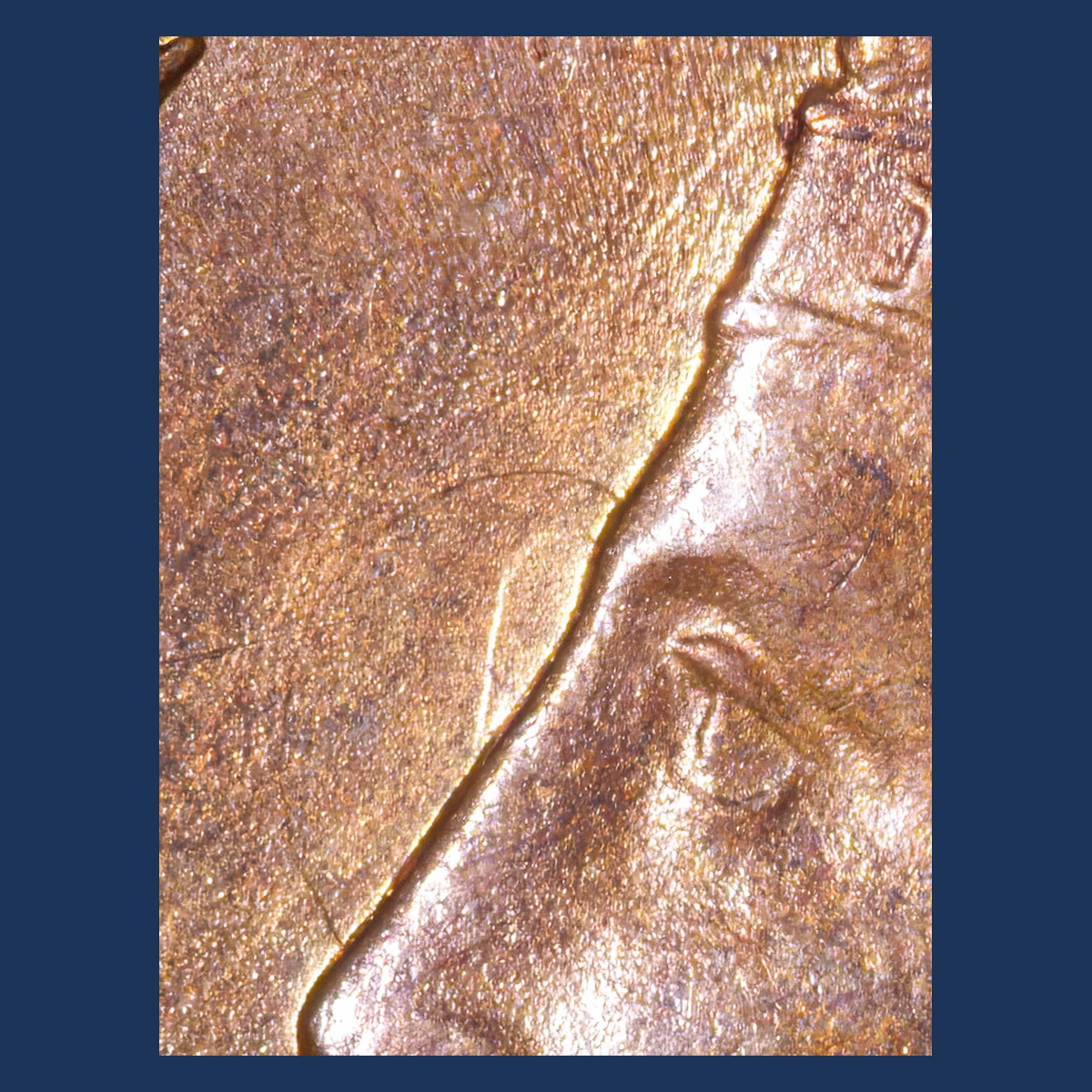
An unexpected faint outline may belong to the design normally found on the opposite face. The two stamping tools can hit one another when no blank is between them.
This collision is called a die clash. Marks impressed into the tools may then appear on coins struck afterward.
A public collection listing describes clashes on both faces of a 1901 Indian cent. It does not establish one precise outline or location to assign to every specimen.
Alignment is essential. A scratch, raised line, or shadow should not be called a transferred wreath or portrait without a matching shape.
Estimated Value
A visible, correctly matched clash can fit an estimated $15–$500 range on ordinary 1901 cents. Stronger recognizable outlines and cleaner surfaces support the more valuable comparisons.
The collection report does not provide a sale price for its exact coin. This range is an estimate for the mechanism, not an auction result attached to that specimen.
If another variety appears on the penny, compare the complete combination once. Adding a full second range for faint clash marks can overstate its value.
How to Identify
A transferred outline should survive a change in lighting, so examine it under a magnifier while keeping the coin still. Inspect the smooth edge for later squeezing before mapping the line.
A scale and calipers compare an accessible coin with 3.11 grams and about 19 millimeters. These readings check the coin, not the shape of a clash.
Next align photographs of the two faces in their correct relationship. Match a proposed wreath fragment to that specific part of the wreath, rather than rotating the image until any two lines seem alike.
The collection example has reported marks on both faces, so compare the second face as well. A scratch or shadow with no corresponding opposite-face shape cannot complete that match.
5. 1901 Indian Head Penny Broadstrike (Estimated Up to $750)
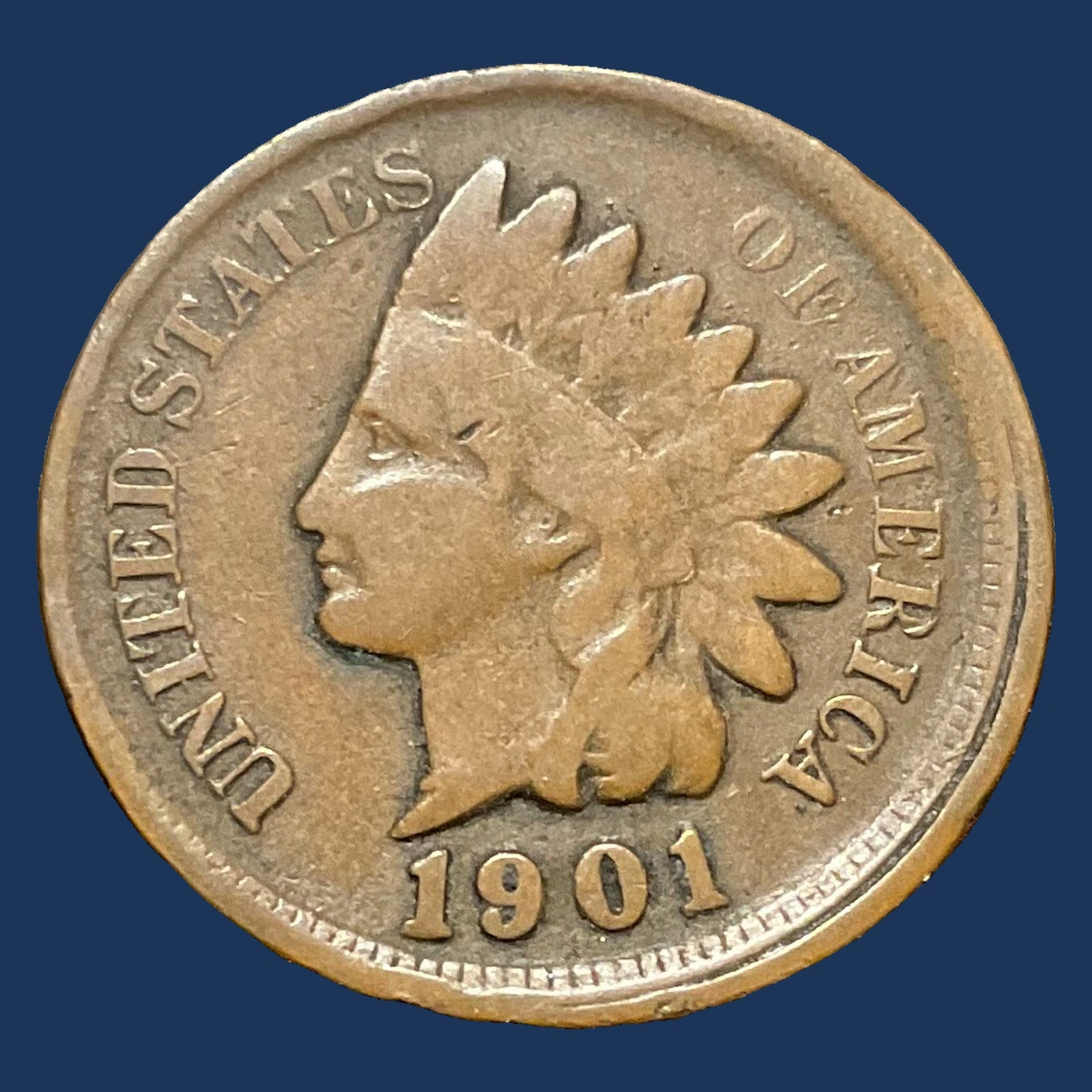
The coin may look wider than usual even though the intended design remains present. A broadstrike forms when the blank is not properly held by the surrounding ring during the blow.
That ring is called the collar. Without its usual restraint, metal can spread outward.
A Heritage listing identifies a 1901 broadstrike graded NGC VG10, meaning a well-worn coin. The error can therefore remain recognizable after considerable circulation.
Width alone does not establish how the change occurred. A penny flattened after leaving the Mint may also spread, but its crushed design and edge need a different explanation.
Estimated Value
An estimated $25–$750 covers genuine 1901 broadstrikes from worn examples through clearer, better-preserved coins. The VG10 listing belongs near worn comparisons, not an unworn price tier.
A 1905 Indian cent broadstrike graded AU58 Brown sold for $258.50 in May 2016. That later date has only slight wear and provides a same-series comparison.
The two coins should not be assigned equal values from the error name alone. Remaining design, spread, surface damage, and condition need to be compared together.
How to Identify
Use calipers to record the widest and narrowest spans, comparing them with the usual 19-millimeter cent. Use a scale to weigh the accessible coin against 3.11 grams; spreading should not by itself remove a piece of metal.
Now follow the full outer design, even if wear has softened the letters. A broadstrike keeps the intended image on the metal, unlike a displaced strike that loses part beyond the edge.
With a magnifier, inspect the smooth edge and broad border for later hammering. Flattened portrait features or a crushed ring around both faces may explain the extra width differently.
For the worn VG10 comparison, rely on the whole outline and surviving design boundary rather than demanding unworn surface detail.
6. 1901 Indian Head Penny Die Cracks and Cuds (Estimated Up to $750)
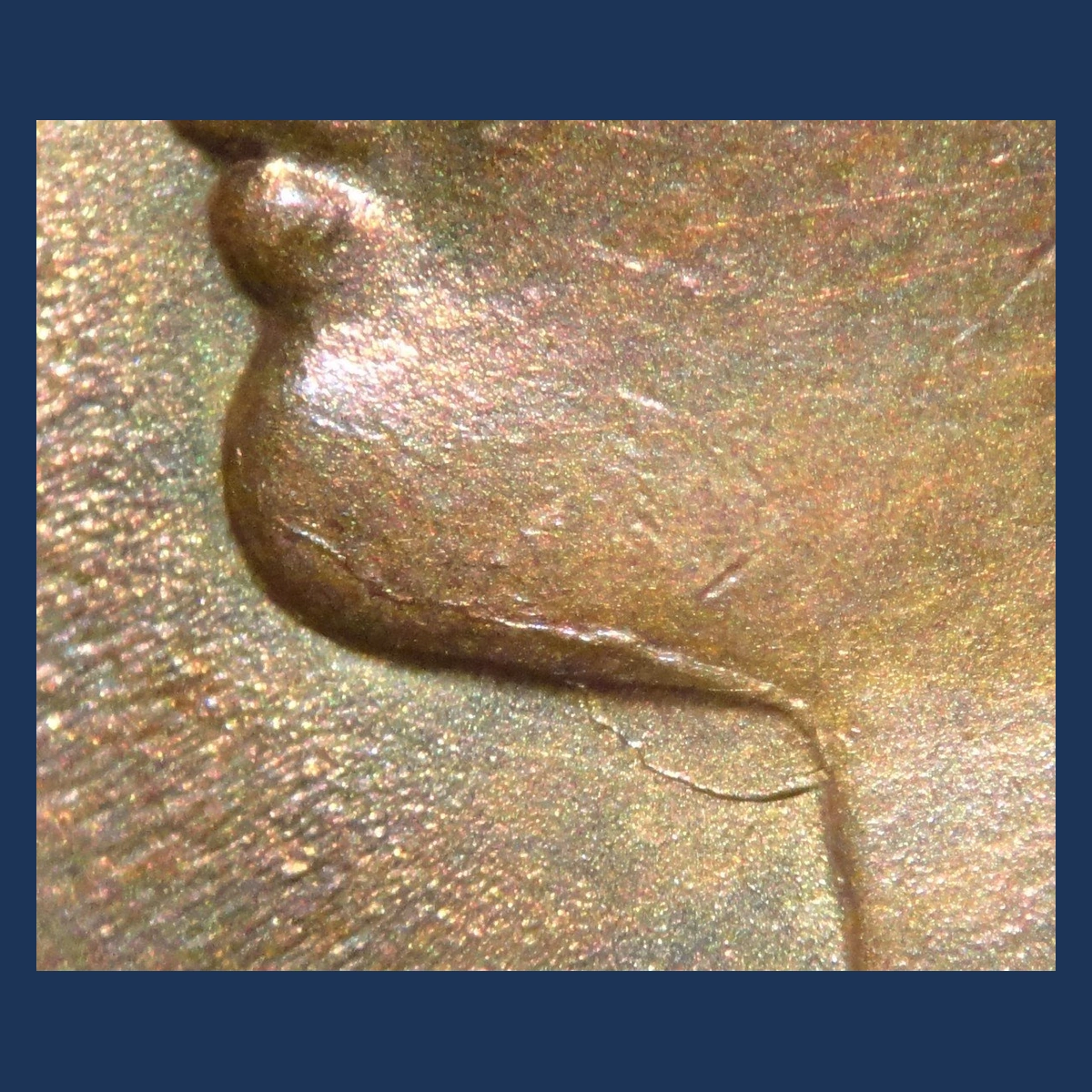
Extra raised metal near the chin can look like short whiskers. It comes from damage to the stamping tool rather than a change to the intended portrait.
Two chin-chip forms and an internal chin crack are documented. Their shapes need separate comparisons.
A retained cud is a cracked piece of the tool that remains in place, leaving some design inside the affected area. One 1901 example involves the lower-right back rim.
Other examples have back cracks or two small breaks on one tool pair. A chin flaw that never reaches the rim is not a rim cud.
Estimated Value
Minor cracks and chin chips can fit estimated whole-coin values of $5–$150. Larger retained rim sections may reach roughly $50–$750, depending on visibility and condition.
A later 1946-S Lincoln cent with a cud sold for $288 in March 2021. It is a bronze-cent comparison for a different design and break.
The two chin forms need their own shape comparisons. Then compare preservation rather than adding money for every small crack on the same penny.
How to Identify
The two chin-chip forms need different close-up comparisons. Use a magnifier to follow the raised whisker-like metal, keeping a thin internal chin crack separate from a wider chip.
Compare a safely accessible penny with 3.11 grams on a scale and about 19 millimeters with calipers. Its smooth edge should also be examined for added metal.
For the retained back section, follow the lower-right rim crack and examine the design inside it. This is a different check from tracing the chin.
A folded rim or soldered lump may interrupt the edge without matching the original cracked-tool pattern. Look closely where the suspect patch meets the border.
When two small breaks appear together, compare both with the same documented coin rather than combining unrelated photographs.
7. 1901 Indian Head Penny Misplaced Date (Estimated Up to $1,500)
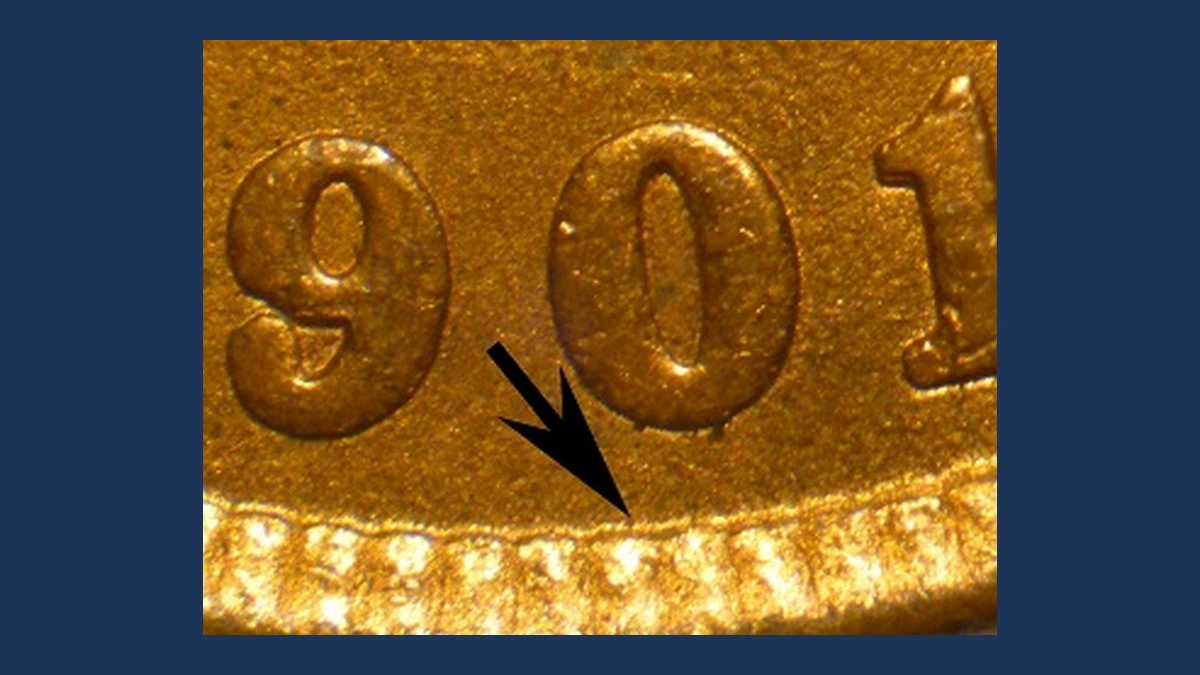
Number fragments can hide among the small teeth along the inner border. They come from a date punch placed away from the intended date area on the stamping tool.
One 1901 variety has a misplaced remnant below the 0 and a repunched final 1. Both features occur on the same coin.
Another documented variety has remnants of 1, 9, and 0 in the border. Its later tool stages should not be confused with a new type of error.
A bump is not enough. Its surviving curve or straight stroke should fit a number and the position shown for that variety.
Estimated Value
Use an estimated $20–$1,500 for identifiable 1901 misplaced-date varieties. The clarity of the extra digits and the underlying coin’s preservation affect the range.
A 1908 Indian cent misplaced date graded MS65 Red and Brown has a recorded $1,187 eBay result from 2021. That is a different-year, unworn comparison with partly red copper color.
The combined repunched and misplaced digits on one 1901 example receive one whole-coin valuation. They do not justify adding the highest price from both categories.
How to Identify
An altered border can imitate an extra digit, so examine the smooth edge and teeth for tooling before tracing numbers. Use a scale and calipers on accessible metal to compare 3.11 grams and about 19 millimeters.
Place a normal penny beside it at the same enlargement. Regular border teeth provide a guide to the curve or straight stroke that should not be there.
The variety with a remnant below 0 also has a repeated stroke at the final 1. Follow both under a magnifier.
For the other variety, compare the separate 1, 9, and 0 remnants with its own photographs. Do not draw missing curves between random bumps merely to finish a number.
8. 1901 Indian Head Penny Doubled Die Obverse (Estimated Up to $1,500)
Raised repeated outlines in LIBERTY or the final date digits can suggest a doubled front design. This doubling begins in the stamping tool, not with another blow to the penny.
This is called a doubled die obverse, with obverse meaning the front. The 1901 category is reported with LIBERTY and 01 as areas to inspect.
Date-only repetition also has another explanation on this series: a separately repunched date. It should not automatically be relabeled as a doubled die.
A matching example is needed before assigning a variety premium. Flat shelves and worn tool outlines are different kinds of doubling.
Estimated Value
For a genuine, matched doubled-front example, estimate $15–$1,500, depending on strength and preservation. This conditional range is not a claim that an identified 1901 specimen sold for the maximum.
A recognized 1887 Indian cent doubled front sold for $1,380 in June 2025. That different date provides a same-series comparison for stronger, established doubling.
The 1901 report should not inherit the 1887 variety’s identity. Date repunching and a flat shelf beside a letter need their own explanations before pricing.
How to Identify
LIBERTY is a better starting point than assuming any extra date stroke proves a doubled front. With a 10× magnifier, compare raised letter outlines or split corners with an identified example.
If only the date repeats, check the repunched-date section instead. The date was added separately to the tool.
Check the front surface and smooth edge for added material. Safely accessible scale and caliper readings can be compared with 3.11 grams and about 19 millimeters.
Now examine the height of the apparent doubling. A flat shelf beside a narrowed letter can form during striking.
That shelf does not establish the stronger variety represented by the upper price estimate. A year-list label cannot replace the raised-letter comparison.
9. 1901 Indian Head Penny Off-Center Strike (Estimated Up to $2,000)
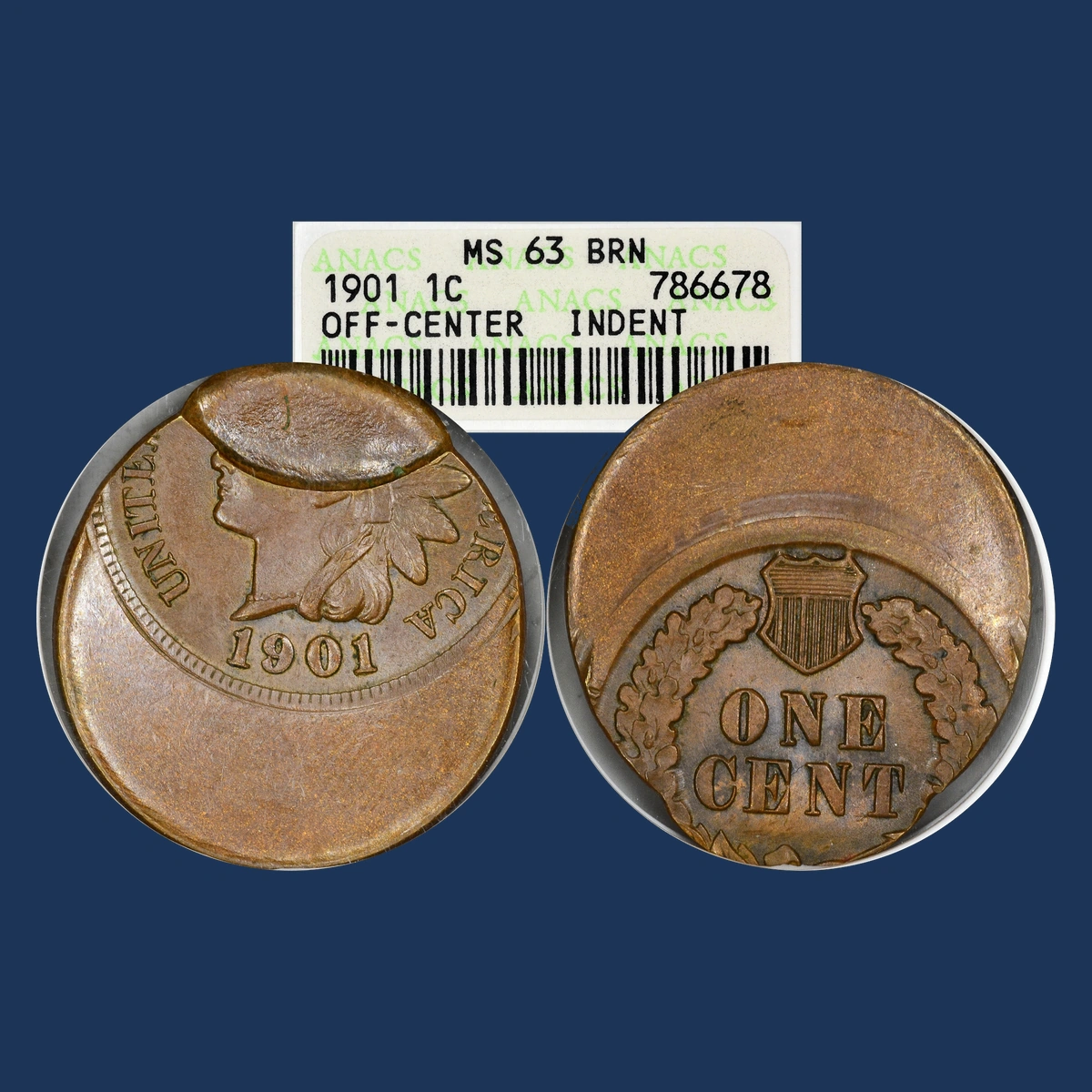
An off-center penny pairs an unused area of metal with a design that runs beyond the blank. The blank was misplaced between the stamping tools when the press came down.
Documented 1901 examples include shifts of about 5%, 10%, and 15%. The 15% example points toward 11 o’clock, while another listing describes a 25% shift.
These are separate coins. Their percentages, grades, and directions should not be assembled into one description.
A complete date often makes comparison easier. Cleaning can still lower a coin’s appeal even when its displaced strike is genuine and the year remains readable.
Estimated Value
Two 10% off-center coins sold in March 2026: a cleaned example with VF-level detail brought $119, while an AU53 coin brought $231.80. AU53 indicates light circulation wear.
Estimate $75–$2,000 across identifiable examples with different shifts and preservation. The higher end requires a stronger comparison than the two moderately worn sales.
An impressive percentage cannot erase cleaning or damage. Read the date, the surviving design, and the condition before choosing where a particular coin belongs within that range.
How to Identify
The blank crescent should belong to a complete original blank, so check its outline and smooth edge for metal removed later. Use a scale to weigh an accessible coin against 3.11 grams and record the outline with calipers beside the normal 19-millimeter size.
Next compare both faces: their missing design must fit the same displaced strike. If only one face shifts while the other is centered, consider a different alignment problem.
Find enough of the date to establish 1901 before selecting a sale comparison. Then inspect the portrait and open areas under a magnifier for polishing lines.
For the reported 15% example, use its 11 o’clock direction only after matching that coin. A different shift is not evidence that every other 1901 off-center penny is wrong.
10. 1901 Indian Head Penny Double Strike (Estimated Up to $2,000)
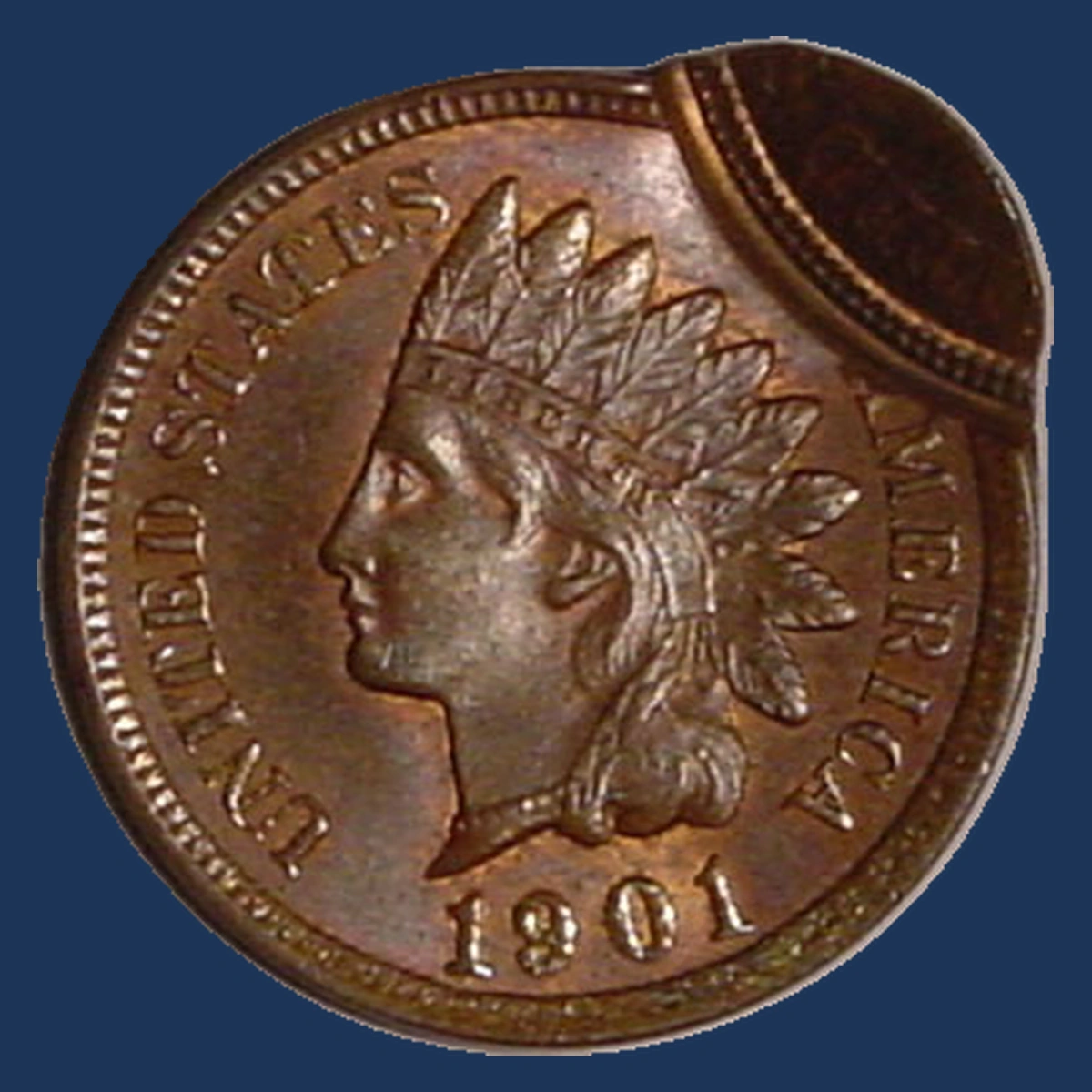
A second clear date can sit beside a faint trace of the first one. On the documented ANACS XF45 example, the first blow was centered normally.
The coin then received another strike about 10–15% off center. The second date is sharp, while the final 1 from the earlier date remains faintly visible.
XF45 describes a worn coin with much detail remaining. Wear and the later strike can both hide portions of the first image.
This is a whole-coin striking error, not a repeated number in the tool. The two design positions must agree across the portrait, lettering, and remaining border.
Estimated Value
The ANACS XF45 example sold for $517.50 in January 2008 at Heritage. That is a completed sale for a worn, clearly double-struck coin.
An estimated $250–$2,000 allows for different preservation and the amount of readable earlier design. It is not a claim that the old price remains the exact value today.
A recognizable second date helps, but it is only part of the comparison. The overlapping portrait and border should support the same two blows.
How to Identify
Mark the sharp later date on a photograph, then look for the faint earlier final 1 nearby. These give two starting points for tracing the rest of the design under a magnifier.
Follow the corresponding portrait and letters rather than treating every extra line as a third image. The documented coin had one normal first strike and one displaced second strike.
Inspect the smooth edge for a join or evidence of later pressing. A scale and calipers can record accessible weight and width against 3.11 grams and about 19 millimeters, allowing for strike distortion.
If the only doubling is a flat shelf at one digit, the two-strike explanation has not been established. Return to the repeated design positions instead of counting isolated ridges.
11. 1901 Indian Head Penny Flipover Double Strike (Estimated Up to $4,000)
A coin that turns over before another blow can mix front and back designs on the same face. This is a flipover double strike.
A 1901 Indian cent is illustrated with this error in Mint Error News. The two faces need to be read together to reconstruct its overlap.
Parts of the original design can disappear beneath the later image. Wear may further obscure the order of those impressions.
A sunken mirror image from contact with another struck coin is a different event. The flipover should preserve evidence of successive press blows, not simply an unusual outline on one face.
Estimated Value
Estimate $700–$4,000 for a genuine 1901 flipover, depending on condition and how clearly its earlier design survives. No completed sale is assigned to the illustrated coin.
As a much later bronze-cent comparison, a cleaned 1956-D Lincoln flipover sold for $456 in June 2024. Its date, design, and surface problems differ from the Indian cent.
The estimated 1901 range allows for that distinction rather than copying the later coin’s price. Both overlapping designs and the original surface remain important.
How to Identify
Photographs of both faces are needed to explain a flipover: label which features belong to the original front and back. Under a magnifier, find crossings where an older design runs beneath a later opposite-face image.
Inspect the smooth edge for a seam joining separate pieces before reconstructing that sequence. Safely accessible scale and caliper measurements can compare the penny with 3.11 grams and roughly 19 millimeters, allowing for distortion.
Then distinguish those overlapping strikes from a sunken mirror impression made by contact with another finished coin. The mirror image follows a different process, so it cannot by itself prove that the penny turned over inside the press.
12. 1901 Indian Head Penny Repunched Date (Estimated Up to $9,000)
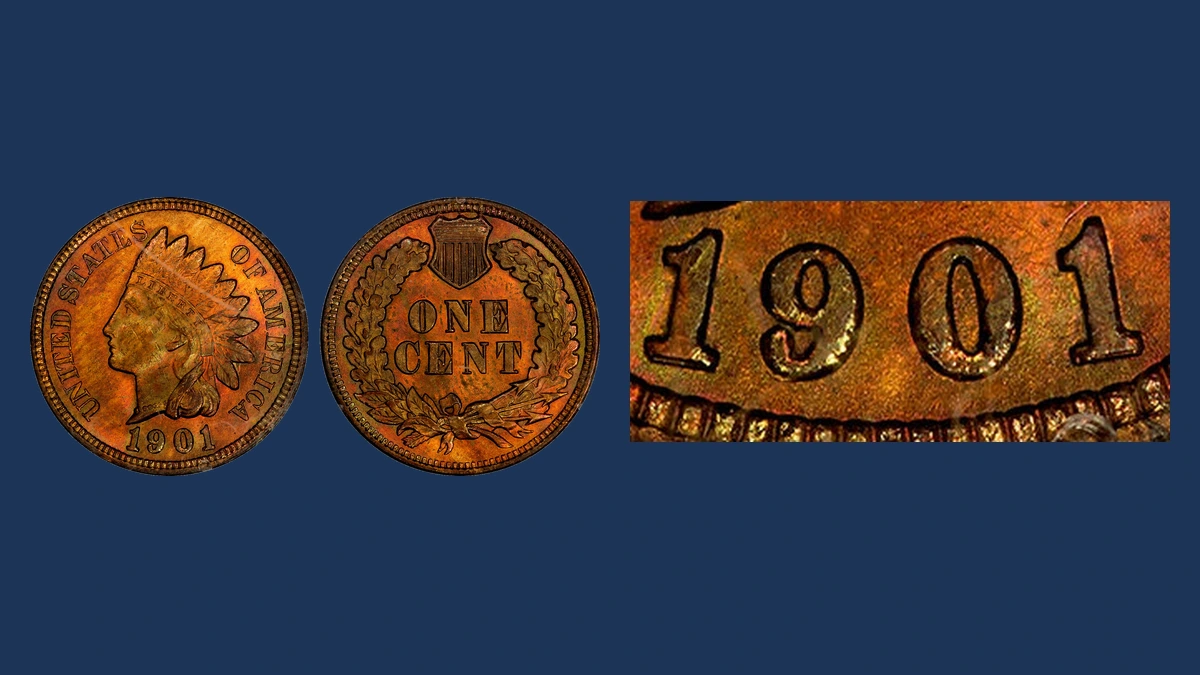
The date can retain small raised strokes from an earlier punch position in the stamping tool. Some 1901 varieties affect the 9 and 0, while others show extra strokes near either 1.
Ordinary coins and specially prepared collector coins, called Proofs, both have reported varieties. A shared tool pair even connects one ordinary example with a Proof example.
That connection does not make their values equal. Their finish and preservation still need separate assessment.
One Proof has a slight extra stroke at the first 1, and another repeats 01 below the main digits. Ordinary varieties include different directions and combinations.
Estimated Value
An exceptional Proof-67 Red Snow-PR4 sold for $8,700 in August 2019, as PCGS records. This was the whole price of a superbly preserved red Proof, not a measured date-error premium.
Estimate $10–$1,000 for ordinary repunched-date examples and roughly $500–$9,000 for suitable Proof comparisons. The exact variety and condition matter within each tier.
A different ordinary Snow 19 coin graded AU50 brought $150 on eBay in November 2016, illustrating the importance of keeping those identities separate.
How to Identify
Choose an ordinary or Proof comparison first; shine alone cannot establish a specially prepared collector coin. Read the holder’s identification where available and compare the full finish.
The faint first-1 stroke on the Snow-PR4 Proof can be hard to see. Its date placement above the border may give a better starting point.
Under a magnifier, trace each extra raised stroke inside a loop or beside a base. Use that particular variety’s photograph rather than a general doubled-date picture.
Inspect the date area and smooth edge for alteration. Compare safely accessible scale and caliper readings with 3.11 grams and about 19 millimeters.
If a weak stroke remains unclear, return to the complete date’s position instead of mentally enlarging the mark.
Conclusion
An extra date stroke, a raised chin mark, and a second complete strike have different causes. Match the visible feature before deciding which price range fits your 1901 penny.
Estimates extend from $5 to $9,000, with the highest tier reserved for exceptional Proof comparisons. Small ordinary-coin flaws do not share that tier merely because the date matches.
Photographs of both faces and the edge keep the comparison grounded in the whole coin.