1902 Penny Error List with Pictures

A nearly half-off-center 1902 penny brought $646.25 at Heritage in January 2013. The NGC AU55 Brown example had light circulation wear and a forty-five-percent shift.
Other coins on this 1902 penny error list need a closer look: a line across the eye, extra date strokes, or doubled back details. Estimated prices span $5–$3,000 for the varieties and striking errors below.
Continue through the examples to see which marks belong to the stamping tools and which changed the whole coin.
1. 1902 Indian Head Penny Raised Patches from Tool Rust
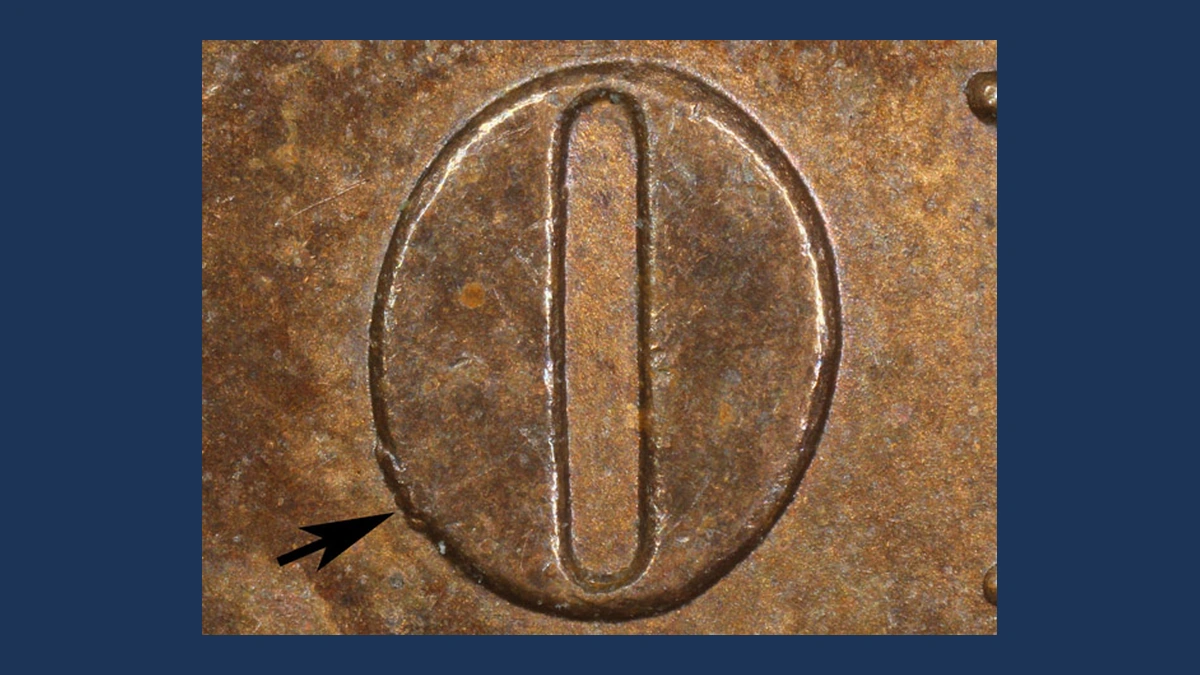
Tiny rough patches beside ONE CENT can come from the stamping tool itself. Poliquin 26 records these marks beside the O, C, and T on the back.
Rust had eaten small holes into the die, the steel tool that stamps the design. Metal entering those holes left raised texture on later pennies.
The same coin also has repeated date strokes below the 1 and inside the 9 and 0. Those date marks help identify the pairing.
They do not mean the bronze coin itself rusted in those exact places.
Estimated Value
An estimated $10–$150 suits identifiable circulated examples with this small tool-rust pattern. Much of the appeal lies in matching the roughness and date together.
This is a working estimate, not a published sale of Poliquin 26. Better preservation makes the tiny features easier to see, while corrosion on the coin can hide or imitate them.
Treat the rust texture and repunched date as features of one penny when comparing prices.
How to Identify
Find the O in ONE first and inspect its lower-left side with a 10× magnifier. Then compare the upper-left C and the left side of the T in CENT.
The cataloged texture is raised on the coin. Move a lamp across it to separate those raised points from pits or crust caused by later corrosion.
Check the date as well, including the trace below the 1. For a loose coin, a scale and calipers provide the normal checks of 3.11 g and 19.05 mm.
Normal measurements cannot identify tool rust. The useful match is the same small patches beside the same back letters.
2. 1902 Indian Head Penny Curved and Straight Clips
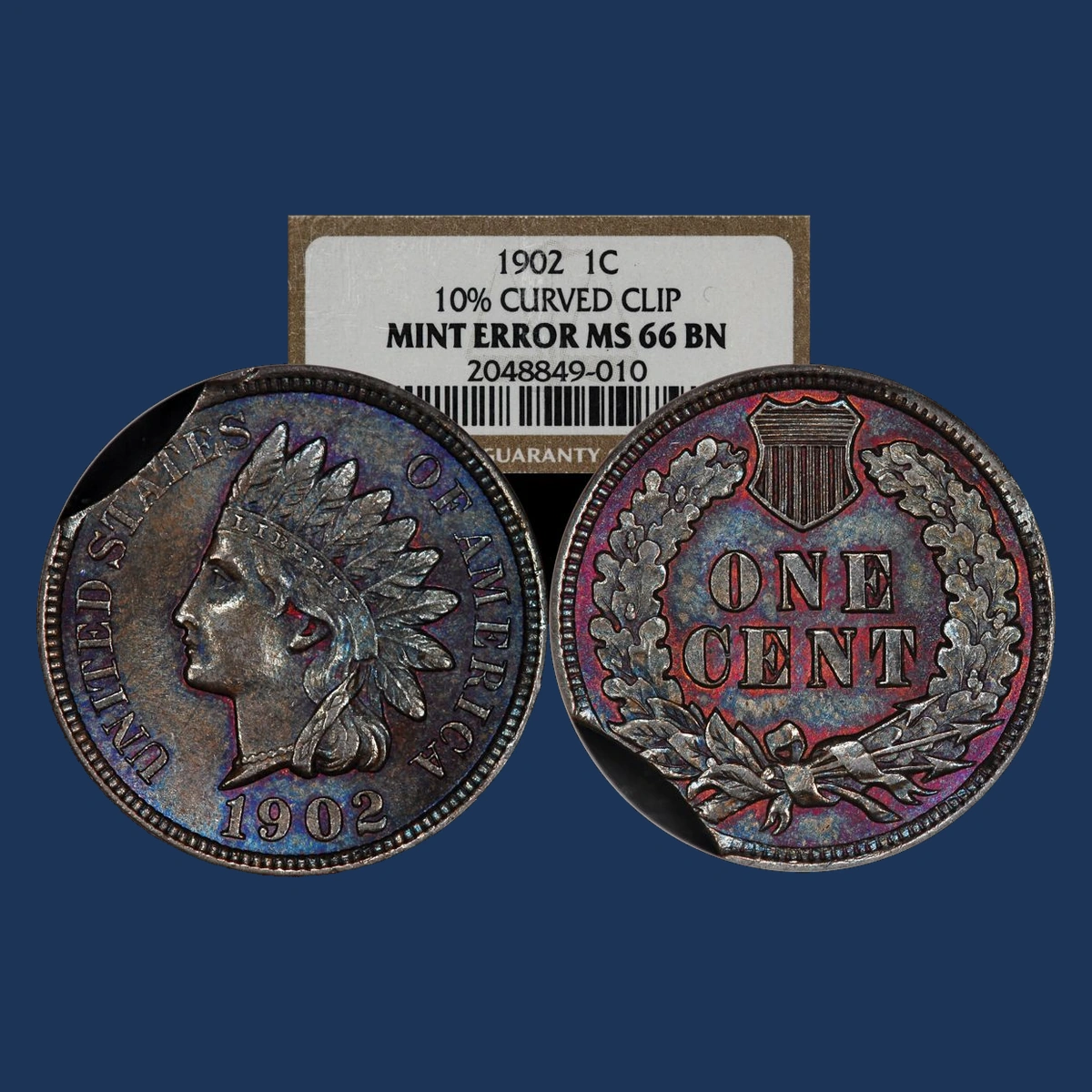
One documented penny has a curved bite missing, while another has a short straight edge. Both were struck on incomplete blanks, or flat metal discs, so the absent metal predates the finished coin.
The curved example is graded NGC MS66 Brown, meaning unworn and very well preserved. The straight example is PCGS MS64 Red-Brown, also unworn but with a different color and grade.
Mint Error News identifies them as ten-percent and seven-percent clips, respectively. Their different outlines should remain visible when comparing them with a suspected clipped penny.
Estimated Value
Allow about $25–$150 for modest circulated clips and $150–$500 for well-preserved examples with a clear missing segment. These are estimates, not sale prices for the two collection coins.
The documented MS66 Brown curved clip and MS64 Red-Brown straight clip belong toward stronger-condition comparisons. A straight edge is not automatically worth more than a curve.
Original surfaces, a convincing rim transition, and the amount of wear matter alongside the reported percentage missing.
How to Identify
An incomplete blank should weigh less than a full one, so record a loose penny on a scale against 3.11 g. Calipers can check its intact width against the usual 19.05 mm.
Inspect each end of the missing area at 10×. The rim should meet the gap in a way consistent with striking an already incomplete blank.
For a straight clip, watch for parallel filing grooves across a newly cut edge. For a curved clip, inspect the arc rather than treating every rounded dent as missing metal.
The opposite rim may show weakness too.
Compare that weakness with any dents elsewhere. Metal pushed inward by a blow is different from an original gap in the blank.
3. 1902 Indian Head Penny Cracks, Chips, and Rim Breaks
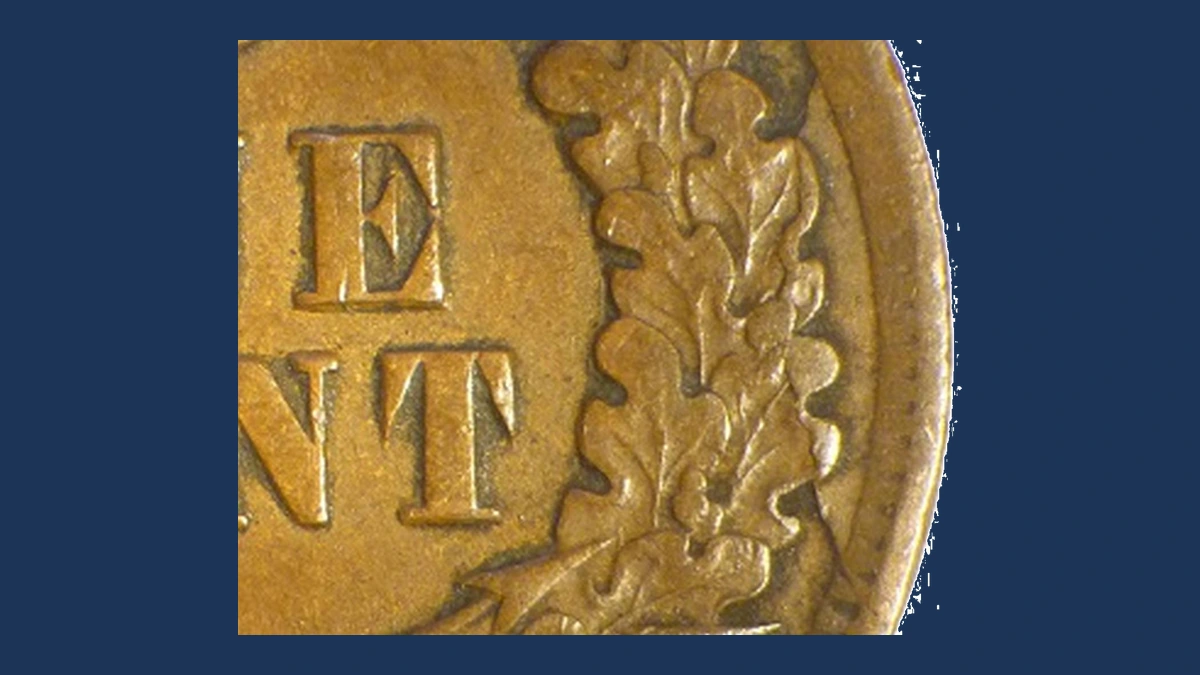
A small lump inside the 2 appears on Poliquin 19, along with a chip at the eighth feather tip. Later examples also show a thin raised line near the chin.
These marks grew as parts of the stamping tool broke. Bigger failures can affect a section beside the rim instead of one tiny point.
Poliquin 20 has a back break bounded near two-fifteen and three-forty-five. The broken section stayed in place for a time, leaving some design inside its outline.
Other recorded pairings have different cracks and rim breaks.
Estimated Value
For small chips or cracks, estimate $5–$100. Larger retained breaks can bring roughly $40–$750 when their boundaries and surviving design are easy to follow.
A late, obvious break may attract more interest than a faint early crack from the same tool. Wear and damage still affect the complete penny.
Several of these pairings also have repunched dates; their separate estimated upper prices should not be added together when valuing that single coin.
How to Identify
Poliquin 19 can be checked at the 2 and the eighth feather tip with a 10× magnifier. Compare both marks before relying on a small lump inside one numeral.
For a larger rim patch, a scale and calipers check the loose coin against 3.11 g and 19.05 mm. Inspect the base of the patch for a joint or different-colored metal that might have been added later.
On Poliquin 20, follow the back boundary between two-fifteen and three-forty-five and look for design remaining inside it. A groove from a scratch cuts into the surface; the original tool crack leaves a raised line.
4. 1902 Indian Head Penny Doubled Front or Back Design
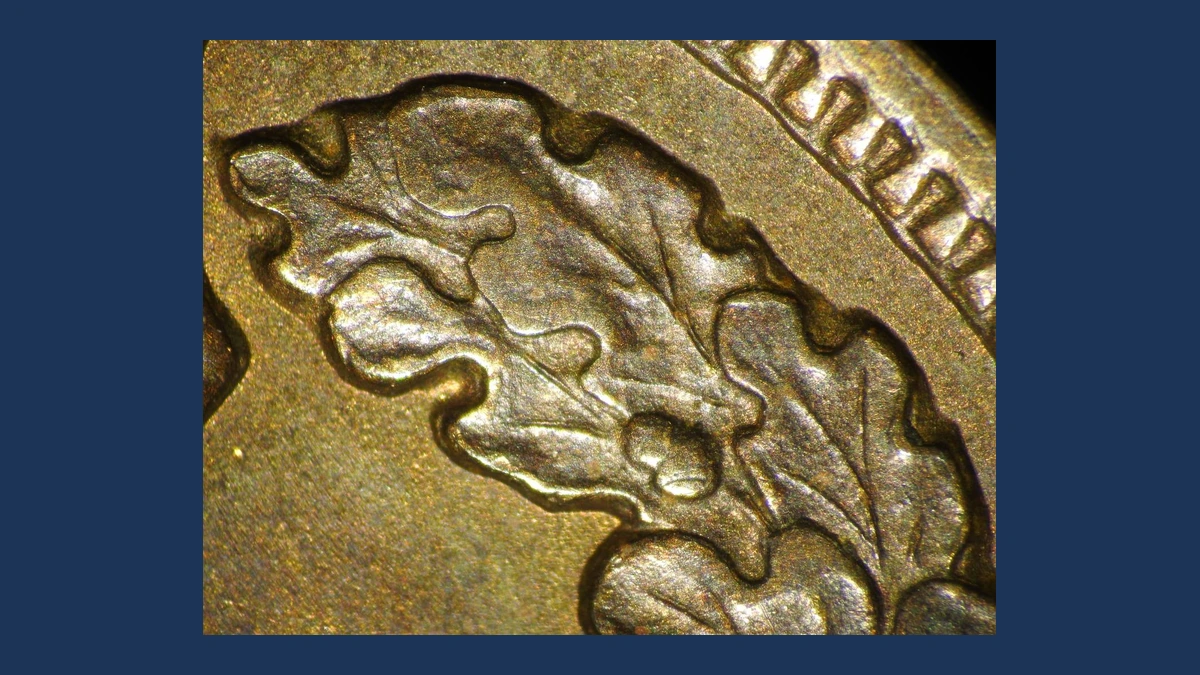
Some 1902 pennies have lightly repeated details on the back. DDR-001 describes an inward shift in the design copied from a doubled stamping tool.
That back was paired with several fronts carrying different repunched dates. An extra date stroke therefore cannot identify the back by itself.
DDR-002 shows another pattern caused by a slight turning shift during tool preparation. Its associated front has strong raised tool lines.
A year guide also reports front doubling around LIBERTY. That front report remains separate from the two back patterns rather than sharing their identifying marks.
Estimated Value
Use an estimated $20–$1,500 for matched 1902 doubled-design examples across circulated and better-preserved grades. The upper part requires a clear pattern and strong overall condition.
These are estimates rather than confirmed sales for every reported front and back variety. Thin or worn lettering can make a weak example difficult to compare.
A repunched date or raised tool line on the same penny may help establish its identity, but neither creates a second full coin price.
How to Identify
Photograph both faces before choosing a doubled-back variety. A front with a repunched date can occur with more than one back, so the date is only part of the check.
Compare the back with the DDR-001 photographs at 10×. The repeated details should agree in their direction and position.
DDR-002 needs its own photograph match. Do not transfer the first pattern to the second because both names contain DDR.
For a loose cent, check 3.11 g on a scale and 19.05 mm with calipers. These measurements establish the ordinary bronze coin, not the doubled tool.
On a reported front example, inspect LIBERTY for repeated raised edges rather than flat shelves beside the letters.
5. 1902 Indian Head Penny Misplaced Date Digits
There may be more date detail below 1902 than within the four main numerals. On Poliquin 1, digit tops from repeated low impressions appear among the border teeth beneath the 9 and 0.
The date punch had landed in the wrong place on the tool. A later correct impression did not erase every earlier trace.
Other examples show a fragment beneath the 0 or between the 0 and 2. Some also carry repunching within the main date.
A misplaced numeral needs a recognizable curved or straight part, not simply a rough border tooth.
Estimated Value
Estimate $20–$1,500 for identified circulation-strike examples, from worn coins to clearer pieces with attractive surfaces. Small fragments that remain easy to see make stronger comparisons.
For a confirmed collector Proof with a misplaced date, a separate whole-coin estimate is $200–$2,000. Proofs were specially made for collectors, and that finish contributes to their price.
A tool previously used for Proofs could later strike ordinary coins, so a shared mark alone does not justify a Proof price.
How to Identify
Inspect the spaces beneath the 9 and 0 using a 10× magnifier, with the date held upright. For Poliquin 1, look for the group of exposed tops rather than one bright border point.
Change the lamp angle without tilting the coin. That helps reveal a small numeral trace otherwise hidden against a tooth in the border.
An ordinary loose bronze cent is about 3.11 g on a scale and 19.05 mm across with calipers. Keep a collector Proof protected; its special finish needs to be identified separately from a reused tool.
For the trace between the 0 and 2, include both numerals in the photograph. Their spacing shows whether the fragment sits in the recorded position.
6. 1902 Indian Head Penny Raised Eye Line and Other Tool Gouges
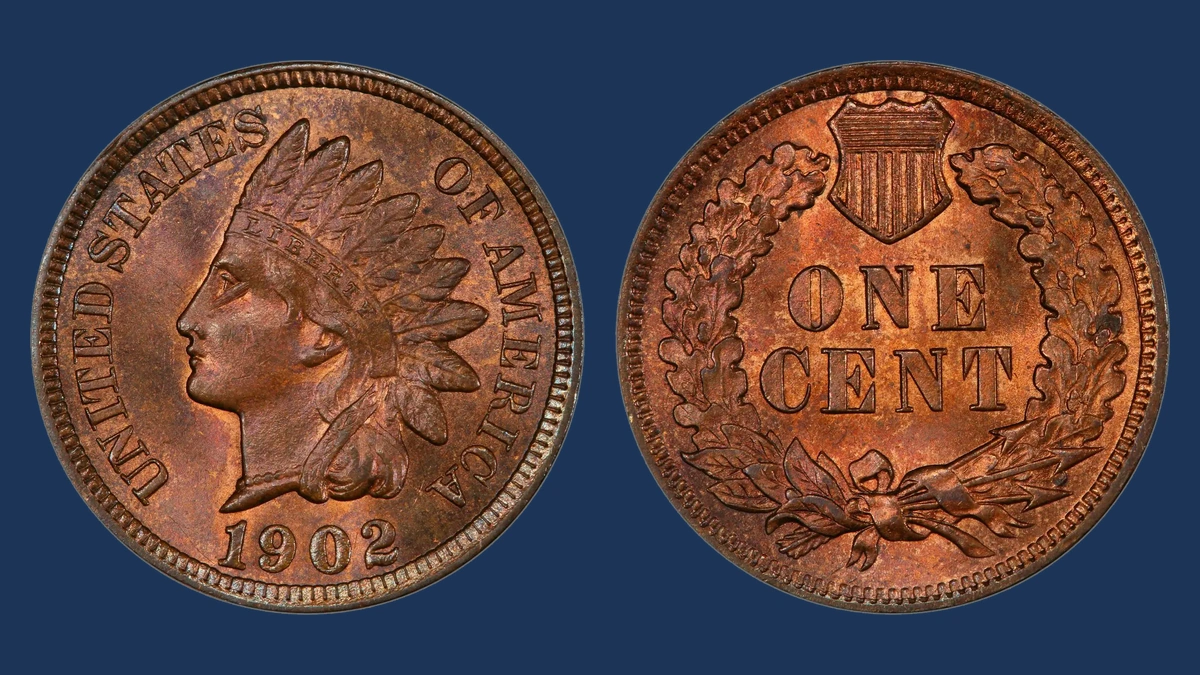
A line running through Liberty’s eye can look like a scratch until the light shows that it rises above the surface. This is the well-known FS-401, also called Snow-4.
A gouge cut into the stamping tool left room for bronze to flow into it. The finished coin received a raised line instead of a cut.
Another recorded variety has a tool line running from the rim through the T of UNITED. Its location separates it from the eye variety.
Neither should be identified merely from a scratch near the same letter or facial feature.
Estimated Value
A PCGS MS62 Brown FS-401 sold for $192 at Stack’s Bowers in November 2022, according to the PCGS auction record. That grade describes an unworn coin with noticeable marks.
Estimate $30–$2,500 for the eye variety across worn examples and strongly preserved red pieces. The broader range is an estimate, not that single sale.
For the separate line through UNITED’s T, use approximately $15–$300 until comparing the actual coin’s condition and line clarity.
How to Identify
The eye line should remain raised as you move the light from side to side. Inspect it with a 10× magnifier for a groove, displaced metal, or a fresh cut through the finished surface.
Follow the line across the eye area and compare its complete shape with FS-401 photographs. Nearby damage can cross the original raised feature without being part of it.
A loose coin can be checked on a scale against 3.11 g and with calipers against 19.05 mm.
For the other variety, leave the portrait and examine UNITED instead. Trace the raised line from the rim through the T; a mark confined to the eye cannot identify that separate tool.
7. 1902 Indian Head Penny Repunched Date
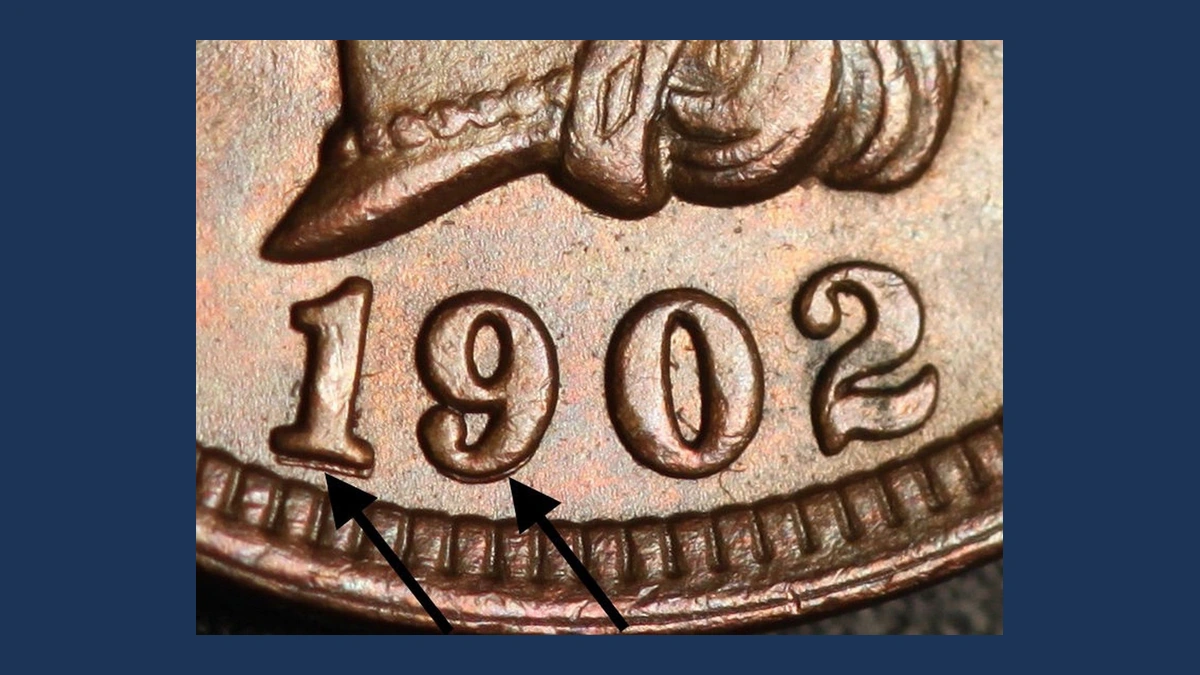
Poliquin 2 has earlier date strokes below the 1 and 9 and inside the 0. Other 1902 varieties repeat only one numeral or shift a different group.
These traces came from more than one date-punch impression in the stamping tool. They do not mean the finished penny received two complete strikes.
Proof 3 has an earlier stroke to the left of the 1’s base. Ordinary Poliquin 13 coins later used that same pair of tools.
Their shared date detail makes finish and overall appearance important when separating the two kinds of coin.
Estimated Value
Ordinary repunched-date examples can be estimated around $15–$2,500, with the clearest well-preserved varieties toward the upper end. A confirmed Proof 3 can be considered separately around $200–$2,000.
These are whole-coin estimates across different varieties and conditions, not prices for every catalog number. A tiny trace on a worn penny belongs in a different comparison from an unworn red example.
Check any associated doubled back too, since some fronts appear in more than one pairing.
How to Identify
Compare the complete date at 10×, keeping all four numerals in one photograph. Poliquin 2 needs the lower 1 and 9 strokes plus detail inside the 0, rather than just one doubled-looking digit.
Other recorded patterns include an earlier 2 below its main impression and a 1 shifted to the left. Match the individual pattern instead of applying one direction to every 1902 repunch.
A scale and calipers check a loose bronze cent against 3.11 g and 19.05 mm. For the Proof 3 pattern, establish the collector finish independently; the same left-hand stroke beside the 1 also appears on ordinary Poliquin 13 coins.
8. 1902 Indian Head Penny Off-Center Strike
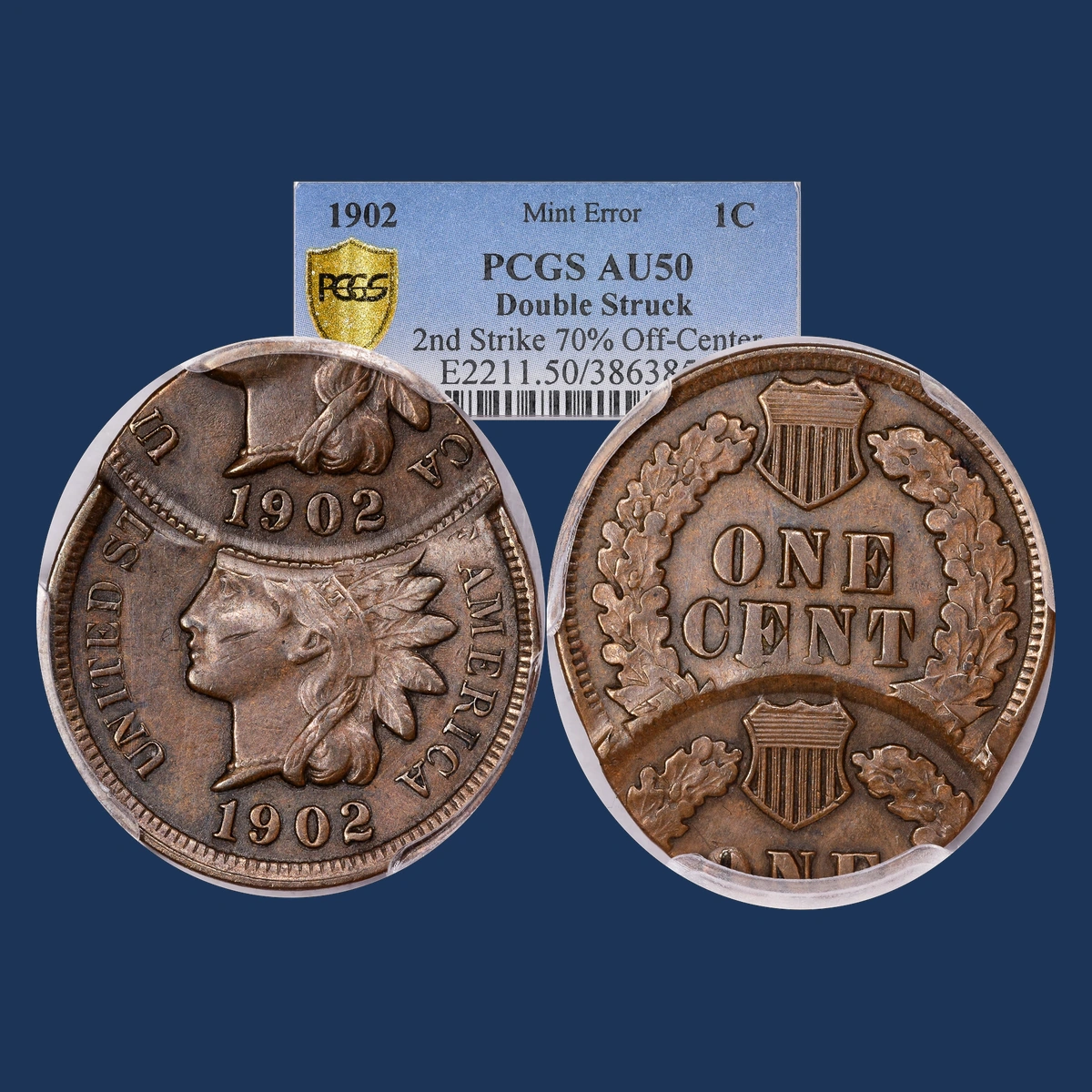
The design can stop short on one side of a penny while a blank crescent remains on the other. The metal disk was not centered between the stamping tools when they struck.
A year guide reports 1902 examples shifted about fifteen and twenty percent. A separate auctioned coin has a much larger forty-five-percent shift.
The date survived on that auction example, allowing its year to be identified. Greater displacement does not guarantee that every important detail remains readable.
An uneven border alone is different from a large area that never received the design.
Estimated Value
Heritage sold a 45% off-center NGC AU55 Brown example for $646.25 in January 2013. AU55 means light circulation wear.
Estimate $75–$750 for modest shifts and $500–$2,500 for larger readable-date examples in suitable condition. A year guide’s $450 listing for a 15% MS64 Brown coin is an asking-price comparison.
The dated auction result and those estimates describe different coins; neither fixes the price of every crescent-shaped blank area.
How to Identify
Lay the coin flat and photograph both sides at the same size. Compare the missing design with the blank crescent, keeping any surviving date in view.
Check the blank area at 10× for its original surface. Grinding away a completed design can leave grooves and reduce the coin’s thickness.
On a loose example, record weight with a scale against 3.11 g. Use calipers to compare its intact width with 19.05 mm, allowing for a distorted edge on a larger shift.
A slightly uneven border without missing design needs a different assessment.
Follow the design to its stopping point on each face. A genuine unstruck crescent should not contain letters that have simply been scraped flat.
9. 1902 Indian Head Penny Double Strike
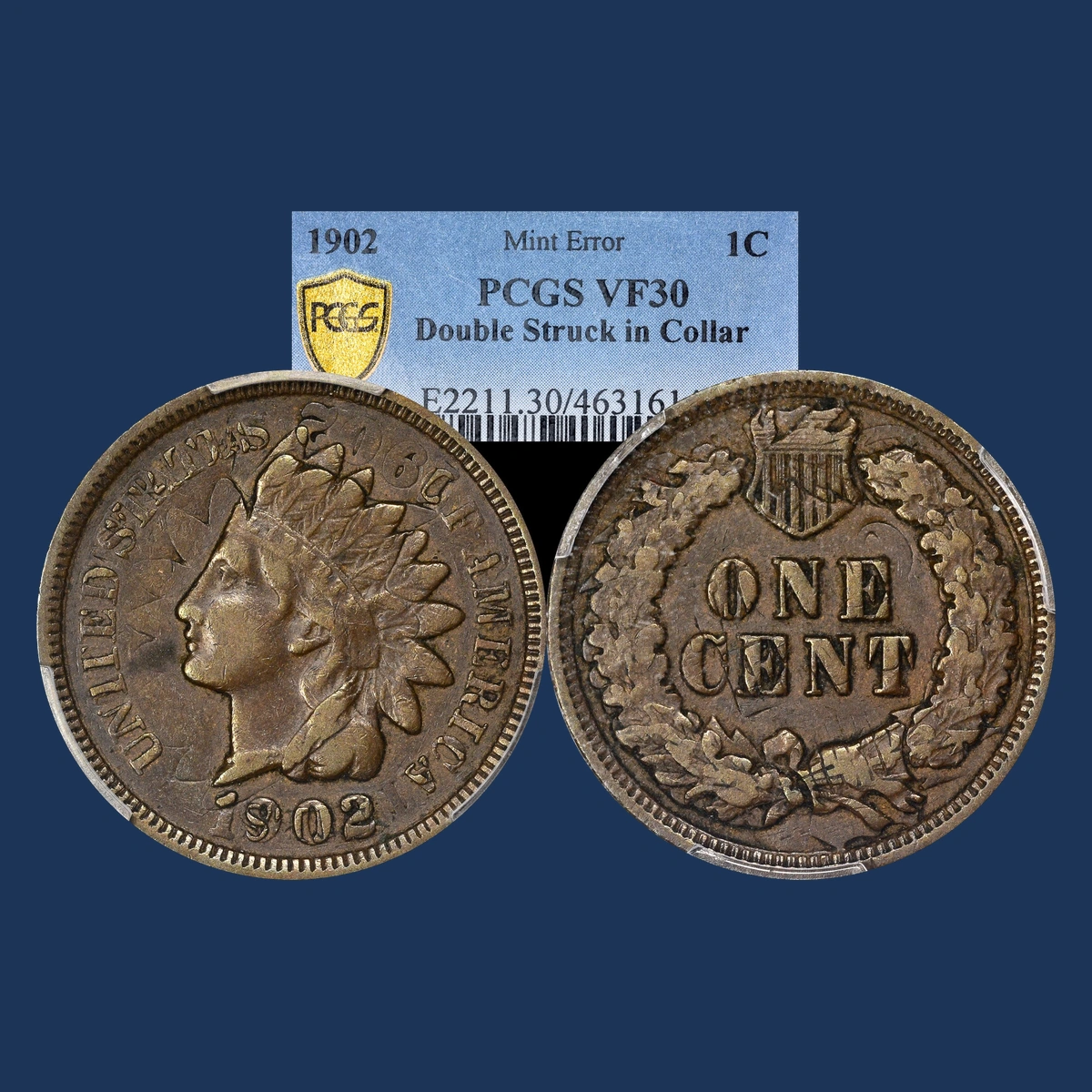
Two strikes can leave overlapping parts of the portrait, lettering, or date. The first impression remained on the penny when the press struck it again.
The collection published by Mint Error News includes a PCGS VF30 example double struck within the collar, the ring around the coin. Its grade indicates moderate circulation wear.
A separate PCGS AU50 Brown coin was double struck off-center and shows lighter wear. Movement between strikes changed how the two impressions overlapped.
These are whole-coin striking errors, unlike a small repeated date already present in the stamping tool.
Estimated Value
For a worn double strike within the collar, estimate $50–$500. More obvious displaced double strikes can fit roughly $500–$3,000, depending on preserved detail and surface quality.
A year guide reports $74 for a VG8 in-collar example sold in 2010. That older, heavily worn coin is a separate comparison from the collection’s VF30 and AU50 pieces.
The amount of movement matters, but a confusing damaged surface can make two strikes harder to demonstrate.
How to Identify
Choose a repeated feature well away from the date, such as a portrait outline or part of the wreath. Under a 10× magnifier, see whether a second recognizable design continues into neighboring areas.
A date-only repunch will not repeat the whole portrait.
For a loose penny, a scale checks the usual 3.11 g; calipers compare the width with 19.05 mm. A coin struck again outside the retaining ring may have an uneven or expanded outline.
Examine where one impression crosses the other rather than counting every thick letter as a second strike. Compare both faces to see whether their overlapping designs fit the same movement between blows.
Conclusion
For 1902 pennies, a small mark in the date can tell a different story from a missing edge or overlapping portrait. The estimates here run from $5 for minor tool breaks to $3,000 for stronger double strikes.
Examine the actual shape before choosing a variety name. Keep both faces in the photographs, and separate collector Proof coins from ordinary pennies even when they share a stamping tool.