1903 Penny Error List with Pictures

An off-center 1903 penny kept its portrait but lost much of UNITED STATES beyond the edge. It sold for $632.50 in May 2005.
This 1903 Indian Head penny error list also includes repeated dates, tiny misplaced digits, and marks left by damaged tools. Estimated whole-coin values run from $5 to $5,000, with specially made Proof coins considered separately.
Use the checks below to connect an unusual shape with the way it was made.
1. 1903 Indian Head Penny Marks from Filing the Die
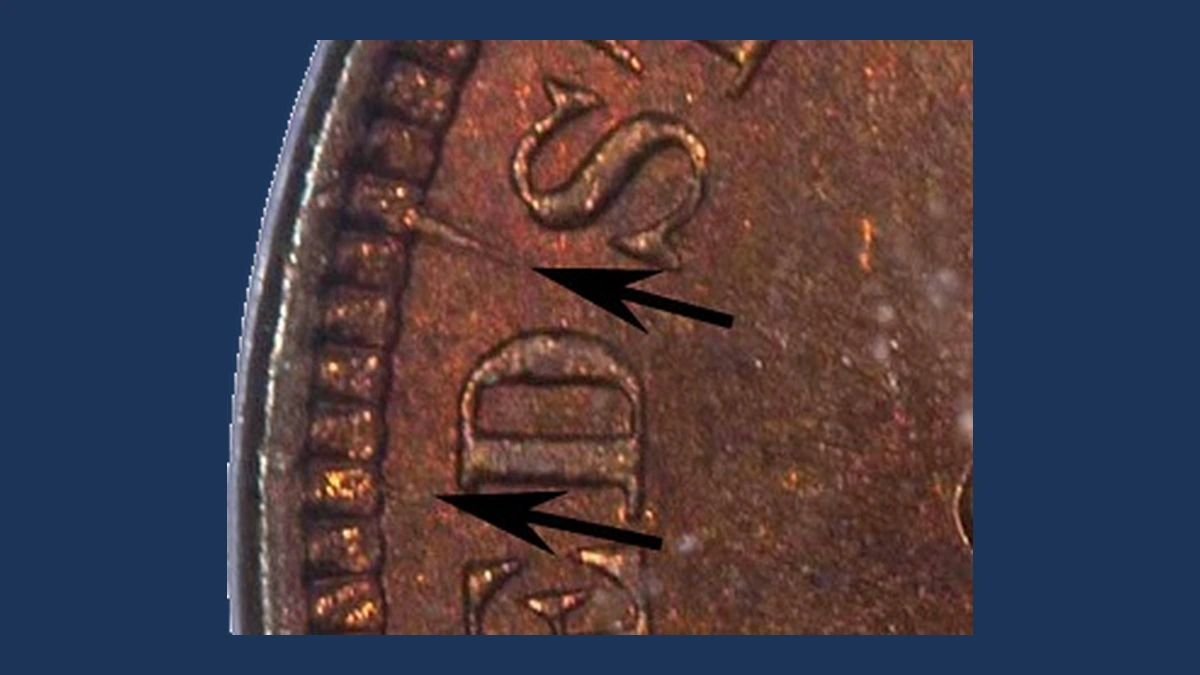
Small raised lines beside the D in UNITED can come from work done on the steel stamping tool. That tool is called a die.
A file can leave grooves in the tool’s surface. During striking, the coin’s metal fills those grooves and copies them as raised lines.
The recorded 1903 pattern has marks before and after that D on the portrait side. A separate repeated-date variety has different lines running from the border into nearby letters.
These lines identify tool work, not scratches cut into a finished penny. Their presence alone does not promise an extra premium.
Estimated Value
Estimate $5–$100 for ordinary examples with matched file marks, including the underlying penny’s value. Many such lines help identify a tool without adding much to the price.
The clarity of the marks and the coin’s condition matter more than their number. A well-preserved coin can cost more mainly because of its original surfaces.
This estimate does not turn every scratch beside UNITED into a collectible variety. Cleaning lines cut into completed detail need a different assessment.
How to Identify
Set a normal UNITED photograph beside the coin and locate the D on the front. With a 10× magnifier, compare the short lines on both sides of that letter.
Angle the lamp to see whether the lines rise above the surface or cut into it. Lines from polishing the finished penny may cross already formed letters and other raised details.
For a loose coin, use a scale and calipers to compare 3.11 grams and 19.05 millimeters, then inspect the plain edge. A size match does not prove a tool mark; its exact path beside the D must agree with the recorded example.
2. 1903 Indian Head Penny Marks from a Rusted Die
The space beside the T in CENT can look rough because the back stamping tool had rust pits. Metal entered the pits during striking and formed small raised bumps.
This is different from the finished coin developing corrosion. Later corrosion attacks the coin’s own surface rather than copying a pattern from the tool.
The listed 1903 rusted-tool variety also has clash marks, which came from the tools touching each other. A transferred outline and a patch of bumps need separate comparisons.
Both features can share one penny. Neither should be expanded into every rough or stained area on its back.
Estimated Value
Use an estimated $5–$150 for matched ordinary 1903 examples, depending on preservation and the visible tool pattern. A small rough patch often serves mainly as an identification clue.
The accompanying clash can add interest, but it remains part of the same whole coin. Separate maximum estimates should not be added together.
This range assumes raised detail formed during striking. Corrosion, harsh cleaning, and dark deposits can reduce a penny’s appeal even when the affected area is visually prominent.
How to Identify
Inspect the plain edge and the surrounding surface for corrosion before focusing on the T. Damage spreading from the edge can explain roughness without a rusted stamping tool.
A scale and calipers compare a loose cent with 3.11 grams and 19.05 millimeters. Leave any sealed example in its holder.
Under a 10× magnifier, examine whether the small bumps rise from the original surface beside CENT. Do not scrape them to test the metal.
Trace any longer curved outline separately as a possible clash mark. The rust identification requires matching the bumps’ position and texture, rather than using that unrelated outline to complete the comparison.
3. 1903 Indian Head Penny Clashed Dies
Faint outlines can appear where the normal design has no matching shape. They may come from the opposite stamping tool touching this one without a blank between them.
The blank is the metal disc before striking. After the tools clash, later coins copy the extra marks alongside their normal designs.
Late stages of the Snow-3 repeated-date variety have clashes on both faces. A separate 1903 pairing has clash marks together with rust roughness beside CENT.
These are different tools and different comparisons. An early Snow-3 coin need not show every mark that developed after the tools had been used longer.
Estimated Value
Estimate $10–$500 for ordinary 1903 cents with recognizable clash marks across worn and better-preserved examples. The shape must be clear enough to connect with the opposite design.
A Snow-3 repunched-date coin with very slight wear sold for $495 in March 2014. That is a date-variety comparison, not a separately established sale of the late clashed stage.
Use the complete coin when comparing price. A tiny additional outline does not justify adding another full valuation to the repunched date.
How to Identify
Start with photographs of the later Snow-3 coin if yours has that repeated-date pattern. The other clashed example has rust marks on the back and needs its own photographs.
Under a 10× magnifier, follow a suspected line through enough curves to recognize part of the opposite design. A short straight scratch is not enough.
For Snow-3, compare marks on both faces with the same late-stage reference.
Check the plain edge for alteration and use a scale and calipers on a loose coin against 3.11 grams and 19.05 millimeters.
For the other pairing, keep the raised rust bumps separate from the transferred outline. They may occur together, but one feature cannot supply the missing shape of the other.
4. 1903 Indian Head Penny Cracks, Chips, and Other Tool Failures
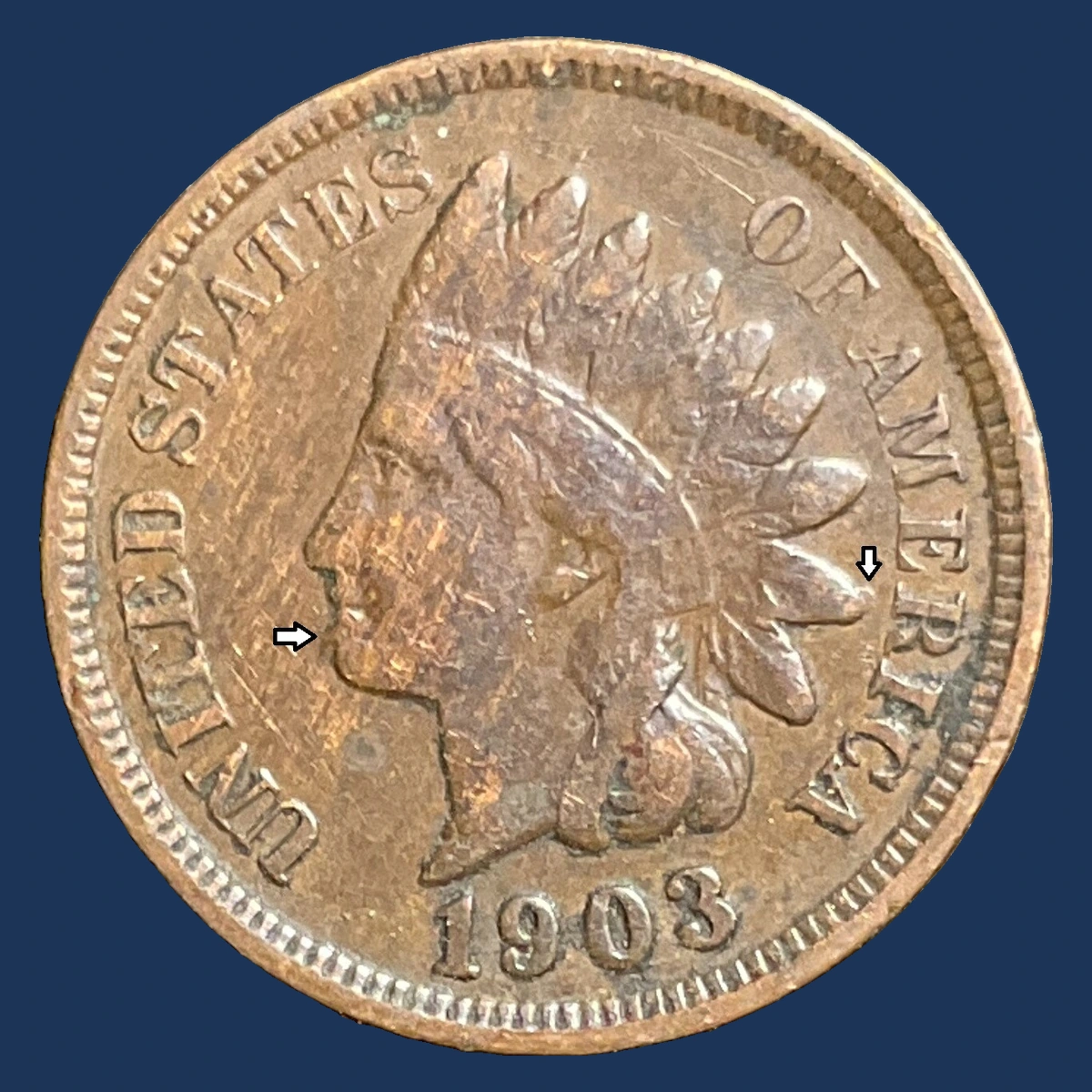
A small chip below the lower lip can grow into a beard-like patch extending toward the chin. Another stage of that tool also shows a break at the eighth feather.
Other 1903 tools failed differently. One has a crack from the 1 toward the 9, with a chip inside the 9’s lower loop.
Back examples have narrow cracks, a break near two-fifteen to two-thirty, or swelling beside the lower-right part of N in CENT.
These raised features reflect damaged or changing tools. They are not all required on one coin, and swelling does not automatically mean a piece fell out.
Estimated Value
Estimate $5–$100 for small cracks and chips, with roughly $25–$750 for stronger matched breaks or more striking tool-failure patterns. These are prices for complete coins in differing conditions.
A later 1946-S Lincoln cent with a cud sold for $288 in March 2021. Its missing-edge-piece error offers broad context rather than pricing every 1903 lump.
A repunched date variety or doubled back also affects the comparison. Do not value each feature as though it were a separate penny.
How to Identify
Decide whether the extra metal lies in the date, on the portrait, or near the back rim. That location determines which failure pattern to compare under a magnifier.
For the beard-like feature, follow the lower-lip patch toward the chin and check the eighth feather against the same tool stage. An earlier stage may have a smaller patch.
On the date example, trace the crack from 1 to the chip inside 9.
Inspect the plain edge for folding or added metal, then compare a loose coin with 3.11 grams and 19.05 millimeters using a scale and calipers.
The swollen area beside CENT needs its own boundary match. Do not call every raised letter corner a missing tool piece.
5. 1903 Indian Head Penny Broadstrike
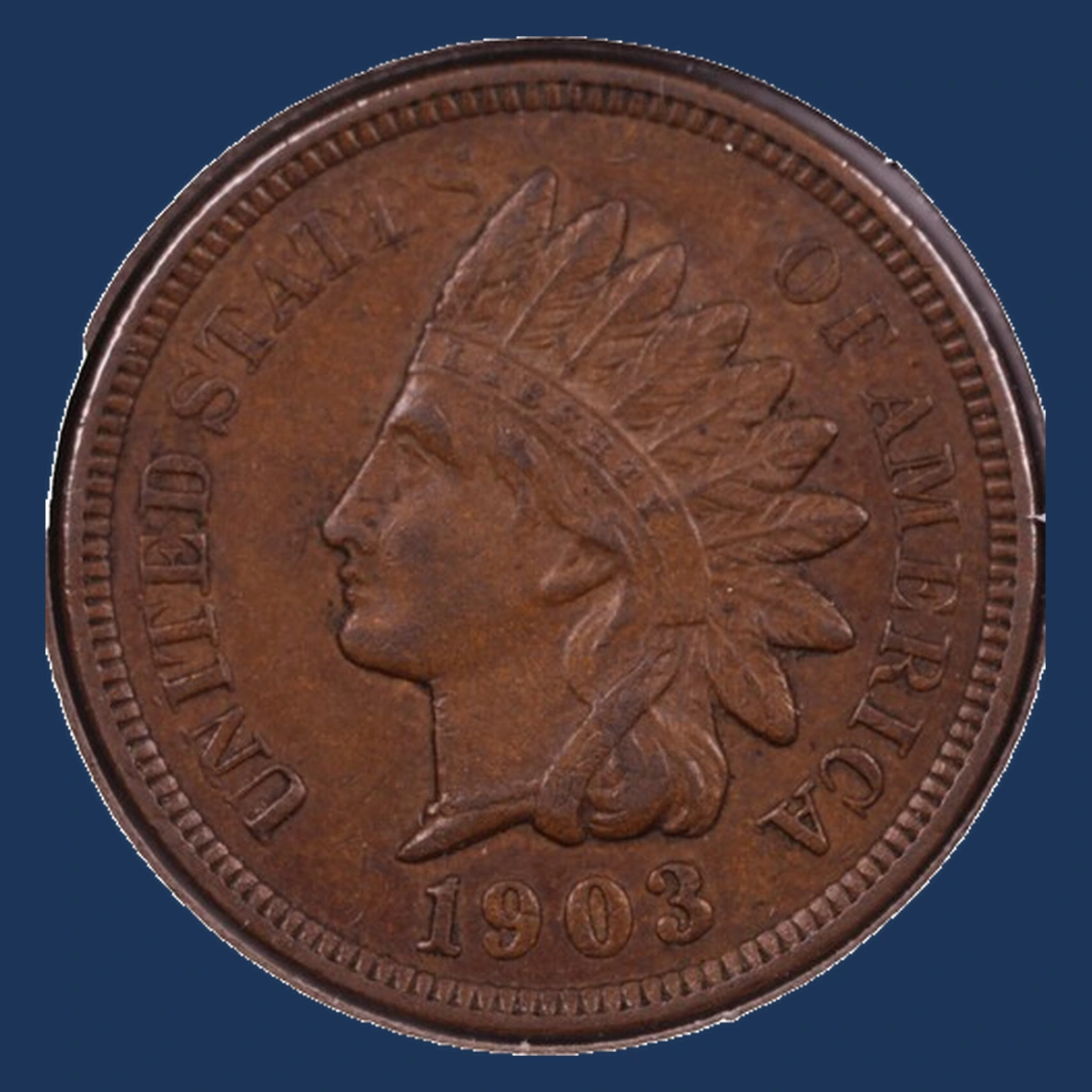
A coin can spread wider than intended when the surrounding ring fails to restrain its metal. This ring is the collar, and striking outside it produces a broadstrike.
A recorded 1903 example was graded NGC Good 6 Brown. That describes a heavily worn coin, so some detail was lost through circulation as well.
The expanded border needs to be judged with the remaining design. A wide edge alone cannot tell you whether the coin spread during striking or was flattened later.
A broadstrike retains the intended design on the available metal. An off-center strike loses some beyond the misplaced disc.
Estimated Value
The NGC Good 6 Brown broadstrike sold for $114 in September 2025. That result gives a same-year comparison for a heavily worn example.
Estimate $50–$1,000 for genuine 1903 broadstrikes across worn through better-preserved coins. The amount of spreading, original surfaces, and remaining design help explain differences in value.
Later flattening can widen a penny too. Its damaged details and altered edge do not qualify it for the same mint-error comparison merely because its diameter increased.
How to Identify
Use calipers to record the widest and narrowest spans of a loose coin against the normal 19.05 millimeters. Then use a scale to compare its metal with 3.11 grams.
Spreading alone removes no metal, so an unusually wide coin can still have normal weight. Inspect the plain edge for hammering or a folded lip.
Follow the surviving outer design with a 10× magnifier and compare both faces. Heavy circulation wear can soften letters without having pushed them beyond the original strike.
Look for crushed detail that could explain later flattening. The useful combination is outward-spread metal and a design that fits inside it, not a wide rim in isolation.
6. 1903 Indian Head Penny Doubled Back Design and Reported Front Doubling
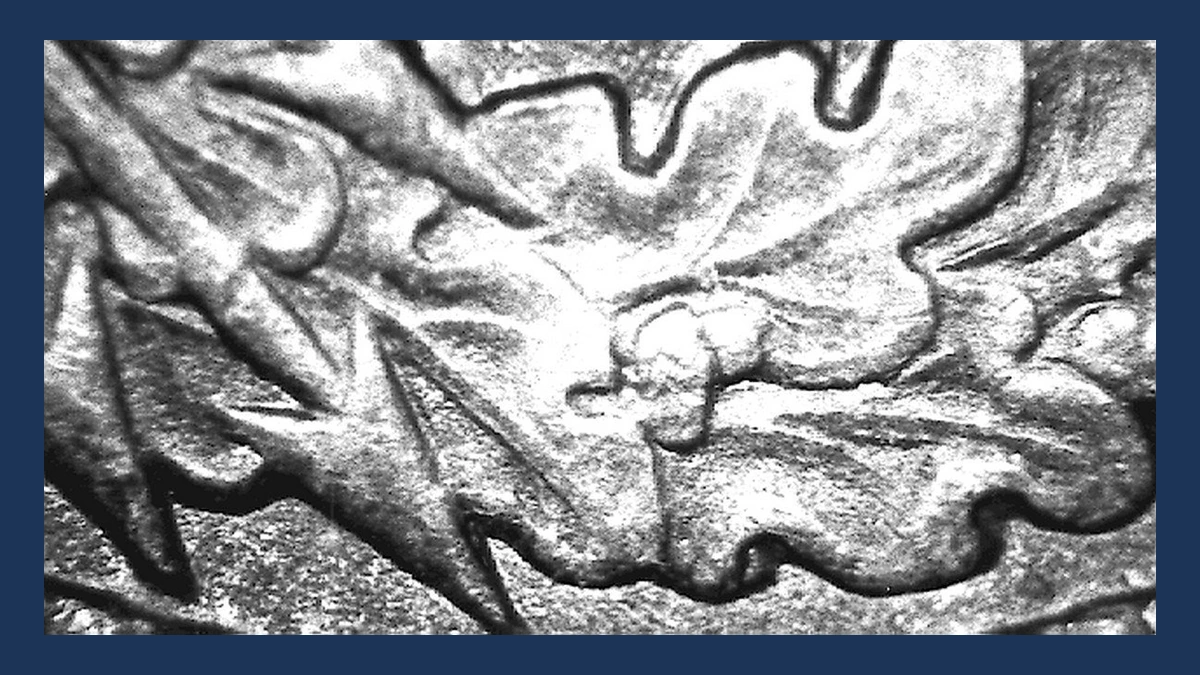
Extra raised edges in the leaf veins can come from a repeated design already present in the back stamping tool. One strike then copies those doubled details onto the coin.
The cataloged Snow-8 variety affects both the left and right wreaths. Its front also has date-punch remnants, which arose during a different step in preparing the tool.
A year guide separately reports a front-doubling category under FS-101. That claim needs its own front-specific match before assigning the number to a coin.
The known doubled back does not establish a doubled portrait or date. The two faces must be examined separately.
Estimated Value
For the identified doubled back, estimate $20–$1,200, according to remaining leaf detail and preservation. A confirmed minor front variety can be considered around $15–$750, without pricing an unsupported identification.
A lightly worn 1889 doubled-back cent sold for $240 in July 2025. That different-year comparison concerns another tool pattern.
The date repunching on a Snow-8 coin belongs in its whole price. It is not a second full value to add to the doubled leaves.
How to Identify
Begin inside the wreaths, where extra vein edges can be followed across nearby leaves. Use a 10× magnifier and change the lighting while keeping the coin upright.
Compare both sides of the wreath with the Snow-8 photographs. The repeated-date strokes are supporting features, but they do not replace the back-design match.
For a loose cent, inspect the plain edge and check 3.11 grams with a scale and 19.05 millimeters with calipers. These measurements cannot identify the repeated tool design.
If the suspected doubling is on the front, choose a front-specific reference instead. A flat shelf from movement during striking or an extra date-punch stroke can have a different cause.
7. 1903 Indian Head Penny Repunched Date
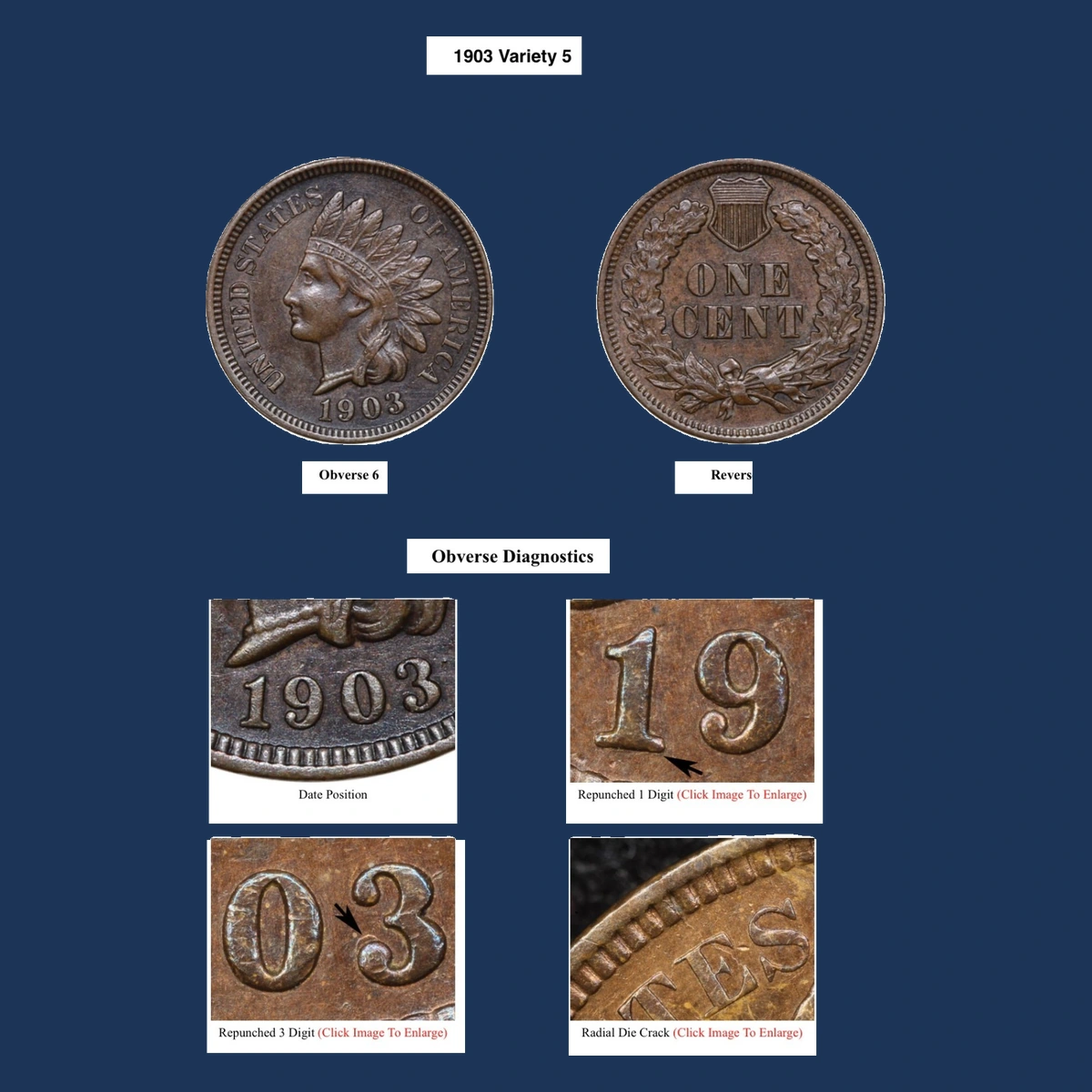
The base of 1 and the loops of 9 can retain thin strokes from an earlier date impression. Mint workers applied the date punch again, leaving some earlier detail uncovered.
On Snow-3, the extra strokes occupy several directions around the digits. Other varieties repeat only the 3 or show upward remnants inside the 0.
Each arrangement belongs to its own tool. A lower stroke on one variety should not be matched with an upper stroke from another photograph.
These are repetitions of the same date. They do not mean a coin was struck over another year or received two blows.
Estimated Value
A Snow-3, FS-304 example graded AU58 Brown sold for $495 in March 2014, according to PCGS. AU58 means very slight circulation wear.
Estimate $10–$1,500 for matched 1903 repunched dates across modest worn examples and stronger preserved varieties. The exact pattern matters alongside condition.
The $495 result does not price every extra-looking stroke. Tool damage, dirt, or a flat shelf from striking movement must be separated from recognizable remnants of another numeral.
How to Identify
Photograph all four digits together, then mark each extra stroke before selecting a variety name. A 10× magnifier can help distinguish a curved earlier numeral from a random ridge beside the date.
For a loose coin, use a scale and calipers to compare 3.11 grams and 19.05 millimeters and examine the plain edge for alteration. These checks establish basic identity, while the earlier strokes identify the tool.
Compare every visible remnant with one documented pattern rather than combining photographs. If the 1 matches but the 9, 0, or 3 points in a conflicting direction, check the match again before using that variety’s price.
8. 1903 Indian Head Penny Off-Center Strike
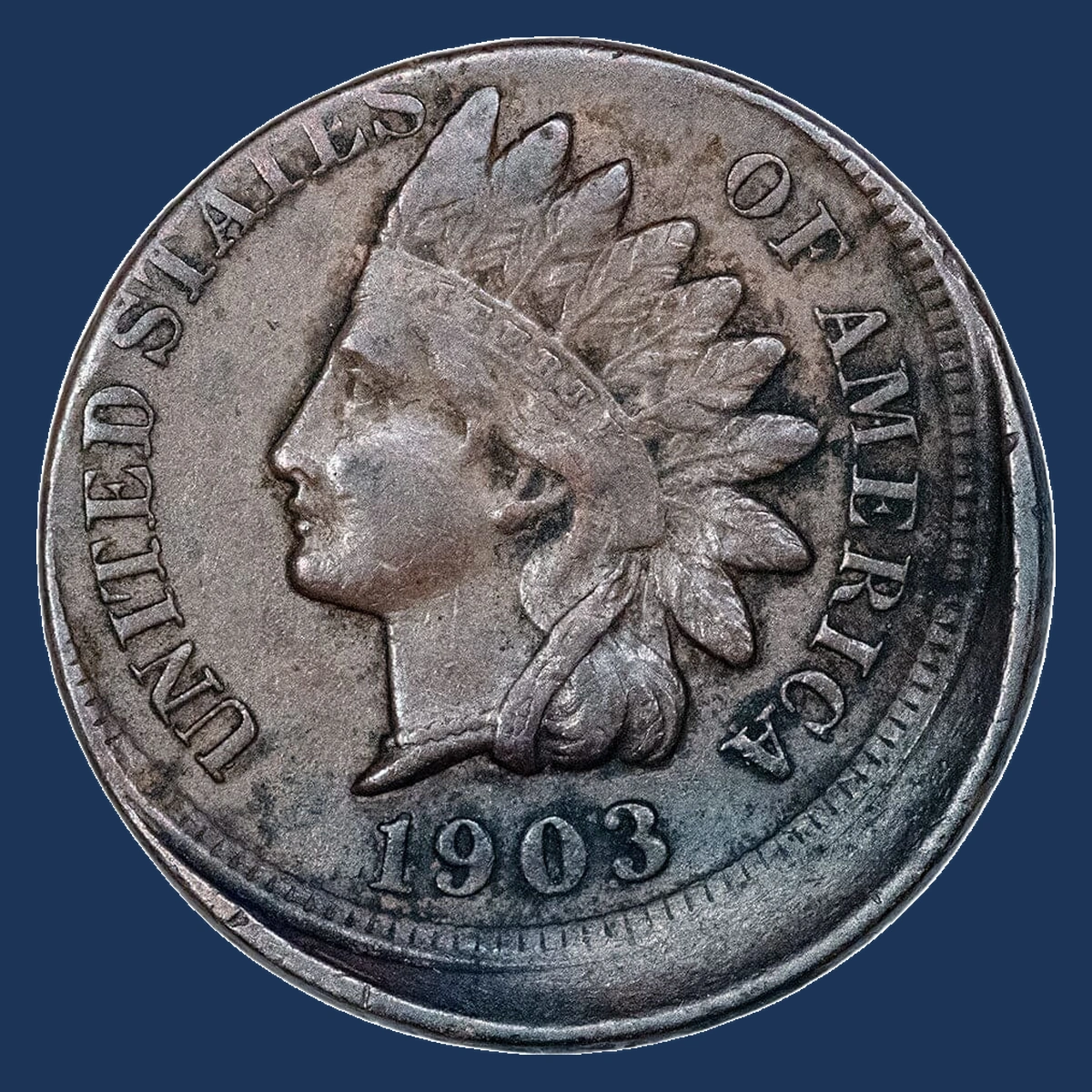
Part of the design can disappear beyond the coin’s edge while untouched metal remains opposite it. The blank entered the press away from its proper position.
A 1903 example shifted 15% toward nine o’clock lost much of UNITED STATES. Its portrait remained well struck, and PCGS graded it MS64 Brown for unworn surfaces with some marks.
A separate 10% example was graded NGC XF40, showing circulation wear with substantial detail. Its percentage and condition should not be confused with the unworn coin.
The blank crescent remains original metal. It is not a piece cut from the finished penny.
Estimated Value
The 15% off-center MS64 Brown coin sold for $632.50 in May 2005. A separate 10% XF40 example sold for $195.20 in March 2026.
Estimate $75–$2,000 for dated 1903 off-center cents across different wear and displacement. Those whole-coin results show how condition changes the comparison.
A large unstruck crescent is not enough to guarantee the upper end. Readable dates, original surfaces, and a clearly explained shift matter alongside the amount of missing design.
How to Identify
Read 1903 before estimating the empty crescent, then set the date upright. For the unworn 15% example, compare the shift toward nine o’clock and the missing UNITED STATES.
Turn to the back to check that its design fits the same displaced blank.
On a loose coin, a scale compares the metal with 3.11 grams. Calipers record the unusual outline beside the normal 19.05-millimeter diameter.
Inspect the plain edge and untouched area under a magnifier for grinding or filing.
The 10% coin needs its own photographs rather than the larger shift’s direction. Both faces must support one original misplaced strike, not missing lettering created by later cutting.
9. 1903 Indian Head Penny Misplaced Digits in the Border or Portrait
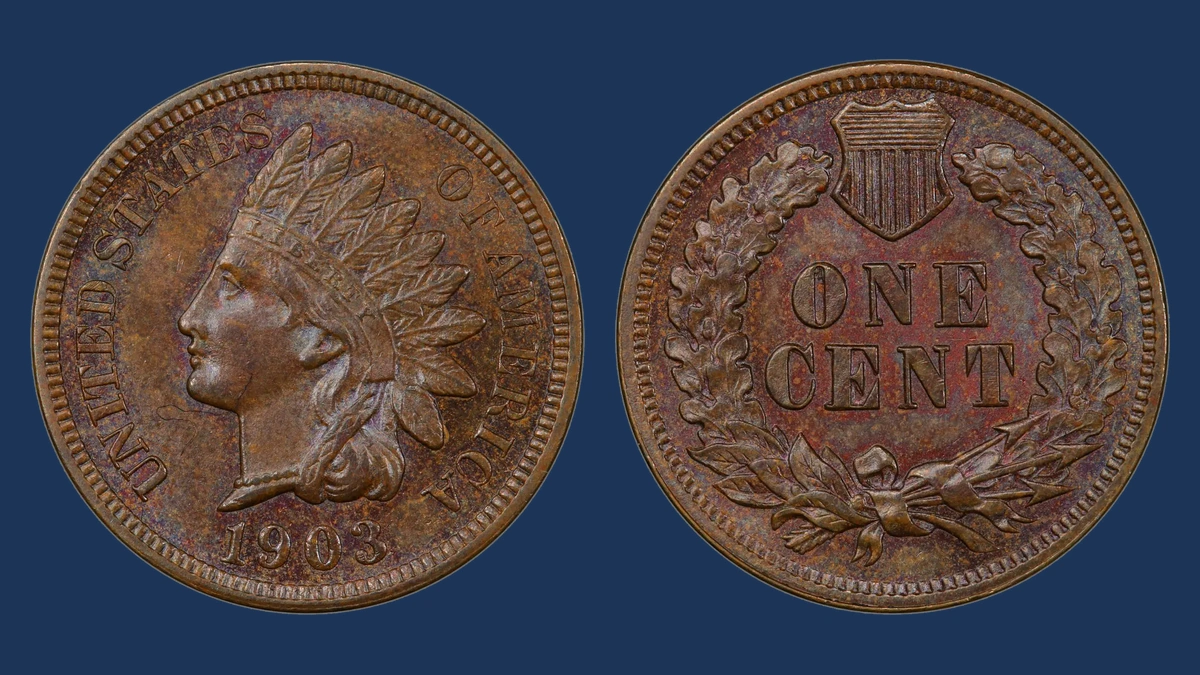
Number tops can hide among the small border teeth below the normal date. They came from the date punch touching the stamping tool in the wrong place.
Recorded 1903 patterns include extra 190 fragments and separate 03 tops. A possible 1 beneath the portrait and other incomplete fragments require their own shape comparisons.
A prepared collector coin, called a Proof, also has misplaced 03 and an earlier stroke inside the 3. Its front tool was used for ordinary coins as well.
The date fragments therefore do not establish Proof status. Coin finish and the complete tool pairing must agree too.
Estimated Value
Estimate $20–$2,000 for identified ordinary misplaced-date examples. Suitable Proofs with the documented 03 pattern can fit a whole-coin estimate of $300–$5,000, much of it reflecting their special preparation and preservation.
An unworn 1878 misplaced-date cent sold for $1,920 in October 2019. That different-year result illustrates how clear fragments and strong condition can combine.
A catalog number alone cannot price an unclear bump. The extra numeral must match its recorded position before a variety comparison is useful.
How to Identify
First decide whether the suspected fragment lies in the border or beneath the portrait. Use the corresponding reference rather than searching every part of the coin for a similar curve.
At 10×, keep the normal date and nearby border teeth visible with the fragment. Incomplete tops should be described by the shape that survives, without inventing a whole number.
For a loose cent, use a scale and calipers against 3.11 grams and 19.05 millimeters and inspect the plain edge.
Keep certified Proofs sealed and compare their finish separately. Since the same front tool served ordinary coins, misplaced 03 alone cannot give a circulation penny the Proof’s identity or price.
Conclusion
The easiest starting point may be a leaf vein, the foot of a date digit, or the empty crescent beside an off-center design. Match that feature before trying to name every mark on the penny.
Estimated whole-coin values here span $5–$5,000. Keep Proof and ordinary examples separate, and treat a repeated date, clash, and small break on one coin as a single complete price comparison.