1909 Indian Head Penny Error List with Pictures

A silver dime blank is the most dramatic item in this 1909 Indian Head penny error list. A specialist guide estimates up to $75,000 for exceptional Indian cents on dime blanks; that figure is a guide estimate, not a 1909 auction result.
Other entries are much smaller features, including extra detail on the ribbon’s L and impressions left by material during striking. The estimated range runs from $20 to $75,000.
Read on to compare the design, mintmark location, and metal before choosing a price.
1. 1909 Indian Head Penny Doubled L and Listed Front Varieties
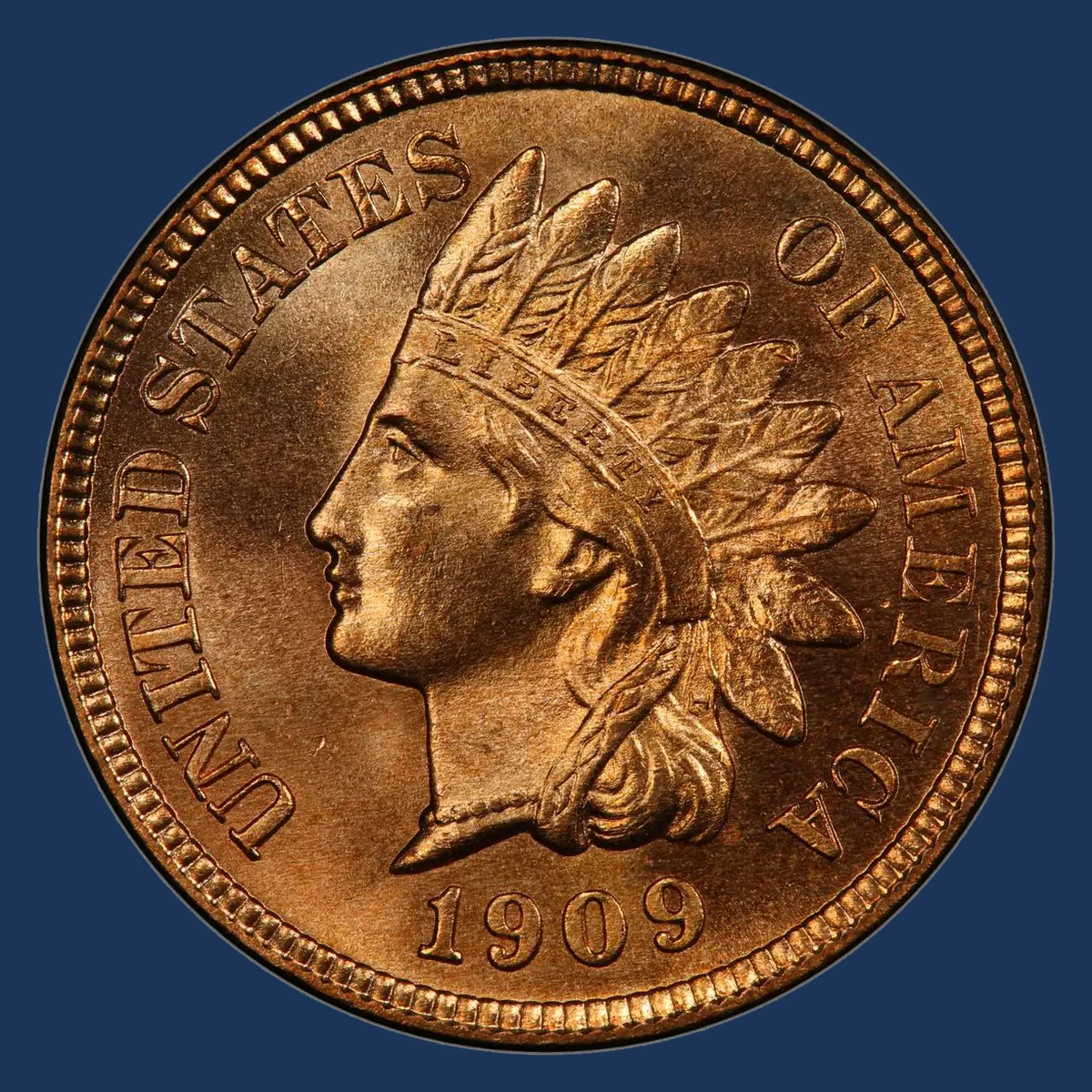
The tiny L on the ribbon behind the neck is the designer’s initial. Some 1909 listings describe extra detail there under doubled-die names, including Snow-1 and FS-101.
Wexler explains that the doubled L came from an earlier master design tool. That tool was used to make working dies, the steel tools that stamped the coins.
This matters because a shared master-tool feature is not proof of one rare working die. Other listed front varieties need their own matching details.
The L’s shape should be examined carefully, without treating every extra edge as a valuable separate error.
Estimated Value
Estimate $20–$1,200 for Philadelphia coins carrying these listed front features across differing wear and color levels. Much of that range can reflect the underlying coin’s preservation rather than a large premium for the L alone.
The doubled master-tool letter does not automatically make a common example a rare working-die variety. A named variety price needs a matching coin and condition.
Worn brown coins and bright, unworn pieces therefore require different comparisons even when their small L looks similar.
How to Identify
Find the ribbon behind the neck, then examine its small L through a 10× magnifier with part of the ribbon still visible. Compare the extra shape with the specialist photograph of master-tool doubling, which can occur on more than one working die.
Use a scale and calipers to check a loose bronze cent against 3.11 g and 19.05 mm before studying its variety details. Any S mintmark belongs on the back below the wreath; a letter beside the date would not be the normal mintmark position.
Other marks used to identify a particular working die can vary even when the L shows the same extra detail. Match the entire set of features in the chosen variety photograph before assigning that coin its catalog name.
2. 1909 Indian Head Penny Off-Center Strike
An unused crescent can sit beside a portrait that partly missed the blank. The blank entered the press away from its intended position, leaving some metal outside the area stamped with the design.
A 1909 Indian Head year guide lists this type. The size of the shift and the mint must be established from the individual coin.
An S, if present, belongs below the wreath on the back. A visible date alone cannot establish San Francisco production.
The intact blank area distinguishes an off-center strike from a gap where metal was removed.
Estimated Value
A useful estimated range for dated Philadelphia examples is $50–$2,500, depending on the shift and preservation. A genuine San Francisco attribution requires its own whole-coin comparison because the ordinary 1909-S is already valuable.
As a same-series comparison, a 1903 Indian cent struck fifteen percent off-center, graded PCGS XF45, sold for $216 in December 2024. XF45 indicates circulation wear with much detail remaining.
That different-year result gives context without establishing a price for every 1909 off-center penny.
How to Identify
Read the date, then turn to the area below the wreath for the mintmark. If the shifted design cut that area off, do not use a San Francisco price merely because 1909-S cents are valuable.
A scale and calipers record the loose coin’s weight and outline against 3.11 g and 19.05 mm. A full blank can retain its metal even when much of the intended design is absent.
Examine the bare crescent at 10× for sanding or freshly cut surfaces. Photograph both faces to show how the designs fit the misplaced blank.
A missing chunk has a different outline from unused but solid metal. Follow the physical edge to distinguish the two before estimating the amount of displacement.
3. 1909 Indian Head Penny Struck Through Material
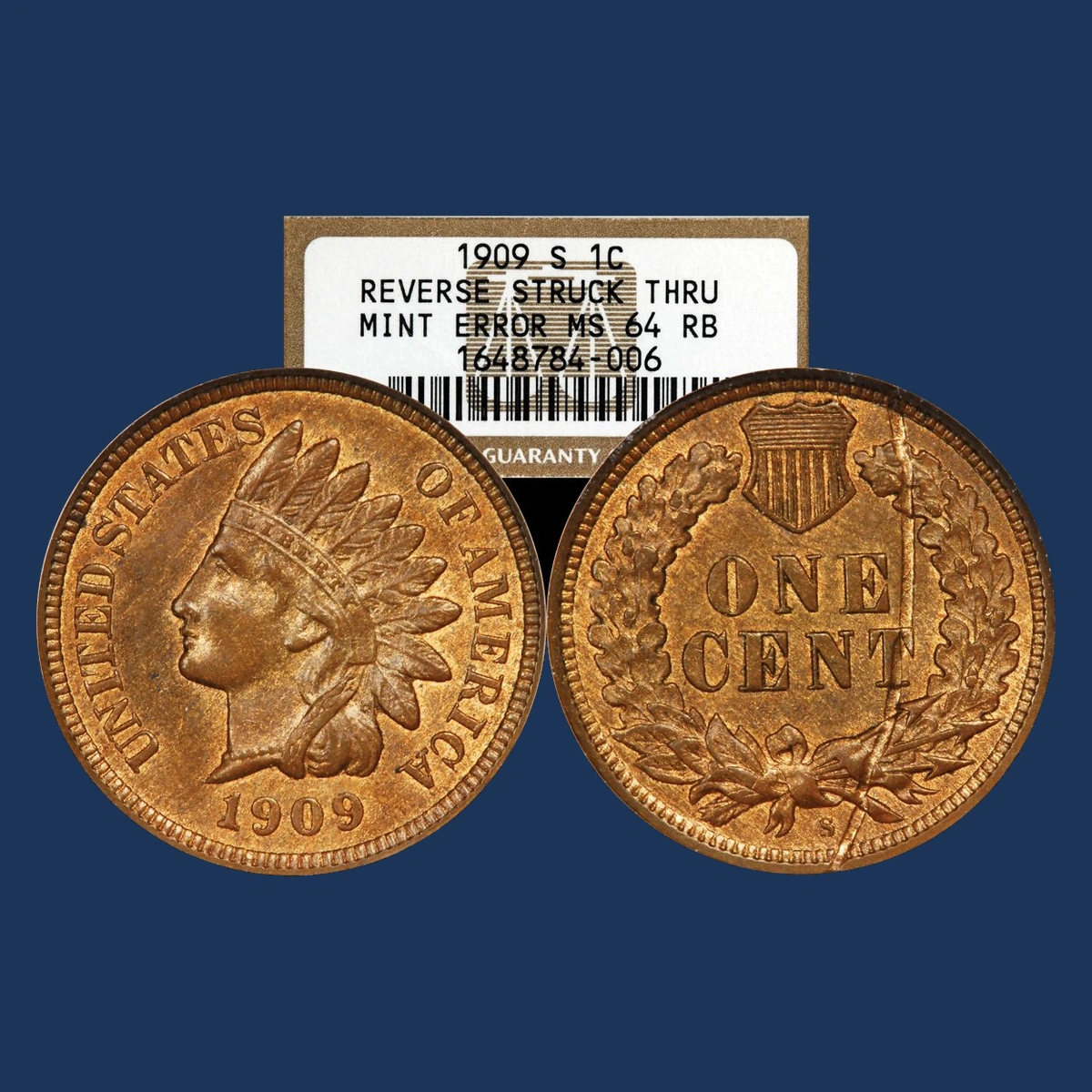
One 1909-S Indian Head cent appears in a specialist collection with a back struck-through error. NGC graded it MS64 Red and Brown, meaning unworn with some marks and partly preserved copper-red color.
Material between the stamping tool and blank interrupted the normal design. The collection’s description does not identify the object responsible.
A separate seller describes a worn 1909 Indian Head penny with a front impression. That seller’s error claim is not the same evidence as the certified San Francisco example.
Both concern an interrupted strike, but the affected face and coin identity differ.
Estimated Value
Estimate $30–$300 for modest confirmed front impressions on circulated Philadelphia coins. For the certified San Francisco back example, an estimated $1,000–$7,000 concerns the entire valuable 1909-S coin, including its unworn condition.
Those are estimates, not reported sales of the two illustrated examples. The obstruction’s visibility can affect appeal, but the mint and preservation explain much of the difference.
A seller’s worn coin should not inherit the high-grade San Francisco range without the same identity and condition.
How to Identify
Start by selecting the correct face and mint. The certified San Francisco report concerns the back, while the seller’s separate report concerns the front.
Photograph the impression under angled light with a 10× magnifier. Follow any normal lettering as it approaches the affected area.
A later dent can cut or flatten finished details. An obstruction during striking can instead prevent those details from forming inside the impression.
Use a scale on a loose example to compare with 3.11 g, and calipers against 19.05 mm. Leave a certified coin sealed and use its recorded measurements when available.
Do not identify cloth, grease, or another object from the error label alone. The actual texture and interrupted design must support that more specific description.
4. 1909 Indian Head Penny Struck on a Silver Dime Blank
An Indian Head design on silver is a very different mistake from a small doubled letter. Mint Error News describes a 1909 example struck on a blank intended for a Barber dime.
The account places it in Fred Weinberg’s personal collection and describes strong detail with original mint shine. It does not describe an already finished dime struck again.
A normal dime blank was smaller and lighter than the bronze cent blank. It contained ninety percent silver and ten percent copper.
A silver-colored coating on an ordinary penny would not create the same blank identity.
Estimated Value
Mint Error News’ price guide places Indian cents on dime blanks at roughly $20,000–$75,000 across worn through exceptionally preserved examples. This series-wide guide range supports an estimate, not a sale price for the particular 1909 coin.
The older collection account supplies no adopted transaction amount. Condition, originality, and professional confirmation of the silver blank are essential to a meaningful comparison.
Do not apply this range to a plated bronze penny or to an ordinary silver dime.
How to Identify
Compare weight and metal together. A normal silver dime blank starts at 2.50 g and 17.91 mm, while a bronze cent starts at 3.11 g and 19.05 mm.
A precise scale and calipers can record a loose coin without scratching it. The cent strike may spread the smaller blank beyond its original width.
Under a 10× magnifier, inspect the edge for plating, filing, or a copper core. Professional non-destructive metal testing can determine whether the alloy matches a silver dime blank.
Read the Indian Head design and full date in the photographs. Traces of an earlier dime design would suggest an overstruck finished coin, which is different from the blank described here.
Conclusion
The ribbon’s L, a displaced portrait, and a silver blank tell different stories about how a 1909 Indian Head penny was made. Estimated values range from $20 for modest listed features to $75,000 for exceptional dime-blank examples.
Check the back below the wreath for an S, and keep Indian Head coins separate from 1909 Lincoln pennies. Use the actual coin’s condition and confirmed feature when comparing it with a price guide.