1920 Penny Error List with Pictures

A penny struck three times still keeps the last two digits of 1920 visible. Another received Lincoln’s design on metal prepared for a Cuban coin.
The Cuban-blank example sold for $2,875 in September 2009, while the triple strike brought $1,800 in August 2020. These are different errors on different coins.
This 1920 penny error list runs from small mintmark traces to those unusual pieces, with estimated values of $5–$6,000. Use the checks below to follow the feature on your own coin.
1. 1920 Lincoln Penny Rotated Dies (Estimated Up to $200)
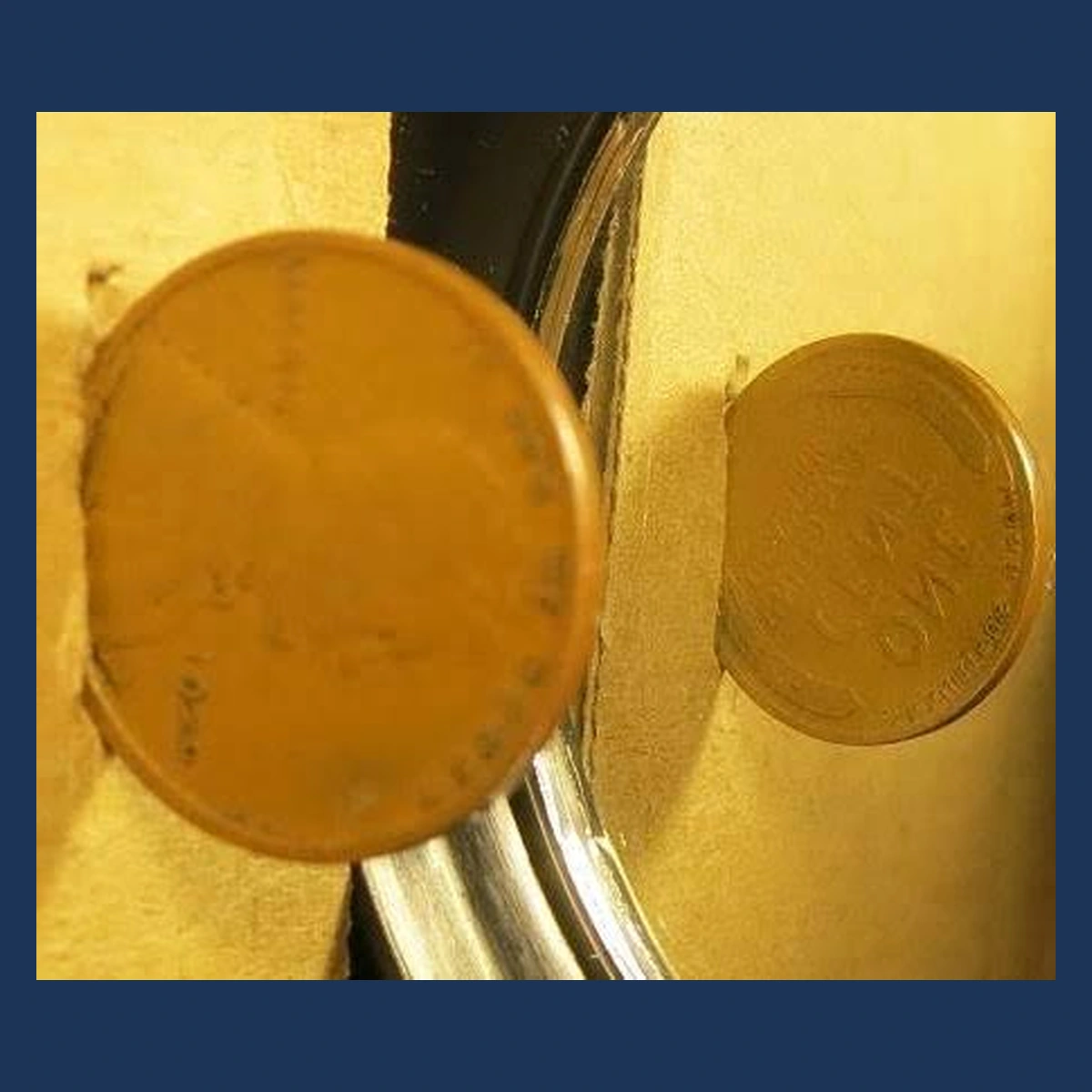
Turn a normal penny over top to bottom and both designs should stand upright. On the reported 1920-D example, the back instead leans by 15 degrees.
The steel tools that stamp the faces are called dies. If their positions turn out of alignment, each newly struck coin can show the same tilted relationship.
This does not require the coin to turn over between separate front and back blows. The error concerns how the two tools face each other.
The reported amount is modest. Its clockwise or counterclockwise direction should be read from the actual coin rather than guessed.
Estimated Value
For a genuine modest rotation, estimate $25–$200. The angle needs to remain consistent when the coin is flipped correctly, and condition also affects value.
A year-specific guide reports a 1920-D PCGS AU58 Brown example sold for $59 in 2018. That is a guide-reported sale, not an independently matched auction lot here; AU58 means only slight wear.
A casually tilted photograph does not support the premium. Establish the alignment before comparing prices for more dramatic turns.
How to Identify
Keep Lincoln upright and turn the coin top to bottom without spinning it sideways. Repeat the motion several times; the back should lean by the same amount each time.
Photograph the starting front and resulting back positions. A 15-degree turn is much smaller than a quarter turn, so a slight hand movement can confuse the measurement.
Check the D below the date when matching the reported example. Inspect the smooth edge and rim under a magnifier for a join between altered pieces.
When safely accessible, compare weight with 3.11 grams on a scale and width with 19.05 millimeters using calipers. Leave a sealed holder intact and maintain the same fixed turning axis for photographs.
2. 1920 Lincoln Penny Repunched Mintmark (Estimated Up to $250)
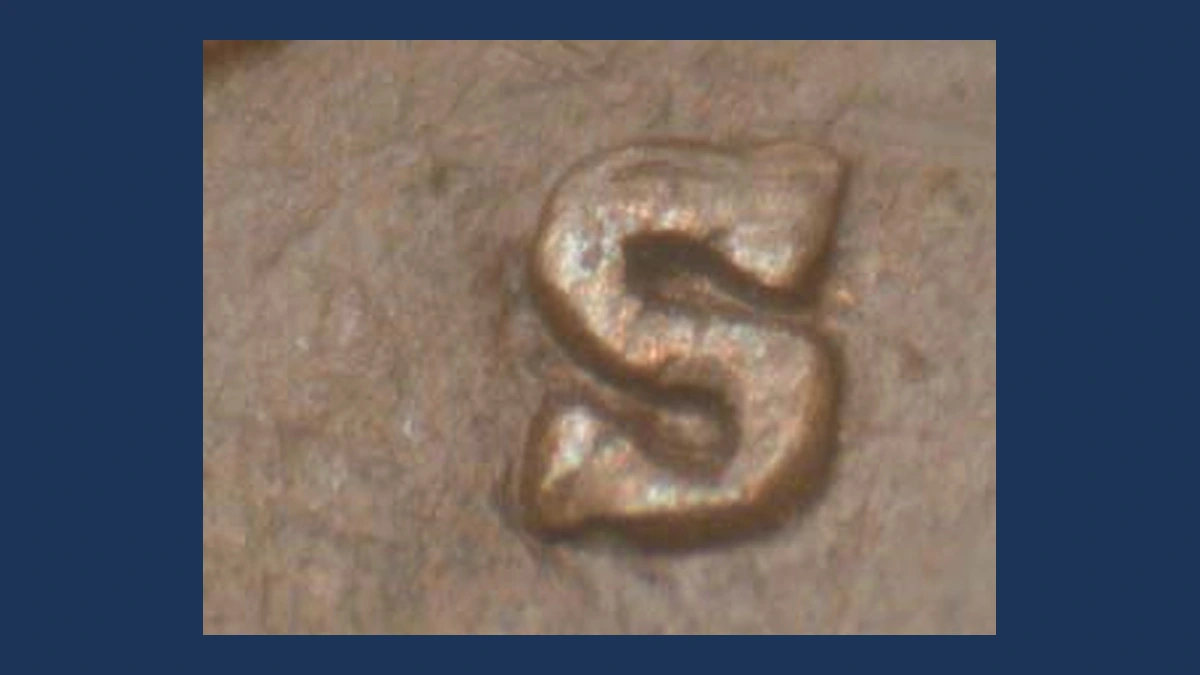
The small mint letter can preserve an extra curve from an earlier punch position. Workers added D or S to the stamping tools by hand before those tools made coins.
For 1920-S, a recognized repunch shows part of the S to the north, or above the main letter. A Denver example instead shows a tilted repeated D.
These are different letter shapes and different overlaps. Rotating a picture of one does not make it identify the other.
Neither pattern requires an extra date or portrait. A mintmark repunch concerns the separately punched letter below the date.
Estimated Value
Identified repunches fit an estimated $10–$250, with clear extra strokes and preserved surfaces supporting the higher comparisons. Tiny worn traces usually need stronger photographs before a variety premium makes sense.
This estimate follows modest Wheat-cent mintmark varieties. It does not assign a recorded auction price to either cataloged 1920 pattern.
Use the correct D or S example when comparing. A lump from a chipped tool, or a flat shelf beside the letter, does not establish another punch position.
How to Identify
Orient the date upright before tracing the mintmark. For the S example, use a 10× magnifier to look above the main letter for its earlier outline.
For Denver, compare the angle of the second D with the main D. A tilted letter overlap should not be replaced by the S example’s simple upward shift.
Change the light to check whether the extra stroke is raised metal or a reflection. Follow its curve far enough to distinguish part of a letter from a shapeless bump.
Inspect the normally smooth edge and confirm 1920. A scale and calipers can check an accessible coin against 3.11 grams and 19.05 millimeters, but those readings cannot name its mintmark variety.
3. 1920 Lincoln Penny Lamination (Estimated Up to $300)
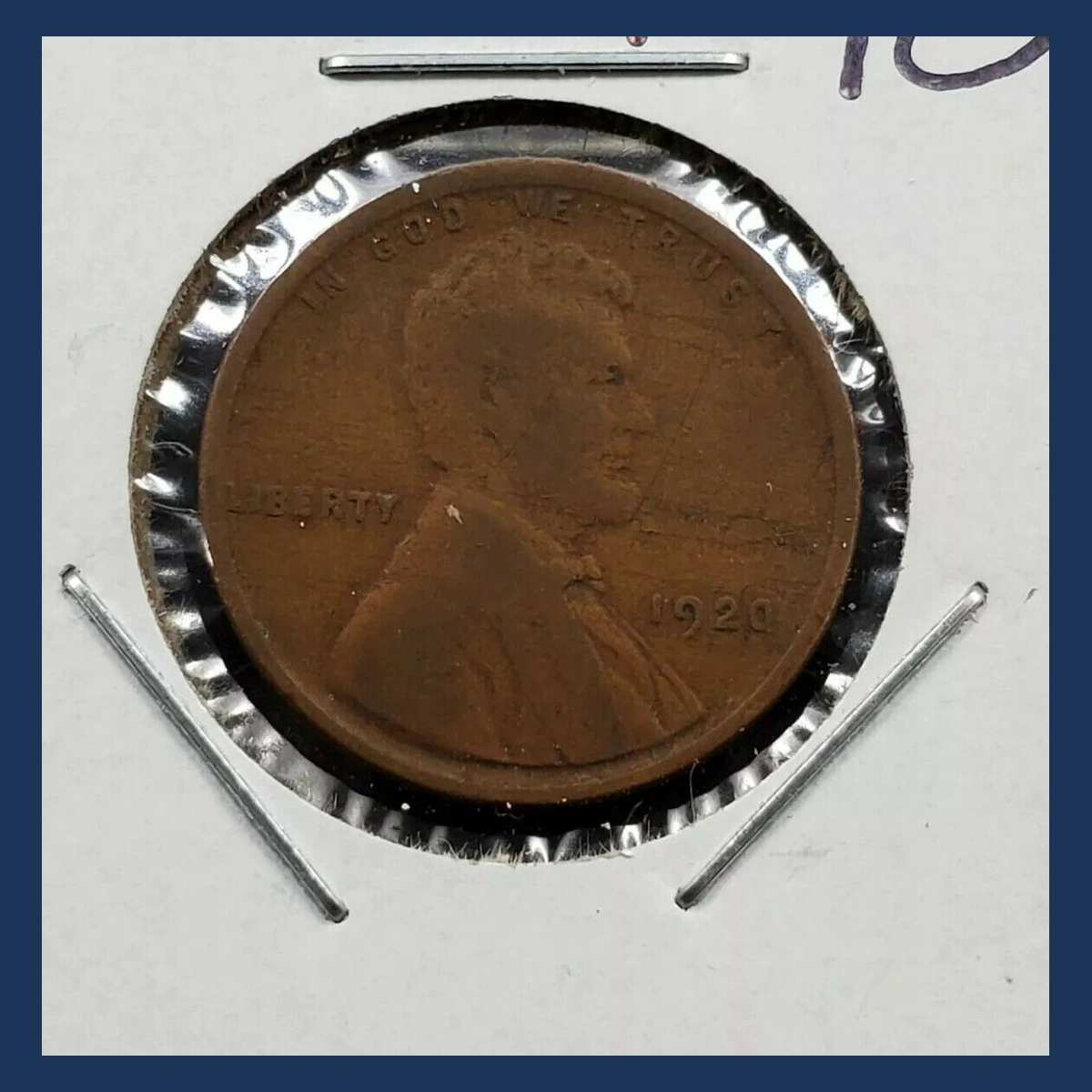
Several 1920 pennies have a thin layer peeling away from the rest of the metal. This failure inside the alloy is called lamination.
One Philadelphia example has two peeling paths, roughly from one-thirty to eight o’clock and from three to seven. Another loses about 40% of its front surface.
A San Francisco listing describes peeling from twelve-thirty to seven o’clock. These positions belong to separate examples, not one large combined crack.
An attached flap may remain, or leave a rough patch after falling away. The records describe surface layers rather than a complete penny split into two halves.
Estimated Value
Estimate $5–$300 for the reported peeling forms, allowing for size, condition, and whether the surface remains untouched. Larger examples are not automatically more valuable if corrosion hides their original boundaries.
A later 1952-D front lamination sold for $35 in July 2013. It provides a modest Wheat-cent comparison rather than a sale assigned to either 1920 peeling path.
Older dealer lists also document these forms. Their minimum bids should not be treated as final auction prices.
How to Identify
Before taking the coin out for measurements, check whether any layer is loose. Keep an attached flap in place and photograph the gap already visible beneath it.
Use side lighting and a magnifier to follow the peeling path. Match the mint and affected face before comparing the clock positions quoted for a particular example.
The alloy is solid copper-rich metal, unlike modern copper-coated zinc cents. A separated layer should be explained as a failure within that alloy.
When safe, use a scale to record loss against the usual 3.11 grams. Calipers compare width with 19.05 millimeters, but should avoid fragile metal.
Include the smooth edge in photographs wherever the separation reaches it, without opening the seam further.
4. 1920 Lincoln Penny Broadstrike (Estimated Up to $400)
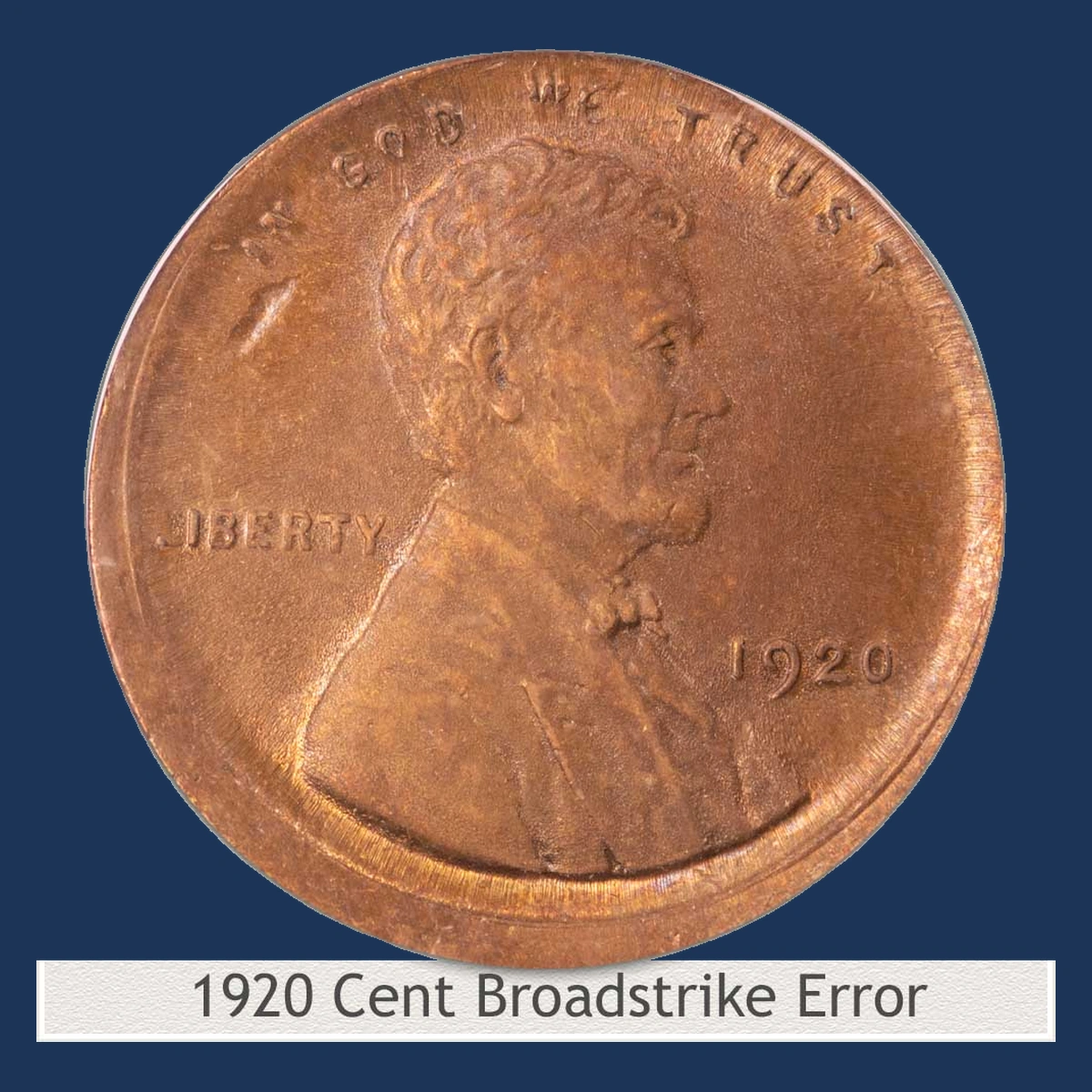
A complete design can sit inside an unusually wide penny. During a broadstrike, the metal spreads without being normally contained by the surrounding ring.
That ring is called the collar. It usually helps control the coin’s finished width during the blow.
A Philadelphia 1920 example graded NGC MS62 Brown appears in a recent auction. Its grade describes an unworn coin with noticeable marks and brown copper color.
The wider outline is the important shape to examine. If letters or part of the portrait fall beyond the available metal, an off-center strike may be involved instead.
Estimated Value
The NGC MS62 Brown broadstrike sold for $119 in March 2026. An estimated $25–$400 covers modest worn examples through clearer, better-preserved spreading.
This is the price of a broadstrike, not the triple-struck coin discussed later. Extra width alone does not establish an additional press blow.
Check the outer surface carefully when comparing values. Hammering can widen a normal cent after it leaves the Mint, but that damage does not earn the same error premium.
How to Identify
Measure the coin across more than one direction with calipers. Compare the outline with the normal 19.05-millimeter diameter, then use a scale to check against 3.11 grams.
A blank can spread without losing its original metal. Next, trace the outermost letters and design on both faces.
They should remain within the expanded boundary, even if some details are weak. An uneven border is not enough to call the coin off center when the intended design is complete.
Under a magnifier, inspect the smooth edge and widened margin for seams or flattening. Look across the portrait for crushed completed detail that could point to later hammering rather than spreading during the original strike.
5. 1920 Lincoln Penny Struck Through a Metal Flake (Estimated Up to $500)
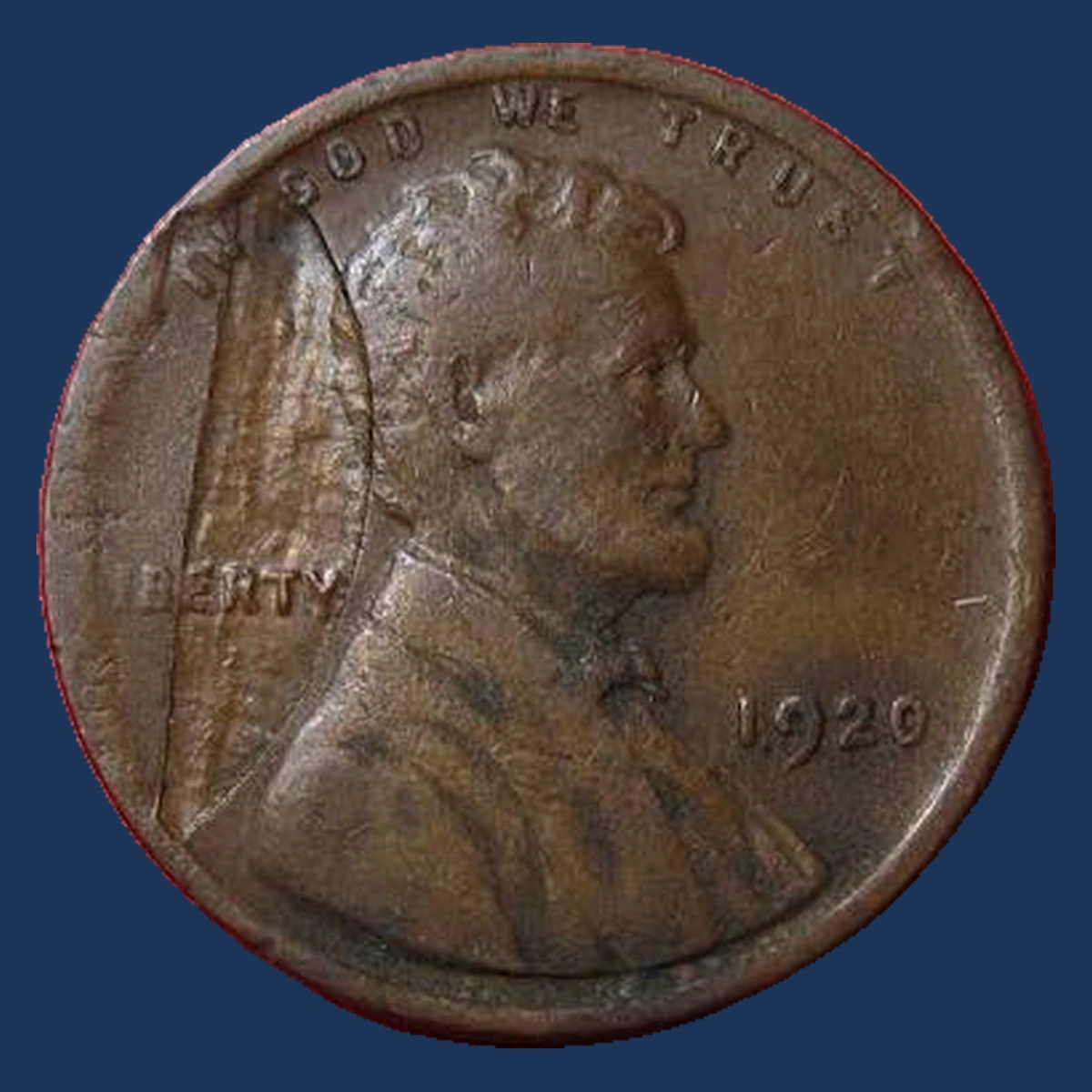
A thin piece of metal can interfere with the next coin being struck. The piece presses into the blank and prevents part of the intended design from forming normally.
A Philadelphia 1920 example is identified as struck through a lamination fragment. Here, lamination describes the loose layer that became the obstruction.
This differs from a layer peeling off the finished coin itself. The feature being identified is the impression made through the interfering fragment.
The record does not establish that the fragment remains attached. Its position and outline must come from the specimen rather than a generic peeling-metal picture.
Estimated Value
A PCGS VG10 example sold for $134 in March 2025. VG10 describes a heavily worn coin whose main design remains recognizable.
For comparable genuine fragment impressions, estimate $30–$500. The range allows for the size of the interruption, preservation, and how clearly the surface shows what happened.
A removed layer from the coin itself belongs in a different comparison. Neither a rough patch nor the word “lamination” alone establishes a struck-through fragment premium.
How to Identify
Look at how the impression meets nearby struck details rather than searching for a flap to lift. The fragment acted as an obstruction during the blow.
Use a magnifier and a low lamp to follow the boundary. A later gouge cuts into a completed design, while an obstruction changes how that design forms.
If loose material is present, leave it untouched. Do not assume the error’s name proves that a fragment is still retained.
An accessible coin can be weighed against 3.11 grams and measured with calipers against 19.05 millimeters. Inspect the smooth edge for separate damage.
Save full-face photographs alongside the close-up so the blocked area can be assessed in relation to the whole strike.
6. 1920 Lincoln Penny Doubled Die Obverse (Estimated Up to $600)
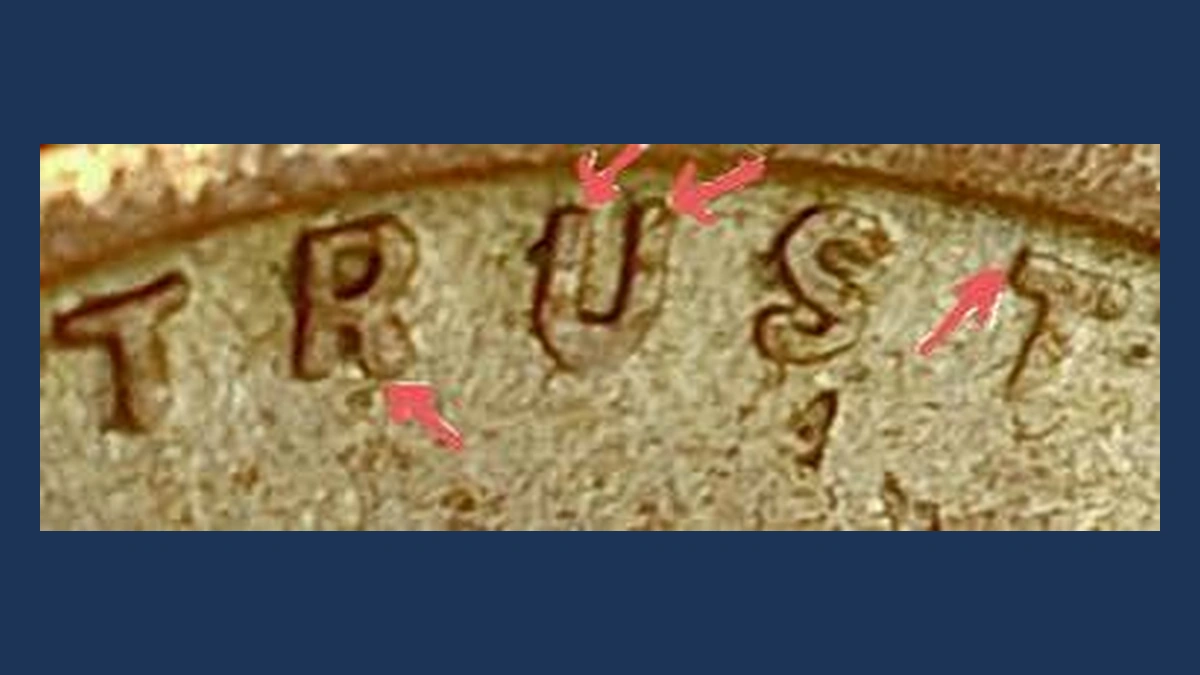
Lincoln’s eye can appear to have an extra eyelid. On the San Francisco example, the extra line lies below and to the right of the eyelid.
A doubled design formed in the stamping tool can reproduce this detail on its coins. Collectors call that a doubled die, rather than a coin struck twice.
An extra-eye feature is also reported for Denver, but its direction needs its own comparison. A Philadelphia report instead concerns the 920 date digits and LIBERTY.
These are separate examples. The San Francisco eye does not identify a Denver coin or establish doubling in a Philadelphia date.
Estimated Value
Use an estimated $20–$600 for a correctly matched minor doubled-front variety. The clearest repeated feature and better-preserved surface support stronger comparisons.
A different 1936 doubled-front cent brought $70 in June 2024. Its ANACS MS63 Brown grade describes an unworn coin with marks and brown color.
That is a later-year comparison, not a 1920 transaction. The eye and date varieties need their own matches before applying a premium; an enlarged-looking feature alone is not sufficient.
How to Identify
For the San Francisco eye, aim the magnifier below and to the right of the normal eyelid. Compare the extra line with the cataloged S example rather than with a doubled date.
A Denver eye needs a Denver photograph; its reported feature does not inherit the S direction. For Philadelphia, inspect the 920 date digits and LIBERTY instead.
Move the light to distinguish raised repeated detail from a flat shelf or reflection. A 10× view should still include enough portrait or lettering to show the location.
Check the smooth edge and date before recording accessible scale and caliper measurements against 3.11 grams and 19.05 millimeters. Keep the mint-specific comparison with each close-up.
7. 1920 Lincoln Penny Cracked Planchet (Estimated Up to $600)
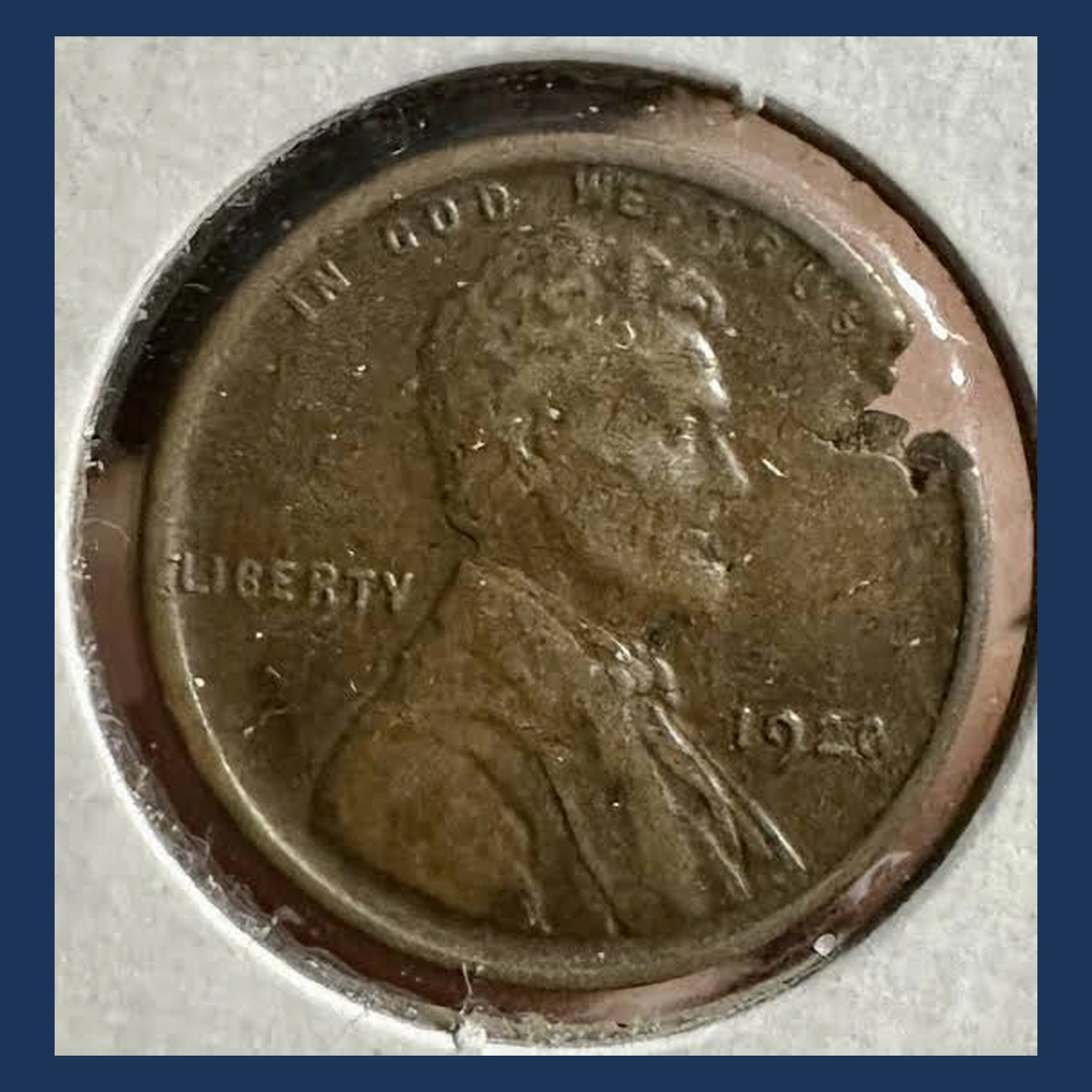
An opening near eight o’clock can run into the body of the coin. The reported Philadelphia example has a cracked blank, rather than a raised line copied from a cracked tool.
A prepared blank is also called a planchet. Its own metal can fail and separate, leaving an actual gap.
This differs from a thin surface layer peeling away. It also differs from a scratch cut into a finished penny.
The position locates this example only. A deeper crack can make handling risky for the object, so the opening should stay exactly as found rather than be widened for inspection.
Estimated Value
A genuine cracked blank can fit an estimated $25–$600. The opening must be distinguishable from a later cut, and its size and the coin’s preservation affect the comparison.
The estimate follows comparable copper-alloy cent blank failures. The older 1920 dealer listing establishes the reported type, but its minimum bid does not supply a realized sale price.
An intact, untouched crack is easier to explain than one that has been pried open. Avoid paying an error premium for an artificial groove.
How to Identify
Examine the edge near eight o’clock without bending the coin. Side lighting and a magnifier can show whether the opening continues into the metal.
If the line stands above the face, check a cracked stamping tool instead. If a thin sheet is lifting, compare the lamination examples.
Photograph any visible continuation on the other face. A sharp cut crossing completed letters or a corroded channel may provide another explanation.
Weigh against the normal 3.11 grams only when the coin can be handled safely. Calipers can compare sound areas with 19.05 millimeters, but must not squeeze the crack.
Keep close-ups of the plain edge with the face views when obtaining an expert assessment of how the metal separated.
8. 1920 Lincoln Penny Clipped and Ragged-Edge Blanks (Estimated Up to $800)
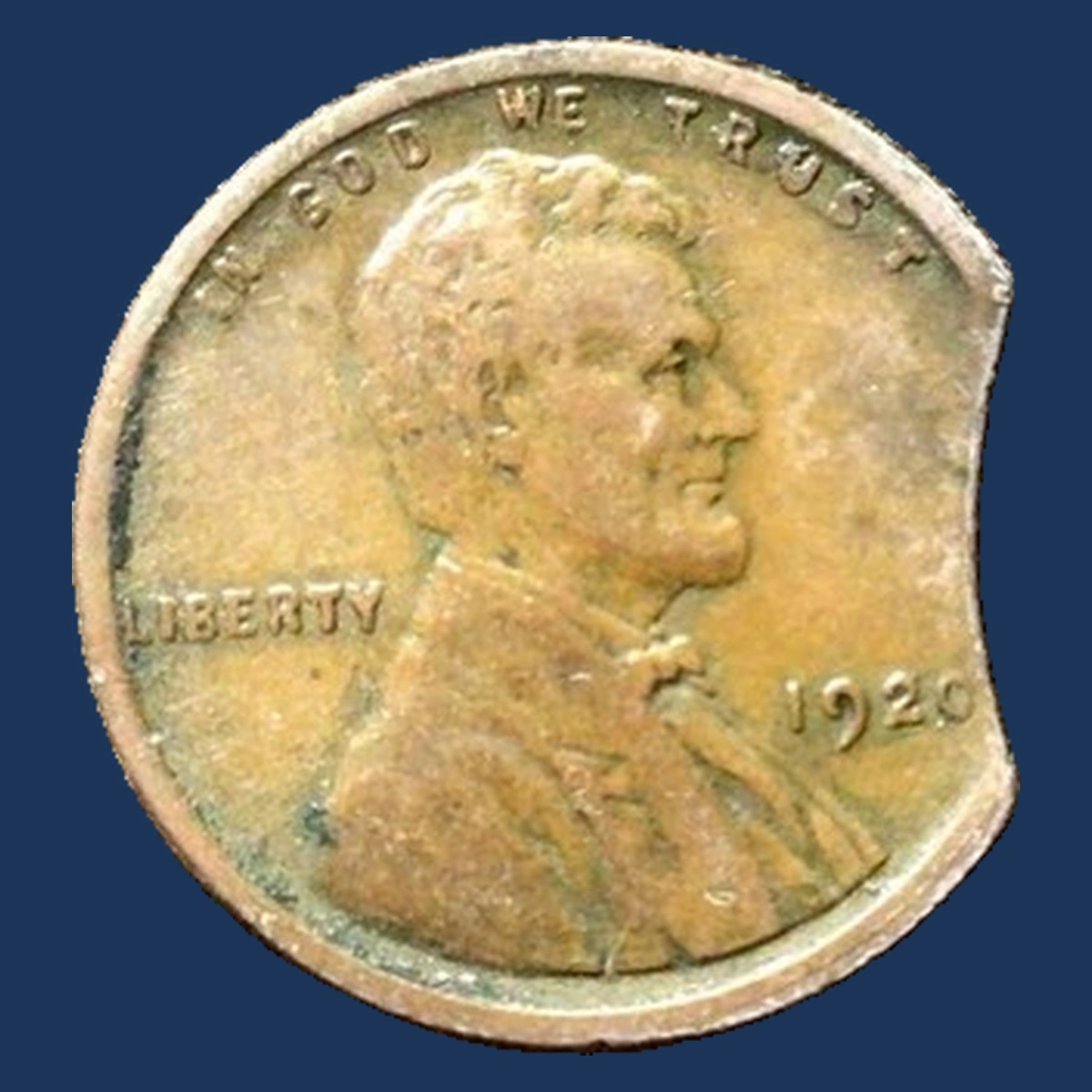
Part of a blank can be missing before any design reaches it. A curved gap and a ragged edge are different ways an incomplete blank can appear.
Philadelphia records include separate 7% and 15% clips. Another clip cuts into the date’s final zero.
A different coin combines a ragged edge with a 15% off-center strike and weighs 3.0 grams. Its uneven metal boundary and shifted design belong to the same piece.
Do not combine those descriptions into one penny. The clip amount describes missing blank metal, while an off-center percentage describes how far the design missed its intended position.
Estimated Value
A 7% curved clip graded PCGS AU55 sold for $49 in March 2025. AU55 indicates light wear; the separate 15% clip is an unworn example and needs its own comparison.
Estimate $15–$500 for ordinary clips and $100–$800 for the ragged-edge and off-center combination. These are whole-coin ranges.
The 3.0-gram weight belongs to the combined error, not all clipped cents. A readable date and a natural missing boundary matter more than adding separate error prices.
How to Identify
Start by drawing the surviving outline from a full photograph. Distinguish a curved missing section from the ragged edge on the combined off-center coin.
Use a scale against 3.11 grams and calipers across sound metal against the usual 19.05-millimeter width. Record the actual measurements rather than transferring the combined coin’s 3.0 grams.
Then inspect the gap under a 10× magnifier. The rim and nearby letters should fit metal that was absent before striking, without later saw marks or cuts through completed detail.
For the combined example, compare both incomplete designs as well as the ragged boundary. Photograph the normally smooth surviving edge and keep its blank defect separate from the amount of design displacement.
9. 1920 Lincoln Penny BIE Chips and Rim Cuds (Estimated Up to $1,000)
A raised bar between B and E can make LIBERTY look as though it contains an I. This tool chip is called a BIE.
Larger pieces breaking from the tool at its edge leave raised patches connected to the coin’s rim. These are cuds, with normal design replaced by extra metal.
Cataloged 1920 examples come from Philadelphia, Denver, and San Francisco. Several involve the back, and some San Francisco records describe multiple breaks on the same coin.
The number of patches does not create several separately valued pennies. Each whole coin needs to be matched to its own visible breaks.
Estimated Value
For small BIE chips, estimate $5–$50. Genuine rim cuds can fit roughly $30–$1,000, depending on size, preservation, and how much normal design they replace.
A later 1946-S major break sold for $288 in March 2021. It is a related Wheat-cent comparison, not a sale of one of the 1920 catalog entries.
Several breaks on one San Francisco coin need one assessment. Do not multiply a single-cud estimate by the number of raised patches.
How to Identify
Read the letters beside a small chip before naming it BIE. The bar must occupy the B-to-E gap, rather than a different space in LIBERTY.
For a larger patch, look for its connection to the rim and the missing design inside it. If details survive within a shifted area, a broken tool section may have stayed in place instead of falling away.
Examine both faces and the plain edge under a magnifier for squeezing, solder, or glue. Avoid scraping a patch to test it.
A scale and calipers check accessible measurements against 3.11 grams and 19.05 millimeters. When several breaks appear, photograph them together so their positions can be matched as one coin.
10. 1920 Lincoln Penny Off-Center Strike (Estimated Up to $1,200)
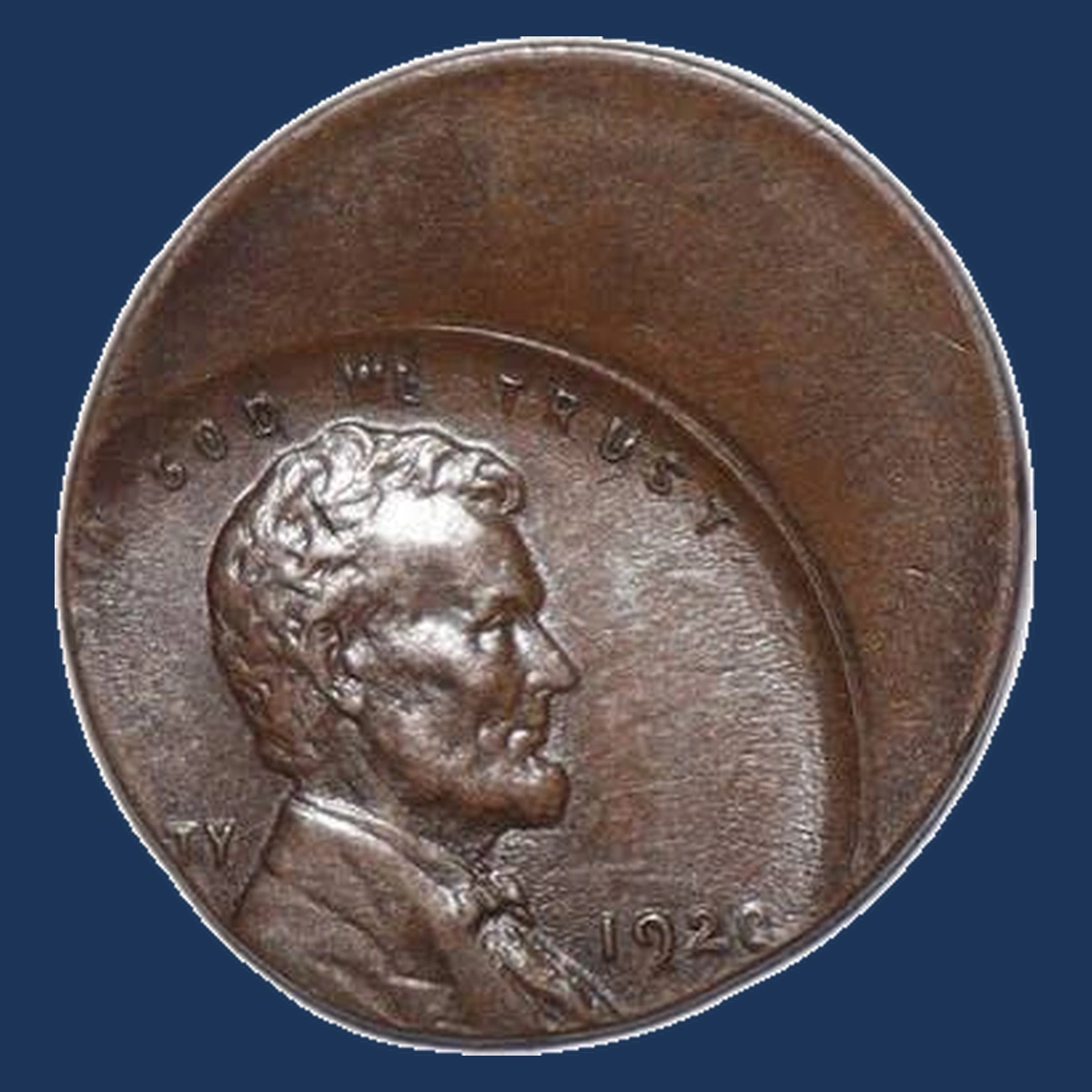
A plain crescent can remain beside the design when the blank sits away from the center of the press. Some letters or portrait details then fall beyond the available metal.
A Philadelphia example is recorded as 20% off center and graded PCGS XF40. That grade describes a worn coin with much of its design still visible.
Its displacement is separate from the ragged-edge combination and the 40% off-center brockage elsewhere in this list. Those coins have additional features.
A complete design inside an expanded outline instead suggests a broadstrike. One blank position should explain the incomplete design on both faces.
Estimated Value
The PCGS XF40 example brought $159 in March 2025. An estimated $40–$1,200 covers genuine dated off-center cents with different shifts and preservation.
The recorded price belongs to the 20% example. It should not be transferred to the 15% ragged-edge coin or the 40% brockage combination.
A larger shift can be more striking visually, but the date still matters. A damaged plain area or missing year digits can make the coin a less useful comparison for a dated collection.
How to Identify
Read the surviving year before measuring the shift. The date should identify 1920 on the coin itself rather than rely on a similar seller’s photograph.
Place full front and back images side by side. Their cut-off designs should agree with one misplaced blank; only one shifted face may point to a misaligned tool.
Inspect the plain crescent with a magnifier for grinding that removed ordinary detail. The unused metal should not look like a freshly scraped patch.
When accessible, weigh against 3.11 grams and use calipers to record the outline against the normal 19.05 millimeters. Inspect the smooth edge around the unused portion, remembering that a simple off-center strike does not have to remove metal.
11. 1920 Lincoln Penny Brockage with an Off-Center Strike (Estimated Up to $2,500)
Lincoln’s portrait appears sunken and reversed on the back of this unusual penny. A previously struck coin stuck to the tool and impressed its raised design into the next blank.
That transferred image is called a brockage. It differs from a normal raised portrait because it is pressed inward and reads as a mirror image.
The documented Philadelphia coin is also 40% off center, toward two o’clock. PCGS graded it VG10, meaning heavily worn but still identifiable.
Both features belong to one coin. The earlier penny that caused the mirror impression is not the piece being described here.
Estimated Value
Estimate $400–$2,500 for a genuine dated brockage with this off-center combination, depending on wear and how clearly the reversed design survives. The combined appearance needs one whole-coin valuation.
The documented PCGS VG10 coin appeared in an August 2006 auction but was not sold. That listing therefore supplies no realized price.
The estimate draws on comparable Wheat-cent brockages. A second ordinary raised portrait, or a later pressed impression, would need a different explanation and price comparison.
How to Identify
Check the depth and direction of the portrait on the back first. A brockage should be sunken and mirror-reversed, not an ordinary raised Lincoln head.
With a magnifier, follow a reversed letter or portrait line into the surrounding surface. A later coin pressed against it can imitate an impression, so original striking around the feature needs examination.
Compare that image with the 40% displacement toward two o’clock on the documented piece. Both features must be explained on the same coin.
Use a scale and calipers when accessible against 3.11 grams and 19.05 millimeters. Inspect the plain edge for later pressing, and preserve photographs of both faces rather than isolating only the mirror portrait.
12. 1920 Lincoln Penny Double and Triple Strikes (Estimated Up to $3,500)
Different design positions can remain when a coin returns beneath the press after moving. Each new blow can cover earlier detail while adding another part of the image.
The Philadelphia triple strike has later blows 70% and 90% off center. Its three designs lie almost vertically, with 20 surviving from the first date.
A separate San Francisco coin has two strikes, the second 90% off center. It does not share the Philadelphia coin’s three-image sequence.
Only a small fragment may appear from an extreme later blow. That fragment needs to fit another strike, rather than be counted from random ridges.
Estimated Value
The Philadelphia triple strike, graded PCGS MS63 Brown, sold for $1,800 in August 2020. Its grade describes an unworn coin with marks and brown color.
Estimate $300–$3,500 for the different multiple-strike forms. The San Francisco double strike has a PCGS AU58 grade, indicating slight wear, and needs its own comparison.
More blows do not set a price by simple multiplication. The visible overlap, readable date, and original surface show how much of the sequence a buyer can actually see.
How to Identify
Mark each design position on a copy of a full photograph. For the triple strike, follow the nearly vertical arrangement and locate the surviving 20 from the first impression.
The second blow covers the 1 and part of the 9. Do not redraw those digits or claim three complete dates are visible.
For the San Francisco double strike, look for one later design fragment consistent with a 90% off-center blow. A 10× magnifier can help connect letters and portrait lines that moved together.
Compare accessible weight and width with 3.11 grams and 19.05 millimeters using a scale and calipers. Inspect the smooth edge for joins or later pressing; repeated striking changes the design without adding another coin’s metal.
13. 1920 Lincoln Penny Struck on Foreign Blanks (Estimated Up to $6,000)
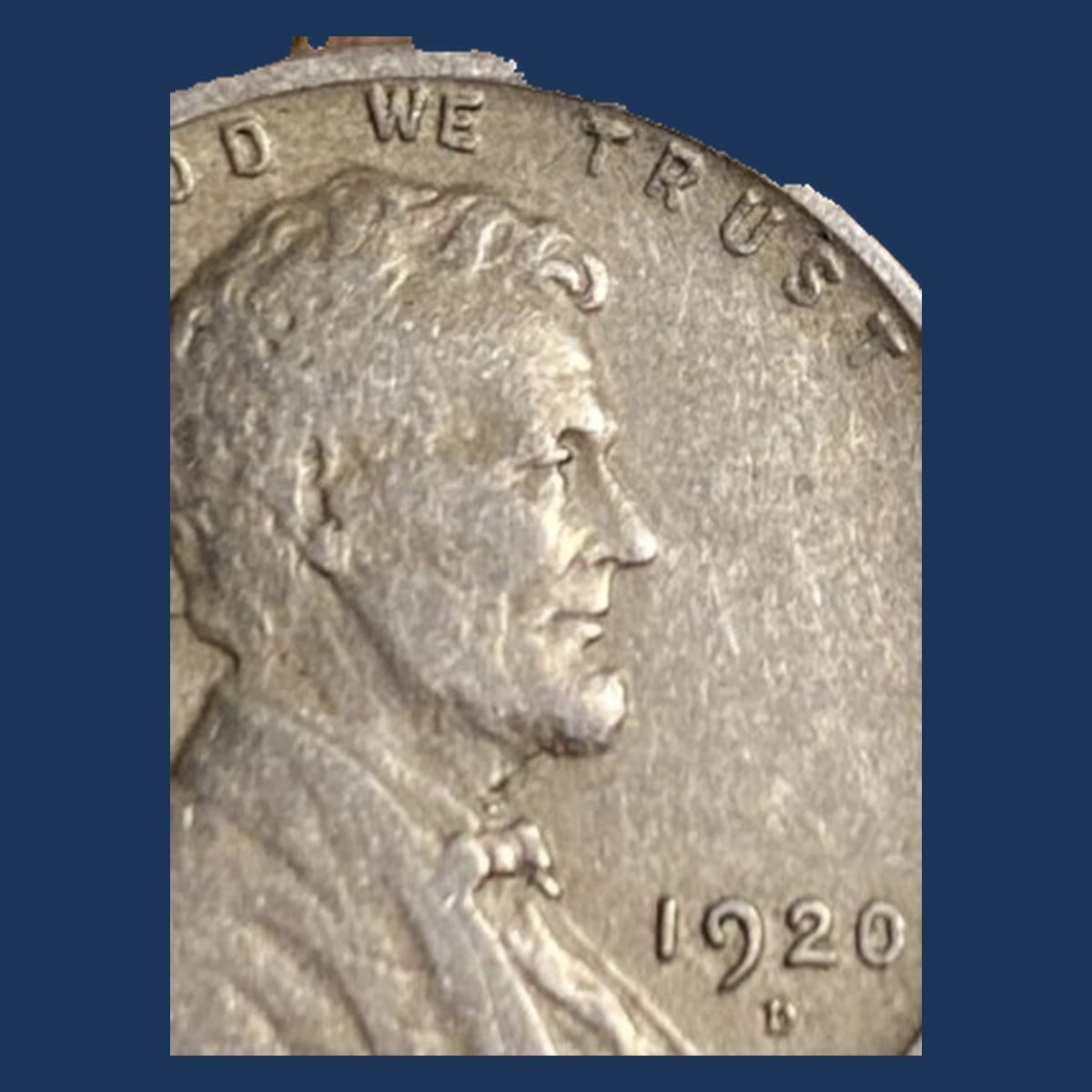
Three different foreign-blank records need separate comparisons. One Philadelphia cent was struck on a Cuban one-centavo copper-nickel blank weighing 2.5 grams.
Its smaller blank loses much of the upper motto. A different coin, identified as an Argentine ten-centavos blank, weighs 3.15 grams and has a heavily worn NGC VG10 grade.
A third record describes a thin foreign copper-based blank without naming a country. Its ANACS VF30 Details description also notes a filed edge and cleaning.
Those alterations are later damage, not the wrong-blank error. Similar colors cannot establish that all three coins share a material or origin.
Estimated Value
The Cuban-blank NGC MS64 coin sold for $2,875 in September 2009. MS64 describes an unworn coin with some marks.
Estimate $1,500–$6,000 for comparable Cuban-blank pieces and $1,000–$5,000 for an authenticated Argentine-blank example. For the damaged, unassigned thin copper-based type, use approximately $150–$1,500.
These are separate comparisons. The two named blanks require matching material evidence, while a filed edge and cleaning affect the unassigned coin’s value; the Cuban sale does not price all three.
How to Identify
Keep each coin’s measurements with its own identification. The Cuban example weighs 2.5 grams, the Argentine example 3.15 grams, and neither number belongs automatically to the unassigned thin blank.
Normal cents are about 3.11 grams and 19.05 millimeters. Use a scale and calipers when safely accessible, recording thickness as well as width for a proposed thin blank.
Professional metal testing can check the alloy without scratching the surface. On the Cuban example, also compare the missing upper motto with the smaller blank’s shape.
Inspect the normally smooth edge under a magnifier for filing or added coating. Leave holders intact and do not infer a country from color when the material has not been identified.
Conclusion
A blank’s missing edge, a shifted design, and a second strike describe different things, even when they occur together. The 1920 examples make those differences visible through their surviving letters, outlines, and metal.
The estimated $5–$6,000 range spans modest chips through identified foreign blanks. Use each coin’s own mintmark, measurements, and condition when comparing, and keep a combined error’s price attached to the whole coin rather than adding separate estimates.