1921 Penny Error List with Pictures

A large unused crescent can turn a Wheat penny into a striking error collectible. As a nearby-year comparison, a sixty-percent off-center 1925 cent brought $960 in September 2019.
The 1921 penny error list also includes small raised bars, peeling bronze, and a thickened San Francisco back design. Estimated values across the types below range from $3 to $2,500.
Follow the photographs and simple checks to separate a mint-made feature from wear or later damage.
1. 1921 Lincoln Wheat Penny Die Cracks and BIE Chips
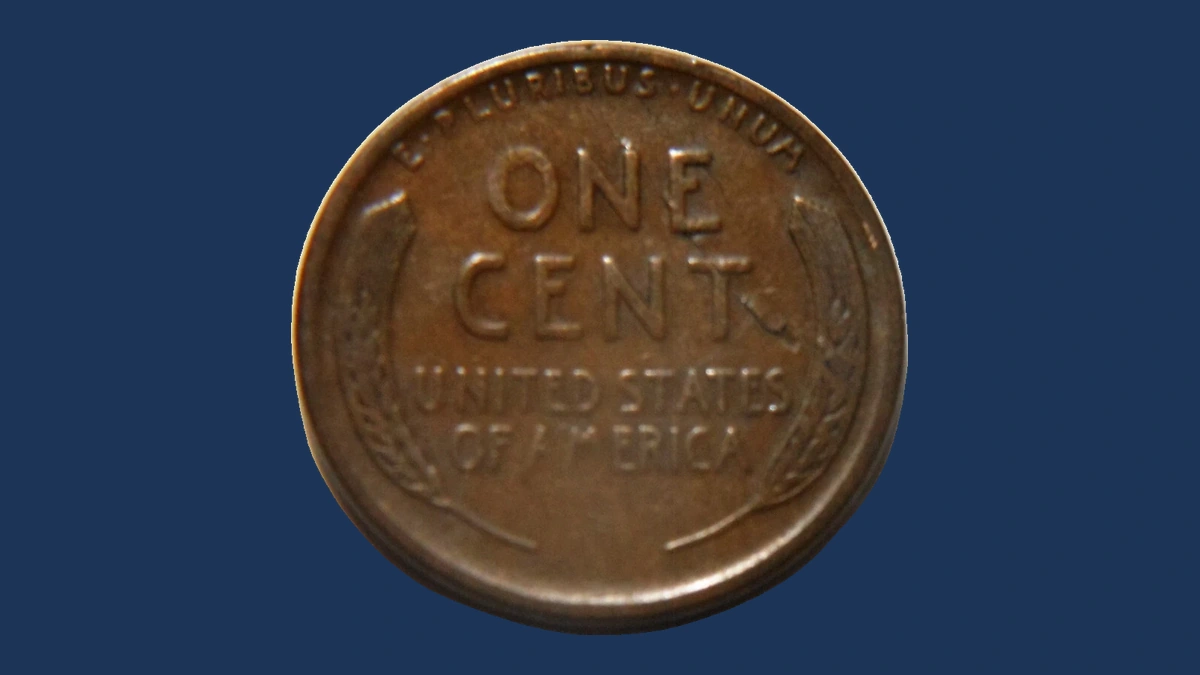
The word LIBERTY may seem to have gained an extra I between its B and E. A small piece broke from the die, the steel tool that stamps the design.
Copper filled that opening and formed a raised bar on the penny. Collectors call the result a BIE.
A longer crack in the tool can instead leave a thin raised line. A year guide reports both kinds of tool damage on 1921 cents.
The shape depends on where the tool broke, so a line elsewhere on the coin is not automatically a BIE.
Estimated Value
Small raised cracks and BIE chips fit an estimated $3–$75 for ordinary circulated examples. A sharp bar that is easy to see generally makes a more appealing comparison than a faint line.
This estimate concerns modest tool damage, rather than a published sale of one named 1921 BIE. The date, mint, and overall condition still contribute to the whole coin’s value.
Dirt or a scratch between the letters does not earn the same error premium.
How to Identify
At 10×, find B and E in LIBERTY and examine the metal between them from two light directions. A raised bar can cast a changing shadow, while a scratch cuts below the original surface and may cross neighboring letters.
For a longer tool crack, follow the line beyond the nearest letter to see whether it rises consistently from the surrounding bronze. Dirt can collect beside letters too, so do not scrape an unfamiliar lump to reveal its shape.
A scale and calipers check a loose coin against 3.11 g and 19.05 mm before closer inspection of suspicious added metal. At the base of a large raised feature, look for a joint or solder rather than a natural continuation of the coin.
2. 1921 Lincoln Wheat Penny Grease-Blocked Back Design
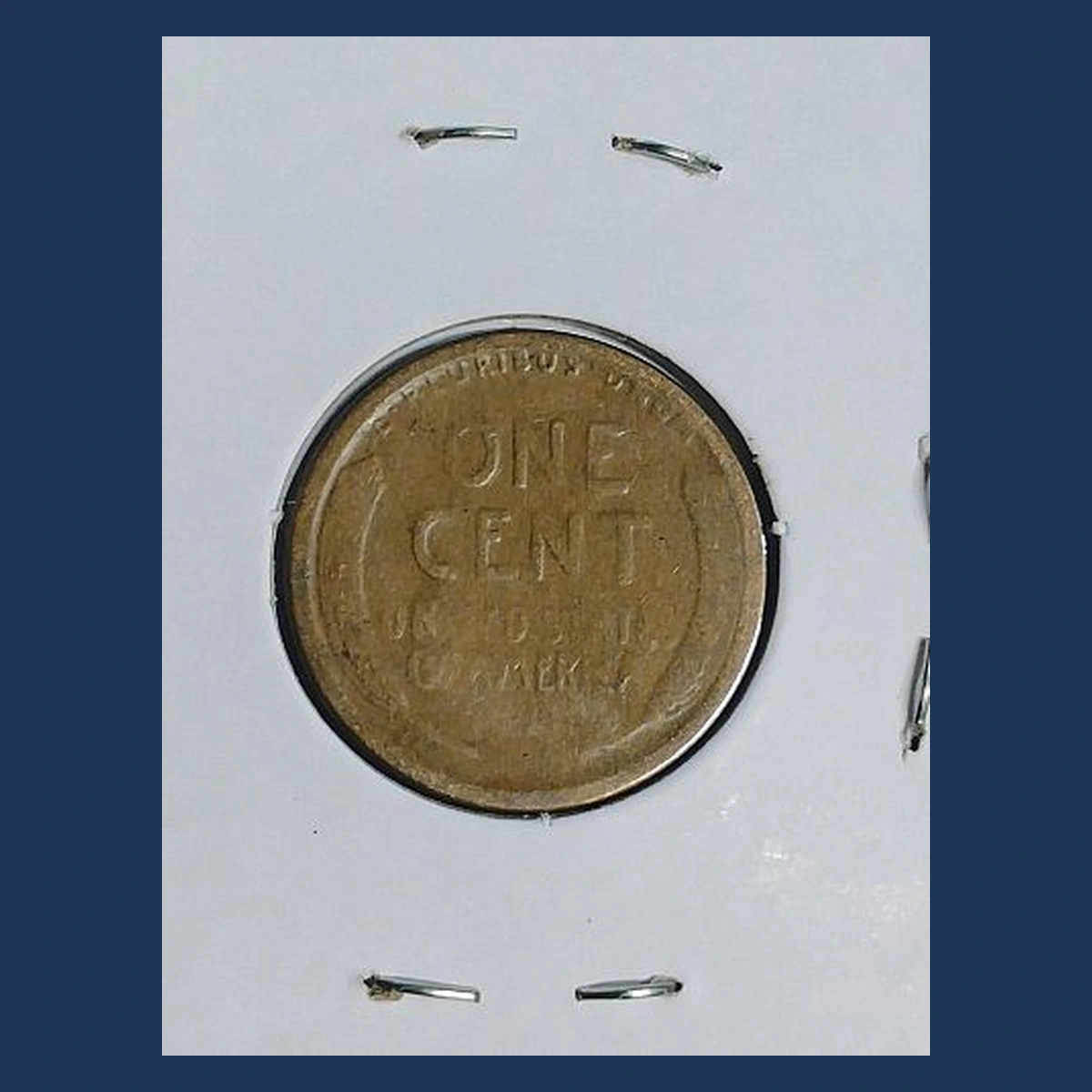
A seller describes one 1921-S penny as having grease-blocked detail on the back. The same coin also has peeling metal on the front.
Grease can pack into small openings in a stamping tool and keep parts of a letter from forming. That can leave a soft, incomplete design beside sharper detail.
The seller’s grease description is a claim about the cause of this coin’s weakness, not a certification. Wear and a weak strike can also reduce detail.
The front peeling and the back weakness therefore need different visual checks, even though they occur together.
Estimated Value
For confirmed grease-blocked detail on a circulated 1921-S penny, estimate $5–$100. More of the original surface should remain visible before making a strong comparison.
A different-year 1933-D back struck-through cent graded PCGS VG10 sold for $30 in October 2022. It was a well-worn coin with an unspecified obstruction, so the price does not prove grease caused the 1921-S example.
Value the two reported features on the seller’s coin together, without adding two maximum estimates.
How to Identify
Both sides matter on the seller’s example. The front has peeling metal, while the grease claim concerns weak detail on the back.
Weigh a loose coin on a scale against 3.11 g and check its solid width with calipers against 19.05 mm. Any missing front layer may affect the weight without explaining the back letters.
Place a normal worn 1921-S photograph next to the back view. Compare letters of similar height and the wheat details before calling their softness unusual.
With a 10× magnifier, move across the transition from sharp detail to faint detail. Scraping may leave narrow grooves through the finished surface.
Tilt the light across the portrait too. Similar flattening on all exposed high points favors circulation wear over a local grease blockage.
3. 1921 Lincoln Wheat Penny Doubled Back Design
Thicker lettering does not always mean that a coin was struck twice. The 1921-S variety called DDR-001 has extra thickness already built into the design of its stamping tool.
The specialist listing points to E PLURIBUS, the separating dots, and the two wheat stems. It does not describe two widely separated copies of the entire back.
Coins made with that tool repeat the same pattern. By contrast, wear or damage may make unrelated letters look uneven.
This variety belongs to San Francisco, identified by the S below the date on the front.
Estimated Value
An estimated $15–$250 is a practical range for identified 1921-S DDR-001 examples across circulated and better-preserved conditions. This is an estimate for a subtle thickened design, not a recorded auction result for dramatic separated letters.
Wear can hide the extra thickness and make the match harder to demonstrate. A clear example with recognizable wheat stems is more useful than one judged from a single blurry letter.
The grade and the original surface also affect the complete penny’s price.
How to Identify
Confirm the S below the date and place the coin beside a normal San Francisco example with similar wear. The usual loose-coin checks are 3.11 g on a scale and 19.05 mm with calipers; neither reading identifies DDR-001.
Now compare the back photographs at equal size, concentrating on E PLURIBUS and both wheat stems rather than one broad letter. A 10× magnifier helps separate the actual outlines from dark shadows around the raised design.
The small dividing dots provide another independent place to test whether the same thickened pattern repeats across the back. Change the light direction and watch whether the extra width stays with the metal or disappears with a shadow.
4. 1921 Lincoln Wheat Penny Curved Clip
This penny has a curved piece missing from its outline, but the metal was absent before the coin was struck. The blank-cutting punch overlapped a hole already left in the metal sheet.
An example in the Rippere collection weighs 2.95 g. ANACS graded it AU55, indicating light circulation wear.
The curve interrupts the round shape while the remaining blank still receives Lincoln’s portrait and the wheat design. The nearby rim can also form weakly.
A later cut can produce a similar outline, but it does not repeat all those effects on the surrounding design.
Estimated Value
Estimate $20–$250 for a genuine 1921 curved clip, depending on its size, condition, and surviving date.
The 2.95 g AU55 example appeared at GreatCollections in March 2025. Its recorded weight helps describe the amount of missing metal.
For comparison, a 1925 Philadelphia curved clip weighing 2.92 g and graded ANACS VF20 sold for $56 in March 2023. That other-year coin shows more circulation wear.
The similar weights alone do not make the two coins equal in value.
How to Identify
Trace the surviving circle before studying its missing piece. Measure an intact width against 19.05 mm with calipers, rather than measuring through the gap.
Turn to the rim opposite that gap. Weakness there can support a clip that already existed when the blank was struck.
Examine the curved opening at 10× for saw marks or fresh filing. Then inspect how the neighboring rim runs into each end.
The recorded example weighs 2.95 g, below the normal 3.11 g on a precise scale. A lower reading supports missing metal but does not establish when it was removed.
Include any nearby weak letters in the photographs. Their shape can help show how the press struck an incomplete blank.
5. 1921 Lincoln Wheat Penny Lamination
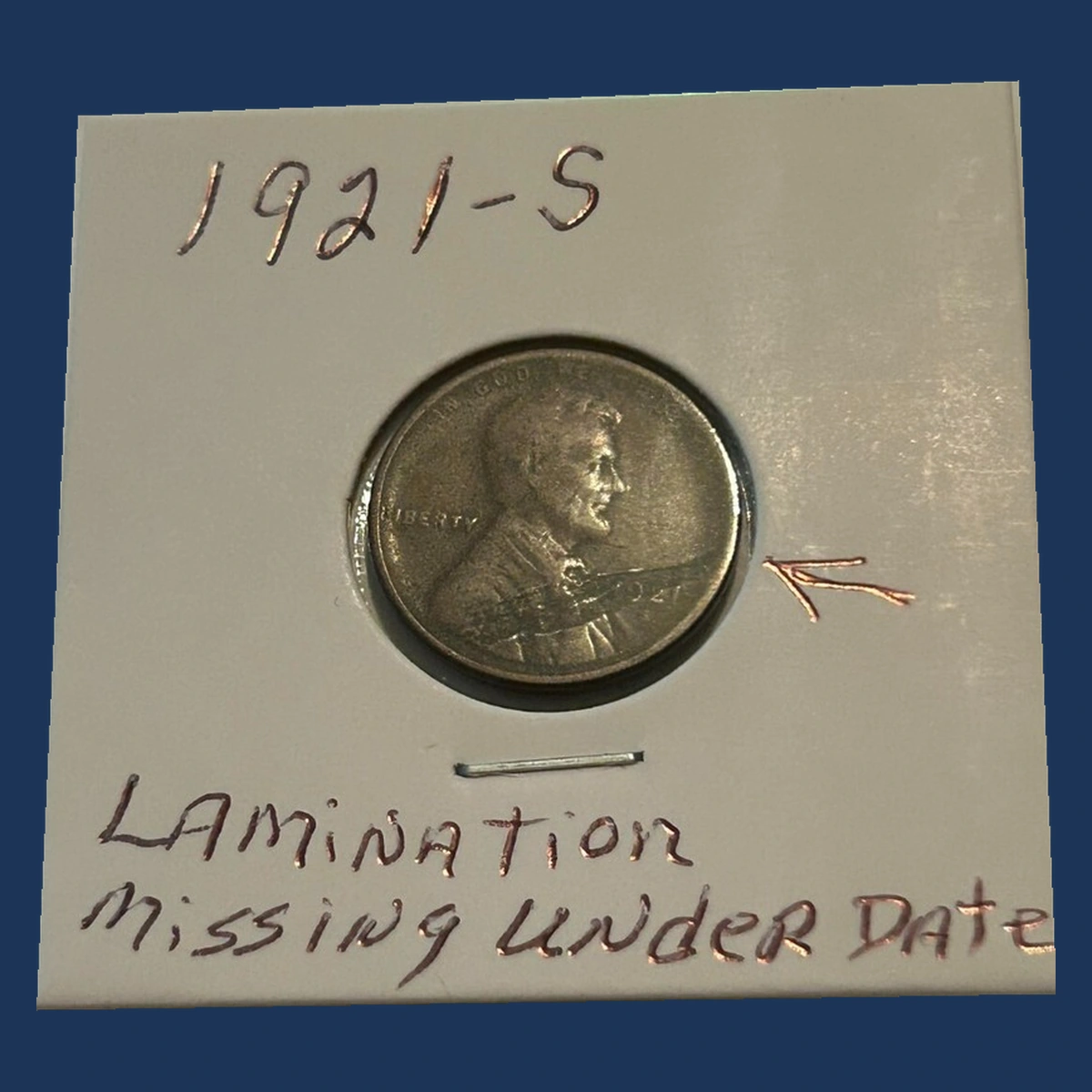
A rough opening across Lincoln’s face or shoulder may mark a layer that separated inside the bronze. The defect is called lamination.
The American Numismatic Association’s 2021 youth auction catalog included a worn 1921 penny with front lamination. Separate 1921-S reports describe peeling on the front or back.
One seller’s San Francisco example also has weak back detail described as grease-related. Its peeling metal remains a different physical feature.
These pennies are solid copper-rich alloy, not copper-coated zinc. A thin separating sheet is part of the original bronze rather than a modern outer plating.
Estimated Value
The 1921 front-lamination penny in the 2021 youth catalog had a $30 opening amount. That figure is an auction starting point, not a final sale.
Estimate $10–$300 for 1921 laminations, allowing for the affected area and how much metal remains attached. An actual different-year comparison is a 1941-S retained back lamination, PCGS MS66 Red, sold for $69 in April 2020.
That unworn red coin’s price concerns its own peeling layer and condition.
How to Identify
Low side lighting and a 10× magnifier can reveal a thin sheet lifting from the surrounding bronze without disturbing it. Follow the separating edge slowly, since a deep cut with pushed-up metal can look like peeling in a straight-on photograph.
A missing piece may lower the usual 3.11 g reading on a scale, whereas a retained flap may leave it nearly unchanged. When using calipers to compare the 19.05 mm width, keep both tips away from the loose layer.
On the combined seller’s coin, the front layer and weak back detail require different explanations, so keep both photographs together. The visible gap beneath an attached sheet is the useful peeling clue; do not lift the sheet to enlarge it.
6. 1921 Lincoln Wheat Penny Broadstrike
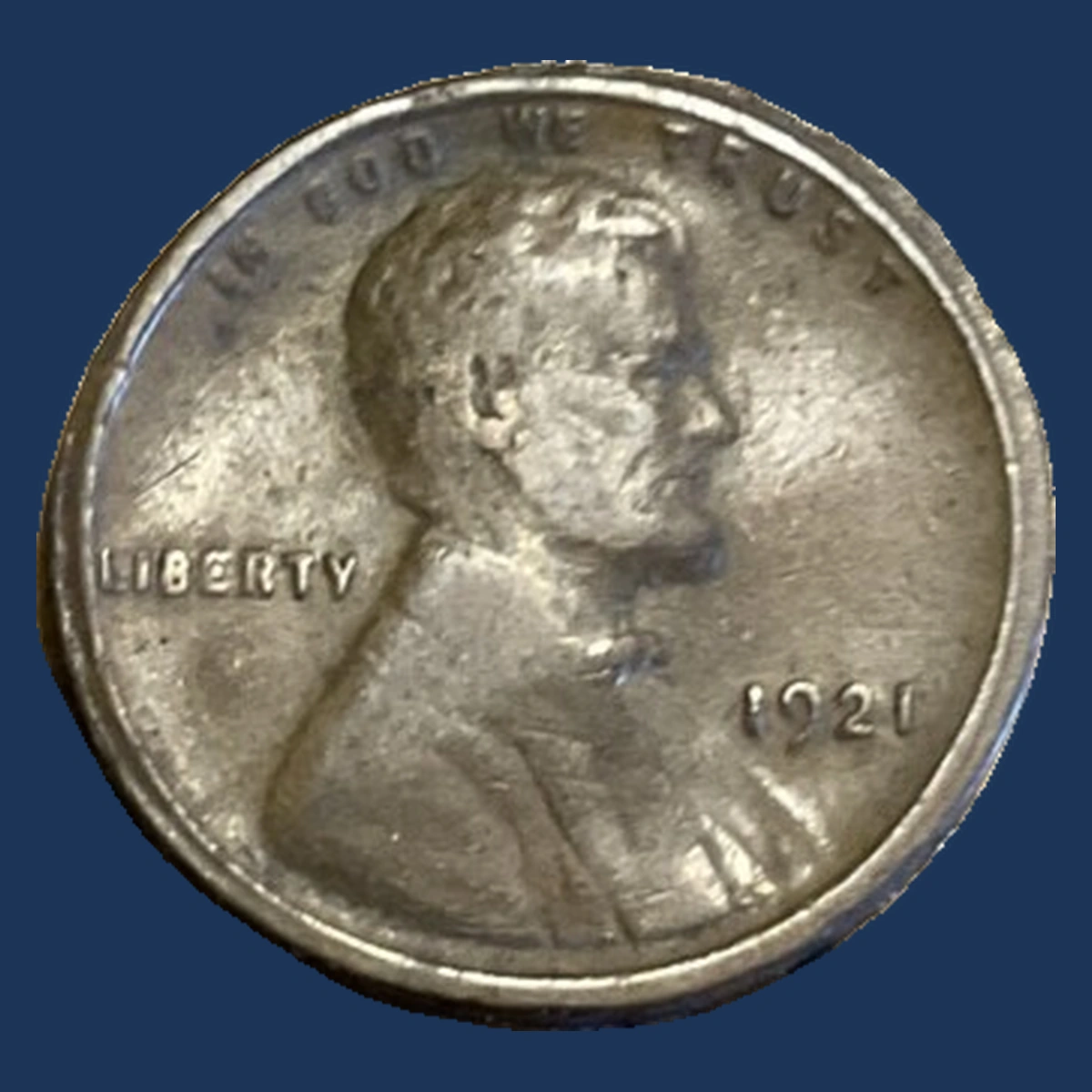
Extra metal around a complete design can make a penny look wider than usual. During a broadstrike, the collar failed to contain the blank as the stamping tools pressed it.
The collar is the ring that normally controls the coin’s width. Without that restraint, metal spreads outward.
GreatCollections recorded a Philadelphia example graded ANACS XF40, meaning visible circulation wear. Its expanded edge is the feature to examine.
A broadstrike still carries the full intended design. A coin that loses part of its design beyond the blank has an off-center feature instead.
Estimated Value
For a circulated 1921 broadstrike, estimate $30–$400, with stronger spread and clear original surfaces supporting the upper comparisons. The ANACS XF40 example shows wear that should be considered alongside its expanded shape.
A 1929-S broadstrike graded PCGS MS64 Brown sold for $288 in August 2020. That separate unworn coin had some marks and brown copper color.
Its better condition should be considered before applying the same price to a worn 1921 penny.
How to Identify
Lay the coin beside a normal cent so that their full outlines are easy to compare. A broadstrike should show extra spread around a complete design rather than just a shaved or battered edge.
Record two widths with calipers, since the spread need not be perfectly even. The normal starting standard is 19.05 mm, while a scale should read near 3.11 g if the metal remains intact.
Inspect the expanded margin with a 10× magnifier. Later hammering can flatten the rim and distort already finished letters.
The ordinary penny already has a plain edge, so smoothness by itself proves nothing. Check that the extra margin grew during striking while the full lettering still fits on the coin.
7. 1921 Lincoln Wheat Penny Off-Center Strike
Lincoln or the wheat design may run out of space on one side of an off-center penny. A bare crescent remains elsewhere because the blank was misplaced between the stamping tools.
A 1921 year guide includes this error type. The mint and degree of displacement have to be established from the individual coin.
Unlike a clip, the crescent is still solid metal. It simply did not receive the intended design.
The location of the date matters to collectors, because a large shift can remove part of the year from the struck area.
Estimated Value
A dated, authenticated 1921 off-center cent can fit an estimated $40–$1,500. Slight shifts belong nearer the lower end, while dramatic displacement with a clear date supports stronger comparisons.
A 1925 Philadelphia cent struck sixty percent off-center, graded PCGS AU58, sold for $960 in September 2019. AU58 means only slight circulation wear.
This is a different-year sale used for comparison. The surviving date, amount of blank space, and surface condition must be judged on the 1921 coin itself.
How to Identify
First decide whether the coin has lost metal or merely lost part of the design. A bare crescent with a continuous edge can still belong to a complete blank.
Use a scale and calipers to record the loose coin against 3.11 g and 19.05 mm. Striking may change its outline, while a cut removes metal.
Photograph the two faces at equal size. Missing design on both should agree with the blank’s position between the tools.
Enlarge the bare crescent at 10× and inspect it for grinding marks. One displaced face with a normal opposite face can reflect a different tool-alignment problem.
Read every surviving date digit. A visible 1921 is the direct link between the unusual strike and this year’s examples.
8. 1921 Lincoln Wheat Penny Double Strike
Two overlapping sets of design can appear when a struck penny receives another blow in the press. The coin may shift sideways, turn, or do both before the second strike.
The 1921 year guide includes double strikes, without identifying one fixed overlap pattern for the date. Each candidate needs its own comparison of the surviving impressions.
This is different from the thickened back design described earlier. That variety repeats details already present in a stamping tool.
A double strike instead records two separate moments when the tools pressed this particular piece of metal.
Estimated Value
Estimate $150–$2,500 for authenticated 1921 double strikes, with clearer overlapping designs and better preservation supporting stronger prices. This range is not a claim that a particular 1921 example sold at either endpoint.
A 1925 Philadelphia double strike graded NGC XF40 sold for $360 in May 2018. Its second strike was off-center, and the grade indicates noticeable circulation wear.
Use that separate coin as a starting comparison, then judge how easily the 1921 impressions can be followed.
How to Identify
Identify two related groups, such as the portrait and a displaced set of letters. Their positions should make sense as a second strike, not merely as one rough or thick letter.
Photographs of both faces help show how the coin moved. A scale and calipers compare the loose piece with the normal 3.11 g and 19.05 mm, while allowing for reshaping during striking.
At 10×, follow where the later impression crosses earlier detail. A second coin squeezed against a finished cent can leave a sunken reversed copy, which needs a different explanation.
Keep that distinction visible in the photographs. Trace several neighboring letters through the overlap to test whether they belong to the same second impression.
Conclusion
Start with the feature you can actually see: a raised bar, separating layer, missing segment, or overlapping design. The estimated $3–$2,500 range covers very different 1921 pennies.
A small flaw on a worn coin and a dramatic double strike need different price comparisons. Check both faces, retain the full date in photographs, and leave fragile metal untouched.
A useful identification explains the shape of the error as well as its weight and condition.