1936 Penny Error List with Pictures

A sideways back and a second date tell different stories on a penny. One comes from a turned stamping tool; the other can come from a coin struck again.
This 1936 penny error list also includes valuable doubled lettering. A Type 1 doubled-die cent graded MS67 Red sold for $48,000 in January 2025.
Estimated values run from $5 to $50,000. Follow the visible clues below to compare the right error and condition, rather than judging every unusual mark by that record price.
1. 1936 Lincoln Penny Lamination (Estimated Up to $250)
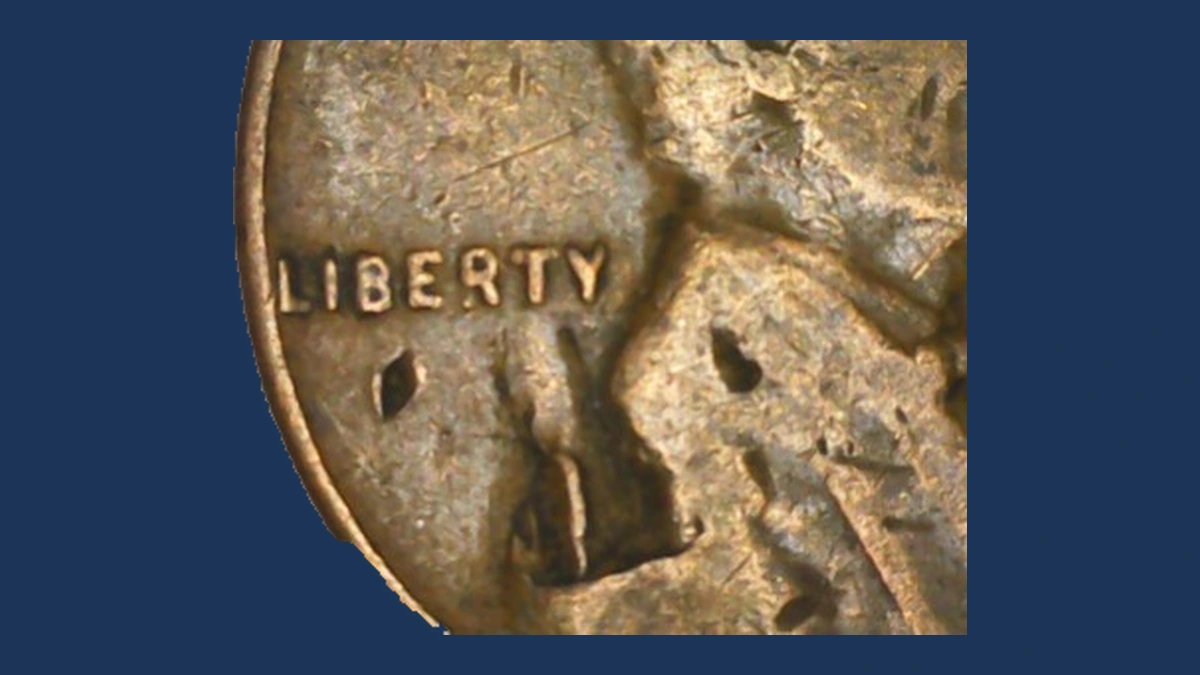
A rough strip or peeling flap can start with a weakness inside the copper alloy. The thin surface layer separates instead of staying bonded to the metal beneath it.
Collectors call this lamination. A reported 1936-D example has a broad front-side separation extending from about three to eight o’clock.
Philadelphia examples include separate front and back laminations, with one described as a large front-side peel. Their positions should not be combined into a single coin.
These reports concern surface layers. They do not establish a complete disc that split into two separate halves.
Estimated Value
Small original laminations can fit an estimated $5–$75, while larger clear separations may reach $50–$250. The affected area and the surrounding coin’s condition both matter.
A 1952-D front lamination sold for $35 in July 2013. That later Wheat cent offers a comparison for peeling alloy, not a sale of the broad 1936-D example.
A loose flap should remain attached if possible. Pulling it away can remove useful evidence and reduce collector appeal.
How to Identify
The Denver example has a broad peeling area across the lower front, roughly from three to eight o’clock. Begin there when matching that coin, but do not expect Philadelphia examples to follow the same path.
Keep any lifted metal in place. Side lighting and a 10× magnifier can show a seam beneath it without touching the flap.
This cent’s copper-rich alloy is solid metal, unlike the thin copper coating on modern zinc cents. A layer separating within it should not be described as missing plating.
Weigh an accessible coin against the normal 3.11 grams. Its usual width is 19.05 millimeters, but keep calipers away from fragile areas and inspect the smooth edge only where safely visible.
2. 1936 Lincoln Penny Curved Clip (Estimated Up to $300)
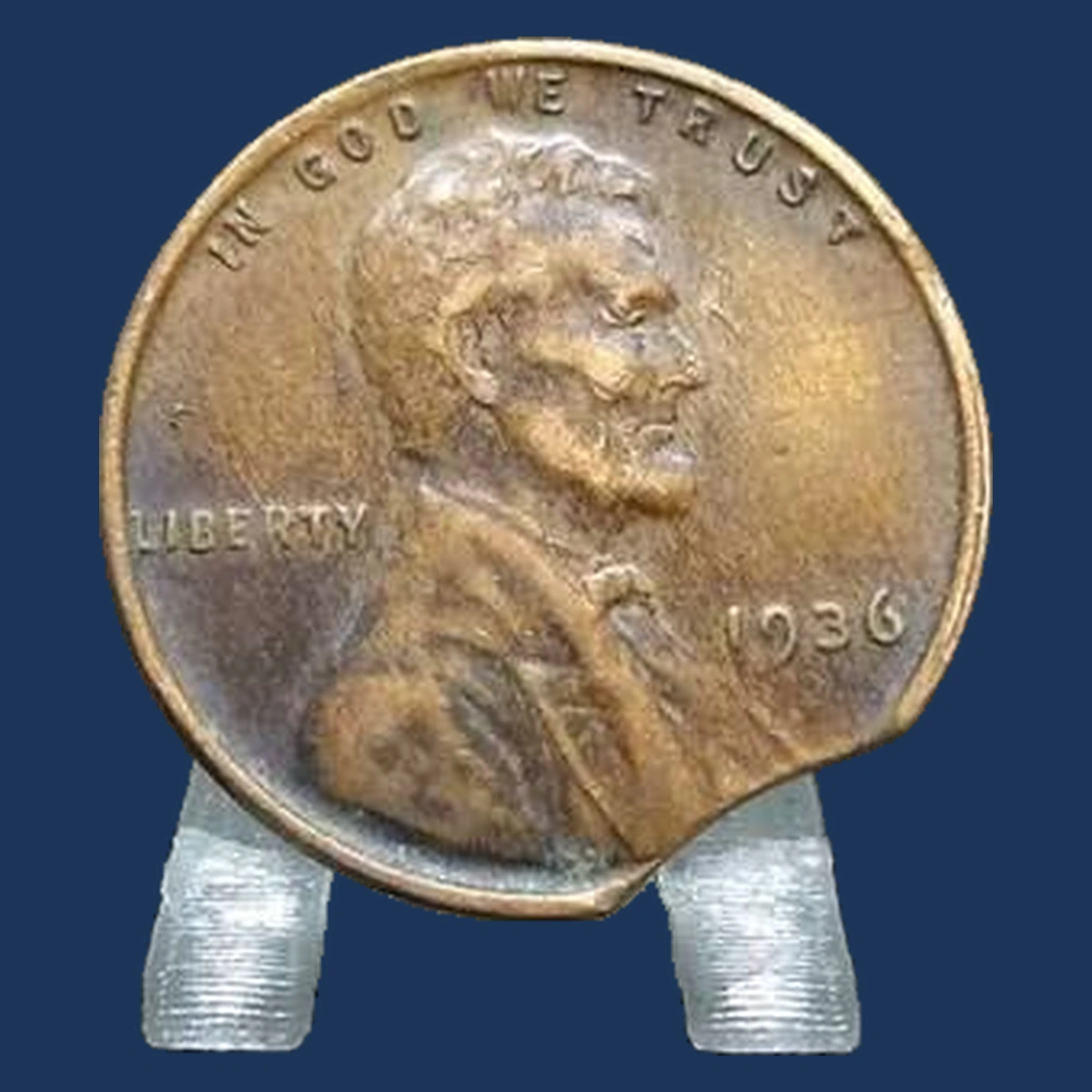
A curved gap can form when a blank is punched from metal that already has part of another opening beside it. The incomplete disc then receives the cent design.
A listing titled as a 1936 cent describes a 5% curved clip and an NGC MS62 Brown grade. That grade means unworn with noticeable marks.
The listing also contains a conflicting year field. The coin’s own date must establish whether it belongs with 1936 examples.
The error type is still worth checking. A genuine clip begins before striking, unlike a bite cut from a finished penny.
Estimated Value
For a confirmed 1936 curved clip of this modest size, estimate $20–$300. The range is conditional on a genuine date and original missing-blank boundary.
A 1967 cent with a larger, straight 13% clip sold for $39 in July 2021. It is a related clipping comparison, not a sale or identical shape for this reported coin.
Wear, color, and date clarity affect the price. The inconsistent listing does not establish a completed 1936 sale by itself.
How to Identify
Resolve the year before examining the gap. Read 1936 on the coin itself and compare it with the holder, since a listing heading can contain a mistaken date.
Next weigh the accessible coin with a scale. Missing blank metal should reduce the normal 3.11 grams; calipers can check an intact span against 19.05 millimeters.
Under a magnifier, follow the curved boundary where it meets the rim. Nearby letters and border details should fit a coin struck after that metal was already missing.
Look along the surviving smooth edge for filing, fresh burrs, or cuts through completed detail. Weakness opposite the gap may help, but it cannot establish an original clip by itself.
3. 1936 Lincoln Penny Struck Through Material (Estimated Up to $400)
A patch above N GOD can mark where material interrupted the front strike. The obstruction prevented the steel tool from contacting that part of the blank normally.
This is described as a struck-through error. Its shape can remain as an impression or an area where normal detail failed to form.
The reported 1936 Philadelphia example has a specific location, but the material itself is not identified. It should not automatically be called wire, cloth, or grease.
The surroundings are important. A later hit or scrape can remove detail in a similar place without involving the minting process.
Estimated Value
An estimated $25–$400 covers a confirmed 1936 struck-through error with a visible original impression. Size, clarity, and preservation guide the comparison.
A 1940 cent struck through wire sold for $219.60 in June 2026. That later Wheat cent offers a related obstruction example, though wire is not established for the 1936 piece.
The comparison supplies a real sale without identifying the earlier object. A random depression made after striking does not qualify for the same error value.
How to Identify
A normal scale reading would not rule out this error. Material caught in the press can block the design without removing metal from the blank.
For an accessible coin, record weight and width against 3.11 grams and 19.05 millimeters with a scale and calipers. Then turn to the front motto rather than searching at random.
The reported affected area lies above N GOD. Use a 10× magnifier and side lighting to see how its boundary meets the nearby lettering.
A sharp gouge cuts into a finished surface; an obstruction changes how the design forms around it. Inspect the smooth edge for separate damage, and leave the affected patch uncleaned rather than trying to expose a guessed material.
4. 1936 Lincoln Penny Uncentered Broadstrike (Estimated Up to $500)
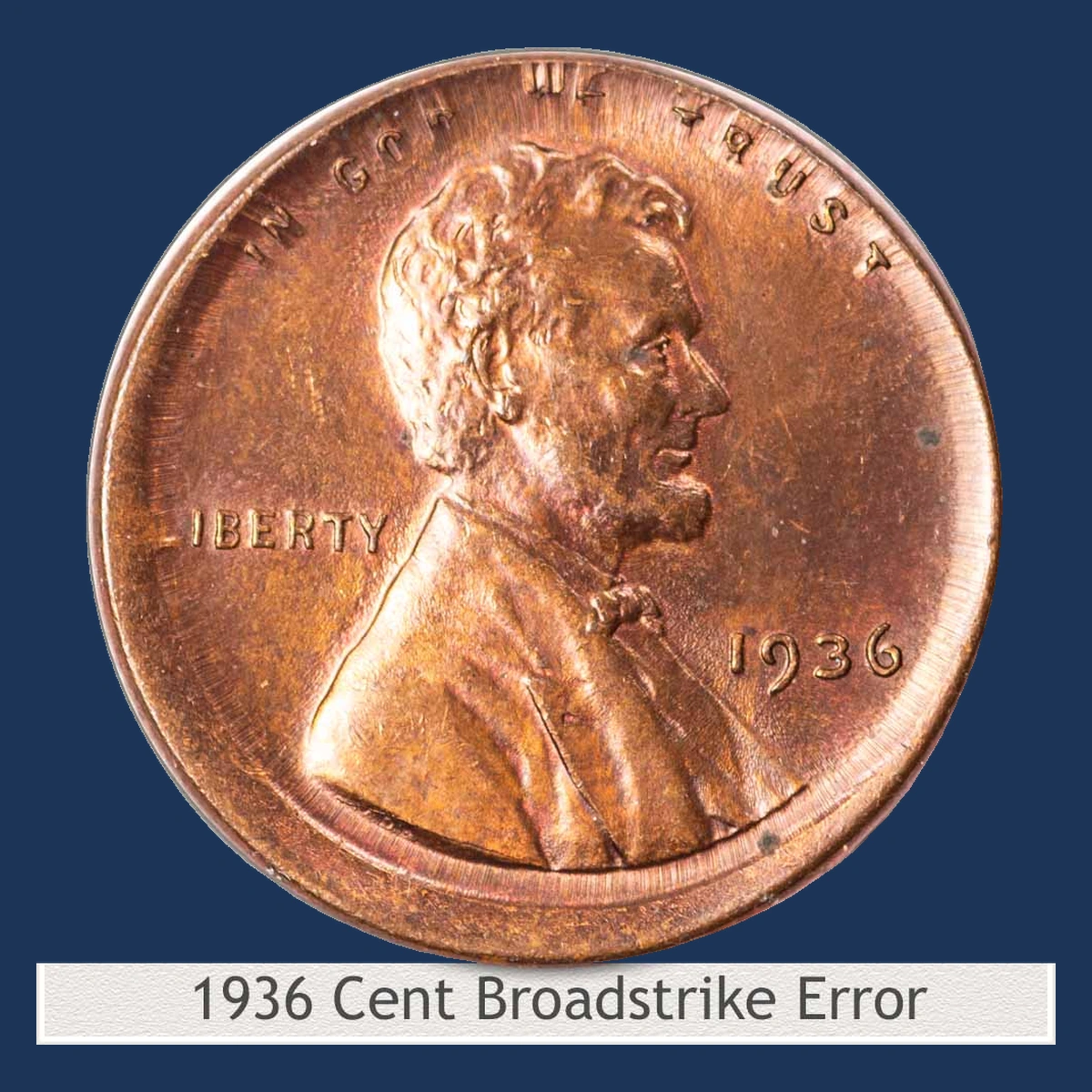
An extra-wide border does not always mean part of the design missed the coin. The illustrated 1936 broadstrike keeps the intended design while spreading unevenly around it.
The ring that normally controls the blank’s edge is called the collar. Without full restraint from that ring, metal can flow farther outward.
The design need not sit at the exact center of the expanded disc. This uneven form is often called an uncentered broadstrike.
The important difference is completeness. An off-center strike loses part of the intended image beyond the available metal; this type retains it.
Estimated Value
Use an estimated $50–$500 for a confirmed 1936 uncentered broadstrike. Strong original spreading and a clean surface generally make the error easier to appreciate.
A 1946-S broadstruck Wheat cent sold for $89 in December 2024. That later date supplies a comparable mechanism, not the price of the illustrated 1936 coin.
A slight uneven border alone should not command the upper estimate. The complete design and the expanded disc must show that a true broadstrike occurred.
How to Identify
Trace the entire design on each face before judging the uneven border. All the intended letters, Lincoln’s portrait, and the Wheat design should remain on the metal.
If part runs off the edge, compare off-center strikes instead. A wider empty margin on one side does not make that decision by itself.
Now put a normal cent beside the coin. Use calipers to measure expansion beyond the usual 19.05 millimeters, and a scale to compare with 3.11 grams.
The metal can spread without losing weight. Under a magnifier, examine the smooth edge and widened border for an added ring or seam.
Flattened finished details may indicate later hammering, so include close-ups of those areas when seeking an expert opinion.
5. 1936 Lincoln Penny Rotated Dies (Estimated Up to $600)
The back should have a predictable position when a U.S. coin is flipped top to bottom. A reported 1936-D penny instead has its Wheat-ear design turned about 95 degrees from that position.
This happens when one stamping tool turns relative to the other. Collectors call the error rotated dies.
The report gives the amount of rotation, but not a clockwise or counterclockwise direction. Both must be measured from the actual specimen.
Tilting a loose coin during photography can create a false impression. The front needs to remain fixed while the back’s position is checked.
Estimated Value
For an authenticated 1936-D rotation close to 95 degrees, estimate $50–$600. A clear angle and a readable date make the feature easier to demonstrate.
This is an estimate based on similar substantial rotations in Lincoln cents, not a recorded transaction for the reported Denver coin. Condition and the strength of both designs affect the comparison.
A small normal alignment difference is less dramatic. A picture taken at an arbitrary angle cannot establish the same error or price.
How to Identify
Check the D below the date and inspect the rim and smooth edge under a magnifier for a join. A coin assembled from separate pieces can produce a misleading front-to-back alignment.
When safely accessible, use a scale and calipers to check about 3.11 grams and 19.05 millimeters. Leave a sealed holder intact.
Now hold Lincoln upright. Flip the coin top to bottom without turning it sideways; the back of a normally aligned cent will also stand upright.
The reported Denver coin’s back is turned 95 degrees, slightly more than a quarter turn. Repeat the same flip and photograph both positions without changing the coin’s starting angle.
Measure which way the back leans rather than assuming a direction from the stated angle alone.
6. 1936 Lincoln Penny Rim Cud (Estimated Up to $800)
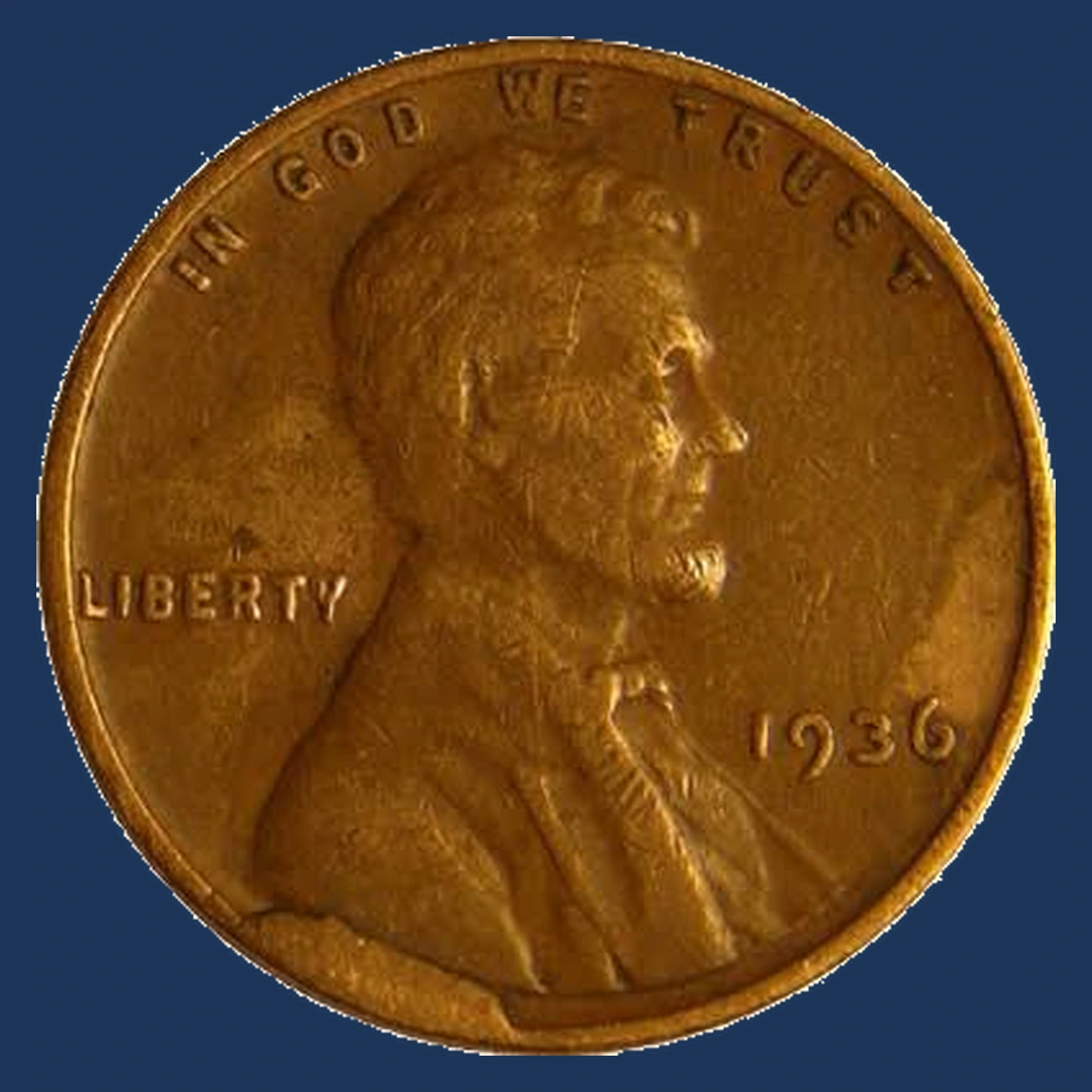
A lump connected to the border can appear where part of the stamping tool is missing. Coin metal fills that empty space during the strike.
The resulting raised patch is called a cud. Normal design disappears within it because the broken-away tool section can no longer form that detail.
A 1936 example is illustrated in an error reference, without a fixed mintmark or clock position given here. Its actual boundary should guide the comparison.
An interior letter-space lump is different in location. So is a retained break, where the broken tool section remains present and can still stamp detail.
Estimated Value
For a confirmed 1936 rim cud, estimate $50–$800. A larger, clear border-connected patch can draw more attention than a small break on a worn coin.
A 1946-S major die break sold for $288 in March 2021. That later Wheat cent provides a broad break-size comparison, not a transaction assigned to the illustrated 1936 piece.
Preservation still matters. Dirt, solder, and metal pushed upward by a later impact should be excluded before choosing an error price.
How to Identify
Look inside the raised area, not just around its outline. A full cud replaces the design where part of the stamping tool was missing.
If letters or other details survive inside a shifted area, check for a broken tool section that stayed in place instead. That is a retained break, with a different appearance.
Follow the patch to the rim using side lighting and a 10× magnifier. Look for glue, solder, or a squeezed edge without scraping the surface.
Compare the opposite face for signs of later crushing too. For an accessible coin, a scale and calipers check the normal 3.11 grams and 19.05 millimeters.
Photograph the smooth edge beside the patch so its connection to the rim remains visible.
7. 1936 Lincoln Penny Off-Center Strike (Estimated Up to $1,000)
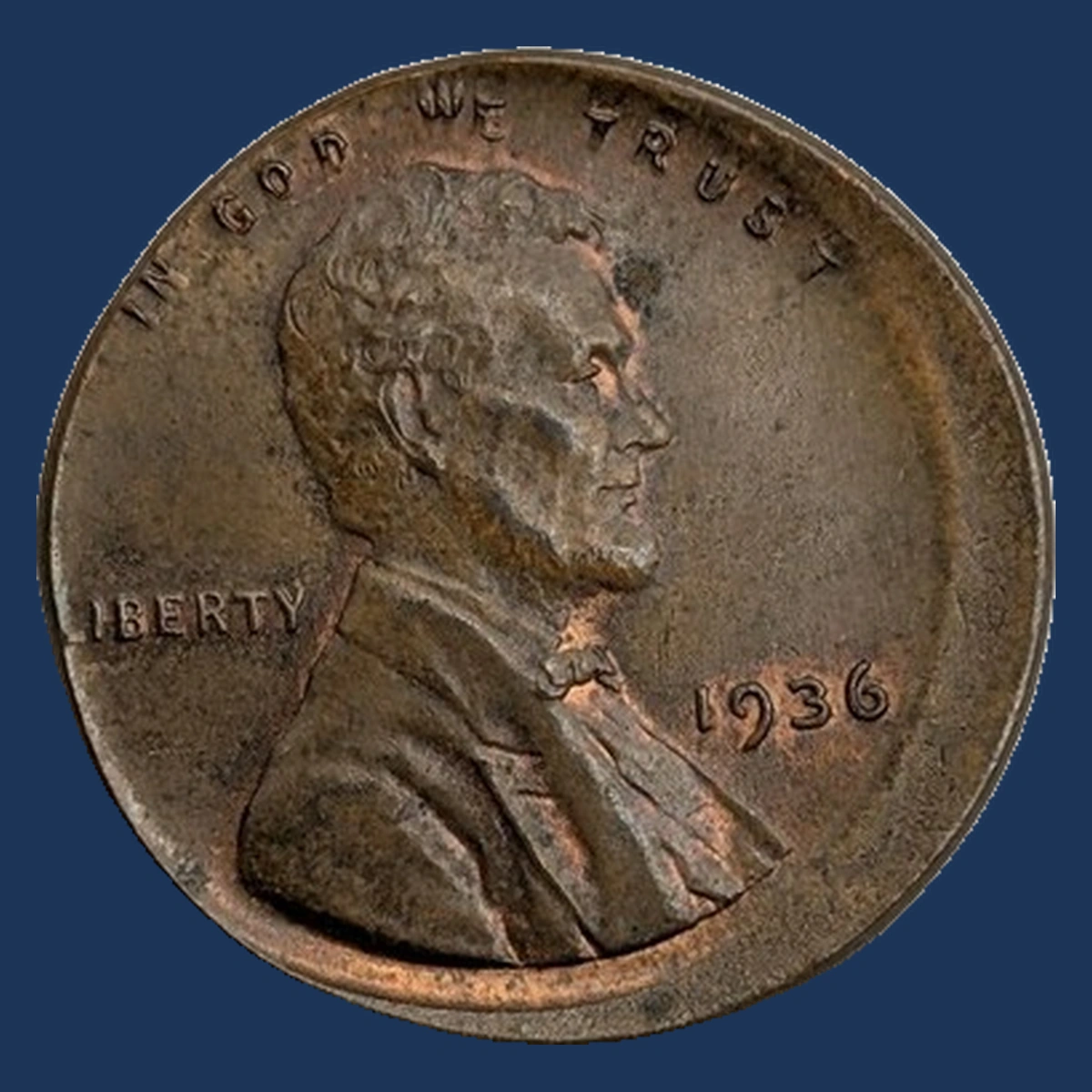
One 1936 cent has its design displaced about 20% toward eleven o’clock. A plain crescent remains where the blank was outside the striking area.
The recorded ANACS F12 grade describes a well-worn coin. Its displaced design is a striking error, while its wear developed afterward.
Off-center strikes affect where both designs land on the same disc. The front and back should therefore tell a consistent story about the blank’s position.
The reported direction belongs to that particular example. Another 1936 off-center cent can point elsewhere and have a different amount of its design missing.
Estimated Value
A separate 1936 cent struck 15% off center toward eight o’clock sold for $63 in January 2022. It was graded ANACS MS60 Brown, an unworn grade with noticeable marks.
Estimate $50–$1,000 across genuine 1936 off-center errors of different shifts and preservation. The sale is not the price of the 20% F12 example.
Readable dates and untouched blank areas help. More displacement does not guarantee more money when the year or important detail disappears.
How to Identify
The worn 20% example and the unworn 15% auction example are different coins. Match the direction and amount of displacement to the photograph of the particular coin you are examining.
Locate the date, then compare the incomplete designs on both faces. They should fit one blank that sat away from the center of the press.
Check whether the plain area is still part of that blank. A clip removes metal; an off-center strike can leave a full blank partly unused.
Use a scale against 3.11 grams and calipers against the usual 19.05-millimeter width when safely accessible. Finally inspect the smooth edge and plain area with a magnifier for cutting or grinding that removed finished detail.
8. 1936 Lincoln Penny Flipover Double Strike (Estimated Up to $3,000)
A penny that turns over before being struck again can carry parts of both designs on each face. The second blow places the back image over the earlier front, and vice versa.
On the recorded 1936 example, the earlier top of Lincoln’s head remains above ONE. Earlier date digits survive near the middle of the right Wheat ear.
Parts of UNUM and the Wheat ears also remain around the later front’s border. These details explain the flip.
NGC graded the coin XF40, a worn grade. It is a repeated strike, not a tool with doubled letters.
Estimated Value
Estimate $300–$3,000 for an authenticated 1936 flipover double strike with readable overlapping detail. Its condition and the clarity of the two designs guide the price.
The recorded XF40 coin was offered in May 2004 but did not sell. It supplies no realized price.
A 1956-D flipover double strike with cleaning sold for $456 in June 2024. That later Wheat cent gives a real comparison, with its different year and surface problem kept separate.
How to Identify
Two sets of opposite-face details are needed here. On the back, look above ONE for the earlier top of Lincoln’s head and near the right Wheat ear for the old date.
On the front, look along the border for older UNUM and Wheat-ear remnants. Compare these marks under a magnifier with the later design laid over them.
The exchanged features explain a coin turning over between strikes. A flat shadow beside one letter cannot explain that sequence.
Check the smooth edge for a join between separate pieces. If safely accessible, weigh the coin against 3.11 grams and measure its width against 19.05 millimeters with calipers; otherwise use recorded measurements without opening its holder.
9. 1936 Lincoln Penny Doubled Die Obverse (Estimated Up to $50,000)
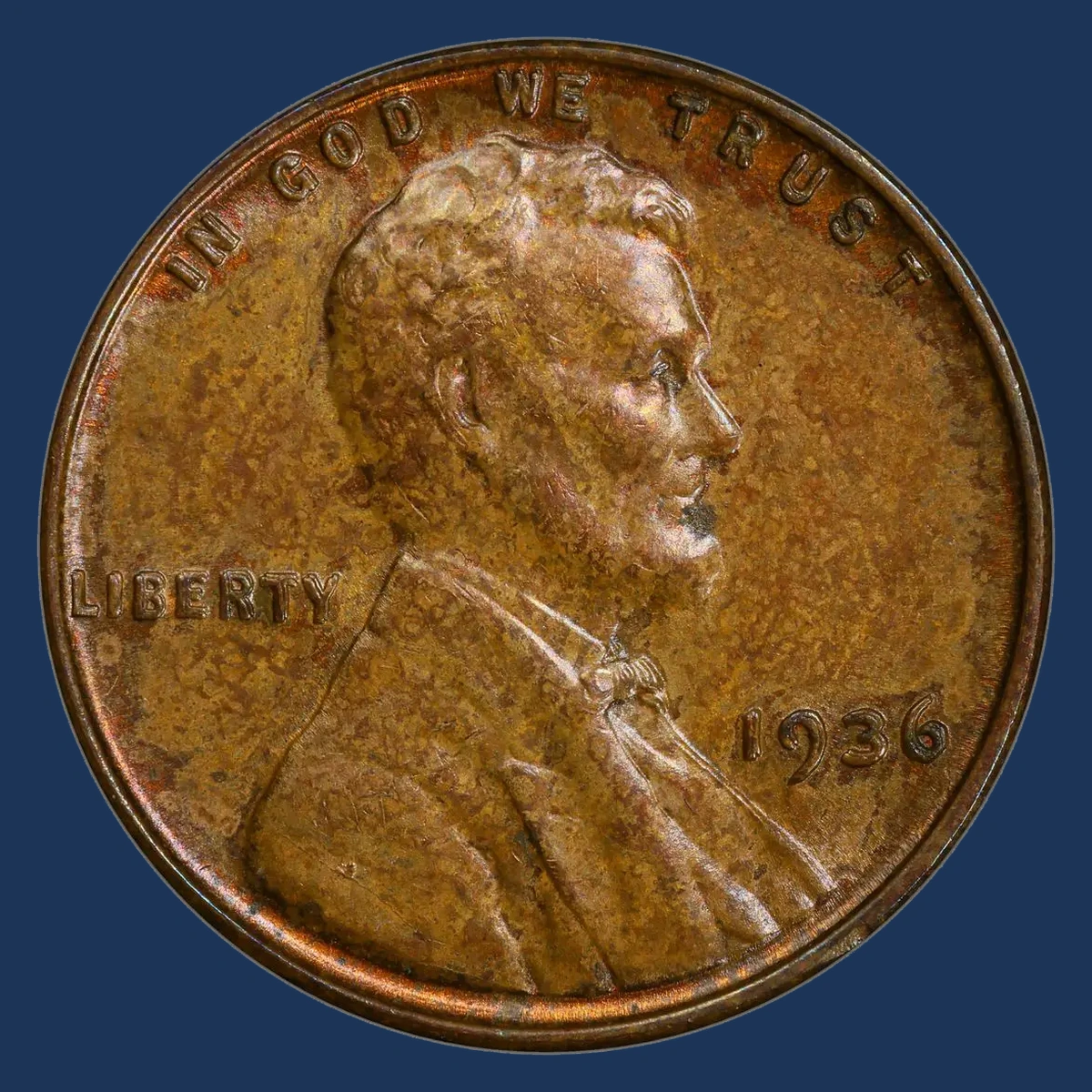
The letters can carry distinct extra outlines even though the coin was struck normally. A doubled die is a steel stamping tool whose design was repeated during its preparation.
Several recognized 1936 Philadelphia varieties show this on the front. The strongest areas vary among the date, LIBERTY, and IN GOD WE TRUST.
One major form is called Type 1. Another recognized form emphasizes the motto more than the date, so the same close-up cannot identify all examples.
These are ordinary strikes. The 1936 Proof cents, collector coins made with special preparation, need separate comparisons for their condition and finish.
Estimated Value
A Type 1 graded PCGS MS67 Red sold for $48,000 in January 2025, according to PCGS auction records. It was exceptionally well preserved and unworn.
An estimated $50–$5,000 covers many collectible examples of different recognized varieties and condition. Exceptional top-grade red Type 1 coins may reach $20,000–$50,000.
A different FS-103 example graded ANACS MS63 Brown sold for $70 in June 2024. That contrast shows why the exact variety matters.
How to Identify
Put a photograph of the specific doubled-front variety beside your close-up. Start with the variety’s strongest feature instead of trying to match the coin to the highest auction price.
The coin should have no mintmark. Use a 10× magnifier to compare the date, LIBERTY, and motto letter by letter.
Some forms show their strongest doubling in the date; another emphasizes the motto. Extra raised outlines should follow the same shapes and positions as the matching example.
A flat shelf beside a smaller-looking letter can come from movement during striking. It does not establish a doubled stamping tool.
Check the smooth edge and record accessible measurements with a scale and calipers against 3.11 grams and 19.05 millimeters before submitting the coin for identification.
Conclusion
Some 1936 errors change the whole coin, while others reveal themselves in one word or a small edge area. Let the visible feature lead the comparison.
Estimated values range from $5 to $50,000. The high end belongs to exceptional doubled-die coins, not every penny with thick letters.
Keep the original surface untouched and photograph both sides. A controlled flip helps check rotation; close letter comparisons help with doubling, and neither test replaces the other.