1959 Penny Error List with Pictures

The Memorial replaced the wheat stalks in 1959, making the back design especially important. A disputed wheat-back piece sold for $48,300 in 2003, but that sale did not settle its authenticity.
This 1959 penny error list covers estimated values of $2–$6,000 for the other listed error types, plus the disputed piece’s separate $30,000–$50,000 historical range. Read on to compare mintmarks, extra strikes, missing metal, and unusual discs.
1. 1959 Lincoln Memorial Penny Peeling and Defective Metal (Estimated Up to $100)
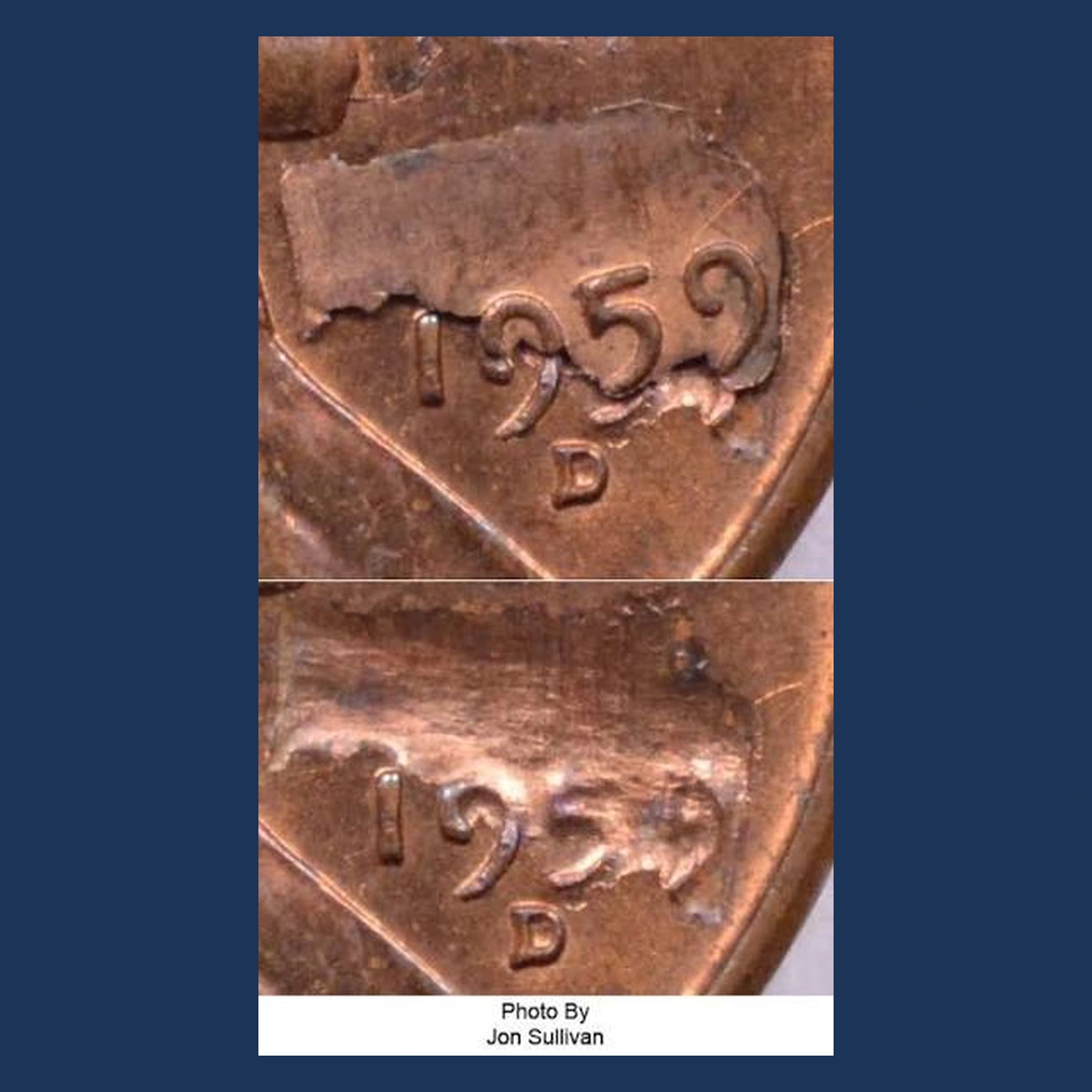
A patch of peeling metal can interrupt Lincoln’s portrait without forming a clean cut. The alloy may have separated along a weak layer inside the original disc.
This peeling is called lamination. A recorded 1959-D example shows separation on the front and detached fragments.
Other defective-disc reports for the year are broader and need their actual surface fault identified. They should not automatically be called holes or assigned a particular location.
The 1959 cent is copper alloy throughout, with small amounts of tin and zinc. Its peeling differs from a copper coating lifting off the zinc center of later cents.
Estimated Value
Estimated values of $5–$100 cover genuine minor 1959 metal defects and lamination. Larger retained flakes or a clearly matching detached piece can make the error easier to understand.
For comparison, a 1966 front-side lamination cent graded NGC MS63 Brown sold for $61 in July 2021. That is a later copper-alloy example, not a price recorded for the 1959-D fragments.
A vague rough patch caused by corrosion should not be given a manufacturing-error premium.
How to Identify
With a 10× magnifier, follow the edge of the lifting layer rather than the color of the patch. Natural separation can extend beneath nearby metal; scraping often leaves repeated tool marks.
Do not lift a flap or try fitting a loose fragment by force. Photographs can compare the boundaries without risking further loss.
A scale checks against the normal 3.11 g, while calipers compare the diameter with 19.05 mm. Inspect the plain edge for a continuing layer or evidence of filing.
On a broadly described defective-disc candidate, identify the actual flaw first. Look for metal splitting along an internal layer with original design related naturally to that split.
2. 1959 Lincoln Memorial Penny Repunched D/D/D Mintmark (Estimated Up to $150)
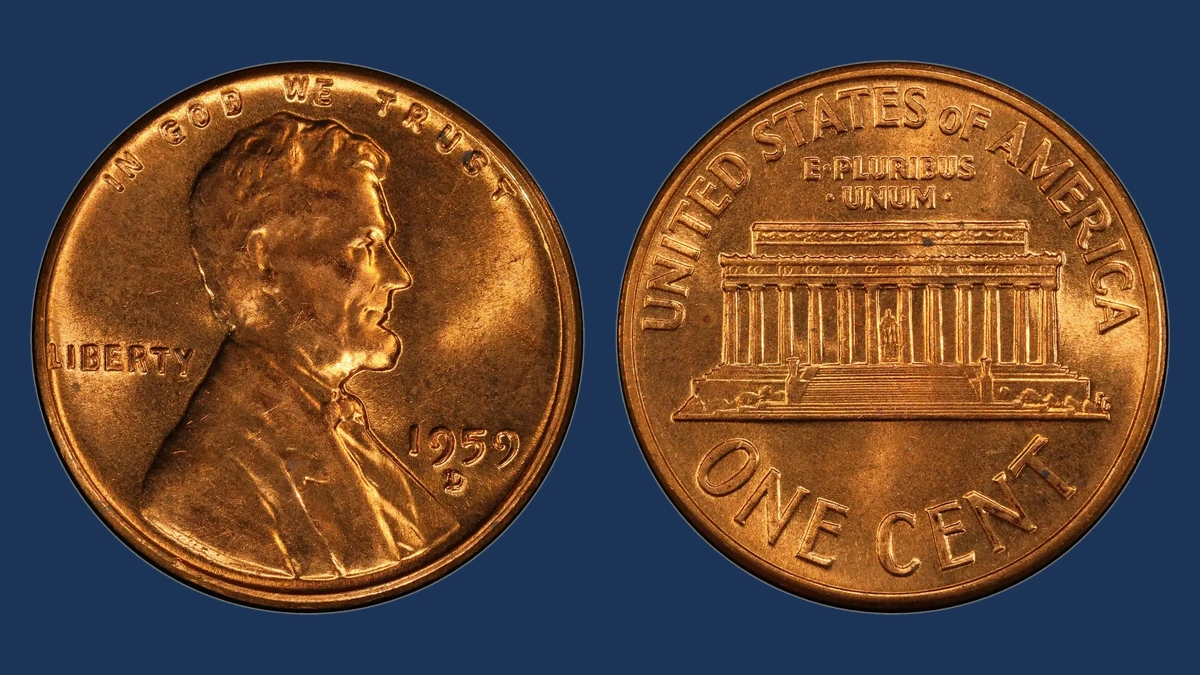
Look below the date for more than the ordinary single D outline. The 1959-D/D/D FS-501 variety shows remnants of repeated mintmark punches.
The worker added the D to the die, the steel tool used to stamp cents, by hand. Punches placed slightly apart left extra letter traces on the tool.
Those traces then appeared on coins struck from it. The D/D/D name describes the repeated mintmark, not three separate strikes of the whole coin.
A swollen or damaged D can look similar at first. Identification depends on recognizable extra strokes in the correct positions, rather than general thickness.
Estimated Value
A confirmed 1959-D/D/D FS-501 cent has an estimated value of $5–$150. A clear extra outline and natural, unworn surfaces generally support more than faint traces on a heavily worn example.
This range compares collectible minor repunched-mintmark varieties; it is not a reported auction result for every color grade. Brown, mixed red-brown, and red coins remain the same variety.
A chipped or flattened D should not receive the premium merely because it looks unusual.
How to Identify
Compare the mintmark with a normal 1959-D before trying to count its impressions. A 10× magnifier should reveal parts of extra letter strokes, not just a broad outer blob.
Use a confirmed FS-501 photograph to trace each remnant. Catalog names are useful only when the shapes on the coin actually match.
Check the surrounding surface for a scratch that pushed metal toward the D. Flat shelves from movement during striking can also imitate an extra outline.
The normal cent weighs 3.11 g and measures 19.05 mm; use a scale and calipers, and inspect the plain edge. Recognize the same repeated D strokes as FS-501 before treating the mintmark as a triple-punch variety.
3. 1959 Lincoln Memorial Penny Broadstrike (Estimated Up to $175)
Extra metal outside the normal rim can make a cent look oversized. It spread during striking because the collar, a ring surrounding the disc, did not hold it properly.
The resulting coin is called a broadstrike. Its design can remain complete even when the extra border is uneven.
A 1959-D broadstrike is reported among offered error coins. Its shape should be compared with the full Lincoln and Memorial designs, not judged only by diameter.
An off-center strike loses design beyond the edge. A broadstrike may sit unevenly within its outline, but its outer design remains on the metal.
Estimated Value
For a genuine 1959-D broadstrike, estimate $25–$175. Strong design, substantial natural spread, and attractive surfaces help a coin compare favorably with other examples.
A 1999 copper-coated zinc broadstrike sold for $67 in March 2023. Its PCGS MS65 Red grade means unworn with few marks and retained red color.
A seller’s description alone does not establish the 1959-D premium; the complete design and original expanded outline still need to be visible.
How to Identify
Use calipers to compare the widest parts with a normal 19.05 mm cent. Measure gently so the coin’s edge is not marked.
Then inspect the outside lettering on both faces under a 10× magnifier. Every part of the design should remain, even if one border is wider.
Check weight on a scale against 3.11 g. A significant loss may indicate a separate defect rather than ordinary unrestricted spreading.
Study the plain edge and both faces for pressure marks from a vise. Those can widen a coin after minting.
The useful distinction is a complete struck design inside a naturally enlarged outline, without the missing outer details of an off-center strike.
4. 1959 Lincoln Memorial Penny Split Discs Before or After Striking (Estimated Up to $200)
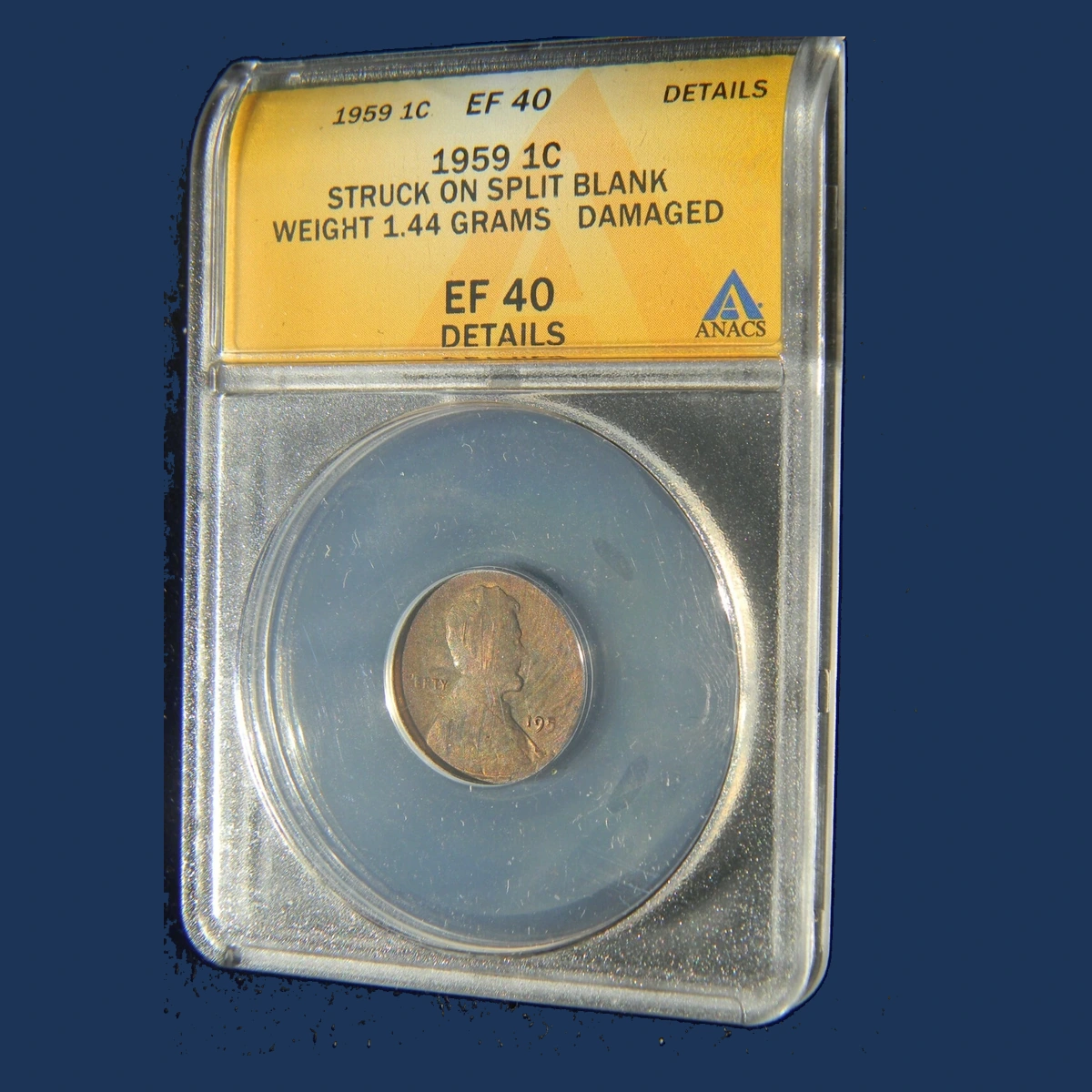
A cent can lose an entire layer through its thickness. When the original disc splits before striking, the remaining thin piece receives a new design on the exposed metal.
A 1959 example of that type weighs 1.49 g. Its appearance differs from a finished cent that later separates.
Another recorded 1959 piece weighs 1.4 g and retains a strong front design after its back layer detached. The exposed split surface can show weak transferred outlines rather than a normal, fully struck back.
Both involve internal metal separation. The relationship between the design and exposed layer helps reveal when it happened.
Estimated Value
An estimated $40–$200 covers recognizable 1959 split-disc pieces. Readable dates, original split texture, and a clear explanation of the surviving design help collectors assess them.
A 1971-D disc that split before striking, weighing 1.6 g, sold for $59 in June 2023. It provides a later-year comparison for the thin-before-striking example, not a direct price for the 1959 after-strike piece.
Do not assign the same timing or value simply because two cents have similar low weights.
How to Identify
Place the piece on a scale and compare it with the standard 3.11 g. Both recorded 1959 examples are far lighter, but weight alone cannot establish when they split.
Inspect the two surfaces with a 10× magnifier. Fresh design over internal metal supports splitting before striking; a strong original face beside a torn-away layer supports later separation.
Calipers compare thickness and the outline with an ordinary 19.05 mm cent. Examine the plain edge for machining or a deliberately thinned section.
Never pull apart a partly separated coin. Decide which design was present before the layer came away by comparing the struck surface with the exposed internal metal.
5. 1959 Lincoln Memorial Penny Clipped Discs (Estimated Up to $250)
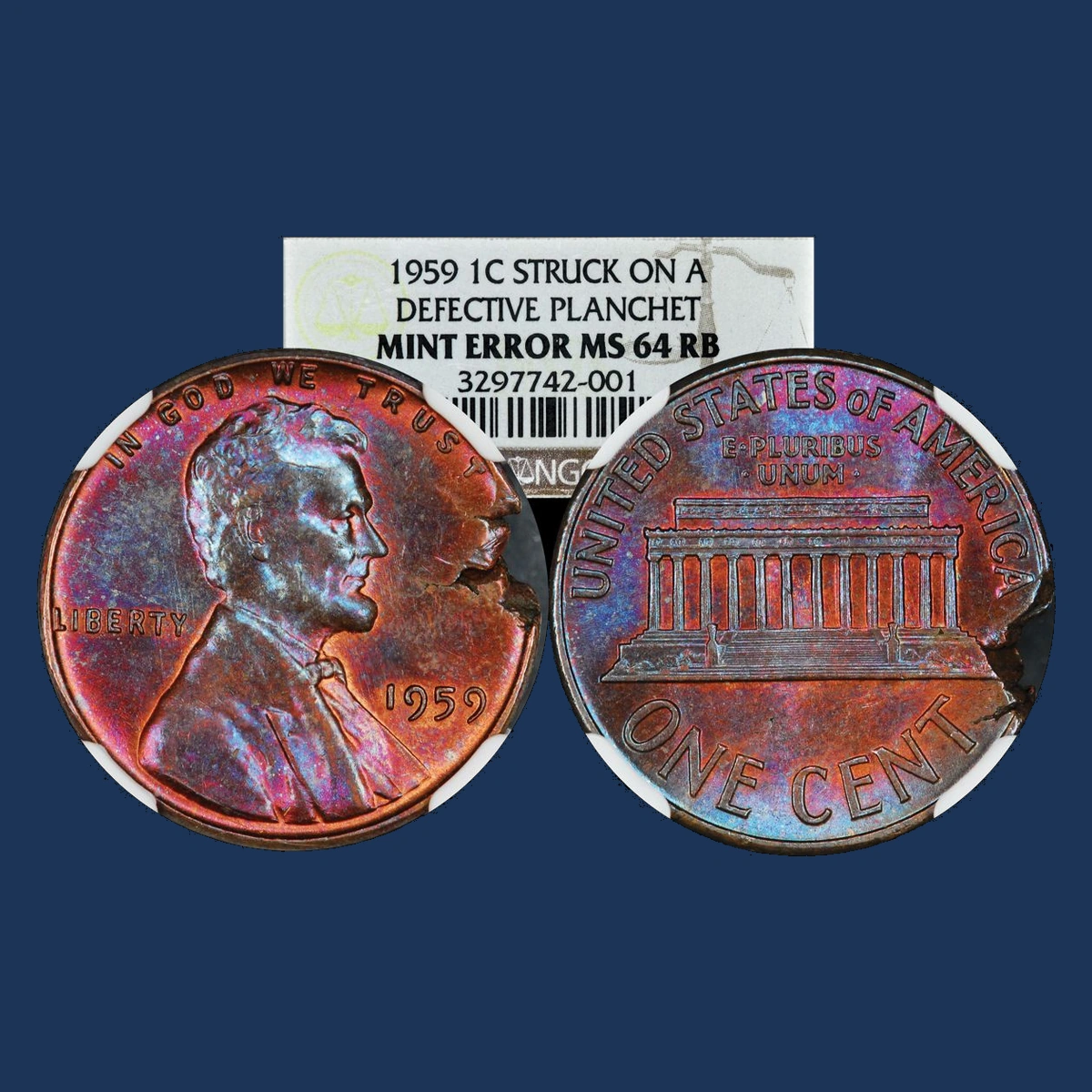
A rough missing edge can make a penny look torn, yet the disc may have been incomplete before striking. An irregular original boundary is called a ragged clip.
One 1959 Philadelphia example weighs 2.78 g and was described as a major ragged clip. A separate Denver clipped cent was certified at a high unworn grade.
Their gaps need not have the same shape. Missing-metal errors can result from different problems in preparing the original disc.
Later cutting and filing can create lookalikes. The important evidence lies where the design and rim formed beside the incomplete boundary, not in roughness alone.
Estimated Value
Estimated values run about $20–$250 for genuine 1959 clipped cents. Larger well-preserved gaps can bring more, but an impressive appearance must be supported by an original mint-made boundary.
A 1967 straight-clip cent graded PCGS MS63 Red sold for $39 in July 2021. That later-year straight clip gives general price context; it is not the price of the 1959 ragged example.
The Denver coin’s high grade also does not establish a sale amount by itself.
How to Identify
Trace the missing section with a 10× magnifier and check how the rim ends at both sides. Later cutting may leave repeated grooves or sharply displaced metal.
For a curved clip, a weak area opposite the gap can help; a ragged clip needs attention to its own irregular boundary. Do not require every clip to share one outline.
Weigh against the normal 3.11 g and use calipers across the remaining round portion of the usual 19.05 mm disc. Inspect the plain edge away from the defect as well.
Compare the original design as it approaches the gap. Metal flow shaped around an incomplete disc is stronger evidence than a rough edge alone.
6. 1959 Lincoln Memorial Penny Off-Center Strike (Estimated Up to $300)
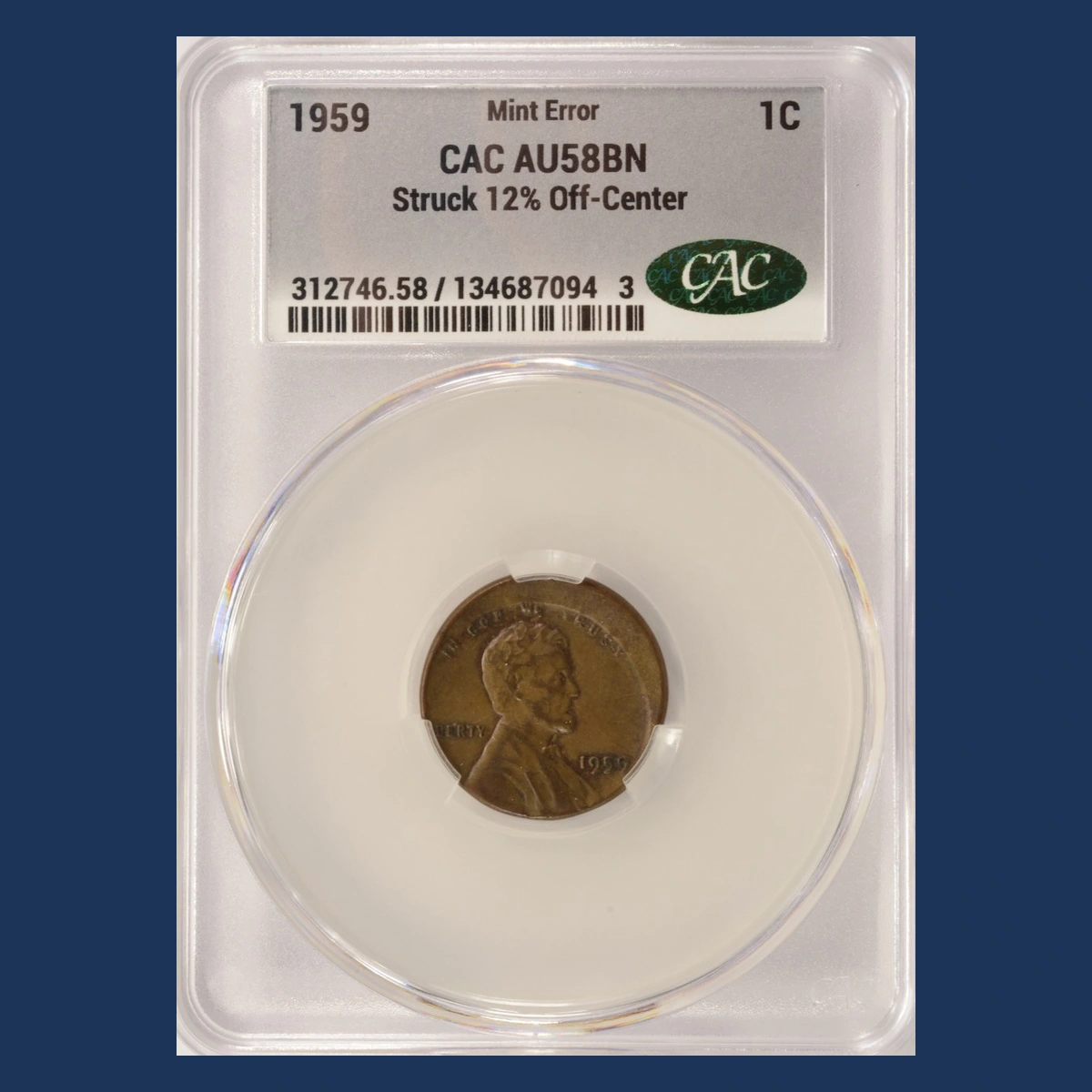
A blank area can appear opposite a crowded Lincoln portrait when the disc sits partly outside the striking position. The stamping tools reach part of the disc.
The recorded 1959 Philadelphia example is about 40% off center. Its displaced design is different from the round, complete picture on a normal cent.
The remaining date ties the error to the first Memorial year. A more extreme shift can remove that useful information.
A coin cut after striking may also lose outer lettering, but cutting does not create original blank metal beside a displaced strike. Both sides should tell the same story.
Estimated Value
Allow an estimated $25–$300 for 1959 off-center cents with readable dates. The shift, condition, and balance between blank metal and surviving design all influence collector interest.
A 1968-D cent struck 60% off center, graded NGC MS62 Red and Brown, sold for $47 in July 2021. That later copper-alloy coin shows why percentage alone does not set the price.
The documented 1959 40% example needs its own valuation rather than an invented sale derived from that comparison.
How to Identify
First find 1959 in the surviving design and check whether a D appears below it. Keep the Philadelphia example separate from a Denver candidate.
Under a 10× magnifier, follow the boundary between struck and blank metal. Original spreading should explain the transition, without grinding marks or a newly cut face.
Inspect the back to confirm that the displacement affects the strike, rather than only one tool sitting slightly out of line. An unusually wide but complete design may be a broadstrike instead.
A scale checks against 3.11 g; calipers compare the disc with 19.05 mm, and the plain edge needs inspection. Locate genuine blank metal opposite design lost beyond the edge.
7. 1959 Lincoln Memorial Penny Doubled Dies (Estimated Up to $350)
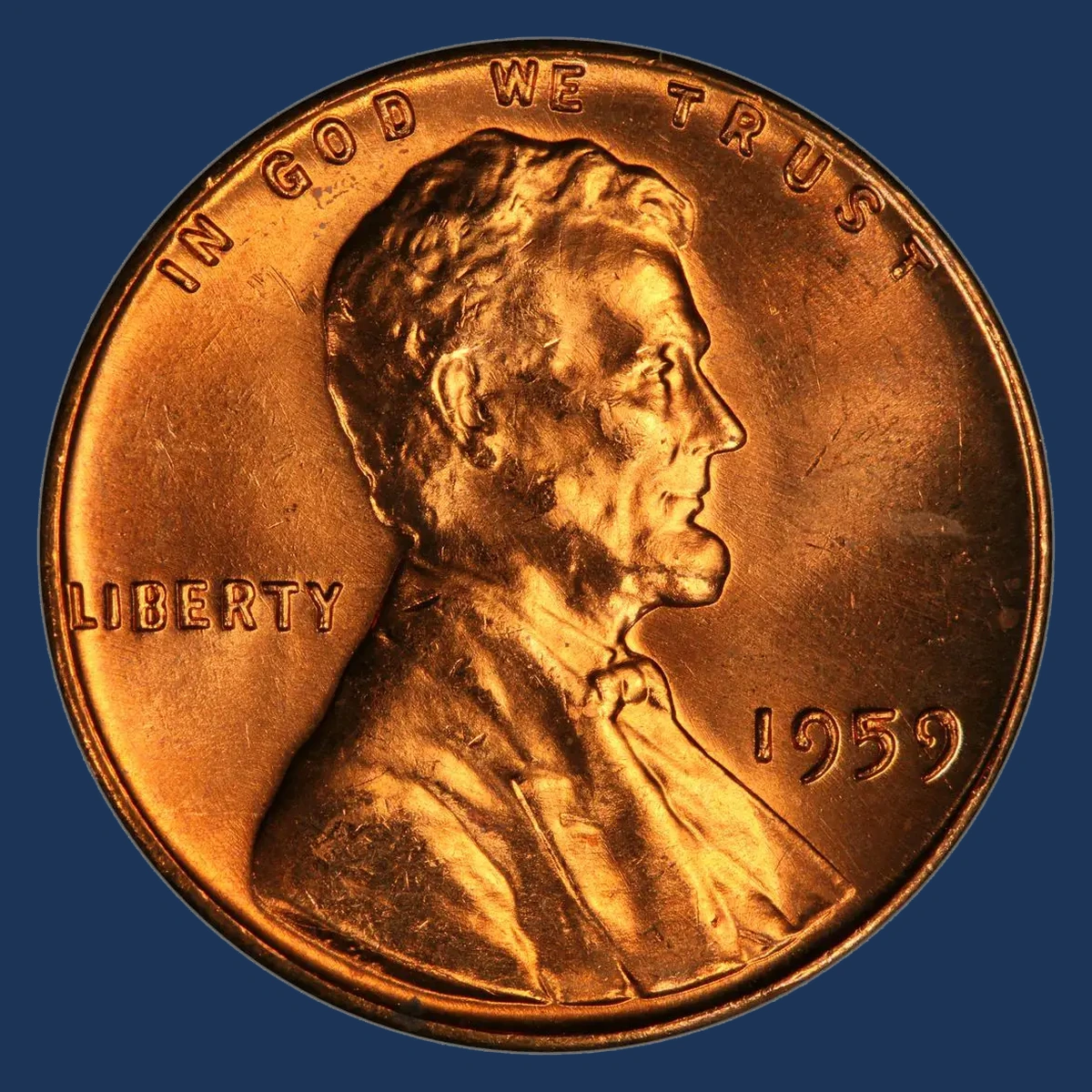
A doubled outline can be present before the coin ever enters the press. The stamping tool itself carries the extra detail and passes it to each coin it makes.
This is a doubled die. Philadelphia 1959 ordinary cents include front-side examples, while a separate back-side discovery shows an extra column-like shape.
That back-side feature appears in the third space between the Memorial columns. It must be distinguished from the building’s normal details and the small Lincoln figure.
Tool movement during striking can leave flat extra-looking ledges instead. Those shelves do not establish either of these recorded doubled-die varieties.
Estimated Value
Confirmed minor 1959 doubled dies fit an estimated $5–$350 range. Stronger separation and a clean, unworn surface can make an identifiable variety more desirable.
PCGS lists a $285 October 2021 eBay result for a front-side example graded MS65 Red. That listed result should not be transferred to the different back-side column variety.
The estimate covers varied preservation and feature strength; ordinary thick lettering or flat strike doubling does not earn the same variety premium.
How to Identify
Choose the side with the extra feature before comparing photographs. For the back-side variety, examine the third Memorial bay with a 10× magnifier and identify the added column-like shape.
On a front-side candidate, inspect the relevant date or lettering for separated raised outlines and forked corners. A supporting scratch alone cannot prove a doubled die.
Compare an ordinary 1959 coin, not a specially made Proof, with the recorded ordinary-issue examples. Reflections can also make the polished areas around letters misleading.
Use a scale and calipers to check roughly 3.11 g and 19.05 mm, and inspect the plain edge. Match the extra raised design in its specific location before assigning a doubled-die label.
8. 1959 Lincoln Memorial Penny Die Cap (Estimated Up to $750)
Instead of leaving the press, a freshly struck cent can stick to a stamping tool. Further pressure then spreads the trapped coin around that tool.
Its edge can rise into a cup-like wall. Collectors call the resulting coin a die cap.
The 1959 error reports include this type, but a claimed cap still needs its original struck shape examined. A penny bent into a bowl after minting can look convincing in a photograph.
The cap itself should also be distinguished from another cent struck beneath it. That second coin may have soft detail while remaining relatively flat.
Estimated Value
A genuine 1959 die cap has an estimated range of $150–$750. Clear surviving design, naturally stretched walls, and attractive surfaces support a stronger price than vague distortion.
A 1979-D cap graded PCGS MS64 Red sold for $329 in January 2016. This different-year copper-alloy example provides context, not a realized price for the reported 1959 cap.
The range applies after cap identification; an ordinary bent cent or a flat weak strike should not inherit it.
How to Identify
Look at the side profile without squeezing the coin flat. The wall should rise naturally from stretched struck metal, rather than from sharp folds.
A 10× magnifier helps follow the design into the distorted area. Pliers can leave grips, scratches, and repeated pressure marks that do not belong to mint striking.
Measure the changed outline carefully with calipers beside an ordinary 19.05 mm cent. A scale can compare the weight with 3.11 g, while the plain edge should be checked for cuts or added metal.
Do not identify a cap solely from a weak portrait. Look for original design extending into a naturally raised wall that wrapped around the stamping tool.
9. 1959 Lincoln Memorial Penny Double Strikes (Estimated Up to $1,000)
Two overlapping portraits can remain inside a nearly normal round cent. One 1959 Philadelphia coin turned before its second strike while still confined by the collar, the surrounding metal ring.
Its earlier design is rotated about 135 degrees from the later impression. Both sets of details belong to the same piece of metal.
Other 1959 examples show much greater displacement. One Philadelphia coin combines a second strike, outward spreading, and a 75% off-center impression.
A Denver example has a second strike about 90% off center with its front blocked. Those different shapes should not be combined into one imagined coin.
Estimated Value
The rotated Philadelphia example, graded NGC MS62 Brown, sold for $576 in February 2018. An estimated $100–$1,000 covers comparable 1959 double strikes with different amounts of displacement and preservation.
Large extra impressions can appeal strongly, but a clear rotated design within the original outline is also collectible. That $576 result belongs to the rotated coin alone.
It should not be used as a documented sale for the separate 75% Philadelphia or 90% Denver combinations.
How to Identify
Find enough connected detail to trace two separate designs. A single doubled letter may come from a doubled tool rather than a second strike of the coin.
For the rotated example, use a 10× magnifier to follow earlier portrait and lettering remnants around the later design. On widely displaced examples, study the extra struck area and any blocked face separately.
Check the plain edge for joins or unnatural pressure marks. Coins squeezed together after minting can produce misleading extra pictures.
Compare weight with 3.11 g using a scale, and record the changed outline with calipers against the normal 19.05 mm. Trace two independently placed, originally struck designs on one continuous coin.
10. 1959 Lincoln Memorial Penny Cuds and BIE Chips (Estimated Up to $1,500)
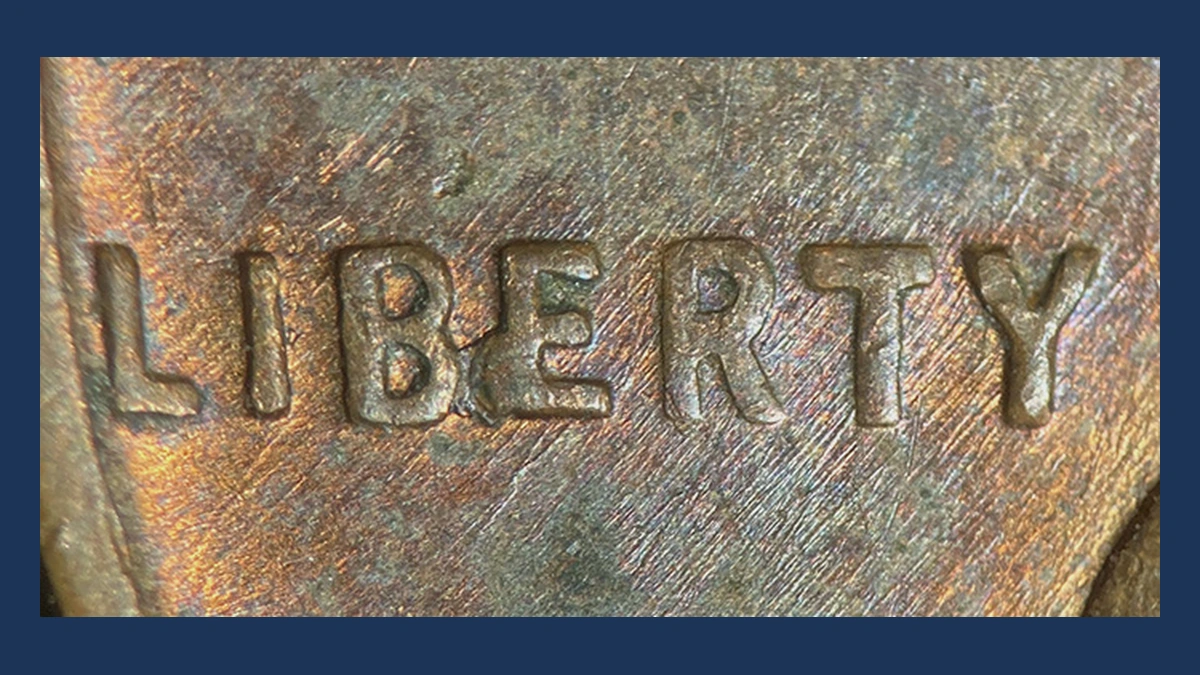
A large raised lump joined to the rim can erase part of the normal picture. A section of the stamping tool broke away, leaving a cavity for coin metal to fill.
That rim-connected feature is called a cud. The 1959 reports also include a much smaller chip between B and E in LIBERTY.
The smaller chip can resemble an extra I, producing the name BIE. It does not change the actual spelling on the design.
Both features come from broken tools, but their size and location differ. A lump of added solder or dirt is not a mint-made tool break.
Estimated Value
Estimated prices for small 1959 BIE chips begin around $2–$40. A large genuine cud can reach roughly $75–$1,500, especially when it has a clear outline and attractive surrounding design.
A 1979 cud cent graded PCGS MS64 Brown sold for $1,020 in May 2021. That later-year major break is a comparison for a substantial cud, not a tiny BIE.
The 1959 feature must be identified on its own before choosing the appropriate part of the range.
How to Identify
Separate the two shapes immediately: follow a cud to the rim, but look between B and E for a BIE. The locations help prevent a small internal chip from being advertised as a major edge break.
Use a 10× magnifier and low light to check that the raised area belongs to the coin. Look for disturbed metal, glue, or solder around it.
Check the opposite face for strike weakness near a large cud, while remembering that this is supporting evidence. The raised rim-connected shape remains central.
A scale and calipers compare 3.11 g and 19.05 mm, and the plain edge should remain natural. Confirm an original raised break at the rim or the specific BIE gap.
11. 1959 Lincoln Memorial Penny Struck-Through and Retained Objects (Estimated Up to $4,000)
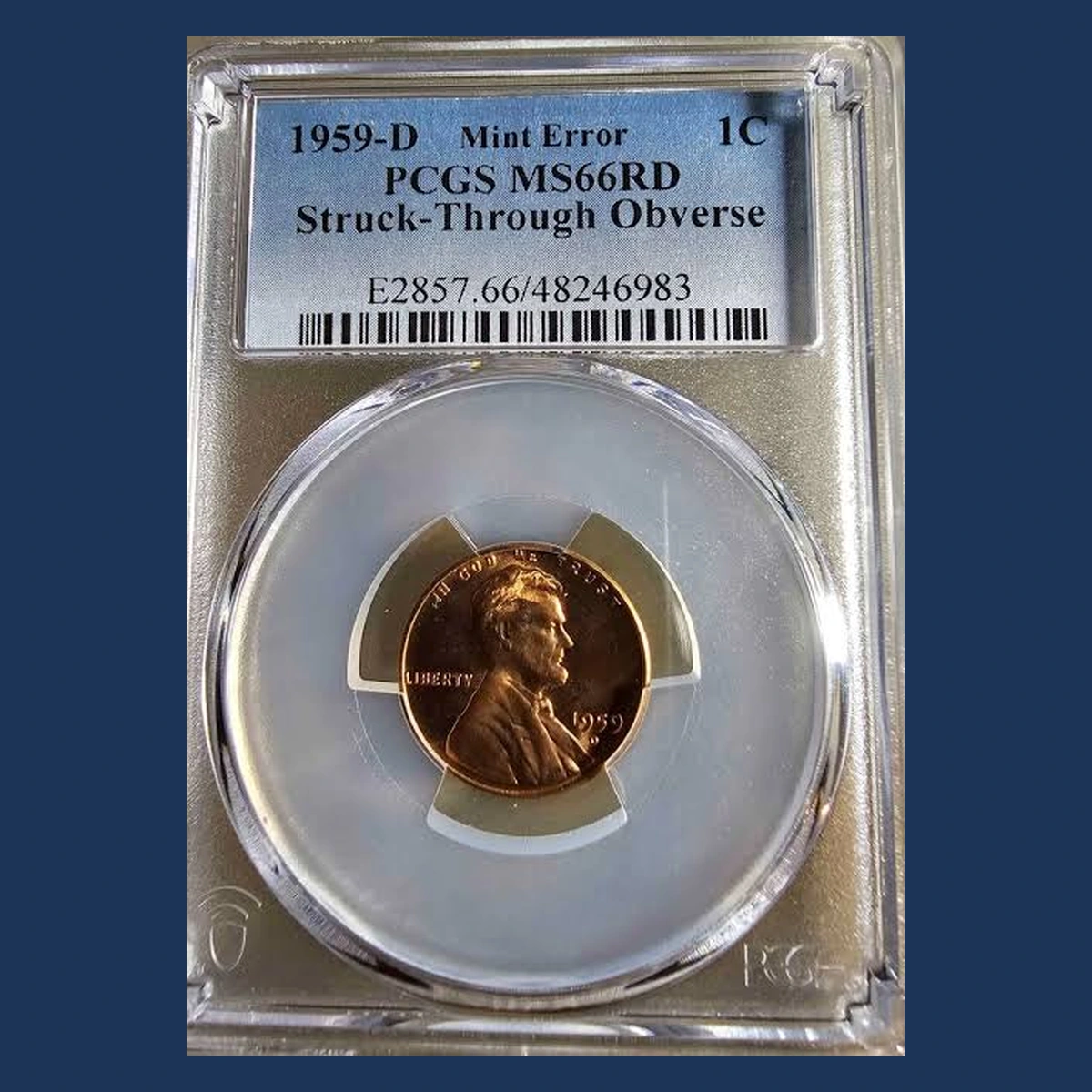
A hollow or missing patch of design can form when an object lies between the disc and a stamping tool. The strike presses around the obstruction rather than transferring the full picture.
This is a struck-through error. If the object remains embedded, it is called a retained struck-through error.
Reports for 1959 include ordinary impressions and a Denver retained-object example. The material should be identified from the actual coin rather than guessed from an indistinct hollow.
A staple, wire, or fabric pattern should not be claimed without visible support. Objects attached after minting can also imitate a retained mint error.
Estimated Value
Small genuine 1959 struck-through impressions have an estimated range of $20–$150. A clearly embedded, identifiable object can bring roughly $150–$4,000, depending on its nature and the coin’s condition.
A 1963 retained-staple cent graded NGC MS62 Red and Brown sold for $3,416 in March 2026. That different-year example supports the upper end only for a comparably clear retained-object error.
The 1959-D report does not establish that its object was also a staple.
How to Identify
Leave embedded material in place. Pulling it out can destroy both the feature and the evidence explaining how it entered the coin.
Under a 10× magnifier, study where coin metal meets the object or hollow. Fresh punctures, adhesive, and scraping indicate a different history from pressure during striking.
Examine nearby letters for natural interruption rather than general wear. A shallow missing letter alone does not reveal what material blocked the tool.
Use a scale against the normal 3.11 g, allowing for a retained object’s weight, and calipers against 19.05 mm. Inspect the plain edge, then identify metal struck around an original obstruction rather than an object added to the finished coin.
12. 1959 Lincoln Memorial Penny Wrong Metal Discs (Estimated Up to $6,000)
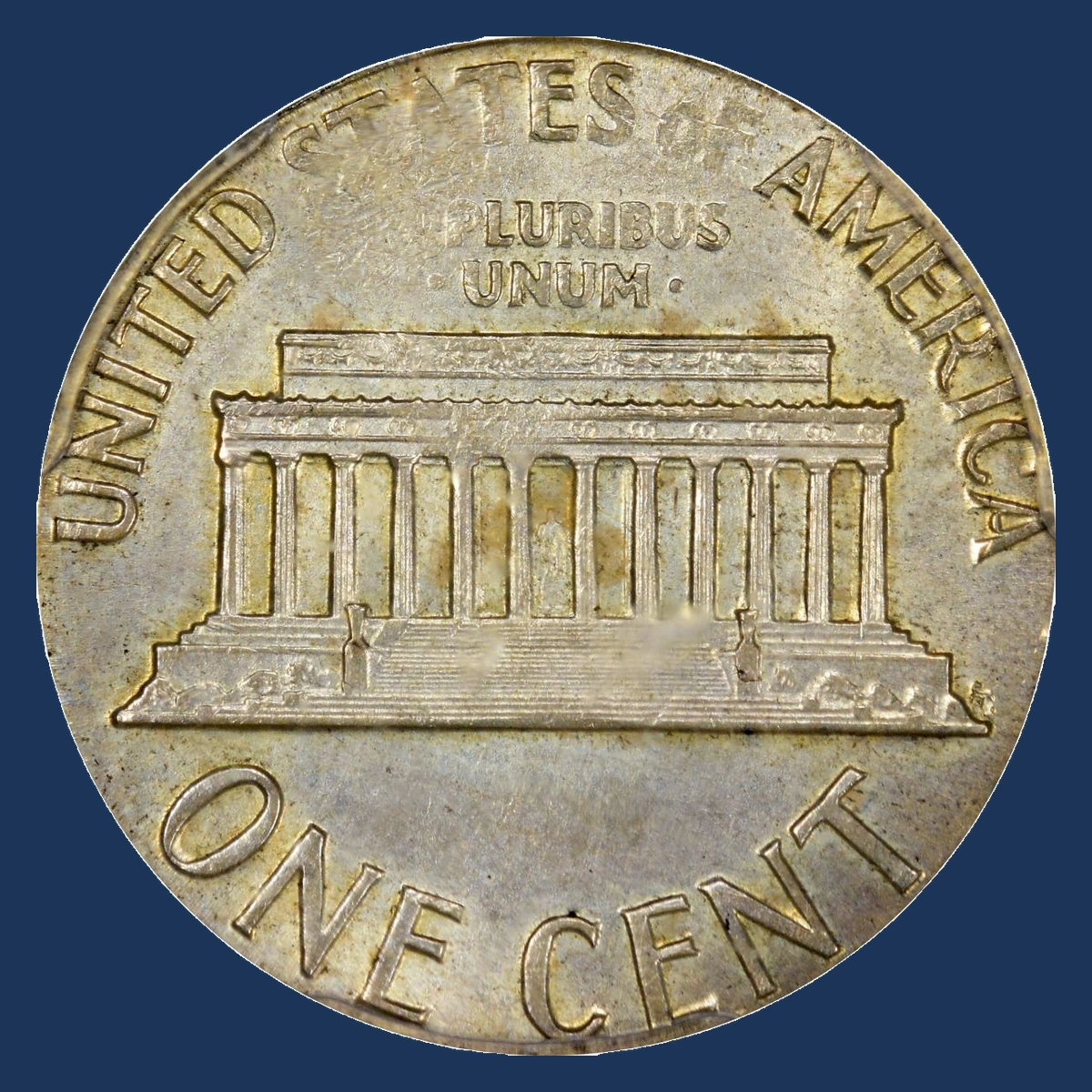
A smaller pale disc can carry a Lincoln cent design that does not quite fit. The press received metal prepared for another coin instead of a cent disc.
A prepared disc is called a planchet. Recorded 1959 examples include silver dime planchets from both Philadelphia and Denver.
Other Philadelphia cents were struck on foreign-coin discs. One is identified as a Philippine 10 centavo disc weighing 2.1 g; another is identified as a Venezuelan 5 centimos disc.
These are separate coins with different metal identities. Color or an unusual weight alone cannot establish which country’s disc entered the cent press.
Estimated Value
Silver dime-disc cents have an estimated range of $500–$3,000; a 1959-D PCGS MS61 example sold for $1,050 in May 2022. A different 1959 silver-disc coin brought $2,440 in June 2026.
For authenticated foreign-disc examples, estimate $1,000–$6,000. The Venezuelan 5 centimos-disc cent, graded PCGS MS61, brought $3,904 in June 2026, as reported in Heritage’s auction report.
That price belongs to the Venezuelan disc, not the separate Philippine example.
How to Identify
Place a normal cent beside the candidate and compare how the outer lettering fits. A 10× magnifier can reveal missing design at the edge or signs of added plating.
A scale distinguishes the usual 3.11 g cent from a roughly 2.50 g silver dime disc. The recorded Philippine-disc coin is 2.1 g, but weight alone cannot establish that origin.
Measure with calipers against the standard 19.05 mm cent diameter. A silver dime disc begins around 17.91 mm, though striking can alter its final outline.
Inspect the plain edge without scraping it. Match dimensions and professionally tested metal to the claimed disc before accepting a foreign-country or silver-dime identification.
13. 1959 Lincoln Memorial Penny Disputed Wheat-Back Mule (Estimated Up to $50,000)
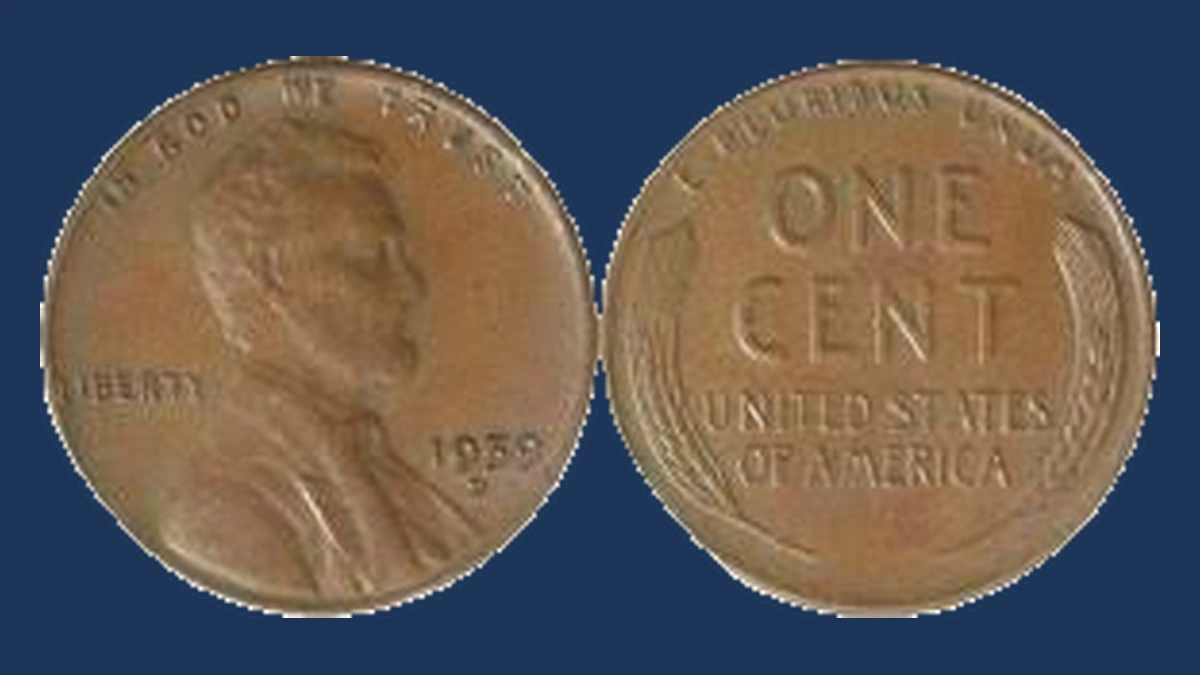
A wheat-stalk back on a coin dated 1959 immediately conflicts with that year’s new Memorial design. The famous reported 1959-D piece has attracted attention for exactly this reason.
A mule is a coin struck with two tools that were not intended to work together. That term explains the proposed error, not proof that this particular piece was made at the Mint.
Published accounts describe conflicting opinions and failed attempts to obtain major grading-company authentication. Its history includes auction sales despite the disagreement.
It therefore belongs among disputed pieces, rather than confirmed examples a beginner can identify from design alone.
Estimated Value
The famous disputed piece sold for $48,300 in 2003 and $31,050 in 2010, according to PCGS’s account. The latter offering did not guarantee authenticity.
A historical market range of roughly $30,000–$50,000 applies to that specific controversial object and its documented history. It is not an estimate for any newly found wheat-back 1959 cent.
Altered dates, joined coins, and replicas do not inherit those prices, even if their front and back appear similar.
How to Identify
Check the front date and D, then compare the back with an ordinary 1959 Memorial cent. An unexpected wheat design starts the examination; it does not finish it.
A 10× magnifier can reveal altered digits, seams around the plain edge, or disturbed surfaces. Calipers and a scale compare the normal 19.05 mm diameter and 3.11 g weight, but matching measurements cannot prove authenticity.
Photographs may miss evidence of joined parts or transferred counterfeit designs. Do not clean the surfaces or try opening a suspected seam.
The famous piece’s auction history is not a certification for another coin. Have the entire coin examined by an established authentication service before accepting a 1959-D wheat-back claim.
Conclusion
Most listed 1959 error estimates fall between $2 and $6,000, from small chips to authenticated wrong-disc coins. The disputed wheat-back piece has its own $30,000–$50,000 historical range and must not set expectations for ordinary finds.
Use the new Memorial design as your starting point, then follow the specific feature. Weight, original surfaces, and the correct comparison matter more than a striking nickname or an ambitious seller’s price.