1973 Penny Error List with Pictures

A finished dime went through a cent press and emerged with two different coin designs. That 1973-D error sold for $4,560 in July 2022.
The 1973 penny error list also has much smaller clues: a split-looking D, doubled letters, or a bar inside LIBERTY. The estimates below run from $1–$6,000, with condition and the exact mistake affecting value.
Read on to see which marks belong together and which only look alike.
1. 1973 Lincoln Penny Damaged D Punch (Estimated Up to $25)
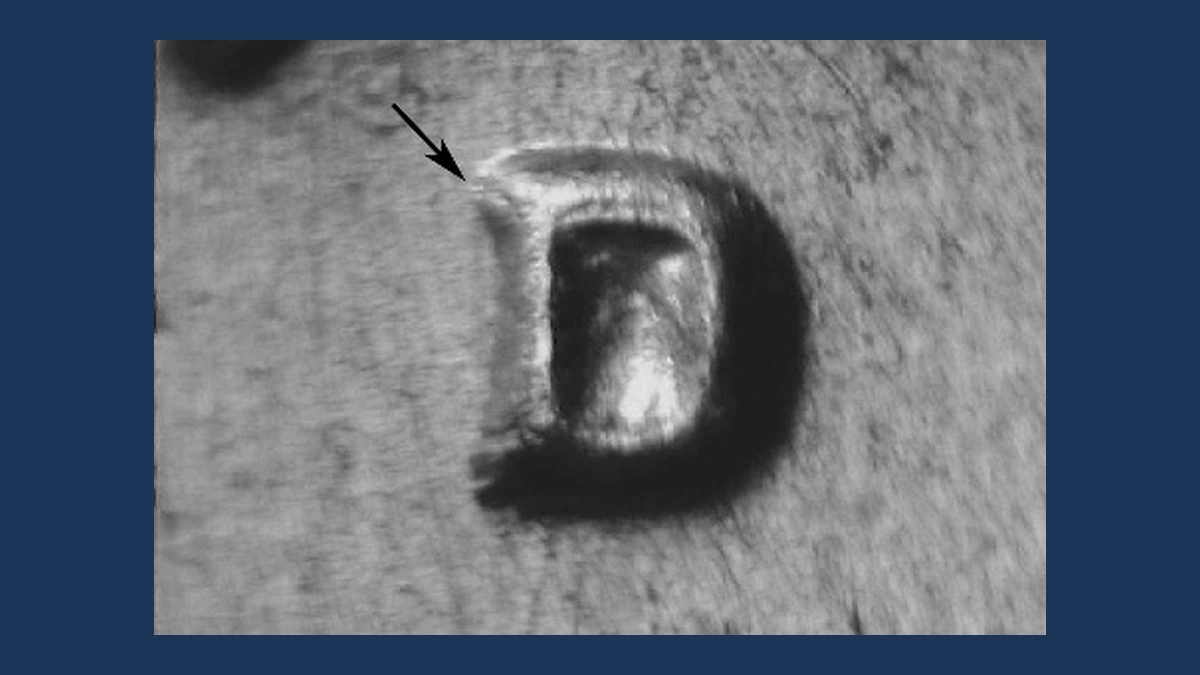
The D can have two lines across its top and split-looking tips. This pattern came from damage to the small punch used to add the mintmark to a stamping tool.
It can resemble a repunched mintmark. The important difference is that the damaged punch already had the unusual shape before it touched the tool.
Wexler explains that some older repunched-D listings were replaced after this distinction became clear. A familiar old variety number alone therefore cannot identify the cause.
The unusual letter still offers an interesting comparison. It simply needs the correct explanation instead of an extra mintmark impression.
Estimated Value
Allow an estimated $1–$25 for an identifiable damaged-punch example, with the upper portion reserved for clear, well-preserved detail. This modest range is an estimate, not a recorded sale of one cataloged coin.
A mintmark described as doubled may attract attention before its cause is checked. The damaged-punch pattern should not receive the price of a stronger genuine repunched D.
Preservation helps collectors see the odd shape. Heavy wear can hide the small split tips completely.
How to Identify
Place an ordinary 1973-D beside the suspect coin and compare the D with a 10× magnifier. Focus on the top bar and the small tips at the ends of its upright stroke.
The damaged-punch pattern gives those parts an unusual shape without requiring a separate, shifted letter. Look for the same combination rather than deciding from one bright line.
Normal cents have a plain edge, weigh 3.11 g, and measure 19.05 mm. A scale and calipers help rule out unrelated changes to the coin.
Check the doubled-looking top bar together with the split tips before treating the mintmark as two overlapping D impressions.
2. 1973 Lincoln Penny Repunched D Mintmark (Estimated Up to $100)
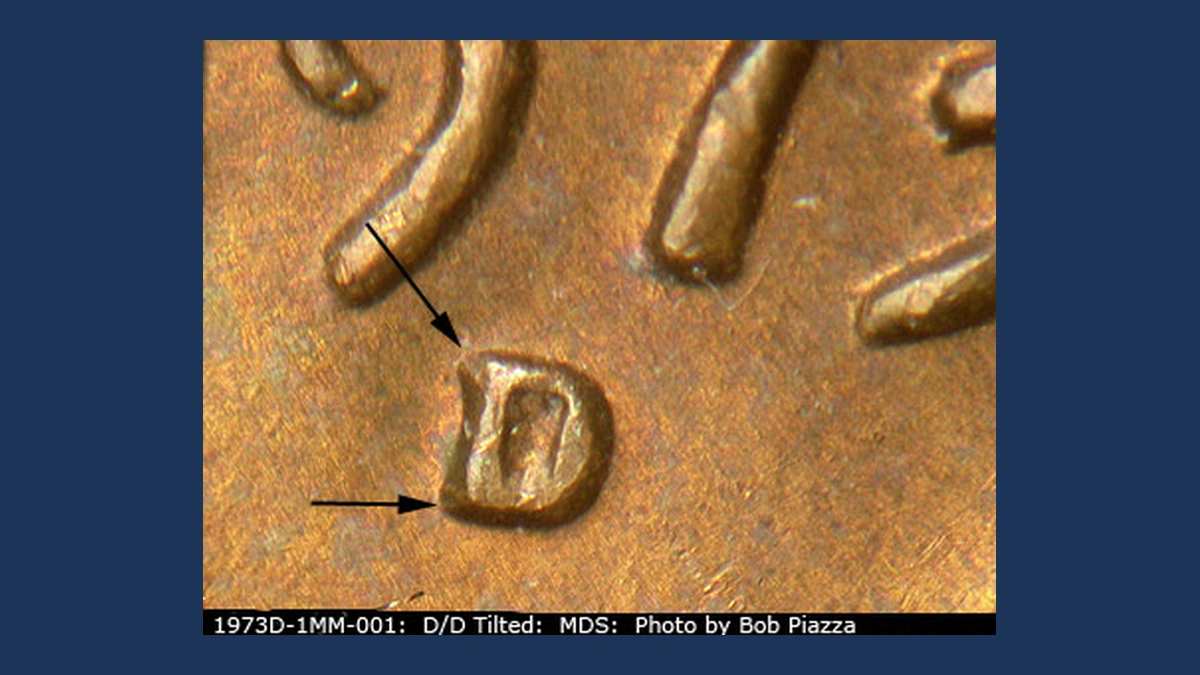
A small second D can survive around the main mintmark when the punch was applied again in a shifted position. Each strike of that punch changed the die, the steel stamping tool.
Wexler lists several 1973-D patterns, including rotated impressions, a southern remnant, and a southeastward remnant. Their extra outlines appear in different places.
The current WRPM-001 is a rotated example. It differs from the damaged-punch pattern once assigned that number.
WRPM-006 remains a questioned listing because its eastern mark may come from a tool scratch. Treat that particular mark as a comparison, not proof of a second D.
Estimated Value
Clear repunched mintmarks have an estimated range of $3–$100. The amount depends on the visible separation, surface condition, and correct match to a listed pattern.
The upper end allows for a strong, well-preserved example rather than every D with an uneven edge. Small or worn remnants tend to offer less visual appeal.
For the questioned WRPM-006 mark, use a provisional $1–$15 comparison range. That estimate does not settle whether the mark is a true repunch.
How to Identify
Identify the direction of any extra D detail under a 10× magnifier before comparing catalog photographs. A southward remnant cannot be matched to a rotated example merely because both show extra metal.
The current WRPM-001 also has supporting marks near IN’s N, WE’s W, and below the D in UNITED. Wexler’s current listings distinguish these patterns from older replaced numbers.
Compare 3.11 g on a scale and 19.05 mm with calipers if the coin itself appears altered. Those are ordinary cent measurements, not tests for a particular repunch.
Follow the suspected remnant far enough to recognize part of a second letter, rather than relying on a single lump or scratch.
3. 1973 Lincoln Penny Doubled Memorial-Side Letters (Estimated Up to $150)
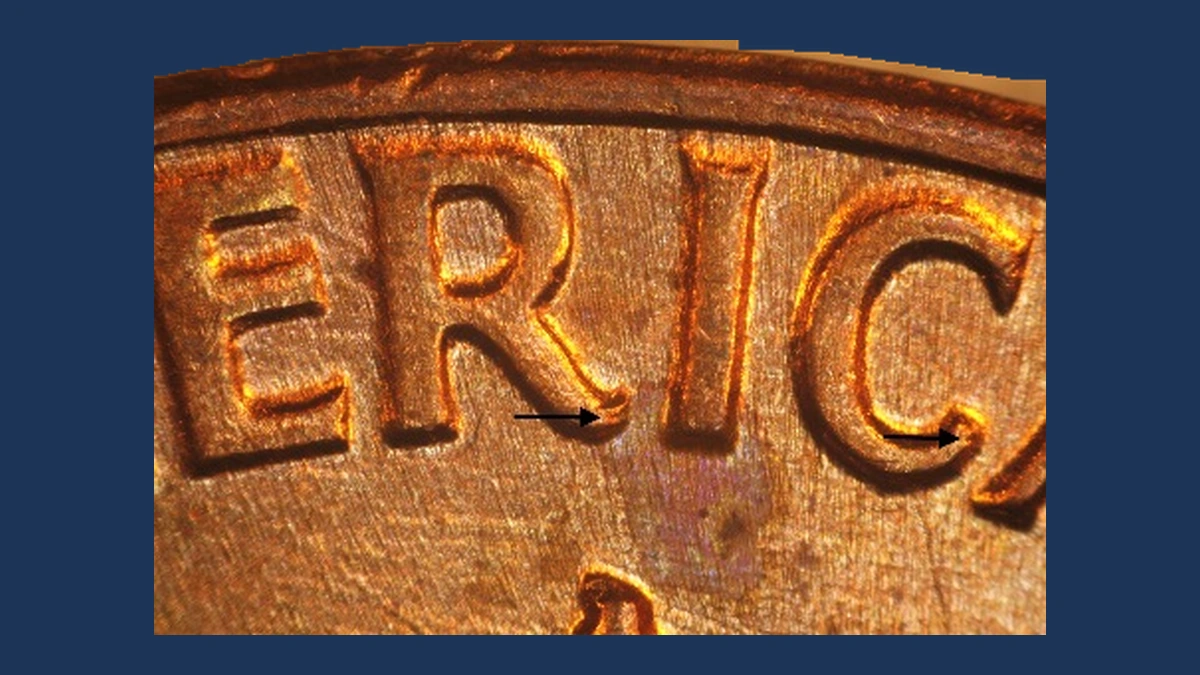
Notches in the R and C of AMERICA can reveal this back-design variety. Extra detail also appears in ONE CENT and the designer’s initials, FG.
Wexler lists the Philadelphia pattern as WDDR-001. The repeated design was present on the stamping tool before it touched the coin.
This is subtle doubling, so large shadows around every letter would suggest a different effect. A light reflection changes as the coin moves, while real raised detail stays in place.
The initials are small and easy to overlook. Compare them with the words rather than trying to identify the variety from one enlarged corner.
Estimated Value
For a coin matching this back pattern, an estimated $5–$150 gives a practical range. The estimate concerns the visible variety and does not claim a recorded auction sale for WDDR-001.
An unworn surface can preserve the little notches more clearly than a heavily handled one. Cleaning may leave bright edges that look stronger in a photograph but reduce the coin’s appeal.
Compare the actual letter shapes before paying for a doubled-design label. Extra sharpness alone is not doubling.
How to Identify
On a normal 1973 Philadelphia cent, the front has no mint letter and the back shows the Memorial. Start by finding AMERICA, ONE CENT, and the small FG initials on that familiar design.
With a 10× magnifier, compare the R and C corners in AMERICA while moving the light across the coin. Follow any extra detail into the other named letters, checking that it stays fixed instead of moving like a reflection.
A scale and calipers check the ordinary 3.11-g weight and 19.05-mm width if the coin appears altered. The tiny stable notches in R and C provide the more useful clue to the doubled design.
4. 1973 Lincoln Penny Doubled Date and Front Words (Estimated Up to $200)
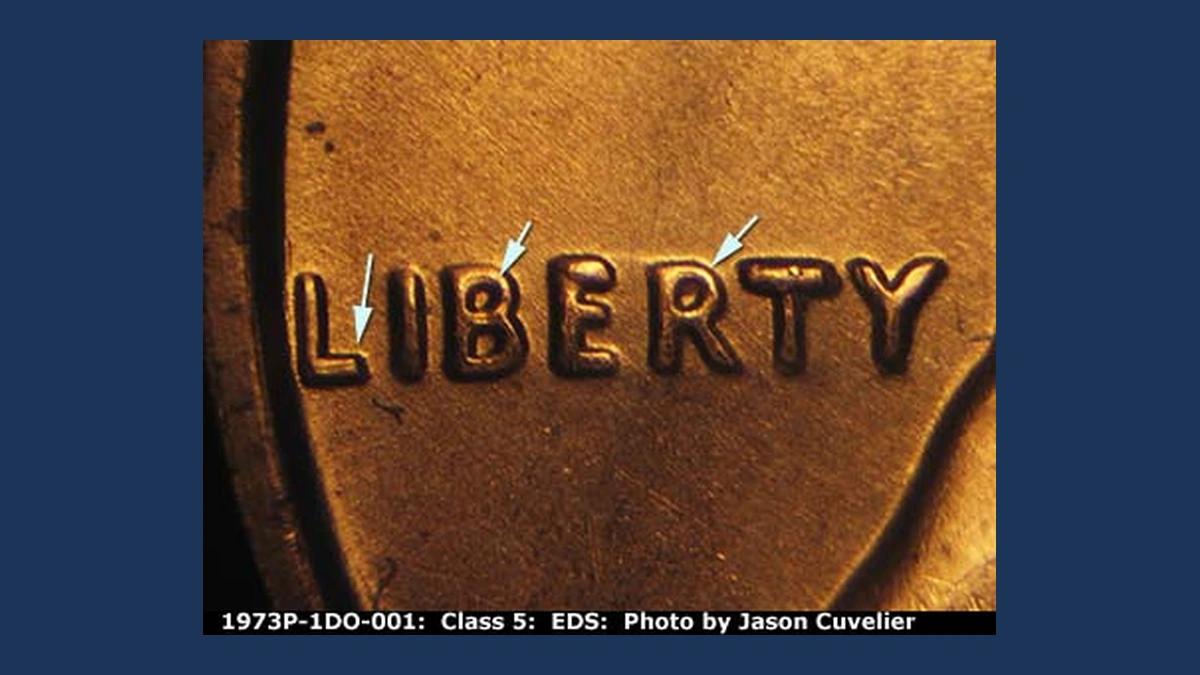
The extra detail changes with the mint and stamping tool. Philadelphia WDDO-001 shows a slight clockwise shift in IN GOD WE TRUST and the first five letters of LIBERTY.
Philadelphia WDDO-002 instead has thicker motto, LIB, and date details. Denver WDDO-001 shows extra detail above the top stroke of 7.
On the ordinary San Francisco WDDO-001, look beneath the middle of 3. That S-mint example is a circulation coin, not automatically a specially made collector proof.
These are separate repeated designs on the tools. Combining their different clues would create a pattern that no single coin needs to show.
Estimated Value
An estimated $5–$200 covers the minor front doubled designs discussed here. The range allows for differences in visibility, wear, and surface color rather than assigning equal value to all four patterns.
A clearly matched date detail can be easier to sell than lettering described only as thick. Photographs should show the specific repeated shape that supports the identification.
No individual auction result is assigned to these catalog entries here. The upper estimate assumes a strong match on a well-preserved coin.
How to Identify
Check the mint area below 1973 before choosing a comparison photograph. With a 10× magnifier, follow the Philadelphia letters, Denver’s upper 7, or San Francisco’s middle 3 as appropriate.
For Philadelphia WDDO-002, compare the diagonal tool line near CENT on the back. Denver’s example has a line running northwest from the top of GOD’s D.
The San Francisco example has a hair crack turning toward WE’s W. These supporting marks belong to their individual patterns, not all doubled fronts.
A scale and calipers compare the standard 3.11 g and 19.05 mm. Match the repeated letter or digit first, then check the supporting mark on that same coin.
5. 1973 Lincoln Penny Missing Blank Section (Estimated Up to $250)
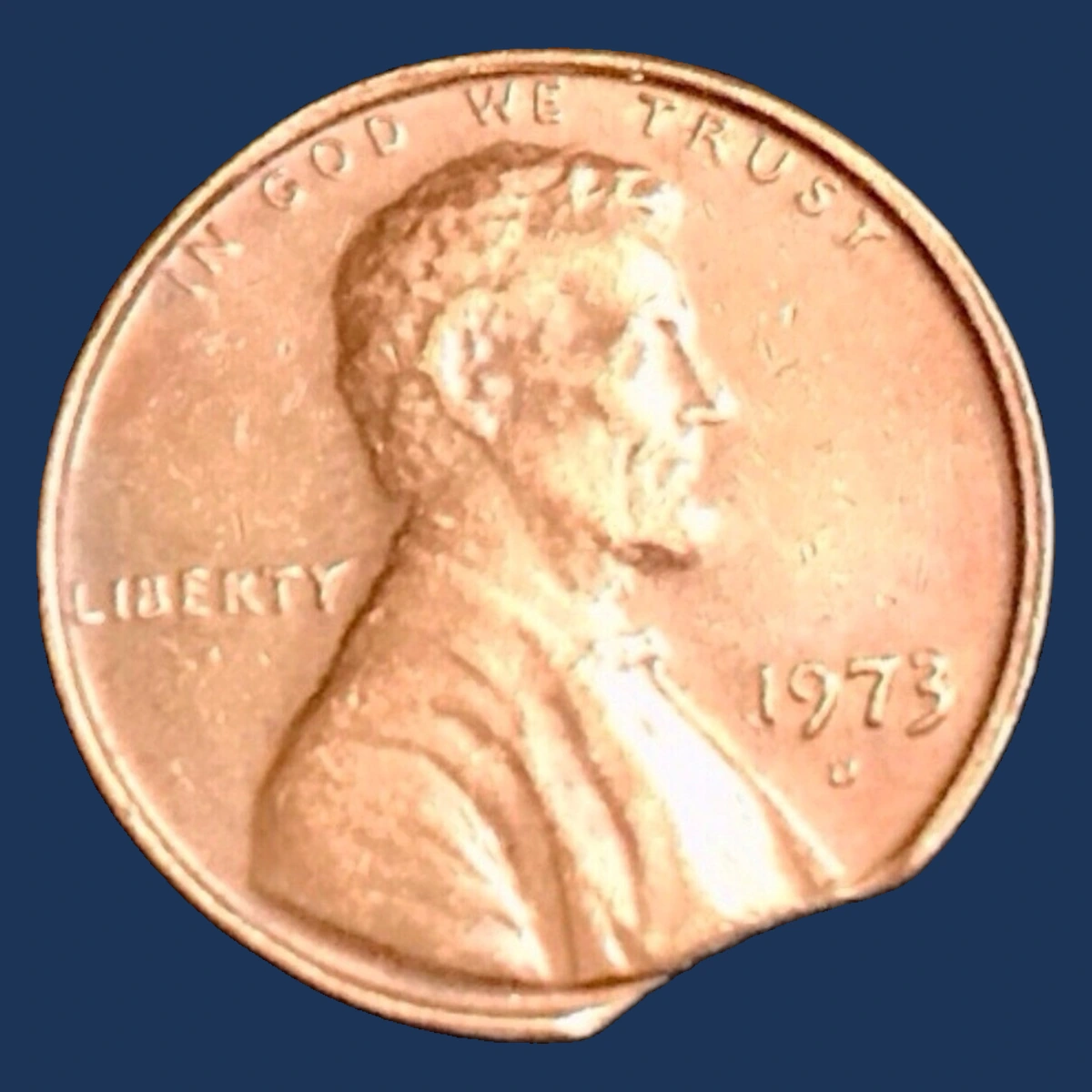
A missing bite can begin before striking. The blank-cutting punch may overlap a hole left in the metal strip by an earlier cut.
The resulting blank has less metal than a complete disk. Striking can soften the design near the missing section and leave related weakness at the opposite rim.
The year guide reports clipped 1973 cents without identifying one required mint or clip position. A straight missing section can have a different blank-cutting origin from a curved bite.
Other pieces were cut away later. A missing raised rim at the notch does not prove a mint error.
Estimated Value
Estimated values of $10–$250 cover modest through more striking, identified clips. The amount reflects the missing section’s size, the remaining design, and the coin’s condition.
This is a comparison range for the reported type, not a sale assigned to an illustrated 1973 specimen. A clipped coin with a readable date is easier to place than an unidentified fragment.
A neat cut can still be later damage. Pay attention to the metal’s shape before the size of the missing piece.
How to Identify
Examine the missing section edge-on under a 10× magnifier, then look directly across the coin at the opposite rim. Genuine blank-cutting errors may show smooth transitions and related weakness rather than freshly cut ridges.
Use a scale to compare the remaining weight with the normal 3.11 g. Calipers can check the surviving arc against the cent’s usual 19.05-mm diameter.
Inspect nearby letters for gentle stretching or fading toward the gap. A sharp saw cut through otherwise complete letters points to a different cause.
The notch, nearby struck detail, and opposite rim should tell one consistent story about metal missing before the strike.
6. 1973 Lincoln Penny Blank Split Before Striking (Estimated Up to $300)
A thin cent can still carry struck designs on both faces. In a split-before-striking error, a weak layer inside the blank separates before the remaining piece enters the press.
The surviving metal weighs less than a complete blank. Its rough split surface may remain visible beneath the later coin design.
The 1973-D example weighs 2.00 g and has an ICG description noting damage. That later damage must be judged separately from the original thin blank.
This differs from a finished coin losing a layer afterward. Here, the press stamps metal that has already separated, leaving design over the split surface.
Estimated Value
The auction index records the damaged 2.00-g example at $11 in December 2008. Its description gives an unworn Details assessment, meaning damage prevents an ordinary straight grade.
Use an estimated $10–$300 for identified split-before-striking cents across different condition levels. The low recorded result shows how much damage can matter even when the mint error is real.
The upper estimate concerns cleaner examples with convincing split surfaces. It is not a revised price for that damaged coin.
How to Identify
The cataloged coin weighs 2.00 g. Compare that figure with a complete 1973 cent’s normal 3.11 g on a precise scale.
Calipers help show the thin edge and compare its width with the normal 19.05 mm. A different split piece need not have exactly the cataloged coin’s weight.
Examine the rough surface with a 10× magnifier and look for design impressed over it. That order separates a blank split before striking from a finished coin that later lost a layer.
Grinding can also remove metal.
Inspect any scratches separately, then trace the struck design across the split texture to establish which came first.
7. 1973 Lincoln Penny Strike Through a Worn Coin Cap (Estimated Up to $400)
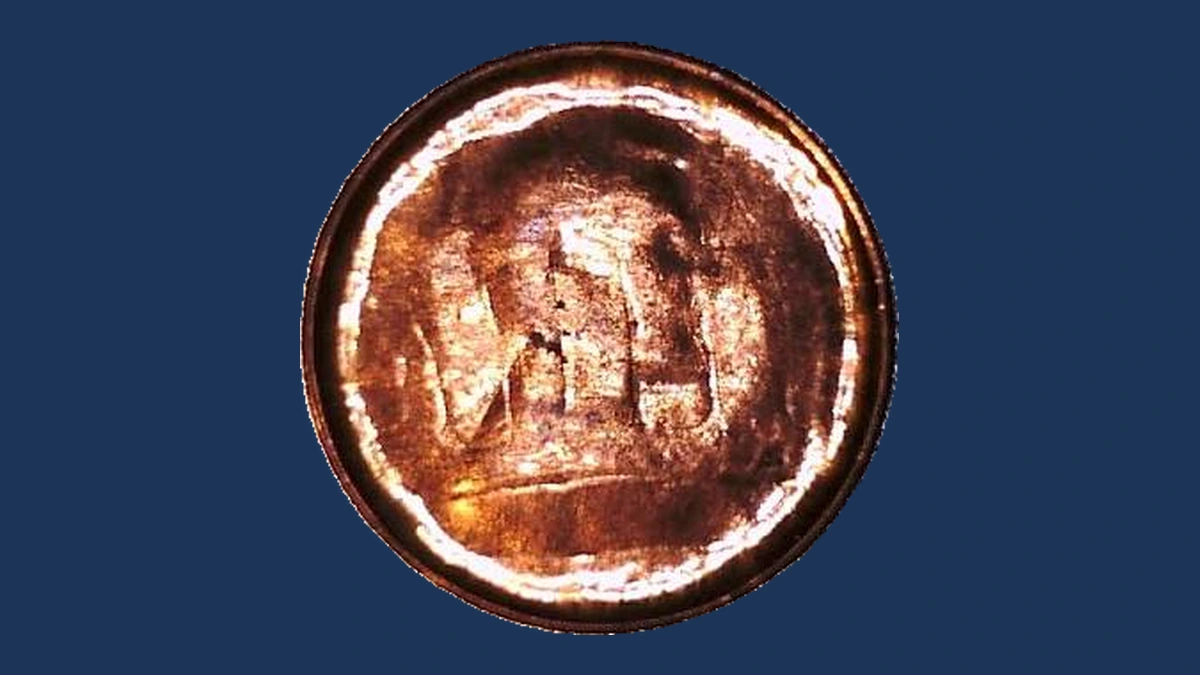
One side can look weak and stretched while the opposite design stays clearer. A previously struck coin may have stuck over a stamping tool, blocking contact with this blank.
Collectors call the stuck coin a die cap. Repeated blows stretch and thin it, allowing more of the tool’s design to show through later.
The 1973-D auction record describes a late-stage cap strike. This cent received an impression through that thin covering.
It is not necessarily the cup-shaped coin that became the cap. A heavily worn or polished ordinary cent can also lose detail, but its surface tells a different story.
Estimated Value
A PCGS AU58 1973-D late-stage cap strike brought $31 in October 2022. AU58 means the coin has only slight circulation wear.
The estimated range is $25–$400 for identified examples with varying strength and preservation. More visible distortion can increase interest when it clearly shows how the covering affected the strike.
The recorded sale offers a useful modest example. It does not set the value of an actual deep coin cap, which is a different object.
How to Identify
The relationship between the two faces matters more than one smooth-looking patch. Compare them at the same light angle, using a 10× magnifier to inspect areas where the covered design becomes soft or stretched.
Check a normal cent’s 3.11-g weight with a scale and 19.05-mm diameter with calipers. A cap covering the stamping tool does not by itself remove substantial metal from the coin underneath.
Polishing can erase detail, too.
Look for scratches crossing the weak area or wear concentrated on high points. Follow the distorted design into clearer detail to see whether it was formed through a covering rather than rubbed away afterward.
8. 1973 Lincoln Penny One-Sided Strike (Estimated Up to $450)
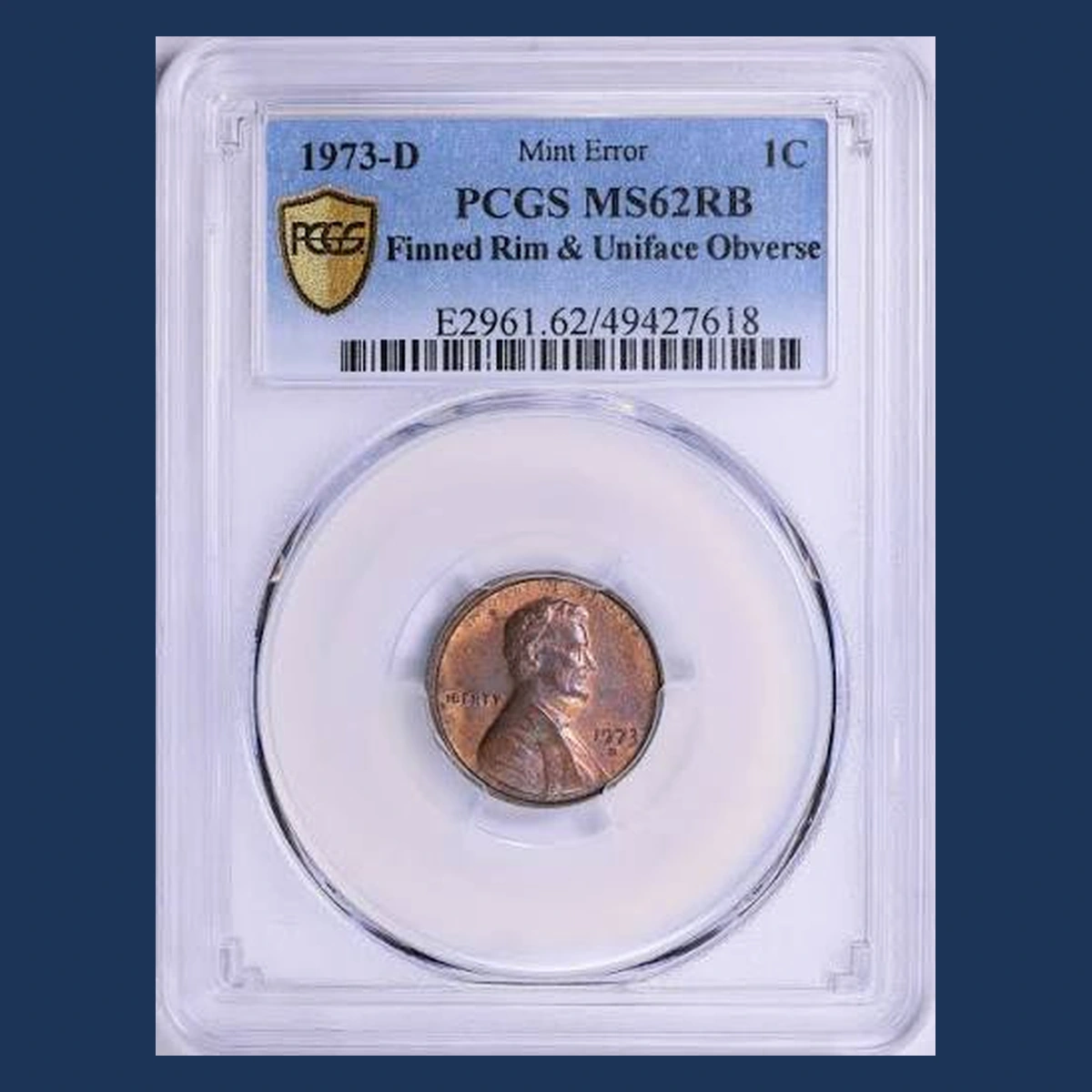
A coin can receive a strong design on one face while another blank blocks the opposite tool. The blocked surface may remain blank-looking or carry only a weak impression.
The auction calls this 1973-D error uniface reverse. Uniface means one-sided, but compare both faces and the label before deciding which side was blocked.
Two blanks caught together provide a simple way for this to happen. The coin is squeezed against blank metal instead of directly against both engraved tools.
Later grinding can also leave a face smooth. The remaining surface texture helps separate that damage from the striking error.
Estimated Value
The listed NGC MS65 Brown example sold for $80 in August 2004, according to the auction index. That grade describes an unworn brown coin with relatively few marks.
Allow an estimated $50–$450 for identified one-sided strikes of this kind. The clarity of the surviving design and preservation of the blocked surface affect the comparison.
The old sale is an example, not a current fixed price. A mechanically smoothed coin belongs outside this mint-error estimate.
How to Identify
Photograph both faces before enlarging the smooth area so the surviving design remains connected to the same coin. Do not infer a missing date or mint letter from an isolated blank-looking photograph.
Under a 10× magnifier, look for original struck texture and inspect for grinding grooves near the boundary. Check the normal 3.11-g weight with a scale and compare 19.05 mm using calipers.
If a holder identifies the year and mint where little design survives, keep that identification with the photographs. It should not become an invented visible letter.
Follow the smooth face to its edge and check whether its texture continues naturally rather than ending in tool marks.
9. 1973 Lincoln Penny Strike Through a Fragment or Loose Debris (Estimated Up to $600)
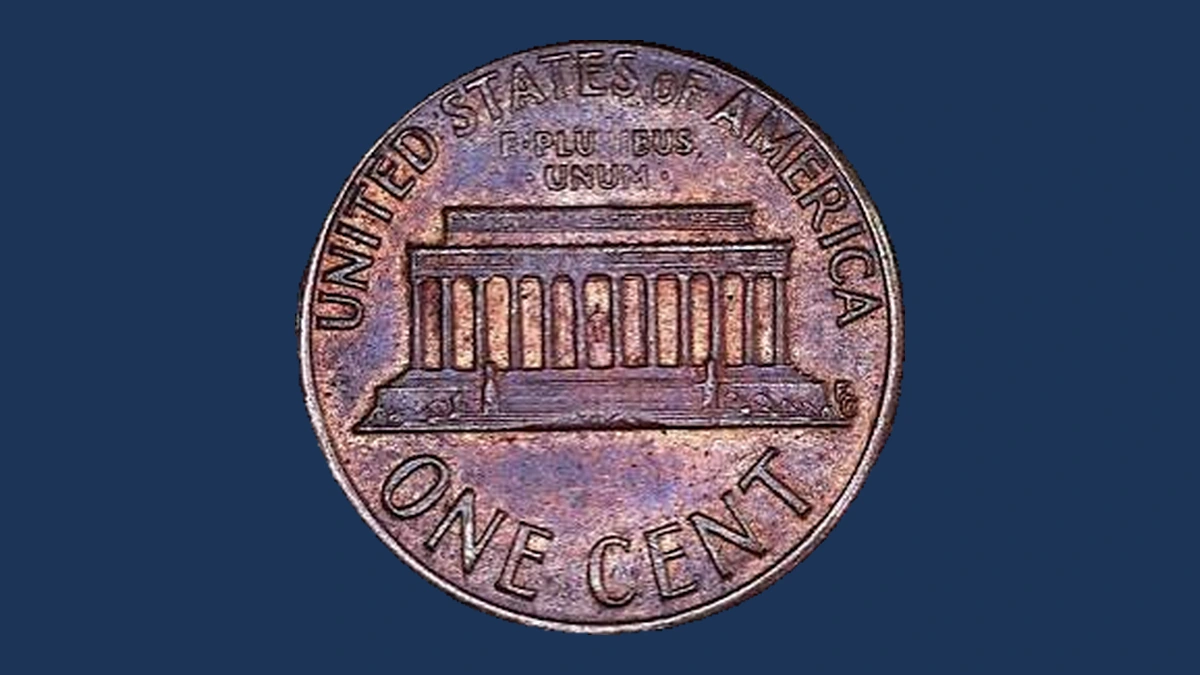
A depressed patch can show where something came between the blank and the stamping tool. The obstruction prevents the design from reaching that part of the coin.
One 1973-D record identifies a struck fragment, meaning the small piece had already received a coin impression. Another describes debris that later detached, leaving its mark behind.
The obstruction is therefore not necessarily still attached to the coin. Its shape may survive only as a hollow or a disrupted area of design.
A later blow can make a similar dent. Look at the surrounding metal before deciding whether the depression formed during striking.
Estimated Value
The fragment-struck example brought $228 in June 2023, graded NGC MS65 Brown: unworn with relatively few marks. The separate detached-debris piece appears in the auction index at $16 in March 2010, graded AU53 with light wear.
Estimated ranges are $10–$150 for ordinary detached-debris impressions and $100–$600 for identified struck-fragment examples. A recognizable transferred detail can make the latter easier to explain.
These prices belong to separate coins. They should not be added together.
How to Identify
Move a light across the depression and examine its boundary with a 10× magnifier. Look for design that fades into the hollow instead of a gouge that cuts through finished lettering.
A struck fragment may leave recognizable impressed detail, while ordinary debris need not do so. The specific shape depends on what blocked the tool, so a random dent should not be assigned a missing object.
The normal cent weighs 3.11 g and measures 19.05 mm, checked by scale and calipers. Neither test proves what made the depression.
Inspect where the design meets the hollow and separate struck-in texture from raised burrs or scratches caused by a later blow.
10. 1973 Lincoln Penny Off-Center Strike (Estimated Up to $750)
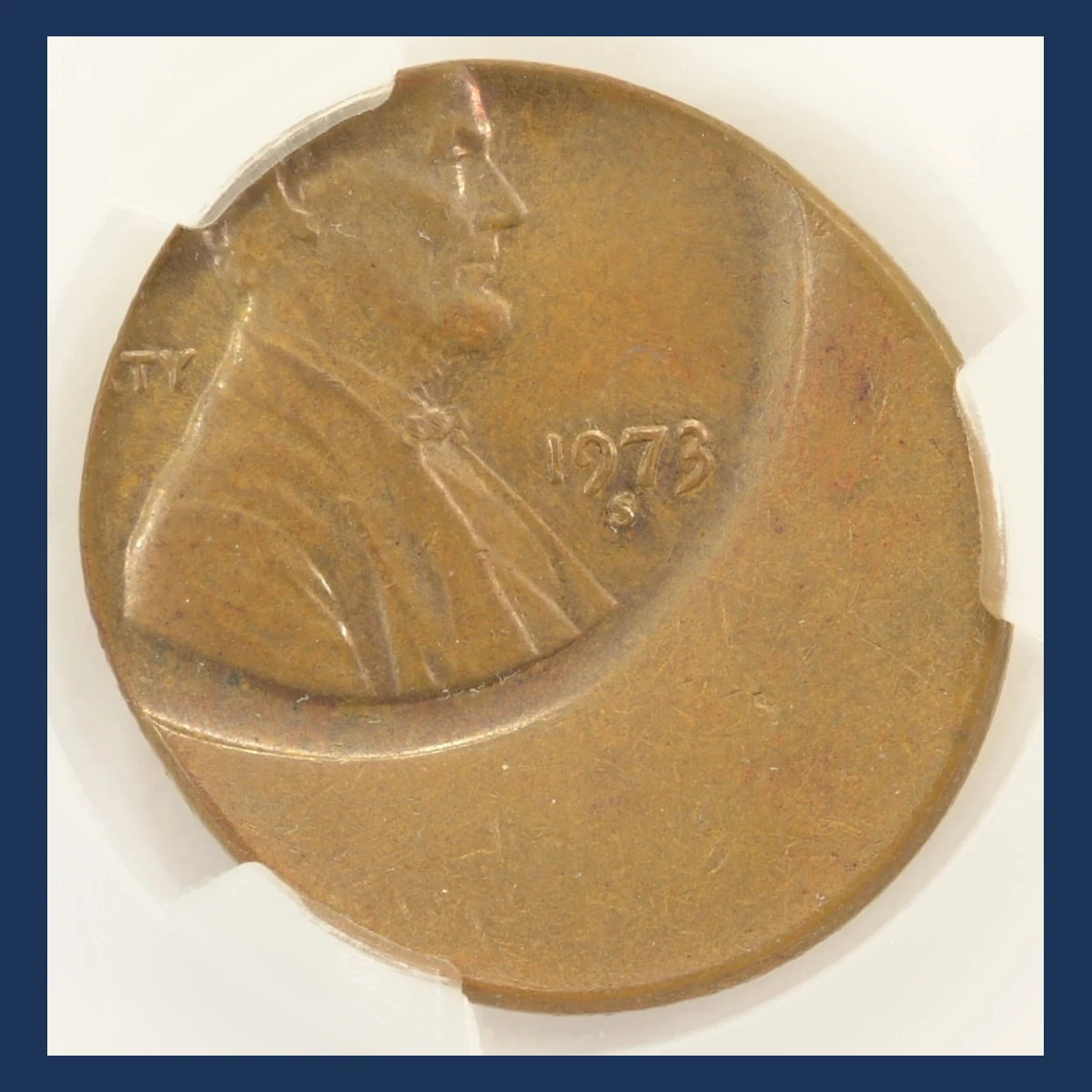
Most of the disk can stay blank when only its edge passes between the tools. The recorded Philadelphia example was struck about 90% off center toward ten o’clock.
That describes one displaced strike, not two strikes. Even a very small impression needs separate evidence before it can be called a double strike.
The blank crescent remains attached to the stamped metal, showing where the disk missed its normal position. A missing physical piece instead suggests a problem in blank cutting, while milder off-center strikes leave more of Lincoln and the Memorial visible.
Estimated Value
The 90% off-center Philadelphia cent sold for $396 in January 2022. ANACS graded it MS63 Red and Brown, indicating an unworn coin with noticeable marks and mixed copper color.
An estimated $15–$750 covers smaller through more striking identified examples. The readable date, surviving design, and surface quality all affect value alongside the percentage.
The $396 result is for a single displaced strike. It should not be promoted as the price of a double strike.
How to Identify
Find the small struck portion before following the curve of blank metal around it. On the recorded Philadelphia coin, the displacement is toward ten o’clock.
Use a 10× magnifier to read the surviving date and look for one consistent impression on each face. A second strike needs its own overlapping design or other clear evidence.
A scale checks the ordinary 3.11-g metal content, while calipers compare the shape with a normal 19.05-mm cent. Inspect any unusually smooth area for abrasion that might have erased an ordinary design.
Trace the boundary between struck and unstruck metal to see the position of the blank during the blow.
11. 1973 Lincoln Penny Large Die Break and BIE Chip (Estimated Up to $1,500)
A raised mass can replace part of Lincoln when a piece breaks from the stamping tool. Metal fills the missing area during striking, leaving a shape above the surface.
Several large 1973-D front breaks are recorded. Two cataloged examples, LC-73D-11 and LC-73D-13B, are different patterns rather than interchangeable names.
A much smaller break between LIBERTY’s B and E can make a bar resembling an I. The year guide reports this BIE effect separately.
Only a break connected to the rim is called a cud. An interior lump or small letter-space chip need not reach the edge.
Estimated Value
A large 1973-D front break in NGC MS61 Brown appears in the auction index at $990 in March 2021. The coin was unworn but had substantial marks or surface limitations.
Estimate $3–$25 for modest BIE chips and $50–$1,500 for larger identified breaks. Size and the amount of replaced design can make a major visual difference.
The documented large-break price does not describe every raised spot. Match the particular shape before comparing condition or color.
How to Identify
First decide whether the raised metal fills a letter gap, replaces a broad design area, or meets the rim. A 10× magnifier helps trace the patch without confusing dirt or attached material with struck metal.
For a Denver large break, compare the full shape to the specific cataloged coin. Do not merge the outlines of LC-73D-11 and LC-73D-13B.
Check the ordinary 3.11-g weight on a scale and 19.05-mm diameter with calipers if added material is suspected. The measurements support inspection but do not name the broken tool.
Follow the patch into the original design and, for a cud, all the way to its connection with the rim.
12. 1973 Lincoln Penny Strike on a Dime Blank (Estimated Up to $3,000)
The edge letters may run out of room on a silver-colored 1973-D cent. A blank made for a dime is smaller than the copper-alloy disk normally used for pennies.
The cent tools can still stamp Lincoln and the Memorial onto it. Parts of the outer design may fall beyond the available metal.
A prepared blank is called a planchet. It has no Roosevelt portrait yet, so this wrong-blank error does not require a dime design underneath.
Several 1973-D auction records identify this mistake. Their weights and condition belong to the individual coins, even when they used the same blank type.
Estimated Value
A PCGS MS62 dime-blank example sold for $336 in July 2022, as listed in the auction index. It was unworn with noticeable marks.
A cleaned 2.29-g example received $312 in September 2024, while another NGC MS64 piece was recorded at $2,440 in June 2026. These different results support an estimated $200–$3,000 range.
Compare the amount of surviving design and surface condition. Do not transfer one specimen’s weight or grade to a different coin.
How to Identify
A plated penny can look white without becoming the right size or metal for this error. Use a scale and calipers to compare a normal cent’s 3.11 g and 19.05 mm with the suspect piece.
A clad dime blank starts around 2.268 g and 17.9 mm, although the cent strike can spread it. Look at the layered edge with a 10× magnifier instead of scraping the surface to expose metal.
Outer Lincoln or Memorial details may run off the smaller disk even when the design is centered. Check both faces for cent details alone, since recognizable older Roosevelt design would indicate a previously struck dime.
13. 1973 Lincoln Penny Double Strikes, Including a Proof and Flipover (Estimated Up to $4,500)
The same piece can carry two cent impressions after moving between blows. A 1973-S proof, a specially made collector coin, received two different off-center strikes.
Its mintmark missed the metal, but the proof surfaces support its San Francisco origin. The curved top of the last date digit helps identify 1973.
A separate Denver coin flipped over before another blow, placing opposite-side designs together. Its second strike also had one side blocked.
Another Denver example had a second strike 90% off center with a blank-looking side. These are separate coins with different striking sequences, not one combination of every feature.
Estimated Value
The NGC PR65 Red proof brought $3,000 in August 2020. Its grade describes a well-preserved collector strike with minor marks.
The Denver flipover in MS65 Brown was recorded at $1,320 in November 2020, while the 90% second-strike example brought $396 in January 2022. Those are separate ordinary-strike coins.
Estimate $100–$1,500 for the Denver double strikes and $2,000–$4,500 for the documented proof kind. Readable overlapping designs and preserved surfaces matter more than simply counting two blows.
How to Identify
Locate a repeated letter, date, or portrait and follow each impression separately with a 10× magnifier. A flipover can put traces of Lincoln and the Memorial on the same face, while ordinary displacement keeps different relationships.
On the proof, the first blow was about 50% off center toward seven o’clock and the second about 25% toward five. No blank separated its two blows.
For either Denver piece, inspect the area blocked during the second strike on both sides. Keep those features separate from the proof’s sequence.
A scale and calipers compare the normal 3.11-g starting disk and 19.05-mm outline with any spreading. Track the overlapping designs to show how this particular coin moved before the next blow.
14. 1973 Lincoln Penny Cent Design Over a Finished Dime (Estimated Up to $6,000)
Lincoln can share the surface with traces of an older dime design when a finished dime enters the cent press. The second design partly flattens or replaces the first.
Collectors call this a double-denomination error because two coin denominations appear on one piece. The listed 1973-D example was certified by PCGS and sold from the Fred Weinberg Collection.
Read the older dime’s date from surviving detail rather than guessing from the cent date. Both designs need not remain equally clear.
This differs from a cent on an empty dime blank. The earlier design reveals the extra step in its production.
Estimated Value
Heritage’s 1973-D cent-over-dime example sold for $4,560 in July 2022, graded PCGS MS63. The grade indicates an unworn coin with noticeable marks.
An estimated $1,000–$6,000 allows for differences in the remaining dime design, readability, and condition. Clear evidence of both denominations makes the unusual sequence easier to see.
The actual sale concerns a finished dime receiving another design. Its price should not be assigned automatically to a cent struck on an unused dime blank.
How to Identify
Find one unmistakable piece of the older dime design before trying to reconstruct the whole coin. A 10× magnifier may reveal a portrait outline, letter, or other detail crossing the later cent impression.
Compare both faces so the older marks form a believable dime design rather than random dents. Read any surviving older date separately from 1973.
The metal starts with a clad dime’s nominal 2.268 g and 17.9-mm diameter. Check with a scale and calipers, allowing for spreading under cent tools designed for a 19.05-mm disk.
Follow a recognizable older design element into the newer cent image to establish that the dime was already struck.
Conclusion
A strange D needs a close look: punch damage and a true repunch can produce similar first impressions. Larger errors tell their stories through missing metal, blocked designs, or impressions from separate strikes.
Estimated values run from $1–$6,000. Match the visible feature before comparing prices, and keep the proof’s special finish separate from ordinary cents.
A clear view of both faces often explains more than one highly enlarged spot.