1799 Dollar Coin Error List with Pictures

Extra stars can hide beneath clouds on a 1799 dollar, while a faint 8 can remain under the final 9. Those two mistakes can occur on the same coin.
An unworn 1799/8 example with the altered star pattern brought $120,750 in November 2012. Its preservation and variety both mattered.
This 1799 Draped Bust dollar error list also explains shifted designs, cracks, and faint impressions from the opposite side. Read on for estimated whole-coin values of $1,000–$150,000 and practical checks that separate those features.
1. 1799 Draped Bust Dollar Shifted Strikes with Complete Designs
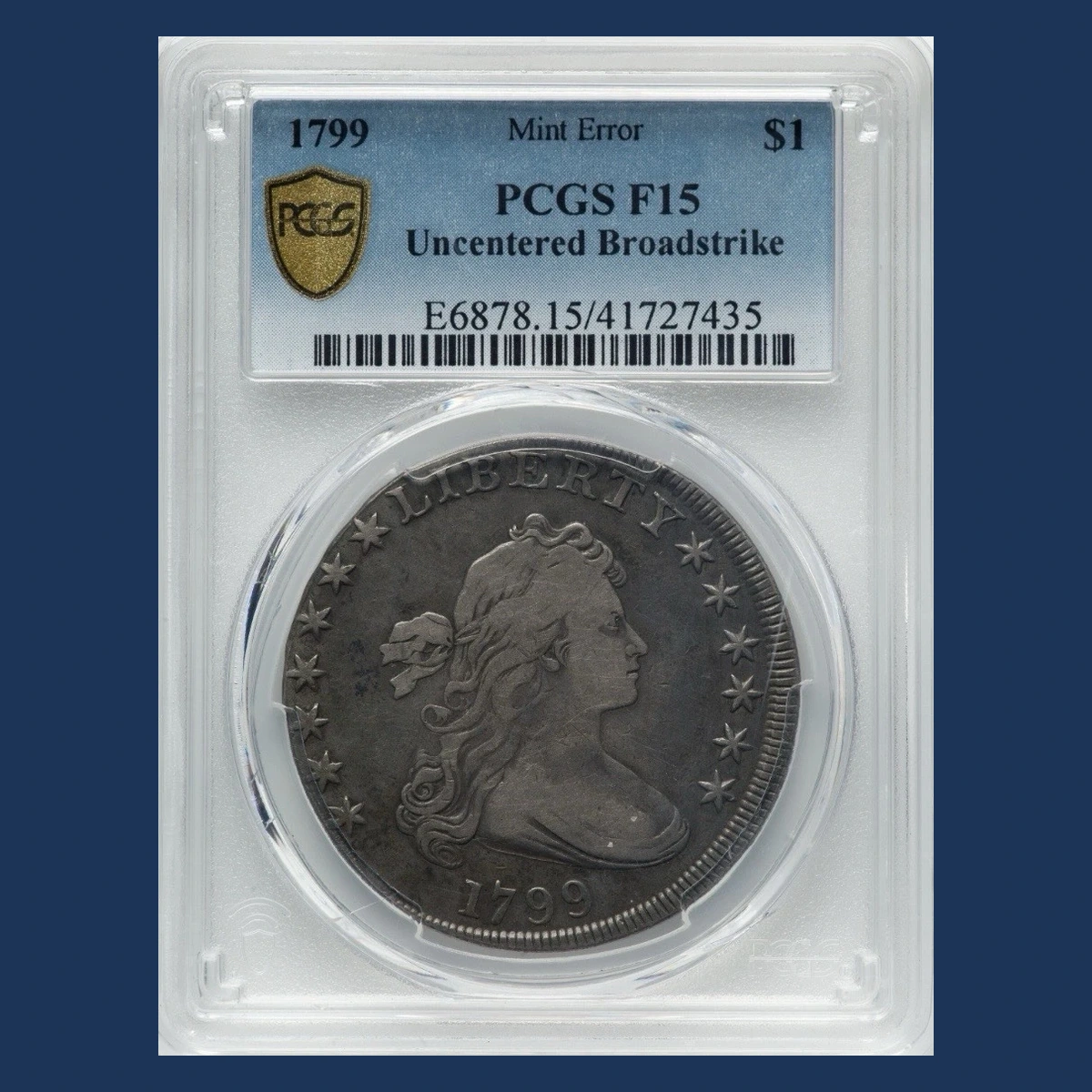
The design crowds one edge while an unusually broad border appears opposite it. On a PCGS Fine 15 example called an uncentered broadstrike, both complete designs sit left of center.
The small border beads are missing on the left and stretched on the right. Another coin, graded AU58, was auctioned as 5% off center despite also retaining all design elements.
The visible border and design matter more than the label alone. These early dollars need comparison with their own minting methods, rather than a modern closed-ring failure explanation.
Cutting down an ordinary dollar can imitate uneven borders.
Estimated Value
The Fine 15 broadstrike sold for $3,416 on July 17, 2026 at Heritage Auctions. Fine 15 indicates substantial wear.
An estimated $2,000–$30,000 covers comparable shifted examples across worn and nearly unworn grades. A full date, original edge, and smooth surfaces are important.
The separately described AU58 coin is much less worn. Its condition cannot be transferred to the cheaper example simply because both designs sit off center on the metal.
How to Identify
Look around the entire design before deciding that part is missing. The two reported examples retain their main designs, even where the border beads disappear.
Compare left and right margins on both faces. On the Fine 15 broadstrike, left-side stars and lettering approach the edge, while the right-side beads stretch outward.
Next inspect the edge lettering for filing, fresh cuts, or flattening. A scale and calipers can flag removed metal: normal early dollars were about 26.96 grams and roughly 39–40 millimeters across.
Those are normal specifications, not measurements of either auction coin. Complete displaced designs, stretched borders, and an unaltered edge are the practical combination to match here.
2. 1799 Draped Bust Dollar Raised Cracks and Edge Breaks
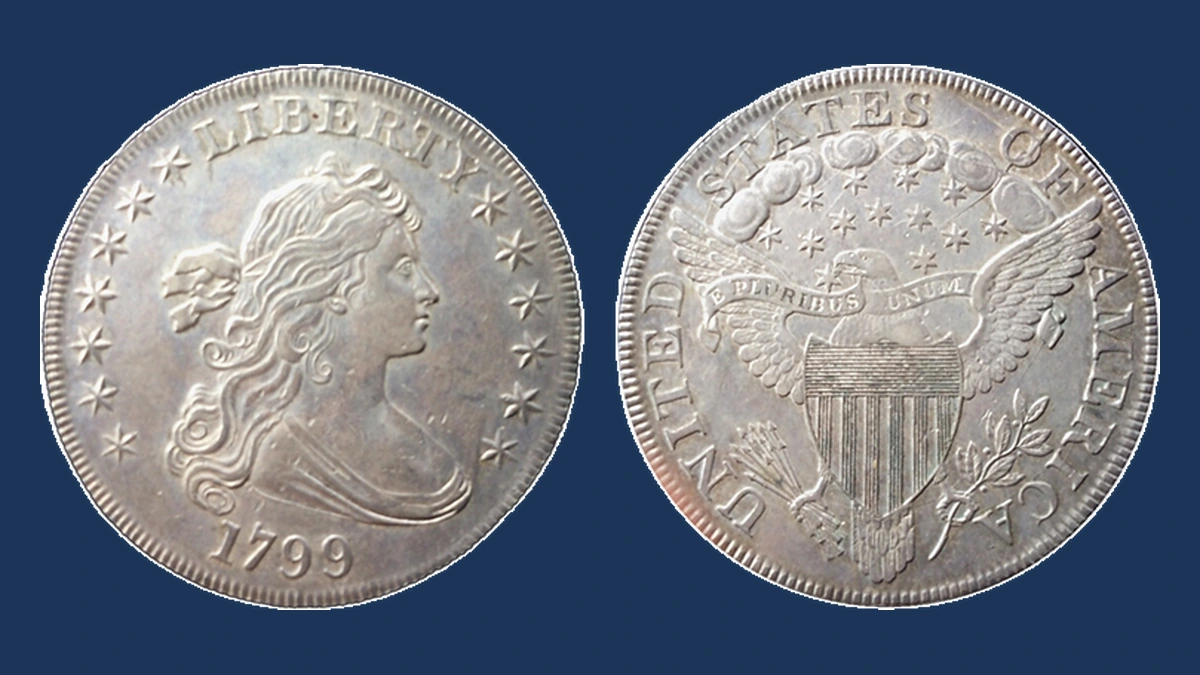
Raised lines can cross the eagle, lettering, and open silver around the design. On the BB-154 variety, one strong back crack runs from the ED area of UNITED toward the shield.
Later examples can show another heavy path below the left wing through STATES and the O in OF. These lines copy splits in the steel stamping tool.
A different variety, BB-166, has a reported break beside the final S in STATES. A break reaching the border can leave a raised lump called a cud.
The two varieties need their own comparisons, not one combined crack map.
Estimated Value
Estimate $1,000–$50,000 for most identified examples from worn through attractive nearly unworn grades. The particular variety and preservation matter more than counting individual cracks.
For context, a BB-154 graded AU55 brought $15,275 in May 2021. A BB-166 graded MS63 brought $33,350 in June 2004, but those variety prices do not prove identical breaks on every example.
Large, clearly defined damage to the stamping tool may interest specialists. Deep scratches or damage to the coin itself can reduce appeal.
How to Identify
Use the lettering to choose the right comparison: ED in UNITED for the strong BB-154 crack, or the final S in STATES for BB-166. These targets lie on different examples.
Under a magnifier, follow the raised silver through the surrounding design instead of stopping at the most obvious lump. A thin crack should continue as a thread, while an edge break replaces a broader area of detail.
Angle the light across the border to distinguish raised copied metal from a dent that pushed the coin’s edge inward. The important match is a continuous crack path or border-connected raised patch in the correct place for that variety.
3. 1799 Draped Bust Dollar Clashed Clouds and Date
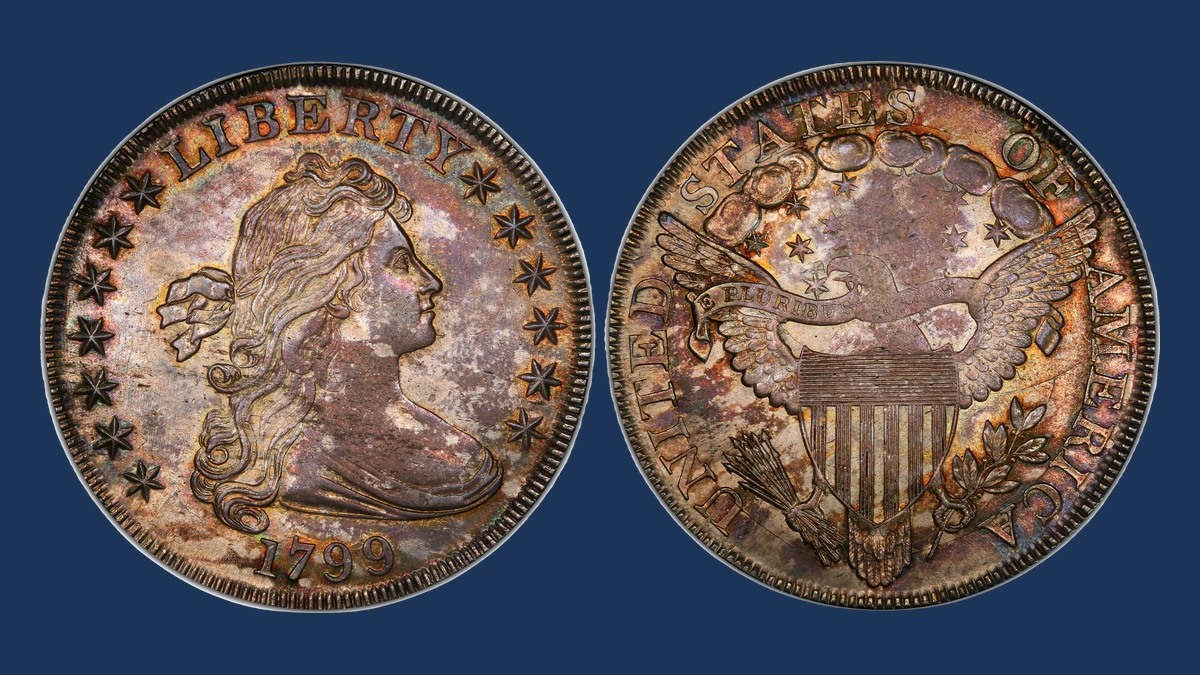
Wavy lines above the date can echo the clouds that belong on the back. On the BB-158 variety, other faint transferred shapes can appear beside the low stars and around Liberty’s bust.
The back can carry a reversed date trace between the end of STATES and OF. It is not another normally facing date.
These marks form when the two stamping tools meet with no metal disc between them. Later coins copy the marks that the collision left on the tools.
Collectors call this a die clash, rather than a second strike on the coin.
Estimated Value
A clearly identified clashed example has an estimated whole-coin range of $1,000–$60,000. Stronger preservation and recognizable transferred shapes help collector appeal.
A BB-158 graded MS63 realized $49,200 in March 2024. That variety-level comparison shows the value of an unworn early dollar; it is not a price assigned to every cloud trace.
A worn coin can still show useful clash marks. Cleaning, heavy scratches, and weakly visible shapes may limit what a buyer offers.
How to Identify
Find the actual cloud row on the back before examining the waves above the front date. Its shape gives you something specific to compare, instead of guessing from a random line.
On the front, use gentle side lighting to separate the shallow waves from scratches crossing the same area. Compare their position with a known clashed BB-158.
Turn to the space between the end of STATES and OF on the back. A surviving date trace there should be reversed, not a normal second date facing the viewer.
Wear can hide one side more than the other. Do not draw extra digits into an indistinct mark.
Cloud-shaped waves above the date, supported by the matching reversed trace on the back when visible, give the clearest check.
4. 1799 Draped Bust Dollar Misplaced and Hidden Extra Stars
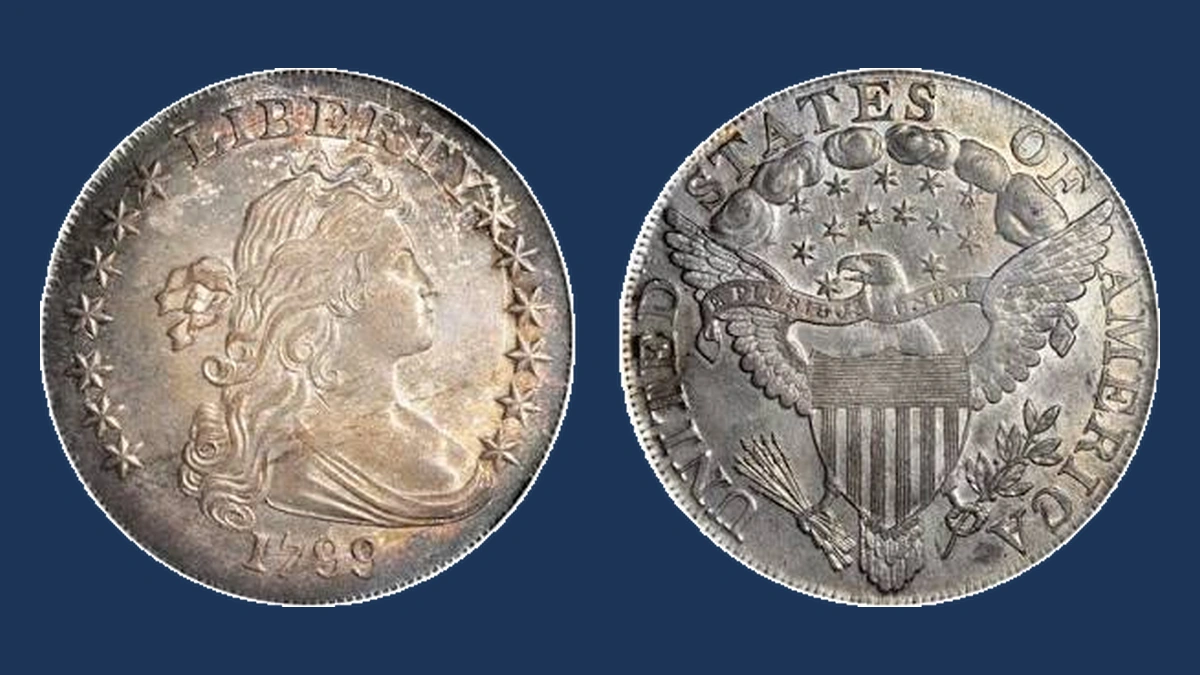
One front design places eight stars to Liberty’s left and five to her right. The usual arrangement is seven and six, so the total remains thirteen even though the layout changes.
A separate back design began with fifteen stars instead of thirteen. Enlarging the two end clouds covered most of the extra stars, but small points still project below them.
These changes came from placing designs into the stamping tools by hand. The eight-and-five front and hidden extra back stars are different varieties, not one combined diagnosis.
An overdate can appear with the fifteen-star back.
Estimated Value
Allow an estimated $1,500–$50,000 for the eight-and-five front variety in worn through attractive nearly unworn grades. The unusual layout does not remove the effect of wear.
For the hidden-extra-star back, estimate $1,500–$150,000 across worn to exceptional unworn examples. A 1799/8 dollar with that back, graded MS64, brought $120,750 in November 2012.
That sale includes both its overdate and star pattern. It cannot be counted as a separate full-price transaction for each feature.
How to Identify
For the eight-and-five front, count stars on each side separately while Liberty is upright. Start at the bottom on one side, then repeat on the other without counting any star twice.
For the fifteen-star back, switch to the clouds above the eagle. Inspect the underside of the first and last clouds with a 10× magnifier, looking for small leftover star points.
The enlarged clouds conceal most of two stars, so simply counting thirteen exposed stars will miss the feature. Compare the end-cloud shapes and protruding points with a clear example.
Keep the tests separate: eight left and five right identify the front layout, while points below enlarged end clouds identify the altered back.
5. 1799 Draped Bust Dollar 9 over 8 Overdate
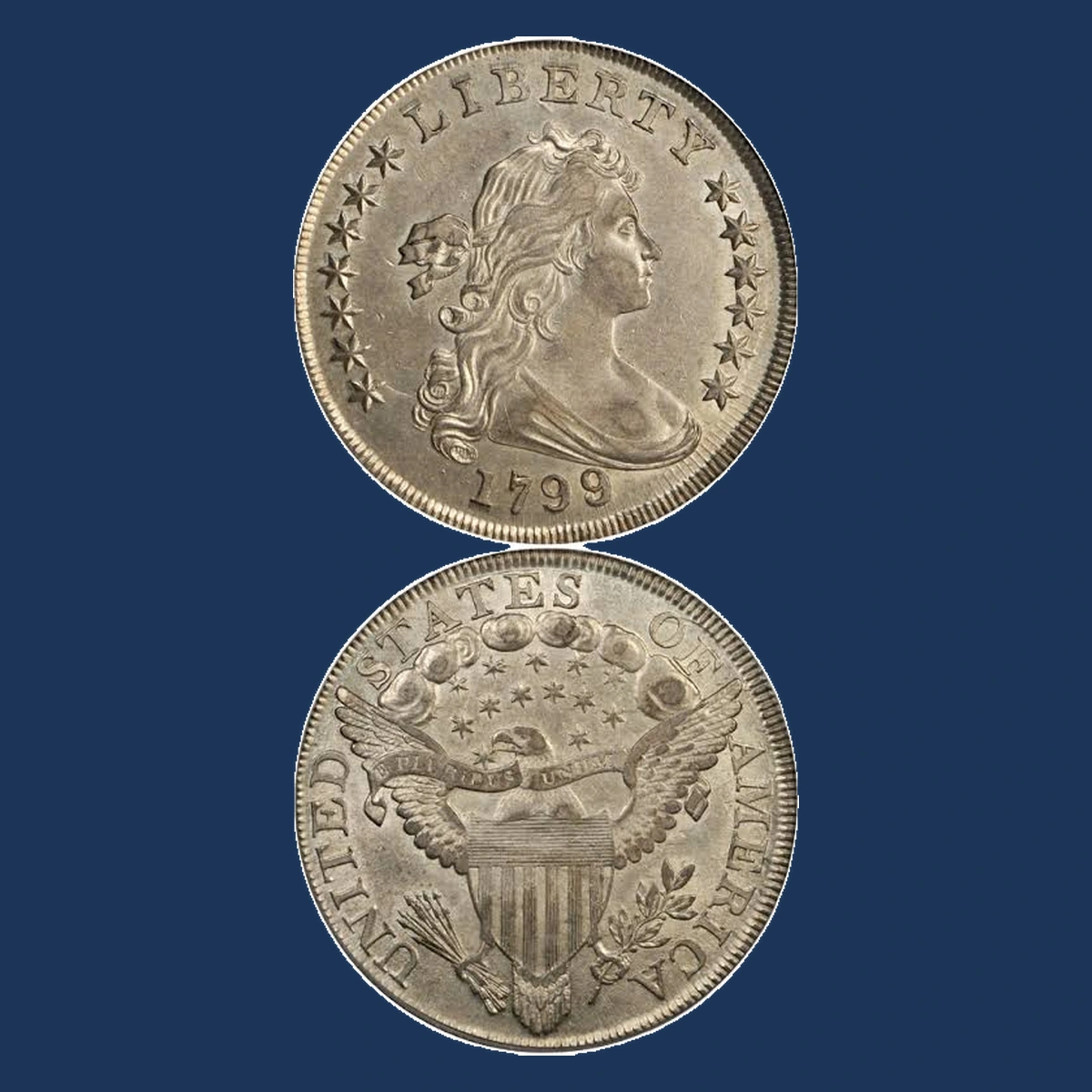
The last 9 in the date can contain traces of an earlier 8. This is the 1799/8 overdate, made by punching a 9 over an 8 in the steel stamping tool.
The coin itself was not first struck as a 1798 dollar and then struck again. Its tool already carried the altered date when the coin was made.
The same overdate front was paired with different back tools, including thirteen-star and fifteen-star designs. Those pairings do not create a new overdate mechanism each time.
Judge the final digit itself before using the back to identify the exact variety.
Estimated Value
Estimated values for genuine 1799/8 dollars span $1,500–$150,000, depending on wear, surfaces, and the back variety. The range covers complete coins.
PCGS records a BB-141 graded MS64 at $120,750 in November 2012. That unworn example also has the back with hidden extra stars.
A worn coin with a clear underlying 8 is still far from that preservation level. Cleaning or altered date details can substantially reduce its appeal and value.
How to Identify
Center the final 9 in a sharp photograph that also includes the preceding digit. Look within and below it for surviving curved portions of the earlier 8.
Compare those curves with an identified 1799/8 rather than a modern drawing of the number. Normal digit thickness, corrosion, and later engraving can all mislead at high magnification.
Check the surface around the date for fresh cuts or disturbed metal. A genuine overdate should blend with the coin’s original surface and wear.
Only after the digit matches should you inspect the back to determine its star pattern. The surviving 8 under the last 9, not the number of back stars alone, establishes the overdate.
Conclusion
First decide whether the unusual feature changes the design, its position, or the surface copied from a damaged tool. Hidden stars and an overdate are different mistakes, even when they share one 1799 dollar.
The estimated $1,000–$150,000 range covers complete coins, from worn examples to exceptional varieties. Match the correct example and condition before using an auction price.
For a shifted strike, inspect the entire design and original edge together.