1800 Dollar Coin Error List with Pictures

AMERICAI looks like a spelling mistake, but its extra stroke was never intended as a letter. An exceptionally preserved example sold for $223,250 in November 2013.
Other 1800 Draped Bust dollar errors involve repeated letter strokes or two complete strikes. These are different processes, even when the visible result seems doubled.
Estimated whole-coin values below run from $1,000–$250,000. Compare the size and position of the extra design before deciding which explanation fits.
1. 1800 Draped Bust Dollar Repunched Letter Strokes
Extra strokes can remain when a letter is entered into a die more than once. The die is the steel tool that stamps the coin.
A variety list reports a double-cut R in LIBERTY, a T in UNITED, and one or both letters T in STATES. These entries describe different examples.
They do not establish one dollar carrying every repeated letter. Each letter’s shape needs comparison with the corresponding tool variety.
Small repeated strokes in the tool can appear after a single strike of the coin. They should not be mistaken for the wider overlapping design of a double strike.
Estimated Value
Estimate $1,000–$30,000 for identified repeated-letter examples across heavily worn through lower unworn condition. The amount describes the early silver dollar rather than a fixed payment for one extra stroke.
A clear letter match can interest a variety collector, but surface quality remains important. Cleaning, deep scratches, or repaired damage can reduce value despite the original feature.
Letter patterns need their own condition comparisons. An unusually high-grade dollar may exceed this general range without the repeated stroke being the main reason.
How to Identify
Choose one reported letter before making a close-up. R in LIBERTY is on the front, while the letters in UNITED and STATES require a back photograph.
Compare the extra stroke with the normal letter’s shape and keep neighboring letters visible. A repeated part should fit the same letter rather than form an unrelated line through the word.
Check a second lighting angle for flat shelves, glare, or a scratch with raised edges. None should be accepted as repunching just because it makes one side look thicker.
Match the candidate to the same letter pattern in an identified 1800 example. Do not combine separate T photographs into a claim that both letters are repeated on your coin.
2. 1800 Draped Bust Dollar Double Strike with the Second Blow Off Center
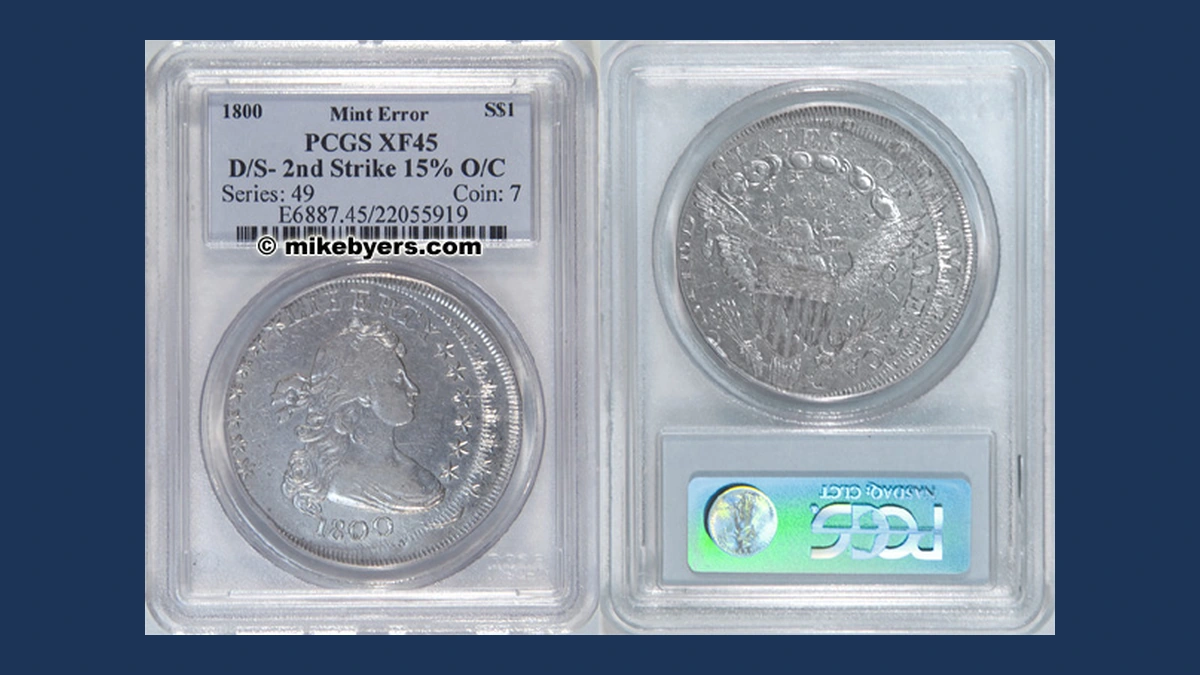
The recorded dollar moved before receiving another strike. The second blow landed about fifteen percent off center, leaving much of the earlier design visible.
This is a large-scale overlap rather than a tiny repeated stroke beside one letter. Stars and lettering from the two impressions can be followed around the faces.
The example is graded PCGS XF45, meaning a circulated coin with substantial detail remaining. Its preservation makes the separate impressions easier to see.
The off-center second strike belongs to the same event as the double striking. It should not be illustrated or priced as a separate coin.
Estimated Value
Use an estimated $25,000–$100,000 for a comparable authenticated double-struck 1800 dollar with strong surviving overlap. Preservation, displacement, and the amount of readable first-strike detail drive the comparison.
A published error-coin book assigned this XF45 example a $50,000 value. That figure is a book estimate, not a stated auction result.
The dealer’s specimen page marks the coin sold without displaying a price. That status does not convert the book figure into a confirmed transaction.
How to Identify
Find two versions of a recognizable star or letter and trace each into the design around it. A second strike should explain several related displaced features, rather than one isolated patch beside a normal letter.
Compare both faces with the certified example while keeping the full outline of each coin visible. Follow the earlier impression into places where the later blow flattened it, then relate that overlap to the off-center second design.
The amount of surviving detail can differ between the faces, so a weak area alone does not invalidate the comparison. Never press another dollar against a candidate to test the pattern, since that creates fresh damage rather than evidence.
3. 1800 Draped Bust Dollar AMERICAI Raised Tool Flaw
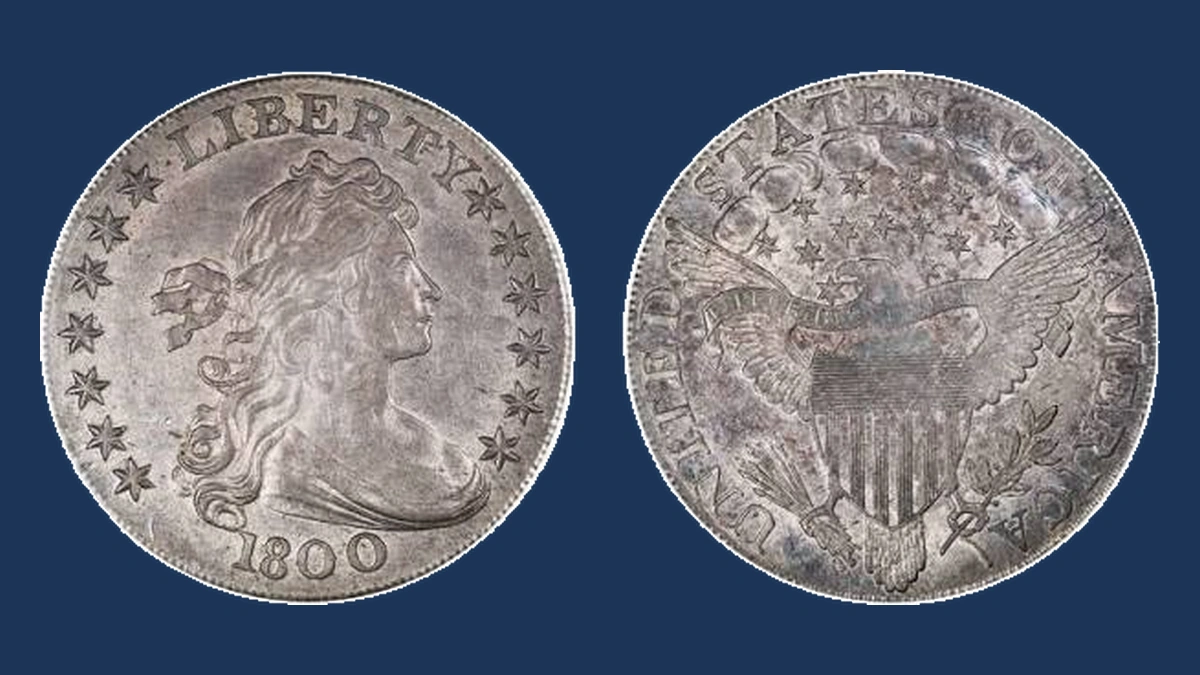
A raised defect after AMERICA can make the word appear to end with an extra I. The name AMERICAI describes that visual effect.
The stamping tool was damaged at this spot. Silver entering the flaw left a raised shape on the coin, rather than an engraved extra letter.
The same back tool was paired with two different front tools. Their dollars share the I-like mark even though other details can differ.
The feature can be large enough to notice without magnification. It still needs comparison with an original example because a scratch or added metal can imitate a simple line.
Estimated Value
PCGS records $223,250 for an exceptional AMERICAI dollar at Heritage in November 2013. Its preservation and ownership history accompany the visible tool flaw.
Estimate $1,500–$25,000 for many worn examples and $30,000–$250,000 for scarce unworn examples of increasing quality. These are whole-coin ranges, not prices for the extra stroke alone.
A clear I-like shape on a cleaned or damaged coin does not place it beside the finest survivors. Compare condition and the complete variety together.
How to Identify
Read the final A of AMERICA and examine the space immediately to its right. The expected mark stands above the background and resembles an added I.
Under side lighting, inspect where the raised shape meets the surrounding silver. A cut into the coin or a lump joined onto its surface needs a different explanation.
Compare that entire section with a known AMERICAI back, including nearby normal lettering. Since two front varieties share it, the front photograph is still needed to identify the complete coin.
Keep the original edge lettering in the authentication record when it can be seen. A copied back marker alone cannot establish that an early silver dollar is genuine or identify its exact front pairing.
Conclusion
On an 1800 dollar, a small repeated letter and a second displaced design should not be confused. The apparent I after AMERICA has another cause: a defect in the stamping tool.
Estimated whole-coin ranges run from $1,000–$250,000, with exceptional preservation driving the upper end. The $223,250 AMERICAI result and the double-strike book estimate describe different coins and different kinds of evidence.
Start with a complete photograph, then compare the relevant detail.