1842 Dollar Coin Error List with Pictures

There may be part of a number where the rock should be on an 1842 dollar. The date itself can also show extra strokes, and one reported example has a broken-tool feature at its rim.
This 1842 Liberty Seated dollar error guide covers estimated whole-coin values of $350–$25,000. For comparison, a repunched-date 1843 dollar sold for $13,200 in August 2025; that is a different-year coin.
The checks below explain where each 1842 feature belongs.
1. 1842 Liberty Seated Dollar Raised Break at the Front Rim
A raised lump touching the rim can form when a piece breaks away from the stamping tool. Silver fills the opening during striking, leaving a feature called a cud.
PCGS’s historical account reports front-rim breaks on one dollar with the misplaced-date pattern. It does not give a clock position for them.
This report concerns that particular example. A rim break should not be expected on every dollar with an extra number fragment in the rock.
The raised metal must also be distinguished from an ordinary rim dent or a later repair.
Estimated Value
Use an estimated $350–$10,000 for genuine examples across worn through moderately preserved unworn conditions. The size of the break, surface quality, and surviving date detail affect interest.
The estimate values one complete dollar, even when misplaced-date details appear on the same coin. Adding a second whole-coin range would count much of its value twice.
A later rim impact or added metal does not earn a Mint-error premium. Clear photographs of the boundary help establish a useful comparison.
How to Identify
Check the edge beside the lump for a dent, seam, or signs of added metal. A rim blow can push silver onto the face and imitate an original raised break.
Next follow the lump’s boundary under side lighting. It should join the rim and replace part of the design where the missing steel could no longer stamp normal detail.
The regular raised rim is not the error. Look for the separate area extending inward from it.
Examine the rock and date on the same dollar for the extra number details described with the reported example. Their presence helps match the coin, but cannot make a soldered or damaged lump genuine.
Compare the edge connection and missing design together before identifying the raised area as a cud.
2. 1842 Liberty Seated Dollar Repeated Strokes within the Date
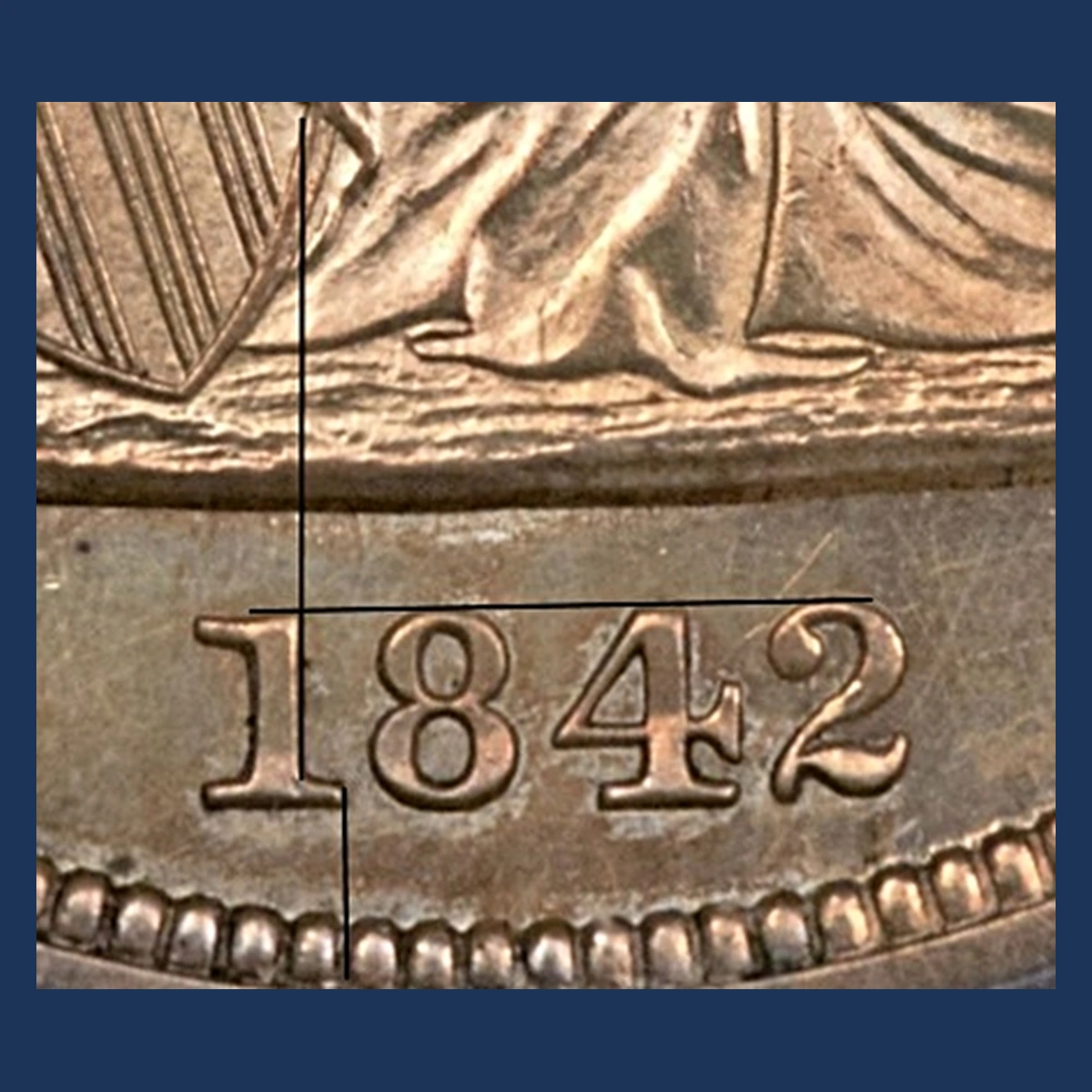
The lower edge of the 2 can show an extra stroke left by a repeated date punch. An auctioned example also has repeated detail inside the upper opening of the 8.
The punch entered the die, or steel stamping tool, more than once before coins were made. The tool then copied the extra outlines onto the silver.
Heritage described these details on an MS60 dollar, meaning an unworn example with substantial marks. It also had a probable misplaced 2 in the rock.
Those two features share one coin but occupy different places.
Estimated Value
Estimate $350–$20,000 for ordinary 1842 dollars with identified repeated-date details, from worn through attractive unworn examples. Much of the price reflects the coin’s preservation.
As a related comparison, an 1843 OC-1 repunched-date dollar graded MS64 sold for $13,200 in August 2025. Its different year and higher grade matter when using that result.
The 1842 MS60 offered by Heritage in May 2007 was listed as not sold. That offering provides a description, not a completed sale price.
How to Identify
Keep the entire date in view before enlarging the bottom of 2 and the upper opening inside 8. Compare those two areas with the described 1842 dollar, rather than a different date variety.
Under a magnifier, each extra stroke should follow a smaller repeated part of the numeral beside it. A scratch that cuts randomly across the number does not show an earlier punch position.
Move the lamp so you can judge the extra detail’s height and rounded shape. Flat shelves made by movement during striking can look doubled too, so compare both the 2 and 8 before naming the variety.
3. 1842 Liberty Seated Dollar Number Fragment in the Rock
A stray portion of a numeral appears in the base of the rock above the date’s 4 and 2. It is away from the place where the date belongs.
The feature resulted from a misplaced punch in the stamping tool. The cataloged OC-7 variety is called Misplaced 2, and one auction description identifies the rock remnant as a probable 2.
A smaller repeated stroke directly against a normal numeral is a separate date feature. Both can appear on the same dollar.
The rock also has ordinary design lines, so an isolated curve needs careful comparison.
Estimated Value
For identified misplaced-date dollars, estimate $500–$25,000 across circulated through highly preserved unworn conditions. The extra fragment’s clarity helps, but the whole coin determines most of the price.
PCGS’s general 1842 history records an MS64+ at $19,975 in September 2016. That is a condition comparison, not a stated OC-7 or rim-break sale.
A scratched dollar should not inherit that value merely because its rock contains an extra numeral. Any companion date repetition remains part of the same total.
How to Identify
Keep 4 and 2 visible beneath the rock while framing a close-up. They show where to look for the misplaced fragment.
An identified OC-7 photograph gives you a specific shape to compare. Look for the same part of a numeral in the same position, not several unrelated rock lines that resemble a number.
Move the lamp across the area to distinguish raised silver from a scratch or dark toning. Note how the extra shape sits among the ordinary rock details.
Check the normal date separately for repeated strokes. A mark touching a date digit answers a different question from one sitting in the rock.
A raised rim break, if present, needs its own examination. Match the rock fragment itself before assigning the misplaced-date name.
Conclusion
On an 1842 dollar, a fragment in the rock and an extra stroke beside a date digit answer different questions. A raised rim break adds another check only when that coin actually has one.
Estimated whole-coin values run from $350–$25,000. The $13,200 repunched-date comparison belongs to an 1843 dollar, so use the correct year, condition, and visible pattern before applying an auction result.