1986 Penny Error List with Pictures

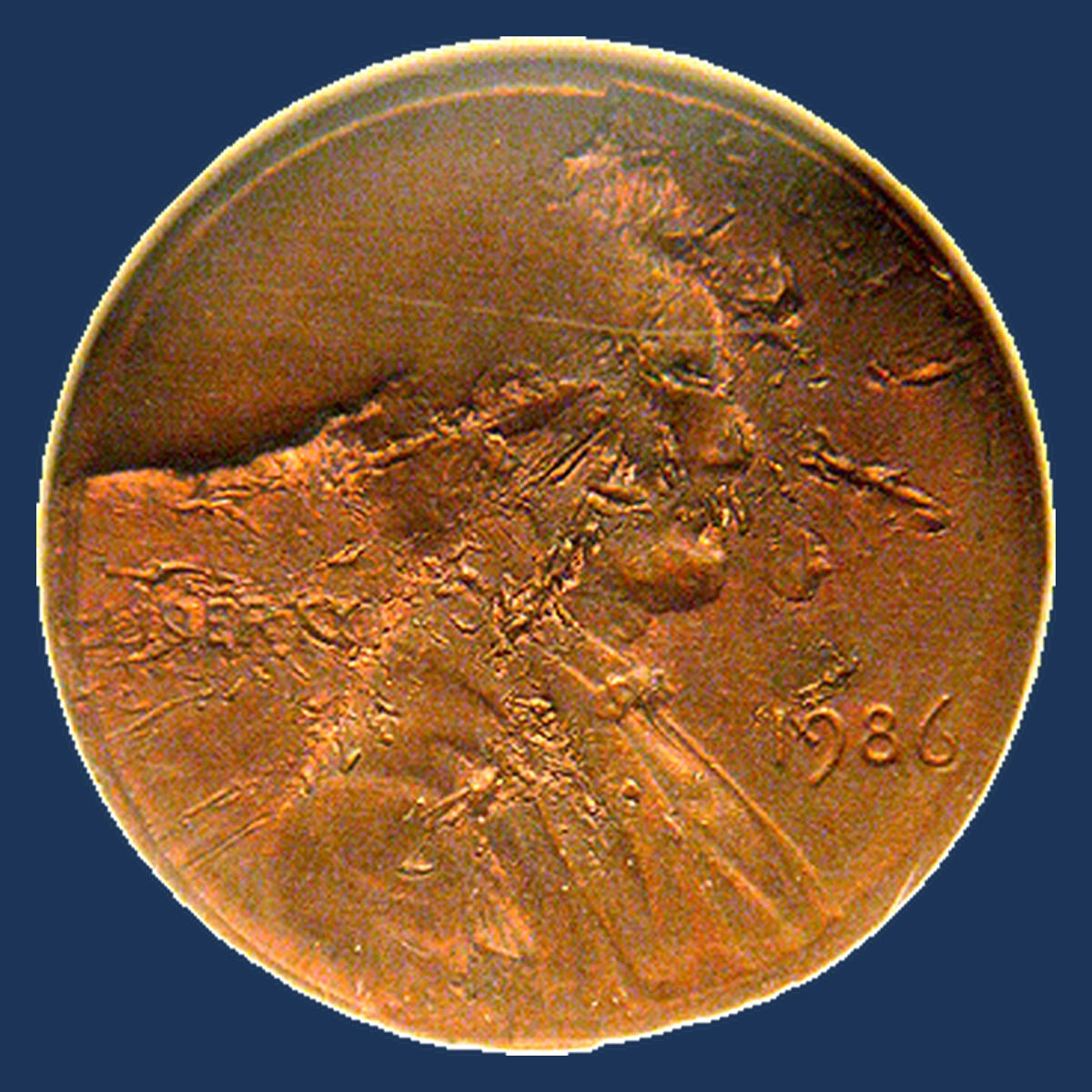
Look above Lincoln’s head on one unusual 1986 cent and part of Roosevelt’s face appears. This cent struck over a dime sold for $632.50 in April 2011.
Not every 1986 penny error is that dramatic: a repeated D or an extra ear outline may need magnification. Estimated values run from $2 to $3,000 across the examples below.
Follow the visible clues to separate original minting mistakes from damage, then compare the prices for the matching type.
1. 1986 Lincoln Penny Trails and Wavy Memorial Steps (Estimated Up to $100)
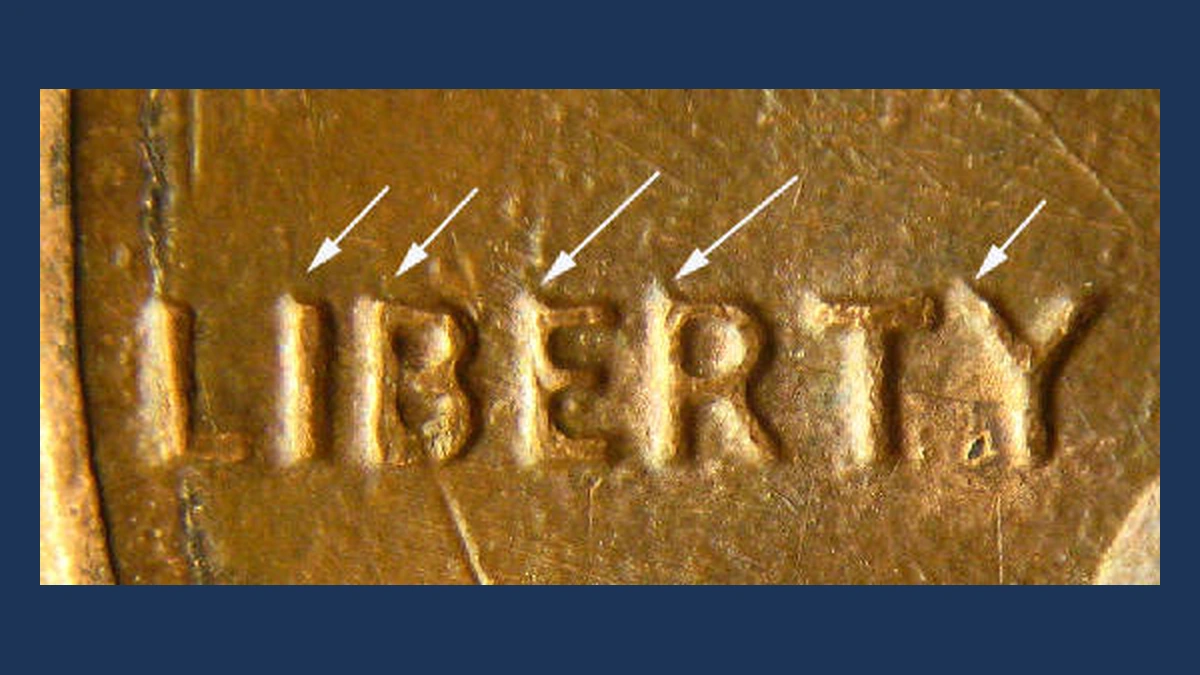
The Memorial’s straight steps can develop an uneven, stretched appearance. Other varieties have short extensions near letters on the front.
These features come from changes in the die, the steel tool that stamps the design. They repeat on coins struck by that tool rather than following later scratches.
Philadelphia examples include front-side trails and a back-side wavy-step listing. A Denver variety has extended detail below the tenth column and changed steps below the sixth through eighth columns.
The locations are not interchangeable. Fine tool-polishing lines used to recognize a variety are separate from its main distorted design.
Estimated Value
Estimate $2–$100 for identified trails and wavy-step varieties. This comparison range reflects minor Memorial-cent tool features, with clearer patterns and cleaner surfaces toward the stronger end.
The estimate is not a separate auction record for each catalog number. A vague ripple with no matching design feature should not receive the same premium.
Collectors need to see the actual extension or changed step. Magnified scratches alone do not establish a valuable variety.
How to Identify
Turn the back toward a lamp and count the Memorial columns from the left. On the Denver example, examine the tenth column’s base and the steps under columns six through eight.
Use a 10× magnifier to distinguish a design extension from a line cut across it. Compare the same mint’s photographs rather than moving a Denver marker onto a Philadelphia coin.
An ordinary 1986 cent is 2.50 g and 19.05 mm wide. Check with a scale and calipers, and inspect the plain edge for later squeezing.
Front varieties need their own letter-area comparison. Follow the changed design itself before using tiny background lines to confirm the tool.
2. 1986 Lincoln Penny Repunched D Mintmark (Estimated Up to $150)
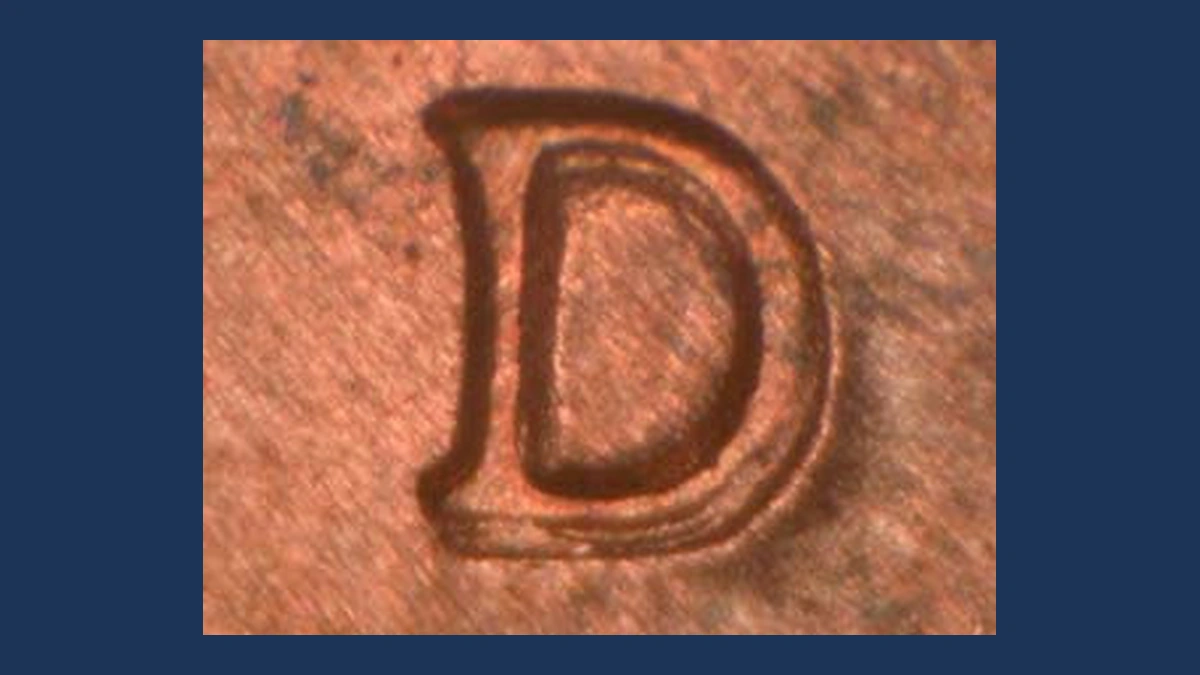
The D below the date was punched into the stamping tool separately from the main design. A second placement could leave part of an earlier D visible.
Coins made from that tool then repeated the same overlapping letter. This is a repunched mintmark.
The 1986-D listings include sideward, downward, upward, and tilted overlaps. One variety retains parts of three punch positions, with extra detail above and below.
These are different tools within the same basic error type. A bump beside the mintmark needs to form part of a recognizable letter before it becomes evidence of repunching.
Estimated Value
A useful estimated range is $3–$150 for identified 1986-D repunched mintmarks. Strong separation and preserved red copper surfaces can help a small feature attract attention.
This estimate compares minor Lincoln-cent repunch varieties rather than assigning an auction result to all eighteen listed tools. Three punch positions do not automatically mean three times the price.
A close overlap still needs a convincing match. A damaged or swollen D should be priced for what it actually is.
How to Identify
Begin with the D’s upright and curved outer side under a 10× magnifier. Look for an earlier stroke that follows a second placement of the whole letter.
A tilted overlap can show only small parts of that earlier impression. Use the 1986-D repunched mintmark photographs to compare the direction and letter position together.
Check the surrounding copper for torn plating and pushed metal. Inspect the plain edge, then compare weight and width with 2.50 g and 19.05 mm using a scale and calipers.
Tiny background marks may support an identification, but cannot replace a matching D. Find the recognizable extra letter stroke first.
3. 1986 Lincoln Penny Doubled Front or Back Design (Estimated Up to $200)
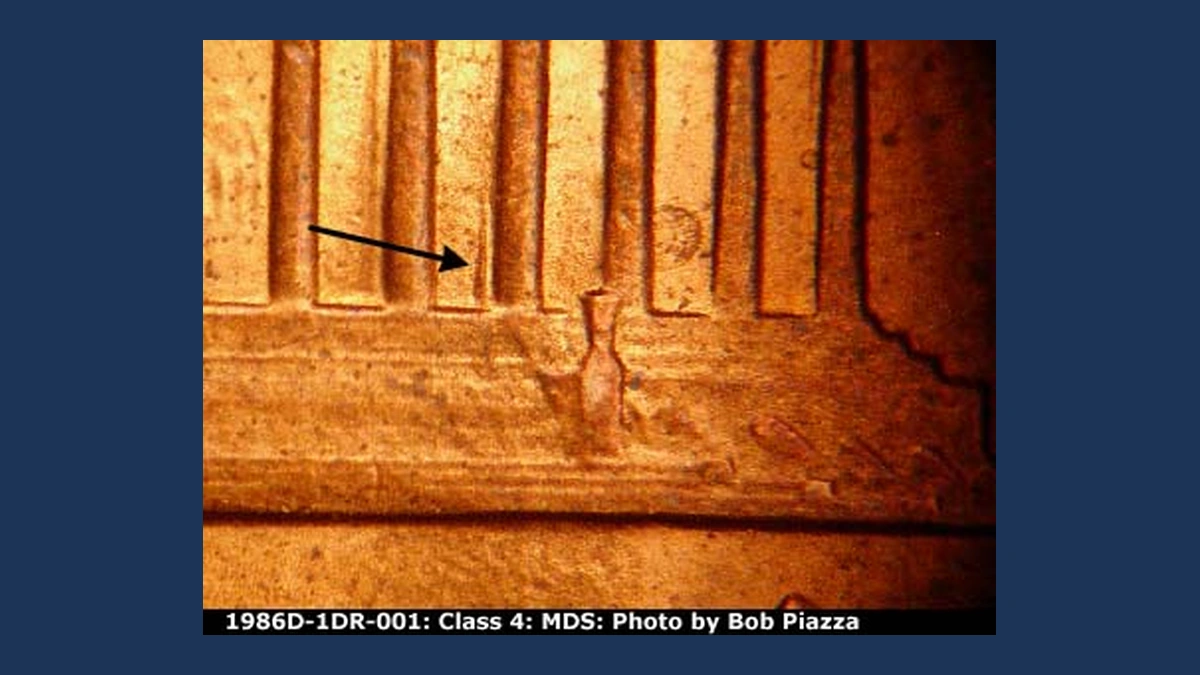
A doubled design can be much smaller than a second full portrait. On a Philadelphia variety, extra date and motto edges extend toward the coin’s center.
Denver examples include thickened lettering and upper hair detail, plus a separate variety with an extra outline below the earlobe. Those two Denver patterns should not be confused.
Another Denver tool repeats part of the ninth Memorial column’s base toward the eighth opening. It affects the back rather than Lincoln’s ear.
The extra design was already on the stamping tool. One normal strike could place it on the penny.
Estimated Value
For these minor doubled designs, estimate $5–$200 after matching the specific variety. Strong, easy-to-show extra detail and an unworn surface generally support more interest.
The range compares similar small Lincoln-cent varieties. It does not borrow the much larger prices of famous doubled dies from other years.
A catalog number alone is not a grade or a sale result. Compare the actual ear, lettering, or column feature before choosing a point within the range.
How to Identify
Choose the correct mint before studying the extra outline. An ordinary Philadelphia cent has no mint letter; Denver cents have D below the date.
With a 10× magnifier, compare the date and motto for Philadelphia, or the specific lettering or ear feature for Denver. For the back variety, count columns from the left to reach the ninth base.
Flat shelves, copper ridges, and general tool wear can imitate extra design. The shape must match the recorded feature at the same location.
Use a scale and calipers to check the ordinary 2.50 g and 19.05 mm, and inspect the plain edge. A repeatable second design shape is more useful than unexplained thick letters.
4. 1986 Lincoln Penny Clashed and Repeatedly Clashed Tools (Estimated Up to $250)
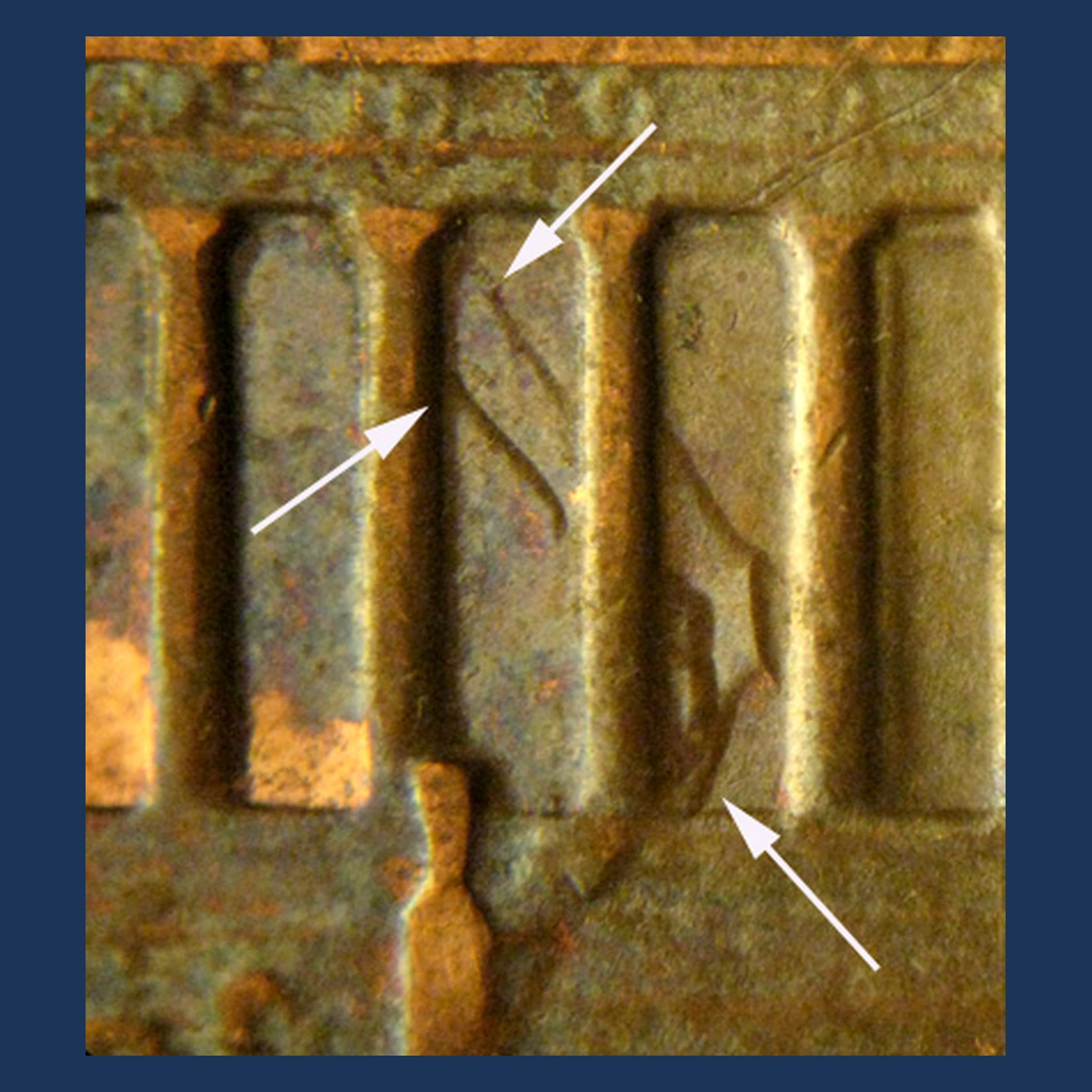
A curve from ONE can appear behind Lincoln’s head, where no such letter belongs. The stamping tools met without a blank between them and marked each other.
Later coins carried those transferred marks. Collectors call them die clashes.
One 1986 example records repeated contacts, including small turns between some contacts. Marks then transferred back to the tool from which the design originally came, producing a counterclash.
Other listed examples have Memorial roof traces or faint portrait outlines on the opposite face. Several parallel lines do not, by themselves, prove a separate collision for every line.
Estimated Value
Estimate $5–$250 for identified 1986 clashes and counterclashes. Clear transferred shapes and an understandable pattern can make a stronger example more desirable.
This is a comparison-based estimate for the visible tool marks, not a recorded sale for every listed clash. Repeated contacts do not set a fixed price per event.
A collector should be able to follow the misplaced design. Faint unrelated lines or later scratches should not inherit the upper estimate simply because they look unusual.
How to Identify
Look behind Lincoln and around the Memorial for shapes that belong to the other face. Use a 10× magnifier and low light to follow a roof edge, letter curve, or portrait outline.
Compare the whole pattern with the recorded example. A counterclash requires the repeated transfer pattern, not just an isolated line near a normal letter.
Polishing may remove some transferred marks, so both faces need examination. Do not count every roof line as another press collision.
Weigh an accessible coin against 2.50 g and measure against 19.05 mm with calipers. Inspect the plain edge for squeezing, then match a recognizable misplaced design fragment rather than a random scratch.
5. 1986 Lincoln Penny Broadstrike (Estimated Up to $300)
There should still be room to read the complete design, even though the penny has spread wider than usual. Its metal escaped the ring that normally controls the edge.
That ring is called the collar. A broadstrike forms when the blank is struck without its normal restraint.
The 1986 year report includes this type without identifying a particular certified specimen or mint. No fixed amount of spreading belongs to the general report.
An off-center strike loses some design beyond the edge. A broadstrike instead keeps the design within its enlarged outline, even when the outer margin is uneven.
Estimated Value
For an authenticated 1986 broadstrike, estimate $10–$300. Greater visible spread, intact lettering, and original surfaces generally make the error easier to appreciate.
A 1999 broadstrike graded PCGS MS65 Red sold for $67 in March 2023. That other-year plated-zinc cent provides a same-mechanism comparison, not a sale of the reported 1986 coin.
The estimate depends on confirming natural expansion during striking. A cent hammered wider after minting does not receive the same premium.
How to Identify
Read around both faces before measuring the widest point. The complete design should remain within the expanded outline rather than disappearing off one side.
Use calipers in several directions and compare with the normal 19.05 mm. Weigh the coin against 2.50 g, since spreading alone does not add or remove metal.
Under a 10× magnifier, examine the portrait and outer lettering for crushing. Later hammering can widen a coin while flattening its raised design.
The edge is normally plain, so the absence of grooves is not a special clue. Look for an original spread of metal around complete struck details, with no worked edge or flattened surface to explain the width.
6. 1986 Lincoln Penny Rotated Back with a Head Crack (Estimated Up to $350)
The Memorial should stand upright after an upright Lincoln is turned over from top to bottom. One listed 1986 head-crack variety also has a rotated back.
A stamping tool sat at an angle relative to the opposite tool. The resulting faces no longer line up normally.
The same coin carries a raised crack extending from Lincoln’s head. That crack identifies a tool feature; it does not measure the rotation.
The catalog does not give a rotation angle for this example. Its combined description therefore should not be turned into a claim of a specific ninety- or 180-degree error.
Estimated Value
Allow an estimated $10–$350 for an authenticated rotated-back example, depending on the measured angle and condition. A small turn generally attracts less interest than a large, easily demonstrated one.
The head crack and rotation belong to one coin, so this is a whole-coin estimate. Do not add a second full price for the crack.
The reported example has no fixed angle used here. Its value should follow the actual visible turn rather than an assumed dramatic rotation.
How to Identify
Start with a normal cent to practice the alignment test. Hold Lincoln upright and turn the coin top to bottom without twisting it sideways.
Repeat with the suspect penny and record the Memorial’s angle. Turning left to right gives the wrong reference for normal United States coin alignment.
Use a 10× magnifier to inspect the separate raised crack above Lincoln’s head. It must match the reported tool rather than any scratch in that area.
Check the plain edge for alteration; a scale and calipers compare the ordinary 2.50 g and 19.05 mm. A consistent tilt after the correct flip establishes rotation, while the crack remains a separate visible feature.
7. 1986 Lincoln Penny Struck Through Material (Estimated Up to $400)
A missing patch of detail can begin before the coin leaves the press. Material between a blank and a stamping tool may block the design or leave its own outline.
Collectors describe this as a struck-through error. Soft material can blur details, while a more solid object may leave a defined depression.
The 1986 year report does not identify the trapped material on a particular specimen. A weak patch should therefore not be described as wire, cloth, or grease without supporting shape or texture.
The original surface inside the affected area is more useful than its unusual appearance alone.
Estimated Value
Estimate $5–$400 for an authenticated 1986 struck-through error. A small weak patch generally compares below a large, clearly original impression with recognizable texture.
A 2021-D cent struck through grease brought $84 in September 2025. That is a same-mechanism market example only for a soft-material obstruction, not proof of the material on a 1986 penny.
Condition and the clarity of the impression matter. Later dents or scraped-away detail should not receive the same mint-error value.
How to Identify
Use a 10× magnifier to inspect the center and boundary of the affected area. Original impressed texture can help distinguish a trapped object from later scraping.
Look at the surrounding design and turn the coin over. A forceful later dent may push metal outward or distort the opposite face in a different way.
Check the ordinary 2.50 g on a scale and the 19.05-mm diameter with calipers. Inspect the plain edge for impacts that might explain nearby weakness.
Do not dig out anything still attached to the surface. Identify the original impression first, and name the trapped material only when its outline or texture actually supports that conclusion.
8. 1986 Lincoln Penny Cuds, BIE, and Head Cracks (Estimated Up to $500)
A raised line above Lincoln’s head can look like a spike. It forms when metal fills a crack in the stamping tool.
Smaller missing tool pieces can leave a bar between B and E, nicknamed BIE. A larger missing section touching the rim produces a solid raised patch called a cud.
The 1986 catalog includes many front shapes, some rim-only breaks, and a separate back-side cud. Certain examples also show additional cracks on the opposite face.
Compare the raised shape on your coin with the same area on a cataloged example. Different breaks leave different outlines, even within one year.
Estimated Value
Small cracks and BIE bars can fit an estimated $2–$30. Clear cuds with more visual impact can fit approximately $30–$500, depending on size and preservation.
For context, a 2021-D retained cud sold for $186 in September 2025. Its broken tool piece remained in place, so it is a comparison for that form rather than every 1986 break.
Several cracks on one penny do not produce several independent prices. Judge the complete coin and the clarity of its strongest features.
How to Identify
Follow a line above the head with a 10× magnifier and side lighting. A genuine tool crack leaves raised metal, while a scratch normally cuts into the surface.
For a cud, establish the patch’s connection to the rim. A small internal chip or BIE bar does not need that connection and should be named accordingly.
Compare the correct catalog shape instead of matching only the year. Some 1986 pieces combine a front break with cracks on the back.
A scale and calipers check the ordinary 2.50 g and 19.05 mm. Inspect the plain edge for pushed metal, then look for a continuous original raised feature that follows the recorded break.
9. 1986 Lincoln Penny Off-Center Strike (Estimated Up to $650)
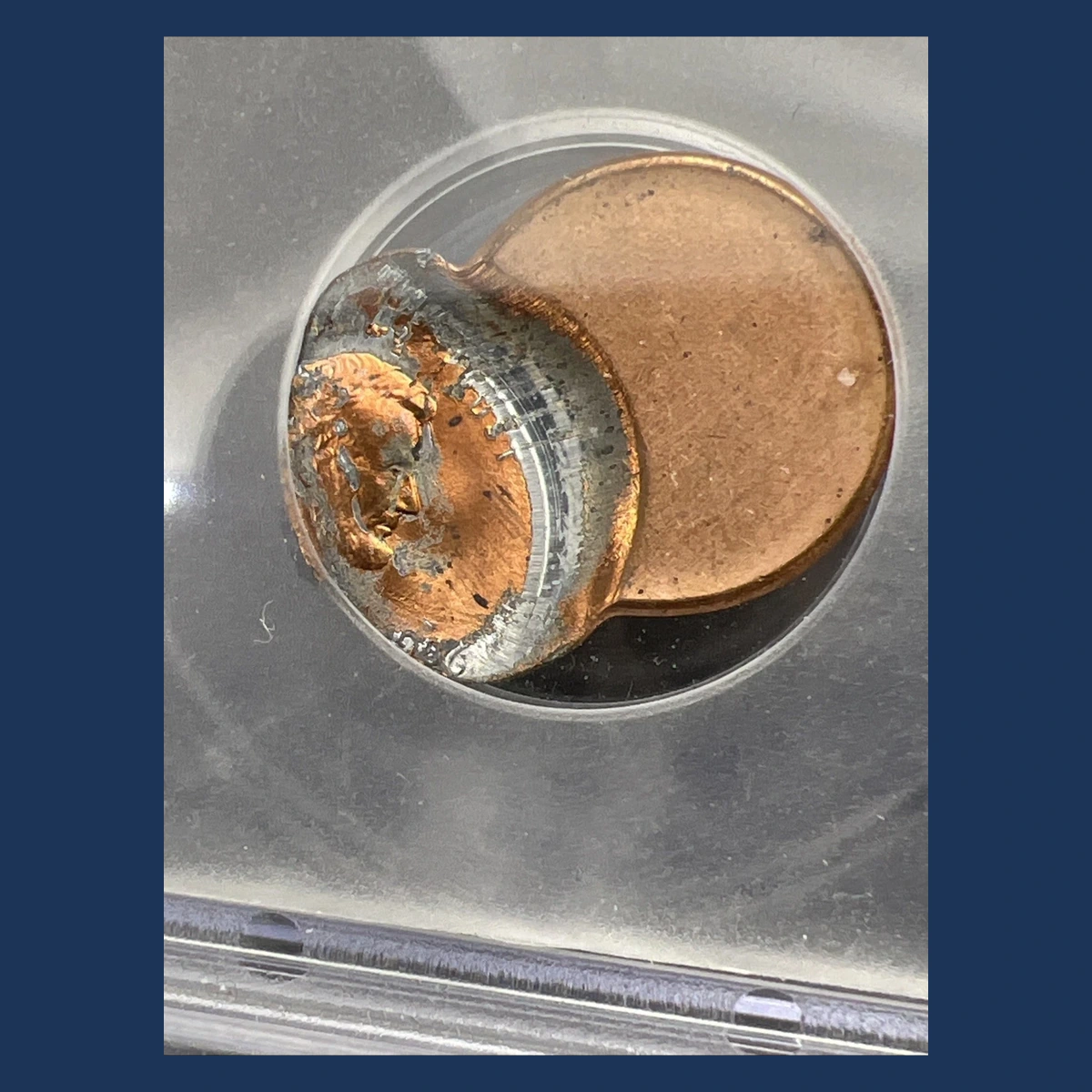
An almost empty cent can still preserve enough design to identify its year. A recorded Denver example was struck about 85 percent off center toward the upper left.
A Philadelphia coin has a smaller, roughly 45-percent shift toward the top. Another Philadelphia listing describes a twenty-percent shift toward the upper right.
The blank was partly outside the striking area when the tools met. Only the metal they reached received the design.
These positions describe separate coins. Their date visibility and remaining portrait differ, so one example’s percentage should not be copied onto every unusual 1986 outline.
Estimated Value
An estimated $20–$650 covers genuine dated 1986 off-center strikes with different degrees of displacement. Clear identity and attractive original surfaces are important alongside the amount of blank metal.
A 1984-D cent struck fifty-five percent off center sold for $41 in September 2024. That other-year result shows why a large shift does not guarantee a large price.
The 85-percent Denver example needs its own condition comparison. An extreme outline with unreadable identity may interest buyers less than a clearer, smaller shift.
How to Identify
Find the surviving date before estimating the missing design. A dramatic crescent alone cannot establish the year or mint.
With a 10× magnifier, inspect the boundary between blank metal and struck detail. Both faces should reflect a disc partly outside the tools, rather than a shift of one tool alone.
Use a scale against 2.50 g; an off-center strike normally keeps the starting metal. Calipers record the altered outline against the ordinary 19.05-mm diameter.
Examine the plain edge and empty area for cutting or grinding. Genuine unstruck metal should sit beside corresponding missing design, with enough original detail remaining to identify this particular coin.
10. 1986 Lincoln Penny Missing Copper Plating (Estimated Up to $750)
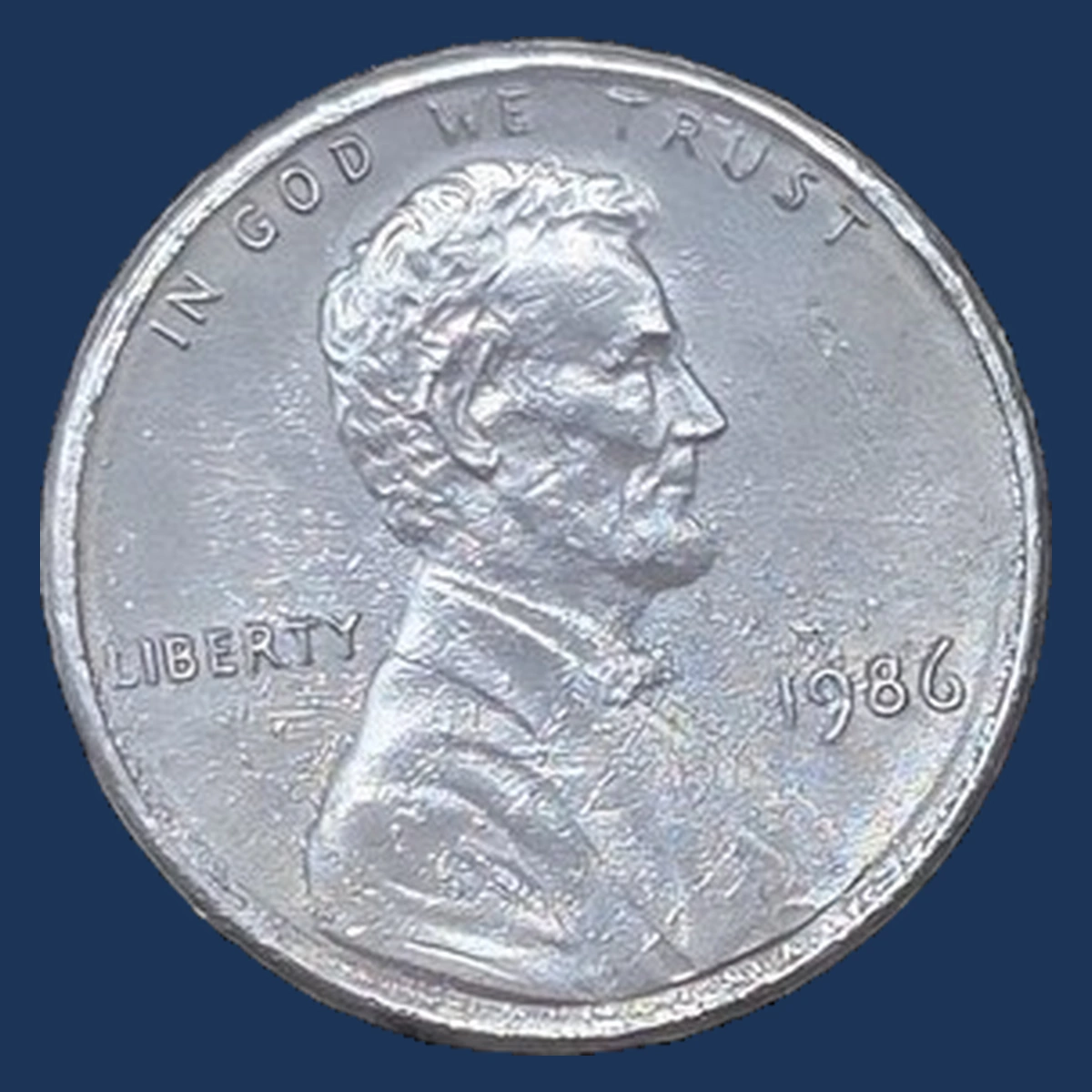
The familiar copper color is only a thin coating on a zinc-centered 1986 penny. Missing coating can leave gray zinc visible instead.
One Denver example was certified as completely unplated by PCGS, with an MS64 grade. That grade describes an unworn coin with some marks.
A different Denver cent was listed by GreatCollections as partly plated and graded NGC MS65. Its remaining copper separates it from the fully bare example.
Neither listing turns the coin into aluminum or a missing outer layer from a clad dime. The metal and original struck surface must fit a zinc cent.
Estimated Value
Use an estimated $50–$750 for authenticated partial or fully unplated 1986-D cents. Surface preservation and the amount of original missing coating affect the closest comparison.
A fully unplated 1995-D cent graded MS63 sold for $180 in March 2023. The different date and grade keep that sale from setting a fixed price for either 1986 piece.
Gray color alone earns no such premium. Acid removal and corrosion can expose zinc after minting while destroying the original surface.
How to Identify
Examine both faces and the plain edge under a 10× magnifier. Look for original struck zinc and, on a partially plated coin, the boundary with surviving copper.
Photograph the surviving copper on both faces, then compare its boundary with the exposed gray metal. Record how much copper remains on each side.
Use a precise scale against the normal 2.50 g and calipers against 19.05 mm. Missing copper can slightly reduce weight, but later chemical removal can do so too.
Scratches, rough attack, or residue may explain exposed zinc without a minting error. Preserve the surface and seek a match based on its original texture, metal, and actual copper coverage.
11. 1986 Lincoln Penny Brockage Impression (Estimated Up to $1,000)
A backward letter below the surface can have a very different cause from ordinary doubled lettering. A struck coin remained in the press and pressed its design into the next blank.
Raised details on the blocking coin became a sunken, reversed image. That transfer is called a brockage.
The year-specific 1986 report includes brockage without establishing the affected face or coverage of a particular certified example. It should not be described automatically as a full portrait covering the entire coin.
The transferred shape matters more than a dramatic hollow. A recognizable mirror image is the useful starting clue.
Estimated Value
For an authenticated 1986 brockage, estimate $75–$1,000, depending on coverage, clarity, and condition. A large readable mirror image generally gives a stronger comparison than a small indistinct patch.
A partial-front brockage on a 2001 cent sold for $79 in March 2025. That sale illustrates the modest end of the mechanism rather than proving the coverage of the 1986 report.
The estimate applies after confirming an original minting event. Coins squeezed together later can also produce reversed impressions.
How to Identify
Light the affected area from the side and use a 10× magnifier to check its depth. The transferred design should sink into the surface rather than stand as normal extra lettering.
Reverse a clear photograph to see whether the letters or portrait become recognizable. Record how much of the coin the impression actually covers.
Check the opposite face and plain edge for crushing from a vise. Pressing finished coins together can create a misleading mirror image.
A scale and calipers compare the usual 2.50 g and 19.05 mm without proving the cause. Follow recognizable recessed design and an original striking relationship across both faces before identifying a brockage.
12. 1986 Lincoln Penny Double Strike with One Side Blocked (Estimated Up to $1,250)
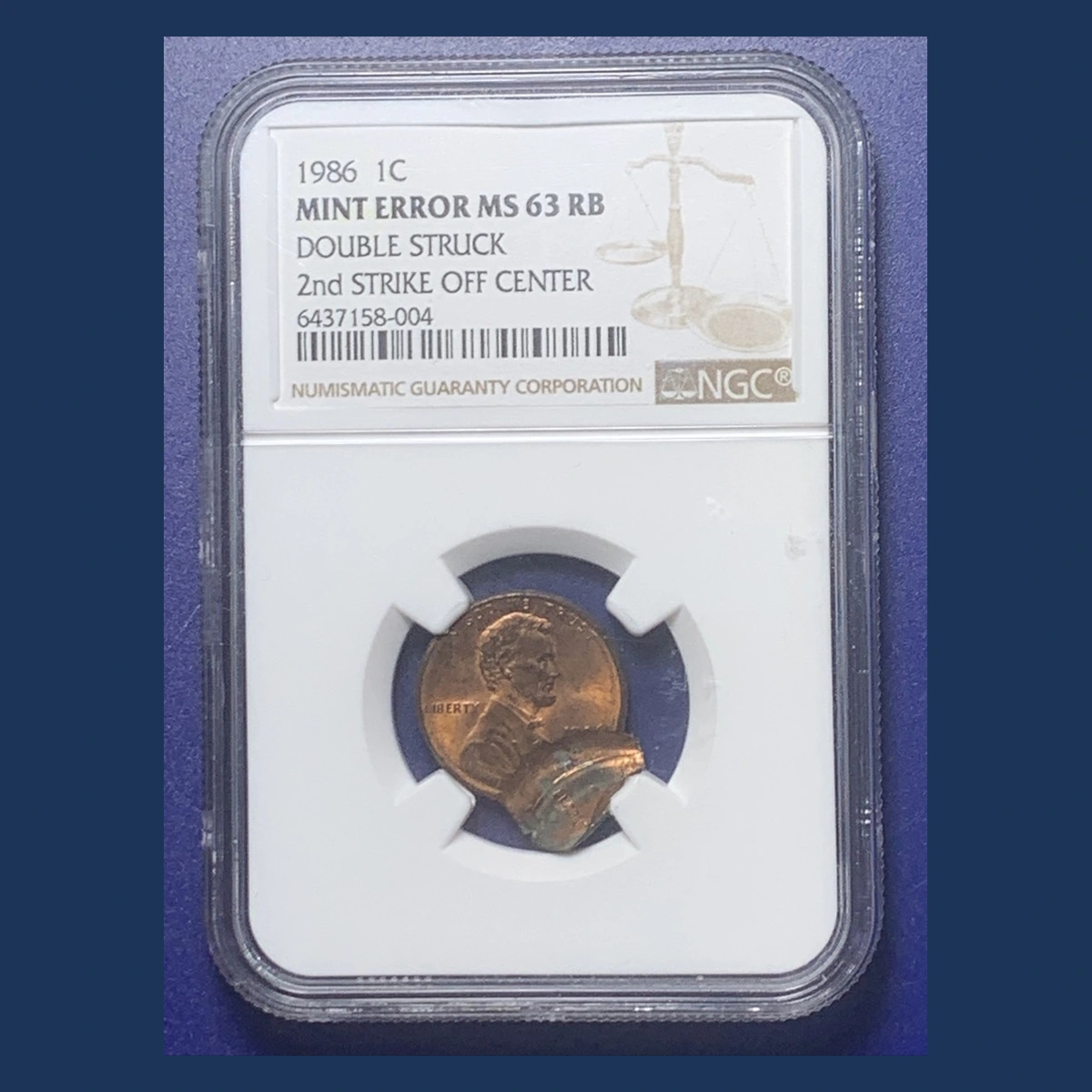
Only a small portion of the second blow reached this Denver cent. After its first strike, the coin moved far from the centered position and received another blow.
The recorded example has a second strike about ninety percent off center. One side of the later striking area was blocked and did not receive the usual design.
It was graded ANACS MS63 Red, describing an unworn coin with marks and retained copper-red color. The grade does not explain which side was blocked.
This is a moved coin struck twice. A tiny shelf along a letter can form during one blow instead.
Estimated Value
Estimate $50–$1,250 for a confirmed 1986-D double strike of this kind, depending on the arrangement and condition. A clear second design makes the unusual sequence easier to understand.
A 1989 cent with a sixty-five-percent off-center second strike brought $70 in January 2016. That is another specimen and does not share the recorded Denver coin’s ninety-percent displacement.
A larger shift can leave less readable design. Price the whole coin rather than assuming the percentage alone makes it more valuable.
How to Identify
Locate one recognizable part of each strike under a 10× magnifier. Trace where the later impression crosses the first rather than counting unrelated doubled-looking edges.
Examine the matching area on the other face for the blocked second design. Do not name the blocking object solely because that surface lacks normal detail.
The original cent normally weighs 2.50 g; a scale checks whether metal was removed later. Calipers record spread from the normal 19.05-mm outline, and the plain edge needs inspection for hammering.
A second date need not survive in full, but two genuine design positions should. Connect the shifted impression with the blocked area to explain this particular double strike.
13. 1986 Lincoln Penny Struck on a Dime Blank (Estimated Up to $1,500)
There is less space for Lincoln and the outer lettering when a dime blank enters the cent press. The smaller disc receives a cent design on the wrong metal.
The Denver example was graded PCGS MS63, and a Philadelphia piece was graded PCGS MS62. These describe different unworn coins with different amounts of marks.
A dime blank has copper-nickel outer layers bonded to a copper center. It is not simply an ordinary zinc penny with its copper coating missing.
The blank had no dime design before the cent strike. Roosevelt or torch traces would point to a finished dime instead.
Estimated Value
An estimated $300–$1,500 applies to identified 1986 cents on clad dime blanks. Clear date detail and attractive surfaces can help an undersized coin show its unusual origin.
A 1981-D cent on a clad dime blank sold for $372 in September 2025. That recent comparison concerns the same wrong-blank mechanism, not either recorded 1986 specimen.
The two 1986 grades should remain attached to their own coins. Silver color without matching metal, size, and weight is not enough to justify the estimate.
How to Identify
Start with a precise scale: a clad dime blank is about 2.268 g, compared with a normal 1986 cent’s 2.50 g. The small difference requires a reliable measurement.
Calipers compare the outline with a dime’s 17.91 mm and a cent’s 19.05 mm. Striking can expand the smaller disc, so its finished width may differ.
Use a 10× magnifier around the edge to look for bonded outer layers and a copper center. An unused blank need not have finished dime grooves.
Search both faces for an older design. Dime-like metal and weight with only cent details support a wrong blank; recognizable Roosevelt details require the next comparison.
14. 1986 Lincoln Penny Struck Over a Finished Dime (Estimated Up to $3,000)
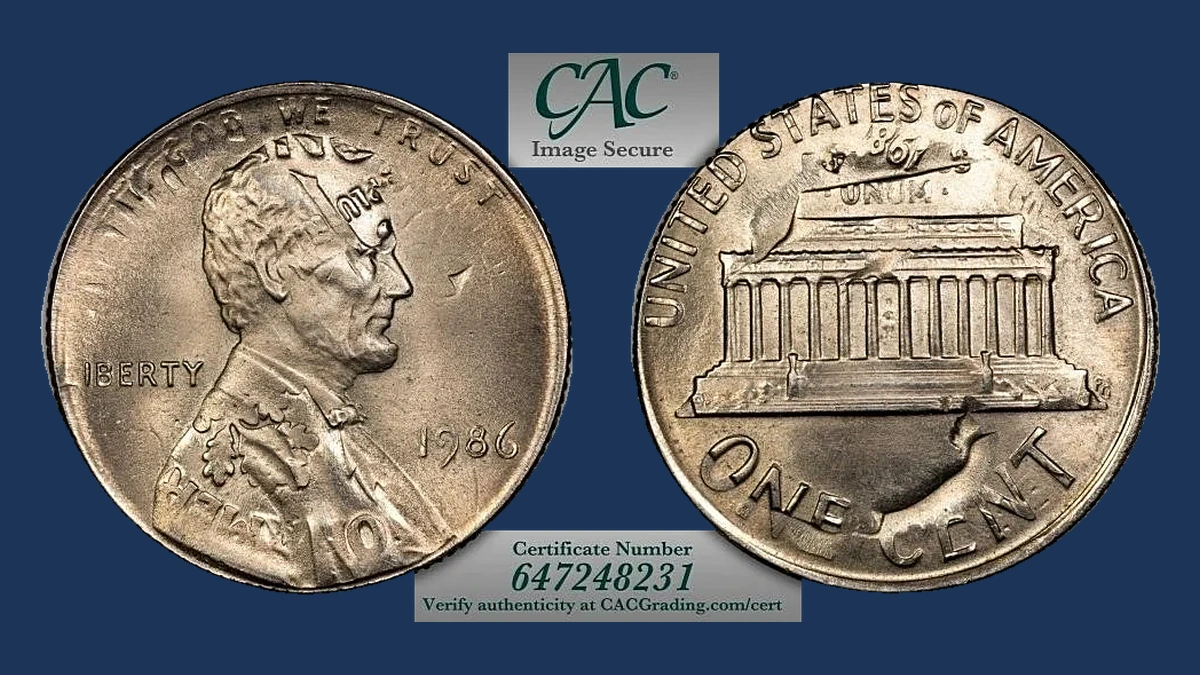
This penny preserves part of another coin beneath Lincoln. A finished 1986-P dime entered a cent press and received the later cent design.
Roosevelt’s forehead and nose remain above Lincoln’s head on the recorded example. The last digit of the dime date is much harder to follow near Lincoln’s clothing.
The piece was graded NGC MS66, an unworn coin with few marks. Two denominations share one piece of metal rather than two coins being stuck together.
An unused dime blank could supply the same metal but not the older portrait. The surviving earlier image explains the difference.
Estimated Value
The NGC MS66 example sold for $632.50 on April 29, 2011. Estimate $500–$3,000 for authenticated examples with differing visibility and condition.
A 1990 cent over a 1989-P dime brought $2,160 in September 2025. That newer transaction is a different coin with a different date combination.
Readable traces of both designs improve the comparison. Do not transfer the higher amount simply because another cent also began as a dime.
How to Identify
Find a recognizable older portrait feature before trying to read every digit. On the recorded example, Roosevelt’s forehead and nose provide clearer evidence than the final dime-date digit.
Use a 10× magnifier to follow those details beneath the cent design. Read the two dates separately rather than treating one clear 1986 as proof that both are fully visible.
The starting dime is about 2.268 g and 17.91 mm, compared with a cent’s 2.50 g and 19.05 mm. Check with a scale and calipers, allowing for spread from the later strike.
Inspect the layered edge without cutting it. A genuine older dime design under the cent design establishes the two-denomination error.
Conclusion
The best starting point is the feature itself: a second D, bare zinc, or a surviving dime portrait. Each points to a different comparison.
Estimated values of $2–$3,000 cover the small varieties and major errors discussed here. Keep ordinary 2.50-g cents separate from wrong blanks, and leave delicate surfaces untouched. A clear identification makes an auction price useful; a similar-looking photograph alone does not.