1884 Morgan Dollar Error List with Pictures

A tiny missing rim on a specially made collector coin and a dollar broken into two pieces tell very different stories. The range of 1884 Morgan Dollar errors also includes a 15% off-center New Orleans coin, reported sold for $19,200 in 2017.
Estimated whole-coin values here run from $75–$80,000, with the broken pair valued together. Follow the visible clues below to separate minting mistakes from wear, damage, and copies.
1. 1884 Morgan Dollar Repunched O Mintmark
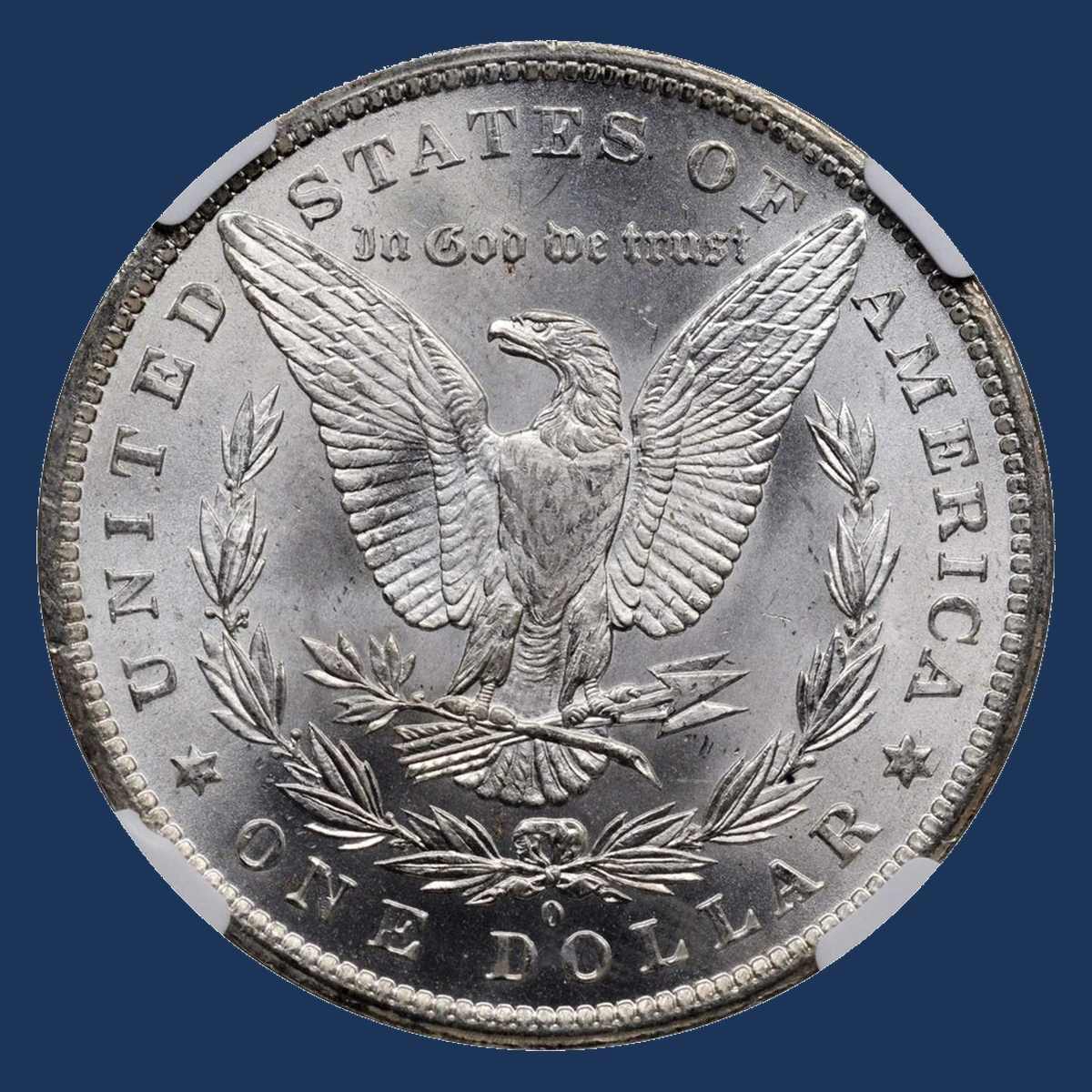
Two overlapping O outlines can appear beneath the wreath on New Orleans dollars. Workers punched the mintmark into the steel stamping tool, called a die, before that tool struck coins.
If the punch entered twice in different positions, parts of the earlier letter could remain. Each later coin copied those overlapping outlines.
Several 1884-O patterns exist, so the position of the extra curve must match the particular variety. O/O means one O punched over another O; it does not establish an O punched over a Carson City CC.
Estimated Value
Estimate $75–$1,500 for ordinary worn through attractive unworn 1884-O/O examples. Scarce combinations of variety, exceptional grade, and deeply reflective surfaces can cost more.
A VAM-6 example graded NGC MS64 Prooflike sold for $256.20 at Heritage on June 8, 2026. Prooflike describes reflective surfaces on a regular coin, not a specially made Proof.
The clarity of the repeated O matters, but the price still includes the dollar’s condition and finish.
How to Identify
The extra curve needs to look like part of an O. With a 10× magnifier, inspect inside the main letter and around its outside edge beneath the wreath.
Compare its shape with a confirmed 1884-O/O photograph of the same pattern, using light from more than one direction. A shelf from movement during striking can look doubled in one photograph without preserving an earlier letter outline.
Test small lumps against the whole mintmark shape rather than naming them individually as extra punches. The decisive close-up shows how a recognizable earlier O overlaps the main O in the same positions as the genuine comparison.
2. 1884 Morgan Dollar Raised Line on Liberty’s Cheek
A long, thin line rises from Liberty’s cheek on certain genuine 1884-CC dollars. A groove in the stamping tool filled with silver during striking, leaving this raised mark on the coin.
That is a die gouge. A scratch made directly on the finished coin usually cuts into the surface instead.
The mint matters here: NGC identified a counterfeit 1884-S that copied this Carson City cheek line. The same-looking mark on an S-mint coin is therefore a warning, not proof of a valuable new San Francisco variety.
Estimated Value
An estimated $200–$1,500 covers genuine 1884-CC dollars with this cheek feature across ordinary collectible grades. Much of that amount belongs to the Carson City coin itself.
The raised line may add interest, but it does not make every example a major error rarity. Better surfaces and less wear usually matter more than a faint tool mark.
A copied 1884-S has no genuine-error value, regardless of how closely its cheek line resembles the real CC feature.
How to Identify
Begin on the back, not the cheek. Confirm that the coin carries CC below the wreath before comparing this particular raised line.
Now move a lamp from side to side across Liberty’s face. A 10× magnifier should reveal a narrow ridge above the surrounding silver, rather than a cut below it.
Match the ridge’s shape and position to a genuine 1884-CC example. NGC’s counterfeit shows why a familiar front-side mark cannot authenticate the whole coin by itself.
Even a nearly normal weight can occur on a convincing copy. For this feature, the immediate test is the correct CC mintmark paired with the matching raised cheek line.
3. 1884 Morgan Dollar Unusually Weak Strike
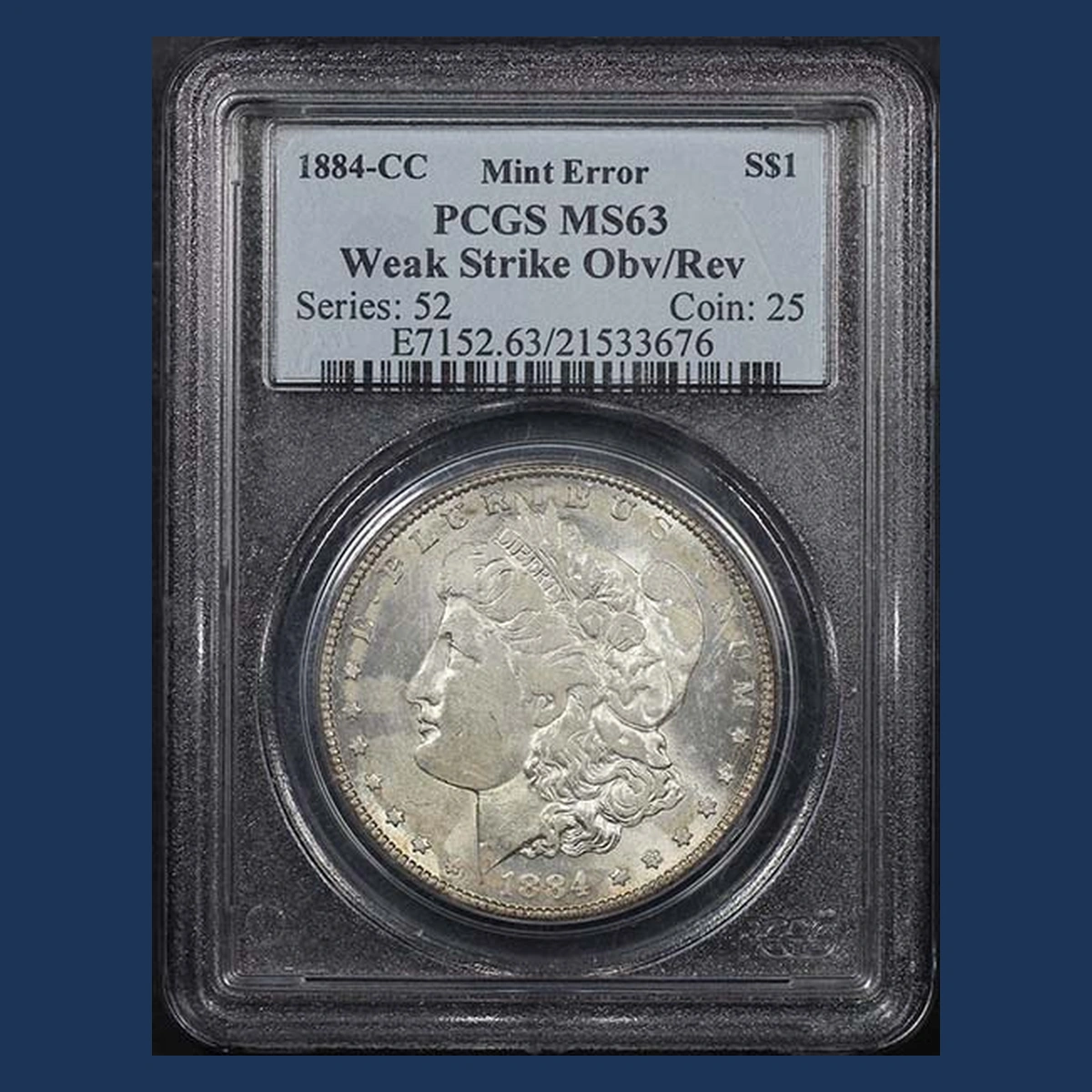
Some design details can remain shallow even though the surface has not been worn away. An unusually weak strike occurs when the metal does not fully fill the design in the stamping tools.
The Northern Nevada collection includes an 1884-CC example described this way. It should be compared with a normally struck Carson City dollar before calling every soft area an error.
Ordinary strike weakness, circulation wear, and grease blocking a tool can produce similar appearances. The broad pattern of missing detail and the surviving surface help distinguish them.
Estimated Value
Use an estimated $300–$2,500 for a genuine, clearly unusual 1884-CC weak strike in collectible condition. This includes the value of the Carson City dollar, not an added payment on top.
A small amount of ordinary softness may bring little extra. A much stronger contrast between shallow design and preserved original surface can attract more interest.
Heavy cleaning or wear makes the original strike harder to judge and generally reduces the whole coin’s appeal.
How to Identify
Put the suspect dollar beside a normally struck 1884-CC of similar condition. Start with the whole design, because a broad loss of detail tells a different story from one missing letter.
Tilt both coins under the same light and compare Liberty’s hair, the eagle, and lower areas protected from wear. Original surface shine continuing through shallow detail can support weak formation, while rubbed high points suggest circulation.
Use a 10× magnifier to inspect a boundary between clear and faint detail before choosing an explanation. If only a local smooth patch is affected, compare it with grease blockage rather than treating all shallow features as the same error.
4. 1884 Morgan Dollar Design Missing from Grease in the Tool
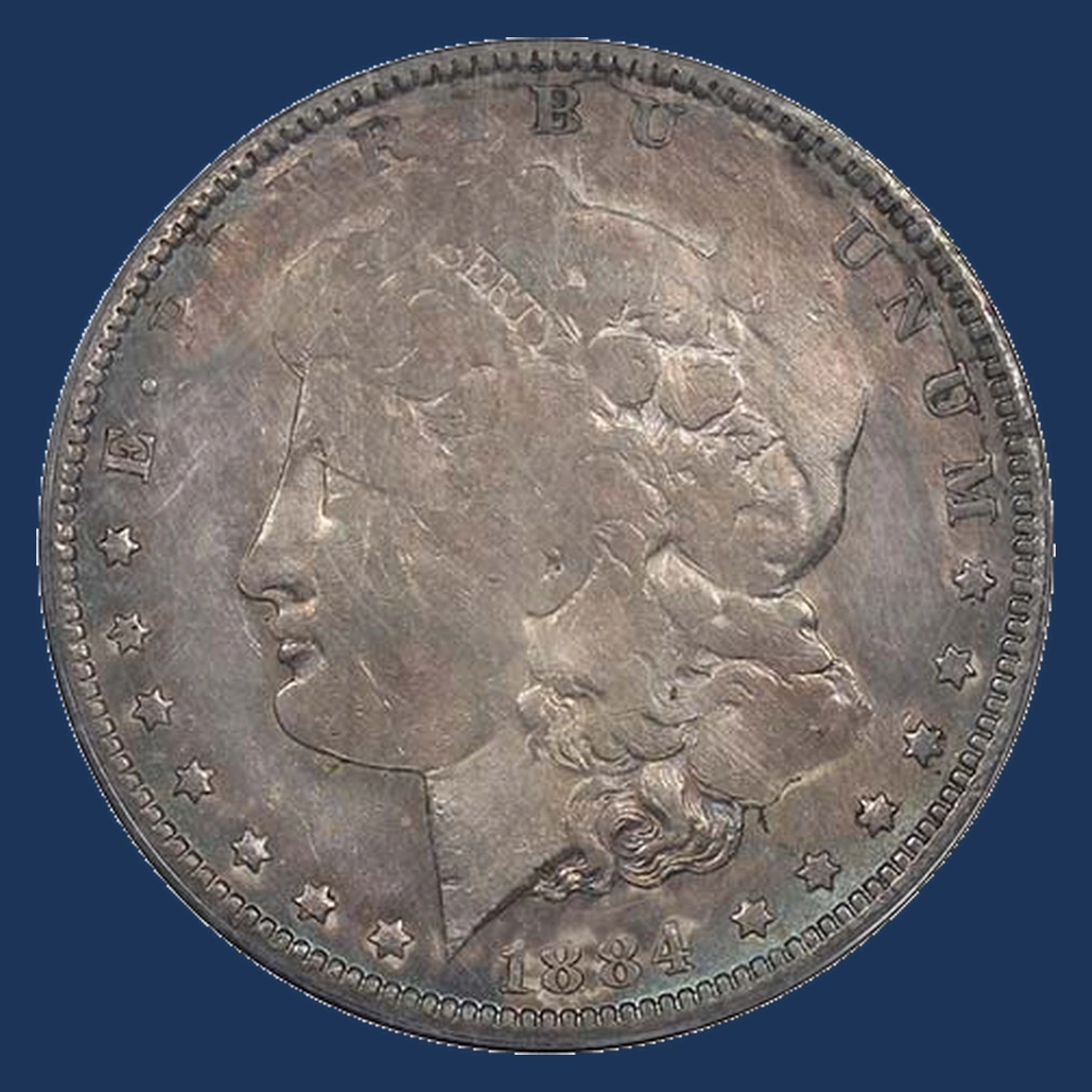
Letters or small parts of the picture can fade while nearby detail stays clear. Grease and dirt packed into a stamping tool can block its recessed design, so that part never reaches the coin.
This is often called a grease-filled die or struck-through grease error. The Northern Nevada collection records an 1884-CC example graded MS61, an unworn grade.
The important contrast is between the locally weak area and the surrounding original surface. It differs from broad strike weakness, and it does not mean that visible oil must remain on the finished dollar.
Estimated Value
For a genuine 1884-CC grease-related error, estimate $400–$5,000 according to grade and how much recognizable detail is missing. Small areas of weakness normally belong near the lower end.
A different-year comparison is an 1899-O Morgan with retained wood, sold for $504 in October 2022. That solid-object impression is not the same appearance or mint as this grease error.
Carson City demand and dramatic missing detail may support a higher whole-coin price.
How to Identify
Choose a clear neighboring letter or design line as your starting point. Follow it into the weak area to see whether detail fades without a scraped or crushed boundary.
Use light from several directions, then inspect the transition with a 10× magnifier. Do not clean the coin to make that transition easier to see.
Compare the same area on an ordinary 1884-CC dollar. A missing detail must actually belong there before it can indicate a blocked tool.
Wear usually changes exposed high points first, while a later scrape may leave grooves or displaced silver. Look for locally absent design beside intact original texture, with the nearby detail still sharply formed.
5. 1884 Morgan Dollar Rim Clip on a Proof
A small rim gap appears on an 1884 Philadelphia Proof graded PCGS PR65 Cameo. Proof means a specially made collector coin, while Cameo describes the contrast between frosted designs and reflective backgrounds.
The gap sits at 2 o’clock on the front and 4 o’clock on the back. Those are views of the same missing section, not two clips.
The metal disc was incomplete before striking, and the design was then pressed onto it. The error survives alongside the coin’s carefully prepared finish, showing that even collector pieces could escape with a flawed blank.
Estimated Value
The PCGS PR65 Cameo example sold for $6,037.50 at Heritage on October 25, 2006. Estimate $4,000–$15,000 for a genuine 1884 Proof rim clip with comparable identification and a range of preservation.
Much of the price reflects the Proof dollar itself, its attractive contrast, and its condition. The clip adds a separate collecting interest.
An old auction result is a comparison, while scratches, cleaning, and weaker surface contrast can change today’s whole-coin value.
How to Identify
The rim is the starting point. Hold the front upright and locate the gap near 2 o’clock.
Photograph the other face without losing track of the same physical spot. With the back upright, that gap appears near 4 o’clock.
Inspect its edge and ends under a 10× magnifier for natural transitions into the struck rim. File strokes or sharp cutting marks suggest a later alteration.
The mirrored center cannot prove that the coin is a Proof, since regular dollars can also have reflective surfaces. Compare the full design and finish with the certified Proof photographs.
A small clip may barely affect the normal 26.73-gram weight. Follow the one original gap through both faces and its edge.
6. 1884 Morgan Dollar Off-Center Strike
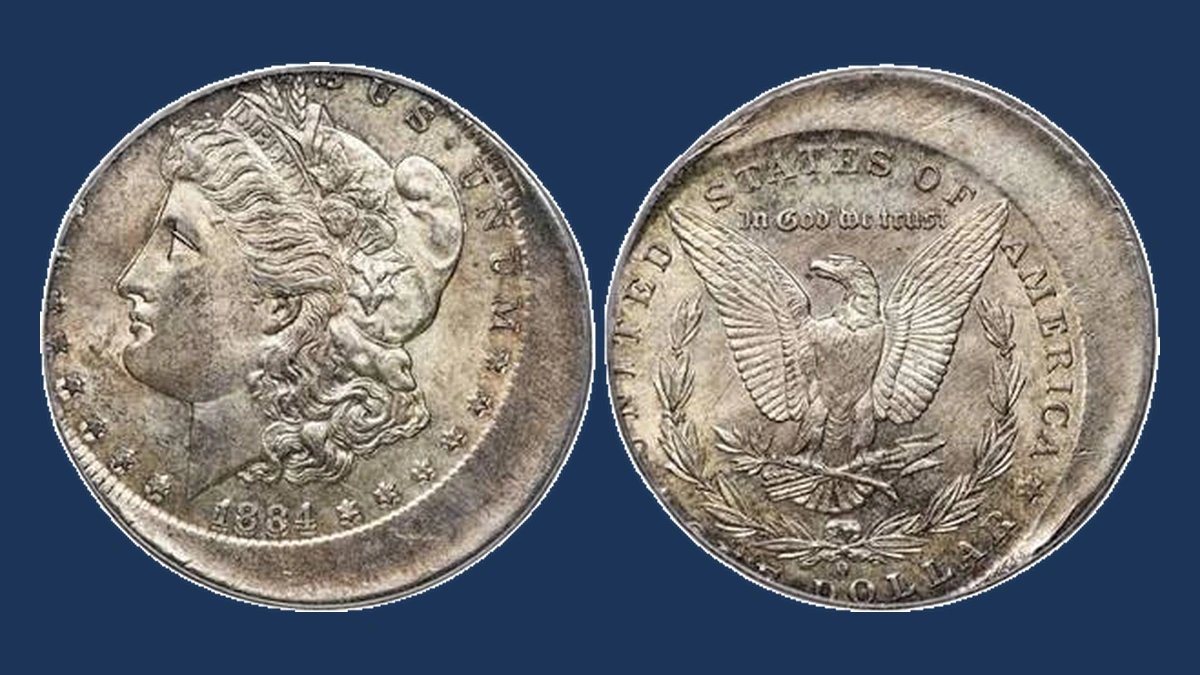
The design runs toward the edge while an unstruck crescent remains on the other side. A metal disc that sits partly outside the stamping area receives an incomplete, displaced design on both faces.
The documented 1884-O example was struck 15% off center and graded PCGS MS64. Both the date and mintmark survive, making its identity clear.
Copies of this year’s off-center dollars also exist. NGC examined a separate fake that had soft, rounded features and the wrong metal mixture, so the dramatic outline alone cannot prove a genuine minting mistake.
Estimated Value
The 15% off-center PCGS MS64 example was reported sold for $19,200 at Heritage in December 2017. Estimate $3,000–$30,000 for genuine, identifiable 1884-O off-center dollars, depending on condition and displacement.
The intact date and mintmark help collectors match the coin to its year and mint. Smaller shifts or damaged surfaces generally support lower figures.
A counterfeit receives no genuine-error premium, even when its weight comes close to the correct standard.
How to Identify
NGC’s false 1884-O weighed 26.4 grams, close to the proper 26.73 grams, despite containing very little silver. Weighing a loose coin is useful, but that number alone cannot authenticate an off-center dollar.
The normal alloy is 90% silver, and a complete round Morgan measures about 38.1 millimeters. An expert’s nondestructive metal test can expose the wrong alloy without scratching the surface.
Next compare Liberty’s eye and surviving letters with a genuine dollar. Use a magnifier to check their shapes rather than assuming soft detail proves a mint error.
Inspect the unstruck crescent and edge for natural, continuous metal.
Match the visible 1884 date, O mintmark, and both faces to the authenticated 15% off-center example.
7. 1884 Morgan Dollar Two Strikes on One Coin
A nearly centered dollar can hide traces of an earlier misplaced design. On this 1884-CC example, the first strike landed 25% off center before a second strike put the design in its normal position.
The second strike covered much of the first impression, but recognizable remnants remain on both faces. NGC graded the coin MS63 PL, with PL meaning reflective surfaces on a regular coin.
It remains in its GSA holder from the government’s silver-dollar sales. This is a genuine second striking event, not merely doubled detail already present in one stamping tool.
Estimated Value
An estimated $20,000–$80,000 applies to a major authenticated 1884-CC double strike of this kind. Carson City identity, surviving first-strike detail, and original government packaging all contribute to interest.
For a different-year comparison, a worn 1903 Morgan double strike brought $2,000 before fees in April 2008. Its wear and different mint make it a much lower comparison.
The 1884 range is an estimate for the complete coin, including both impressions together.
How to Identify
Start by tracing the centered portrait and outer lettering, which belong to the second strike. Then search beside them for parts of the first design that escaped being flattened.
Compare both faces with the documented GSA example. Its first strike was 25% off center; do not reverse that sequence and describe a centered first strike followed by an off-center second.
Under a 10× magnifier, check that surviving pieces fit a displaced version of the whole design. A thin doubled edge on a few letters is a different kind of evidence.
The useful match is the earlier off-center detail underneath the later centered impression, on the same certified 1884-CC dollar.
8. 1884 Morgan Dollar Split after Striking
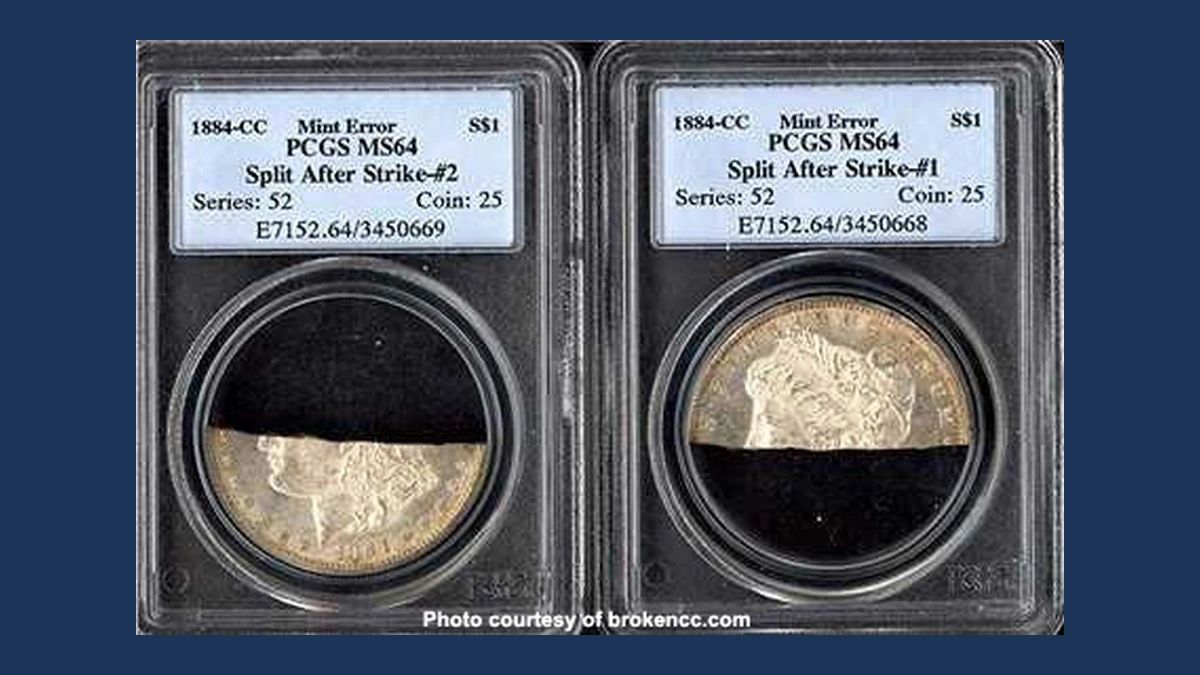
This dollar survives as two matching pieces, each in its own PCGS holder. The break runs across the coin rather than peeling a thin layer from one face.
The design was already present when the flawed metal fractured. The two parts retain pieces of the same portrait, eagle, and border, and together form the famous Broken CC dollar.
PCGS graded the paired pieces MS64 and identified a split after striking. An internal weakness in the metal allowed the fracture; this is not an ordinary coin cut in two with a saw.
Estimated Value
Estimate $30,000–$80,000 for the documented broken 1884-CC dollar with both authenticated halves preserved. The pair is valued as one remarkable coin, not as two complete dollars.
Mike Byers’ archive assigns it a $50,000 value and marks it sold, but does not identify that figure as the transaction price. The distinction matters when making comparisons.
The matching halves, preserved surfaces, and history together support collector interest far beyond an ordinary damaged dollar.
How to Identify
Both halves matter to this identification. Keep them in their separate holders and compare clear photographs enlarged to the same size.
The fracture outlines should complement each other, while the portrait, lettering, and back design continue across the join. Do not force the pieces together or remove them from protection to test their fit.
A thin layer peeling from one face has a different shape from this break across the full coin. Saw cuts and repeated tool marks would also require a different explanation, even if the pieces fit.
The two halves should restore one normal 38.1-millimeter outline in the photographs. Trace the matching fracture and continuous design against the certified pair.
Conclusion
Keep the mintmark in view as you compare these errors. The Carson City cheek line, New Orleans repeated O, and Philadelphia Proof clip belong to different coins.
Estimated values span $75–$80,000, depending on the mistake, condition, and completeness of a matched pair. Preserve the surfaces and any separated pieces, then compare the actual feature rather than judging a coin from a dramatic label alone.