1886 Dollar Coin Error List with Pictures

A silver dollar shaped like a shallow bowl is a striking place to begin. The famous 1886 die cap sold for $160,312 in January 2022.
Most 1886 Morgan dollar errors are smaller discoveries, including a line inside 6 or a repeated mint letter. Estimated whole-coin ranges here run from $85–$250,000, with that exceptional cap at the upper end.
Use the close-up checks below to understand what changed and where to look.
1. 1886 Morgan Dollar Raised Line inside 6
A small bar inside the final 6 can be more useful than the coin’s overall shine. The Philadelphia variety known as Line in 6 has this raised feature within the digit’s loop.
The line comes from a mark in the steel stamping tool, called a die. Silver entering that mark during striking leaves extra metal on the dollar.
Collectors distinguish more than one tool pairing with this feature. Matching the line does not establish every other detail of the coin’s variety.
A scratch through the finished coin leaves a different kind of surface disturbance.
Estimated Value
For a matched Line in 6 example, estimate $90–$1,000 across worn through attractive unworn condition. Especially high grades need their own closer comparisons.
A year guide describes a modest extra value for the line on ordinary examples. It is not a promise that every coin with a mark in 6 receives the same premium.
The surrounding date should remain clear enough to establish the feature. Original surfaces and fewer distracting marks can matter more than a slightly stronger line.
How to Identify
Place the date near the center of your photograph, then enlarge the opening inside 6. Look for a raised line within that opening rather than a cut crossing the entire digit.
Move a small lamp from one side to the other. Check how the line meets the surrounding numeral, keeping the lower curve visible.
A deep scratch may continue through nearby flat metal and leave raised edges along its cut. Do not confuse those edges with a bar copied from the stamping tool.
Once the line matches, compare the rest of the date and portrait with the same illustrated variety. A single tiny feature cannot establish all of a coin’s other tool details.
2. 1886 Morgan Dollar Peeling Silver Alloy on the Back
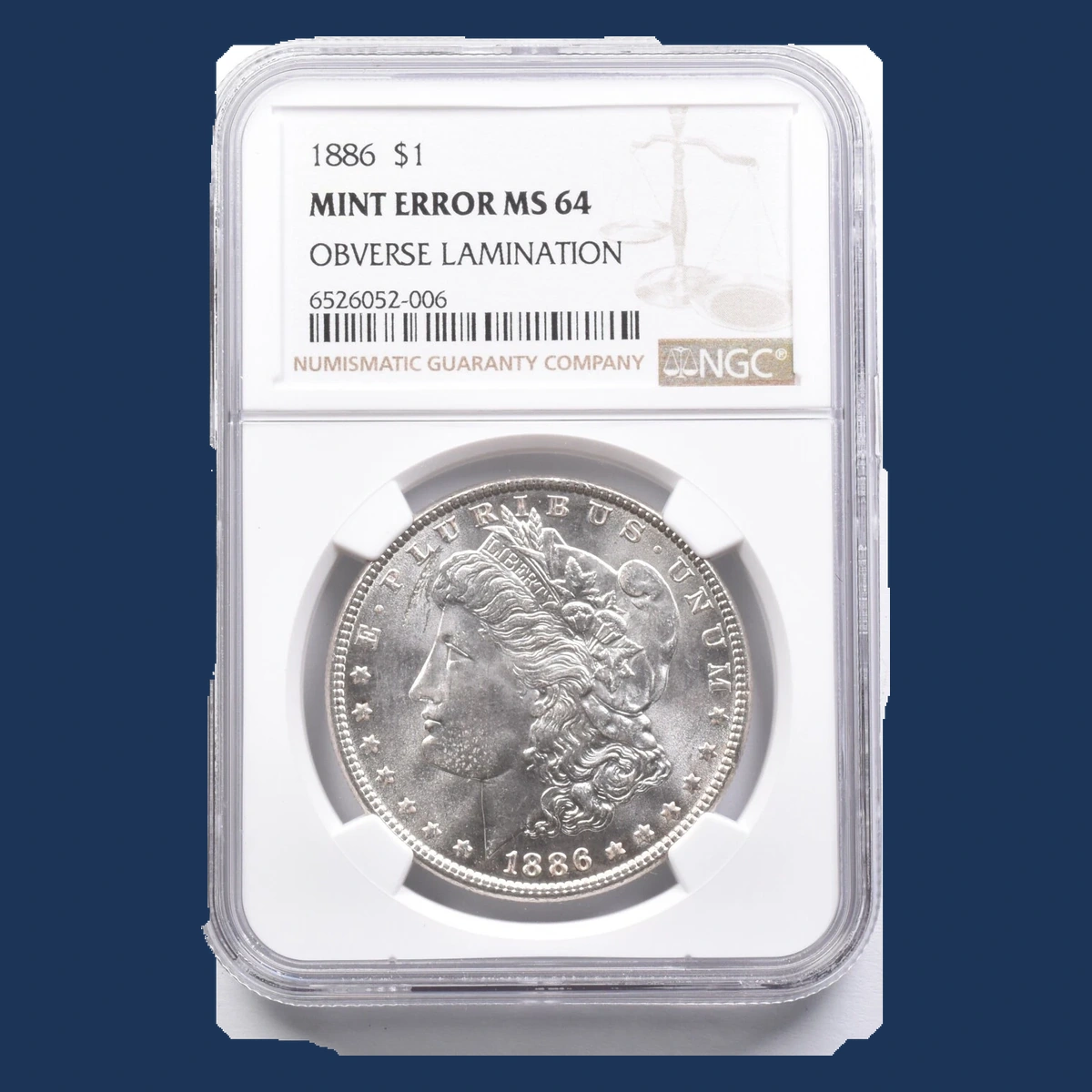
A thin layer of silver alloy can separate from the metal beneath it. Collectors call this peeling defect a lamination.
The 1886 report concerns a Philadelphia dollar with the defect on its back, graded NGC MS62. That grade describes an unworn coin with noticeable marks.
The report does not establish a complete dollar split into two thin pieces. A local flake or lifting sheet is the feature to examine.
Morgan dollars are solid silver-copper alloy throughout, rather than modern layered coins. Their peeling should not be described as the loss of a separate copper-colored outer coating.
Estimated Value
The reported NGC MS62 example was listed at $189, an asking price rather than a confirmed sale. Its specific appearance and preservation belong to that individual dollar.
Estimate $100–$1,200 for comparable Philadelphia examples with genuine peeling, across circulated and ordinary unworn grades. Larger intact flaps may attract more interest than shallow, nearly invisible separations.
A missing flake can reduce visual appeal even when the defect is genuine. Cleaning and later scraping can also lower the complete coin’s value.
How to Identify
If part of the silver layer remains attached, photograph it without lifting a corner or pressing it back down. Include a full-back view so the flap’s location remains clear beside the surrounding eagle, wreath, and lettering.
Look along the separation for design still carried on the thin sheet, using light from different sides. Where a flake is missing, examine the exposed texture and compare it with intact metal immediately around the gap.
A later scrape may leave parallel cutting lines, pushed-up metal, or an outline unrelated to a thin layer. A dull-colored patch without any physical separation may instead be staining or wear and needs a different explanation.
3. 1886 Morgan Dollar Rotated Back Design
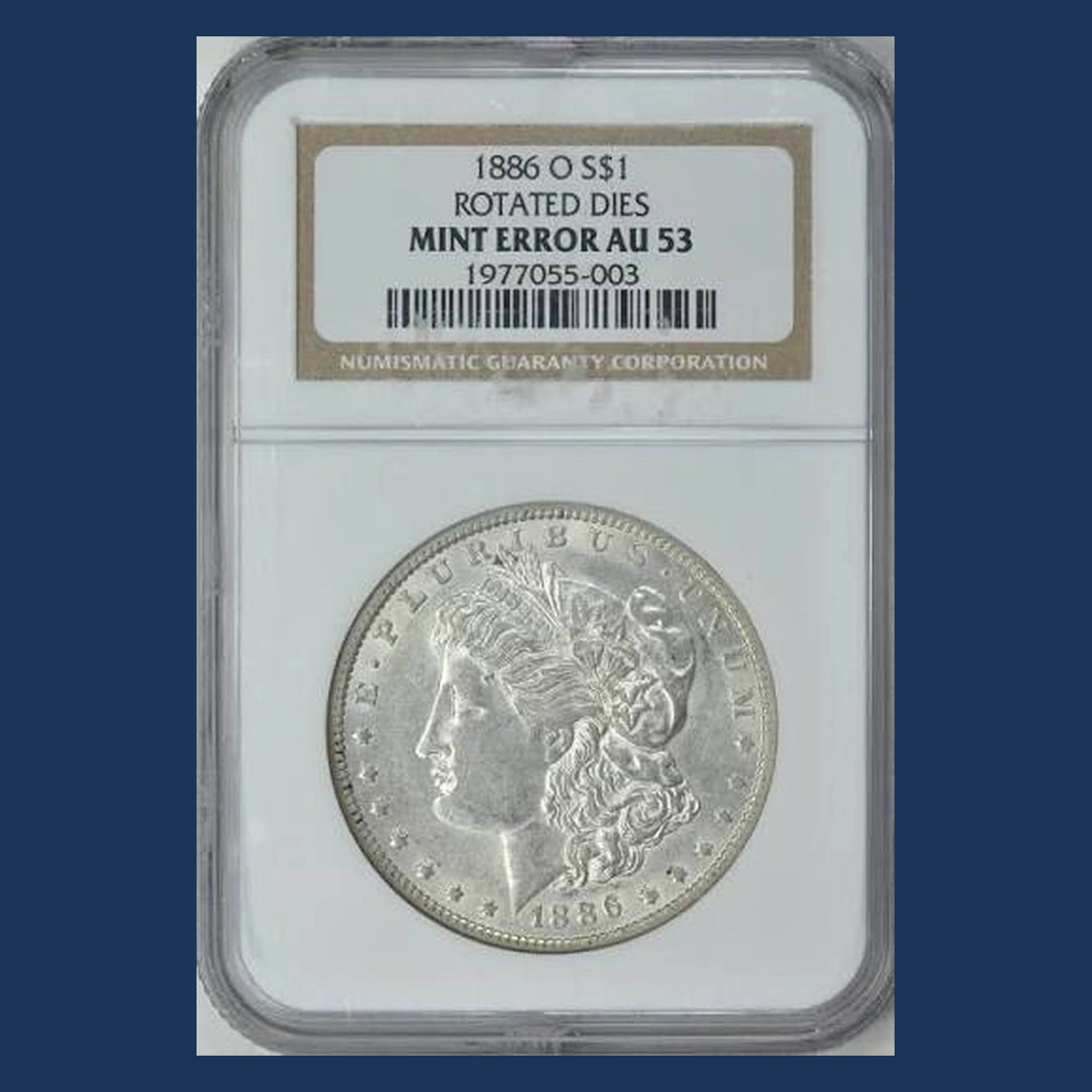
The eagle should stand upright after an upright Liberty portrait is flipped from top to bottom. A sideways eagle can reveal that one stamping tool turned relative to the other.
A year source reports an 1886-O example graded NGC VF35. This is a circulated grade with considerable design detail still visible.
The exact turn angle is not established by that report. It should not be replaced with a dramatic angle borrowed from another coin.
The coin’s round outline may remain perfectly normal despite the rotated design. Separate photographs can imitate rotation if the photographer turns the coin between views.
Estimated Value
An asking price of $348.50 accompanies the reported NGC VF35 New Orleans example. The listing does not establish a completed auction result.
Use an estimated $200–$2,000 for authenticated rotations in comparable circulated through ordinary unworn condition. The angle, remaining detail, and overall surface quality affect interest.
A slight turn is generally less dramatic than a large sideways or inverted design. Establish the actual relationship between both faces before choosing a price comparison or accepting a seller’s angle.
How to Identify
Hold Liberty upright and mark the coin’s top position on a paper outline beside it. Flip the coin over from top to bottom without spinning it sideways.
For a normally aligned dollar, the eagle should now be upright.
Repeat the movement to see whether the same tilt appears each time.
Record the entire action in one video, keeping your camera fixed. Two unrelated face photographs cannot show whether the coin moved during photography.
Check the O mint mark below the wreath because the reported specimen is from New Orleans. Use a protractor beside the image only after the flip is repeatable; do not assign the report an angle it never supplied.
4. 1886 Morgan Dollar Clash Marks from Colliding Tools
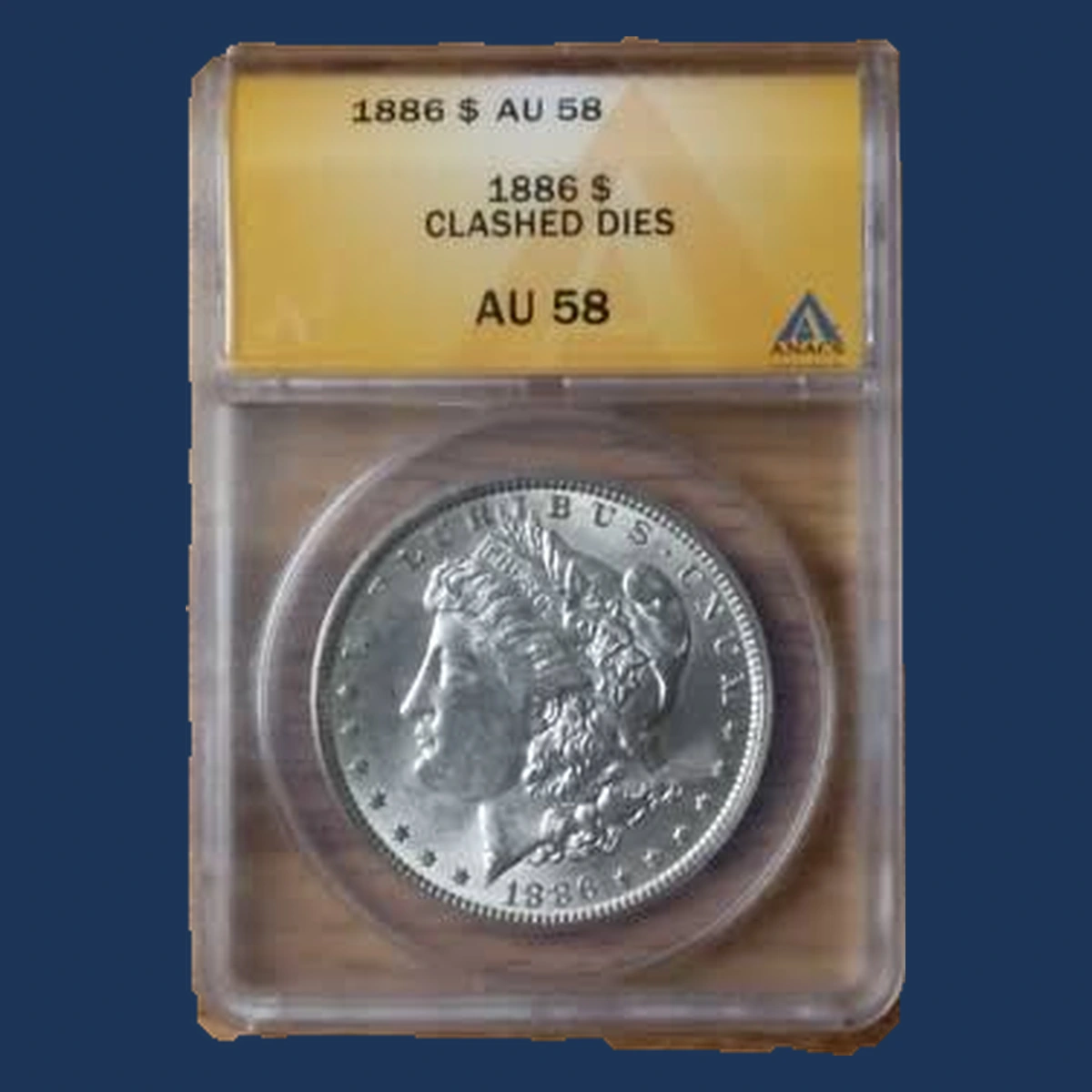
The two stamping tools can strike each other when no blank lies between them. The damaged tools then copy small parts of the opposite design onto later dollars.
Philadelphia examples include sideways V-shaped marks near the upper right wreath and a separate sunken n fragment beside Liberty’s neck. These are different patterns.
A New Orleans variety shows a transferred E below and left of the eagle’s tail. Other letter remnants depend on the particular example.
The marks do not mean the dollar itself received a complete extra strike. Their shapes must fit a transferred piece of the opposite design.
Estimated Value
Estimate $85–$2,500 for identified clash varieties across worn through ordinary unworn condition. Strong, recognizable transferred letters can attract more interest than a faint isolated line.
An ungraded Philadelphia example was offered around $96. A year guide gives roughly $85–$900 for New Orleans Clashed E coins, depending on condition.
These are an asking price and guide estimates, not equivalent auction results. Several clash traces on one dollar still belong to the value of that single coin.
How to Identify
Start with the unusual shape: a sideways V, a partial n, and an E need different comparisons. Find the shape’s exact position relative to nearby normal detail.
On the Philadelphia wreath example, compare the cluster near the upper right wreath rather than selecting any two crossing lines. For the neck example, the reported n trace is sunken, so a raised scratch edge is not an automatic match.
The New Orleans E belongs below and to the left of the tail. Keep the O mint mark in a separate full-back photograph to establish the coin’s identity.
Compare a complete pattern with the same variety’s image. Loose scratches scattered around the correct general area do not form a transferred letter.
5. 1886 Morgan Dollar Partial Collar with a Stepped Edge
Only part of a blank’s edge may enter the ring surrounding it during striking. That ring is the collar, which normally limits outward spread and forms the edge grooves.
The supported section stays narrow while the exposed metal can expand. A step between those levels gives the edge its distinctive appearance.
Year references report this feature for 1886 Morgan dollars without establishing a particular mint or clock position. Those details need the actual coin.
A smooth edge alone is not enough. Filing, squeezing, and wear can change the grooves without producing an original partial-collar strike.
Estimated Value
A year guide gives $100–$300 for modest partial-collar examples. That published range is an estimate, not a documented sale of a particular certified 1886 dollar.
Use a broader estimated $100–$3,000 when comparing confirmed examples from worn through ordinary unworn condition. A prominent original ledge and clear edge grooves can improve interest.
The mint and whole coin’s condition still matter. A damaged smooth edge should not receive the premium of a genuine step formed during striking.
How to Identify
View the edge at a shallow angle and trace its outline around the coin. Seek two levels in the metal, not merely a section with faint grooves.
Where the levels meet, photograph how the grooves stop and how the unsupported metal spreads. Check several points instead of relying on one edge close-up.
A filing job can leave a smooth strip with cutting lines. Compression after minting may bend or flatten both the grooves and nearby rim.
Compare the two faces with that edge record to see whether their borders fit the expansion. Leave a certified coin in its holder and use available side photographs if the plastic hides part of the edge.
6. 1886 Morgan Dollar Doubled Design Details
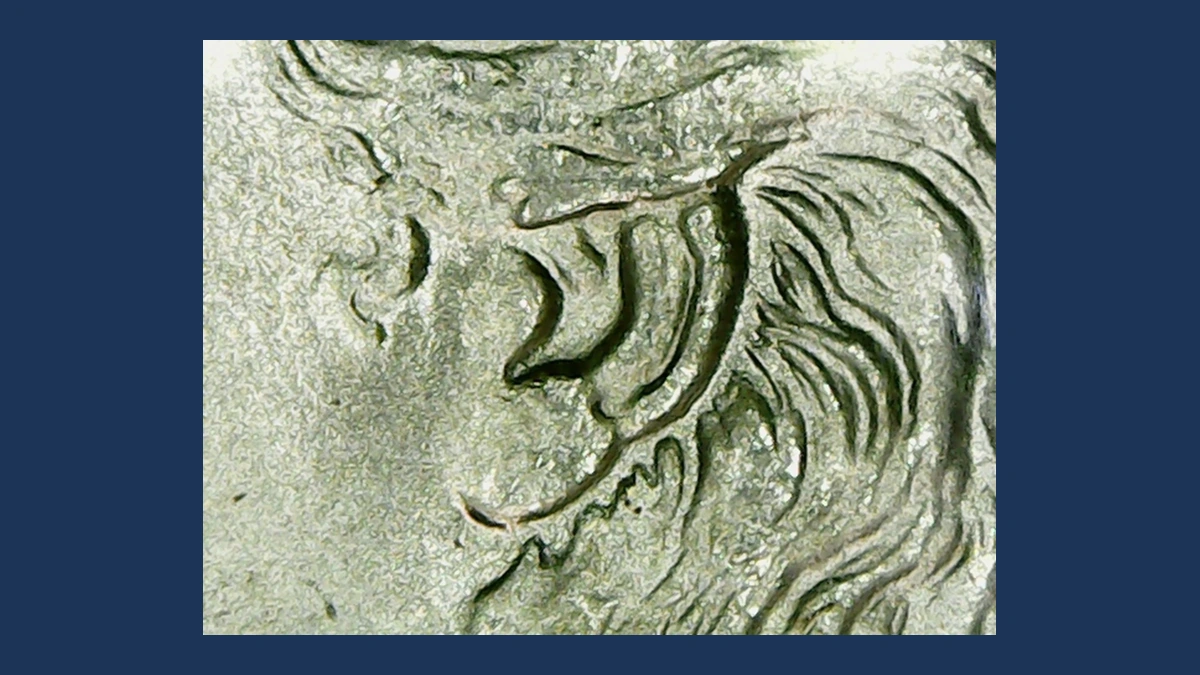
Repeated arrow outlines on the back can come from a stamping tool that already contained doubled detail. Every coin struck with that tool can copy the same pattern.
Other Philadelphia examples show slight separation at an eyelid tip and extra thickness below the earlobe. A separate back variety affects the lower edges of TRU and the wing tips.
These small features occur on different tool varieties, rather than all belonging to one dollar. Wexler’s front example also has repunched date details.
The doubled design and repeated date have separate causes. Their coexistence does not create two complete coins to price.
Estimated Value
Estimate $100–$4,000 for matched doubled-design examples across ordinary collector conditions. The clearest patterns and better-preserved coins can command more interest.
A year guide places attractive unworn doubled-arrow examples around $100–$250, while other guides cite higher figures for exceptional grades. Such guide numbers should be matched to condition rather than treated as guaranteed offers.
Minor eyelid or wing-tip doubling may add less than a bold recognizable arrow pattern. A combined doubled-design and repunched-date coin receives one whole-coin valuation.
How to Identify
Choose the relevant design area before using a magnifier. Arrows belong on the back, while the eyelid and earlobe require a clear portrait photograph.
For the front example, compare the eyelid tip and the lower edge of the ear together. Wexler’s illustrated listings separate that pattern from the motto-and-wing example.
Inspect TRU along its lower edges when checking the latter variety. A thick letter somewhere else does not replace that match.
For doubled arrows, follow the repeated contours through both pointed ends and feather details. Low flat shelves, wear, or doubled camera images should not be accepted simply because they make an outline look wider.
7. 1886 Morgan Dollar Repunched S or O Mint Mark
The mint letter was punched into the stamping tool by hand. Another punch in a slightly different position could leave parts of the first letter visible.
The San Francisco report identifies repeated detail at the upper and lower ends of S. New Orleans also has a reported O-over-O variety.
The two letters require their own matching images. The New Orleans report does not give a direction that can safely be borrowed from the San Francisco pattern.
Philadelphia dollars have no mint letter in this position. Their normal blank space is not an example of a missing or repunched mark.
Estimated Value
For identified S-over-S or O-over-O examples, estimate $100–$5,000 across circulated and ordinary unworn condition. This is a whole-dollar estimate, including the mint’s normal collector value.
A clear leftover letter can improve interest, but its strength is only one part of the comparison. Heavy wear may conceal the smaller traces.
Exceptionally well-preserved New Orleans dollars can exceed a general error range because of condition alone. Match the mint, surface preservation, and exact letter pattern before applying a named-variety premium.
How to Identify
Find the mint mark below the wreath and enlarge it without cropping away the surrounding design. First decide whether the letter is S or O.
For S, inspect the short ends at its top and bottom for the reported repeated strokes. Move the light to distinguish raised remnants from shadows inside the normal letter.
An O candidate requires its own documented comparison showing the second punch position. Do not rotate an image until an unrelated mark seems to fit.
Check whether the extra shape follows part of a letter rather than a random bump. Dirt beside the mint mark should be photographed as found, not scraped away in an attempt to reveal a second outline.
8. 1886 Morgan Dollar Misplaced or Repunched Date Digits
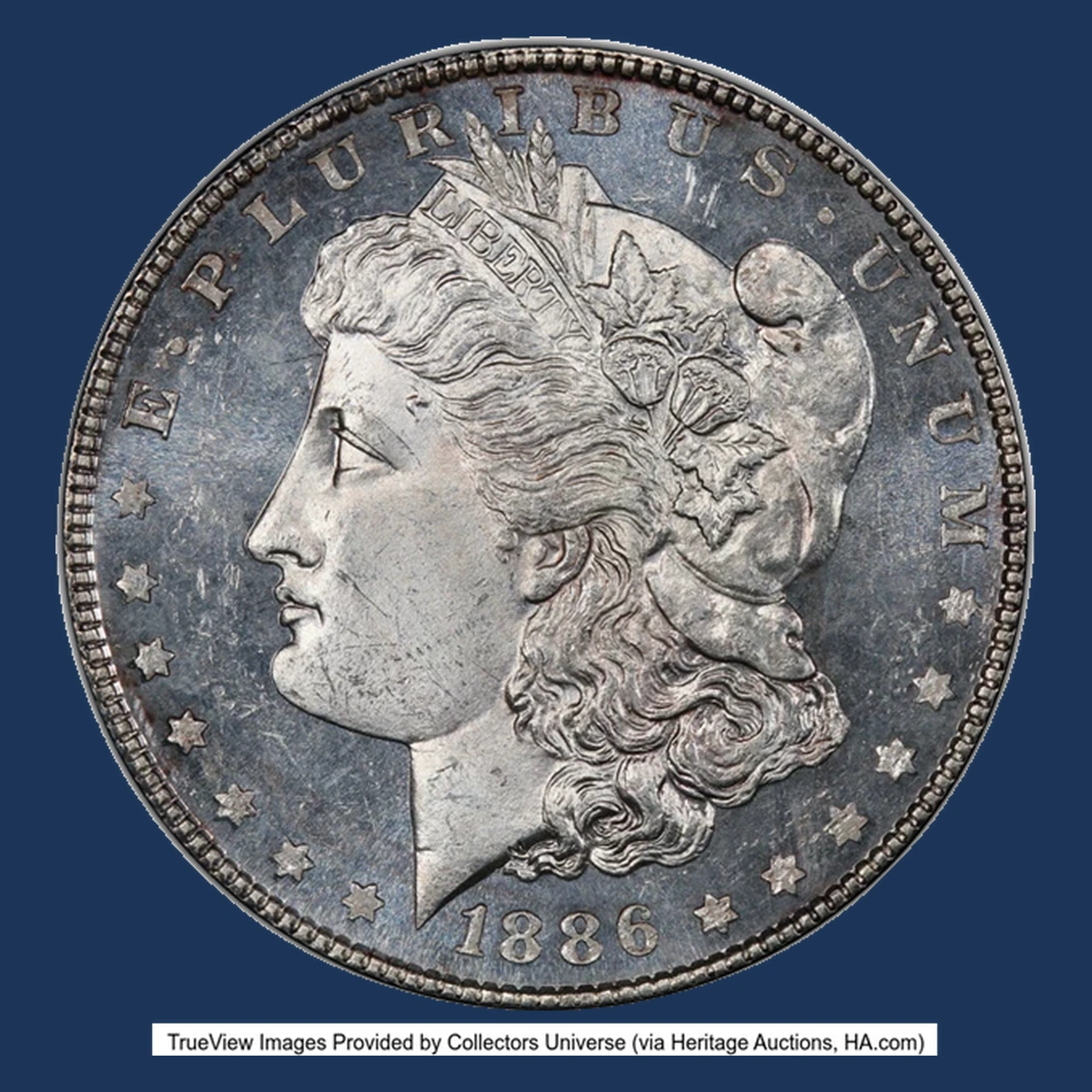
A date punch could touch the tool twice or land outside its intended position. The earlier impression might survive as a small extra curve or stroke.
Philadelphia reports include repeated detail at 1 and 6, and a separate pattern at 1 and the first 8. Another variety has part of an 8 below the designer’s M at Liberty’s neck base.
That M is on the front, not in UNUM on the back. A New Orleans example combines a repeated lower part of 1 with several clash traces.
These are separate patterns within the broader date-punching error.
Estimated Value
Estimate $100–$6,000 for identified date-punching varieties in circulated through ordinary unworn condition. Distinctive misplaced-digit traces and strong repeated numerals can attract different levels of demand.
A guide quotes roughly $400–$4,000 for the Philadelphia doubled-date variety commonly called VAM-20. Other date patterns should not automatically receive that range.
The mint and grade must match the comparison. When a dollar also has doubled portrait details or clash marks, price the whole coin without adding several full-coin estimates together.
How to Identify
For the misplaced 8, begin at the designer’s small M near the base of Liberty’s neck. Search immediately below it for the curved raised remnant, keeping the portrait and date in view.
Ordinary repunching requires a different photograph centered on the date itself. Inspect the base of 1 and the lower loop of 6 for their reported traces.
On Wexler’s separate Philadelphia example, compare the bar below the upper end of 1 and separation inside the first 8. Do not combine these positions into one universal date pattern.
The New Orleans example needs its own lower-1 comparison. Its back clash marks can help identify the complete coin, but cannot substitute for inspecting the numeral.
9. 1886 Morgan Dollar Wire Retained on Both Faces
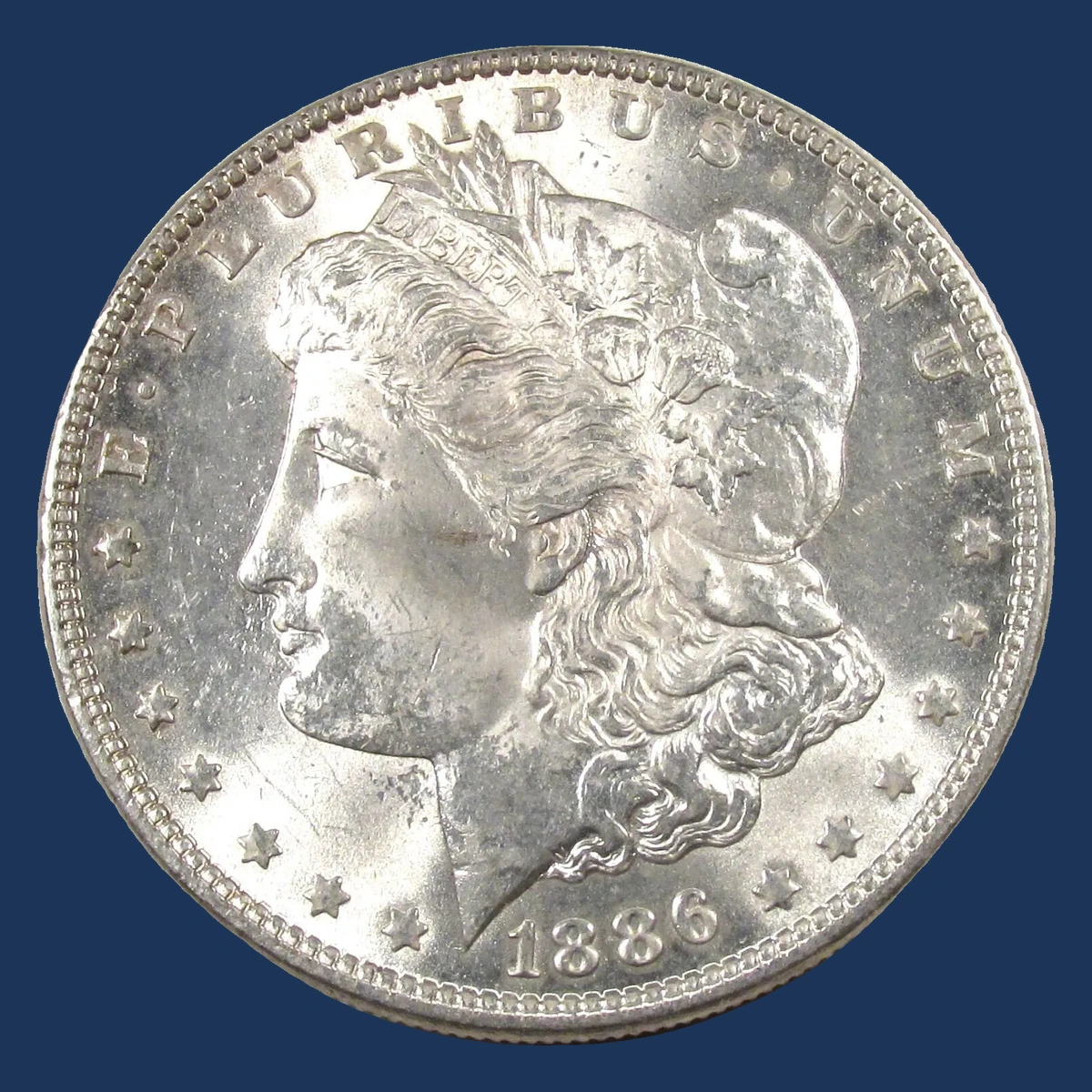
A piece of wire caught between a blank and a stamping tool can become pressed into the silver. If it stays attached, the coin retains the obstruction itself.
A year source reports an 1886 Philadelphia dollar with wire retained on both faces, graded PCGS MS63. MS63 describes an unworn coin with visible marks.
The wire’s exact path must come from that specimen’s photographs. It should not be imagined from an ordinary scratch or a loose strand resting on the surface.
Material added later can imitate this appearance. The surrounding struck details help establish when it met the coin.
Estimated Value
The reported two-sided retained-wire example was offered at $1,296. This is a historical asking price, not evidence that a buyer paid that amount.
For authenticated retained-wire dollars of comparable type, estimate $500–$6,000. The size and visibility of the wire, its secure survival, and the coin’s surfaces help explain the spread.
An object that falls away leaves a different collectible appearance. A strand glued onto a dollar after minting does not share the value of material caught during the strike.
How to Identify
Do not tug at the wire or test whether it comes loose. Begin with photographs showing how the metal meets the strand along its length.
Examine whether nearby letters or other details are interrupted where the wire lies. Look for evidence that pressure shaped the surrounding silver, rather than assuming contact alone proves a mint error.
Inspect both faces separately because the report concerns retained wire on each. Their paths need not be identical, and a strand on one face does not supply evidence for the other.
If you see adhesive, solder, or disturbed metal around the object, stop handling it and seek examination. Keep the wire and dollar together without attempting any cleaning.
10. 1886 Morgan Dollar Off-Center Strike
A blank lying partly outside the striking area receives an incomplete design. The unused part of its metal remains as a blank crescent beside the displaced picture.
The 1886 year guide reports off-center dollars but does not identify a particular mint or a photographed example. Each candidate therefore needs its own date and mint check.
This is different from a design shifted on just one face by a misaligned tool. It also differs from a clipped blank, where part of the metal was already missing.
An off-center strike leaves the metal present, with the design landing in the wrong place.
Estimated Value
The year guide estimates $250–$300 for modest examples. For a confirmed 1886 off-center dollar, a broader estimated $250–$12,000 allows for stronger displacement and better condition.
A different-year 1890-O dollar struck seven percent off center sold for $2,880 in March 2024. That is a comparison, not an auction result for an 1886 candidate.
The readable date, mint, amount of missing design, and surface quality all matter. A larger percentage does not by itself guarantee a higher price.
How to Identify
For a loose dollar, weigh it before deciding that the blank area represents missing metal. The normal standard is 26.73 grams, with wear affecting an old coin’s actual weight.
Compare both faces and trace the same physical blank crescent through them. Look at how the design ends against that crescent rather than judging only an uneven border.
If one face remains normally centered with its complete design, consider a shifted stamping tool instead. A cut edge with reduced metal points toward another explanation.
Keep every readable date digit and the mint area in your photographs. A nearby year’s off-center dollar cannot establish the identity or price of a partly dated candidate.
11. 1886 Morgan Dollar Bowl-Shaped Die Cap with a Mirror-Image Back
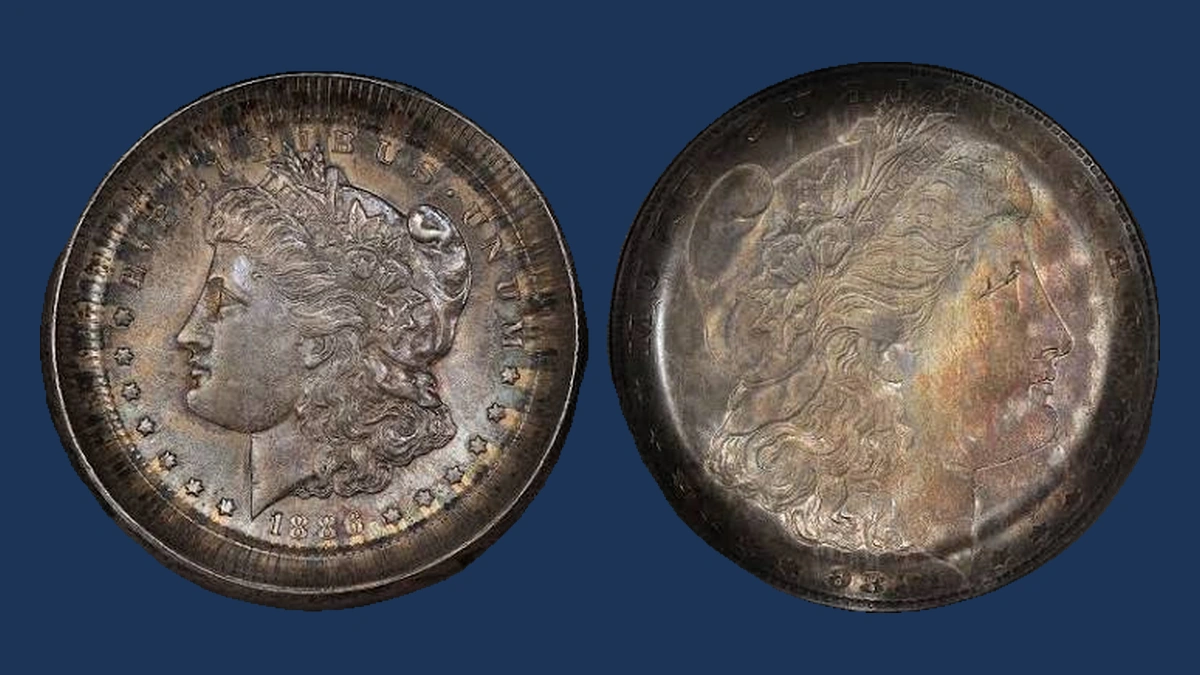
This dollar rose around a stamping tool instead of dropping out of the press normally. Repeated contact spread its metal and curled the edge into a shallow bowl.
The famous Amon Carter example has Liberty’s design on both faces. On the back, the portrait is enlarged and the lettering and date read backward.
That mirror-image impression is part of the same dramatic coin, not a separate error specimen. Its professional grade is PCGS MS64, meaning unworn with some marks.
A dollar struck beneath a stuck cap can look weak or distorted. It is not automatically the bowl-shaped cap itself.
Estimated Value
The Amon Carter example realized $160,312 in January 2022 at GreatCollections, as reported by PCGS. Its historic ownership and exceptional shape accompany that actual sale.
An estimated $100,000–$250,000 is appropriate for a comparable major authenticated Morgan dollar cap of this quality. This is a rare-object estimate rather than a routine price list.
A bent ordinary dollar or a coin with faint details under a stuck cap is not comparable. Authentication and the complete surviving form are essential.
How to Identify
Use the back design first to separate this coin from an ordinary dollar bent into a cup. Its lettering and date run backward, and the portrait is enlarged and displaced.
Then compare the curled edge with the stretching of the design. A deep curved shape alone cannot prove how the coin formed.
The front should still belong to the same 1886 dollar shown in the certified photographs. Follow distinctive marks across the face and edge views rather than relying only on a label.
Leave the coin in its holder and compare it with the documented Amon Carter specimen. Do not try to flatten a candidate or press another coin against it to reproduce the reversed image.
Conclusion
An extra line in 6 and a bowl-shaped die cap call for very different checks. Start with the feature you can actually see, then establish the mint and condition.
Estimated whole-coin values span $85–$250,000, with minor marks far below the exceptional cap. Its $160,312 auction result does not set a price for every unusual 1886 dollar.
Keep fragile peeling metal and retained wire untouched while documenting both faces.