1888 Dollar Coin Error List with Pictures

Liberty’s lips can look doubled on an 1888-O dollar, while another variety has a raised line across her face. Collectors call them Hot Lips and Scarface.
A Hot Lips example brought $19,200 at Heritage in July 2022. Yet some 1888 Morgan dollar errors cost far less, including a peeling-silver coin that sold for $53.
The estimated ranges below span $50–$25,000. Follow the visible clues to learn which kind of dollar you have.
1. 1888 Morgan Dollar Lamination
Thin silver can lift from the front of the dollar or leave a shallow, rough-edged opening. This peeling is called lamination.
The metal was weak along an internal seam, often because of impurities in the alloy. Pressure and later handling could open that weakness into a flap or missing patch.
Heritage listed an 1888-O with front lamination graded MS62 by NGC. That grade describes an unworn coin with visible marks.
Morgan dollars are a silver-copper alloy throughout. The peeled area is not a missing outer layer from a modern sandwich-like coin.
Estimated Value
An estimated $50–$750 suits modest front laminations through larger, attractive examples. The NGC MS62 1888-O sold for $53 in March 2024.
That result shows how affordable a genuine error can be when the defect is small or attracts limited bidding. More visible peeling may bring a stronger price.
A stable flap with original detail can interest collectors, while cleaning or rough handling can spoil both the surface and the error.
How to Identify
If a flap remains attached, keep fingers and tools away from it. Photograph its edge from a low angle to show the gap beneath.
Look for a thin sheet separating along a seam, with nearby design still intact. A deep scoop with sharp tool tracks suggests metal was removed after minting instead.
The O beneath the back wreath identifies the New Orleans example. Check the full front before comparing its defect with a close-up from another coin.
A normal unworn dollar weighs 26.73 g and contains 90% silver. Weigh a loose example only if metal loss appears substantial; a tiny flake may be too light to change an ordinary scale reading.
2. 1888 Morgan Dollar Misaligned Front Die
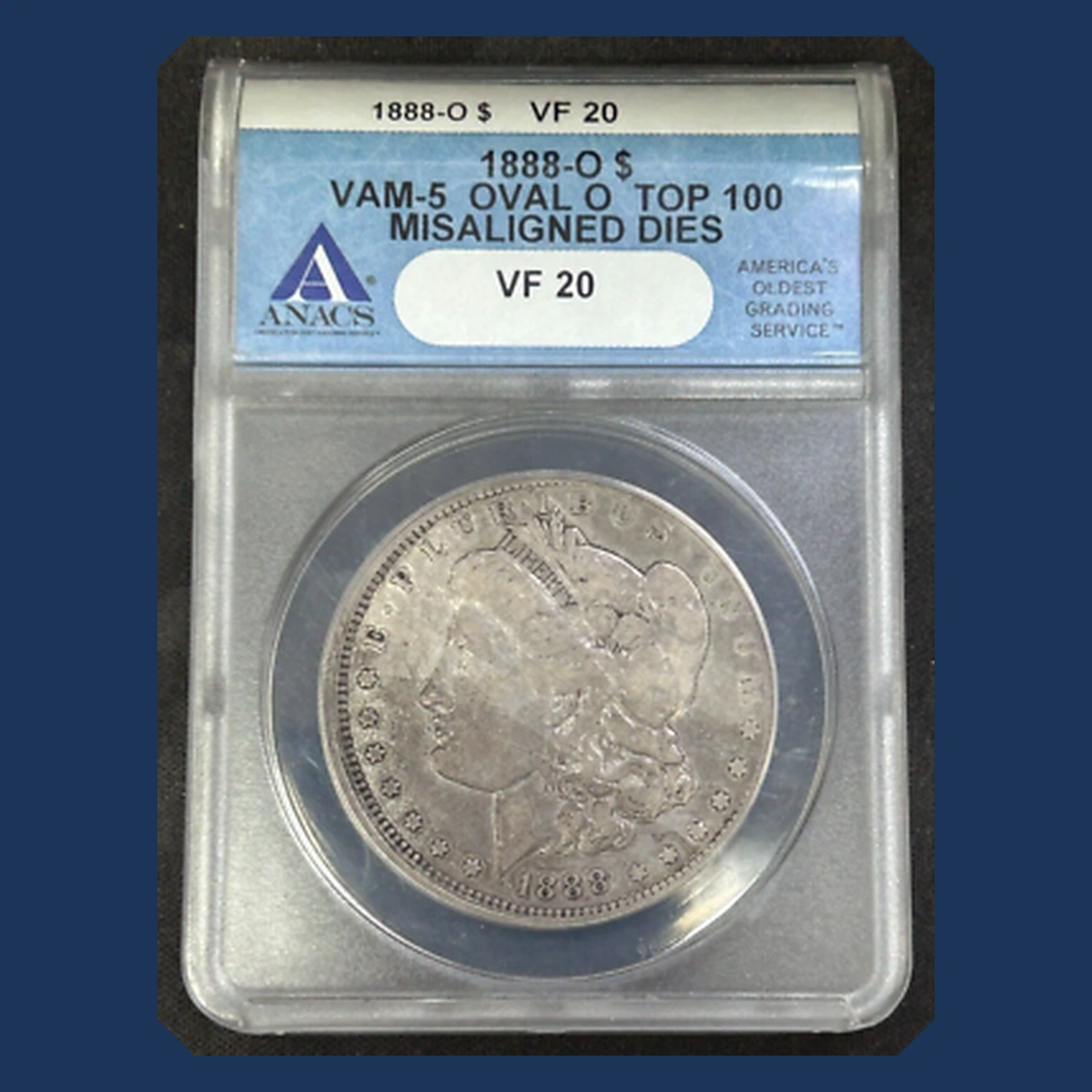
One side can sit off center even though the other remains better centered. This happens when one die, the steel tool that stamps a face, shifts sideways in the press.
The dollar blank itself need not have entered far off center. That difference separates a misaligned die from an ordinary off-center strike.
An 1888-O example was cataloged with a misaligned front die and an XF Details grade. It had light wear and improper cleaning.
The cleaning was a later condition problem. It did not cause the original shift of the design.
Estimated Value
Estimated prices run from $100–$1,500, with more obvious displacement generally attracting greater interest. The cleaned 1888-O XF Details example sold for $276 in February 2012.
That sale gives a useful comparison for a worn coin with a real minting error and a separate surface problem. It should not be used as a clean-coin grade price.
Clear border displacement, visible lettering, and original surfaces can support a higher result.
How to Identify
Take straight-on photographs of both faces at the same size, with the borders fully visible. Mark the narrowest border on the front, then compare the corresponding area on the back.
If the front design has shifted while the back remains closer to center, a misaligned front die may explain it. A shifted blank usually affects the design placement on both sides together.
Examine the narrow border for crushed metal or filing that could create a false impression of displacement. On the documented cleaned coin, keep bright rubbed surfaces separate from this centering test; cleaning cannot move the original design sideways.
3. 1888 Morgan Dollar Partial Collar
The grooves around a Morgan dollar’s edge normally form inside a metal ring called the collar. If the blank sits only partly within that ring, some metal can spread beyond it.
This leaves a step between the grooved portion and a wider section. The step can be level or change height when the blank or collar is tilted.
An 1888 Philadelphia example graded MS61 appears in a Heritage sale. A separate ANACS MS63 tilted example appears in a Stack’s Bowers group lot.
These are two different dollars, not two descriptions of the same photograph.
Estimated Value
Allow an estimated $150–$2,000 for a clear partial-collar error, depending on the step and overall condition. The NGC MS61 Philadelphia dollar sold for $180 in November 2020.
MS61 means unworn with substantial marks. The separate MS63 tilted example was part of a three-coin lot, so the group’s price cannot be assigned to that dollar alone.
A broad visible step and cleaner surfaces can justify a stronger comparison.
How to Identify
An edge-on photograph should show both the grooves and the widened metal beside them. Ask for several angles if a holder hides part of the edge.
Follow the step around the coin, noting whether its height stays level or gradually changes. A tilted partial-collar strike can produce the changing height, but a few isolated edge dents do not establish it.
For a loose dollar, compare widths gently with calipers against the normal 38.1 mm diameter. Inspect any unusually narrow area for grinding, since removing metal can alter the edge without creating a true struck step.
Keep the two published 1888 examples separate when matching photographs. One coin’s angle or position need not match the other’s.
4. 1888 Morgan Dollar Curved Clip
A smooth-looking bite from the edge may have begun before the dollar was struck. The blank-cutting punch overlapped an earlier hole in the sheet of silver-copper metal.
The resulting incomplete blank then received the dollar design. Collectors call the missing curved section a curved clip.
A 2010 Coin World advertisement offered an 1888 Morgan dollar described as a curved clip, graded NGC MS61. The short listing did not specify a mint letter.
The gap’s size and location must be judged from the actual coin. They cannot be inferred from the grade.
Estimated Value
An estimated $150–$2,500 covers a modest genuine clip through a larger, attractive example. The 2010 advertisement asked $275 for the MS61 coin; that was a seller’s price, not an auction result.
A visible curve, a readable date, and undisturbed surfaces help the error appeal to buyers. A small clip hidden by the holder may draw less interest.
Any mint letter should be identified before applying a same-mint price comparison.
How to Identify
Weigh a loose candidate before judging the gap by appearance alone. Missing blank metal should lower the weight from the normal 26.73 g, although a very small clip may cause little change.
Next inspect the curved edge with magnification. Look for the original blank edge and design flowing toward the gap, rather than fresh saw teeth or a filed surface.
The opposite rim can be weak because the incomplete blank was not shaped normally before striking. This helpful sign is not equally obvious on every clip.
Photograph the mintmark area beneath the back wreath along with the date. If that area is missing or hidden, leave the mint unassigned instead of assuming Philadelphia.
5. 1888 Morgan Dollar Strike-Through
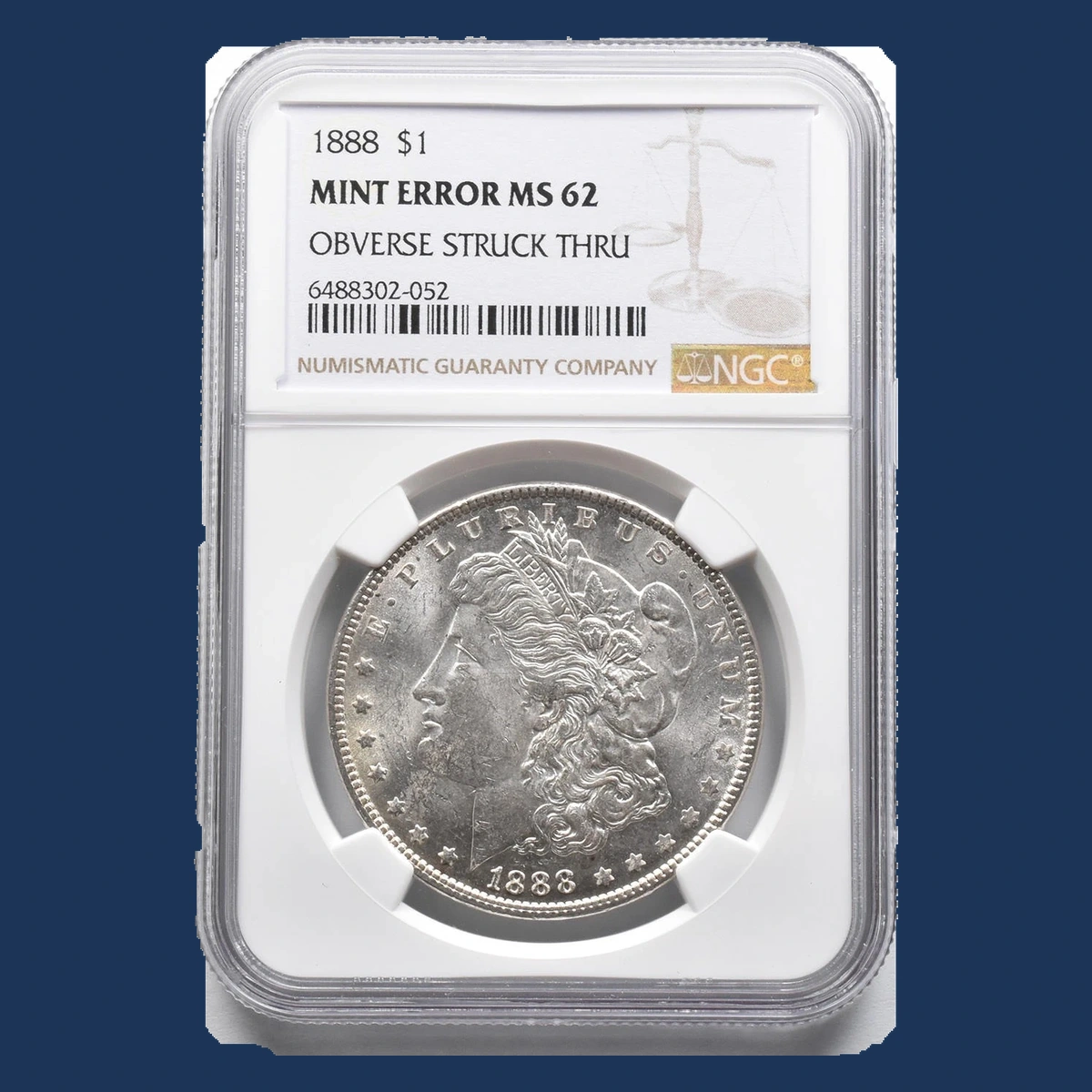
The letters RU in TRUST are nearly erased on a documented 1888-O dollar. Foreign material blocked that small part of the back design during striking.
This is called a strike-through. The auction description identifies the mint-made effect but does not name the material.
The same coin also has a clashed E and a separate front die break. Those additional features do not turn the missing letters into doubling.
Other Philadelphia strike-throughs appear in year-list reports. Their impressions need their own photographs, rather than borrowing the exact RU location from the New Orleans coin.
Estimated Value
For clear, ordinary strike-throughs, estimate $75–$3,000. The 1888-O with nearly missing RU, a clashed E, and a front break sold for $207 in November 2004.
That was one price for the whole coin and all its features. It is not three separate error premiums to add together.
A larger recognizable object impression or a much better-preserved dollar may reach higher prices than this localized lettering example.
How to Identify
Read IN GOD WE TRUST across the back and compare RU with the letters on either side. The documented coin loses much of those two letters while surrounding details remain.
Use angled light to inspect the affected surface. A strike-through can leave blocked or sunken detail; later abrasion often leaves scraping and smooths surrounding high points too.
Photograph the whole back before enlarging RU. This makes it easier to tell a localized obstruction from a generally weak strike.
For a Philadelphia candidate, examine its own impression rather than requiring the same missing letters.
Do not name cloth, grease, or wire solely from a weak patch. The visible shape must support any more specific material claim.
6. 1888 Morgan Dollar Clashed Design
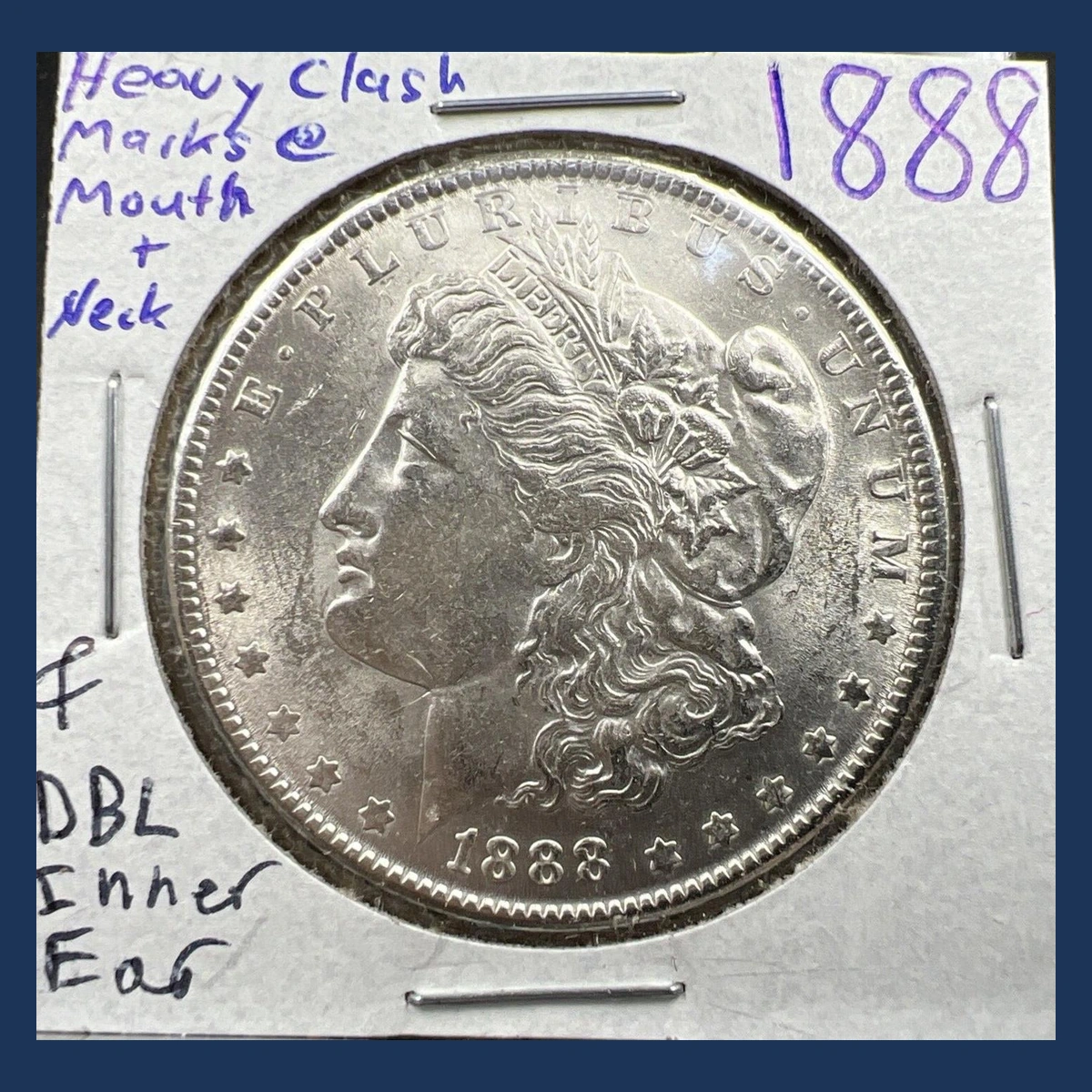
An unexpected E can appear beside the ribbon bow on the back of an 1888-O dollar. It comes from LIBERTY on the opposite die.
The dies hit each other with no blank between them, transferring part of one design onto the other tool. Later coins received that extra mark along with the normal design.
This accident is called a die clash. The E belongs to a documented New Orleans example with other minting features.
Clash marks beneath the eagle’s beak are also reported on separate examples. They should not be assumed to accompany every clashed E.
Estimated Value
Use an estimated $75–$3,500 range, from modest visible clashes to attractive examples with strong transferred details. The documented clashed-E coin brought $207 at Heritage in November 2004.
Its grade was MS63, meaning unworn with noticeable marks. That same dollar also had the strike-through and front break described elsewhere here.
The sale values the combined coin; a strong E and better surface preservation can support higher comparisons.
How to Identify
Locate the ribbon bow at the bottom of the wreath and enlarge the area just to its left. Compare the extra E-shaped mark with a confirmed photograph of the clashed-E variety.
The letter comes from LIBERTY, so its shape needs to fit that transferred design rather than an imagined E from another phrase. Random tool lines nearby are not enough.
If you are examining a reported clash beneath the beak, use a photograph showing that separate feature instead. Trace the mark’s outline through several lighting angles; a scratch with scraped edges follows a different process from a design transferred through the dies.
7. 1888 Morgan Dollar Rotated Back Die
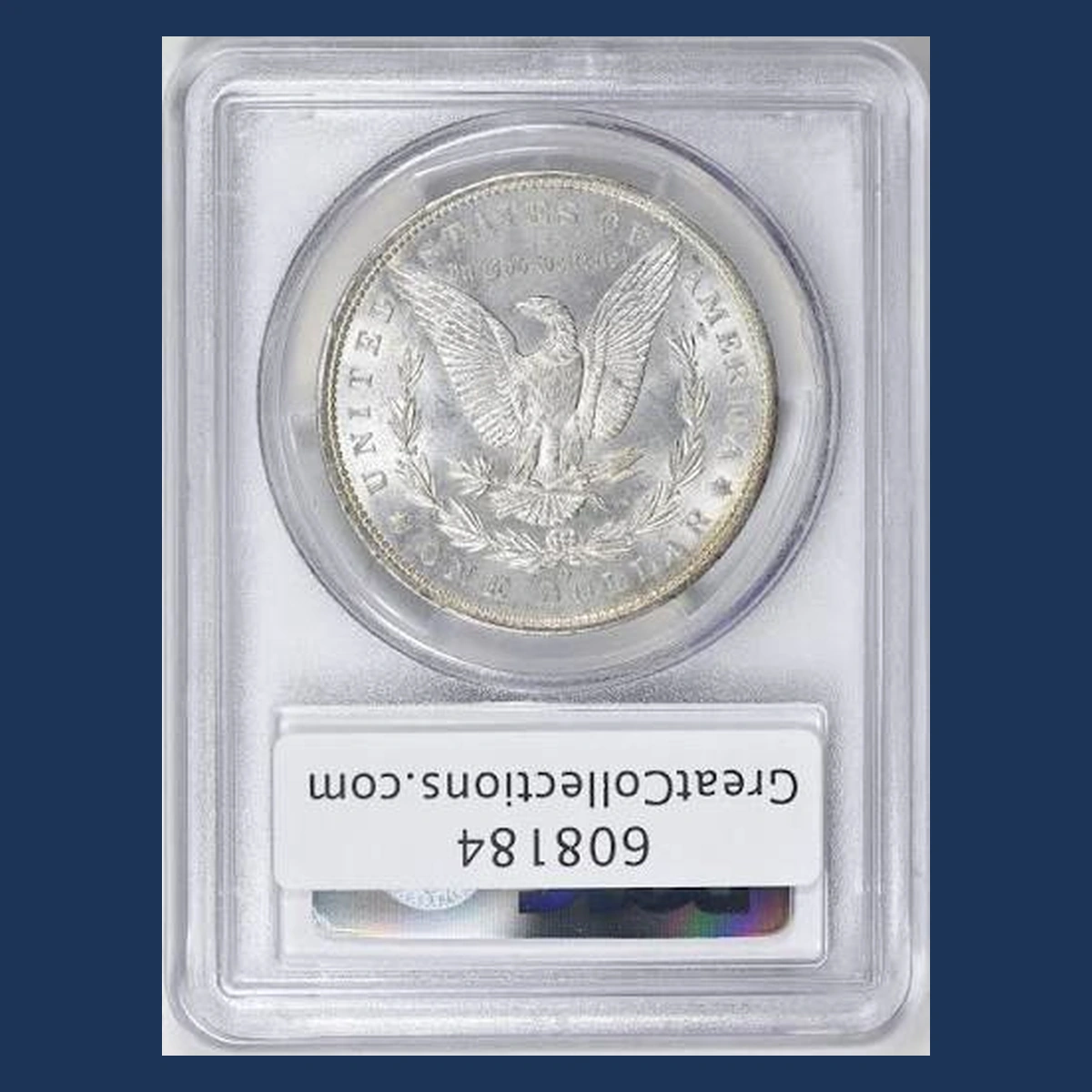
The eagle can lean strongly sideways when you flip the dollar in the normal way. One documented 1888-O has its back design rotated 80 degrees counterclockwise.
The back die turned away from its intended position in the press. Both designs could still be centered and fully struck.
Heritage cataloged the example as PCGS MS63, an unworn coin with marks. The stated angle belongs to that particular dollar.
A tilted photograph or a coin turned inside its holder can create a misleading appearance. Rotation must be checked by comparing both faces without changing the coin’s position between views.
Estimated Value
An estimated $300–$5,000 covers clear, substantial rotations through attractive near-sideways examples. The documented 80-degree 1888-O sold for $1,092.50 in June 2010.
That is a useful same-year comparison with an identified angle and grade. A tiny tilt does not carry the same appeal as a large rotation.
Original surfaces and a secure measurement help at the upper end. A crooked holder insert alone adds no error value.
How to Identify
Practice the flip with an ordinary U.S. coin first. Hold the portrait upright and turn it top to bottom; the opposite design should finish upright.
Repeat that motion with the 1888 dollar while keeping your grip steady. On the documented 80-degree example, the eagle ends strongly tilted counterclockwise instead.
Try the test twice to rule out a slight twist of your fingers. Two photographs taken separately can be rotated by software and do not prove the relationship between the faces.
A short video of the controlled flip is more useful for a loose coin. For a sealed holder, turn the entire holder and compare both faces without opening it.
8. 1888 Morgan Dollar Doubled Dies, Including Hot Lips
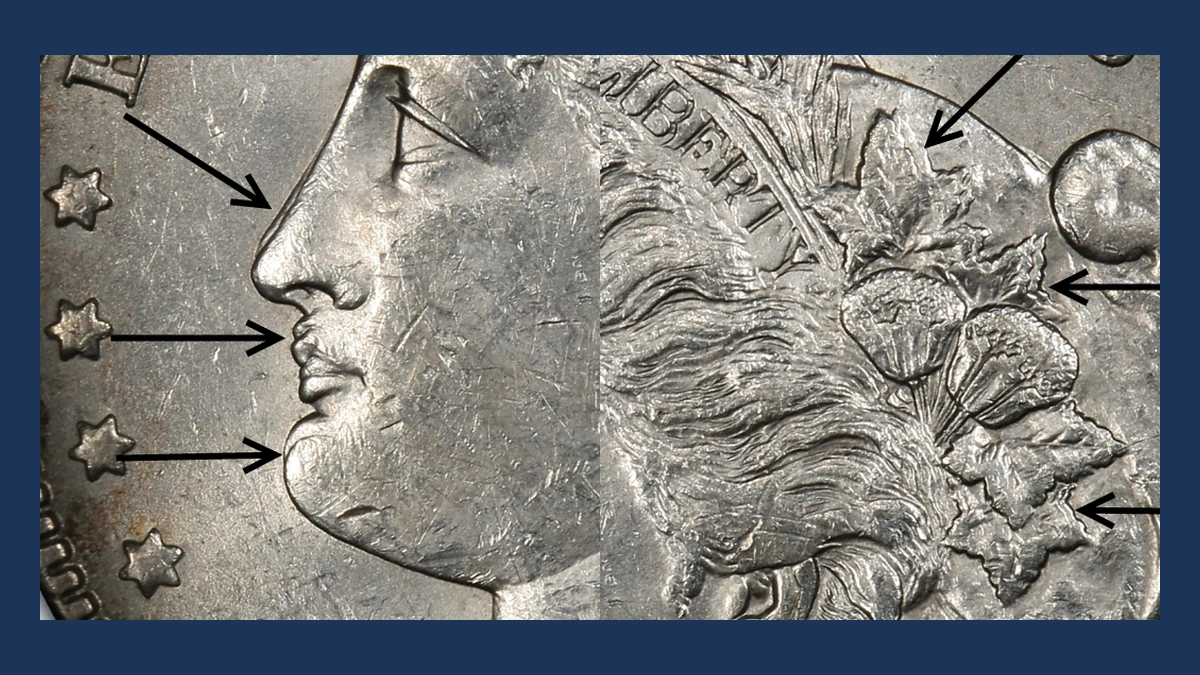
Hot Lips describes an 1888-O with extra raised outlines around Liberty’s lips, nose, and chin. It is a doubled-die feature created while the stamping tool was prepared.
Other New Orleans examples show doubled arrows on the back. Philadelphia reports include doubled ear or eyelid details and doubling around the back feathers, arrows, and wreath.
These features belong to different varieties and need separate comparisons. A coin with doubled lips does not automatically have every other doubled feature.
A gouge found beside doubling is a separate tool mark. It did not create the repeated design.
Estimated Value
Estimated prices span $50–$20,000, with many minor examples near the lower end. A circulated Hot Lips graded XF40 sold for $229 in February 2023.
At the other extreme, an unworn MS61 Hot Lips brought $19,200 in July 2022, recorded by PCGS. Unworn Hot Lips coins are much scarcer than ordinary unworn 1888-O dollars.
Philadelphia ear, eyelid, or back doubling needs its own comparison, not the rare Hot Lips price.
How to Identify
Read the mintmark before choosing a photograph. O means New Orleans, while a normal Philadelphia dollar has no mint letter.
For Hot Lips, follow Liberty’s mouth into the nose and chin with a 10× magnifier. Compare the extra raised outlines across the profile, not just one thick lip.
The New Orleans arrow variety needs a separate back photograph. Match the doubled arrow outlines without borrowing Philadelphia marks.
For Philadelphia, compare the reported ear or eyelid feature with the appropriate example, then examine any back doubling separately.
Flat shelves beside design edges can result from movement during striking. Rounded duplicate detail that follows the correct variety’s pattern is more useful than a general impression that everything looks thick.
9. 1888 Morgan Dollar Damaged Dies, Including Scarface
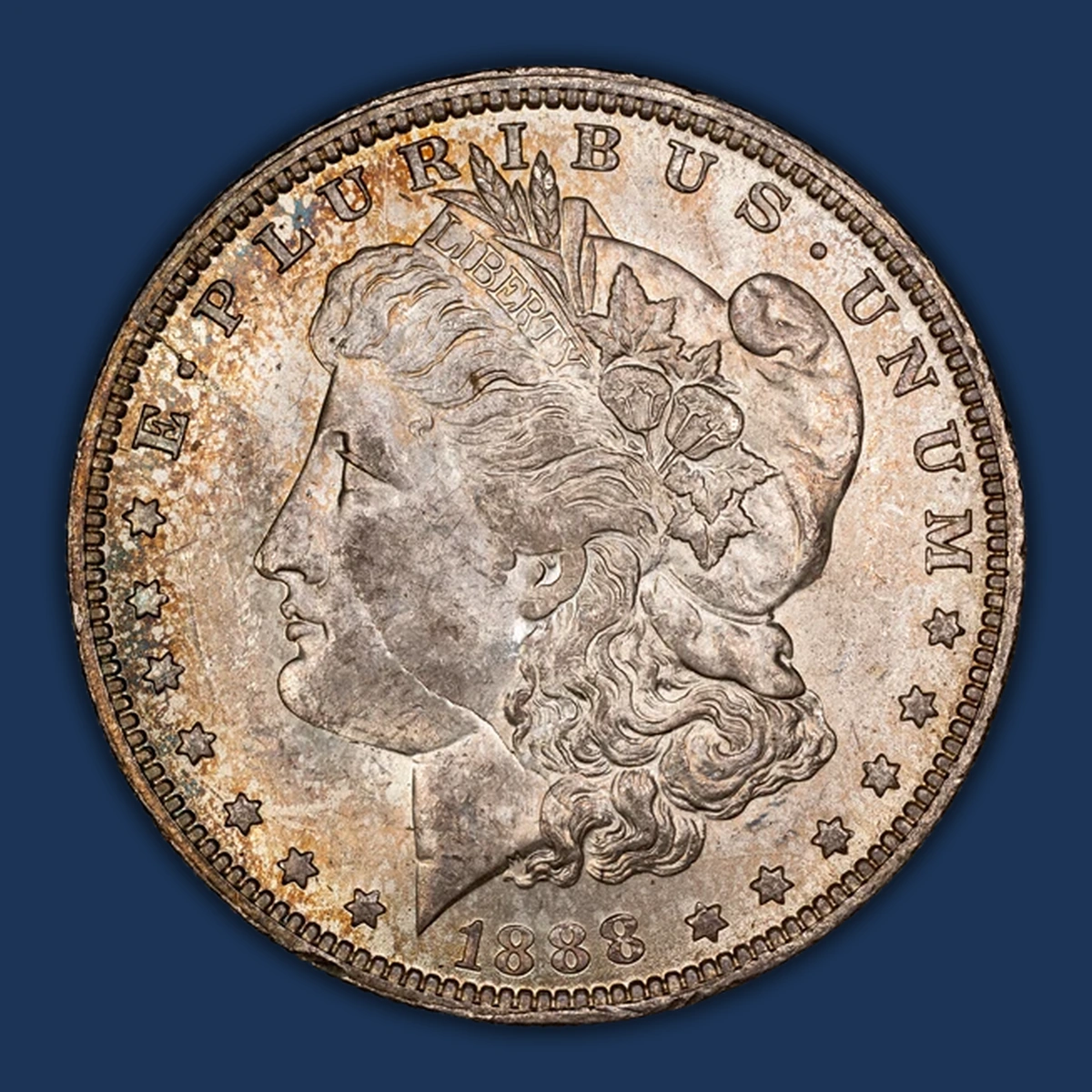
Scarface is a raised break running across Liberty’s face on an 1888-O. It begins near the dot between E and PLURIBUS, then crosses the nose toward the lower hair curls.
The line grew as the die cracked. A faint early crack does not have the same appearance or value as the full facial break.
Another New Orleans coin has a break across the R in PLURIBUS. Separate 1888-S reports describe raised gouge marks around the eagle, arrows, and feathers.
Cracks and gouges damage the stamping tool in different ways, but both can leave raised metal on dollars.
Estimated Value
Estimate $50–$25,000 across minor tool damage and strong Scarface examples. An MS64 Scarface sold for $18,800 in August 2015.
The strength of the facial break matters greatly. A small early line belongs in a much lower comparison than the full raised scar.
The separate R break and San Francisco gouge marks do not inherit Scarface prices. For those, judge the original dollar’s condition and how clearly its particular raised marks appear.
How to Identify
For Scarface, begin at the dot between E and PLURIBUS and follow the raised line across Liberty’s nose and face. Compare how far it extends with a full-break photograph before selecting an expensive Scarface price.
A short early line that stops before the face needs a different comparison. A later scratch will sink into the portrait rather than reproduce the raised path.
Check the O mintmark, then keep the separate R-in-PLURIBUS break distinct from Scarface. On an S dollar, move to the back eagle, arrow shafts, and feathers to inspect the reported raised gouges.
Match several marks together with an attributed photo. One random bump cannot establish the whole tool-damage pattern.
Conclusion
A small peeling patch and a strong Scarface break sit at very different ends of the $50–$25,000 estimated range. Look beyond a catchy name to the actual shape on your dollar.
For doubled designs, match the correct mint and affected area. For edge errors, side photographs can reveal what a front view misses.
The $19,200 Hot Lips sale shows the appeal of a scarce, well-preserved variety, not a price for every doubled-looking 1888 coin.