1935 Dollar Coin Error List with Pictures

A second raised outline on the back can turn a 1935-S Peace dollar into the collectible VAM-4 variety. One MS66 example brought $4,200 in December 2016.
1935 Peace dollar errors also involve peeling metal, incomplete blanks, and displaced designs. Estimated whole-coin values for the types below range from $75–$35,000, with major striking errors at the high end.
Read on to separate a repeated design from damage and to learn which features support each estimate.
1. 1935 Peace Dollar Peeling or Split Metal
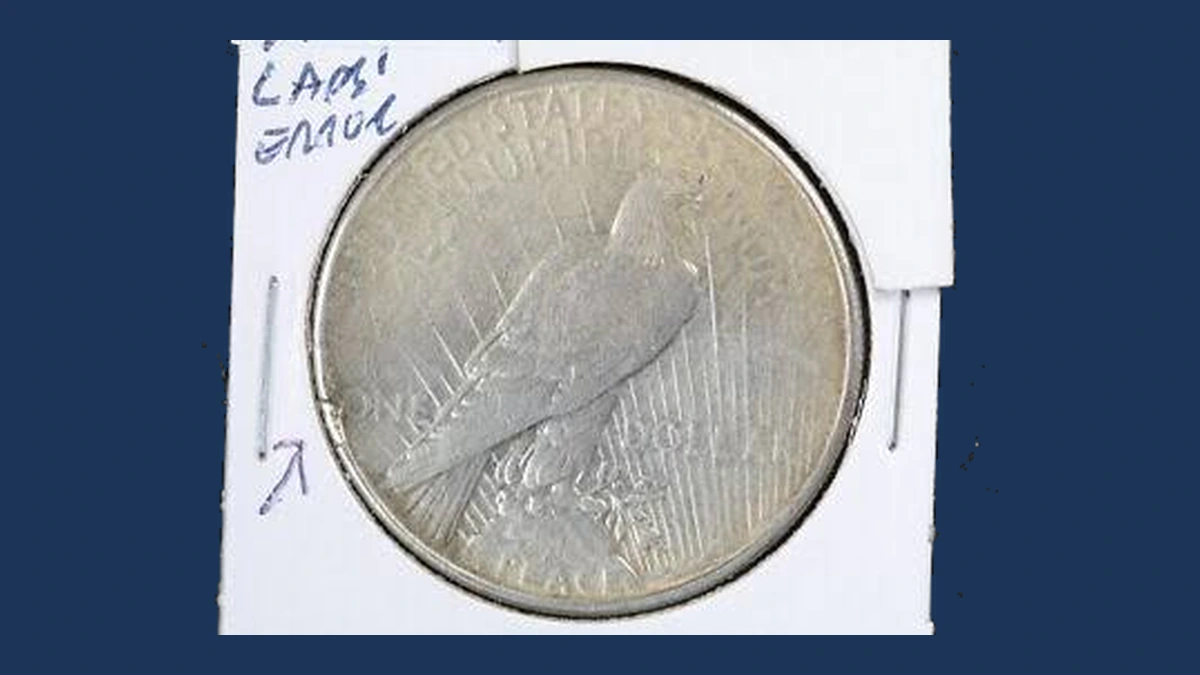
A flap or shallow missing patch can show that the silver alloy separated within itself. Collectors call this a lamination, meaning the metal has peeled along a weak layer.
The flaw begins in the metal used for the coin. A loose piece may remain attached or fall away after the design is struck.
On a Peace dollar, examine Liberty and the open surface around her for a layered boundary. A scratch cuts into the surface instead.
The size and depth can vary. A small surface peel should not be mistaken for an entire coin that has split through its thickness.
Estimated Value
For a genuine surface lamination, estimate $75–$850 for the whole coin. A minor flaw may add little, while a large attached flap can attract more interest.
A 1923 Peace dollar graded NGC MS64 with a front lamination sold for $84 in March 2024. That different-year example shows how modest such an error’s price can be.
The 1935 coin’s mint, wear, and original surfaces still matter. A deep gouge caused later does not receive the same estimate.
How to Identify
Leave any loose flap in place. Lifting it to inspect underneath can break away the best evidence of how the metal separated.
Use side lighting to follow the edge of the affected area. A layered opening should continue beneath the surface, whereas a scrape often leaves metal pushed along its sides.
Check whether nearby portrait detail remains intact. Broad wear smooths the high points; a lamination can interrupt a limited patch beside otherwise clear detail.
The normal coin is a silver-copper alloy, not a modern coin with a copper-colored center. For a deep separation reaching the rim, examine that edge without bending the coin.
Photograph the flap’s attachment or the exposed layered boundary before asking an error specialist to distinguish it from scraping.
2. 1935 Peace Dollar Clipped Blank
A missing bite at the edge can start before the dollar receives its design. The metal disc, called a blank, may be punched from an incomplete part of the silver strip.
If the punch overlaps a hole left by an earlier blank, it produces a curved gap. A strip boundary can produce a different outline.
Striking then forms the design on the metal that remains. Nearby letters or the rim may weaken as metal moves toward the gap.
A similar notch can be cut into a finished dollar. Its shape alone cannot show whether the metal was absent before striking.
Estimated Value
Estimate $150–$1,500 for a genuine clipped 1935 Peace dollar, including the value of the underlying silver coin. A small gap on a worn example belongs toward the lower end.
Use clipped silver-dollar comparisons with similar missing-metal size and condition. A dramatic gap with natural struck borders can command more than a shallow edge flaw.
The estimate assumes an original incomplete blank. A sawed or filed notch is damage, even when its curved outline resembles a collectible clip.
How to Identify
Examine the lettering closest to the gap before focusing on its shape. Metal movement during striking can leave those details stretched or weak near the missing section.
Then inspect the inner wall under magnification for cutting lines, burrs, or a freshly filed surface. Older damage can darken, so matching color does not establish authenticity.
A loose intact Peace dollar normally weighs 26.73 grams. A clip reduces that weight, but so does cutting away metal later.
Look across the coin for a weak rim opposite the gap, using it only as supporting evidence. Trace the adjoining design into the gap and check its inner wall together to distinguish an original clip from later removal.
3. 1935 Peace Dollar Raised Cracks and Rim Blobs
A wandering line can be the imprint of a crack in a die, the steel tool that stamps the coin. Metal enters that crack under striking pressure.
If a piece breaks away at the tool’s edge, the coin can develop a raised blob joined to its rim. This larger feature is called a cud.
The blob replaces design that the missing tool section can no longer form. A scratch, by contrast, normally cuts below the surface.
Treat a suspected 1935 rim blob as a feature to authenticate. Its position and size must come from the coin, not a general diagram.
Estimated Value
A confirmed raised crack or rim cud can be estimated at $100–$2,000 for the whole 1935 dollar. Small lines may contribute little beyond its normal date and condition value.
The higher portion assumes a substantial original rim-connected blob that replaces clear design. It is a conditional estimate, not a recorded sale of a named 1935 cud.
Compare the area covered, remaining detail, and surface preservation. A rim hit that merely pushes metal inward belongs to damaged-coin pricing instead.
How to Identify
Tilt the suspected line in the light to determine whether it stands above the surface. Do not run a sharp point across it.
Follow the line through nearby letters or open areas. A crack impression should behave like added raised metal, while a scratch usually has a sunken track and displaced sides.
For a larger blob, establish whether it actually joins the rim. An isolated small lump inside the design is not a rim cud.
Inspect the outside edge beside it for a dent that could have pushed ordinary rim metal inward. Also compare the opposite face for damage from squeezing.
Use a close photograph showing the blob, rim, and lost design together when requesting confirmation of the broken-tool error.
4. 1935 Peace Dollar Doubled Back Design
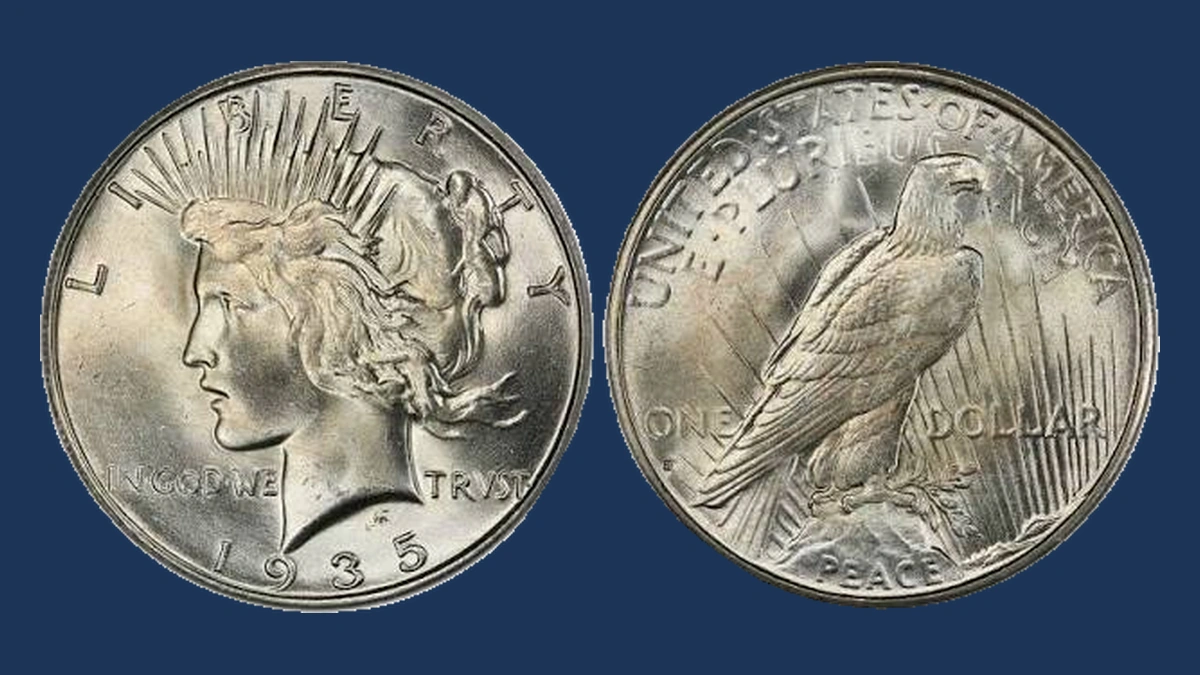
Extra raised outlines on the back can belong to the stamping tool itself. Every coin struck from that tool can repeat the same doubled details.
The recognized 1935-S variety is VAM-4, a catalog name used to identify its particular design pattern. PCGS includes it among the Top 50 Peace dollar varieties.
Examine the lower eagle area, the branch, and nearby lettering against a confirmed example. A general impression of thick letters is not enough.
Doubling formed during the strike can leave flatter ledges that resemble a second outline. Reflections can also create extra lines that disappear when the light moves.
Estimated Value
A PCGS-listed VAM-4 example graded MS66 sold for $4,200 in December 2016. Estimate $150–$5,000 for identified examples across circulated and well-preserved unworn grades.
Much of the high-grade price belongs to the quality of the 1935-S dollar itself. The doubling premium should not be confused with the whole auction amount.
Wear can hide the small details needed to name the variety. Clear raised separation and original surfaces make a closer comparison possible.
How to Identify
Find the S on the back before comparing VAM-4 photographs. A no-mintmark Philadelphia dollar cannot be assigned this San Francisco variety merely because a letter looks doubled.
Choose a clear image of a confirmed VAM-4 and compare the lower back design under a magnifier. Keep the eagle’s branch and adjoining lettering in the same view.
Change the lighting angle if an apparent outline follows a bright reflection. Genuine doubled detail remains part of the raised design rather than moving across the surface with the light.
A flat shelf alongside one letter can result from movement during striking. Match several raised outlines in the same positions as the confirmed VAM-4 image before using that variety’s price range.
5. 1935 Peace Dollar Expanded Strike
A broadstrike spreads beyond the usual coin outline because the surrounding collar ring does not properly contain the metal. The full design remains on the expanded disc.
The coin need not be perfectly centered. What matters is that the design fits while the metal has spread beyond its normal boundary.
The edge can lack the grooves normally formed by the collar. However, a smooth edge by itself does not prove a broadstrike.
Grinding or flattening a finished dollar can also change its outline. A genuine expanded strike should explain the edge, wider metal, and preserved design together.
Estimated Value
For an authenticated 1935 broadstrike, estimate $2,500–$10,000. This is a whole-coin estimate based on the scarce Peace-dollar error type, rather than a routine premium for a smooth edge.
As a different-year comparison, a 1921 broadstrike graded NGC AU58 sold for $7,762.50 in January 2009 at Heritage Auctions. The 1921 issue has a different raised design profile.
Expansion, original surfaces, and a clearly complete design influence the estimate. Later flattening does not receive this error value.
How to Identify
First check whether LIBERTY, the date, and the back inscriptions all remain on the metal. A shifted design partly beyond the disc points toward an off-center strike instead.
Measure a loose coin across several directions with calipers. A normal Peace dollar is 38.1 millimeters wide; a broadstrike can spread unevenly beyond that size.
Inspect the edge for natural spreading rather than grind marks. Weighing near the normal 26.73 grams can support an intact blank, but a flattened normal coin may also retain its weight.
The missing edge grooves therefore need support from the faces. Compare the expanded border with the complete, normally struck design before having the coin checked as a broadstrike.
6. 1935 Peace Dollar Off-Center Strike
A blank crescent beside a missing design indicates that the metal disc was out of position when struck. Both faces are displaced relative to the same disc.
The exposed crescent was outside the tools and received no design. On the opposite side, part of the design can fall beyond the metal.
This differs from an expanded strike that preserves the complete design. A one-sided uneven border can also result from a shifted stamping tool rather than an off-center blank.
The date must establish 1935. A missing date cannot be replaced by a guess based on the general Peace design.
Estimated Value
Estimate $3,000–$35,000 for an authenticated off-center 1935 Peace dollar, depending on displacement, wear, and the surviving date. This is an estimate for a major striking error.
A different-year comparison shows the possible scale: a 1922-S Peace dollar struck fifteen percent off center brought $32,200 at the 2003 ANA auction. It was graded PCGS MS65.
That exceptional older sale does not establish a standard price for every offset dollar. A slight one-sided misalignment belongs in a different category.
How to Identify
Find and read the date first. If enough of it lies beyond the metal, the coin cannot simply be called a 1935 example from its general appearance.
Now turn it over while keeping track of the unstruck crescent’s position. Both designs should be displaced relative to that same part of the disc.
Examine where the smooth metal meets the struck design. Filing, an attached extension, or later flattening may produce an unnatural boundary.
The normal dollar’s edge grooves can help you compare struck and unstruck portions, but do not expect every section to look identical. Confirm matching displacement on both faces and a natural unstruck crescent before estimating how far off center the strike is.
Conclusion
The estimated $75–$35,000 span covers very different coins, from modest metal flaws to major striking errors. A small abnormality does not automatically place a dollar near the top.
For the 1935-S doubled back, match the named variety before comparing prices. For missing or spreading metal, examine the original boundaries and both faces.
Keep loose flakes untouched, avoid cleaning, and use the coin’s actual features to choose the right comparison.