1991 Penny Error List with Pictures

Two presidents on one penny make an unusual pair. A 1991 penny error with Lincoln struck over Roosevelt sold for $747.50 in a 2006 auction.
Other mistakes are much smaller: an extra bar in LIBERTY, a curved missing edge, or faint building lines beside the portrait. The types below have estimated values from $2 to $2,500.
Read on to see which details matter and how to separate a mint mistake from later damage.
1. 1991 Lincoln Memorial Penny Doubled Dies (Estimated Up to $150)
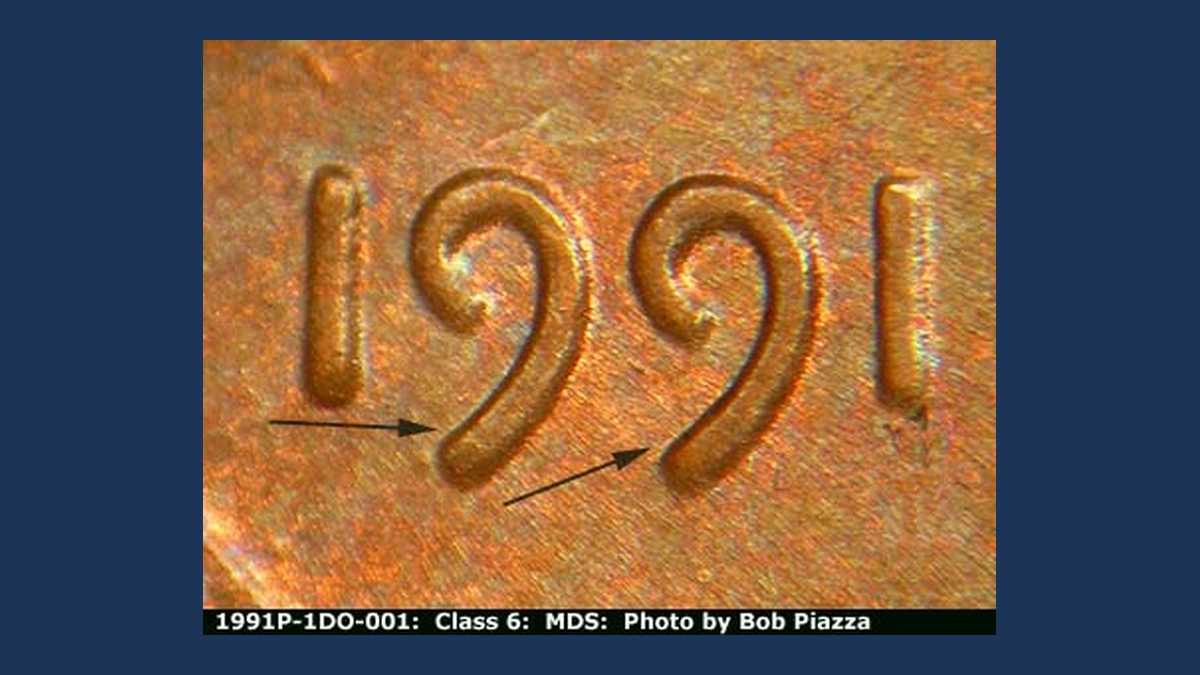
The bottoms of the two 9s deserve a closer look. Some 1991 cents have thickened date digits and a fine extra line in Lincoln’s hair above his forehead.
A doubled die is a steel stamping tool that received a doubled design during manufacture. Its coins repeat that design in the same places.
Other examples show extra Memorial details or doubled lettering on the back. These are separate varieties, so one coin need not show every listed feature.
The important difference is an extra part of the design. A flat ledge beside a letter often comes from movement during striking instead.
Estimated Value
Most modest examples fall within an estimated $2–$150 range. This is an estimate for confirmed minor Memorial-cent doubling, rather than a reported auction result for every 1991 variety.
Tiny doubling on a worn coin usually brings less than clear separation on a bright, undamaged piece. Collectors also need to recognize which variety they are buying.
An ordinary coin with flat strike doubling does not gain the same premium simply because its letters look thick.
How to Identify
Start with the date and mint mark before comparing close-up photographs. Philadelphia coins have no mint letter, while Denver coins have a D below the date.
With a 10× magnifier, inspect the two 9s and the hair above Lincoln’s forehead. For back-side varieties, compare the Memorial columns and nearby lettering with the exact listed example.
Do not combine marks from different coins. The 1991 variety photographs show the differences.
Check a loose coin against 2.50 g on a scale and 19.05 mm with calipers, and inspect its plain edge. These checks will not prove doubling.
Match a separated design line at the same location in a confirmed variety photograph.
2. 1991 Lincoln Memorial Penny Clashed Dies (Estimated Up to $150)
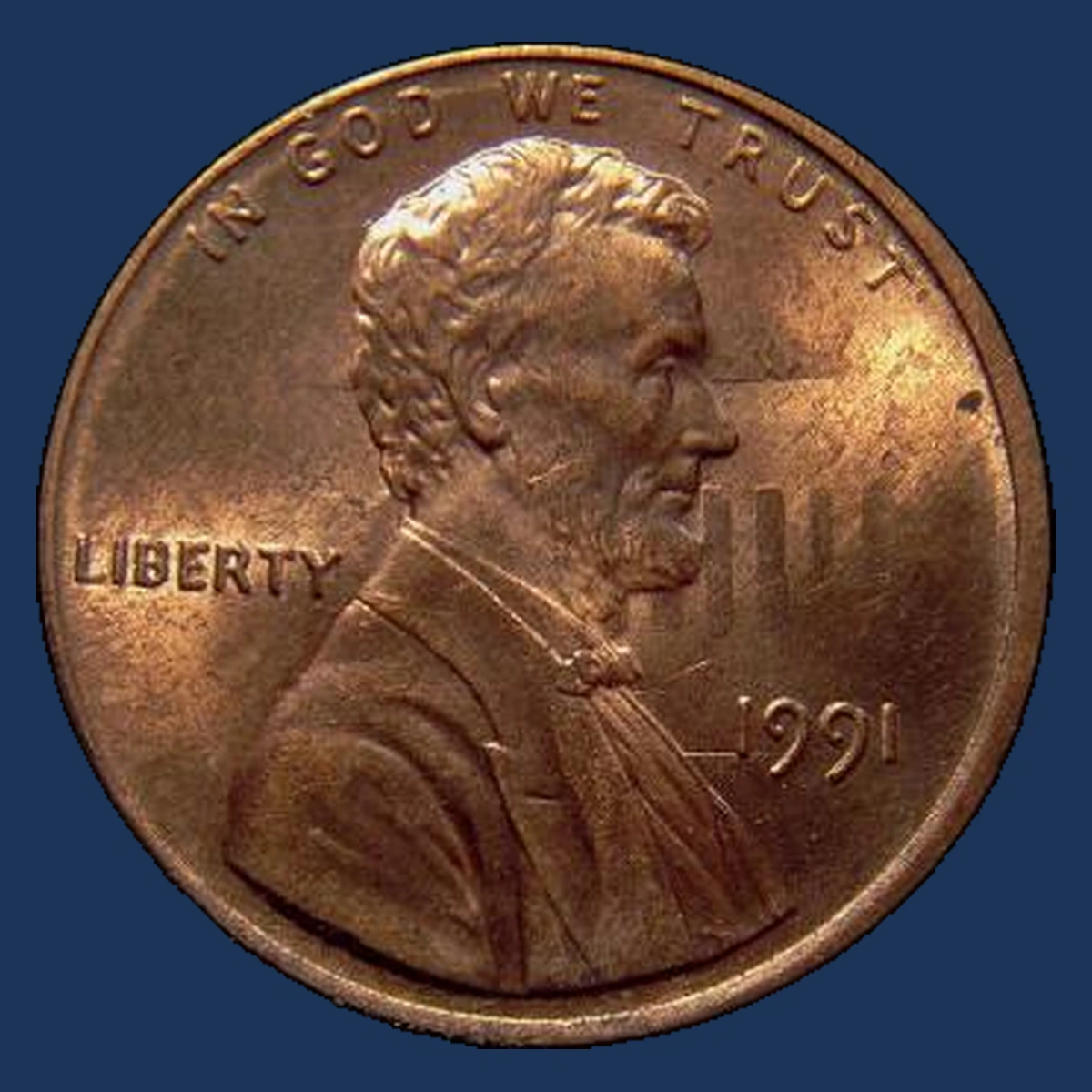
Lincoln’s side can carry faint traces of the building normally found on the back. The 1991 example illustrated by Lincoln Cent Resource shows this kind of unexpected outline.
It starts when the two stamping tools meet without a metal disc between them. Each tool can pick up a shallow mark from the opposite design.
Later coins then receive those marks alongside their normal designs. Collectors call this a die clash.
Look for a small recognizable trace, not a complete second portrait pressed deeply into the surface. That deeper impression would call for a different explanation.
Estimated Value
A reasonable estimate is $10–$150 for light to clear 1991 clashes. This range follows the market for minor Memorial-cent clashes, with the strength of the transferred image carrying much of the value.
A faint line that needs careful lighting belongs near the lower end. Several clear, correctly placed building details can attract stronger interest.
The illustrated 1991 coin establishes the type, but it is not a priced auction sale in this guide.
How to Identify
Find the unexpected line on the portrait side, then turn the coin over. Ask which part of the Memorial could have left that shape.
A 10× magnifier helps distinguish a design trace from an ordinary scratch. Change the light angle instead of rubbing the surface.
Inspect the plain edge for damage from squeezing. A scale reading near the usual 2.50 g and a caliper measurement near 19.05 mm provide basic size checks.
Compare the pattern with the illustrated 1991 clash. An imagined building assembled from several unrelated scratches is not a match.
Trace the same Memorial outline in the same position as the confirmed example.
3. 1991 Lincoln Memorial Penny Curved Clip (Estimated Up to $200)
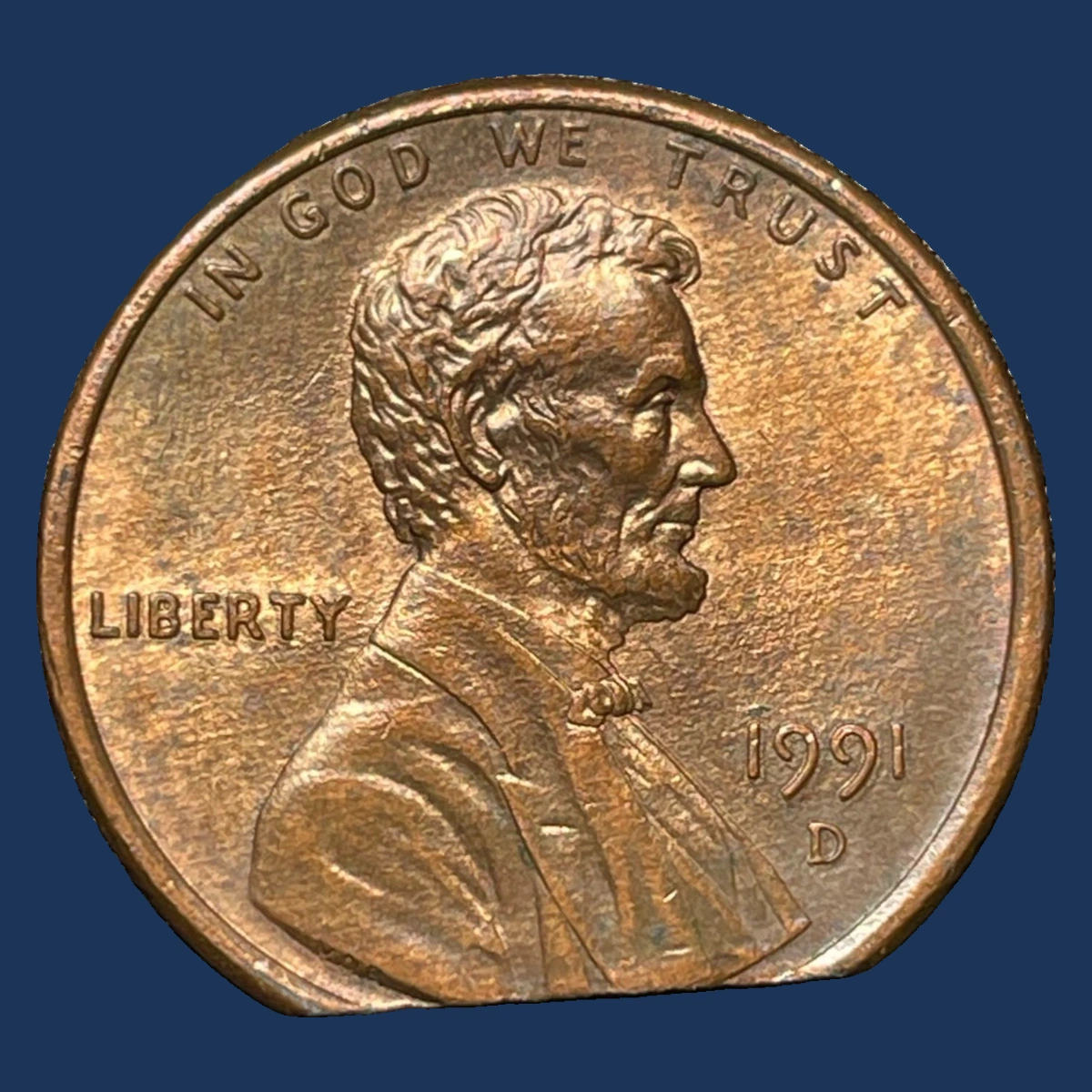
A smooth inward curve interrupts the edge where metal should have been. On the 1991 coin discussed by Ken Potter, this missing section appears together with an off-center design.
The missing metal starts earlier than the strike. A cutter overlaps a hole in the metal strip while punching out a fresh disc.
The incomplete disc later receives the coin design. Its clipped boundary can affect how metal flows around the neighboring rim.
A coin cut after leaving the Mint may look similar from above. The shape alone therefore matters less than the edge and the design beside it.
Estimated Value
Allow an estimated $15–$200 for genuine 1991 curved clips, including more interesting combined errors. Larger missing sections and an obvious off-center strike can increase collector appeal.
For a recent comparison, a 2021 cent with a straight clip sold for $114 at Heritage in September 2025. Its clip shape differs from this year’s reported curved example.
The comparison supports a general price level, not a recorded sale price for the illustrated 1991 coin.
How to Identify
Lay the coin beside a normal cent without pressing their edges together. Compare the missing curve and the neighboring rim, rather than judging only the outline.
Under a 10× magnifier, look for natural metal flow at the clipped boundary. Saw marks, fresh cutting lines, or a filed surface suggest later alteration.
The rim opposite a genuine clip may be weak, although that feature is not required in every case. Examine any off-center design separately.
Use calipers on the intact portion against the normal 19.05 mm diameter. A scale should show a loss from the usual 2.50 g that fits the missing metal.
Check the curved boundary for original striking detail that meets it naturally, without later cutting marks.
4. 1991 Lincoln Memorial Penny Broken and Sunken Dies (Estimated Up to $300)
An extra raised bar between B and E makes LIBERTY seem to contain an I. This small break in the stamping tool is commonly called a BIE error.
A larger tool failure is also reported for 1991. A central part of the back-side tool sank, leaving a corresponding raised area on the coin.
The larger coin also shows other striking problems. The raised area itself comes from a change in the tool’s surface, rather than a piece of the coin peeling away.
Small chips and larger failures can look quite different despite sharing a damaged stamping tool as their cause.
Estimated Value
This group has an estimated range of $2–$300. Small BIE bars usually occupy the inexpensive end, while a large, clearly confirmed raised area can draw more attention.
A 1988 cent with a prominent rim-connected die break sold for $312 at Heritage in March 2025. That is a different form of tool damage and a different year.
The comparison helps size the possible premium; it does not establish a $312 sale for the reported 1991 sunken-tool example.
How to Identify
For a BIE coin, aim a 10× magnifier between the B and E of LIBERTY. A genuine raised bar should join the coin’s surface naturally, rather than sit on it as dirt.
For the larger failure, inspect the height change and any design remaining across it. Compare both faces, since dents can push metal upward on the opposite side.
Check the plain edge without trying to separate any apparent layers. Use a scale and calipers against the normal 2.50 g and 19.05 mm specifications.
Tool damage need not change either measurement. The raised pattern and its relationship to the original design matter more.
Look for an unbroken original surface across the raised feature, then compare its exact shape with a confirmed example.
5. 1991 Lincoln Memorial Penny Struck-Through Error (Estimated Up to $350)
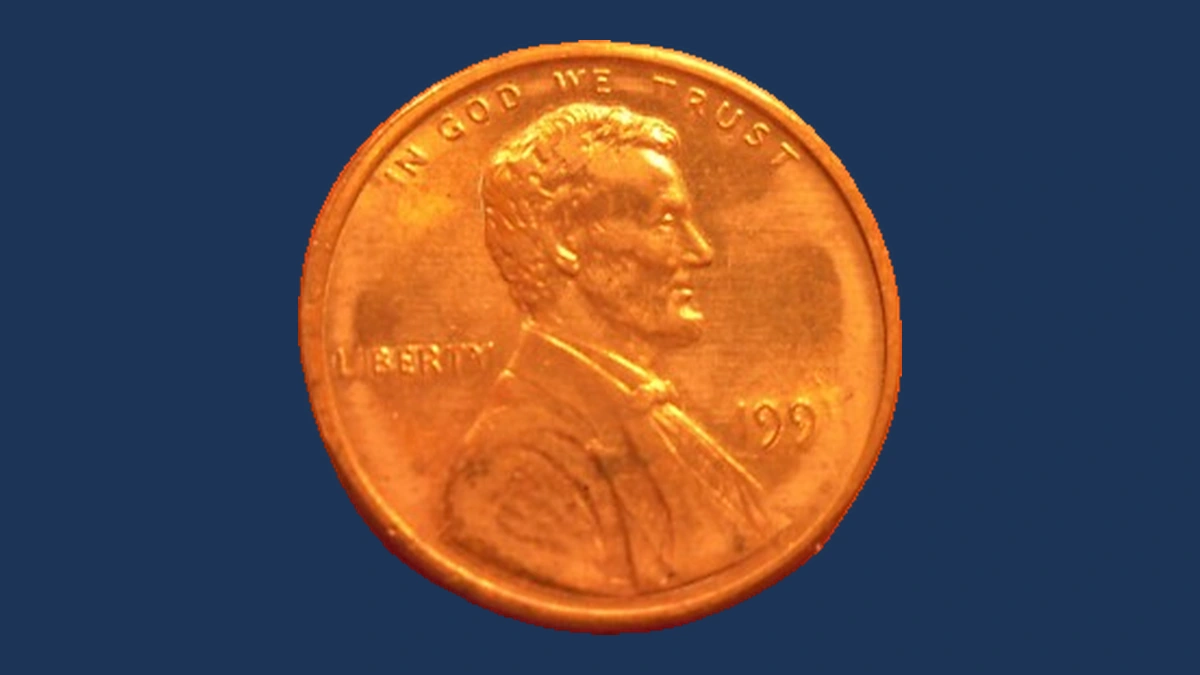
A patch of missing detail can be the clue. Material caught between the metal disc and a stamping tool can block part of the design or leave an impression.
This is called a struck-through error. The material might move away after the strike, leaving only its effect on the coin.
The 1991 reports do not establish a repeated location or specific material. A weak letter alone therefore does not identify cloth, wire, or grease.
The affected area should still have a surface consistent with striking. A scraped patch that removes both metal and design is a different kind of damage.
Estimated Value
For confirmed examples, estimate $5–$350, from minor blocked details to a large, clear impression. The size and appearance of the affected area matter more than a dramatic seller’s description.
A 2017-D cent struck through material on its front sold for $228 at Heritage in March 2025. That later coin offers a useful price comparison, not proof of an identical 1991 error.
Heavy scratches or corrosion do not receive this mint-error premium.
How to Identify
View the weak area beside equally exposed details elsewhere on the coin. Ordinary wear usually softens several high points, while an obstruction can affect a more local area.
With a 10× magnifier, inspect the surface inside and around the patch. Look for original texture rather than parallel scrape marks or rough corrosion.
Weigh a loose coin against the usual 2.50 g, then measure it with calipers against 19.05 mm. Check the plain edge for filing or squeezing.
These checks help screen out damage but do not identify the trapped material. A retained object needs expert examination before anyone tries to remove it.
Follow the untouched surface into the weak design area and check that no later scraping explains the missing detail.
6. 1991 Lincoln Memorial Penny Broadstrike and Partial Collar (Estimated Up to $400)
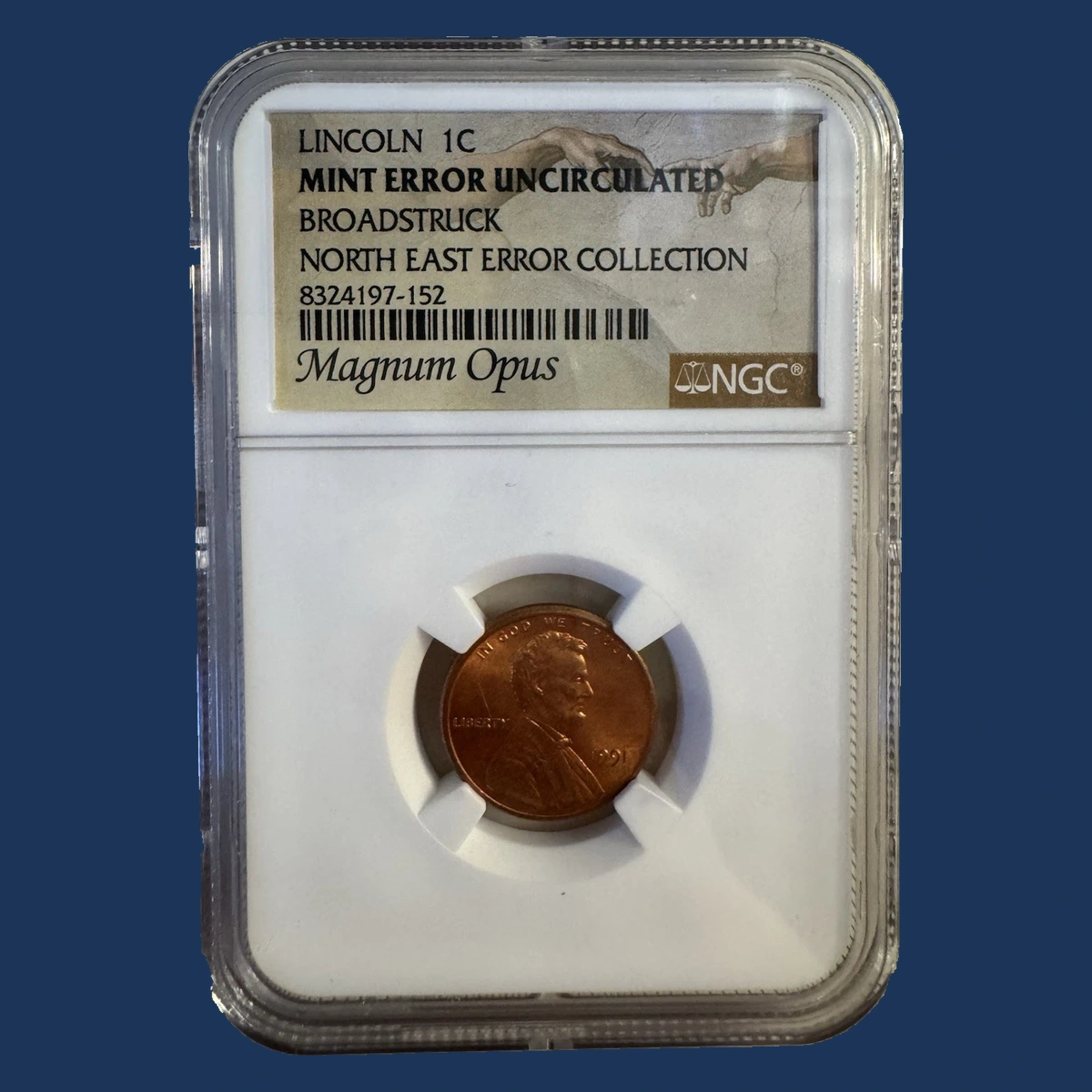
The design can fit inside an unusually wide coin, or the edge can have two different levels. Both effects involve the collar, the ring that normally limits the coin’s width during striking.
A broadstrike forms when the ring does not contain the metal. A partial collar forms when it contains only part of the coin’s thickness.
Both forms are reported for 1991. One broadstruck example also carries a partial mirror-image impression.
The stepped edge can resemble two faces coming apart. In a partial-collar error, however, it reflects uneven outward spread rather than two separate pieces of metal.
Estimated Value
Estimated prices run from $15–$400. A modest edge step generally costs less than dramatic spread combined with another clear mint error.
An ordinary 1999 broadstruck cent graded MS65 Red by PCGS sold for $67 at Heritage in March 2023. MS65 describes an unworn coin with relatively few marks.
That sale is a comparison for a simple broadstrike. A 1991 coin with an added mirror-image impression needs to be priced as one combined-error coin.
How to Identify
Look along the edge first. A partial collar can leave a narrow portion beside an expanded portion, forming a continuous step.
For a broadstrike, compare the whole design with a normal cent. The design should remain complete even though metal spreads beyond its usual boundary.
Measure several directions with calipers against the normal 19.05 mm diameter. Check a scale against 2.50 g, since spread alone does not remove metal.
Under a 10× magnifier, inspect the normally plain edge for hammering or repeated impact marks. Do not pry at a step that appears to be a seam.
A complete design inside extra spread suggests a broadstrike; a natural two-level edge points to partial collar contact.
7. 1991 Lincoln Memorial Penny Off-Center Strike (Estimated Up to $500)
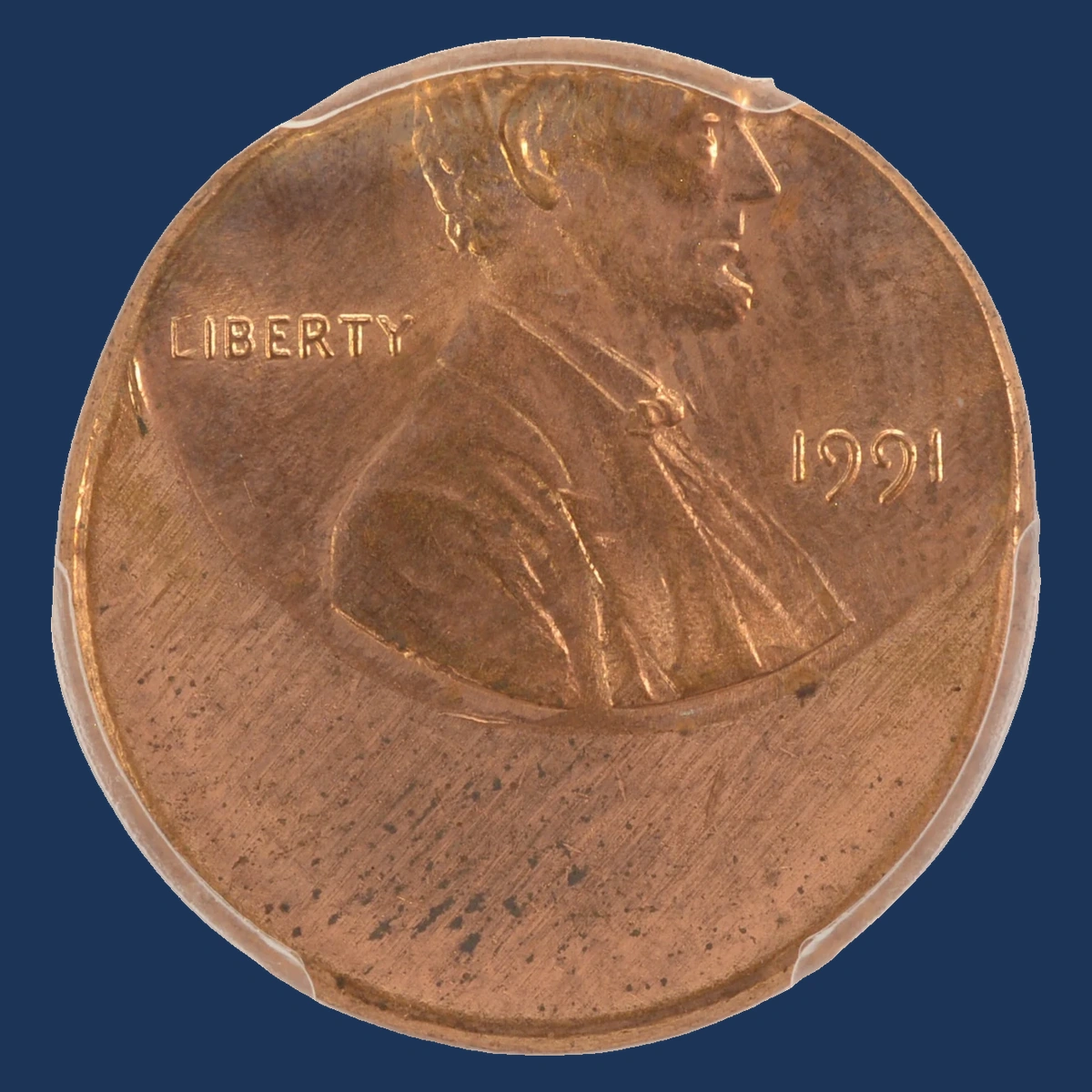
One side of the disc remains blank while the design runs beyond the other side. The metal disc was not centered between the stamping tools when they came together.
A recorded 1991 example has a 15% shift toward two o’clock. ANACS graded that coin MS64 Red, meaning it remained unworn and retained its red copper color.
The percentage describes the amount of displacement, not how much the coin weighs. Larger shifts can cut away much more of the readable design.
A full date helps collectors identify the coin and can make an otherwise similar off-center piece more appealing.
Estimated Value
A practical estimate is $20–$500 for genuine 1991 off-center cents. Small shifts sit toward the lower end, while bold displacement with a readable date can command more.
In March 2023, a 1999 cent struck 10% off-center sold for $47 at Heritage. It offers a comparison for a modest error, rather than a price for the recorded 15% 1991 example.
Surface damage can sharply reduce the value of an otherwise dramatic piece.
How to Identify
Find the date before estimating how far the design moved. Make sure all readable digits actually belong to the coin, rather than to a seller’s description.
Compare the two faces under a 10× magnifier. A genuine off-center strike leaves an unstruck portion and cuts off part of the design.
A displaced rim with the full design still present may instead involve a misaligned tool. Check the plain edge for signs that someone trimmed or squeezed the coin.
A scale should remain close to the normal 2.50 g unless another error removed metal. Use calipers to record the outline against the usual 19.05 mm size.
Find the blank crescent directly opposite the part of the design that runs off the coin.
8. 1991 Lincoln Memorial Penny Double Strike (Estimated Up to $600)
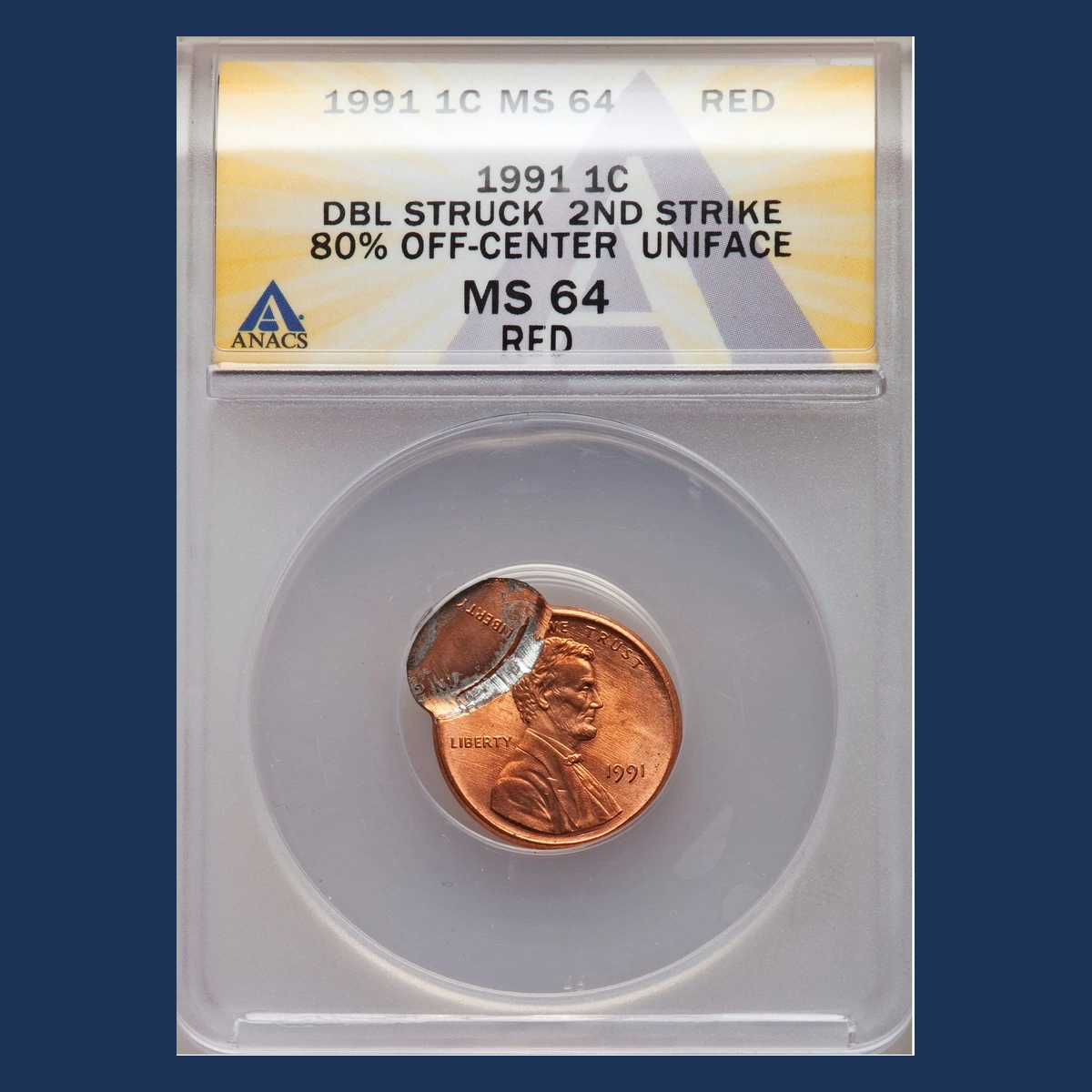
Two separate design impressions can share the same piece of metal. A coin that fails to leave the press may move and receive another blow from the stamping tools.
The recorded 1991 example has its second strike about 85% off-center. Most of that second design falls beyond the coin, leaving only a smaller overlapping portion.
This is different from a doubled die, which repeats extra outlines from a doubled tool design. Here, the coin itself was struck again.
The first design and the second strike’s boundary help show the sequence. Their relationship is more useful than simply counting doubled letters.
Estimated Value
Estimate $50–$600 for 1991 double strikes, depending on how clearly the two blows can be seen. The recorded example graded PCGS MS65 Red sold for $149 at Heritage on March 18, 2024.
That actual result shows that a very large second-strike percentage does not automatically mean a huge price. Readable dates, attractive overlapping designs, and undamaged surfaces affect demand.
More complex examples can cost more, but the number of strikes alone does not set the value.
How to Identify
Locate a boundary where the later blow flattens or interrupts the first design. Then follow the surviving parts of each impression separately.
A 10× magnifier should reveal real struck details within the second area. Flat ledges beside letters are not evidence that the whole coin received another blow.
Inspect both faces and the plain edge for crushing from a vise. Later squeezing can create misleading impressions but usually damages surrounding details.
Record the outline with calipers, using 19.05 mm as the ordinary diameter. Compare the weight with 2.50 g on a scale; repeated striking does not by itself remove metal.
Identify two distinct struck areas and the point where the later one overlaps the first.
9. 1991 Lincoln Memorial Penny Missing Copper Plating (Estimated Up to $700)
A normal 1991 cent has a thin copper coat over a zinc center. Missing original coating can leave part or all of the coin gray instead of copper colored.
The error begins before the coin receives its design. The exposed zinc is then struck along with any remaining copper.
Year-specific reports include this type, but a gray coin needs more than a color match. Chemicals can remove copper from an ordinary finished cent.
The boundary between gray and copper areas can explain what happened. Roughness, pits, or damaged design can point to later treatment rather than an original plating mistake.
Estimated Value
Use an estimated $50–$700 for a 1991 coin confirmed to have missing original copper plating. This range does not apply to ordinary cents stripped after leaving the Mint.
A 1995-D unplated cent graded PCGS MS63 sold for $180 in March 2023. Another unplated 1995 cent, graded NGC MS67, brought $660 in January 2023.
Those different grades show how preservation affects the price. They are comparison sales from another year, not documented 1991 results.
How to Identify
Keep the coin dry and untreated. Acid or polishing would destroy the surface clues needed to distinguish a mint error from a stripped cent.
Examine gray areas and any copper boundary through a 10× magnifier. Look for undamaged struck detail, without the roughness that can follow chemical attack.
Compare its plain edge with the two faces. A scale reading slightly below the normal 2.50 g may fit missing copper, but can also fit later stripping.
Check the diameter with calipers against 19.05 mm. A noticeably smaller silver-colored coin may involve a dime disc instead.
Have the original surface and coating boundary examined together before treating gray color as a missing-plating error.
10. 1991 Lincoln Memorial Penny Partial Brockage (Estimated Up to $1,000)
Some letters or design details face the wrong way and sink into the surface. This mirror-image impression is called a brockage.
It forms when a previously struck coin sits between a new disc and one of the stamping tools. The finished coin acts as a stamp, pressing its raised details into the next piece.
The recorded 1991 example combines a partial brockage with outward spread from a broadstrike. ANACS graded it MS63 Red.
Only part of the design needs to show the backward impression. Its depth and direction separate it from the faint transferred lines of a tool clash.
Estimated Value
An estimated $150–$1,000 covers partial brockages of this general size and complexity. Large, readable backward details and attractive surfaces tend to raise the price.
The 1991 broadstrike-and-brockage coin is a single combined example. Its two errors should not be assigned separate prices and added together.
This range compares other Memorial-cent mirror-image errors rather than a verified selling price for that particular listing. Weak, crowded impressions generally attract less than a clear recognizable design.
How to Identify
Turn a close-up image backward on a screen, or compare it with a mirror image of a normal design. The odd details should then make visual sense.
Use a 10× magnifier and side lighting to confirm that the backward features sink into the surface. Raised normal lettering beside them can help judge the difference.
A scale comparison with 2.50 g checks the metal amount. Calipers may show extra width beyond 19.05 mm on the combined broadstruck example.
Inspect the plain edge and both faces for vise damage, since squeezing two finished coins together can produce a false mirror impression.
Look for readable backward, sunken details within an otherwise naturally struck and undamaged surface.
11. 1991 Lincoln Memorial Penny Struck on a Dime Blank (Estimated Up to $1,500)
Lincoln’s design may look too large for the silver-colored disc beneath it. A cent struck on an unused dime blank has less space around the portrait and lettering.
A blank is the metal disc prepared for striking. In this error, a disc intended for a different denomination reaches the cent press.
The dime disc has silver-colored outer layers bonded around a copper center. That construction differs from the cent’s thin copper coat over zinc.
This type is reported for 1991 separately from cents struck over finished dimes. An unused disc should not already carry Roosevelt’s portrait or the dime’s torch.
Estimated Value
For a confirmed example, estimate $400–$1,500. The range is for the wrong metal disc, not for a normal cent that someone plated or trimmed.
A 2007-D cent on a dime blank, graded PCGS MS66, sold for $600 at Heritage in March 2023. That later coin offers a direct comparison of the same basic mistake.
A clear date, strong cent design, and clean surface can improve the price within this estimated range.
How to Identify
Begin with measurements rather than color. A normal cent weighs 2.50 g and measures 19.05 mm, while an ordinary dime weighs about 2.268 g and measures 17.91 mm.
Use a scale and calipers without scratching the coin. Striking can spread a wrong-size disc, so its final diameter need not match an untouched dime exactly.
With a 10× magnifier, examine the edge for the copper center between silver-colored outer layers. Do not require the grooves of a finished dime.
Check both faces for older dime details. Their presence would make it an overstruck dime instead of an unused blank.
Combine dime-like weight and layered metal with a cent design that naturally runs short of room.
12. 1991 Lincoln Memorial Penny Struck Over a Finished Dime (Estimated Up to $2,500)
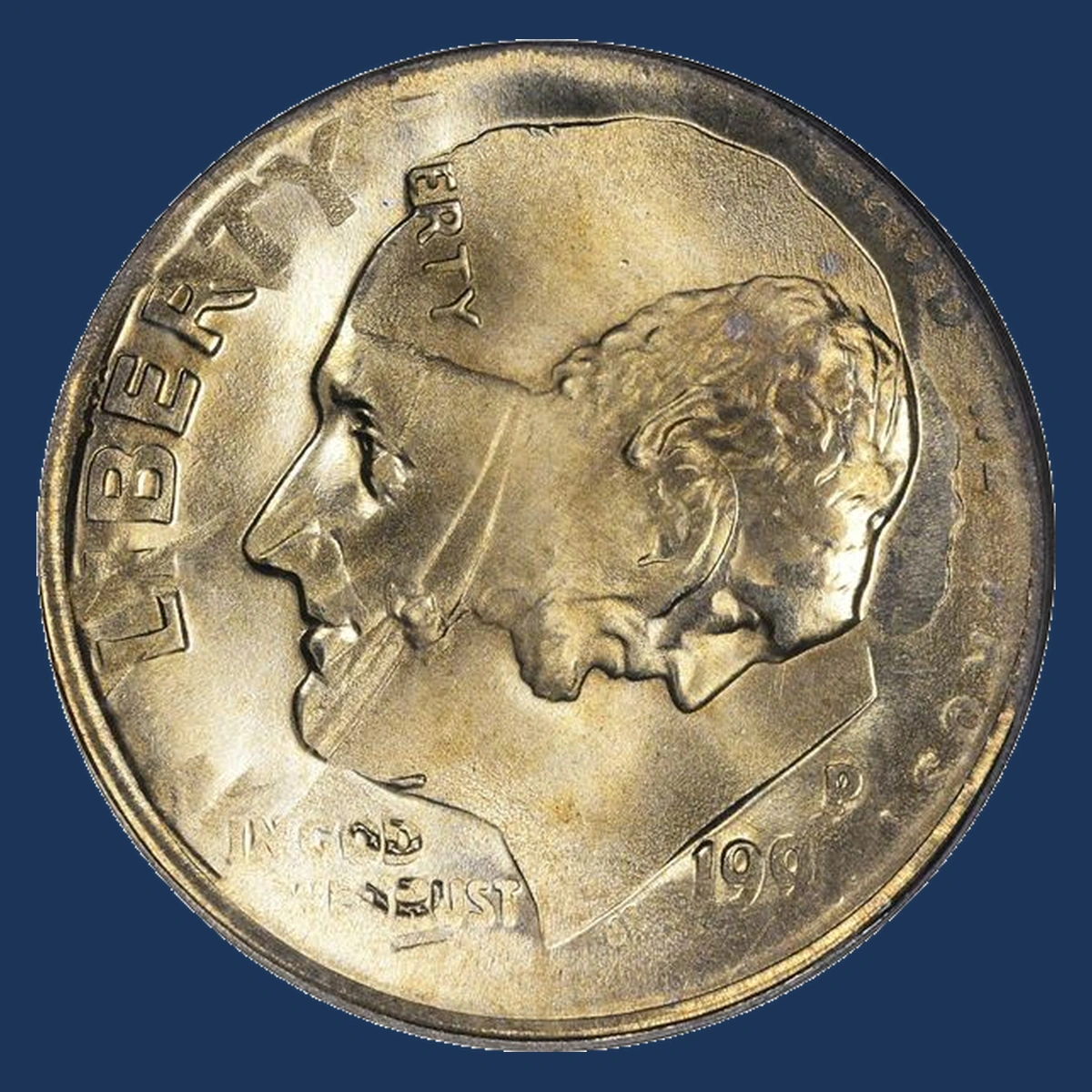
Roosevelt’s portrait is visible beneath Lincoln’s on this coin. It began as a finished dime and then received the cent design in another press.
The recorded ANACS MS63 example has Roosevelt pointing toward the lower left relative to Lincoln. Traces of the dime’s date and P mint mark remain visible.
All four digits of the cent’s 1991 date can be identified, although their lower portions are partly missing. The dime’s final date digit is not readable.
The auction described the underlying dime as 1991-P. Its older design remains the key difference from a cent struck on an unused dime disc.
Estimated Value
The recorded 1991 overstruck dime sold for $747.50 on April 29, 2006. An estimated $700–$2,500 range allows for differences in preservation and the visibility of both designs.
A later comparison supports continued collector interest: a 2001 cent over a 2001-P dime brought $1,320 at Heritage in September 2025.
That newer result is from another year. A clear pair of overlapping portraits generally makes the mistake easier to appreciate and can improve demand.
How to Identify
Find a feature that belongs only to the dime, such as Roosevelt’s portrait or part of the torch. Copper color alone cannot explain this coin.
Under a 10× magnifier, trace the older image beneath the cent details. Keep the readable cent date separate from the partly hidden dime date.
The metal should fit a dime’s bonded layers and about 2.268 g weight, rather than a normal cent’s 2.50 g. Inspect the edge for that layered construction.
Use calipers to compare the outline with ordinary dime and cent diameters of 17.91 and 19.05 mm. The second strike can spread the metal.
Find genuine dime design under genuine cent design, with both belonging to the same naturally struck piece of metal.
Conclusion
Estimated values for these 1991 penny errors run from $2 to $2,500. A small raised bar and a coin carrying two different designs belong at very different price levels.
Look at the metal, edge, and visible design before accepting an error name. Keep the coin untreated, record its measurements, and compare the specific feature with a confirmed example before paying a substantial premium.