2007 Presidential Dollar Error List with Pictures

A Washington dollar struck over a Jefferson nickel brought $17,625 in January 2016. Its two overlapping coin designs are far removed from the faint edge letters most collectors notice first.
These 2007 Presidential dollar errors range from small tool marks to unusual metal and major striking accidents. Estimated values span $5–$25,000, with the president, finish, and actual mistake all affecting the comparison.
Read on to check ordinary dollars and collector Proofs without confusing their different edge-making processes.
1. 2007 Presidential Dollar Uneven Edge-Letter Spacing
One stretch of edge can look unusually empty while another has crowded characters. On Washington dollars, NGC described a large gap between TRUST and the following date, with the mint letter crowding E PLURIBUS UNUM.
The coin slipped during the separate lettering operation. This changes the spacing within the inscription rather than producing two complete sets.
Ordinary edge lettering can begin anywhere relative to the portrait, so its starting point is not an error. The meaningful feature is an abnormal gap or overlap within the words and date themselves.
Estimated Value
For a substantial, original spacing error, estimate $10–$150. A clear combination of an enlarged gap and a crowded section provides a stronger display than a slight difference in spacing.
A 2009-D Taylor slipped-edge coin was reported at $16.59 in a 2010 sales survey. That later president supplies an older comparison, not a price for the Washington example.
Wear can blur the characters needed to show the displacement. Minor spacing changes may bring little premium.
How to Identify
Follow the inscription from TRUST to the date, then from the mint letter toward E PLURIBUS UNUM. Compare the actual gaps with an ordinary, normally lettered Washington dollar rather than where the inscription sits beneath the portrait.
Keep a full circle of edge photographs in their original order. A misplaced or repeated frame can create a false gap that is not present on the metal.
Examine any crowded area with a magnifier to separate sliding marks from a second set of letters. A single inscription with an enlarged gap balanced by crowded characters fits this type better than two complete strings.
2. 2007 Presidential Dollar Faint Outlines from Clashed Dies
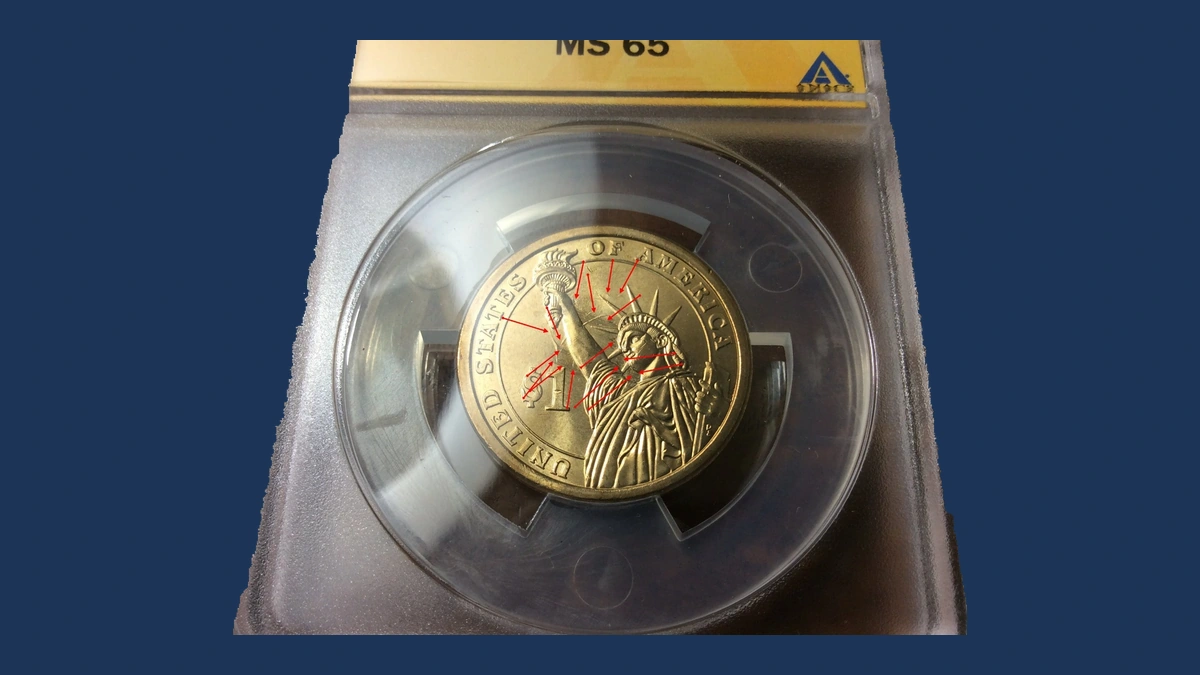
An extra outline can appear near Washington’s eye or among the Statue of Liberty’s details. It forms when the two dies, the steel tools that stamp the coin, strike each other without a blank metal disc between them.
That contact can mark a tool with part of the opposite design. Later coins then carry the unwanted outline alongside their normal pictures.
Documented Washington examples show linked marks near the eye, between the dollar sign and numeral, beside the crown, and below the jaw. Some traces can be weakened when a tool is polished.
Estimated Value
A recognizable Washington clash fits an estimated $20–$250 range. Several connected transferred details usually make a better comparison than one unexplained line.
Wear or tool polishing can leave only fragments of the original clash. Price those weaker appearances below examples with clearer outlines and cleaner surfaces.
An extra crown ray from a clash is not the same feature as the elongated third ray. Its shape and surrounding transferred detail must support the clash explanation.
How to Identify
Place same-sized photographs of both faces beside each other and locate an extra outline. Ask which part of the opposite picture could account for its shape.
On a Washington candidate, inspect the eye area and the reported back-side locations around the crown, jaw, and dollar value. Follow related curves rather than matching a lone straight line.
The normal design must be considered too.
An ordinary crown ray, a doubled tool detail, or a scratch can each look unusual under strong light. Compare with a normal coin and change the lamp direction to separate real raised detail from reflection.
A connected shape matching the opposite face provides the useful check. Do not identify a clash solely because the crown seems to have another point.
3. 2007 Presidential Dollar Raised Cracks and Small Die Breaks
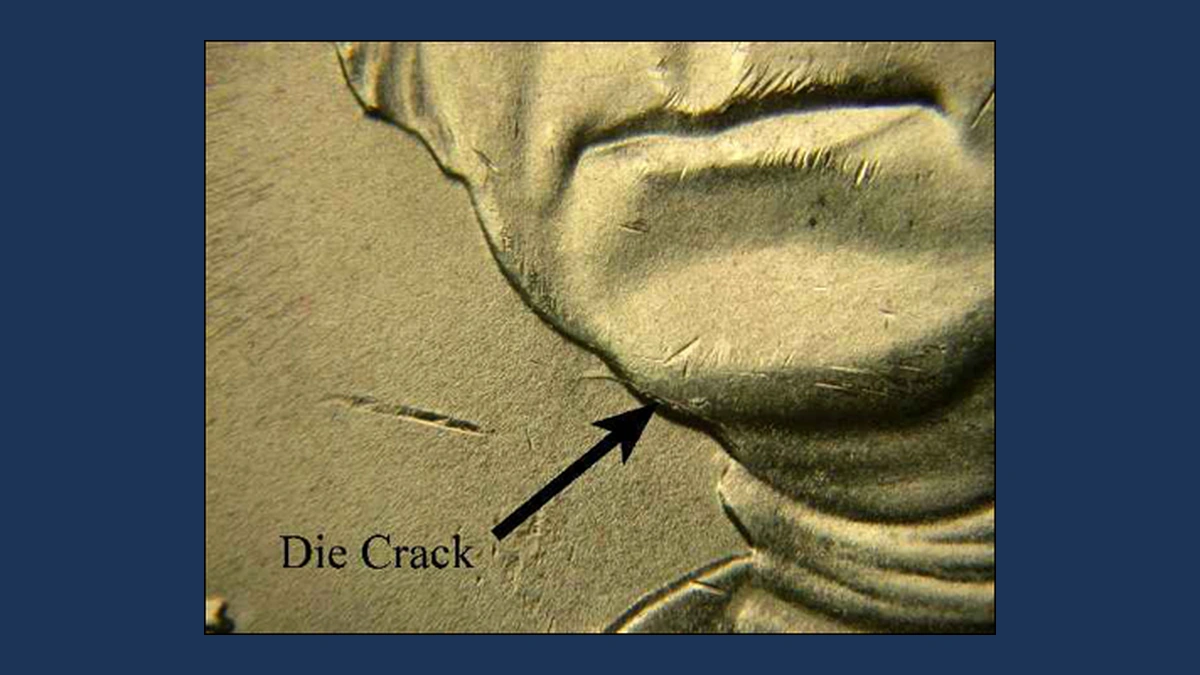
A thin raised line or a solid lump can come from a broken stamping tool. Coin metal fills the damaged area and leaves extra detail that was not part of the intended design.
A 2007-S Jefferson Proof has a back-side crack near two o’clock. Proof means a specially made collector coin, often with reflective surfaces.
Other reports include a small chip inside an S of STATES on Washington dollars and a Madison rim break above the I in AMERICA. These are separate examples, not a list of marks expected on one dollar.
Estimated Value
Estimate $5–$50 for small ordinary chips or cracks, and $50–$300 for stronger rim breaks or clearly identified Proof cracks. The combined range is $5–$300.
A large visible break usually offers more interest than a tiny blob inside a letter. A Proof must also retain the collector finish that supports its identity.
Compare the actual raised shape and preservation. A lump of dirt or metal pushed up by damage is not a broken-tool error.
How to Identify
Choose the relevant president before looking for a mark: Jefferson’s reported crack is on an S Proof, while the other examples involve different designs. Start at two o’clock on the Jefferson back, or the stated letter on Washington or Madison.
Tilt the coin to test whether the mark rises above the surface. A later scratch often has a cut center with pushed-up metal beside it; an original crack forms a ridge.
For Madison, trace whether the raised mass actually meets the rim above the I. A break connected to the rim differs from a small chip enclosed inside a letter, even though both came from tool damage.
4. 2007 Presidential Dollar Doubled Detail at Liberty’s Crown and Arm
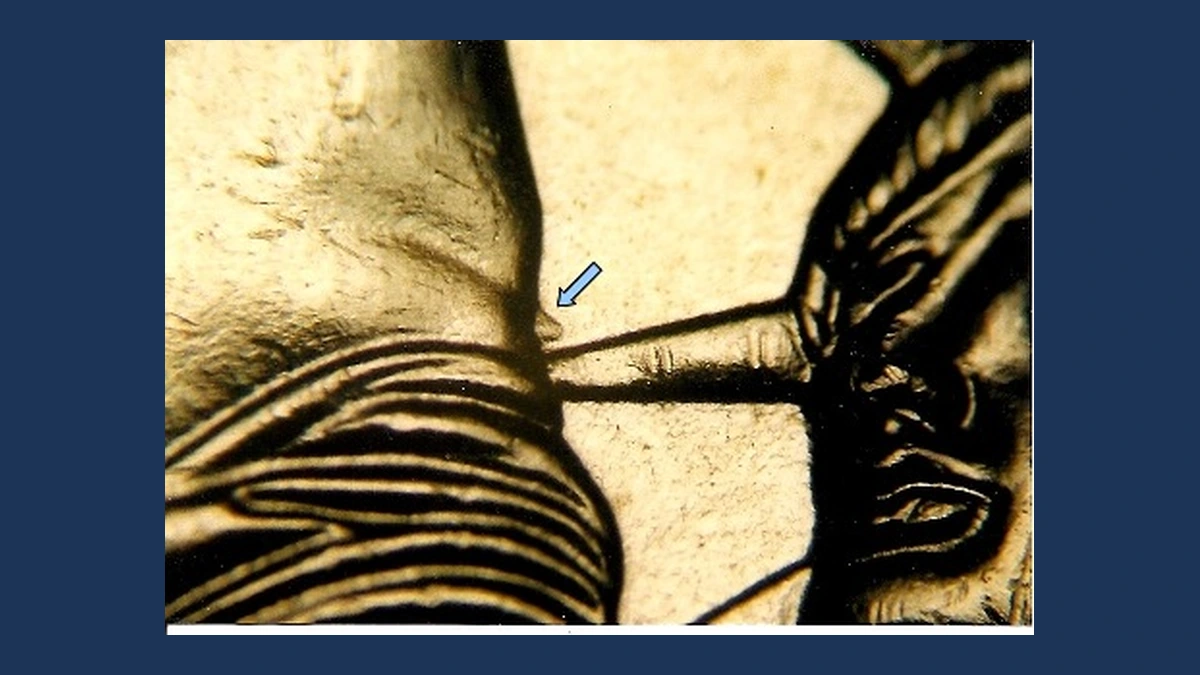
A small extra edge can appear where the second crown ray meets the Statue of Liberty’s raised right arm. This repeated detail was already present in the stamping tool before the coin was made.
Catalogs list examples for Washington, Adams, Jefferson, and Madison, but the same back design does not make every coin the same variety. Mint and finish still matter.
The Washington reports include Philadelphia and Denver ordinary coins and a Philadelphia satin-finish type. Satin finish is a softer-looking collector surface; it does not mean a coin was worn smooth.
Estimated Value
Use an estimated $20–$400 for a correctly matched doubled-design example. Most appeal comes from a clear, recognizable extra outline rather than generally thick-looking design.
An unworn coin makes this small feature easier to see. The upper end assumes a strong pattern and desirable preservation, not simply a holder with a high grade.
Compare the same president, mint, and finish. A price attached to a Washington variety should not automatically be transferred to a Madison lookalike.
How to Identify
Read the president and edge mint letter before enlarging the common Statue of Liberty design. Choose a matching catalog photograph for that combination, including satin finish when applicable.
Count clockwise from the head to locate the second crown ray and its junction with the raised arm. Check the precise extra outline against the photograph instead of searching indiscriminately for thick lines elsewhere.
View it under more than one light angle.
A flat shelf caused by movement during striking differs from a rounded repeated tool detail. Likewise, a transferred clash outline need not match the same small junction.
Compare the separation and shape at the junction itself. A matching raised pattern there is more useful than a general impression that the entire crown looks doubled.
5. 2007 Presidential Dollar Unusual Color from Improper Heating
A dollar can have an unusually dark surface while retaining its complete struck design. Improper annealing means something went wrong while heating the metal before striking, affecting the surface color.
Reports cover Philadelphia and Denver Washington coins, Philadelphia Adams, Denver Jefferson, and Denver Madison. A Madison example was listed as ICG MS66, an unworn grade, with a sintered-planchet description, another term used for this reported surface problem.
Color alone cannot establish the cause. Burial, chemicals, later heating, or a coating can also change a normal dollar’s golden appearance.
Estimated Value
For a professionally identified heat-treatment error, estimate $30–$400. Original color that extends naturally across an unworn struck surface is more appealing than blotches caused by later damage.
A different-year 2009-P Native American dollar with improper annealing sold for $61 in November 2011. It was graded NGC MS64 and provides a modest historical comparison.
The president and degree of color change affect the match. A dark ordinary dollar should not inherit an error price from color alone.
How to Identify
Compare the suspect coin with a normal dollar in neutral daylight before adjusting any photograph. Look at both faces and the edge so one dark reflection does not determine the result.
Use magnification to check for a coating, flaking residue, corrosion pits, or rubbing through the color. These can indicate changes after the coin left the Mint.
Examine the design beneath the color.
Original struck surfaces should remain, while harsh later treatment may dull or disturb them. If a face instead exposes a distinct copper layer and the coin is light, investigate missing outer metal as a different problem.
Have the surface examined before assigning a heating cause. The useful distinction is original struck metal with a verified color change, not darkness by itself.
6. 2007 Presidential Dollar Repeated Edge Inscriptions
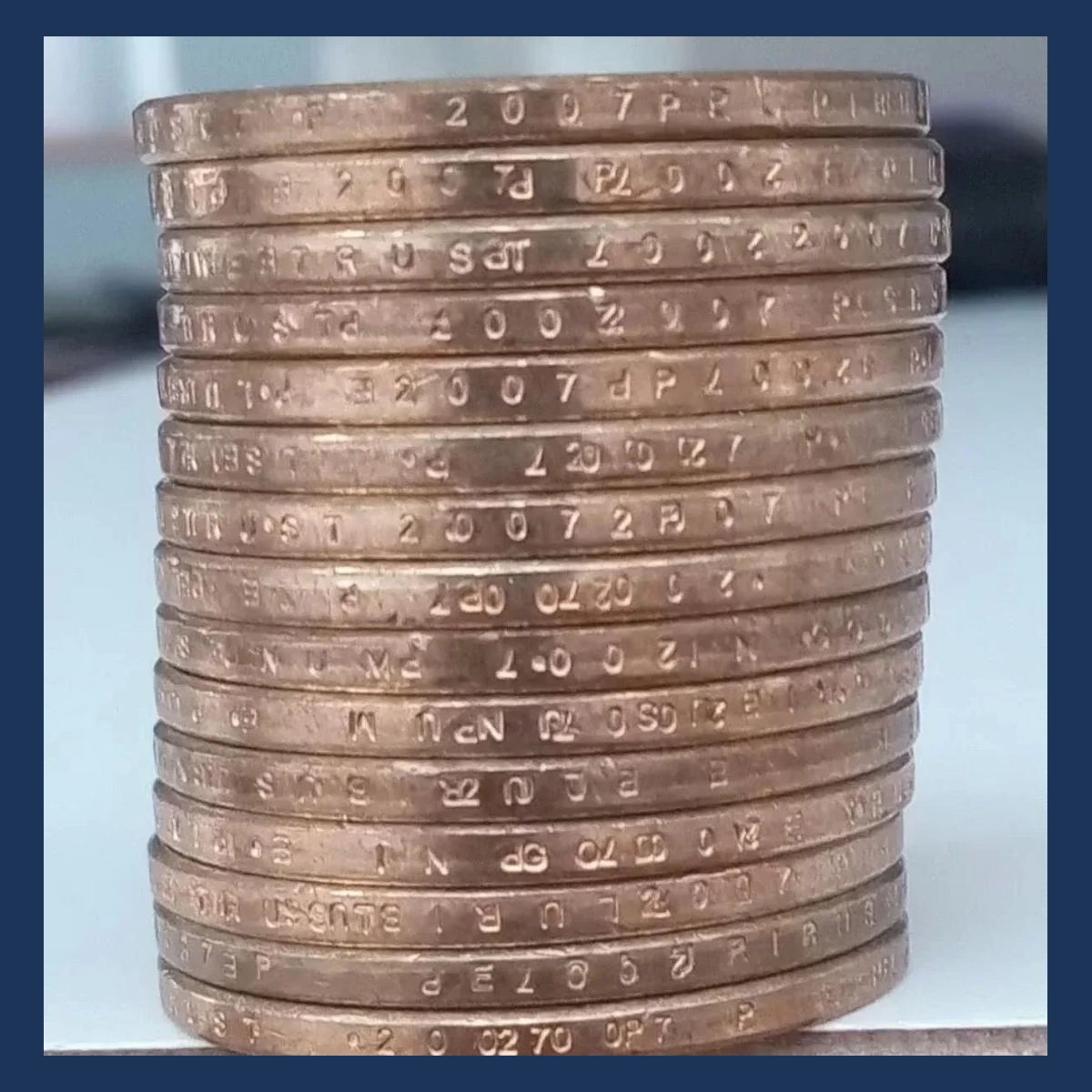
Two dates or crowded mottoes can surround a coin whose face designs look completely normal. The dollar went through the separate edge-lettering equipment more than once.
The second inscription can overlap the first in the same direction, or face the other way. Both versions require two real sets of characters pressed into the edge.
Reports include Philadelphia Washington, Philadelphia and Denver Adams, and Jefferson examples with different mint and direction combinations. Normal Position A and Position B describe a single inscription’s orientation, so those labels alone do not identify an error.
Estimated Value
Estimated values of $30–$500 cover genuine repeated lettering, with readability and condition guiding the comparison. Long clear overlaps generally display better than isolated crowded marks.
A 2007-P Adams dollar with overlapping edge letters brought $59 in March 2010. That unworn example supplies an actual same-year comparison for this group.
Different presidents and less common combinations may appeal to different collectors. Do not assume that an upside-down single inscription deserves the range given to two complete sets.
How to Identify
Choose a repeated word and trace both versions along the metal. Keep the coin in the same orientation until you can distinguish a second sequence rather than one inscription seen twice.
If the sets face opposite directions, photograph them together in one overlapping edge section. Reversing a photograph of one normal inscription does not demonstrate doubled lettering.
Check that the characters are recessed and retain normal letter shapes. Contact marks from another coin can leave odd fragments without forming a second complete inscription.
Confirm the president and any readable mint letters before choosing a comparison. Two consistent letter sequences on the same edge, not the position of one sequence against the portrait, establish the repeated pass.
7. 2007 Presidential Dollar Washington’s Elongated Crown Ray
One crown ray reaches farther than expected toward Liberty’s raised arm. On the reported 2007-P Washington variety, the third ray extends to the arm instead of ending with a clear gap.
The difference can be visible without strong magnification. PCGS recognizes the elongated-ray variety in both ordinary edge-letter directions, Position A and Position B.
This is an extended existing ray, not simply an additional line beside the crown. Its exact origin has been debated, so the visible design difference is a better starting point than an assumed manufacturing explanation.
Estimated Value
For the elongated-ray variety, use an estimated $25–$500. The upper portion assumes attractive preservation and a clear match to the recognized long ray.
PCGS records an ICG MS67 example at $77 in an August 2011 GreatCollections auction. That historical sale shows that the feature does not automatically make every example enormously valuable.
Wear, marks near the crown, and certainty of the match influence the comparison. A scratch joining an ordinary ray to the arm is a different appearance.
How to Identify
Place a normal Washington dollar beside the candidate with Liberty upright on both. Compare the gap between the third crown ray and her raised arm, not merely the overall sharpness of the crown.
The elongated variety should bridge the normal gap with a continuation of the ray. Follow that continuation under magnification to see whether its shape belongs to the struck design.
A scratch may also cross the gap.
Look for a cut center or disturbed metal that would reveal damage, and distinguish an extra clash line from the existing third ray. Check the P on the edge rather than borrowing an attribution from the matching back alone.
The extended third ray reaching the arm is the practical visual match.
8. 2007 Presidential Dollar Blocked or Impressed Face Details
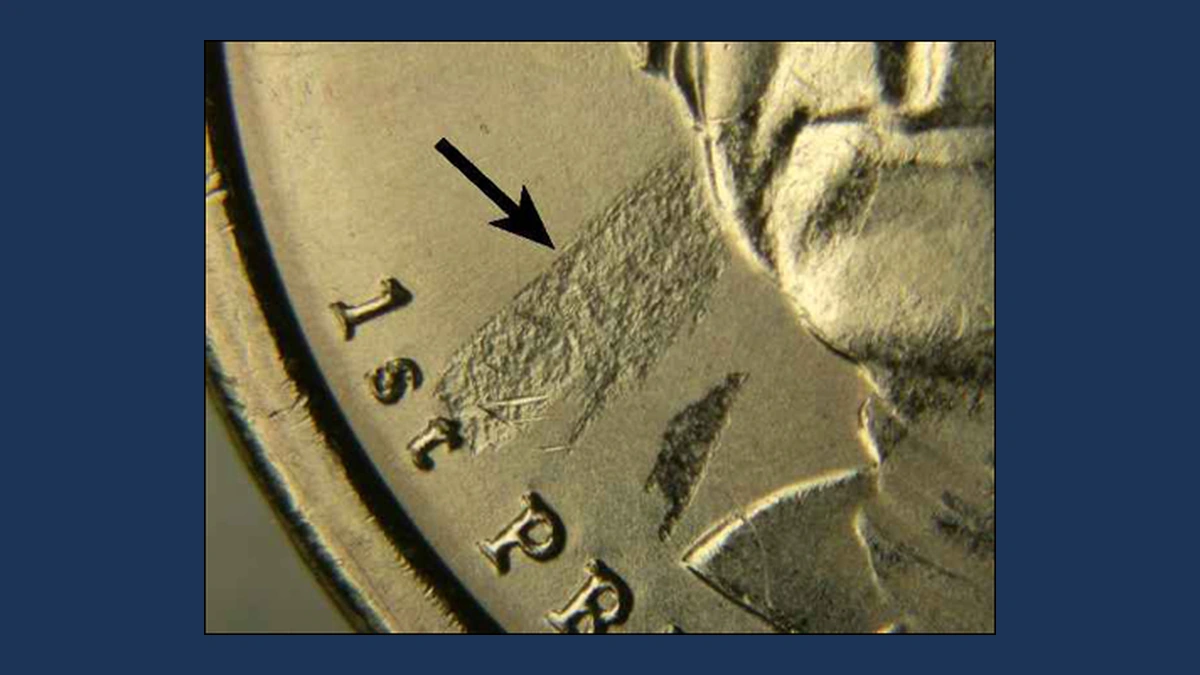
Foreign material can leave a weak patch, a depression, or a textured impression where normal design should appear. It blocked contact between a stamping tool and the metal during the strike.
Washington reports include filled design and wrinkled grease impressions near the dollar value and Liberty’s right sleeve. One reported Washington example also has clash marks, which are a separate effect on that coin.
A Jefferson satin-finish example has a long front impression from twelve o’clock toward his left eyebrow. The different locations describe different pieces, not a single pattern shared by every president.
Estimated Value
Estimate $15–$800 for these struck-through appearances, from lightly blocked design to a clear, larger impression. The shape and amount of lost detail matter more than the label alone.
A historical dealer list asked $85 for the Jefferson satin-finish example with the long front impression. That was an asking price, not a confirmed auction result.
Extra clash marks on a Washington coin do not create a second coin to price. Compare its combined appearance and overall condition.
How to Identify
Find the affected location on the appropriate president first. On Jefferson’s reported satin-finish type, follow the long impression from the upper border toward the left eyebrow.
Check its boundary for original struck surface rather than a sharp scratch cutting through completed detail. A magnifier can reveal displaced metal or later polishing that changes the explanation.
For the Washington examples, inspect weak lettering or wrinkles around the dollar value and sleeve instead. Compare nearby intact design so ordinary wear is not mistaken for a blocked strike.
Leave any retained material alone. A local impression that interrupts the intended picture beside undisturbed detail is the useful check; the material need not be named to recognize its effect.
9. 2007 Presidential Dollar Missing, Weak, or Partial Edge Lettering
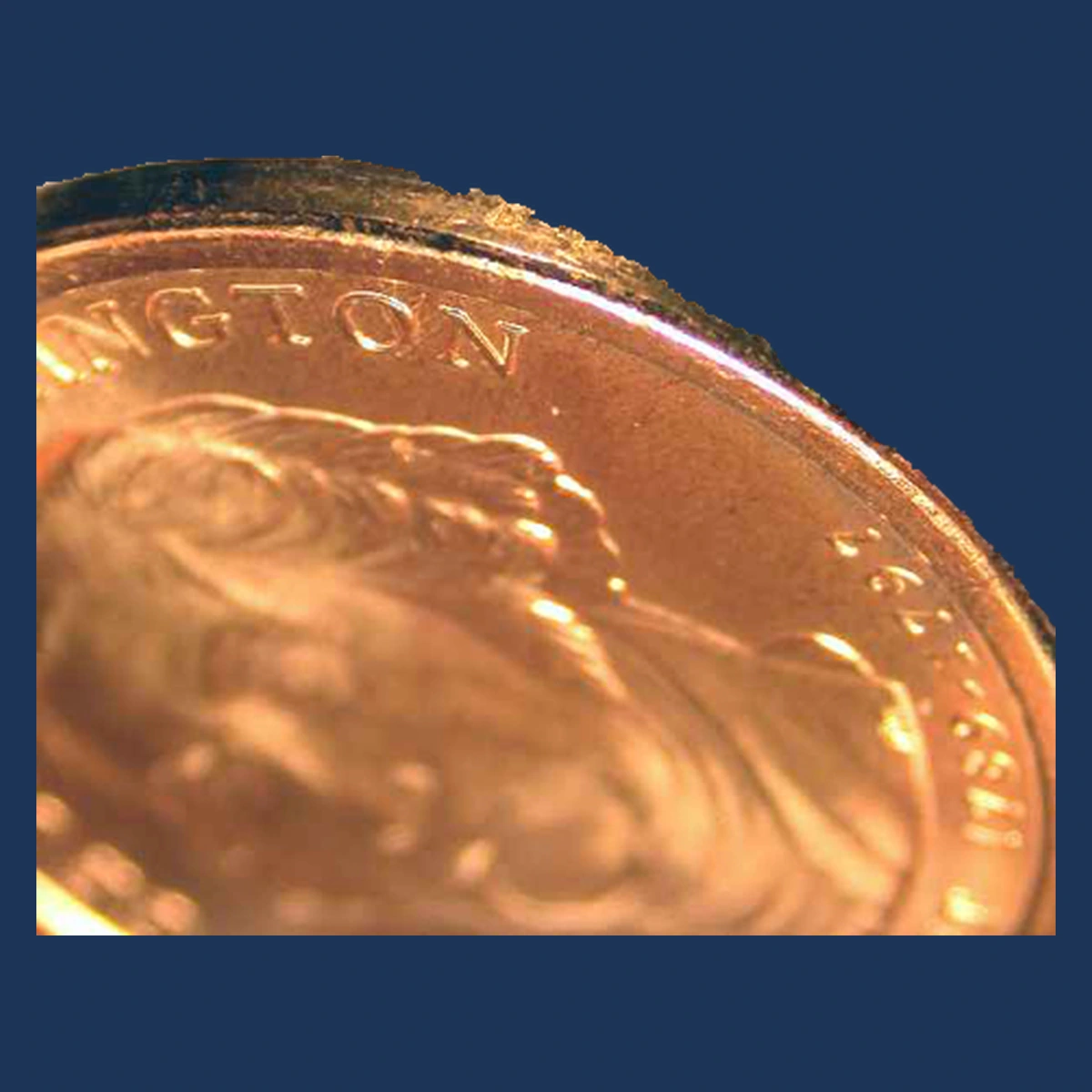
A fully missing edge inscription leaves no year, mint letter, or mottoes around the dollar. Weak lettering retains shallow cuts, while partial lettering leaves only sections of the intended text.
These appearances occur when the separate lettering operation is missed or fails to leave the complete inscription. Cataloged missing-edge examples include all four presidents, with collector satin-finish reports kept separate from ordinary coins.
Weak or partial reports also span different presidents, mints, and finishes. A smooth patch does not prove that the entire edge is unlettered, and an absent mint letter cannot identify Philadelphia or Denver.
Estimated Value
Use estimated ranges of $10–$150 for weak or partial ordinary inscriptions and $20–$500 for ordinary missing-edge coins. Scarcer authenticated satin-finish examples can fit $150–$1,500.
The combined estimate is $10–$1,500. A 2007 Madison missing-edge dollar graded NGC MS67 sold for $119 in July 2025, illustrating an actual price for an unworn ordinary example.
President and finish must match the comparison. Do not apply a scarce collector-finish price to every smooth-edged Washington dollar.
How to Identify
Search the whole edge for one surviving character before deciding that all lettering is missing. Change the light angle at blank-looking sections; shallow letters may become visible when glare moves away.
On 2007 dollars, both mottoes belong on the edge as well as the date and mint letter. Photograph any gaps in order so partial and complete loss remain distinguishable.
Check the rims for filing or polishing.
A loose normal dollar measures about 26.5 millimeters across; reduced width can support an alteration concern but is not the only test. The original surface and rim shape need to agree with an unaltered edge.
Use the president to identify the issue if no year survives. Any original letter cut means the inscription is not completely absent.
10. 2007 Presidential Dollar Curved Missing Portions of the Blank
A curved bite can be missing from the coin’s outline before the design is struck. The blank was punched from metal sheet that overlapped an earlier hole, leaving part of the disc absent.
Reports cover all four presidents. PCGS confirmed two Denver Jefferson examples with roughly 3.5 percent missing, while Adams examples include much larger clips.
A Philadelphia Madison report records a curved clip and a weight of 7.0 grams. Gaps in edge lettering beside a clip can accompany the same incomplete shape; they do not mean that an additional coin is involved.
Estimated Value
An estimated $75–$1,500 covers authenticated clipped presidential dollars, with larger and more visible clips generally attracting more interest. The president and overall condition also affect the comparison.
For reference, the normal dollar weighs 8.10 grams; the reported 7.0-gram Madison shows substantial missing metal. Weight describes the piece, not its sale price.
A small Jefferson clip should not inherit a price intended for a much larger Adams example. Original notch surfaces matter more than a dramatic nickname.
How to Identify
Weigh a loose coin and inspect the missing portion together. A lighter reading supports missing metal, but someone cutting a finished dollar can also reduce its weight.
Look inside the curve for original blank surfaces and for design that weakens naturally near the incomplete edge. Fresh file lines, sharp cutting scars, or a rim sliced through afterward suggest damage.
Inspect the opposite rim as well.
A weak rim opposite the clip can occur when the incomplete blank was prepared, though it is not equally strong on every genuine example. Compare the surrounding lettering rather than demanding one identical outline for all presidents.
The original notch and naturally affected rim or design provide a better identification than weight alone.
11. 2007 Presidential Dollar Misaligned Front and Back Orientation
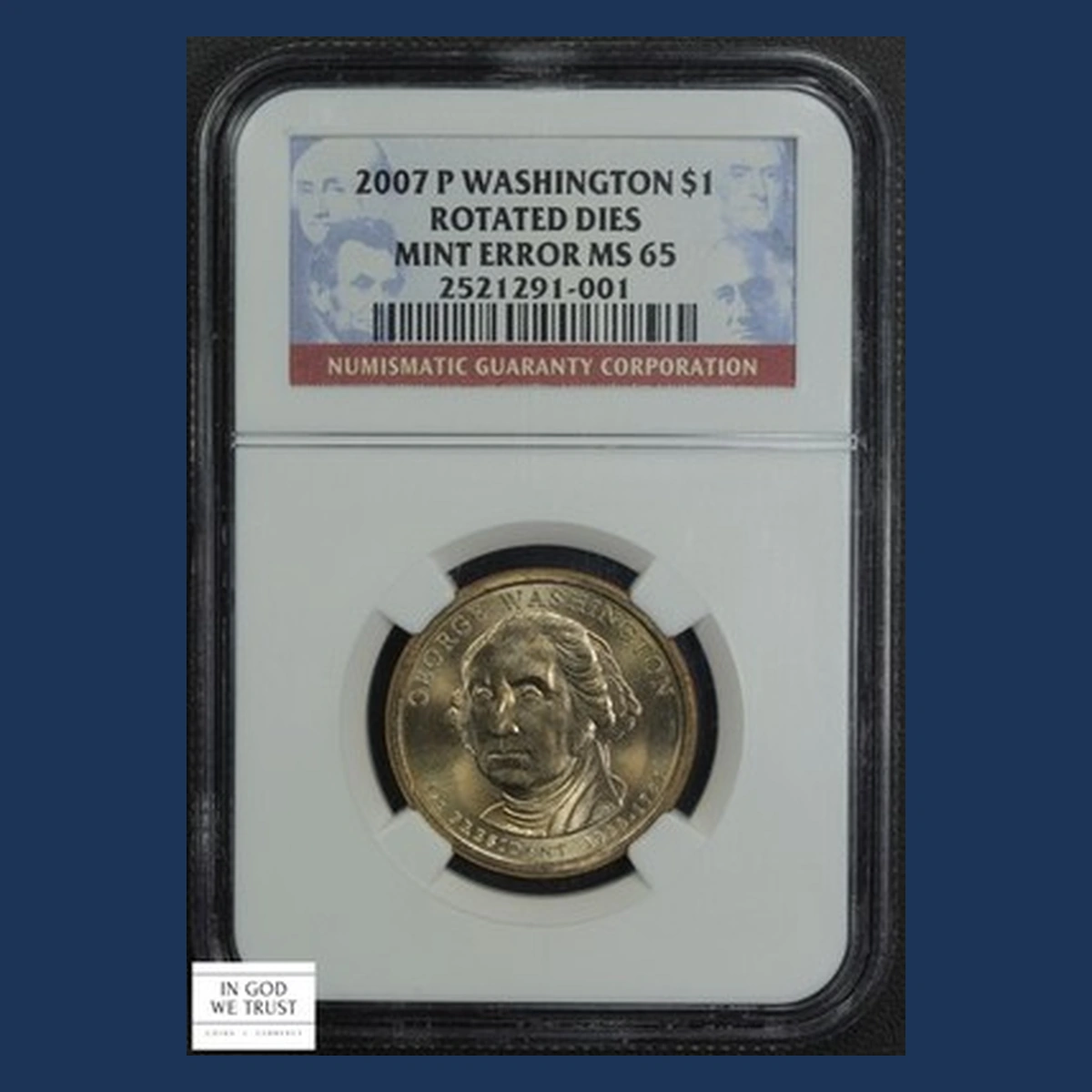
The Statue of Liberty can stand at an unexpected angle when the upright Washington portrait is turned over vertically. This indicates that the two stamping tools did not face each other in the normal orientation.
NGC documented a rotated Washington dollar, but the report does not supply a fixed angle for every example. The actual front-to-back difference should be measured on the coin being examined.
Edge-letter direction is unrelated to this test. A normal inscription can face either way even when the front and back designs are correctly aligned.
Estimated Value
For a substantial confirmed rotation, estimate $50–$1,500. Small deviations are less dramatic than a strongly tilted or inverted back, so the measured angle matters.
The range assumes an original dollar with a genuine relationship between its two faces. Photographs rotated independently can make an ordinary coin seem unusual without changing the coin at all.
Compare the same president and similar preservation. A holder’s tilted position is not itself a reason to raise the price.
How to Identify
Hold Washington upright at the left and right edges, then turn the coin over from top to bottom without twisting it sideways. The Statue of Liberty should stand upright after this straight vertical flip.
Repeat the movement to see whether the same tilt returns each time. If the result changes, adjust your grip before trying to measure an angle.
Use a straight reference line behind the coin or aligned photographs to record the difference. Keep both images linked to the same physical flip, rather than rotating each image until the designs look level.
The repeated tilt of the back after that controlled vertical turn establishes the mismatch. It does not reveal which particular tool moved in the press.
12. 2007 Presidential Dollar Madison Proof with a Partly Constrained Edge
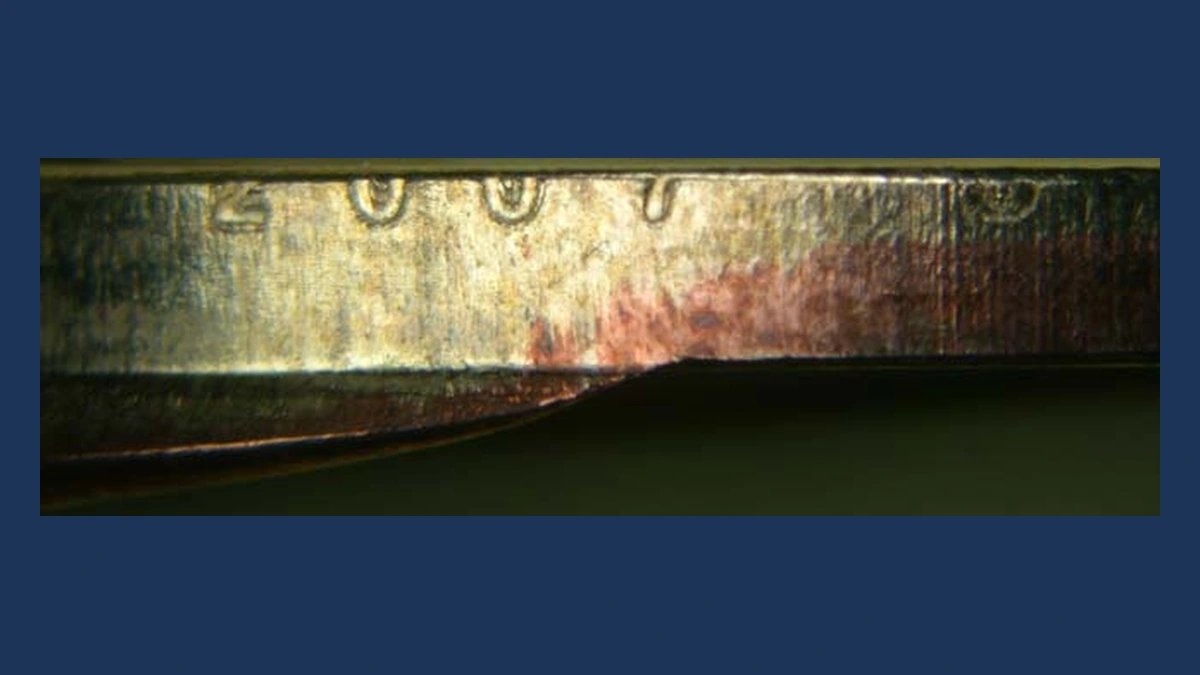
The date and motto can sit unusually high on the side of a Madison Proof, beside a projecting lip of metal. The ring around the blank did not hold the entire edge in its proper position during striking.
This ring is called the collar. On presidential Proofs, its lettered segments form the edge inscription at the same time as the face designs.
NGC illustrated this partial-collar effect on a 2007-S Madison dollar. It differs from an ordinary dollar slipping through the separate edge-lettering equipment after its faces were already struck.
Estimated Value
Estimate $250–$2,000 for an authenticated Madison Proof partial-collar example. A clear displaced inscription with a visible metal lip presents the error more effectively than a slight high rim.
The estimate applies to the whole collector coin. Its reflective surface, marks, and degree of distortion all affect its appeal.
Compare Proofs with Proofs, because ordinary dollars receive edge lettering differently. High lettering on a circulation-style coin should not automatically receive this scarcer Proof-error estimate.
How to Identify
Establish the Madison design and S Proof identity, then inspect the date’s vertical position on the edge. Look for lettering that rides unusually close to a rim rather than judging which direction the words face.
Follow the same section around the coin until the projecting metal lip becomes visible. The shifted inscription and distorted edge should belong to the same original surface.
Compare with a normal Madison Proof under matching light. A coin bent or rolled after manufacture may have damaged rims without the same relationship between collar-formed letters and expanded metal.
The high inscription beside an original projecting lip is the useful combination. One isolated tall rim is not enough to distinguish this error from other distortions.
13. 2007 Presidential Dollar Wedge-Shaped Proof from Tilted Dies
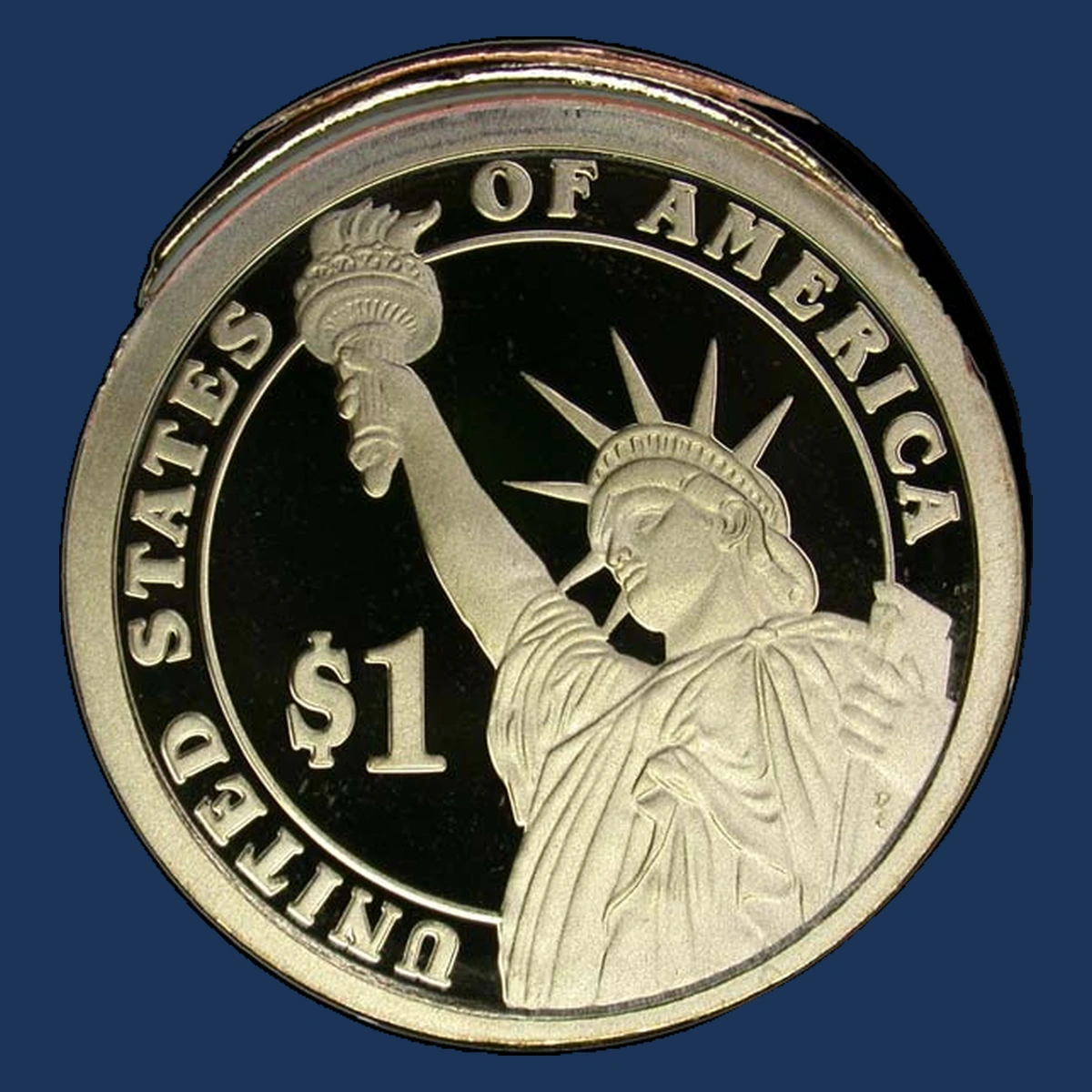
One side of the coin can be thicker than the other, giving the edge a wedge-like profile. The stamping tools were not level with one another when they struck the metal.
NGC documented this effect on 2007-S Washington and Adams Proofs. Metal could also escape into the gap beside a tilted tool, forming an unusually high, distorted rim.
The important feature is uneven thickness across the coin, not simply a picture positioned slightly to one side. A camera held at an angle can imitate a high rim in one photograph.
Estimated Value
For an authenticated wedge-shaped presidential Proof, estimate $300–$3,000. A readily visible change in thickness and a strong original raised rim make the effect easier to appreciate.
The range also depends on whether the collector surface remains attractive. Scratches and handling marks can lower the value even when the distortion is dramatic.
An ordinary Proof bent after leaving the Mint is a different object. The premium assumes the uneven shape was formed during the original strike.
How to Identify
View the edge from opposite directions before concentrating on either portrait. Does the thick side stay thick as you turn the coin, or was the apparent wedge caused by the camera angle?
On a safely accessible loose coin, a thickness comparison at opposite points can help document the difference. Avoid squeezing a delicate projecting rim or opening a grading holder to make that measurement.
Inspect both faces for bending damage.
A later bend may distort the whole plane or leave contact scars. Original uneven striking should instead agree with the raised rim and how the design formed across the coin.
Photograph the thick and thin sides in the same orientation. A consistent wedge with matching original struck surfaces supports tilted tools rather than a photographic illusion.
14. 2007 Presidential Dollar Blank Faces with a Lettered Edge
This piece has edge lettering but no presidential portrait or Statue of Liberty. It is a prepared metal disc, called a planchet, that missed the face strike yet reached the lettering equipment.
PCGS reported a 2007-D example with an already raised rim. Its edge carries the date, mint letter, and both mottoes.
NGC also illustrated weak lettering on an unstruck blank. Finding a blank in a Washington roll does not put Washington’s portrait on its empty face.
A completely unlettered dollar blank needs separate evidence before it can be assigned to 2007.
Estimated Value
A genuine dated, lettered blank has an estimated value of $500–$4,000. Its readable edge ties an otherwise unstruck piece to the issue and makes it different from a generic dollar blank.
The edge should be judged for completeness and the faces for original surface quality. Marks from handling can reduce the appeal of an otherwise clear example.
No portrait premium can be assigned from a design that is not present. Compare other lettered blanks, not ordinary smooth-edged presidential coins.
How to Identify
Read the edge before drawing conclusions from the blank faces. A visible 2007 and D distinguish the reported example from an undated disc that could belong to several dollar issues.
Examine both faces with magnification for residual portrait outlines, ground-down lettering, or polishing marks. Removing a finished coin’s designs does not recreate an unstruck planchet.
Check that the raised rim and surface texture fit a prepared blank. On a loose piece, compare weight and width with the normal dollar standards of 8.10 grams and about 26.5 millimeters.
Those measurements are supporting checks, not the whole identification. Original unstruck faces together with genuine dated edge lettering establish the unusual combination.
15. 2007 Presidential Dollar Missing Golden Outer Layer
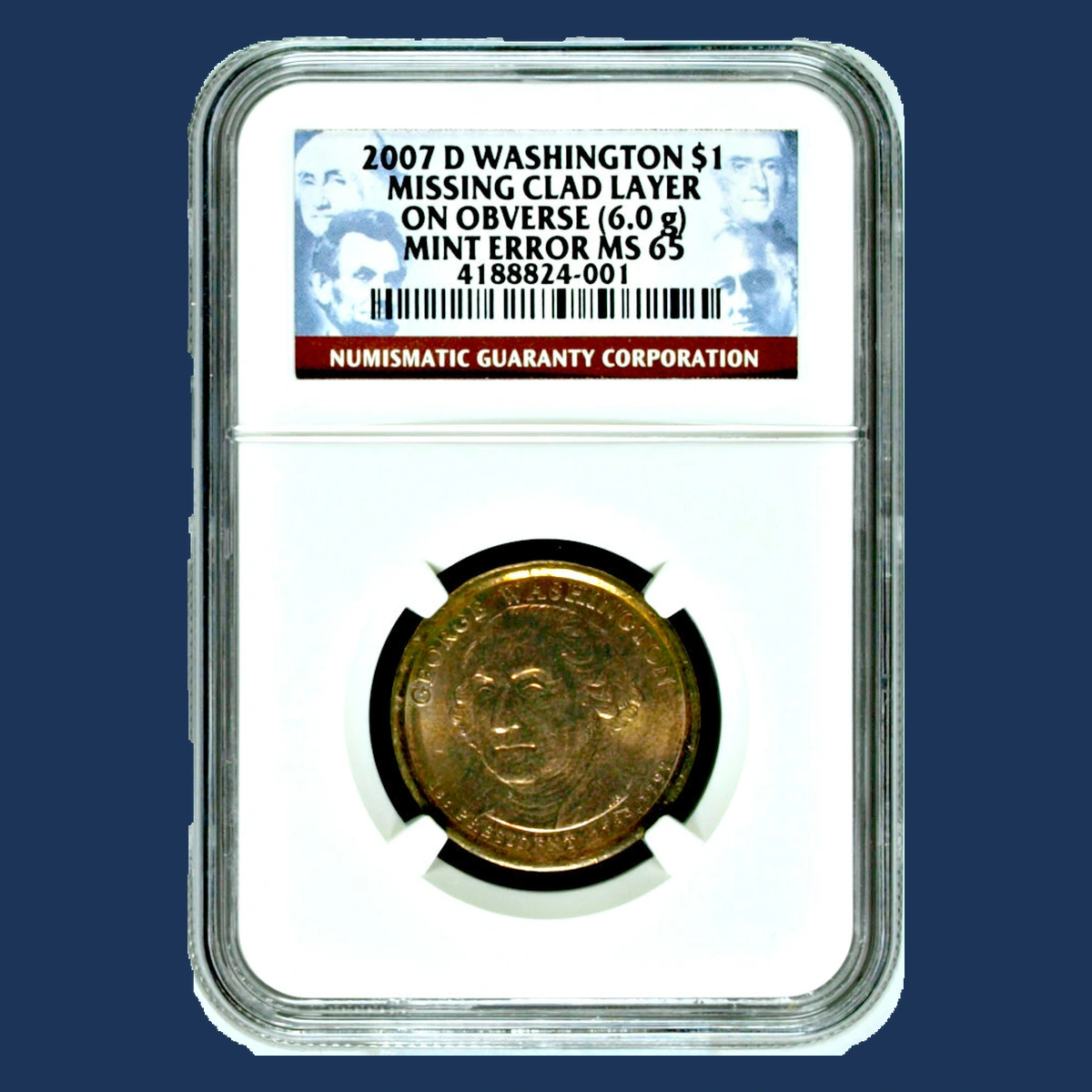
A reddish copper face can replace the dollar’s usual golden appearance when an outer layer is missing. These dollars have a copper center bonded to outer alloy layers, rather than a thin gold coating.
Reports include all four presidents, with front and back losses represented by different coins. Some also lack edge lettering, but those combined features still belong to one piece.
Washington examples include a Philadelphia front-layer loss and a Denver back-layer loss. A color change from heating or chemicals does not by itself show that an entire metal layer is absent.
Estimated Value
Estimate $300–$4,000 for authenticated missing-layer examples, depending on president, preservation, and the extent of the loss. A clear copper face with original design is particularly easy to display.
A historical dealer list asked $1,150 for a Philadelphia Washington front-layer error graded PCGS MS63. That was an offer price, not a completed sale.
Other pieces combine layer loss with missing edge letters. Price the combined coin rather than adding two unrelated examples’ values together.
How to Identify
Inspect the side of the coin beside the reddish face and compare it with the opposite edge. Look for the actual layer boundary rather than deciding from copper color alone.
Weigh a loose example next: a complete loss should reduce the normal 8.10-gram weight. A grading holder’s printed standard specifications are not a measurement of the coin inside.
Under a magnifier, examine the exposed face for original struck design, corrosion, scraping, or a coating. Artificial removal can also lower weight, so the reading must agree with the surface.
Check which president and face are involved. An absent layer at the edge, exposed copper with original design, and reduced weight together support a genuine layer-loss identification.
16. 2007 Presidential Dollar Repeated Strikes and Expanded Shapes
Two overlapping pictures can appear when a coin moves and receives another strike. Without the collar, the metal ring that controls its width, repeated blows can also spread it into a much larger shape.
Washington reports include broad expanded pieces, sometimes flipped before another blow. One Adams example combines a second strike twenty percent off center, a five-percent clip, and absent edge lettering.
A separate S Jefferson Proof shows rotated repeated design around the front lettering, back of the head, and Liberty’s arm. Normal aligned Proof strikes do not produce that displaced second picture.
Estimated Value
Estimated values span $300–$5,000 for these compound striking errors. The clarity of the second design and overall distortion make a large difference.
Historical dealer asks included $1,650 for a Washington multiple strike, $2,300 for a flipped expanded Washington, and $3,250 for the clipped Adams double strike. These were separate offers, not verified auction results.
Compare the whole combination on one coin. Repeated strikes, expansion, and a clip should not be priced as if they were three separate coins.
How to Identify
Find two substantial versions of a letter, portrait edge, or Statue of Liberty detail. Map their displacement across the coin rather than relying on a small doubled-looking edge.
If the piece was flipped between blows, parts of the front and back designs can appear on the same face. Distinguish those larger overlapping pictures from a faint clash outline.
For an expanded Washington, inspect the outer boundary and remaining design. A loose coin wider than the normal 26.5 millimeters supports expansion, but a dealer’s “half-dollar size” description is not an exact measurement.
On the Jefferson Proof, follow matching shifted details around the stated lettering, head, and arm. A coherent second picture distinguishes movement between blows from normal repeated Proof striking.
17. 2007 Presidential Dollar Adams Designs on an Aluminum Machine Fragment
Instead of a normal round dollar, this piece is a small irregular fragment of aluminum carrying portions of the coin design. It came from a feeder finger, a machine part used to move blanks into the press.
The fragment received two blows from Adams dollar tools. The surviving second-president inscription identifies Adams, while repeated STATES lettering shows the double strike.
The documented PCGS MS64 piece weighs nine grains, about 0.58 gram. It is not a normal dollar with aluminum stuck to its face, and its absent edge lettering does not establish a mint.
Estimated Value
For this rare kind of struck machine fragment, estimate $1,500–$7,500. The identified Adams PCGS MS64 example sold for $2,300 at Heritage in September 2009.
That transaction concerns the small fragment itself, not an ordinary dollar or a two-coin group. Readable design and secure identification of the material drive much of its interest.
A fragment with little recognizable detail would make a weaker comparison. Its unusual metal alone is not enough to prove that it entered a coin press.
How to Identify
Locate the surviving second-president wording and the repeated STATES detail before making a claim about the date. Those design fragments connect this piece to Adams and show the two blows.
Inspect the entire object, including its sides: it should be an irregular metal fragment, not a round coin cut into a new shape. A material examination is especially useful because appearance alone cannot establish aluminum.
Compare the documented nine-grain weight only with the correct fragment, not the standard 8.10-gram dollar specification. Similar-looking metal scraps can have unrelated weights and origins.
The recognizable Adams details struck into the fragment provide the key evidence. Raised or engraved imitation letters added afterward would not reproduce the original overlapping strike pattern.
18. 2007 Presidential Dollar Washington Struck on a Nickel Blank
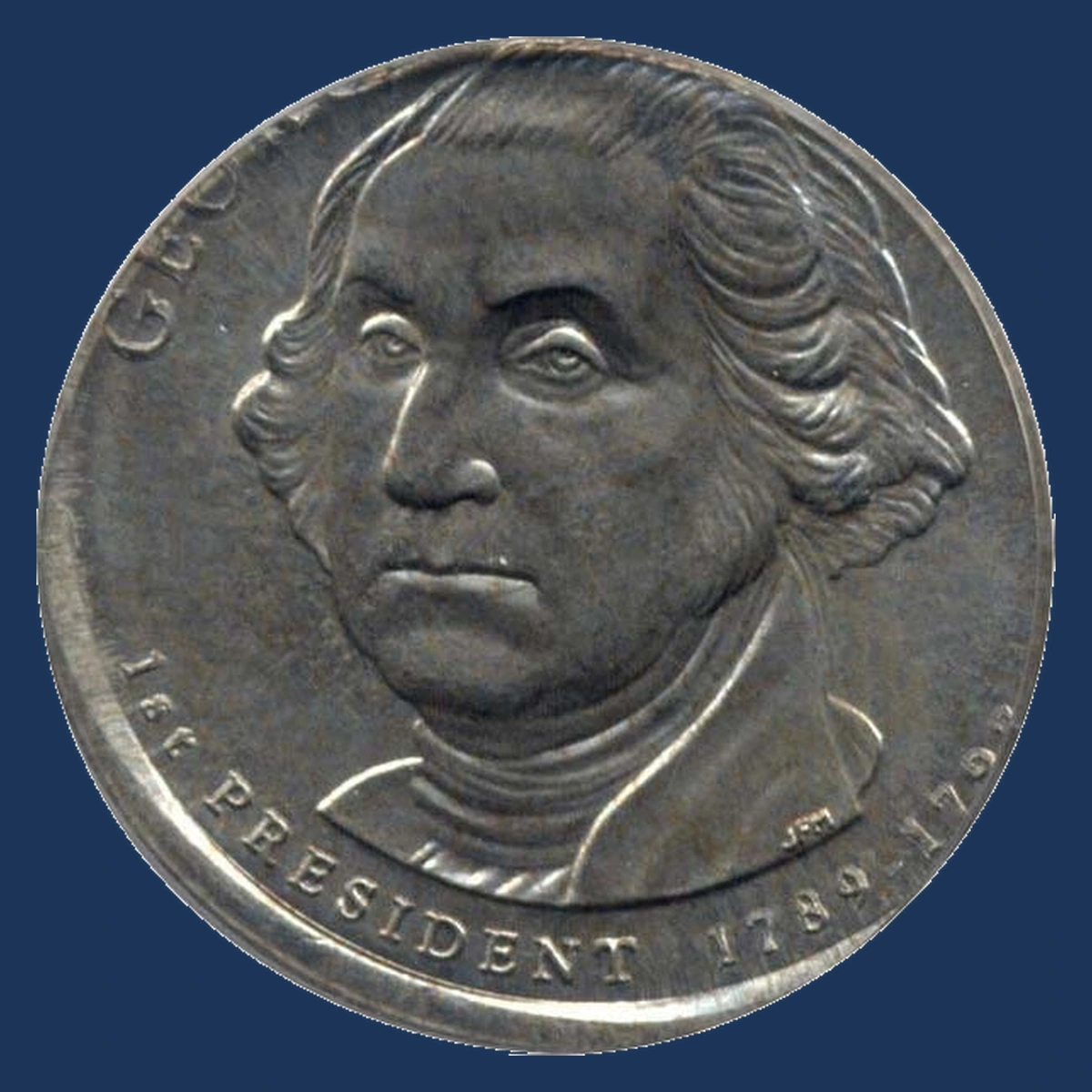
Washington’s dollar portrait can be stamped onto a disc intended for a five-cent coin. The smaller metal blank cannot contain all the normal dollar design, leaving parts near the border cut off.
A specialist survey identifies a Washington example graded PCGS MS66. This type uses an unstruck nickel blank, not a nickel that already carried Jefferson and Monticello.
The different metal and smaller dimensions distinguish it from a full-sized golden dollar. Without a surviving mint inscription, the mint cannot be assigned merely from the Washington design or the color of the metal.
Estimated Value
For an authenticated Washington dollar on a nickel blank, estimate $5,000–$15,000. Recognizable dollar designs, correct metal, and attractive preservation are important to the comparison.
A related but different Washington dollar struck over an already finished nickel sold for $17,625 in January 2016. That coin retained an earlier five-cent design, which this blank error does not require.
The comparison shows interest in major wrong-metal pieces. It does not turn a blank error into the same coin or the same sale.
How to Identify
On a loose example, begin with weight and diameter rather than color. A normal nickel blank is about 5.00 grams and 21.2 millimeters wide, compared with a dollar’s 8.10 grams and 26.5 millimeters.
Those are normal standards, not reported measurements of the PCGS MS66 piece. The actual coin needs its own measurements and metal assessment.
Then inspect how the dollar designs meet the smaller edge. A genuine strike should run naturally beyond the available metal, unlike a dollar trimmed after its complete design was struck.
Look for any older nickel design as well. Correct blank characteristics with only the dollar design support a wrong-blank identification, while surviving nickel details indicate an overstrike instead.
19. 2007 Presidential Dollar Jefferson Proof with Edge Mottoes in the Wrong Order
The words are present, but their order is wrong on this Jefferson Proof error. After 2007 S, the reported sequence reads IN GOD WE TRUST before E PLURIBUS UNUM.
A normal Proof places E PLURIBUS UNUM first after the date and mint letter. Three lettered collar segments surround the blank and impress its edge while the face designs are struck.
Placing those segments in the wrong order changes the sequence without omitting any words. The report concerns S Jefferson Proofs, not a normal ordinary coin whose single inscription happens to face downward.
Estimated Value
Use a conditional estimated range of $1,000–$20,000 for a verified Jefferson Proof with the wrong sequence. This is an estimate for the unusual assembly error, not an established auction result.
The original finder reportedly sought tens of thousands of dollars for discovery sets. Those were asking prices for sets and should not be treated as completed single-coin sales.
Original Proof surfaces and a clearly documented continuous edge would be essential to a meaningful price comparison.
How to Identify
Start at the readable 2007 S and follow the edge in the direction that makes the characters upright. Record which complete motto follows the date before turning to the next section.
Do not rearrange separate photographs.
The error order is IN GOD WE TRUST followed by E PLURIBUS UNUM; the normal order reverses those two mottoes. A continuous edge view is more convincing than loose pictures placed into a chosen sequence.
Confirm Jefferson and the S Proof finish on the same coin. Segmented Proof collars produce this order problem differently from the rolling operation used for ordinary dollars.
The two correctly spelled mottoes in the wrong uninterrupted sequence after 2007 S are the actual identifying feature.
20. 2007 Presidential Dollar Washington Struck Over a Finished Jefferson Nickel
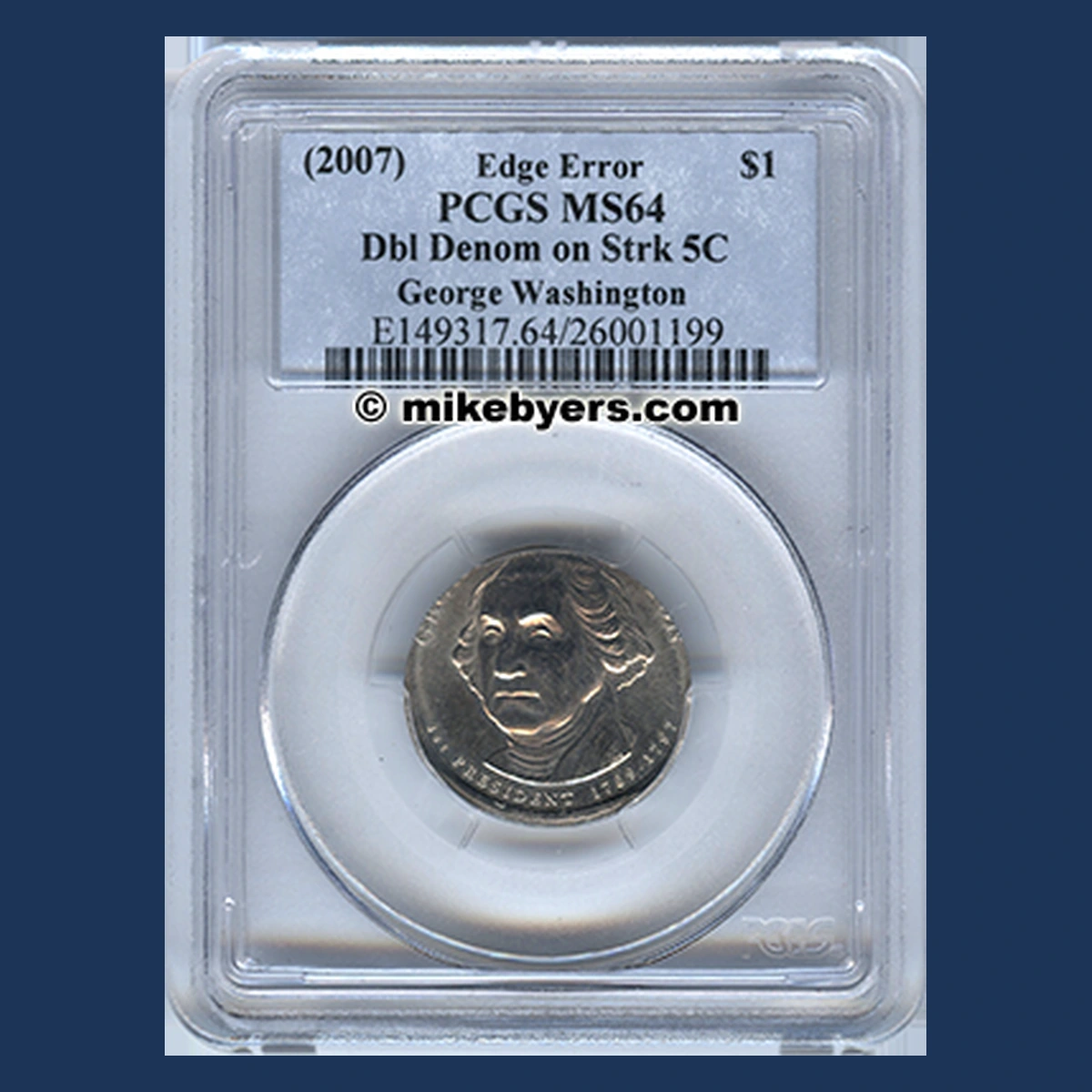
Traces of a five-cent design remain beneath the dollar picture on this overstrike. A finished Jefferson nickel entered the dollar press and received a Washington design over its earlier image.
The documented example shows nickel detail below PRESIDENT 1789 and above the torch and OF AM. The dollar strike shifted slightly toward half past twelve.
Washington’s portrait remains complete, but parts of his name and UNITED are missing at the edge. This combination distinguishes the piece from a dollar struck on an unused nickel blank, which has no earlier nickel design to preserve.
Estimated Value
The documented Washington-over-nickel coin brought $17,625 at Heritage on January 6, 2016. PCGS graded it MS64, meaning unworn with some marks.
An estimated $10,000–$25,000 is appropriate for comparable authenticated pieces, depending on the surviving earlier design and preservation. The sale is a historical benchmark rather than a guaranteed future result.
Visible nickel details are central to the appeal. A damaged or trimmed dollar without an earlier struck design is not a comparable overstrike.
How to Identify
Identify the older design first, especially below PRESIDENT 1789 and above the torch and OF AM on the documented example. The extra marks must form recognizable nickel detail, not random scratches.
Compare where the dollar strike displaced or flattened those earlier features. Overlapping designs should show a consistent order, with the dollar image struck over the nickel.
The smaller disc should also explain the incomplete outer dollar lettering. Measurements and metal composition can support a nickel origin, but normal nickel specifications must not be substituted for an actual measurement.
Check both faces for coherent remnants of the earlier five-cent design. Those remnants distinguish a finished-coin overstrike from a dollar design placed on an otherwise unused nickel blank.
Conclusion
The estimated $5–$25,000 range covers much more than missing edge letters. A shifted inscription, a weak face detail, and a dollar design struck on another coin demand different checks.
Match the president and finish first, then preserve the original edge and surfaces. Several mistakes can occur on one piece, so compare the value of the whole coin rather than adding a separate premium for every visible effect.