1795 Half Dollar Error List with Pictures

A 1795 half with clash marks sold for $19,550 in 2008. A dramatically double-struck example later brought $13,200 in 2022, despite its much heavier wear.
These 1795 half dollar errors and varieties have estimated values from $1,200 to $75,000. The highest range concerns an exceptional piece with a design on only one side.
Look beyond the biggest mark. Read on to compare corrected letters, raised lines, extra strikes, and flaws in the silver itself.
1. 1795 Flowing Hair Half Dollar Planchet Lamination (Estimated Up to $4,500)
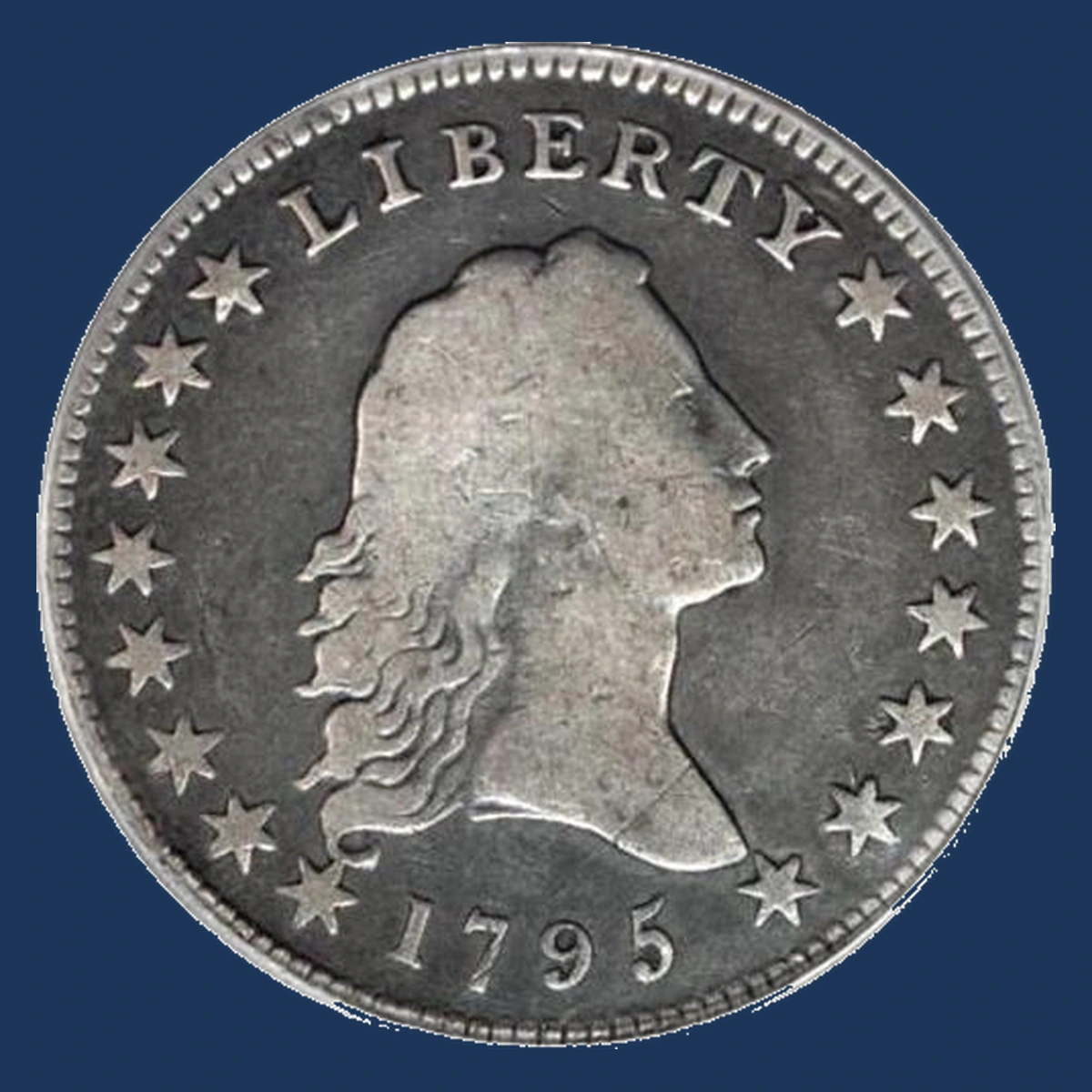
A layer has separated beside the fourth and fifth front stars on one 1795 Small Head half. PCGS graded the coin VG10, a heavily worn condition.
The auction catalog identifies the patch as lamination, meaning separation within the coin’s metal. It also notes scratches elsewhere, which have a different cause.
The coin belongs to variety O-128. Its back design helps establish the Small Head identity.
A thin silver layer can remain visible after years of wear without leaving a deep hole. The natural border of the layer matters more than its dark color or the size of an unrelated scratch.
Estimated Value
The PCGS VG10 Small Head example brought a $2,600 hammer bid in April 2008, before the buyer’s fee. Estimate $1,800–$4,500 for a comparable circulated coin with a shallow lamination.
The price includes the Small Head variety and the condition of the whole half. It does not reveal a separate charge for the peeling layer.
A much larger loss across the portrait could reduce appeal even when it began at the Mint.
How to Identify
Find stars 4 and 5 and light the nearby smooth background from the side. A 10× magnifier should show a shallow change in level along a thin border.
A scratch cuts into the surface instead. Leave any dark seam or attached flake untouched.
Compare the full back design with a known O-128 before assigning the Small Head name. The original alloy was 89.24 percent silver.
Use a scale and calipers against the original 13.48 grams and about 32.5 millimeters, allowing for wear and lost metal. Inspect the lettered edge as well.
The shallow separating layer beside the specified stars is the first feature to match.
2. 1795 Flowing Hair Half Dollar Die Cracks (Estimated Up to $6,500)
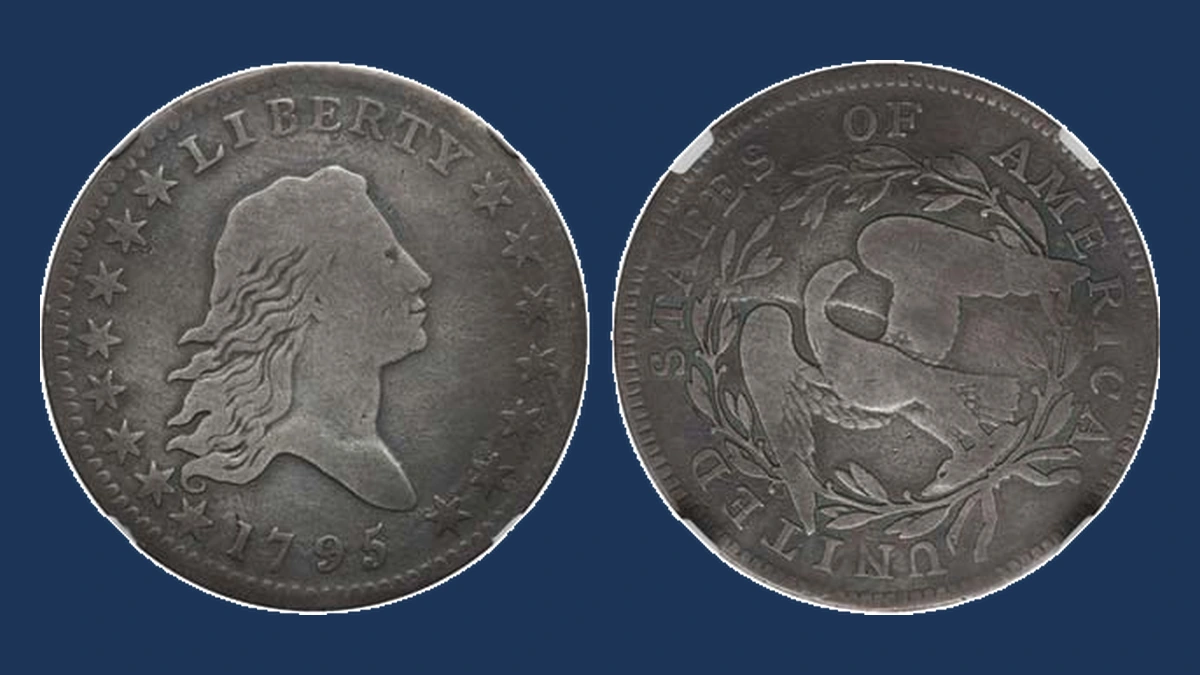
A raised line above LIBERTY runs toward the right-side stars on the NGC VG8 O-104 example. Another variety, O-107a, has a back-side line between OF and AMERICA toward T in UNITED.
These are separate coins with different paths. Both show cracks in the dies, the steel tools that stamp the designs.
Silver entered the narrow cracks during striking and left ridges on the coins. The lines therefore sit above the surface.
Scratches usually cut downward instead. Early Mint workers also filed some blanks to adjust their weight, leaving grooves that should not be mistaken for raised die cracks.
Estimated Value
Estimate $1,200–$6,500 for typical circulated examples with readable cracks, from heavily worn coins through attractive very fine pieces. Rare late stages of a tool’s use may bring more.
The Small Head VG10 with lamination brought a $2,600 hammer bid in 2008. That provides a same-year comparison, not a sale tied to these cracks.
Compare the particular variety and condition first. A longer crack does not automatically make an otherwise ordinary coin more valuable.
How to Identify
Use a lamp from the side and a 10× magnifier to see whether the line rises above the surface. Changing the light can reveal a small shadow beside the ridge.
For O-104, follow the path above LIBERTY toward the right stars. For O-107a, compare the separate route between the back’s words.
A split through the coin itself is different. Parallel file grooves made to adjust a blank’s weight also run downward rather than forming a raised ridge.
Check the lettered edge and compare the original 13.48 grams and about 32.5 millimeters with a scale and calipers. The coin’s alloy standard was 89.24 percent silver.
A continuous raised path matching the correct variety is the first useful test.
3. 1795 Flowing Hair Half Dollar S Over D in STATES (Estimated Up to $7,000)
The last S in STATES covers an earlier D on the O-129 reverse. A worker corrected the wrong letter in the stamping tool, but parts of it remained.
Coins struck by that tool could carry the same extra strokes. They do not need to have been struck twice.
Heritage described the correction on a PCGS Fine 12 example and on a separate NGC VG8 double strike. The latter coin has two different features.
Its extra strike happened to the coin itself. The S-over-D was already in the tool, so the corrected letter must be examined separately from the displaced portrait.
Estimated Value
Circulated examples around very good through very fine have an estimated range of $2,000–$7,000. A readable earlier letter and attractive surfaces help the variety’s appeal.
The O-129 VG8 sold for $13,200 in December 2022 also had a major double strike. That sale includes both features.
It is not the price of an otherwise normally struck S-over-D half. A corrected letter alone should not inherit the value of the extra portrait impressions.
How to Identify
Find the last S of STATES, not its first letter. Use a 10× magnifier and a straight-on close-up to examine what remains beneath it.
Compare those strokes with a clear O-129 photograph. Dirt, reflections, and wear may create extra-looking lines, but should not reproduce the same parts of a D.
The full coin should show Liberty’s Flowing Hair portrait, a small eagle inside a wreath, and a lettered edge. Its original alloy was 89.24 percent silver.
Use a scale and calipers against 13.48 grams and about 32.5 millimeters. The underlying D strokes at the final S give the quickest starting match, with the remaining design confirming the variety.
4. 1795 Flowing Hair Half Dollar Y Over Star in LIBERTY (Estimated Up to $8,000)
Pieces of a star appear beneath the Y at the end of LIBERTY on O-121. The Y was punched into the stamping tool over an earlier star impression.
Part of that first shape survived the correction and appeared on the coins. It is not the normal star beside the word.
One Heritage example was graded NCS VF Details, with cleaning and graffiti on Liberty’s forehead. Details means a problem prevents a regular numerical grade.
Those surface problems are separate from the corrected letter. The place to examine is within and around the Y, not the unrelated marks on the forehead.
Estimated Value
Estimate $2,000–$4,500 for an identifiable very fine example with surface problems. Cleaner circulated coins with clearer letter detail can fit $4,500–$8,000.
These are estimates, not a recovered sale price for the NCS coin. A different 1795 correction, A over E, brought $8,400 in AU Details condition in November 2020.
That coin had sharper detail and another variety. Cleaning and graffiti on the Y-over-star example must be considered separately when choosing a comparison.
How to Identify
Begin at the Y in LIBERTY, even if the coin also has forehead graffiti. A 10× magnifier and side lighting help reveal the raised pieces around the intended letter.
Compare the shapes with an O-121 picture. Do not treat a worn end of the letter or the normal nearby star as the earlier punch.
A fresh scratch can cross the Y, but it cuts into the coin rather than repeating the original raised shape. Keep the full word visible in photographs.
Check the lettered edge, 13.48-gram original weight, and roughly 32.5-millimeter width with a scale and calipers. The alloy was 89.24 percent silver.
The star-shaped remnants at the Y are the first identifying feature, not the forehead marks.
5. 1795 Flowing Hair Half Dollar Rotated Dies (Estimated Up to $9,000)
The eagle does not sit in its normal position relative to Liberty on a reported O-109 half. Heritage described the NGC VF30 example as having moderately rotated dies.
That means the front and back stamping tools were turned out of their usual alignment. The catalog gives no exact angle or direction.
A coin can show this relationship after only one strike. It differs from the double-struck O-129, which moved between blows and has another portrait impression.
Keep both sides tied to the same top and bottom when taking photographs. Straightening each image separately would hide the rotation being measured.
Estimated Value
An example near VF30 with moderate rotation has an estimated whole-coin range of $3,000–$9,000. No recovered sale price is assigned to the cataloged O-109 here.
A lower-grade Small Head VG10 with lamination brought a $2,600 hammer bid in 2008. Early Flowing Hair halves already carry substantial value before an unusual feature is considered.
Better preservation can explain a higher total. The word moderate alone does not establish a large added price for rotation.
How to Identify
Hold Liberty upright and flip the coin from top to bottom without twisting it sideways. With normal coin alignment, the eagle should then stand upright too.
Repeat the movement and record any consistent slant with aligned photographs or a protractor. Do not borrow an angle from another rotated coin.
Use a 10× magnifier to check for extra portrait impressions as well. Those would raise a different question about repeated strikes.
Inspect the lettered edge and compare the coin with 13.48 grams and about 32.5 millimeters using a scale and calipers. Its original alloy was 89.24 percent silver.
The same eagle tilt after repeated straight flips is the quickest useful observation.
6. 1795 Flowing Hair Half Dollar A Over E in STATES (Estimated Up to $12,000)
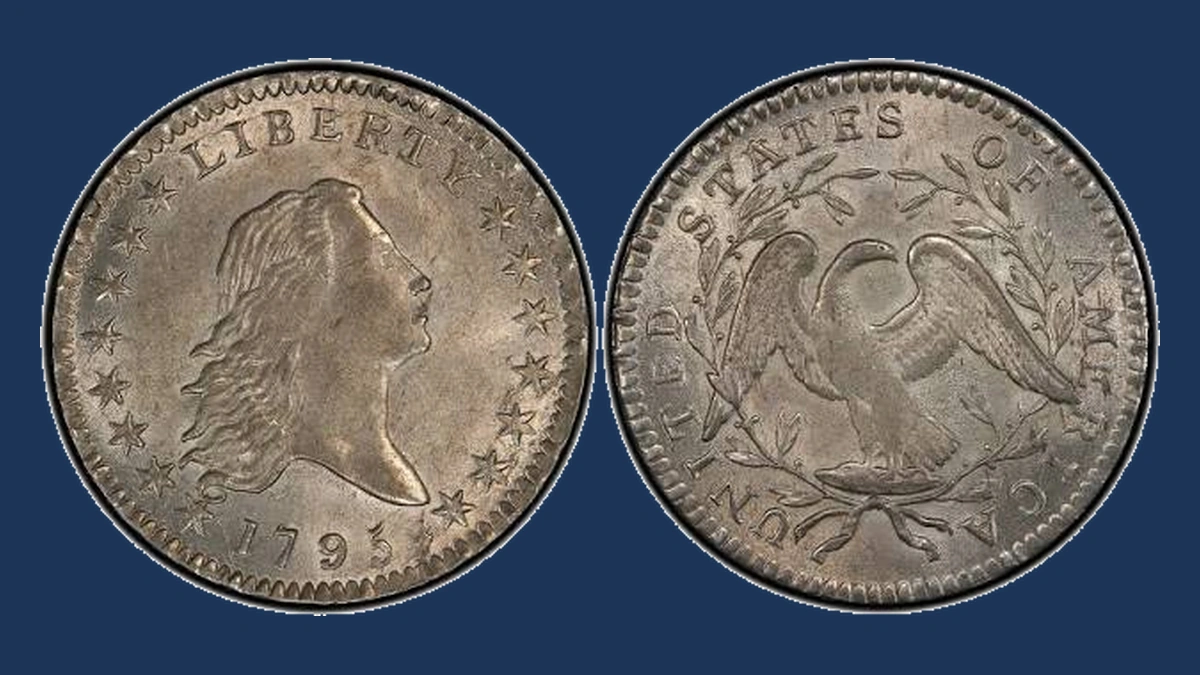
An E was punched where the A in STATES belonged on the O-113 family. A worker corrected it by punching the proper A over the mistake.
Small pieces of the earlier E remained near the top of the replacement letter. Later coins repeated that corrected shape.
This is a change to the stamping tool. It did not require an extra strike on each finished coin.
The order of the letters matters: this 1795 variety is A over E. An E-over-A variety on a later half dollar has the opposite correction and needs a different comparison photograph.
Estimated Value
PCGS records an AU Details example at $8,400 in a November 2020 Stack’s Bowers sale. Estimate $3,000–$12,000 across identified circulated coins through lightly worn examples with problems.
The higher end assumes attractive remaining detail and acceptable surfaces. One extra-looking stroke does not justify it.
Exceptionally preserved or scarce late-stage examples need individual comparison. Even a low-grade coin must retain enough of the corrected letter to establish the variety.
How to Identify
Find the A, the third letter in STATES, and follow it from bottom to top with a 10× magnifier. Look near the top for small surviving pieces of an E.
Compare their positions with a known O-113 photograph, then check the surrounding design. A flat doubled ledge cannot replace the particular strokes of a different letter.
The normal coin has no mintmark and carries words around its edge. Its original silver content was 89.24 percent.
Use a scale and calipers against about 13.48 grams and 32.5 millimeters to check for obvious inconsistencies. The small E remnants beside the corrected A are the clearest first feature to match.
7. 1795 Flowing Hair Half Dollar Cuds and Retained Die Breaks (Estimated Up to $15,000)
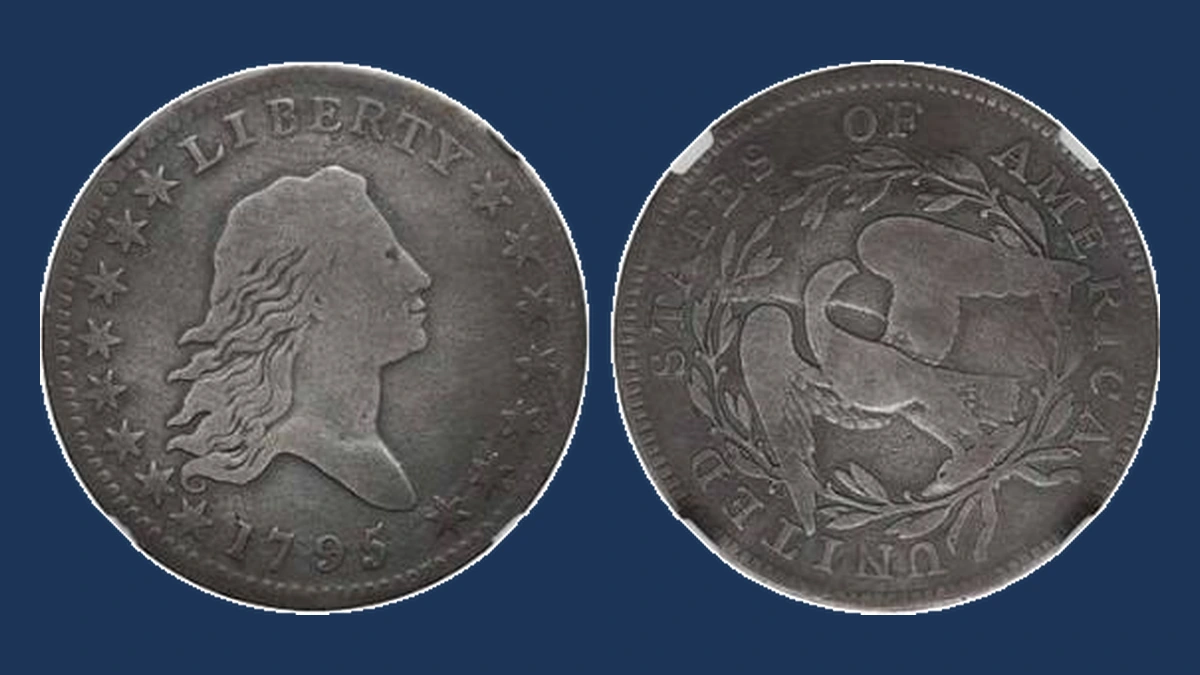
A raised patch may join the rim above AME in AMERICA or below the wreath’s right ribbon on documented 1795 examples. These locations belong to separate coins.
Such rim patches can form when a piece breaks from the stamping tool’s edge. Collectors call a missing edge section a cud.
A retained break means the broken piece stayed in place, so some design may still appear. Its border or height change can reveal the fracture.
Another illustrated break lies inside the design between OF and AMERICA. That internal patch is not a rim cud, even though the tool also broke there.
Estimated Value
Estimate $2,000–$15,000 for circulated examples with clearly identified cuds or retained breaks. The wide range allows for condition, visibility, and scarcity of the broken-tool stage.
The VG8 double strike sold for $13,200 in 2022. That offers a same-year major-error comparison, not a sale of one of the illustrated rim breaks.
A faint retained break and a dramatic missing section need different comparisons. Shared damage to a stamping tool does not make their premiums equal.
How to Identify
Use the JRCS photographs to find the whole broken area rather than one isolated bump. A 5×–10× magnifier and side light help show whether it reaches the rim.
On a retained section, look for surviving design inside the border of the break. An internal patch remains enclosed within the design instead.
Inspect the opposite face and nearby rim for later impact damage. A blow can push metal up but often leaves compression around it.
The lettered-edge half began at about 13.48 grams and 32.5 millimeters, in 89.24-percent silver. Check with a scale and calipers.
The actual break border and its connection to the rim provide the fastest first classification.
8. 1795 Flowing Hair Half Dollar Double Strike (Estimated Up to $25,000)
Two portrait impressions appear on the NGC VG8 O-129 double strike. Heritage explains that the front stamping tool turned about forty-five degrees clockwise between blows while the back tool stayed still.
The same coin also has an S punched over D in STATES. That letter correction did not cause the second strike.
A different O-131, graded PCGS VF20, was described as a flipover double strike. It turned over between strikes, producing a different pattern.
Both need their own comparisons. A rim knock near ten-thirty on the O-129 was damage and is not evidence of another blow from the Mint’s tools.
Estimated Value
The NGC VG8 O-129 sold for $13,200 on December 21, 2022. Estimate $8,000–$25,000 for circulated 1795 double strikes with similarly strong visible evidence.
Surviving impressions and surface quality can differ greatly. The separate VF20 flipover coin does not automatically receive the O-129’s sale price.
The S-over-D correction is already part of that whole coin. It should not receive another full valuation added to the double-strike result.
How to Identify
Locate surviving parts of both portraits and compare how far they turned. The O-129 should fit the reported clockwise movement between its two front impressions.
Use a 10× magnifier across the overlap and retain full photographs. A doubled edge on one letter is not enough to reconstruct a second strike.
For the flipover example, look for pieces of the opposite design rather than a backward sunken copy made by later pressing. Each sequence needs its own match.
Check the lettered edge, then compare scale and caliper readings with 13.48 grams and about 32.5 millimeters. The original alloy was 89.24-percent silver.
The compatible positions of the surviving first and second designs are the deciding clues.
9. 1795 Flowing Hair Half Dollar Recut 1795 Date (Estimated Up to $25,000)
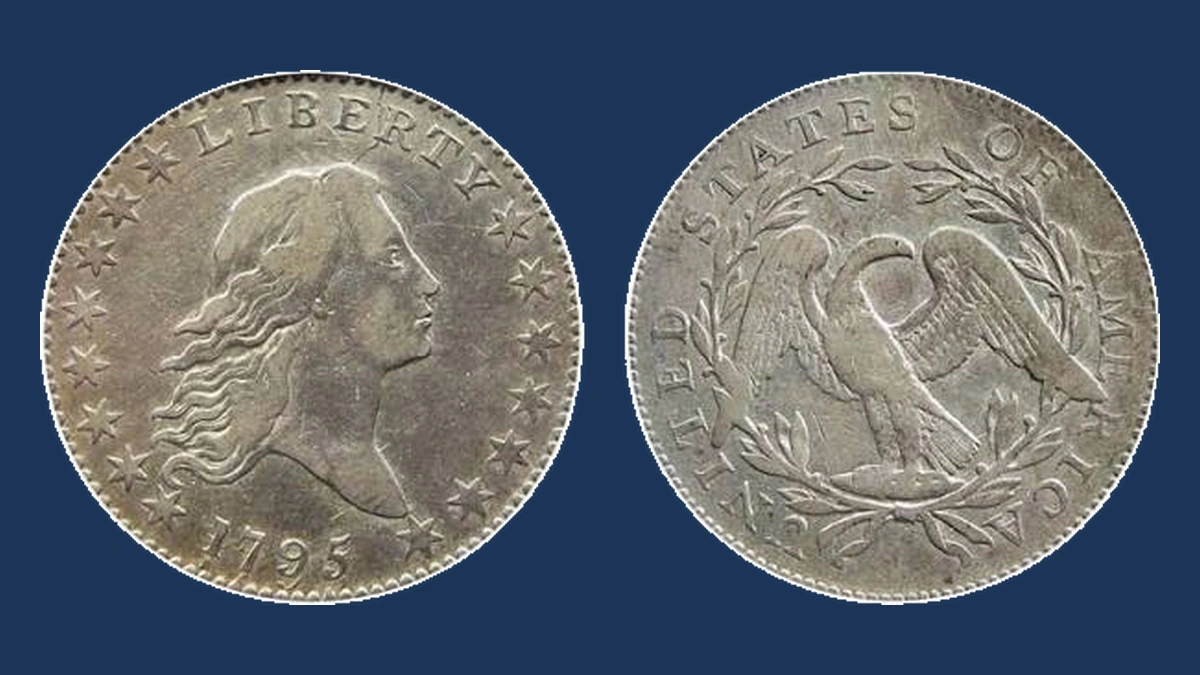
All four date digits were first punched low, then punched again higher in the tool. The lower remnants produce the 1795/1795 appearance.
This is the same year repeated, not a different year hiding beneath the final digit. The coin did not need another full strike.
The front tool was used with a Two Leaves O-112 back and a Three Leaves O-111 back. Those names describe different leaf arrangements that help identify the complete variety.
Wear can blend the lower traces into the final digits. A readable date alone does not prove that the earlier impressions remain visible enough to identify.
Estimated Value
Clearly identified circulated examples have an estimated range of $3,000–$10,000. Attractive lightly worn coins can reach approximately $12,000–$25,000.
Compare Two Leaves and Three Leaves coins within their own varieties. PCGS lists $18,800 for a Two Leaves example in the October 2014 Gardner sale, for a coin recorded as lightly worn, or AU55.
That gives a higher-grade comparison for the repeated date. An advertised heavily worn AG Details example belongs to a much lower condition level.
How to Identify
Light the date from two directions and examine the space beneath each numeral with a 10× magnifier. Shallow lower traces may disappear in a single overhead photograph.
They should repeat the same four digits. The portrait and stars should not move with them as they might on a double-struck coin.
Check the back’s leaf arrangement against O-111 or O-112. That keeps the Two Leaves and Three Leaves examples separate.
The normal edge is lettered, and the original alloy was 89.24 percent silver. A scale and calipers should compare the coin with 13.48 grams and about 32.5 millimeters.
The consistent lower remnants of 1795 beneath the final date give the fastest useful match.
10. 1795 Flowing Hair Half Dollar Clashed Dies (Estimated Up to $30,000)
Extra traces beneath Liberty’s chin appear on an NGC AU55 O-122 sold by Heritage. A separate O-116 has transferred back lettering near LIBE and the left stars.
Those letters correspond to UNITE on the opposite tool. The two examples should not be combined into one pattern expected on every 1795 half.
Clashes happen when the stamping tools hit each other with no blank between them. Marks from that contact can appear on later coins.
The O-122 also has filing marks elsewhere on the front. Those grooves were made in the blank to adjust its weight and are not clash marks.
Estimated Value
The O-122 NGC AU55 sold for $19,550 on January 10, 2008. Comparable attractive lightly worn examples have an estimated range of $15,000–$30,000.
Circulated coins with visible clashes can fit $2,000–$8,000. Their wear requires a different comparison.
The AU55 buyer paid for a sharply detailed early half and its particular variety. The price is not a separate fee for marks beneath the chin, and a faint trace on a worn coin does not inherit it.
How to Identify
Compare each extra shape with the design from the opposite stamping tool. The letters near LIBERTY should fit the actual back lettering in the expected reversed position.
A 10× magnifier and photographs at matching size help follow shallow traces. A line beneath the chin needs that same shape comparison.
Mint filing marks are cut into the blank, while a scratch or color boundary can merely look like an extra outline. Keep those separate from the clash.
Confirm the complete variety and lettered edge. Use a scale and calipers against the original 13.48 grams and about 32.5 millimeters; the alloy was 89.24 percent silver.
A recognizable opposite-side fragment in the correct place is the first convincing clue.
11. 1795 Flowing Hair Half Dollar Uniface Strike Attributed to 1795 (Estimated Up to $75,000)
The piece called P3007 has a half-dollar back design but no struck portrait on the other side. It is silver and has words around its edge.
Its 1795 identity comes from matching the back to a known tool called reverse H. There is no readable date on the piece.
Saul Teichman’s USPatterns discussion favors a Mint error rather than a trial made to test a tool. The interpretation remains part of its history.
A ground-down coin, separated layer, or modern copy can also have a blank-looking face. That appearance alone does not make another piece comparable to this historic example.
Estimated Value
For a historically identified P3007-type piece, the estimated range is $20,000–$75,000. This is a comparison-based estimate, not a recorded sale of that specimen.
The 1795 double strike sold for $13,200 in 2022 and provides a different major-error comparison. A verified one-sided piece has a more exceptional character and history.
The estimate cannot be applied to an unidentified blank-sided coin. It also does not settle whether the historic piece was an error or a trial.
How to Identify
Start with the eagle, wreath, letters, and spacing on the struck side. The USPatterns discussion identifies reverse H, which must match before the blank side becomes meaningful.
With a 10× magnifier, inspect both faces and the full edge for tool marks or faint remains of a removed portrait. Check for a COPY mark too.
A scale and calipers help show whether the metal was thinned. Normal half-dollar standards were about 13.48 grams, 32.5 millimeters, and 89.24-percent silver with edge lettering.
Those measurements alone cannot prove how it was made. The essential first combination is reverse H, an undisturbed blank face, and an original lettered edge.
Conclusion
These 1795 errors and varieties have estimated values from $1,200 to $75,000. A corrected letter or shallow raised line can matter as much as a large visible mark.
Keep each variety’s complete front, back, and edge in the comparison. The dateless one-sided piece requires a reverse-H match, not merely a blank-looking face.
Condition, original surfaces, and a clearly identified feature explain which part of the range fits a particular coin.