1797 Half Dollar Error List with Pictures

A worn 1797 half dollar sold for $55,463 at GreatCollections in 2025. That price shows the value of this scarce early coin, even before considering a mint error.
The 1797 half dollar errors below include raised cracks, faint extra design traces, and a report of repeated edge lettering. Estimated whole-coin prices span $25,000–$60,000.
Keep reading to inspect the edge and both faces without confusing later damage with a mint-made feature.
1. 1797 Draped Bust Half Dollar Repeated Edge Lettering Error (Estimated Up to $45,000)
Words run around the edge: FIFTY CENTS OR HALF A DOLLAR, with ornaments between them. Workers added this lettering separately from the front and back designs.
A repeated edge inscription does not mean the coin’s faces were struck twice. The edge could have passed through its lettering equipment incorrectly.
Spink described possible repeated lettering on a 1797 coin, but kept a question mark in the description. It was graded NGC VF Details, meaning a worn coin with a condition problem.
The same description notes scratches and tool marks. The whole edge needs inspection before the reported repetition can be accepted.
Estimated Value
Estimate $25,000–$45,000 for a worn, damaged example like Spink’s reported coin. The catalog estimate was £18,000–£20,000, not a completed sale.
A PCGS F15 1797 half dollar brought $55,463 at GreatCollections in 2025. That comparison had a regular numerical grade, without the Details condition label.
The lower proposed range allows for damage. It does not add a separate premium for edge repetition that has not been confirmed.
How to Identify
Read the edge from start to finish. Use a magnifier and overlapping photographs to follow every word, rather than judging one crowded pair of letters.
Look for a repeated sequence that fits another pass through the lettering equipment. Scrapes, dents, and letters cut in later can interrupt the wording without showing that process.
Check the complete coin too: it should have the 1797 date, fifteen front stars, and the small eagle. A half dime is a different, much smaller coin.
Compare a scale reading with 13.48 g and calipers with about 32.5 mm, allowing for wear. The edge should carry letters rather than regular grooves.
A specialist’s review of the uninterrupted inscription is the quickest reliable way to judge the reported repetition.
2. 1797 Draped Bust Half Dollar Die Clash Error (Estimated Up to $50,000)
A faint design fragment may appear where the surface should be empty. It can form when the dies, the steel tools that stamp coins, hit each other without a blank between them.
One tool can pick up a trace of the other’s design. Coins struck afterward may show that trace beside their normal image.
This is called a die clash. It records contact between the tools, rather than proving that the coin was struck twice.
Clashing is reported for 1797 halves without one exact design fragment identified for every example. Each candidate needs a comparison with the opposite face.
Estimated Value
An estimated $30,000–$50,000 fits genuine, worn 1797 halves around Very Good to Fine condition with modest clash marks. It prices the whole scarce coin.
A PCGS F15 example sold for $55,463 in 2025. That result is a date-and-condition comparison, not a sale of the clash report discussed here.
The lower estimate allows for greater wear. It does not assign a large added value to an unidentified faint outline.
How to Identify
Look in the open areas around Liberty and the small eagle. Angled light and a 10× magnifier can make faint shapes easier to separate from the normal design.
Compare a connected shape with the opposite face. A random line or a mark left by contact with another coin does not prove that the dies clashed.
Heavy wear can blur the evidence. Keep the comparison within the half-dollar design, rather than borrowing a detail from a 1797 half dime.
A normal unworn half weighs about 13.48 g and measures roughly 32.5 mm. Check with a scale and calipers, and inspect the lettered edge.
A specialist showing how the trace matches the opposing design provides the fastest useful confirmation.
3. 1797 Draped Bust Half Dollar Die Crack Error (Estimated Up to $60,000)
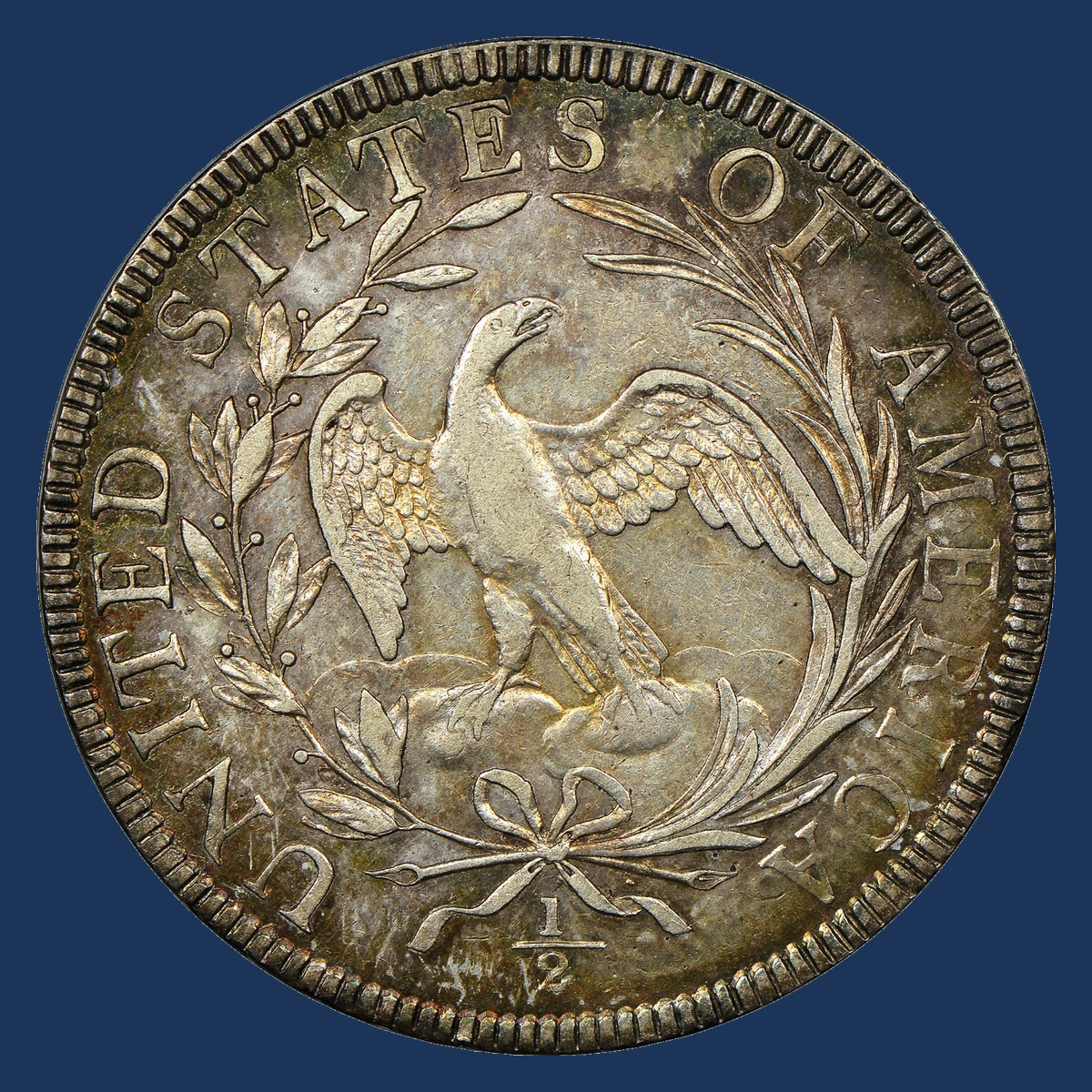
A raised line runs through the second star toward Liberty’s hair curl on one documented 1797 variety. Two more lines cross the wreath on the back and head toward the eagle’s wings.
One back line begins near nine o’clock; the other starts above the O in the lettering. Together, these paths help identify the version called O-101a.
The lines came from cracks in the steel dies used to stamp the coin. Silver entered the narrow openings during striking and formed ridges.
These are marks from damaged tools. They do not mean that the silver coin itself split along those paths.
Estimated Value
The PCGS VF25 O-101a sold for $51,750 in November 2011. Its auction description identified all three crack paths.
An estimated $45,000–$60,000 suits similar Very Fine examples with pleasing surfaces. These coins show circulation wear but retain enough detail for the pattern to be seen.
The cracks help identify what sold, while rarity and overall condition drive much of the price. Heavy scratches or weaker detail can make another coin a poor comparison.
How to Identify
Begin at the second star from the lower left. With a 10× magnifier, follow the raised line from the rim toward the nearby hair curl.
Now check the back. Trace both lines across the wreath toward the eagle’s wings, comparing the full routes with the cataloged example.
A scratch cuts into the surface, even if displaced metal rises beside it. It should not reproduce the same set of three raised paths.
Confirm the date, fifteen stars, and small-eagle design, then inspect the lettered edge. Use a scale against 13.48 g and calipers against about 32.5 mm, allowing for wear.
Agreement of the front path and both reverse paths is the quickest positive match.
Conclusion
Estimated prices for these complete 1797 halves span $25,000–$60,000. Their rarity makes even worn coins expensive, so a small mark should not receive a separate large premium without support.
The cracked-die example has three clear paths to compare. Repeated edge lettering and faint clash shapes need their own checks, with damage kept separate from the features created during minting.